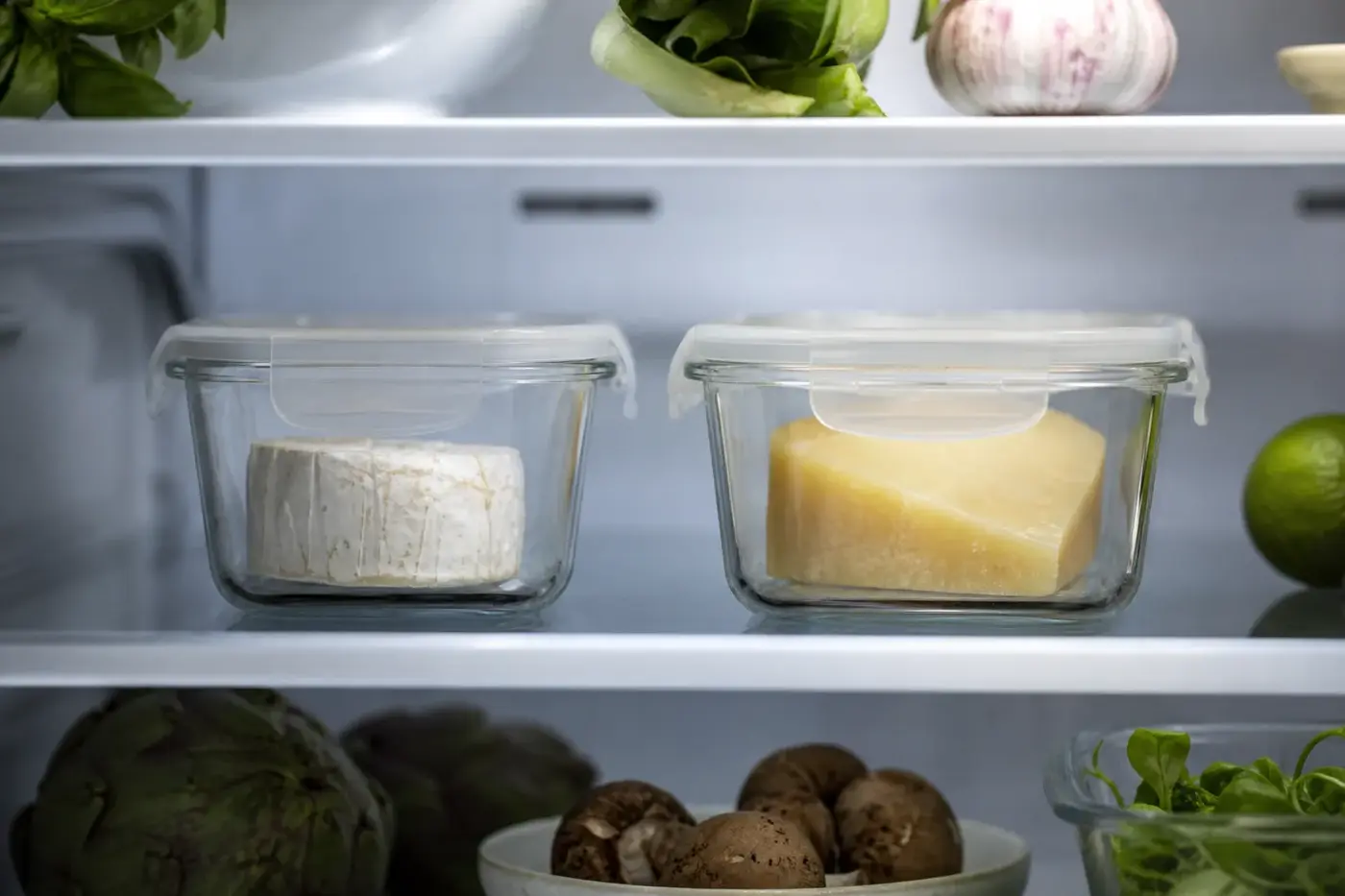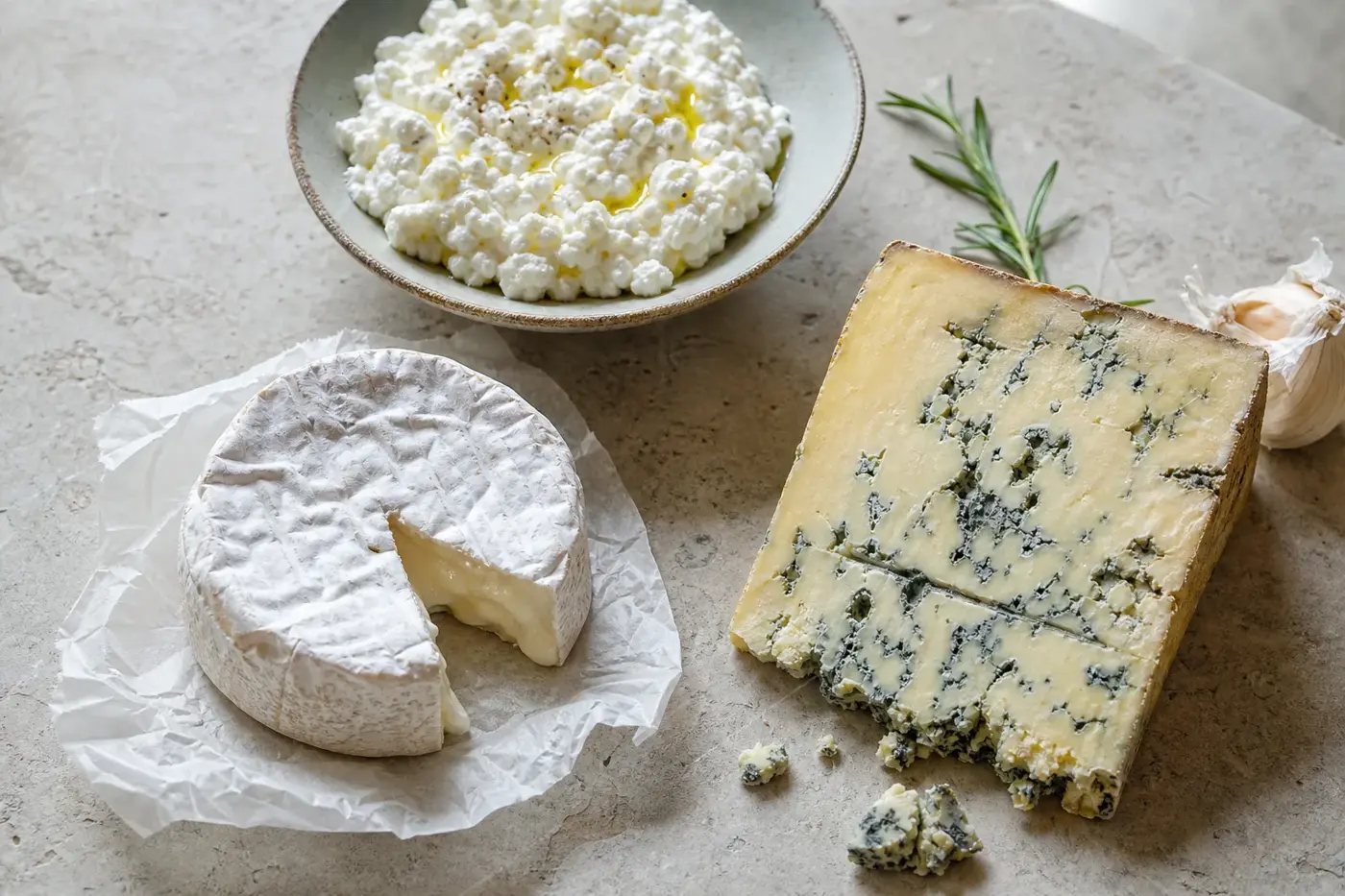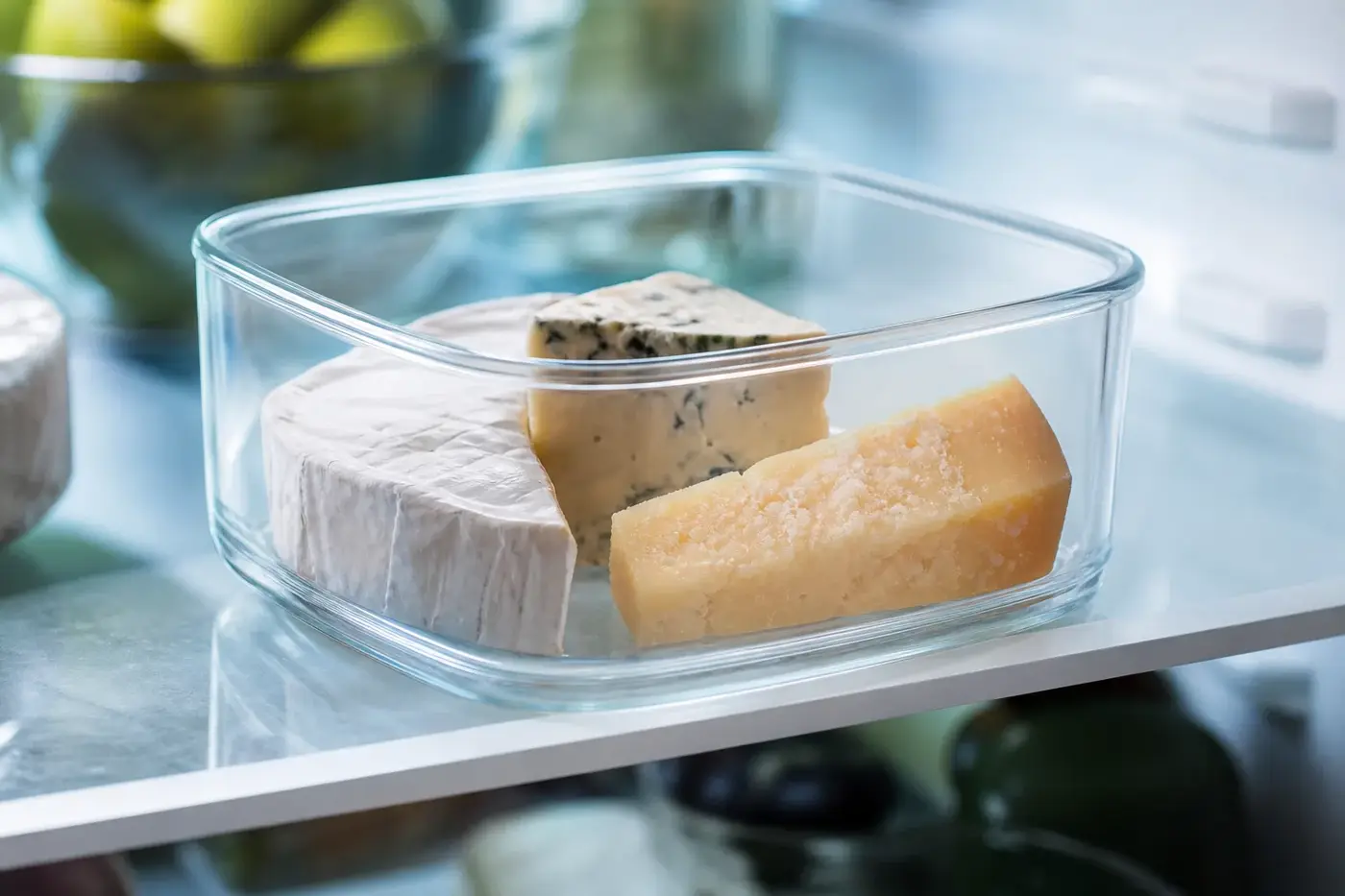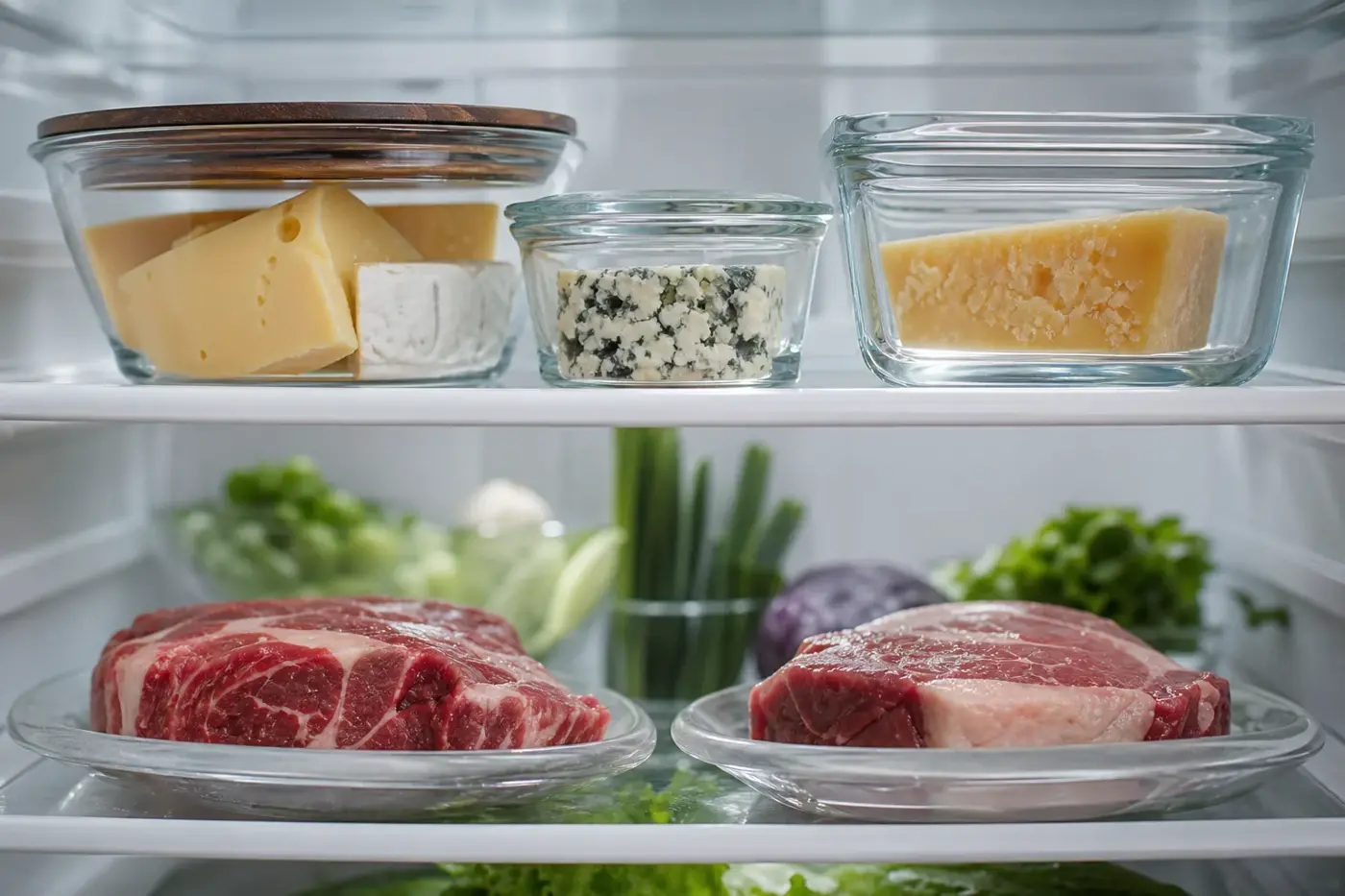
The fridge door opens. You lift out the cheese and reach for a knife, ready for that first slice. But there is something you cannot see: Listeria can multiply even in the fridge. Cold slows its growth, but cannot make contaminated cheese safe. [4][5][11]
Your everyday habits make a difference. Choose cheese with clear storage instructions, keep chilled cheese cold, use clean hands and utensils, and act on recalls. Any extra precautions depend on who is eating and which country’s official advice applies. [1][3][8]
Five good habits, starting at the cheese counter
- Read the storage instructions and check the date before you buy. [2][3]
- Bring chilled cheese home promptly and put it in the fridge. [1][5]
- Keep ready-to-eat cheese separate from raw meat and its juices. [3]
- Check national advice before serving anyone who needs extra care. [8][9][10]
- Check recalls against the product, batch and date on your pack. [19][20][21]
Read the label before you reach for the knife
A use-by date concerns safety, not simply whether your cheese is at its best. Under FSA household advice for England, Wales and Northern Ireland, use-by concerns safety; best-before concerns quality. However reassuring the cheese looks or smells, neither overrides its use-by date. FSANZ also advises against eating food past its use-by date. [2][3]
Choose cheese you can identify, and keep its label. At the cheesemonger’s counter, ask for product details and storage instructions. Match the use-by date to when you plan to eat it, and check for shorter storage instructions once opened. [2][3]
Get chilled purchases home and into the fridge promptly. The FDA’s US limit for refrigerated groceries is two hours out of refrigeration, or one hour when the air temperature exceeds 32 °C (90 °F). Include your journey home in that time. [5]
If you are buying for someone at higher risk, check whether the milk was pasteurised. Ask the seller if the counter label does not say. Then follow the relevant national cheese advice below, because milk treatment is only part of the picture. [8][9][10]
Make room for cheese, and check the temperature
Your fridge dial does not tell you the whole story. Use a thermometer to check the temperature instead. These household recommendations are presented for November 2026. [1][4][5]
| Country or area | Agency | Temperature to aim for | Source date |
|---|---|---|---|
| UK | FSA | 5 °C or below. [23] | Publication date not stated |
| US | FDA | 4.4 °C (40 °F) or below. [5] | 5 March 2024 |
| Canada | Health Canada | 4 °C (40 °F) or below. [6] | 5 June 2025 |
| Australia and New Zealand | FSANZ | 5 °C or colder. [3] | 8 July 2025 |
| France | ANSES | Keep at 4 °C; put risk foods in the coldest zone. [7] | Date not stated |
Keep your cheese covered, allow room for cold air to circulate and clean up spills promptly. Refrigeration slows growth, but Listeria can still multiply at fridge temperatures. Cold storage cannot make contaminated or recalled food safe. [4][5][11]
Food businesses follow separate temperature-control legislation, depending on their jurisdiction and operation. For your home kitchen, follow the household figures above. [18]
Set a clean scene for your cheese board
Before you reach for the cheese, wash and dry your hands. Repeat after touching raw foods, and keep surfaces and utensils clean. Use separate equipment for raw meat and ready-to-eat food: cross-contamination means germs passing between foods or surfaces. [3][5]
FSS advice for Scottish households says to store raw meat in sealed containers below ready-to-eat foods. Think about everyone who will share your cheese, too. Check ingredients and allergen statements, including added ingredients in flavoured products. [3][4]
Bring out a little, keep the rest chilled
Put out what you expect to eat, replenish from the fridge and keep track of time. In the US, the FDA’s limit for perishable food is two hours, or one hour above 32 °C (90 °F). [5]
In Australia and New Zealand, FSANZ’s household advice counts every spell at room temperature, including preparation and serving. Under two hours, refrigerate it; between two and four hours, eat it immediately. After four hours, discard it. [3]
Cooked cheese dishes need a leftovers routine of their own. Follow the instructions for your country:
- England, Wales and Northern Ireland, FSA: cool and refrigerate within two hours; eat within 48 hours or freeze. Reheat only once, until steaming hot throughout. [1][15]
- United States, USDA: refrigerate within two hours, or one hour above 32 °C (90 °F); use refrigerated leftovers within three to four days. [16]
- Canada, Health Canada’s pregnancy guidance: refrigerate or freeze promptly; eat refrigerated leftovers within two to four days. Reheat to at least 74 °C (165 °F), and avoid reheating the same leftovers more than once. [6]
- Australia and New Zealand, FSANZ: cool quickly, refrigerate and use perishable leftovers within a few days; reheat quickly to piping hot. New Zealand MPI’s pregnancy guidance specifies eating refrigerated leftovers within two days. [3][12]
Choose cheese with your guests in mind
Who needs extra care? Check national advice if you are pregnant, preparing food for young children or older adults, or have a weakened immune system. Age thresholds and cheese recommendations differ between countries. Ask your doctor, midwife or dietitian about your circumstances. [8][9][10]
Where you live matters, as unpasteurised hard cheese illustrates. NHS pregnancy advice permits it. Health Canada, by contrast, advises its higher-risk groups to avoid every uncooked cheese made from unpasteurised milk. [9][10]
| Country | Who the advice is for | Choosing and preparing your cheese | Source date |
|---|---|---|---|
| UK, NHS | Pregnancy | Cook mould-ripened soft cheeses with white coatings and soft blue cheeses until steaming hot, whether pasteurised or not. [9] | 15 June 2026 |
| US, CDC | Pregnant people, adults 65 or older, weakened immunity | Avoid unheated queso fresco-type cheeses and raw-milk cheeses; alternatively, heat to 74 °C (165 °F) or until steaming hot. [8] | 31 January 2025 |
| Canada, Health Canada | Pregnancy, age 60 or over, children five or under, weakened immunity | Avoid uncooked unpasteurised cheeses and uncooked soft, semi-soft and blue cheeses, even when pasteurised. [10] | 29 September 2026 |
| Australia and New Zealand, FSANZ | People at increased risk of listeriosis | Avoid soft, semi-soft and surface-ripened cheeses unless thoroughly cooked; FSANZ specifies steaming hot, 75 °C. [11] | Source date unconfirmed |
| France, ANSES | Pregnant women, young children, people over 65 and people with weakened immunity | Avoid raw milk cheeses except cooked pressed cheeses, a term describing the cheesemaking method. [13] | 8 April 2022 |
New Zealand MPI’s pregnancy guidance, reviewed on 29 July 2026, also lists hard cheese as suitable when stored in the fridge. Read its pregnancy table alongside your local clinical advice. [12]
When national advice calls for cooking, heat the cheese as part of the dish until its centre reaches the specified condition. A softened rind or melted surface does not tell you that the whole dish is steaming hot. Follow any stricter instructions on the packaging. [3][8][9]
Look beyond the name on the cheese
“Pasteurised” is an important word, but not the whole story. Pasteurisation kills harmful germs through heat treatment of milk; cheese can become contaminated afterwards. Read it alongside the cheese type and consider how the cheese has been handled. [5][8][11]
Listeria monocytogenes can grow during refrigerated storage and cause serious illness, particularly in people at higher risk. Other hazards include Salmonella, Shiga toxin producing E. coli, often shortened to STEC, and toxins made by some bacteria, such as Staphylococcus aureus. ANSES assesses these alongside Listeria, and the risk differs between kinds of cheese. [5][8][11][22]
Histamine is a separate chemical hazard that can build up in some long ripened foods. When you choose your cheese, consider more than its name. Milk treatment, the product’s condition, storage and the person eating it all matter. [22][8][9][10]
This page summarises published guidance from the official sources it cites. It is not medical advice. Guidance differs between countries and changes over time, so check the current source for where you live, and ask your doctor, midwife, pharmacist or dietitian about your own circumstances.
Know which mould belongs, and which does not
Mould deliberately used to ripen cheese is different from unexpected spoilage. In the US, USDA FSIS advises discarding soft cheese, and crumbled, shredded or sliced cheese, when unwanted mould appears. [14]
For hard cheese, USDA FSIS allows you to cut away at least 1 inch, about 2.5 cm, around and below the mould. Keep your knife clear of the mould as you cut, then rewrap the cheese. [14]
A recall requires a different response: follow the recall notice. Discard cheese past its use-by date under the FSA and FSANZ advice above. [2][3][19]
Heard about a recall? Start with your pack
Your pack carries the details you need: exact product name, pack size, batch code and date. Match these against the official recall notice. Follow its return or disposal instructions, and keep recalled cheese away from food you intend to eat. [19][20][21]
Official recall services list current notices by brand, batch and date. Use those details to establish whether the cheese in your fridge is affected. [19][20][21]
If you feel unwell after eating a recalled product, follow the notice’s medical advice and contact a healthcare professional. This is especially important during pregnancy or with weakened immunity. [19][21]
The EU’s 2026 Listeria change, explained
Since 1 July 2026, Regulation (EU) 2024/2895 has amended criterion 1.2 of Regulation (EC) No 2073/2005. It covers ready-to-eat foods able to support Listeria growth, excluding foods for infants and special medical purposes. [17]
For the limit of 100 colony-forming units per gram to apply, the producer must demonstrate to the competent authority that levels will stay within it throughout shelf life. Otherwise, Listeria must not be detected in 25 g. Both limbs apply to products on the market during shelf life. [17]
For your kitchen, the distinction is straightforward: this rule governs food businesses, not a household test. It applies in the EU from 1 July 2026. Great Britain has its own, separate assimilated legislation. [17][18]
Questions people ask
What temperature should I keep my fridge at?
The FSA advises households in the UK to keep their fridge at 5 °C or below. Check it with a thermometer rather than trusting the dial.
Can I eat cheese after its use by date if it smells fine?
The FSA says a use by date concerns safety, while a best before date concerns quality. Smell and appearance must not overrule a use by date.
Can I cut mould off cheese?
USDA FSIS advises discarding soft, crumbled, shredded or sliced cheese if unwanted mould appears. For hard cheese, it allows cutting away at least 2.5 cm around and below the mould, keeping the knife clear of it, then rewrapping the cheese.
Can I eat soft cheese during pregnancy if it is pasteurised?
The NHS advises cooking soft cheeses with white mould coatings and soft blue cheeses until steaming hot during pregnancy, whether pasteurised or not. Check the current NHS pregnancy advice.
How can I tell whether my cheese has been recalled?
Check the product name, pack size, batch code and date against the official recall notice. Follow its return or disposal instructions and keep the recalled cheese away from food you intend to eat.
Sources
- Food Standards Agency. How to chill, freeze and defrost food safely, online guidance, originally published 2017. Official guidance.
- Food Standards Agency. Home food fact checker, updated 21 August 2026, section on milk and dairy date markings. Official guidance.
- Food Standards Australia New Zealand. Food safety basics, updated 8 July 2025. Official guidance.
- Food Standards Scotland. Chilling food, online guidance, update date not established. Official guidance.
- US Food and Drug Administration. Refrigerator Thermometers: Cold Facts about Food Safety, content current as of 5 March 2024. Official guidance.
- Health Canada. Safe food handling for pregnant people, published March 2025, modified 5 June 2025. Official guidance.
- ANSES. Qu'est-ce que la listériose et comment s'en prémunir ?, date not stated in the supplied extract. Official guidance.
- US Centers for Disease Control and Prevention. Preventing Listeria Infection, 31 January 2025. Official guidance.
- Health Canada. Safer cheese choices for people at greater risk of food poisoning: Information Sheet, 29 September 2026. Official information sheet.
- Food Standards Australia New Zealand. Listeria in food, page metadata dated 2 October 2025; visible update date not verified. Official guidance.
- ANSES. Fromages au lait cru : quels risques pour la santé et comment mieux les prévenir ?, 8 April 2022. Official guidance.
- USDA Food Safety and Inspection Service. Molds on Food: Are They Dangerous?, web page undated, PDF revised August 2013. Official guidance.
- Food Standards Agency. Cooking your food, current online guidance, sections 7.1 and 7.2. Official guidance.
- USDA Food Safety and Inspection Service. How do I handle leftovers safely?, updated 20 December 2024. Official guidance.
- European Commission. Commission Regulation (EU) 2024/2895 of 20 November 2024 amending Regulation (EC) No 2073/2005 as regards Listeria monocytogenes, Official Journal, 21 November 2024, Article 2 and Annex. Official legal text.
- Food Standards Agency. Revised guidance: reducing the risk of vulnerable groups contracting listeriosis, consultation draft, published 23 September 2026, legislative framework and Annex A. Official consultation draft.
- Food Standards Agency. Update 1: Traditional Cheese Company recalls French Bries because of contamination with Listeria monocytogenes, FSA-PRIN-28-2026, 24 June 2026, Northern Ireland-specific. Official recall notice.
- US Food and Drug Administration. Outbreak Investigation of Listeria monocytogenes: Soft Cheese (June 2026), investigation page, 2026. Official investigation.
- Canadian Food Inspection Agency. Various brands of organic cheeses recalled due to Listeria monocytogenes, published and updated 14 October 2026. Official recall notice.
-
ANSES. Avis relatif aux modalités de maîtrise du risque lié à la présence de dangers microbiologiques dans les fromages et autres produits laitiers fabriqués à partir de lait cru, reference 2019-SA-0033; publication date requires confirmation from the PDF. Agency assessment.
-
Food Standards Agency. News item on food affordability and food safety, citing September 2022 data; publication date not stated. Official source.
Last checked: November 2026
Last checked November 2026.
The editors suggest you read next
Cheese During Pregnancy
You scatter Parmesan over your plate, then pause: it was made with unpasteurised milk.