Cheese Safety for People at Higher Risk of Foodborne Illness
The fridge door is open.
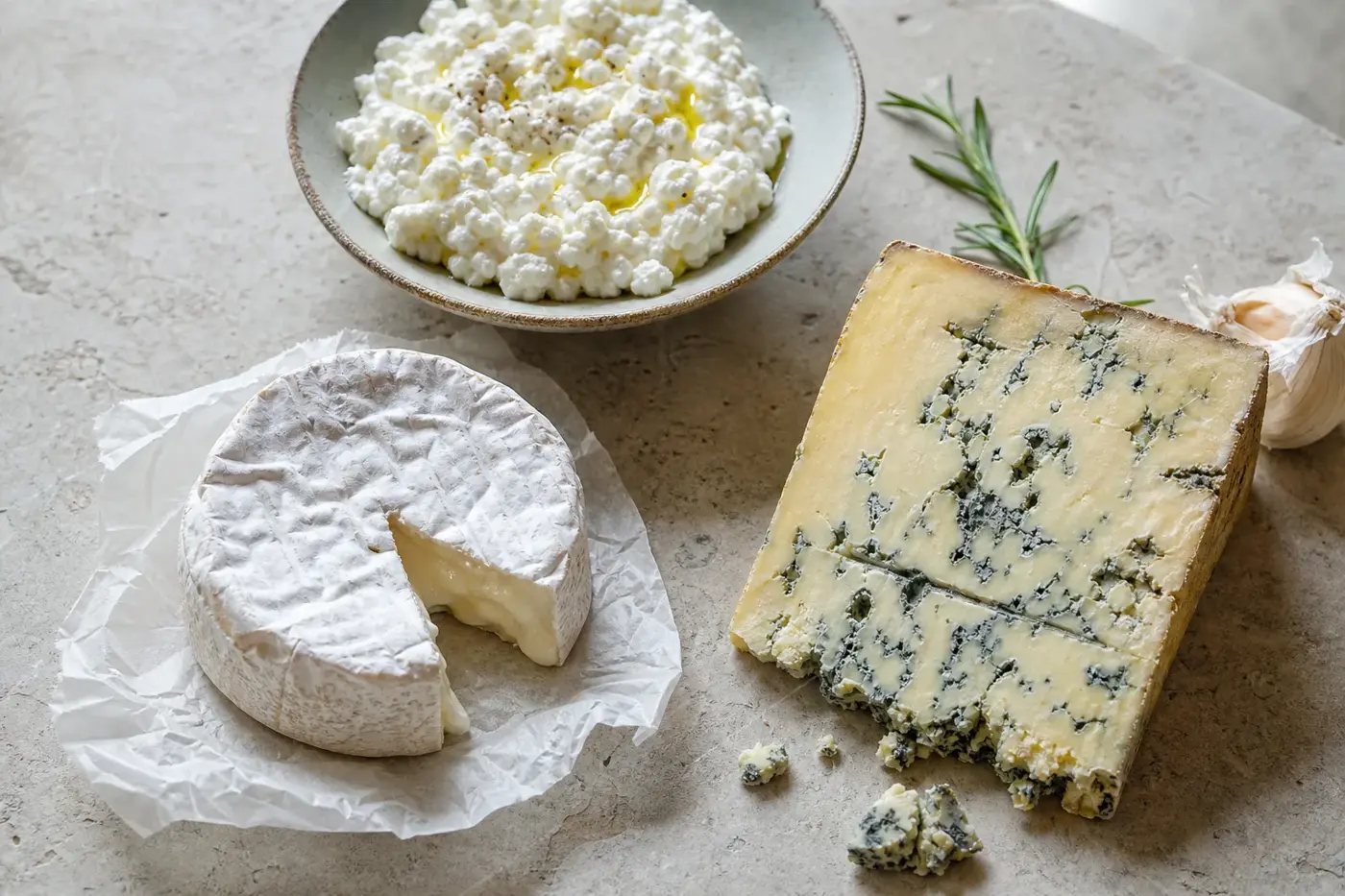
The fridge door is open. Your hand is halfway to the cheese when you pause: the milk was pasteurised, but is that the whole story? In a household at higher risk, moisture, ripening, storage and preparation matter too. Listeria can grow slowly in the fridge and survive freezing.[4]
UK NHS guidance in November 2026 distinguishes hard cheese, fresh pasteurised cheese and soft mould-ripened or blue cheese. Specialist advice can be more restrictive after treatments such as an organ transplant.[1][2][5] The question to take to the counter is not simply “Is this pasteurised?” but “Is this cheese suitable for the person eating it?”
Who needs extra care at the cheese counter?
If you are pregnant, older, or living with certain illnesses or treatments, choosing cheese takes extra care. According to the UK Health Security Agency, pregnant people, newborn babies, older people and people with certain illnesses or treatments face a greater risk of severe listeria infection. Risk increases with age, particularly beyond 80.[1]
UKHSA lists cancer, organ transplantation, chemotherapy, oral steroids and other treatments that suppress immunity. It also includes uncontrolled diabetes or HIV infection, chronic kidney or liver disease, alcohol dependency and iron overload.[1]
Begin with the person’s clinical team, before you turn to the cheese label. Ask which restrictions apply, whether they change during treatment and whom you should contact about an unfamiliar food. Keep those instructions where anyone shopping or cooking for the household can find them.
NHS Blood and Transplant, for example, publishes specific food guidance for heart and lung transplant recipients. Questions about unlisted foods belong with the transplant team.[5] Pregnancy guidance covers a different clinical situation, so choose the source for the person eating the cheese, rather than someone else’s permitted-food list.
What your fridge can and cannot do
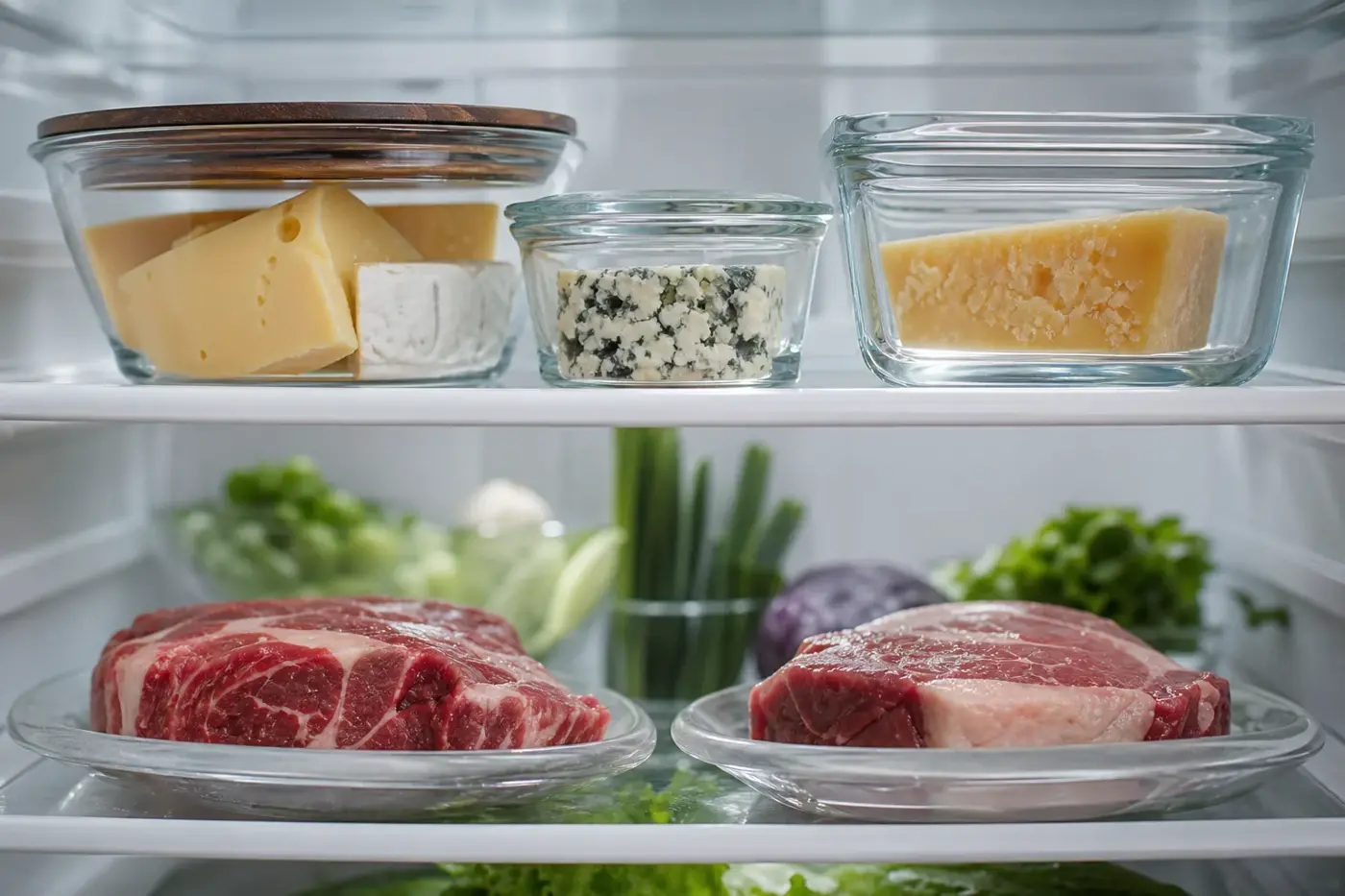
Your fridge has an essential role, but cold alone is not enough. The Food Standards Agency explains that listeria can grow slowly at refrigerator temperatures and survive freezing.[4] Cheese is often eaten without further cooking, which makes careful handling particularly important. Cold storage needs limited storage time and protection against contamination alongside it.
Listeria monocytogenes causes listeriosis. Many healthy people have no symptoms or only a mild illness, UKHSA explains. In susceptible people, it can cause an invasive infection that spreads beyond the gut. During pregnancy, even mild or unnoticed maternal infection can have serious consequences for the baby.[1]
Contamination can happen after the milk has been treated. Pasteurisation kills harmful germs in milk, but cheese can become contaminated afterwards if its manufacturing environment is unhygienic, the US Food and Drug Administration explains.[3] Listeria can also persist in food-processing environments.
Other foodborne pathogens need attention too. Salmonella and some types of E. coli can cause diarrhoeal illness, and the FDA notes that unpasteurised cheese can carry harmful organisms besides listeria.[3] Listeria receives particular attention because infection can spread beyond the gut in susceptible people.[1][3]
It helps to think of pasteurisation and handling as separate parts of the same task. Pasteurisation addresses contamination in the milk; careful handling addresses contamination introduced later. For more about the organism and its control, see listeria and cheese safety.
Look beyond “pasteurised” on the label
At the cheese counter, “pasteurised” gives you useful information, but not the complete answer. Conditions inside the finished cheese matter too. The FDA explains that high moisture and low acidity favour listeria growth in queso fresco-type fresh cheeses. It also identifies contamination after pasteurisation as a continuing concern.[3]
Ripening changes the advice as well. NHS pregnancy guidance treats a soft cheese with a white mould rind differently from pasteurised cottage cheese or mozzarella. Soft mould-ripened cheese needs thorough cooking whether its milk was pasteurised or unpasteurised.[2]
Find out both the cheese style and its milk treatment. Then match those details to the guidance you are following. Neither detail should stand in for the other.
For the differences between milk treatments, see raw milk, thermised and pasteurised cheese. If your household is managing higher risk, keep the immediate question precise: what does the relevant official or clinical guidance say about this type of cheese?
Same cheese, different circumstances: choose your guidance
Hard blue cheese shows why the person’s circumstances matter. NHS pregnancy advice lists it as suitable, while heart and lung transplant guidance advises avoiding it.[2][5] This table compares those two sources as of November 2026. Their differences reflect different medical circumstances.
| Cheese style | NHS pregnancy guidance | NHS Blood and Transplant guidance after heart or lung transplantation |
|---|---|---|
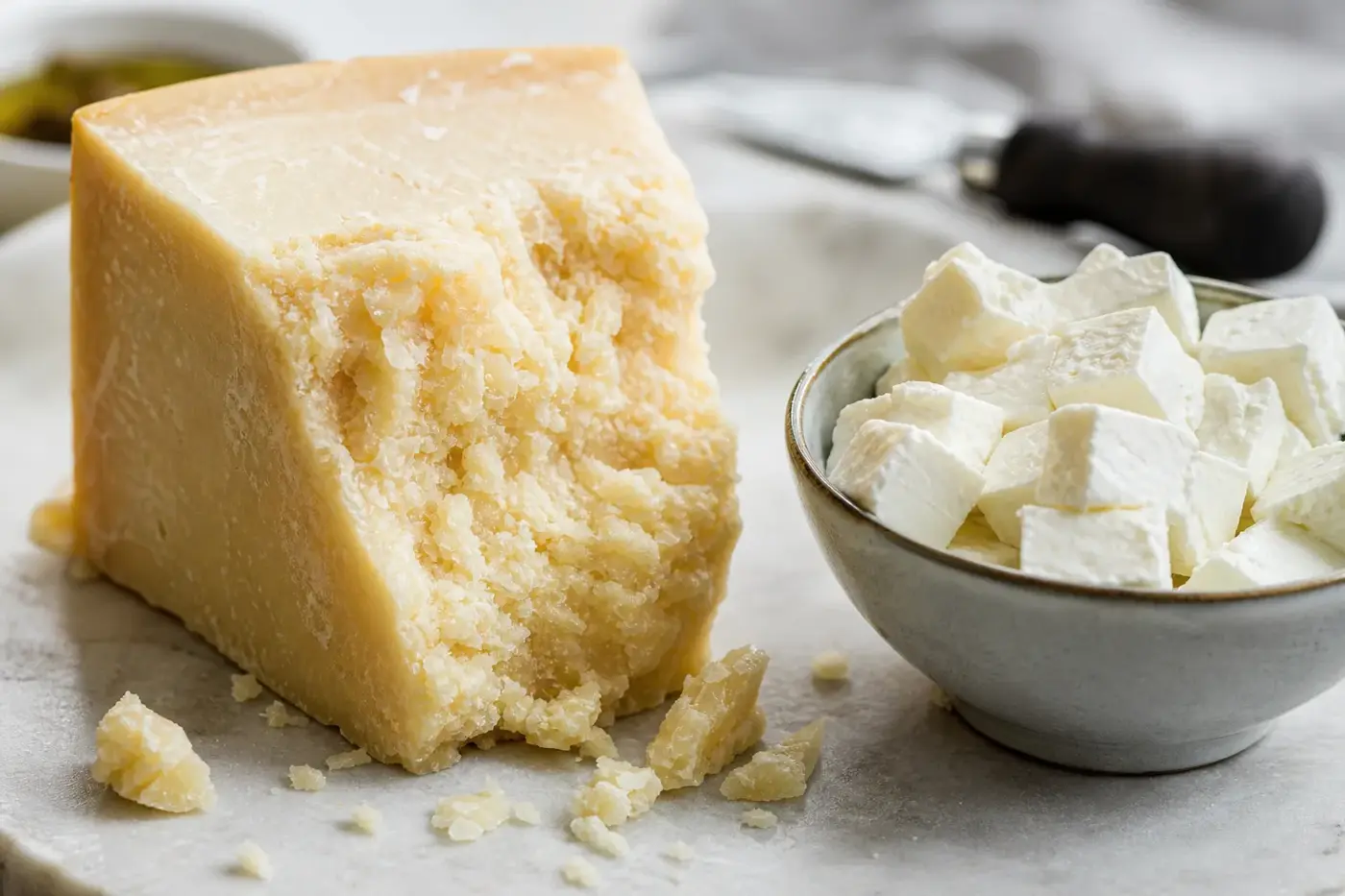
| Hard cheese | Pasteurised and unpasteurised hard cheeses are suitable.[2] | Hard cheeses are lower risk, but avoid uncooked cheese made from unpasteurised milk.[5] |
| Pasteurised semi-hard cheese | Includes pasteurised semi-hard cheese, such as edam.[2] | Edam is among the lower risk choices.[5] |
| Fresh or non-mould-ripened soft cheese | Includes pasteurised cottage cheese, mozzarella, feta and cream cheese.[2] | Cream cheese and pasteurised non-mould-ripened soft cheeses are lower risk choices.[5] |
| Soft white-rind mould-ripened cheese | Cook thoroughly, whether pasteurised or unpasteurised.[2] | Avoid soft mould-ripened cheeses.[5] |
| Blue cheese | Hard blue cheese is suitable; cook soft blue cheese thoroughly.[2] | Avoid both soft blue and hard blue cheeses.[5] |
Softness alone cannot answer the question for you. NHS pregnancy guidance includes several pasteurised fresh cheeses, while requiring thorough cooking for soft mould-ripened and soft blue-veined cheeses.[2] Establish the cheese’s style, not just how soft it feels.
Make a clear plan with your clinical team
Treatment, and the period when you are most susceptible, can shape specialist instructions. Cambridge University Hospitals publishes a separate food table for periods of neutropenia during stem cell transplantation, when infection-fighting white blood cells are reduced. It lists unpasteurised dairy products, mould-ripened cheese and blue-veined cheese among foods to avoid.[6]
Some restrictions last for life. NHS Blood and Transplant says heart and lung transplant recipients should follow its food-safety guidance throughout life. This is because immunosuppressant medication continues to weaken natural defences.[5]
You can take these specific questions to the team:
- Which cheese guidance applies during this stage of treatment?
- Does thorough cooking change the advice for a cheese on the avoidance list?
- Are there restrictions on deli-cut cheese or food brought into hospital?
- When should someone contact the team about a temperature, vomiting or diarrhoea?
Ask before taking cheese or a cheese dish into hospital. Cambridge University Hospitals requires concerns about food brought in for transplant patients to be discussed with the ward dietitian.[6] Have that conversation before the food arrives, so you know what is appropriate to bring.
Cooking cheese? Look beyond the melted top
A melted top can look wonderfully inviting, but it cannot tell you whether the centre is hot enough. The NHS instruction is specific: these cheeses should be steaming hot all the way through. Melted on the surface or warm in the middle is not enough.[2]
For pregnancy, the NHS lists cheese cooked until steaming hot as suitable, including soft and blue cheese.[2] Thorough cooking is also one of the FSA’s principal controls against listeria.[4]
If you are following transplant or other specialist instructions, ask the clinical team whether cooking changes the advice for that cheese. Plan your meal around their written avoidance list.[5][6]
Cooking must also be considered alongside the product’s storage history. Follow its date and handling instructions, and any recall notice affecting it.[8][9]
Give your fridge a weekly check
Keep your home fridge between 0 and 5 °C (32 to 41 °F), the FSA advises. Use a fridge thermometer and check it weekly. This consumer guidance applies to England, Wales and Northern Ireland.[7]
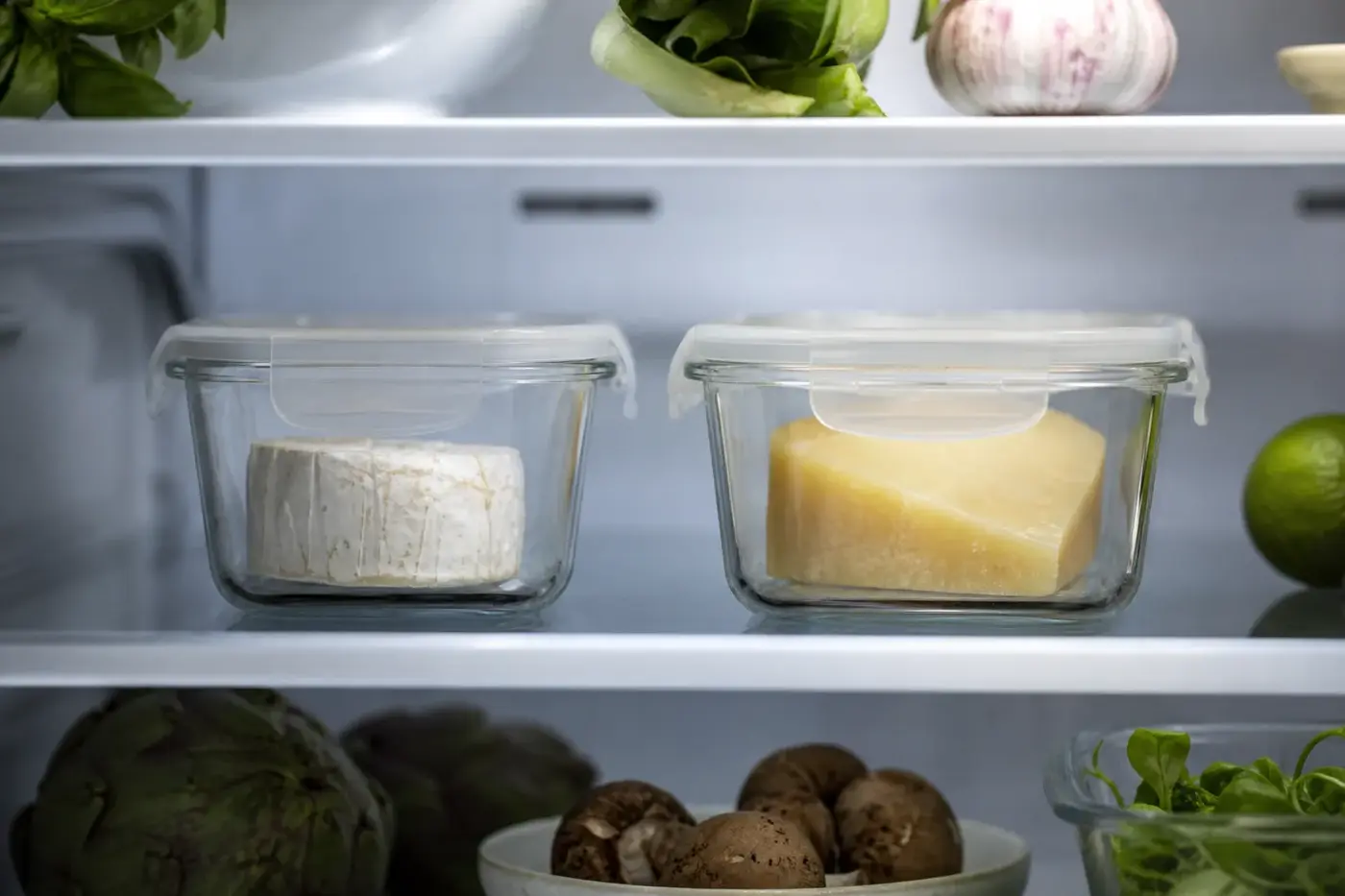
You can make that thermometer check part of planning the week’s food. Arrange chilled products so their labels, dates and instructions are easy to see. The FSA advises refrigerating dairy products and foods carrying a use-by date, following the storage instructions on their packaging.[7]
Pay particular attention to three details:
- The date: GOV.UK guidance says a use by date concerns safety. Do not eat food after its use by date. A best before date concerns quality.[8]
- The storage conditions: incorrect storage can make food unsuitable before its use-by date.[8]
- The opening instructions: check what changes once you have broken the seal.[8]
If an instruction says “use within” a stated period, write the opening date on the pack to help everyone follow it. Keep the original label with the cheese too. That gives everyone in the household the same information.
During preparation, keep chilled food outside the fridge for the shortest possible time, as the FSA advises.[7] When you are serving someone at higher risk, follow the relevant clinical team’s advice. For fuller guidance, see how to store cheese at home.
Start with clean hands and a clear workspace
Before you cut the cheese, give it a clean place to land. Keep cheese eaten without cooking separate from raw-food preparation. The FSA identifies food handlers, raw foods, equipment and utensils as possible sources of listeria contamination.[4]
NHS Blood and Transplant advises washing your hands before preparing food and cleaning worktops and chopping boards. Prepare and store raw and cooked foods separately. Keep raw meat, poultry and fish at the bottom of the fridge, in a container or on a plate to prevent drips.[5]
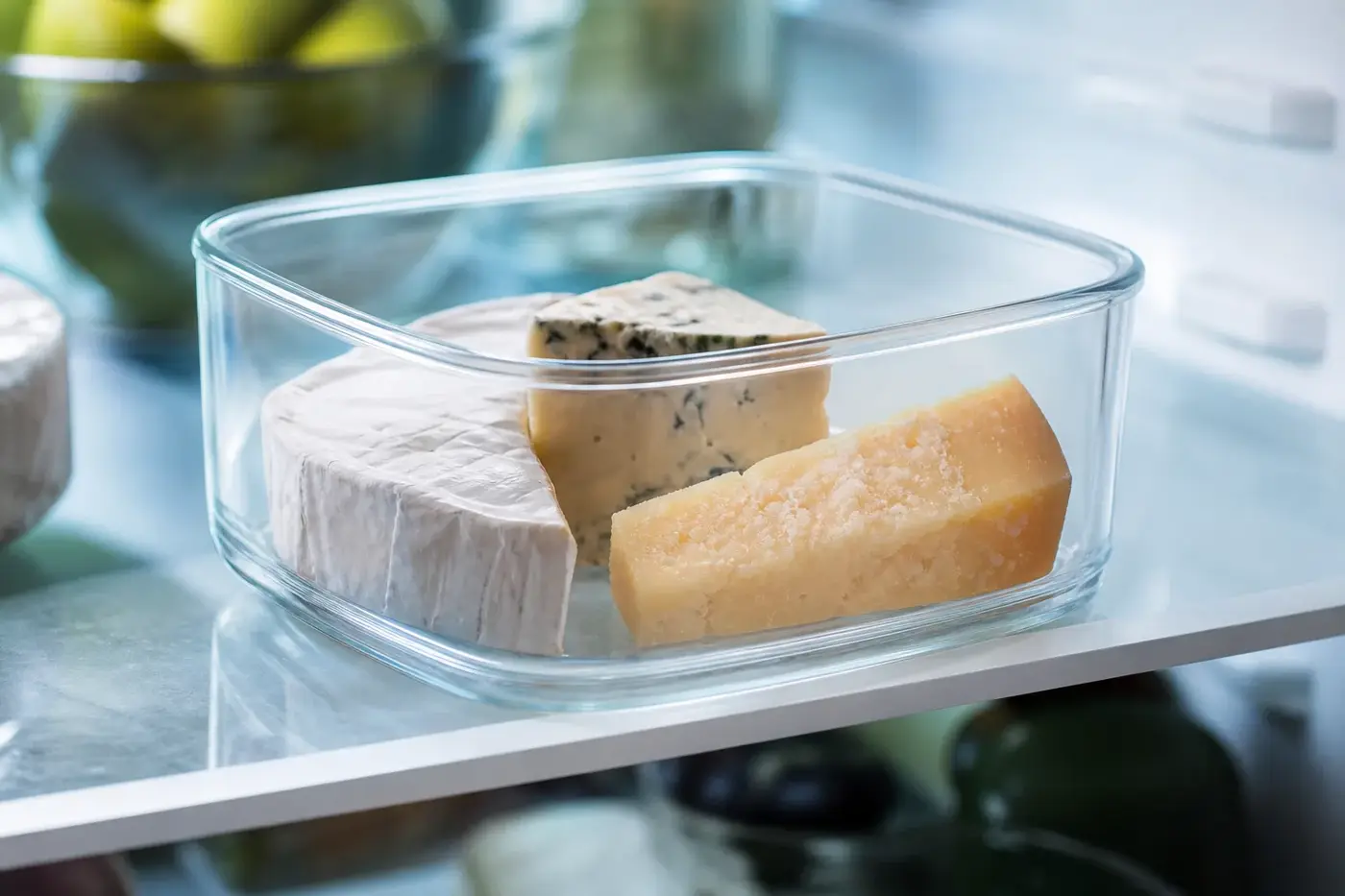
Use a clean board and knife for the cheese, away from raw foods. In a shared kitchen, make the arrangement easy to follow: put the intended portion in a clean container and retain its label. Clear information means nobody has to rely on remembering when the communal pack was opened.
A few useful questions before the first bite
At the counter or restaurant table, you can keep the conversation short and specific. Ask questions that a cheesemonger or kitchen can answer from the product label or preparation method. Those details help you put official guidance into practice.
When buying cheese, ask:
- Is the milk pasteurised?
- Is this a fresh cheese, a mould-ripened soft cheese or a blue cheese?
- What are the storage and opening instructions?
- Can I keep the label or product details with the cheese?
These questions establish the details you need to apply NHS cheese advice and official storage guidance.[2][8] Keep the answers with the cheese, where anyone preparing or serving it can find them.
When eating out, ask:
- Which cheese is used, and can the kitchen confirm its milk treatment?
- If cooking is required, will the cheese be steaming hot throughout?
- Can the dish be prepared to match the relevant clinical instructions?
When hosting, ask the guest first: “Which guidance are you following, and what would work for you?” Agree the cheese and its preparation before serving. If your guest has specialist restrictions, follow their clinical team’s instructions rather than interpreting a general list for them.[5][6]
A recall notice? Check the details on your pack
Start with the exact product, rather than a familiar cheese name alone. Use the FSA’s food-alert service and Food Standards Scotland’s alerts to find official notices. Compare the notice with your cheese’s name, pack size, batch code and relevant date.[9][11]
A withdrawal removes a product from sale; a recall reaches customers who may already have bought it. The FSA explains this distinction. Its notices give the reason for the action and instructions for consumers.[9]
If the details match your cheese, stop serving it. Follow the notice’s directions about return or disposal. Keep the product information available if you need to discuss an exposure with a healthcare professional.[1][9]
Follow the notice for that particular product. For general buying and handling decisions, return to the complete cheese food-safety guide.
Know the symptoms and when to get help
Fever, aches, chills, nausea, vomiting and diarrhoea are among the listeriosis symptoms listed by the NHS. During pregnancy, stomach pain or reduced baby movements may also occur. Affected babies may be irritable or feed less.[10]
The NHS advises an urgent GP appointment or NHS 111 help if you think you have listeriosis and are pregnant, have weakened immunity or take treatment that weakens immunity, or think your baby has it. Pregnant people can also contact their midwife. Use the NHS service linked in the sources below.[10][12]
Call 999 or go to A&E for the emergency signs listed by the NHS: severe headache with a stiff neck, discomfort looking at bright lights, a seizure, sudden confusion, extreme sleepiness or difficulty waking, or a rash that does not fade under a glass. The NHS says not to drive yourself to A&E.[10]
When you seek help, explain any suspected food exposure and the relevant illness or treatment. Symptoms can sometimes develop well after the food was eaten, UKHSA notes.[1]
General information only, not medical advice: follow the official guidance where you live.
Questions people ask
Can I eat soft cheese during pregnancy?
NHS pregnancy guidance includes pasteurised cottage cheese, mozzarella, feta and cream cheese. It advises cooking soft mould ripened cheese and soft blue cheese until steaming hot all the way through. See NHS pregnancy guidance for the full list.
Which cheeses does guidance cover after a heart or lung transplant?
NHS Blood and Transplant lists hard cheeses as lower risk but advises avoiding uncooked cheese made from unpasteurised milk. It also advises avoiding soft mould ripened cheese and both soft and hard blue cheese. See its food guidance and ask the transplant team about unlisted foods.
What temperature should my fridge be for storing cheese?
The Food Standards Agency advises keeping a home fridge between 0 and 5 °C and checking a fridge thermometer weekly. Its consumer guidance applies to England, Wales and Northern Ireland.
What should I do if my cheese is recalled?
Check the FSA food alert service or Food Standards Scotland alerts and compare the notice with the cheese name, pack size, batch code and relevant date. If the details match, stop serving it and follow the notice about return or disposal.
When should someone at higher risk seek help for possible listeriosis?
The NHS advises an urgent GP appointment or NHS 111 help if you think you have listeriosis and are pregnant, have weakened immunity or take treatment that weakens immunity, or think your baby has it. Pregnant people can also contact their midwife. For emergency signs, including severe headache with a stiff neck or sudden confusion, the NHS advises calling 999 or going to A&E and not driving yourself; see NHS listeriosis guidance.
Sources
- UK Health Security Agency. Listeria monocytogenes in ready-to-eat products: advice for health professionals. Published 24 April 2025; current online text retrieved November 2026. Official guidance.
- NHS. Foods to avoid in pregnancy. Current online edition retrieved November 2026, section “Cheese, milk and other dairy”. Official pregnancy guidance.
- US Food and Drug Administration. Queso Fresco-type Cheeses Consumer Guidance. Current online edition retrieved November 2026, sections on moisture, acidity, pasteurisation and contamination. Used here for microbiological explanation. FDA guidance.
- Food Standards Agency. Reducing the Risk of Vulnerable Groups Contracting Listeriosis: Guidance for healthcare and social care organisations. Retrieved PDF edition, displaying a January 2018 review date; sections 1.2, 1.4, 2 and 3. Official guidance PDF.
- NHS Blood and Transplant. Food safety after a heart or lung transplant. Current online edition retrieved November 2026. Transplant guidance.
- Cambridge University Hospitals NHS Foundation Trust. Nutrition during stem cell transplantation. Current online edition retrieved November 2026, sections “Menus”, “Food from home” and “Neutropenic diet”. Patient information.
- Food Standards Agency. How to chill, freeze and defrost food safely. Published 18 December 2017; current GOV.UK text retrieved November 2026. Official chilling guidance.
- GOV.UK. Understanding food labelling: Best before and use-by dates. Current online edition retrieved November 2026. Date and storage guidance.
- Food Standards Agency. Alerts, current service retrieved November 2026; recall-process explanation in Product Recall Information Notice FSA-PRIN-52-2026, 6 November 2026. Official recall notices.
- NHS. Listeriosis. Current online edition retrieved November 2026, sections on symptoms and urgent and emergency care. Symptoms and NHS instructions.
- Food Standards Scotland. For safe food and healthy eating. Current homepage retrieved November 2026, including its official food-alert navigation. Food Standards Scotland.
- NHS 111. Check your symptoms. Current service retrieved November 2026, reached through the NHS listeriosis page. NHS 111 online.
Researched from official public-health, food-safety and NHS clinical guidance, comparing the instructions for pregnancy and specified transplant settings.
Last checked: November 2026
Last checked November 2026.
The editors suggest you read next