Cheese Quotations: Verified Sources and Misattributions
Dessert arrives.
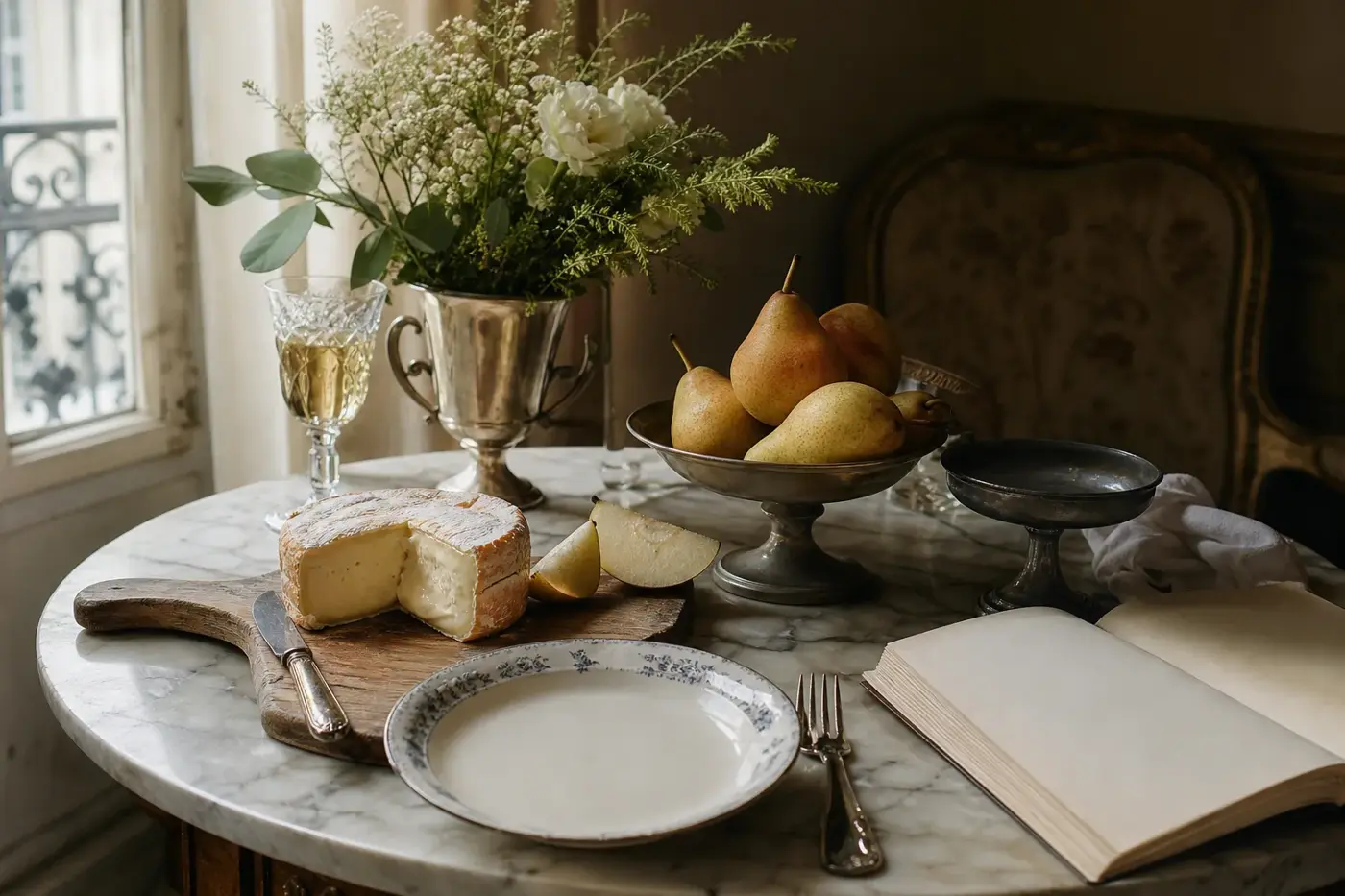
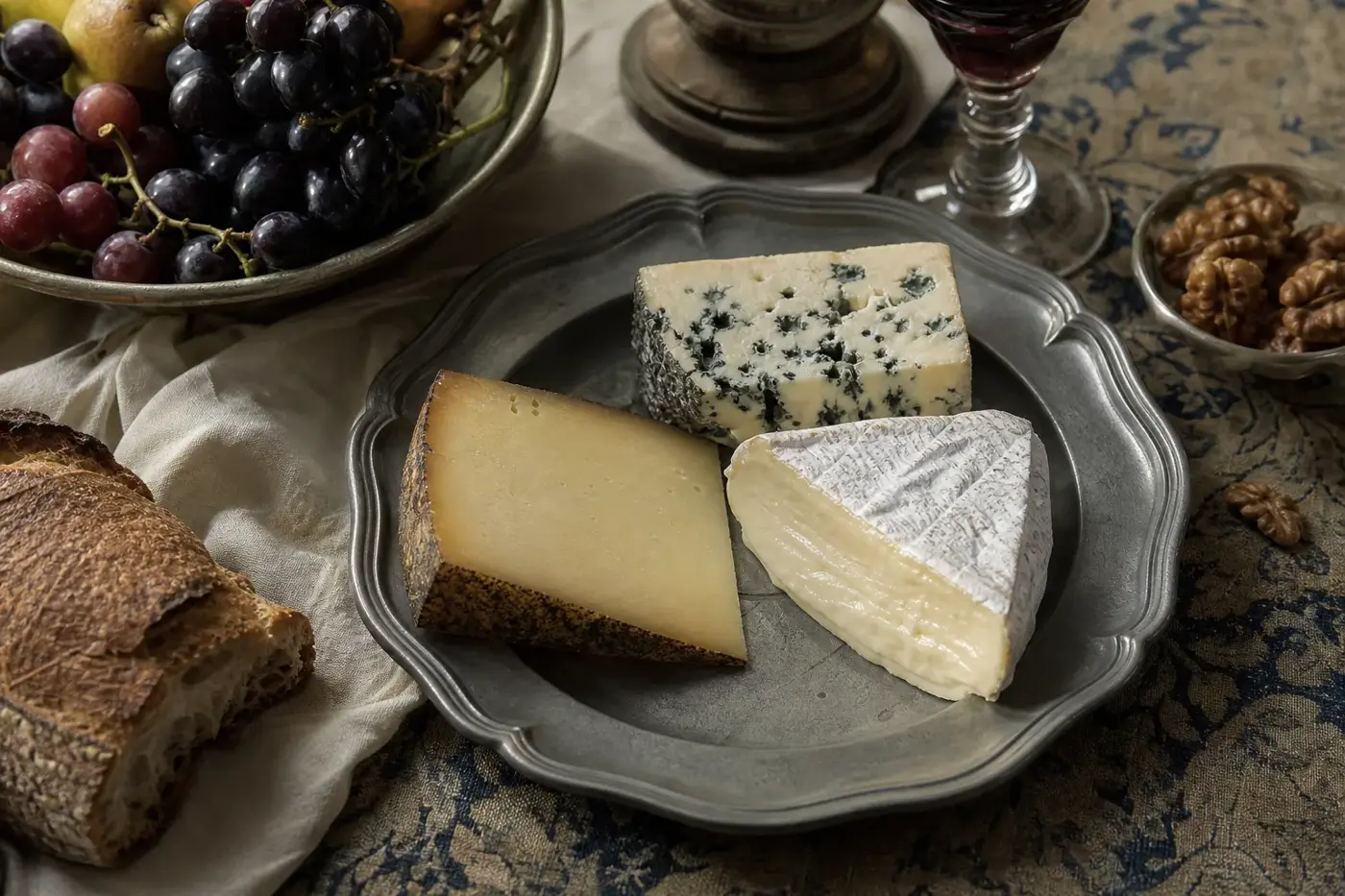
Dessert arrives. You look for the cheese. For Brillat-Savarin, its absence leaves something so badly missing that he compares it to a beautiful woman without an eye. The crucial word is dessert, not meal: that tiny substitution changes his published thought.
Chesterton’s silent poets have a literary home too, in his essay “Cheese”. With governing France and growing older, you enter murkier territory. A famous name can lend a sentence considerable confidence, sometimes rather more than it deserves. [1,2]
Before a famous name wins you over
A famous name beneath a delicious sentence is tempting. But a verified quotation needs identifiable wording in a source you can inspect: the author’s book, a dated letter, an authorised script or a recording of the speaker. A sentence’s presence in a book does not necessarily tell you who invented it.
A plausible attribution has some support, perhaps a contemporary report, but a link remains incomplete. An unsupported attribution has no identifiable evidential trail. Familiarity, repetition in quotation collections and a joke that sounds just like its supposed speaker cannot fill that gap.
Here, unresolved means the authorship or wording remains unsettled. Misattributed goes further: evidence points to the credit being wrong. “Attributed to” can be an honest, useful caption, not a reluctant halfway house between true and false.
The date you want is the earliest reliable attestation actually located. That dates the evidence, not necessarily the moment somebody supposedly spoke. Below, you will find identifiable texts alongside bibliographical leads whose finer details remain open.
Brillat-Savarin: keep a place for cheese at dessert
Turn to aphorism XIV of Physiologie du goût and Jean Anthelme Brillat-Savarin gives you this: [1]
Un dessert sans fromage est une belle à qui il manque un œil.
A close English rendering is: “A dessert without cheese is a beautiful woman missing an eye.” That preserves the French line’s dated comparison. Keep your attention on dessert: replace it with meal and you give the statement a broader reach. [1,7]
You need not hunt through descriptions of elaborate dinners to find it. The line sits among the book’s opening aphorisms, before the main sequence of meditations. It is a compact pronouncement, not a remark extracted from a particular dinner, and the Wikisource text identifies its edition as 1867, the dated edition for this entry. [1]
If you quote it, keep three things separate: the French edition supplying the text, the translator supplying the English, and the scope of that English wording. “Is like” may feel more natural than “is”. Turning dessert into the whole meal, however, changes the subject rather than merely smoothing the sentence. [1]
Your label: French quotation, with “meal” a paraphrase. Present an English version as a translation, so your reader can distinguish Brillat-Savarin’s words from the translator’s decisions. That small courtesy preserves both his thought and its journey into English. [1]
Chesterton: pull up a chair for the silent poets
G. K. Chesterton gives cheese a memorable literary grievance in “Cheese”, an essay collected in Alarms and Discursions: [2]
Poets have been mysteriously silent on the subject of cheese.
His opening paragraph announces an extravagantly ambitious work about cheese’s neglect in European literature. Then the exceptions arrive: Virgil and an anonymous nursery rhyme. You can almost feel the sweeping claim wobble as soon as he makes it. That unravelling belongs to the comedy. [2]
Read the sentence in its home and it becomes sharper and funnier. Chesterton is playing the aggrieved advocate for an overlooked subject, not presenting a completed scholarly survey of poetry. Later, he reaches the table itself, defending bread with cheese against the restaurant habit of serving biscuits. [2]
Wikiquote’s accompanying bibliographical reference dates the collection to 1910 and places the sentence on page 70. Project Gutenberg’s transcription supplies the complete wording and essay title. The early edition’s title page remains the place to settle those publication details. [2,3]
Your label: wording and authorship supported by the essay. Cite “Cheese” alongside Alarms and Discursions, and you give your reader a route into the surrounding argument. Why leave them with one detached sentence when the essay offers more to enjoy? [2]
De Gaulle: a country, a question and two cheese counts
With the cheese question attributed to Charles de Gaulle, the number is where you stumble. How can anyone govern a country with so many varieties? LibQuotes gives 246; another quotation collection gives 265, in a differently worded remark about bringing the French together. The joke may feel familiar, but those details matter. [3,4]
LibQuotes points you towards Ernest Mignon’s Les Mots du Général (1962) and Newsweek of 1 October 1962. Wikiquote also connects the familiar question with Mignon’s book. These are leads to a contemporary printed attribution, rather than the underlying book passage or magazine page needed to put the versions side by side. [4,5]
Your label: unresolved attribution; earliest primary attestation unsettled. Treat the 1962 references as places to investigate, not as a speech date or a ready answer. They leave the audience and de Gaulle’s choice of number unsettled too.
Keep those versions apart. Changing 246 to 265 alters a substantive detail, not simply the English translation; replacing “govern” with “bring together” may alter the claim itself. You need the underlying records, not the most appealing pieces assembled into one beautifully polished quotation. [3,4]
For your caption or speech, use “attributed to Charles de Gaulle”. Attach any precise number to the source recording it. Political diversity gives the joke its appeal, but the attribution and the count of French cheeses each need evidence of their own.
Age and cheese: let the joke travel without a name
“Age doesn’t matter unless you are a cheese” is wonderfully portable. Short, memorable and easy to reuse, it is also the exact wording at issue here. This entry has no accessible, dated primary publication supporting a named author.
Your label: unresolved. The earliest reliable attestation and original speaker remain unsettled. However neatly a line fits somebody’s public persona, you still need a source before putting their name beneath it.
A dated newspaper item would move the search forward, but its value would depend on its contents. An unsigned filler would show the joke circulating by that date; a report crediting a performer would show that performer receiving credit. Circulation, credit and invention answer three different questions. Keep them separate when an earlier clipping turns up.
For now, let the author remain unnamed. You lose none of the saying’s memorability, and you avoid giving it an invented personal history. The joke can stand perfectly well without a famous name to lean on.
Life of Brian: listen to the whole exchange
At the back of the crowd, people are struggling to hear. That is where Wikiquote’s transcription places the cheese exchange during the Sermon on the Mount in Monty Python’s Life of Brian. A character labelled “Man” reports: [6]
I think it was, "Blessed are the cheesemakers"!
The next exchange turns cheesemakers into the basis for an interpretation about manufacturers of dairy products. People confidently supply meaning to words they have imperfectly heard, and there is your joke. The quotation record identifies the film as a 1979 work. [6]
For your source note, distinguish transcription from performance: reported film wording; original performance remains a separate source. The available transcription supports this account of the scene. The original English soundtrack or an authoritative published script would provide the next point of comparison.
To take that next step, record the release or disc edition, listen to the entire exchange and note that version’s timestamp. Keep the speaking character separate from the actor performing and from the film’s credited writers. Subtitles give you another text to compare with the soundtrack, not a replacement for listening.
When you quote the line, keep its mishearing attached. Present it as the sermon speaker’s actual pronouncement and you remove the misunderstanding that makes the comedy work. The surrounding exchange is part of the pleasure, not disposable packaging. [6]
Give your favourite quotation a proper home
Before you choose a line for an article, exhibition caption or talk, make a short source record. Good wording is only part of the job: its location, edition and attribution need to travel with it. Otherwise, even a securely sourced passage can pick up an unsupported date or speaker along the way.
- Copy the passage exactly, and say where it lives. Record the essay, aphorism, page or scene, together with the edition inspected. A title alone sends your next reader on an unnecessarily difficult hunt.
- Keep quotation and translation distinct. Name a published translator when you use their wording, or label a fresh rendering. Keep paraphrases outside quotation marks.
- Give each competing version its own record. Different numbers, speakers or settings need to stay apart until evidence connects them. Picking whichever reads best quietly hides the disagreement.
- Use “attested in” for the earliest located publication. Reserve “first said by” and “originated with” for evidence establishing priority. An early appearance alone cannot do that work.
- Keep the attribution label, even when space is tight. If a research note calls a quotation unresolved, it remains unresolved on your poster, social image or display card.
Often, the most useful discovery is tiny: an essay title that takes you straight to the passage, the original French noun, or the realisation that two numbers belong to different retellings. Keep that detail beside the memorable sentence. You give the next reader a route back to the evidence, beyond the lure of an attractive line and a famous name.
If an earlier source emerges, keep the later one as part of the trail. A useful correction identifies the record that changed the judgement and explains what remains unsettled. Then readers who know another version can follow the change, rather than simply exchange one confident assertion for another.
Questions people ask
What did Brillat-Savarin actually say about cheese?
His French aphorism says, “Un dessert sans fromage est une belle à qui il manque un œil.” A close English rendering is, “A dessert without cheese is a beautiful woman missing an eye.” The inspected edition is dated 1867.
Where did Chesterton write that poets were silent about cheese?
The sentence appears in his essay “Cheese”, collected in Alarms and Discursions. The wording and authorship are verified, although the early edition’s title page still needs direct inspection to establish its publication details.
Did Charles de Gaulle say France had 246 or 265 cheeses?
Different quotation collections give different versions: one says 246, while another says 265. The attribution remains unresolved because the cited book passage and magazine page were unavailable for direct comparison.
Who said “Age doesn’t matter unless you are a cheese”?
The author has not been verified. The research did not establish an accessible, dated primary publication supporting a named author, so the page recommends leaving the author unnamed.
Is “Blessed are the cheesemakers” the exact line in Life of Brian?
A Wikiquote transcription reports the line as “I think it was, ‘Blessed are the cheesemakers’!” The original performance has not been verified against the English soundtrack or an authoritative published script.
Sources
- Jean Anthelme Brillat-Savarin, Physiologie du goût, “Aphorismes du professeur”, edition identified as 1867. Original French text transcribed on Wikisource, especially aphorism XIV and its position within the opening sequence. Read the aphorisms.
- G. K. Chesterton, Alarms and Discursions, “Cheese”, Project Gutenberg electronic transcription, eBook 9656. Complete essay inspected for wording, title and context. The transcription alone does not establish the early edition’s imprint. Read the collection.
- Wikiquote contributors, “Cheese”, online compilation, version retrieved November 2026. Secondary discovery source for the Chesterton collection’s reported 1910 date and page 70, and for the separate 265-cheese attribution. Read the compilation.
- LibQuotes, Charles de Gaulle quotation entry, undated, retrieved November 2026. Secondary discovery source giving 246 and pointing to Mignon’s 1962 book and Newsweek, 1 October 1962. Those underlying publications were not inspected. Read the entry.
- Wikiquote contributors, “Charles de Gaulle”, online compilation, version retrieved November 2026. Secondary discovery source associating the 246-cheese question with Ernest Mignon, Les Mots du Général, 1962. Read the compilation.
- Wikiquote contributors, “Monty Python’s Life of Brian”, online transcription, version retrieved November 2026. Secondary transcription of the Sermon on the Mount exchange; original soundtrack and authoritative script comparison outstanding. Read the transcription.
- Jean Anthelme Brillat-Savarin, Physiologie du goût, Project Gutenberg electronic transcription, eBook 22741, released 2007. Corroborating French text, aphorism XIV. Read the text.
Research combined inspection of original literary texts in digital transcription with quotation-reference leads; unresolved attributions remain explicitly separated from verified wording.
Last checked: November 2026
Last checked November 2026.
The editors suggest you read next