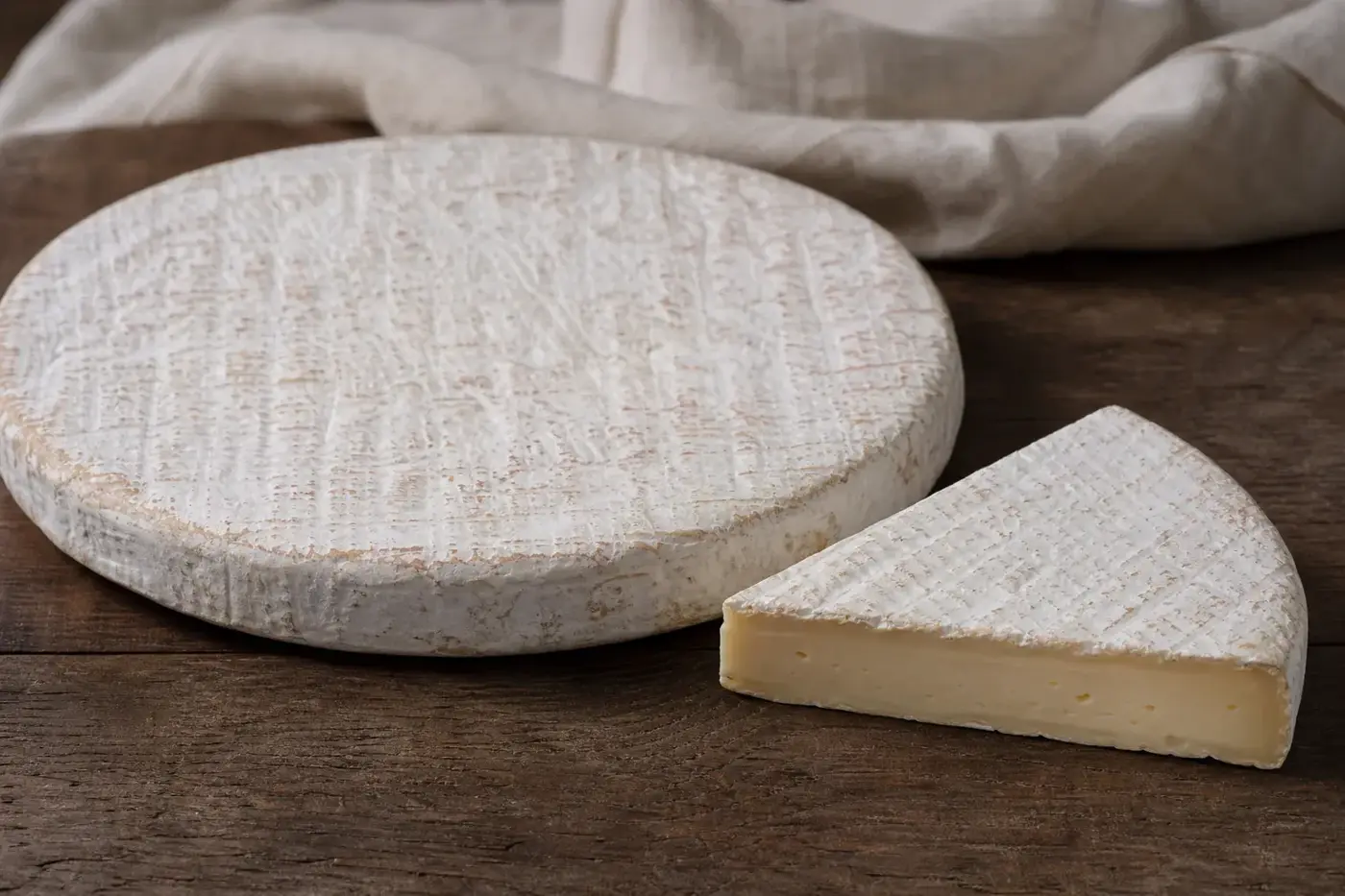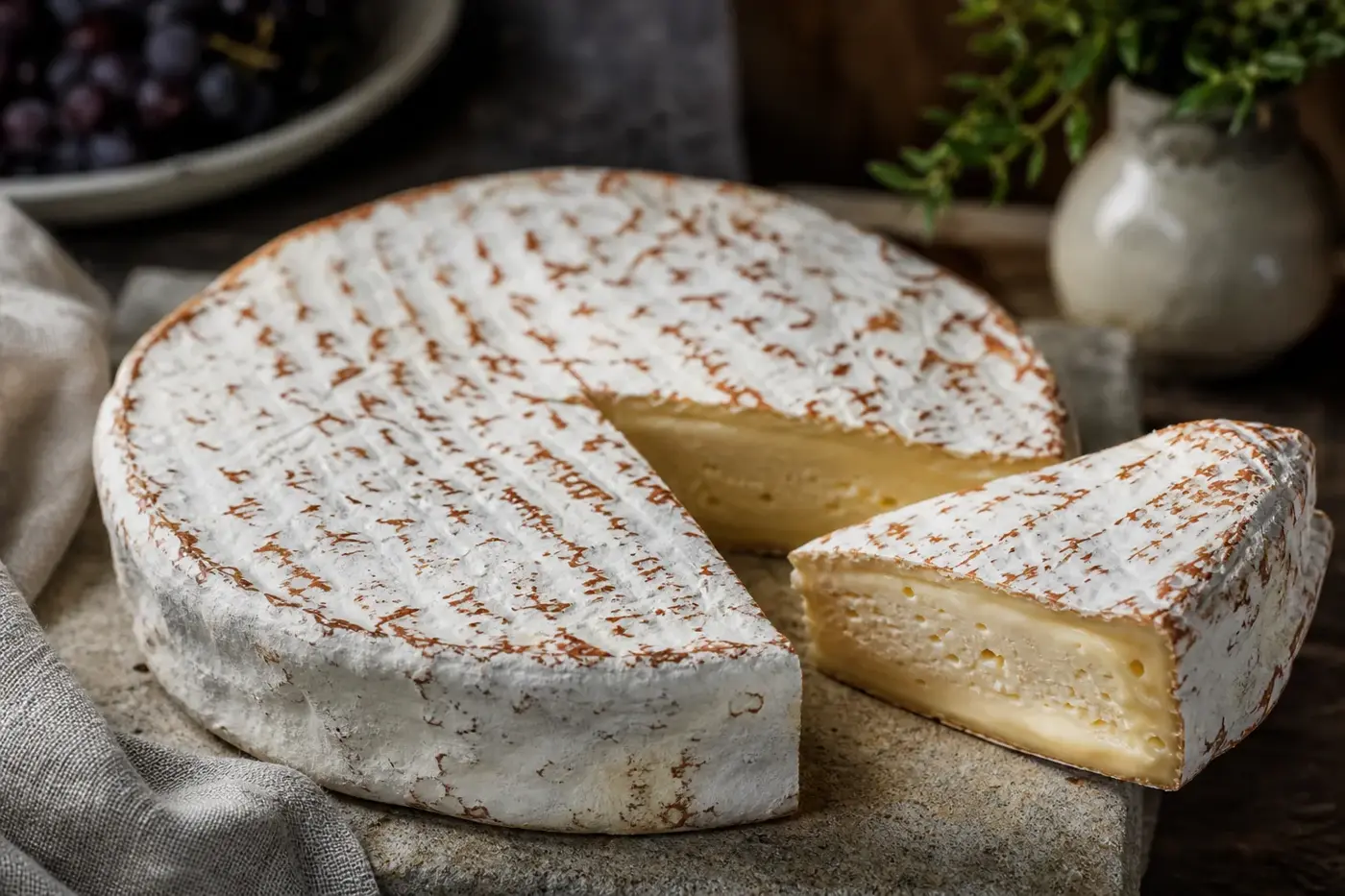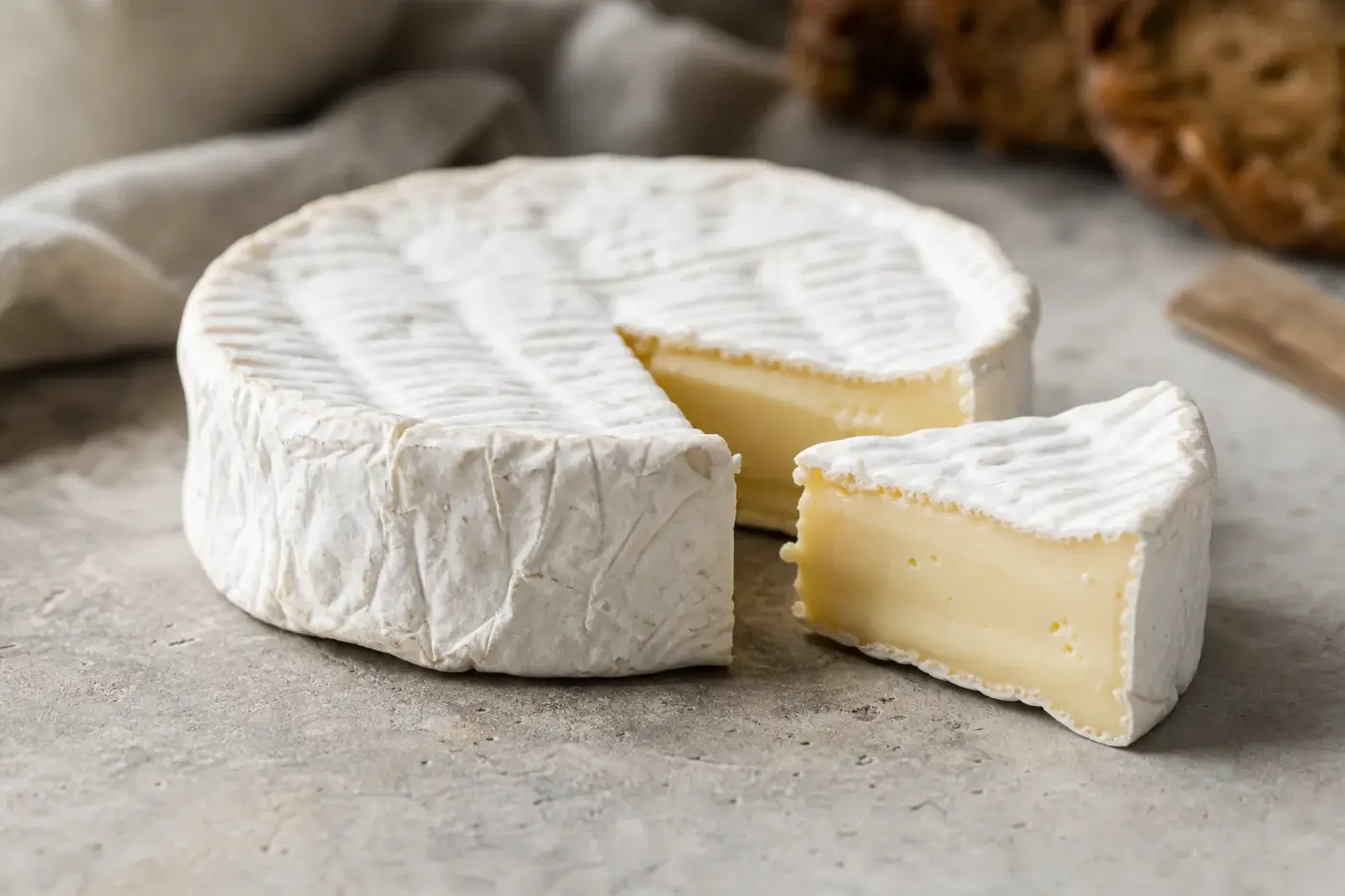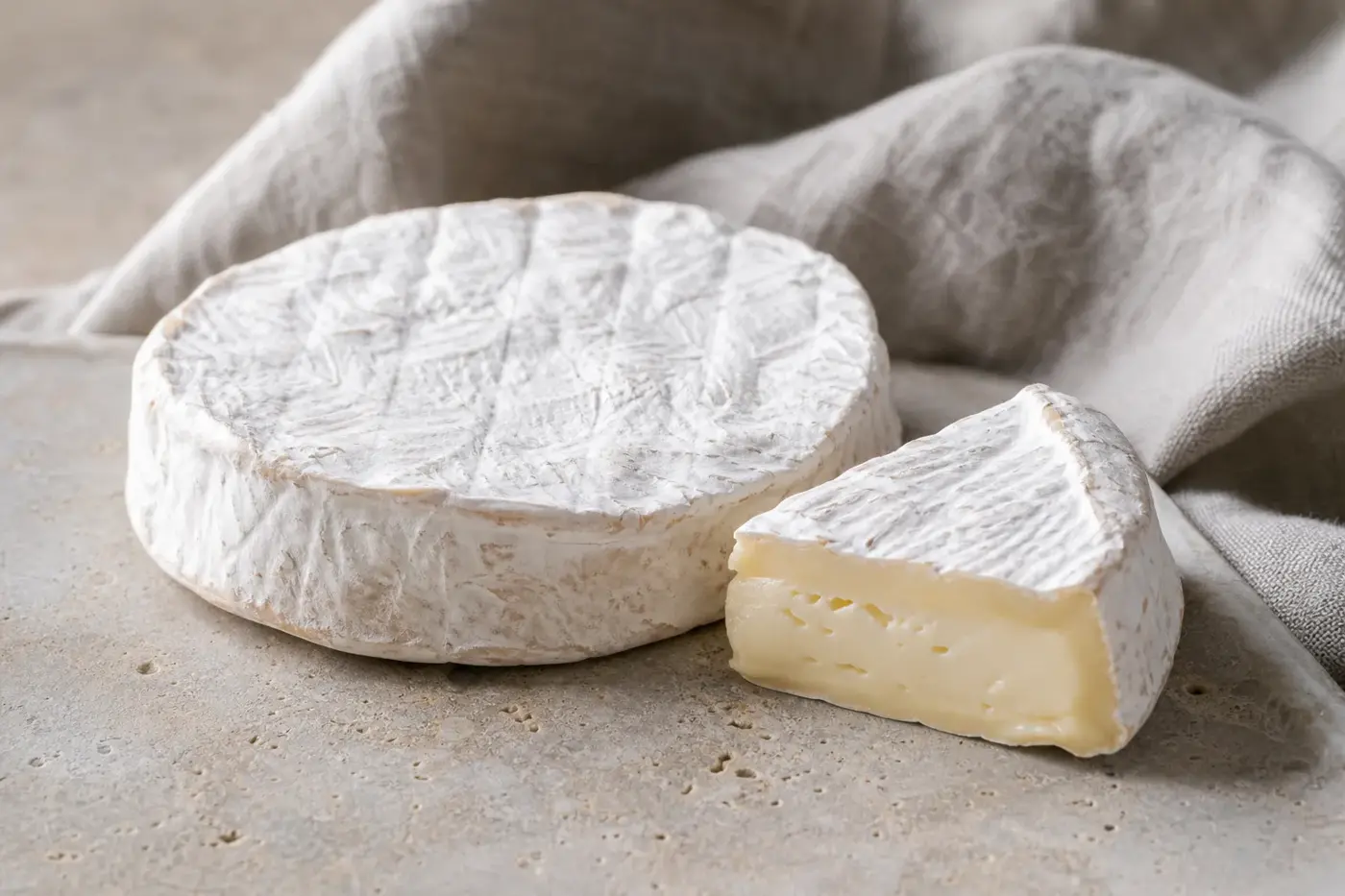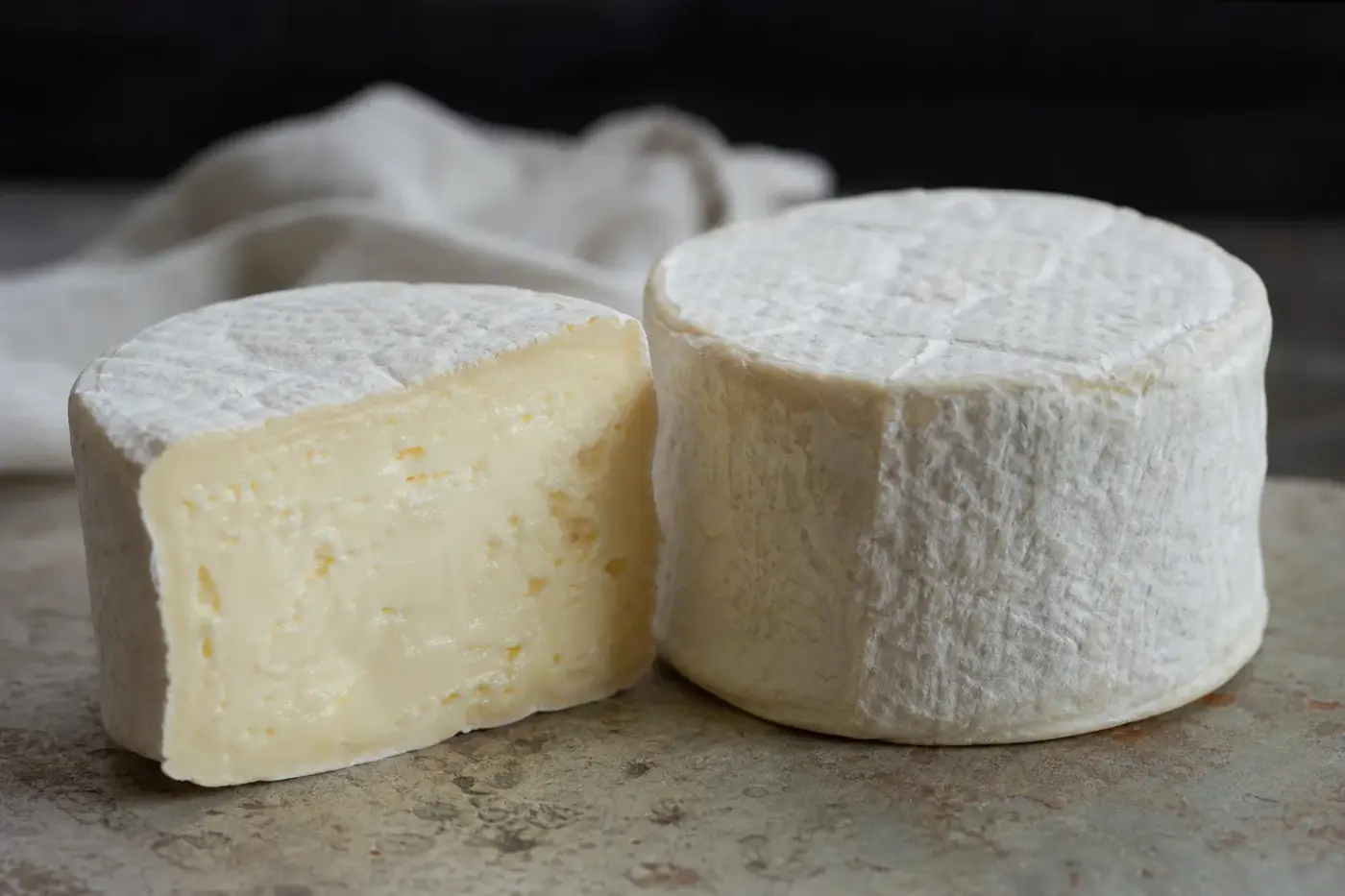
First comes fresh cream and butter. Then you reach the delicate white rind, where mushroom and woodland aromas may emerge as Brillat-Savarin ripens. Beneath it sits a pale, yielding paste, rich with cow’s milk cream. That contrast between dairy richness and developing rind is part of the cheese’s official specification, not just a reason to linger over your next mouthful. [1][2]
| Your quick reference | The useful details |
|---|---|
| Familiar and registered name | Brillat-Savarin. [2][3] |
| EU protection | Protected Geographical Indication, PGI, called IGP in French; amendment dossier PGI-FR-02102-AM01. November 2026. [2] |
| EU registration date | Defra records 19 January 2017 as the original EU registration date. [3] |
| Great Britain protection | Registered PGI; UK scheme registration dated 31 December 2020 at 23:00. November 2026. [3] |
| Milk and enrichment | Whole cow’s milk and cow’s milk cream. [1] |
| Milk treatment | Ask for the particular product’s declared treatment. |
| Composition at first marketing | At least 72% fat in dry matter; at least 40% total dry matter; salt below 2% of the whole cheese. [1] |
| Styles to look for | Fresh or ripened, the latter labelled affiné. [1] |
| Shapes and sizes | Small cylinders at least 100 g; large cylinders at least 500 g, with specified dimensions. [1] |
| Pregnancy guidance | UK NHS guidance on white-rinded, mould-ripened soft cheeses, November 2026. [7] |
Follow the cream into the woodland
Cream enrichment is at the heart of Brillat-Savarin. The cheese’s promotional group describes a white, uniform fresh paste, with fresh cream leading its dairy aromas. As the cheese ripens, acidity diminishes. Fruit, mushroom, woodland and hazelnut notes develop beneath the white-to-ivory surface. [4]
You have two different pleasures to choose between. Fresh cheese gives you a direct dairy character; ripened cheese adds the aromas associated with its rind. The specification and producer group describe these changing qualities, which give you a more useful starting point than age alone. [2][4]
At the counter, tell the monger what you fancy: a fresh, slightly tangy centre or a more developed rind character. That gives them more to work with than asking whether a cheese is “ready”. Ready for whom? Even cheese lovers are allowed different plans for the evening.
Fresh or affiné: which will you choose?
Fresh Brillat-Savarin can first go on sale three days after rennet is added, but not before. Rennet is the preparation that helps milk set into curd. For cheese labelled affiné, the minimum age is five days for the small format or eight days for the large format, counted from rennetting. [1][2]
On ripened cheese, Penicillium candidum and/or Geotrichium dominate the surface flora. This living surface forms the white-to-ivory rind and accompanies those mushroom and woodland aromas. The producer group also describes acidity becoming less prominent as ripening proceeds. [2][4]
Ask whether your cheese is fresh or affiné, then ask about its condition now. The minimum age is a production requirement, not a verdict on what you ought to enjoy. Finding your balance of dairy tang and developed aroma is the more personal, and rather more pleasurable, part of the conversation.
Take a journey through its home territory
The defined production territory stretches from northern Saône-et-Loire towards Seine-et-Marne. Along the way, it takes in designated areas of Côte-d’Or, Yonne and Aube. Those boundaries matter when you follow the cheese on a map. The designation covers a specified area, not the whole of those five departments. [1][2]
Inside that territory, the protected production stages begin with blending milk and cream and run through drying. For affiné cheese, they continue until ripening is complete. The geographical link rests on quality and reputation, alongside the area’s established tradition of cream-enriched, lactic-curd cheesemaking. [2]
You will see IGP in French: it means PGI, Protected Geographical Indication. For how that differs from PDO and TSG, see protected cheese names. Great Britain has its own registered entry for Brillat-Savarin, so check the relevant jurisdiction. The designation does not provide worldwide protection. [3]
Meet the patient work behind the paste
Cream brings richness, but it does not do all the work. Brillat-Savarin combines cream enrichment with lactic coagulation, a way of setting milk in which acidification takes the leading role. Once milk and cream are blended, the sequence is rennetting, coagulation, moulding, draining, unmoulding, salting and drying. Ripening follows where required. [1]
Curd is the set portion of milk; whey is the liquid it releases. The specification emphasises slow setting and natural drainage as part of the region’s cheesemaking tradition. Careful handling of this delicate material, together with control of its moisture, helps create that fine paste. [2][5]
So when you taste the cheese, the cream tells only part of its story. How the enriched mixture sets, drains and matures also shapes what reaches your plate. For the wider sequence, explore how cheese is made. These stages explain Brillat-Savarin’s production; they are not a home cheesemaking recipe.
Look a little closer at “triple cream”
Brillat-Savarin is frequently associated with the triple-cream category, but the French legal threshold for triple crème is higher than its PGI minimum. Article 13 of France’s cheese decree permits the term when a cheese contains at least 75 g of fat per 100 g after complete drying. Brillat-Savarin’s PGI specification requires at least 72% fat in dry matter. The protected name alone therefore does not establish that every example meets the French triple-cream threshold. [1][6]
The important words for you to notice are “dry matter”. That means everything left once water has been removed. Fat in dry matter measures fat as a proportion of those remaining solids, not of the cheese you actually eat. [6]
A hypothetical example makes that easier to picture. If 100 g of cheese contains 40 g of dry matter, and 75% of that dry matter is fat, the cheese contains 30 g of fat. For the actual fat per 100 g in your particular cheese, turn to its nutrition panel. [6]
A Parisian name, a regional story
The Parisian affineur Henry Androuët named the cheese in tribute to the gastronome Jean Anthelme Brillat-Savarin, according to the official historical account. That account links the name’s reputation to commercial success in the early 1930s. It also records dairies in the defined area adopting the name in the early 1960s. [2]
The cheesemaking tradition reaches further back. The earlier specification describes the area’s lactic-curd cheesemaking, followed by nineteenth-century practices of enriching milk with cream. You can think of this as the background to the cheese’s development, rather than one grand moment of invention. [5]
There are two strands worth keeping in view. One is the older regional tradition of making and enriching lactic cheeses. The other is the later commercial life of the Brillat-Savarin name. The specification’s historical narrative keeps the story of the technique distinct from the story of the name.
Take three questions to the cheese counter
Start simply: is the cheese fresh or affiné, what milk treatment does this particular product declare, and when will you serve it? If your piece has been cut and rewrapped, ask for the original label or product information. Those details give you something useful to choose by, rather than leaving the rind to do all the talking.
Size offers another distinction. The protected small format measures 60 to 100 mm across and 30 to 60 mm thick; the large format measures 110 to 140 mm across and 40 to 70 mm thick. The amended specification sets minimum weights rather than the former upper weight limits. [1][2]
Buy an amount you can use while following its storage instructions. If you are comparing cheeses, ask the seller about their texture now. Cylinders of the same age need not suit the same occasion. Let their present condition and your serving plans guide you.
Let the first mouthful belong to the cheese
Try Brillat-Savarin on its own before introducing anything sweet. For a simple first serving, add plain bread with a crisp crust and pear or apple. You get an unobtrusive base and a fresh contrast to the cream-led character. This suggestion takes its flavour starting point from the producer group’s published description. [4]
For a straightforward alcohol-free accompaniment, choose sparkling water. Keep the serving simple enough to leave room for the cheese’s character. It has quite enough going on without an elaborate supporting cast.
Take out only the portion you intend to eat. UK NHS advice says chilled ready-to-eat food should be eaten within four hours of leaving refrigeration. If you let the cheese lose its refrigerator chill before serving, that time still counts towards the limit. [8]
Get acquainted with the rind
The white surface on affiné Brillat-Savarin is its intended ripening rind, as described in the specification. Before you eat it, check whether your particular product has any additional covering or treatment. Follow the product’s or seller’s instructions. [2]
Brie gives you a familiar visual comparison: the NHS identifies it as a mould-ripened soft cheese with a white coating. Brillat-Savarin’s defining production feature, however, is its specified cream enrichment. Explore Brie separately, because a similar appearance does not make these cheeses interchangeable in identity. [1][7]
Chaource enters the Brillat-Savarin specification’s historical discussion through research into the region’s lactic-curd tradition. That connection helps explain their development. At the counter, bring the conversation back to the cheeses in front of you. Ask to compare acidity, texture and rind character. [5]
This page summarises published guidance from the official sources it cites. It is not medical advice. Guidance differs between countries and changes over time, so check the current source for where you live, and ask your doctor, midwife, pharmacist or dietitian about your own circumstances.
Keep it chilled and follow the health guidance
Follow the pack’s refrigeration and opening instructions. In consumer guidance for England, Wales and Northern Ireland, the Food Standards Agency advises keeping your home fridge at 5 °C or below. Use a fridge thermometer to check, and keep ready-to-eat cheese separate from raw foods. [9]
The UK NHS advises people who are pregnant not to eat mould-ripened soft cheeses with a white coating, whether pasteurised or unpasteurised, unless cooked until steaming hot all the way through. Consult the current NHS pregnancy guidance. The guidance cited here is from November 2026. [7]
The NHS also identifies older people, newborn babies and people with weakened immunity as being at higher risk of serious listeriosis. If you are in one of these groups, consult its current listeriosis guidance and your healthcare professional about your circumstances. [8]
Always establish the particular product’s milk treatment when buying, rather than guessing from the cheese name. For the wider distinctions, see raw, thermised and pasteurised cheese. For practical refrigeration advice, continue to storing cheese at home.
Questions people ask
What does Brillat-Savarin taste like?
Fresh Brillat-Savarin has a dairy character led by fresh cream. As it ripens, acidity diminishes and fruit, mushroom, woodland and hazelnut notes develop.
Is Brillat-Savarin made with pasteurised milk?
The milk treatment permitted under the specification was not verified on the page. Check the label or ask the seller for the particular product’s information.
Can you eat the rind of Brillat-Savarin?
The white surface of ripened Brillat-Savarin is its intended ripening rind. Before eating it, check whether the product has any additional covering or treatment and follow the seller’s or product’s instructions.
Can you eat Brillat-Savarin during pregnancy?
The UK NHS advises pregnant people not to eat mould ripened soft cheeses with a white coating, whether pasteurised or unpasteurised, unless cooked until steaming hot all the way through. Check the current NHS pregnancy guidance at https://www.nhs.uk/pregnancy/keeping-well/foods-to-avoid/.
How should Brillat-Savarin be stored?
Follow the pack’s refrigeration and opening instructions. The Food Standards Agency advises keeping a home fridge at 5 °C or below, using a fridge thermometer and keeping ready to eat cheese separate from raw foods.
Sources
-
French Ministry of Agriculture, Cahier des charges de l’indication géographique protégée « Brillat-Savarin », homologated by order of 7 July 2025, published in Bulletin officiel 2025-29. Sections 2 and 5 contain composition, formats and production stages. Official specification.
-
European Commission, Publication of the communication of an approved standard amendment to a product specification of a geographical indication, C/2025/6086, 12 November 2025. Includes the amended single document for Brillat-Savarin. Official publication.
-
Department for Environment, Food & Rural Affairs, Brillat-Savarin, protected food name register entry, published 4 January 2021, accessed November 2026. Great Britain register entry.
-
Groupement de Promotion du Brillat-Savarin, Le Brillat-Savarin, un fromage onctueux et raffiné, undated, accessed November 2026. Producer promotional body’s sensory descriptions, attributed as such. Producer group account.
-
INAO, Cahier des charges de l’indication géographique protégée « Brillat-Savarin », approved 18 May 2016. Used for its historical account, not superseded production limits. Earlier specification.
-
French Republic, Décret n°2007-628 du 27 avril 2007 relatif aux fromages et spécialités fromagères, Article 13, version in force retrieved November 2026. Binding French labelling provision.
-
NHS, Foods to avoid in pregnancy, current online guidance accessed November 2026. Official pregnancy guidance.
-
NHS, Listeriosis, reviewed 10 November 2023, accessed November 2026. Official listeriosis guidance.
-
Food Standards Agency, How to chill, freeze and defrost food safely, current online consumer guidance, accessed November 2026. Official chilling guidance.
Researched through official specifications, the published EU amendment, the Great Britain register, French legislation, UK public health guidance and an attributed producer-group account.
Last checked: November 2026
Last checked November 2026.
The editors suggest you read next