Cheese Trade and Tariffs
Picture a pallet of cheese waiting to cross the border.
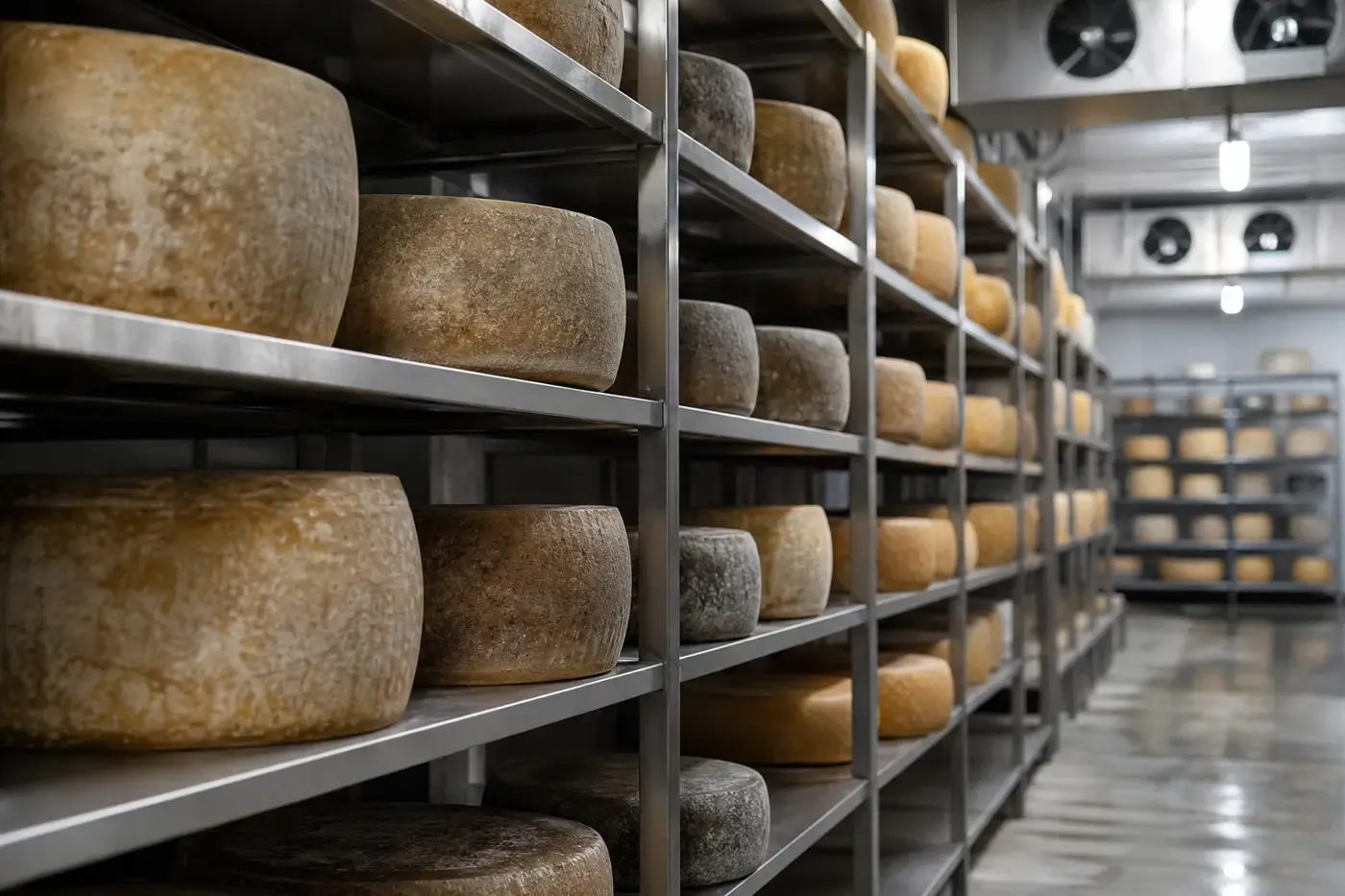
Picture a pallet of cheese waiting to cross the border. You might prefer to inspect its contents with a knife and a decent cracker, but customs has other priorities. Its duty could be zero, yet it can still need an origin claim, a customs declaration and border documents. Zero duty does not mean zero paperwork. [3,7,10]
Behind that pallet sits a busy trade. In Defra's provisional 2025 statistics, 472,000 tonnes of cheese came into the UK and 207,000 tonnes went out. Plenty travels in both directions, and every shipment has its own requirements. [1]
Why your cheese takes the long way round
Why import cheese when you already make it? Different milk supplies, manufacturing specialisms and markets all give cheese reasons to travel. A country can produce substantial quantities, import other styles and export its own cheeses. The UK figures cover fresh, grated, powdered, processed and blue-veined cheese. [1]
Ireland, France, Denmark, Germany, Belgium and Italy were substantial EU suppliers to the UK in 2025, according to European Commission statistics. Those statistics also record 112,836 tonnes of cheese imported by the EU from the UK. You can see how much the neighbouring market matters, although these figures do not rank the UK's principal export destinations. [2]
What your tariff bill actually covers
A tariff sets the customs duty on imported goods. Start with the relevant UK Global Tariff rate, unless a preference, relief or another applicable measure changes the outcome. Most favoured nation, usually shortened to MFN, means ordinary non-preferential treatment. Despite its name, it is not a special concession for one favoured trading partner. [3]
Customs duty is separate from VAT, transport services, customs representation and border inspection charges. Each has a different basis, so a preferential duty rate changes only the customs duty calculation. HMRC's food VAT guidance treats most food for human consumption as zero-rated, subject to listed exceptions. Catering receives different treatment, so look at your precise product and transaction. [3,5]
Start at 0406, then get to know your cheese
Cheese and curd sit under customs heading 0406, but you need more detail for a declaration. The detailed commodity code determines duties, import VAT, possible preferences and associated measures, including licences and tariff quotas. Only the first six digits of the international classification are shared worldwide. [4,6]
Before looking up a code, describe your cheese clearly: its composition, production method, presentation, intended use and packaging. A wheel, a grated product and cheese intended for further processing each need careful classification. Resist copying a code from an earlier order. If an overseas supplier suggests one, compare it with the destination's tariff. [4,15]
Put a 1,000 kg shipment through the sums
Take an illustrative shipment of 1,000 kg of cheese imported into Great Britain. At an applicable duty rate of zero per 100 kg, you have ten chargeable units. Ten multiplied by zero gives zero customs duty. That calculation depends on the applicable commodity code, import date, origin rules and any quota conditions. [3,6]
If the duty is expressed as a percentage, use customs value instead. Before you reach for the calculator, look at both the operative tariff measure and the unit in which it is expressed. [3]
A lower quota rate needs a closer look
A tariff rate quota, or TRQ, makes a stated quantity available at a lower duty. Your access depends on the product, origin, quota period and administrative conditions. If access is exhausted or unavailable to you as the importer, another applicable rate governs the shipment. Consider eligibility for the lower rate alongside the general tariff classification. [6,7]
The Australian agreement gives you a concrete example. Its UK cheese quota schedule provides 24,000 tonnes in treaty year one, rising to 48,000 tonnes in year five. Those are scheduled quantities, not a promise of what remains: the available balance changes as claims are made. Before claiming, HMRC directs importers to consult the tariff for quota eligibility and additional documents required. [6,7]
The invoice does not tell the whole origin story
A European invoice tells you something, but not everything. Where you bought cheese is not necessarily where it originated, and HMRC expressly warns that origin may differ from the country of purchase or shipment. A trade agreement can reduce duty for qualifying goods, but preferential origin depends on where they were produced and whether they meet its production rules. A dispatch address alone cannot settle that question. [7]
For UK-EU trade, examine the product-specific rule and any permitted cumulation. Cumulation allows qualifying materials or production from the other party to count. HMRC also explains insufficient processing: limited operations can fail to confer origin. Its example of cheese imported from the EU and grated in the UK makes the processing history particularly important. [8]
The UK-EU Trade and Cooperation Agreement permits a preference claim based on a statement on origin or importer's knowledge. Importer's knowledge means holding enough evidence to establish origin, not simply having an impression of where the cheese came from. Agree who will gather that evidence before dispatch. This matters especially when your merchant sells cheese made by somebody else. [9]
At the border, cheese faces two different questions
Customs treatment and sanitary clearance serve different purposes. Your commodity code goes on the customs declaration, alongside the information needed to establish customs treatment. Sanitary controls establish whether the animal product meets the importing market's entry requirements. For Great Britain, Defra requires animal products to come from approved countries and establishments, and directs importers to consult restrictions associated with disease outbreaks. [4,10]
Under Great Britain import guidance in November 2026, medium-risk animal products require a health certificate. Low-risk products instead require a commercial document. Commercial imports by post or courier follow the same rules, so establish the current product risk category before arranging transport. [10]
For imports into Great Britain, establish whether your product and route require IPAFFS notification and entry through an approved border control post. Follow the current official guidance for that specific consignment. [10]
Bound for the EU? Start with the first border
Your buyer may be further along the route, but the first EU border matters. Defra's September 2026 export guidance requires an export health certificate for products of animal origin moving from Great Britain to the EU. Goods must enter through an appropriate EU border control post in the first country of entry, with advance notification arranged by the EU-based import agent. The exporting business must also have the required approval. [11]
Plan around the actual journey, not just the final address. A shipment passing through one EU country to reach another encounters entry controls at its first EU border. Commercial samples containing animal products also require certification under the guidance. For other destinations, ask the importer to confirm that market's requirements and obtain the relevant official certificate. [11]
Give Northern Ireland a route plan of its own
Northern Ireland has distinct arrangements under the Windsor Framework. HMRC's guidance distinguishes movements from Great Britain, movements involving non-EU countries, and trade with the EU. Establish the tariff treatment and declaration requirements for your particular route. An XI EORI number may be needed; qualifying Northern Ireland goods moving directly to Great Britain generally need no import declaration. [12]
For eligible retail consignments moving from Great Britain to Northern Ireland, the Northern Ireland Retail Movement Scheme uses a single General Certificate supported by a packing list. Read its eligibility conditions closely, remembering that relevant EU animal and plant health standards continue to apply. The retail scheme, customs treatment and movements intended for onward EU trade each need separate attention. [13]
Your route at a glance: November 2026 guidance
| Where your cheese is going | What you need to establish | Where to find the guidance | Guidance date |
|---|---|---|---|
| Imports into Great Britain | Approval and product risk category | Defra import guidance [10] | November 2026 |
| Great Britain to EU | Export certificate and first-entry controls | Defra export guidance [11] | November 2026 |
| Great Britain to Northern Ireland | Retail scheme eligibility or full route requirements | Windsor Framework guidance [12,13] | November 2026 |
A protected name has its own requirements
A geographical indication governs the right to use a name in a particular market. The official Great Britain register records protected food and drink names and their associated documents. Look up the exact registered wording and relevant specification, then the destination's protection arrangements. Evidence of preferential customs origin does not replace permission to use a protected name: these are separate requirements. [7,14]
Market access also depends on the importing country accepting the product and establishment, and on compliance with its import conditions. Favourable duty treatment works within those requirements, not around them. For the naming principles, read protected names explained; for the information you encounter on packs, see how to read a cheese label. [10,11]
Small parcels can bring a sizeable workload
For a small cheesemaker, every dispatch brings product classification, origin evidence, certification and transport coordination. Each task needs an owner. A fragmented order can therefore involve substantial administration for relatively little cheese. Consolidating consignments may help coordination, but every product still needs the correct supporting information. [4,9,10,11]
Delays eat into the delivery window, too. If you import cheese, choosing makers and styles means weighing the reliability of the whole route alongside the cheese itself. That is how border administration can influence what reaches your cheese board. Keeping a route workable matters as much as securing a favourable tariff. [10,11]
Before your cheese leaves, get the details together
Use the official UK Trade Tariff to establish the detailed code, origin, import date, duty measures and quota conditions. Read the Great Britain animal-product import guidance or the official export guidance for your route. Then confirm arrangements with the receiving importer and border authority. [10,11,15]
Keep a shipment record with the date, origin evidence, certificate references and person responsible for each step. Revisit the requirements close to dispatch, because quota balances, tariff measures and disease restrictions can change. Your decisive question is specific: which cheese, made where, moving by which route, into which jurisdiction, on which date? [7,9,10,15]
Questions people ask
Does zero customs duty mean cheese can cross the border without paperwork?
No. A shipment can qualify for zero customs duty and still need an origin claim, a customs declaration and border documents.
What commodity code should I use for cheese?
Cheese and curd belong under heading 0406, but a declaration needs a more detailed commodity code. Check the code against the destination's tariff using a clear description of the product, including its composition, production method and packaging.
Does buying cheese from an EU seller make it eligible for preferential duty?
Not necessarily. Preferential origin depends on where the cheese was produced and whether it meets the agreement's production rules. A European invoice or dispatch address alone cannot establish origin.
What documents are needed to import cheese into Great Britain?
Defra's import guidance checked in November 2026 requires a health certificate for medium risk animal products and a commercial document for low risk products. Check the current product risk category and whether the route requires IPAFFS notification and entry through an approved border control post in Defra's Great Britain animal product import guidance.
What is needed to send cheese from Great Britain to the EU?
Defra's September 2026 export guidance requires an export health certificate for products of animal origin. The goods must enter through an appropriate border control post in the first EU country of entry, with advance notification arranged by the EU based import agent. Commercial samples containing animal products also require certification.
Sources
- Department for Environment, Food & Rural Affairs, Agriculture in the United Kingdom 2025, Chapter 13: Overseas trade, 2026 edition, Tables 13.3a and 13.3b and accompanying notes.
- European Commission, Directorate-General for Agriculture and Rural Development, EU dairy extra trade, 2025 full-year tables, source Eurostat COMEXT, retrieved November 2026.
- Department for Business and Trade, Tariffs on goods imported into the UK, online guidance, retrieved November 2026.
- HM Revenue & Customs, Finding commodity codes for imports into or exports out of the UK, updated 22 August 2022.
- Australian Government Department of Foreign Affairs and Trade, Australia-UK FTA Annex 2A Tariff Commitments, Section 2B, Part 2B-1 Notes for Schedule of the United Kingdom, official treaty text, TRQ 5: Cheese and Curd, retrieved November 2026.
- HM Revenue & Customs, Check your goods meet the rules of origin, online guidance, retrieved November 2026.
- HM Revenue & Customs, General rules to determine the origin of your products for trade between the UK and EU, online guidance, retrieved November 2026.
- HM Revenue & Customs, Proving originating status and claiming a reduced rate of Customs Duty for trade between the UK and EU, online guidance, retrieved November 2026.
- Department for Environment, Food & Rural Affairs, Import animal products for human consumption to Great Britain, online guidance, retrieved November 2026.
- Animal and Plant Health Agency, Rural Payments Agency and Department for Environment, Food & Rural Affairs, Export or move food, drink and agricultural products, updated 23 September 2026.
- HM Revenue & Customs, Trading and moving goods in and out of Northern Ireland, updated 6 July 2026.
- Department for Environment, Food & Rural Affairs, Northern Ireland Retail Movement Scheme: how the scheme will work, online policy guidance, retrieved November 2026.
- Department for Environment, Food & Rural Affairs, Protected geographical food and drink names, official register, retrieved November 2026.
- UK Government, Trade Tariff: look up commodity codes, duty and VAT rates, official service introduction, retrieved November 2026.
Researched through official trade statistics, government border and customs guidance, and the published UK-Australia tariff annex, with operational implications identified as editorial synthesis.
Last checked: November 2026
Last checked November 2026.
The editors suggest you read next
The Global Cheese Industry Explained
At the farm gate, a delivery of milk begins its journey with the clock already ticking.