Commercial Cheese Import Rules Country by Country
Your pallet is ready to leave the dairy.
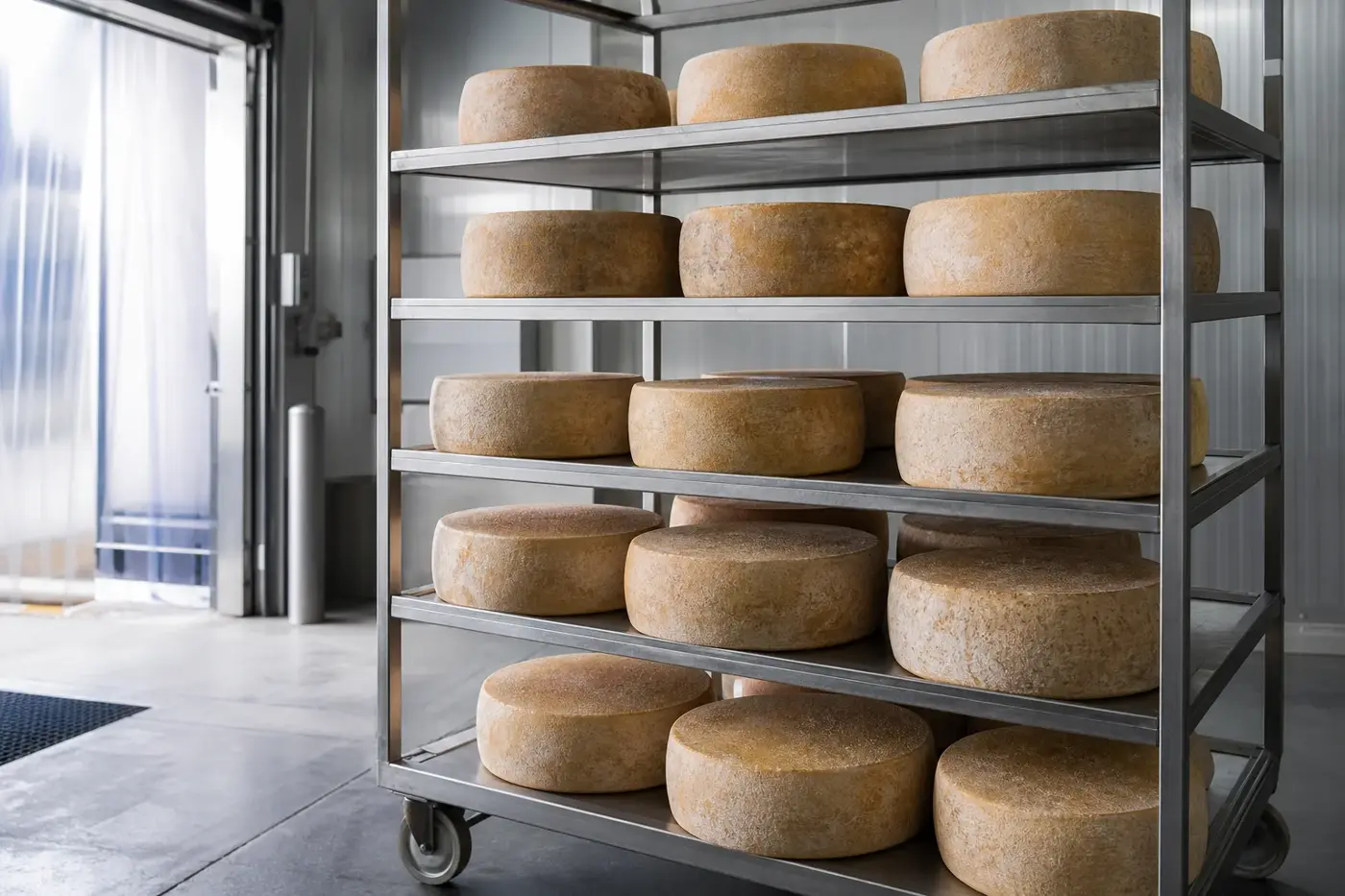
Your pallet is ready to leave the dairy. The cheese has had its time to mature; now the paperwork needs to be ready, too. One incorrect licence number can stop a Canadian consignment at the declaration stage. Before you send it, the cheese's origin, producer and treatment must qualify for its destination. [1][5][12]
Then come two parallel paper trails. One covers food and animal health controls. The other covers customs classification, origin and any quota entitlement. You need both in order before the journey begins. [1][5][12]
Small parcel? Start with the commercial rules
Sending cheese for sale or supply through a business? Plan it as a commercial consignment. A small parcel does not necessarily mean fewer requirements: Great Britain's guidance expressly applies the same commercial rules to postal and courier shipments. Establish what you need before sending samples, exhibition stock or courier parcels. [1]
Carrying the cheese yourself raises a separate question. If you're a retailer collecting it in a car, establish the business import requirements rather than relying on a traveller's allowance. When you ask the authority for advice, give the movement's purpose, quantity, origin and destination.
Get to know your cheese before booking its journey
Before you request a freight quotation, gather the manufacturer's product dossier. Record the milk species, ingredients, milk treatment, processing steps, ageing, packaging, storage conditions and intended use. Add the manufacturing country and establishment identity. These details help you investigate the product-specific conditions in official import systems. [1][12][16]
“Heated cheese” does not tell the whole story. Keep raw milk, thermised milk and pasteurised milk distinct in your dossier. New Zealand's dairy notice explicitly distinguishes raw milk cheese, thermised cheese and cheese receiving a curd heat treatment. For the production differences behind those terms, see milk treatments explained. [16]
Give the place of manufacture and the place of despatch separate entries, too. Great Britain's notification guidance, for example, has specific instructions for the country associated with certification and the country from which goods are consigned. Ask your exporter to identify every relevant stage. The wholesaler's address is not the answer to every box. [1]
This page summarises published guidance from the official sources it cites. It is not medical advice. Guidance differs between countries and changes over time, so check the current source for where you live, and ask your doctor, midwife, pharmacist or dietitian about your own circumstances.
Great Britain: start with your cheese's risk category
For Great Britain, meaning England, Scotland and Wales, begin with approved countries and establishments. Then find your consignment's risk category in the relevant Border Target Operating Model tables and commodity-code list. EU and non-EU guidance provide separate starting points. Disease safeguards can change the route. [1][2][3]
The overall model has low, medium and high categories. Current guidance for products of animal origin for human consumption places those products in low or medium. Low-risk consignments need commercial documentation rather than a health certificate; medium-risk consignments need the appropriate official health certificate. Both need advance notification through IPAFFS, the Import of Products, Animals, Food and Feed System. [1][2][3]
Before despatch, confirm the notification deadline, entry point and certification requirements with the receiving authority. Make the question specific to your commodity and route. Your driver and agent also need to be ready to follow any inspection instructions. [1]
Northern Ireland: know which of the three routes you're taking
A direct overseas import into Northern Ireland follows a different route from a movement from Great Britain to Northern Ireland. A movement from Northern Ireland to Great Britain is distinct again. Identify your route before despatch. Then ask DAERA, Northern Ireland's Department of Agriculture, Environment and Rural Affairs, and the relevant UK authorities to confirm its controls.
Moving cheese from Northern Ireland to Great Britain? UK guidance provides a distinct route for qualifying Northern Ireland goods, so confirm that your cheese meets that definition before using it. Contact DAERA about products subject to safeguards. Keep the consignment's destination and eligibility evidence with your movement records. [1][4]
European Union: check the country, then the cheesemaker
Cheese arriving from outside the EU needs two separate permissions. The exporting country or region must be eligible for the relevant commodity. The establishment must also appear in the appropriate approved list. The Commission identifies Regulations (EU) 2021/404 and 2021/405 as the animal health and public health country-listing instruments. [5]
Obtain the applicable official certificate through the exporting competent authority, the government body responsible for the relevant controls. The EU operator responsible for your consignment must pre-notify the entry border control post in TRACES by completing Part I of the Common Health Entry Document. For products of animal origin, that document is the CHED-P. [6][7]
The border authority records its decision in Part II. Documentary checks examine certificates; identity checks compare goods, labels and seals with the papers. Physical checks can include examination, sampling and laboratory testing. Before you commit to production, confirm the correct certificate model and dairy treatment conditions for the particular origin. [6][7]
United States: give all three sets of requirements their turn
Start with FDA requirements. Relevant food facilities must be registered where required, and FDA must receive prior notice before the food is offered for import. Registration identifies a facility. As FDA states, it does not give individual food importers, products or shipments advance approval. [8]
Next, identify the responsible Foreign Supplier Verification Program importer. Establish whether your shipment falls within that programme or an exemption. FDA's FSVP framework requires covered importers to verify their foreign suppliers, including evaluating those suppliers and the hazards associated with their foods. Your entry arrangements should name the party taking that responsibility. [9]
Check animal health conditions separately through USDA APHIS. Its Veterinary Services Permitting Assistant helps you identify permit requirements, while regional animal health status can affect admissibility. Before despatch, confirm tariff classification, the customs entry procedure, the quota position and any dairy import licence with your importer and customs agent. [10]
Canada: give that licence number your full attention
Where a Canadian food import requires a Safe Food for Canadians licence, it must be active and cover both importing and the relevant commodity. CFIA warns that an incorrect or invalid licence number on the import declaration causes rejection. Use the Automated Import Reference System, AIRS, to check your particular product and origin. [12]
Canadian dairy imports can involve tariff quotas, allocations and import permits. Check the current cheese requirements with Global Affairs Canada. Establish which arrangements apply to your shipment before making the customs declaration. [11]
Your records matter after the border, too. Canadian records must identify the immediate supplier and business customer, subject to the retail-consumer exception. CFIA's guide requires those records to remain accessible in Canada for two years. Give someone responsibility for keeping them before your cheese arrives. [12]
Australia: begin with biosecurity, then food inspection
Work through Australia's Biosecurity Import Conditions system, BICON, using your actual dairy product, origin and processing route. Before loading, establish whether you need a permit, treatment evidence or official certification. Save the resulting conditions with your shipment dossier. DAFF directs food importers to BICON for biosecurity and imported-food requirements. [13][15]
Food inspection is a separate stage. DAFF's Imported Food Inspection Scheme checks food intended for sale against Australian requirements, with the inspection and testing approach depending on the food. Its official guidance lists cheese and raw milk cheese separately. Choose the relevant product pathway rather than treating all dairy goods as interchangeable. [13][14]
New Zealand: find the standard that fits your cheese
Identify the relevant MPI Import Health Standard alongside the food import requirements. MPI's dairy requirements collection contains different standards for different origins and uses, including a separate Australian pathway. Confirm the biosecurity documents you need and whether your selected route requires an import permit. [17]
MPI's Food Notice dated 1 May 2026 offers a useful guide to how the dairy requirements fit together. Part 8 and Table 8.1 connect country or region, permitted products, import conditions and clearance evidence. The requirements distinguish pasteurised and unpasteurised products. They also make specific provision for official certificates or approved laboratory results where applicable. [16]
What you intend to do with the cheese can affect New Zealand's import requirements, too. Before despatch, confirm the current notice and relevant import health standard with MPI. Ask what evidence your proposed use requires. [16][17]
Japan: have the notification conversation before booking transport
Begin with the Ministry of Health, Labour and Welfare's Imported Food Safety service and the quarantine station handling the arrival. Before booking transport, ask your Japanese importer to confirm the food import notification, supporting manufacturing information and any inspection requirements for the cheese. Have the recipe, processing description and intended use ready for that conversation. [18]
Ask your importer to confirm separately whether animal quarantine requirements apply to the particular dairy product and origin. Agree who will resolve document queries, arrange sampling and receive the official release decision. Settle those responsibilities before transport rather than leaving them with the carrier.
China: match the cheesemaker to the registration record
China's official CIFER portal provides an overseas food enterprise registration list and a product-category lookup. Check your exporter's exact establishment identity and product scope against those public tools. Match the manufacturer to the registration record before asking your Chinese importer to confirm shipment eligibility. [19]
Before despatch, ask your Chinese importer and the exporting competent authority to confirm the current GACC conditions. Those conditions need to cover the producing country, product category, establishment and certificate. Make each part of that request explicit.
Customs: there's more to your cheese than its name
A cheese's trading name is not its tariff classification. Use the destination's classification: CFIA's guide specifically requires the appropriate Harmonized System code and its additional agency coding. Consult the destination customs authority or obtain classification advice if composition or presentation creates doubt. Give your agent the technical dossier, including whether the product is grated, processed or supplied as part of another food. [12]
Claiming preferential duty? Ask your agent to identify the applicable origin rule and the evidence required by the relevant agreement. Customs clearance and food or animal health approval are separate decisions; one does not automatically confer the other. Establish any quota entitlement and required import permit before making the declaration. [11]
Have the label checked for the selling market through label reading essentials, then confirm the actual legal requirements with your importer. For names carrying geographical protection, use protected names explained to frame a separate destination-market check.
Before the doors close, make time for this checklist
Work through this checklist with your importer and agent. It brings together the documentary, notification and traceability checks described in the official guidance. Give each task an owner and retain evidence that it is complete. [1][6][12]
This is a working checklist for commercial consignments, November 2026. Apply the destination and shipment conditions in the cited official sources.
| Stage | What you need to confirm | What to keep |
|---|---|---|
| Eligibility | Country, establishment, product and treatment fit the official route. | Dated eligibility check and establishment record. |
| Certification | You have the correct model, authorised signature and matching batch details. | Official certificate and supporting declarations. |
| Commercial papers | Invoice, packing list, quantities, consignee and transport details agree. | A consistent set of shipment documents. |
| Notification | You've agreed the responsible operator, arrival point and submission timing. | Notification reference and acknowledgement. |
| Customs | Classification, origin claim and any quota permit are confirmed. | Declaration instructions and origin evidence. |
| Traceability | You can link batches to the supplier, shipment and receiving business. | Batch register and receiving records. |
| Border handover | Your driver and agent know who handles inspection requests. | Contact sheet and release messages. |
Put the manufacturer's transport specification and the destination's applicable temperature-control conditions into your carrier's written instructions. Agree the monitoring method, access to records and action on a delay or temperature excursion with your importer. Plan access for inspection while maintaining the specified conditions, including during temporary holding.
If your consignment is held or rejected, obtain the authority's written reason and instructions. Keep the cheese under the required controls while your importer and agent establish whether correction, further evidence or an authorised disposal route is available. Obtain explicit authority before any return movement, treatment or destruction. Keep the decision with the batch record.
Ask the right person, with the whole cheese story
Your importer handles destination-market compliance, supplier verification and receiving arrangements. A customs agent handles classification, declarations, origin evidence and quota documentation. Take official certification questions to the exporting competent authority. Ask the destination authority about eligibility or border-control questions that the documents do not settle. [1][6][9][12]
Send a complete question: cheese description, milk species, treatment, manufacturing establishment, origin, despatch country, destination, intended use and proposed arrival point. Ask for the applicable official condition or certificate reference, and save the response against your shipment. Recheck the live systems before despatch, especially after a disease restriction or supplier change.
Questions people ask
What does a commercial cheese import into Great Britain need?
First check the approved country and establishment, then establish the consignment's risk category. Low risk consignments need commercial documentation, while medium risk consignments need an appropriate official health certificate. Both require advance notification through IPAFFS.
What approvals does cheese need to enter the EU from outside it?
The exporting country or region must be eligible for the relevant commodity, and the establishment must be on the appropriate approved list. The EU operator must also notify the entry border control post in TRACES by completing Part I of the Common Health Entry Document.
What can cause a Canadian cheese import declaration to be rejected?
CFIA warns that an incorrect or invalid Safe Food for Canadians licence number on the import declaration causes rejection. Where the licence is required, it must be active and cover importing and the relevant commodity.
What must a cheese importer check before shipping to the United States?
Check FDA facility registration and prior notice requirements, and identify who is responsible for foreign supplier verification. Animal health conditions, customs classification, quotas and any dairy import licence need separate checks.
Does New Zealand treat all imported cheese the same way?
No. Its dairy requirements distinguish raw milk cheese, thermised cheese and cheese receiving a curd heat treatment. The relevant import health standard can also depend on the origin and intended use.
Sources
- Department for Environment, Food & Rural Affairs and Animal and Plant Health Agency. Import animal products for human consumption to Great Britain. Guidance updated 22 April 2025, retrieved November 2026.
- Department for Environment, Food & Rural Affairs and Animal and Plant Health Agency. Check risk categories for animals and animal products imported from the EU to Great Britain. Live guidance, version retrieved November 2026.
- Department for Environment, Food & Rural Affairs and Animal and Plant Health Agency. Check import risk categories, inspection rates and related rules for animals and animal products imported from non-EU countries to Great Britain. Live guidance retrieved November 2026. The retrieved address is retained because a shortened version was not checked.
- UK Government. Moving qualifying goods from Northern Ireland to the rest of the UK. Live guidance retrieved November 2026.
- European Commission, Directorate-General for Health and Food Safety. Non-EU countries authorised establishments. Live guidance retrieved November 2026.
- European Commission, Directorate-General for Health and Food Safety. Modules. TRACES documentation, live version retrieved November 2026.
- European Commission, Directorate-General for Health and Food Safety. Import controls of food and feed: Questions and Answers. Live guidance retrieved November 2026.
- US Food and Drug Administration. Importing Human Foods. Live guidance retrieved November 2026.
- US Food and Drug Administration. FSMA Final Rule on Foreign Supplier Verification Programs (FSVP) for Importers of Food for Humans and Animals. Rule overview, live version retrieved November 2026.
- USDA Animal and Plant Health Inspection Service. Animal Product Imports. Updated 18 June 2026.
- Canadian Food Inspection Agency. Importing dairy products. Modified 23 July 2026.
- Canadian Food Inspection Agency. Importing food to Canada: a step-by-step guide. Live guidance retrieved November 2026.
- Australian Department of Agriculture, Fisheries and Forestry. Import requirements by food type. Live guidance retrieved November 2026.
- Australian Department of Agriculture, Fisheries and Forestry. Raw milk cheese. Product-specific guidance retrieved November 2026.
- Australian Department of Agriculture, Fisheries and Forestry. Biosecurity Import Conditions system (BICON). System guidance retrieved November 2026.
- New Zealand Ministry for Primary Industries. Food Notice: Requirements for Registered Food Importers and Imported Food for Sale. Dated 1 May 2026, Part 8 and Table 8.1.
- New Zealand Ministry for Primary Industries. Requirement documents for importing dairy. Document collection retrieved November 2026.
- Japan Ministry of Health, Labour and Welfare. Imported Food Safety. Official service page retrieved November 2026.
- China E-port Data Centre. China Import Food Enterprises Registration. CIFER portal, live version retrieved November 2026.
Researched through official import guidance, government notification-system documentation and MPI's 2026 dairy import notice, with outstanding legal verification recorded below.
Last checked: November 2026
Last checked November 2026.
The editors suggest you read next
Cheese Law Around the World: The Complete Guide
GRUYERE reached an American legal border and lost its exclusivity.