Cheese Law Around the World: The Complete Guide
GRUYERE reached an American legal border and lost its exclusivity.
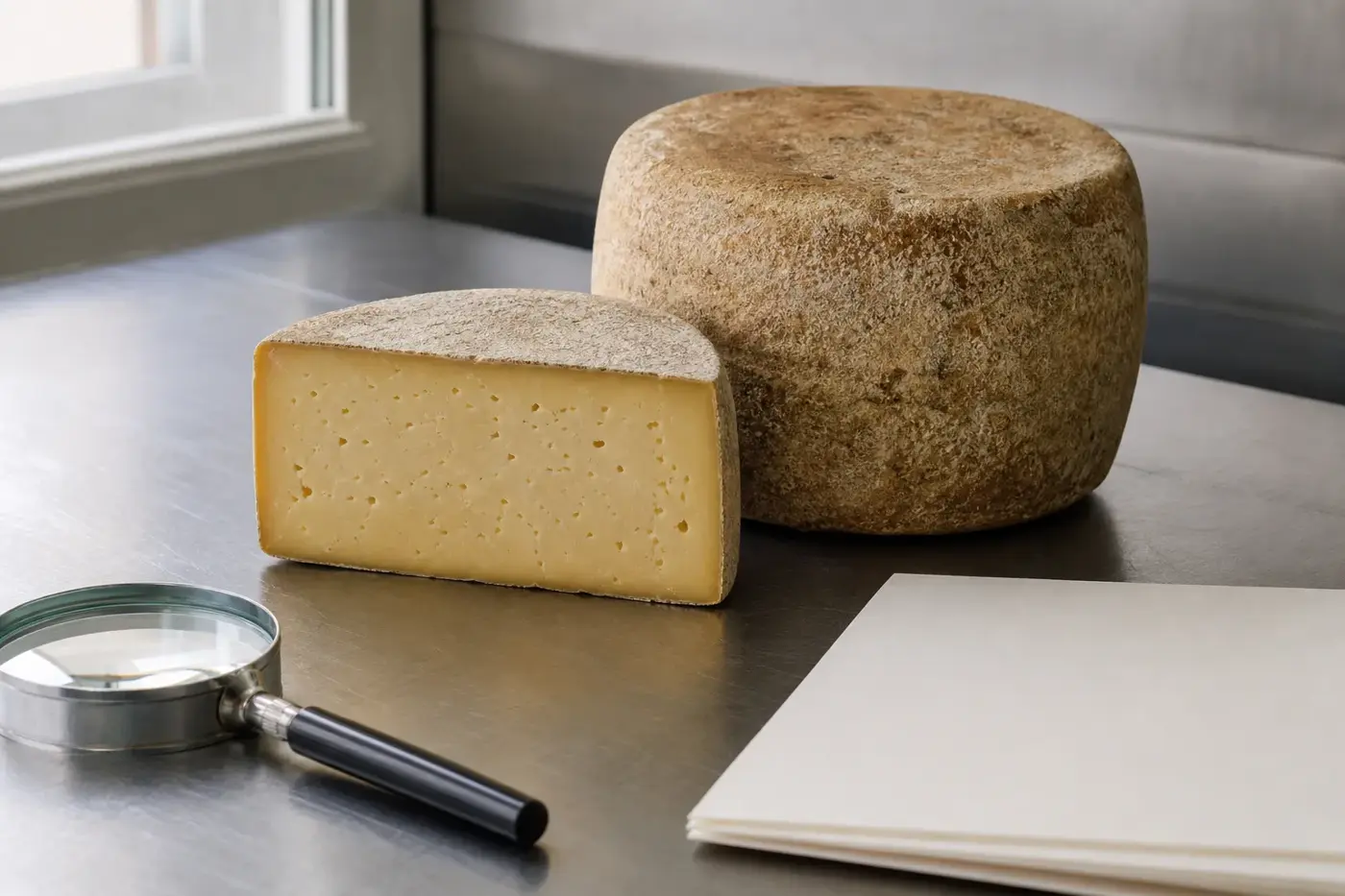
GRUYERE reached an American legal border and lost its exclusivity. On 3 March 2023, a US appeals court upheld a finding that GRUYERE is generic for cheese in the United States. A name with a European geographical association could not simply cross the Atlantic as an exclusive right.[7]
You might choose a cheese by its smell, its texture or the remaining space in your fridge. The law takes a different interest: its milk, dairy, name and label answer to different rules, depending on where it is made or sold and what someone is doing with it.[3,9,12,15]
The essentials before you begin
- Codex standards are international reference points, not automatic permission to import.[1,2]
- A cheese name can have different rights in different markets.[7,8]
- The US requirement for 60 days of ageing applies to specified cheese standards, not every cheese.[9,10]
Follow the cheese from milk to market
Making a cheese and marketing it raise different legal questions. A production rule may govern milk treatment, a compositional standard may define the finished food, and a geographical indication may reserve its name to qualifying producers. You need to consider each requirement separately.[3,9,12]
Follow the consignment through five questions. Where was the milk obtained, where was the cheese made, which name appears on it, where will it be sold, and is it travelling commercially or in someone's luggage? Your answers lead to different authorities and documents. Even an ingredient permitted under a general cheese standard may be excluded by a protected name's product specification.[1,3,19,20]
Codex offers a reference, not a passport
Codex Alimentarius, developed by FAO and WHO, supplies international reference standards. Its General Standard for Cheese, CXS 283-1978, covers ripened and unripened cheese, while recognising that particular varieties can have more specific provisions. At its heart is milk becoming cheese: protein is concentrated through coagulation, the setting of milk, and the removal of whey, the liquid separated from the curd.[1]
Codex texts become enforceable domestic requirements when a jurisdiction incorporates them into its rules. Their international role goes further. The World Trade Organization's Agreement on Sanitary and Phytosanitary Measures recognises Codex food safety standards as benchmarks, while allowing scientifically justified higher protection.[2,6]
Trade agreements can also establish recognition of particular names. Before you ship cheese, consult the destination's operative rules. An international standard is not an import permit.[2,6]
Protected names: the place behind the cheese
A protected designation of origin, PDO, ties an EU product's qualities or characteristics essentially or exclusively to its geographical environment. Production steps must take place within the defined area. A protected geographical indication, PGI, requires a quality, reputation or other characteristic attributable to origin, with at least one production step there.[3]
A traditional speciality guaranteed, TSG, takes a different approach. It protects a registered traditional composition or method, without requiring production in a particular geographical area. The distinction matters: tradition and place are not interchangeable requirements.[3]
Regulation (EU) 2024/1143 is the central EU instrument, supported by implementing and delegated rules. The Commission identifies eAmbrosia as the legal register for agricultural geographical indications. Read the registered name alongside its product specification, which sets out the requirements behind the designation. The guide to protected names explained explores these distinctions in more detail.[3,4]
The United States uses its trade mark framework, including certification and collective marks. A certification mark can certify regional origin and compliance with standards; an ordinary trade mark identifies commercial source. The USPTO also recognises relevant common law rights. Finding no registered mark does not, by itself, establish that you are free to use a name.[6]
Same cheese name, different rights
The GRUYERE case shows how sharply rights can change at a border. On 3 March 2023, the US Court of Appeals for the Fourth Circuit upheld the finding that GRUYERE is generic for cheese in the United States, refusing the proposed certification mark. The decision concerned that particular term and application; other marks or logos still need separate consideration. European geographical associations do not automatically confer exclusive rights across the Atlantic.[7]
Canada takes a different approach. Section 11.17 of its Trademarks Act contains exceptions for specified cheese indications, including Feta and Gorgonzola. One covers qualifying business use before 18 October 2013. Another allows use with a qualifying term such as “style”, alongside a clear indication of geographical origin.[8]
Those statutory exceptions come with conditions. “Style” is not a general licence to use any protected cheese name. You may therefore need different wording for the same product in different markets.[8]
Great Britain and Northern Ireland: where the rules divide
For the UK geographical indication schemes, Great Britain means England, Scotland and Wales. Northern Ireland follows the EU schemes. Defra's guidance confirms that names protected in the EU on 31 December 2020 following successful applications are protected under both systems. Later registrations need a separate territorial assessment.[5]
| Where | Name protection | Where to start | Reference date |
|---|---|---|---|
| EU | EU GI schemes | Regulation (EU) 2024/1143; Commission guidance.[3,4] | November 2026 |
| Great Britain | UK GI schemes | Defra guidance; UK registers.[5] | November 2026 |
| Northern Ireland | EU GI schemes | Defra guidance on territorial scope.[5] | November 2026 |
This boundary affects more than logos. For cheese sold in Great Britain, consult the applicable British food legislation and domestic enforcement rules. For Northern Ireland, consult the relevant EU provisions and any applicable Windsor Framework arrangements.[5,12,15]
When reviewing a change, record its application date and territorial scope. A new EU amendment does not automatically amend the Great Britain rule.[5,12,15]
Raw milk cheese: look closely at the US 60 day rule
For cheddar made from unpasteurised milk, 21 CFR 133.113 requires curing for at least 60 days at a temperature of at least about 1.7 °C (35 °F). Both figures matter: the temperature is a minimum. The hard cheese standard in 21 CFR 133.150 contains the same condition. US federal milk treatment and ageing requirements attach to particular cheese standards.[9,10]
Fresh cheeses and other named categories have their own standards, and cheddar for manufacturing has a separate provision. Do not read the 60 days as a requirement for every cheese, or as a guarantee of safety. FDA sampling of raw milk cheeses aged for 60 days detected pathogens in some samples. An individual cheese can meet its ageing requirement and still contain pathogens.[9,11]
EU dairy hygiene rules accommodate production from raw milk, subject to the relevant controls. They do not apply one US-style ageing requirement across all cheese. A protected name's specification may add milk treatment requirements of its own. For the technical distinctions, see raw milk, thermised and pasteurised cheese.[3,12]
This page summarises published guidance from the official sources it cites. It is not medical advice. Guidance differs between countries and changes over time, so check the current source for where you live, and ask your doctor, midwife, pharmacist or dietitian about your own circumstances.
Food safety begins with the cheesemaker
In the EU, primary responsibility for food safety rests with the food business operator under Regulation (EC) No 852/2004. Its hygiene framework includes procedures based on HACCP, hazard analysis and critical control points. This means identifying significant hazards and controlling them throughout the process. Regulation (EC) No 853/2004 adds requirements for foods of animal origin, including dairy production and establishment approval where applicable.[12,13]
In the United States, 21 CFR Part 117 sets manufacturing practice and preventive control requirements, with exemptions and modified requirements for specified situations. For a cheesemaker, practical questions include milk acceptance, cleaning, separation of operations, hazard controls, records and corrective action. Inspectors examine those arrangements. Official approval leaves everyday responsibility with the business.[14]
When something goes wrong, a supplier's records become essential. Identifying the milk, ingredients and production batches in a consignment gives authorities and businesses a route through the investigation. For consumer guidance, consult cheese food safety alongside the appropriate national agency.[14]
Cheese or cheese product? Start with the legal name
A US standard of identity sets the requirements for using a defined food name. Part 133 covers cheeses and related cheese products, not one interchangeable category. Cheddar, for example, has limits on moisture in the whole cheese and minimum milkfat in its solids. Those compositional measures are distinct from the fat per 100 g shown on a nutrition panel.[9,10]
The imitation rule addresses a different question. Under 21 CFR 101.3, a substitute that resembles another food and is nutritionally inferior generally requires “imitation” labelling. Nutritional inferiority has a defined regulatory meaning; a reduction in fat or energy alone does not establish it. A substitute meeting the rule's conditions can instead carry an appropriate common, usual or descriptive name.[18]
Start with the exact legal name on your package. Cheese, pasteurised process cheese and a substitute described under another name may fall under different compositional provisions. Resemblance on the plate does not settle legal identity.[9,18]
Read the label beyond the name
In the EU, Regulation (EU) No 1169/2011 governs mandatory food information. Ingredient lists generally identify ingredients in descending order by weight, and listed allergens must be indicated as the regulation requires. Milk and egg are separately listed allergens. Egg-derived lysozyme, where used, therefore needs its own assessment rather than being covered by a declaration of milk.[15]
Some cheese qualifies for an ingredient list exemption when only the specified dairy ingredients, cultures, enzymes and necessary salt are involved, subject to the regulation's conditions. Applicable allergen information requirements still stand.[15] In the United States, Part 133 directs ingredient declarations to the relevant labelling rules, with specific allowances such as declaring certain enzymes simply as “enzymes”.[9] For a product sold there, consult FDA major allergen guidance separately, including how milk sources are declared.
Origin needs separate attention. EU rules require origin information where its absence could mislead consumers, and primary ingredient origin provisions can also apply. The operator's address identifies the responsible business, not necessarily where the cheese was made. Follow how to read a cheese label for a practical reading sequence.[15,22]
Plant based products: names matter here too
EU law reserves “cheese” and other dairy designations for milk products, subject to listed exceptions. Adding a plant descriptor does not generally make those names available for purely plant based products. That was the Court of Justice's holding in Case C-422/16, decided on 14 June 2017, interpreting Regulation (EU) No 1308/2013, Annex VII, Part III.[16,17]
In the United States, consider the product's identity, its truthful descriptive name and the imitation provisions described above.[18] Before you choose a product name, also consult the separate dairy naming rules in Great Britain and the applicable EU rules in Northern Ireland. A description permitted in one market may need changing in another.
Before your cheese crosses a border
Before a commercial consignment leaves, establish its product classification, origin, milk treatment, establishment eligibility, documentary requirements and the destination's current restrictions. EU rules for foods of animal origin include conditions on third countries, establishments, certification and official entry controls. The precise route depends on the product and applicable import regime. Ask the destination authority which certificate or attestation you need before dispatch.[12]
For the United States, FDA explains that imported food must meet the same requirements as domestically produced food. Its guidance identifies facility registration and prior notice requirements where applicable. FDA does not pre-approve every individual food shipment: entry can be examined and refused. A satisfactory label or recognised geographical name is only part of import compliance.[19]
Cheese in personal luggage follows a different route. Before travelling into Great Britain with cheese, consult current GOV.UK guidance for the country of origin, any transit country, the destination and the purpose of your journey. Read the applicable restrictions and exceptions. Packaging, including packaging from an airport purchase, does not replace that assessment.[20]
Provenance and fraud: does the claim hold up?
Cheese fraud can involve substitution, adulteration, false provenance or misleading use of a protected name. The Food Standards Agency's food crime guidance distinguishes adulteration, substitution, misrepresentation and other offences. The central question is whether the cheese matches its description, ingredients and legal specification. A compositional failure and a false origin claim may call for different evidence.[3,9,21]
For composition, compare analytical findings with the relevant standard, including any prescribed methods. Part 133 expressly links compositional requirements to analytical methods. For protected origin, examine the specification and verification system: records of production and movement must support the claimed provenance. Investigators can combine that paperwork with sampling and official checks to test the claim behind the label.[3,9]
As a buyer, begin by asking for the supplier's traceability information. Refer suspected misrepresentation to the responsible food authority, recording the product description, batch details and basis for concern. Keep an unresolved suspicion out of public allegations.[21]
Find the rule for your next step
Start with the destination and the activity. For EU protected names, consult the Commission's register and linked specification; for Great Britain, use Defra's registers. For US composition and naming, turn to the eCFR and FDA. For Canadian name exceptions, read the Trademarks Act itself.[3,4,5,8,9]
A trade body's explanation can help you find your bearings. The official text and its operative date, however, determine the applicable rule.[3,4,5,8,9]
Before commissioning new packaging, bring the intended food name, ingredient list, milk treatment, manufacturing country and destination market together in one record. This gives each authority a clear set of facts to work from.
Keep a dated copy of the relevant version. Publication, commencement and application can be different events, so consult transitional provisions before changing a label or dispatching a consignment. For an actual transaction, disputed name or enforcement issue, obtain advice from a suitably qualified specialist and the competent authority. This overview provides general information, not legal advice.
A little more cheese reading
- Protected Names Explained: PDO, PGI and TSG: get to know registered schemes and their specifications.
- How to Read a Cheese Label: put the naming, ingredient and origin distinctions to work on a pack.
Questions people ask
Does all raw milk cheese sold in the United States have to be aged for 60 days?
No. The ageing requirement applies to particular cheese standards, not every cheese. For cheddar made from unpasteurised milk, the standard requires at least 60 days at a temperature of at least about 1.7 °C.
What is the difference between PDO, PGI and TSG?
A PDO ties a product’s qualities or characteristics to its geographical environment and requires production steps within the defined area. A PGI requires a connection to origin and at least one production step there. A TSG protects a registered traditional composition or method without requiring production in a particular area.
Do the same cheese name protections apply across the UK?
Great Britain uses the UK geographical indication schemes, while Northern Ireland follows the EU schemes. Names protected in the EU on 31 December 2020 following successful applications are protected under both systems, but later registrations require a separate territorial check.
Can I bring cheese into Great Britain in my luggage?
Check current GOV.UK guidance for the country of origin, any transit country, the destination and the purpose of the journey. Read the applicable restrictions and exceptions, even if the cheese was packaged at an airport.
Does cheese always need an ingredient list in the EU?
No. Some cheese qualifies for an exemption when only the specified dairy ingredients, cultures, enzymes and necessary salt are involved, subject to the regulation’s conditions. Applicable allergen information requirements still stand.
Sources
- FAO and WHO, General Standard for Cheese, CXS 283-1978, retrieved official PDF carrying amendments through 2013. Current-version verification remains an editorial hold, recorded below.
- World Trade Organization, Understanding the Sanitary and Phytosanitary Measures Agreement, official explanatory text, accessed 2026.
- European Parliament and Council, Regulation (EU) 2024/1143, adopted 11 April 2024, published 23 April 2024. Original text and official legal-status information retrieved.
- European Commission, Regulations on geographical indications and quality schemes, current guidance listing the principal regulation and 2025 supplementary instruments, accessed 2026.
- Defra, Protected geographical food and drink names: UK GI schemes, current guidance, accessed 2026.
- United States Patent and Trademark Office, Geographical indications, current official explanation, accessed 2026.
- US Court of Appeals for the Fourth Circuit, Interprofession du Gruyère v. U.S. Dairy Export Council, No. 22-1041, judgment, 3 March 2023.
- Department of Justice Canada, Trademarks Act, section 11.17, current consolidated provision, accessed 2026.
- Office of the Federal Register, 21 CFR Part 133, Cheeses and Related Cheese Products, eCFR text retrieved November 2026.
- Office of the Federal Register, 21 CFR 133.113, Cheddar cheese, eCFR edition displayed as current to 5 November 2026.
- US FDA, Microbiological Surveillance Sampling: FY14-16 Raw Milk Cheese Aged 60 Days, official study summary, accessed 2026.
- European Parliament and Council, Regulation (EC) No 853/2004, consolidated edition dated 27 January 2026.
- European Parliament and Council, Regulation (EC) No 852/2004, original Official Journal text, 2004.
- Office of the Federal Register, 21 CFR Part 117, Current Good Manufacturing Practice, Hazard Analysis, and Risk-Based Preventive Controls for Human Food, current eCFR text, accessed 2026.
- European Parliament and Council, Regulation (EU) No 1169/2011, consolidated edition dated 1 January 2018, displaying subsequent corrigenda.
- European Parliament and Council, Regulation (EU) No 1308/2013, original Official Journal text, 2013, Annex VII, Part III.
- Court of Justice of the European Union, Press release No. 63/17 concerning the judgment in Case C-422/16, 14 June 2017. This is the Court's summary, not the binding judgment text.
- Office of the Federal Register, 21 CFR 101.3, Identity labeling of food in packaged form, current eCFR text, accessed 2026.
- US FDA, Importing Food Products into the United States, current official guidance, accessed 2026.
- UK Government, Bringing food into Great Britain: Meat, dairy, fish and animal products, current traveller guidance, accessed 2026.
- Food Standards Agency, Food crime: reporting and preventing it, Overview, current official guidance, accessed 2026.
- European Commission, Origin labelling, current official explanation, retrieved 2026.
- Food Standards Agency, Alerts, official alert index, accessed November 2026.
- US FDA, Recalls, Market Withdrawals, & Safety Alerts, official alert index, accessed November 2026.
This desk-researched overview brings together official standards, legislation, court records and government guidance; outstanding version and legal-text checks are recorded for the editor below.
Last checked: November 2026. Verification of the current law remains incomplete.
Last checked November 2026.
The editors suggest you read next