How to Store Cheese at Home
Open the fridge and a strongly aromatic cheese may introduce itself before you have found the milk.
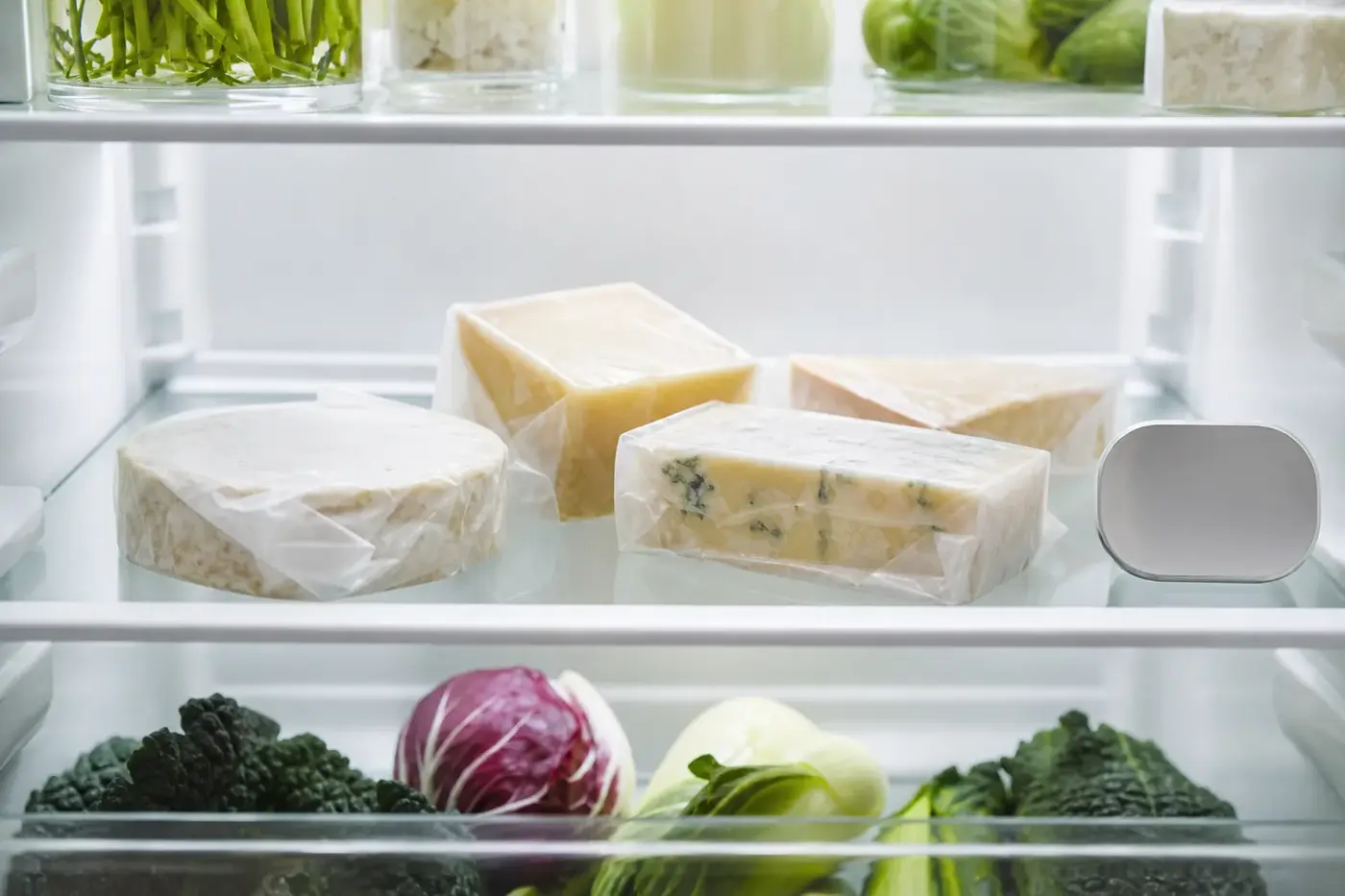
Open the fridge and a strongly aromatic cheese may introduce itself before you have found the milk. Its milder neighbours need a little breathing space: the American Cheese Society advises keeping these cheeses separate. Keep your cheese covered or wrapped in the fridge and follow the label: temperature protects safety, while wrapping protects texture and keeps aromas from travelling.[1,8]
Let your thermometer have the final word
Your fridge dial tells only part of the story. A thermometer gives you the temperature: the FSA recommends checking it weekly, and Food Standards Scotland advises regular thermometer checks too. Leave room for cold air to circulate instead of packing every shelf tightly.[1,2]
The household refrigeration recommendations below are dated November 2026. If your cheese's pack calls for colder storage, follow that instruction.[1,3,4,5]
| Where you live | Temperature to aim for | Guidance from |
|---|---|---|
| England, Wales and Northern Ireland | 0 to 5 °C | FSA [1] |
| Scotland | 0 to 5 °C | Food Standards Scotland [2] |
| United States | 4 °C (40 °F) or below | FDA [3] |
| Canada | 4 °C (40 °F) or below | Health Canada [4] |
| Australia and New Zealand | 5 °C or colder | FSANZ [5] |
| New Zealand | 2 to 5 °C | MPI [6] |
| France | Maximum 4 °C in the coldest zone | ANSES [7] |
In France, the maximum of 4 °C applies specifically to the coldest zone, not every shelf. That is the area covered by ANSES's advice. At EU level, EFSA recommends keeping refrigerators cold to limit the growth of Listeria, a bacterium that can cause foodborne illness.[7,16]
This page summarises published guidance from the official sources it cites. It is not medical advice. Guidance differs between countries and changes over time, so check the current source for where you live, and ask your doctor, midwife, pharmacist or dietitian about your own circumstances.
Find a safe home for your cheese
Give your cheese a covered spot, protected from raw food and its juices. MPI's New Zealand guidance places ready-to-eat dairy foods above raw meat and seafood, with raw foods in leakproof containers on the bottom shelf. In the United States, USDA advises keeping perishable foods out of the door, where temperatures fluctuate more.[6,11]
A drawer labelled for cheese does not guarantee the right temperature. USDA describes specialised compartments as useful storage environments, but yours still needs to be cold enough and separate from raw foods. Use your thermometer to check it against the relevant guidance above.[3,6,11]
Before you handle cheese, wash your hands and set out clean utensils and a clean board. Keep equipment used for raw meat away from cheese you will eat without cooking. Cleaning and separation are two central steps in CDC's US food-safety guidance.[14]
Wrap each cheese for a comfortable stay
An unopened cheese can stay in its original packaging unless the label says otherwise. Once you open it, cover it again after every use. The American Cheese Society recommends fresh cheese paper, parchment or waxed paper with an outer layer of plastic wrap; Clemson Extension offers tightly fitted plastic film or foil as another approach.[8,9,10]
Read this table alongside the national temperatures above and your cheese's own instructions. The wrapping advice comes from US cheese and extension bodies. You will find just one keeping time here: Health Canada's specific guidance for opened cottage cheese.[4,8,9,10]
| Your cheese | How to wrap or contain it | Where to keep it | When to use it |
|---|---|---|---|
| Hard and semi-hard pieces | Fresh paper plus outer plastic wrap, or close-fitting film or foil.[8,9] | Covered drawer or shelf, separate from raw food.[6,11] | Follow the label.[12] |
| Soft ripened cheese | Wrap individually in fresh cheese paper with an outer wrap.[8] | Covered chilled space, separate from raw food.[6] | Follow the label.[12] |
| Blue and strongly aromatic cheese | Wrap separately in a tightly covered container.[8,9] | Separate from milder cheeses and raw food.[6,8] | Follow the label.[12] |
| Fresh cheese in a tub | Reseal the tub or use a clean airtight container.[10] | Covered chilled shelf above raw food.[6] | Follow the label.[12] |
| Opened cottage cheese | Reseal the tub and refrigerate.[10] | Chilled shelf at 4 °C (40 °F) or below.[4,6] | Canada: 3 days after opening for safety, in Health Canada guidance modified 11 April 2024.[4] |
Fresh wrapping helps stop your cheese drying out or exchanging aromas with its neighbours. Keep blues and strongly aromatic cheeses away from milder pieces, as the American Cheese Society advises. For tubs, UConn Extension offers an airtight container as an alternative; follow any product-specific directions for storage liquid or packaging.[8,10]
Give the label a place beside the cheese
Whether you have a whole cheese or a cut piece, its label's storage conditions still matter. Leave a sealed pack intact until you need it, then cover exposed cheese and close the package properly after cutting. UConn Extension recommends tightly wrapping or sealing opened cheese before returning it to the fridge, with an airtight container as another option.[10]
Keep the original label with your cheese so its date and storage directions stay close at hand. If it gives a period for use after opening, note the opening date and follow that instruction. UK guidance warns that incorrect storage can make food unsafe before its use-by date.[12]
Health Canada's general cheese categories do not distinguish opened packs from unopened ones. Its hard-cheese chart entry therefore gives you no time allowance for an opened wedge. The cottage-cheese entry explicitly covers opening, which is why it supplies the only duration in the wrapping table.[4]
Bring out a little, leave the rest chilled
Cut off what you plan to eat and leave the rest in the fridge. UConn Extension says you can bring cheese towards room temperature before eating, but prolonged time out can change its texture and make fat seep onto the surface. Small servings make more sense than bringing out your entire supply.[10]
For cheese that needs refrigeration, follow your country's official time limit. In the United States, FDA allows no more than two hours at room temperature, falling to one hour when the air is above 32 °C (90 °F). Return food to the fridge promptly rather than waiting for the limit.[3]
For England, Wales and Northern Ireland, FSA heatwave guidance says to avoid leaving food out longer than two hours when temperatures are higher than usual. In Australia and New Zealand, FSANZ says perishable food held between 5 °C and 60 °C for less than two hours may go back in the fridge. Between two and four hours, eat it immediately; after four hours, discard it. Count every period outside refrigeration together, and follow any stricter instructions on your cheese's packaging.[5]
In Scotland, FSS advises returning food to the fridge as quickly as possible. Wherever you live, keep the portions you serve separate from the cheese you are saving for later.[2,10]
Recognise when it is time to let go
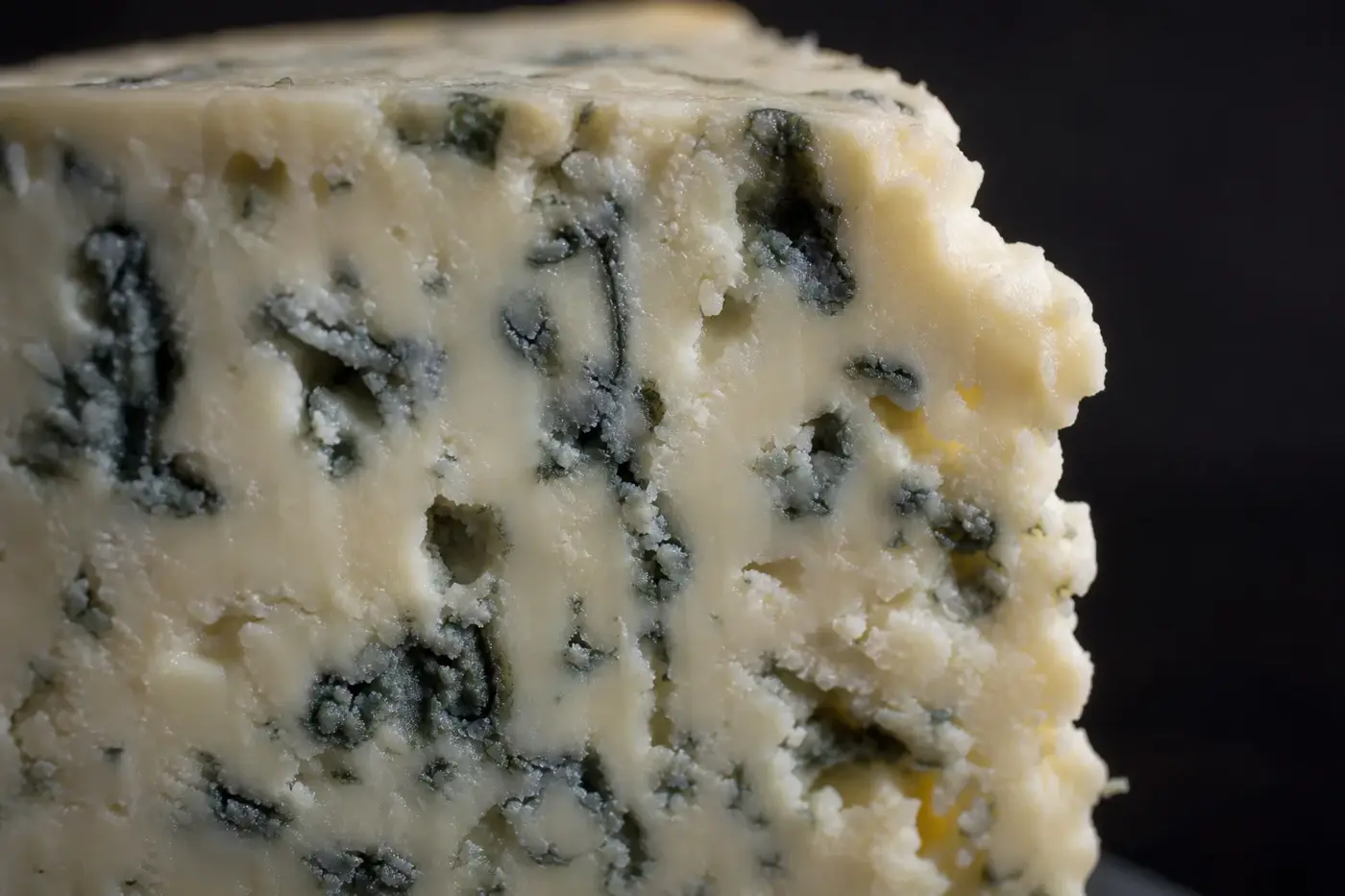
Unexpected slime, a pronounced off odour or deterioration unlike your cheese's usual condition are reasons to discard it. The American Cheese Society lists sliminess and ammoniated or other off odours as warning signs. Natural rinds and deliberately grown mould need to be judged in the context of the cheese's style.[8,13]
For unwanted mould, national advice differs. In England, Northern Ireland and Wales, the FSA advises against eating mouldy food, with no separate trimming exception for hard cheese. In the United States, USDA FSIS advises discarding affected soft, crumbled, shredded and sliced cheese.[12,13,14]
For eligible hard cheese, USDA FSIS permits cutting away at least one inch, about 2.5 cm, around and below the mould spot. Keep your knife clear of the mould, then rewrap the remaining cheese. Neither approach overrides a recall or the product's use-by date.[12,13,14]
Your eyes and nose cannot establish safety: FDA warns that harmful bacteria may be present without obvious spoilage. In the UK, do not eat chilled cheese beyond its use-by date, even if it looks and smells normal; food cooked or frozen by that date has separate official handling instructions. A best before date concerns quality, so check which date your cheese carries and follow its storage directions.[3,12]
During pregnancy, follow your country's specific advice on cheese choices as well as storage. In the UK, the NHS gives separate guidance for hard, soft and mould-ripened cheeses. Ask your midwife or another health professional about personal dietary questions.[15]
Freeze with your next meal in mind
Harder cheeses generally freeze better than softer ones, according to UConn Extension, which suggests using thawed cheese for cooking. Think of it as a change of role rather than retirement. Freeze yours in its unopened original pack or, once opened, in small pieces tightly wrapped in plastic film and freezer paper. Thaw it in the fridge and follow the label's freezing directions.[1,10]
UK FSA guidance sets a freezer temperature of around -18 °C (0 °F) and permits freezing up to the use-by date. Freeze cheese while it is still suitable to eat, not after it has deteriorated.[1,10]
There is always another cheese question
Still wondering about the cheese in your fridge? These related articles are in preparation:
- Can You Freeze Cheese?: practical choices for texture and later cooking.
- How Long Does Cheese Last?: keeping times and the conditions behind them.
- Mould on Cheese: When to Cut and When to Bin: the distinctions between styles and formats.
- Best Before and Use By Dates on Cheese: understanding the date and after-opening instructions together.
Questions people ask
What temperature should I store cheese at?
The FSA recommends 0 to 5 °C in England, Wales and Northern Ireland, and Food Standards Scotland gives the same range for Scotland. Follow any colder storage instruction on the pack and check the fridge with a thermometer.
How should I wrap cheese after opening it?
The American Cheese Society recommends fresh cheese paper, parchment or waxed paper with an outer layer of plastic wrap. Wrap blue and strongly aromatic cheeses separately from milder cheeses.
Can I cut mould off cheese and eat the rest?
In England, Wales and Northern Ireland, the FSA advises against eating mouldy food, without a separate exception for hard cheese. In the United States, USDA FSIS permits cutting away at least one inch, about 2.5 cm, around and below the mould on eligible hard cheese, but advises discarding affected soft, crumbled, shredded and sliced cheese.
How long can cheese be left out of the fridge?
In the United States, the FDA allows no more than two hours at room temperature for cheese that needs refrigeration, reduced to one hour when the air is above 32 °C. FSA heatwave guidance for England, Wales and Northern Ireland says to avoid leaving food out longer than two hours when temperatures are higher than usual.
Can I freeze cheese?
UConn Extension says harder cheeses generally freeze better than softer ones and suggests using thawed cheese for cooking. Freeze it in its unopened original pack or, once opened, in small pieces tightly wrapped in plastic film and freezer paper, then thaw it in the fridge.
Sources
- Food Standards Agency, How to chill, freeze and defrost food safely, published 18 December 2017. Applies to England, Northern Ireland and Wales.
- Food Standards Scotland, Chilling food, undated live guidance retrieved November 2026.
- US Food and Drug Administration, Are You Storing Food Safely?, version identified in the fact sheet as current on 18 January 2023; live text retrieved November 2026.
- Health Canada, Safe food storage, version identified in the fact sheet as modified 11 April 2024; live text and dairy-products table retrieved November 2026.
- Food Standards Australia New Zealand, Food safety basics, updated 8 July 2025.
- New Zealand Food Safety, Ministry for Primary Industries, Food safety at home, booklet retrieved November 2026, sections “Storing food at home” and “Fridge tips”.
- ANSES, Avis, saisine n° 2017-SA-0141, initial opinion 8 February 2019, revised May 2019, Annex 2, Table 1, general-population microbiological prevention advice.
- American Cheese Society, Tips for Cheese Lovers, undated live guidance retrieved November 2026, “Storing Cheese”. An industry association, not a food safety regulator.
- Clemson University Cooperative Extension, Handling of Cheese for Safety & Quality, HGIC 3506, archived primary document held by South Carolina State Library, retrieved November 2026.
- University of Connecticut Extension, Ask UConn Extension: All About Cheese, 7 April 2022.
- USDA Food Safety and Inspection Service, Refrigeration and Food Safety, archived USDA publication hosted by Copeland, retrieved November 2026.
- GOV.UK, Understanding food labelling: Best before and use-by dates, undated live guidance retrieved November 2026.
- USDA Food Safety and Inspection Service, Molds on Food: Are They Dangerous?, revised March 2010, USDA publication hosted by Gallatin City-County Health Department.
- US Centers for Disease Control and Prevention, Preventing Food Poisoning, 24 November 2025.
- NHS, Foods to avoid in pregnancy, live guidance retrieved November 2026, “Cheese, milk and other dairy”.
- European Food Safety Authority, Listeria, live topic guidance retrieved November 2026, consumer prevention advice.
- Food Standards Agency, Food safety in a heatwave: advice for consumers, published 27 June 2024. Applies to England, Northern Ireland and Wales.
This desk-researched guide compares national household food safety advice with separately attributed cheese-wrapping guidance from university extension services and a cheese industry association.
Last checked: November 2026
Last checked November 2026.
The editors suggest you read next
Can You Freeze Cheese?
You reach for a neat block of cheese, knife poised for a proper slice.