Mould on Cheese: When to Cut and When to Bin
You peel back the wrapping on a Brie.
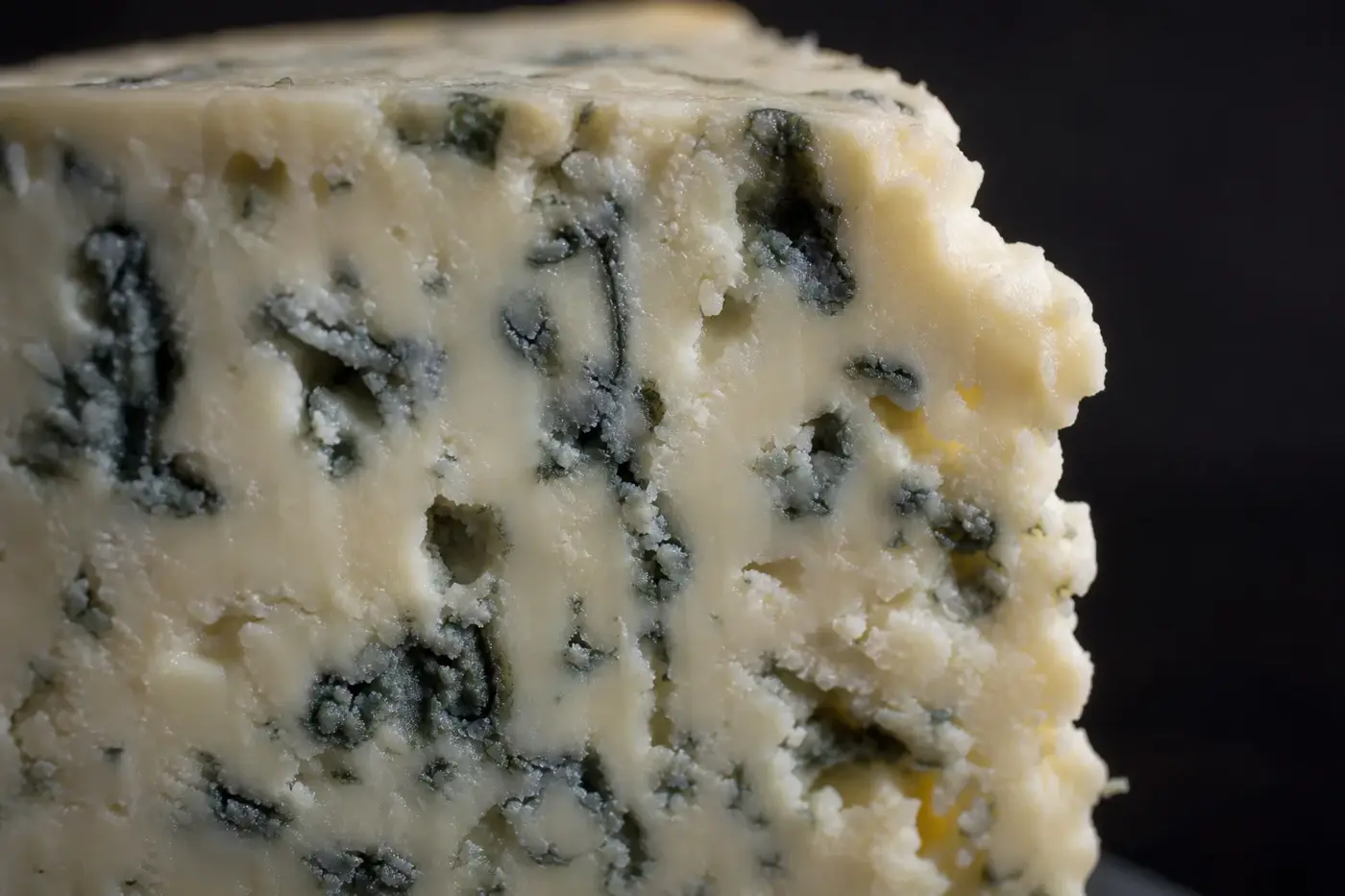
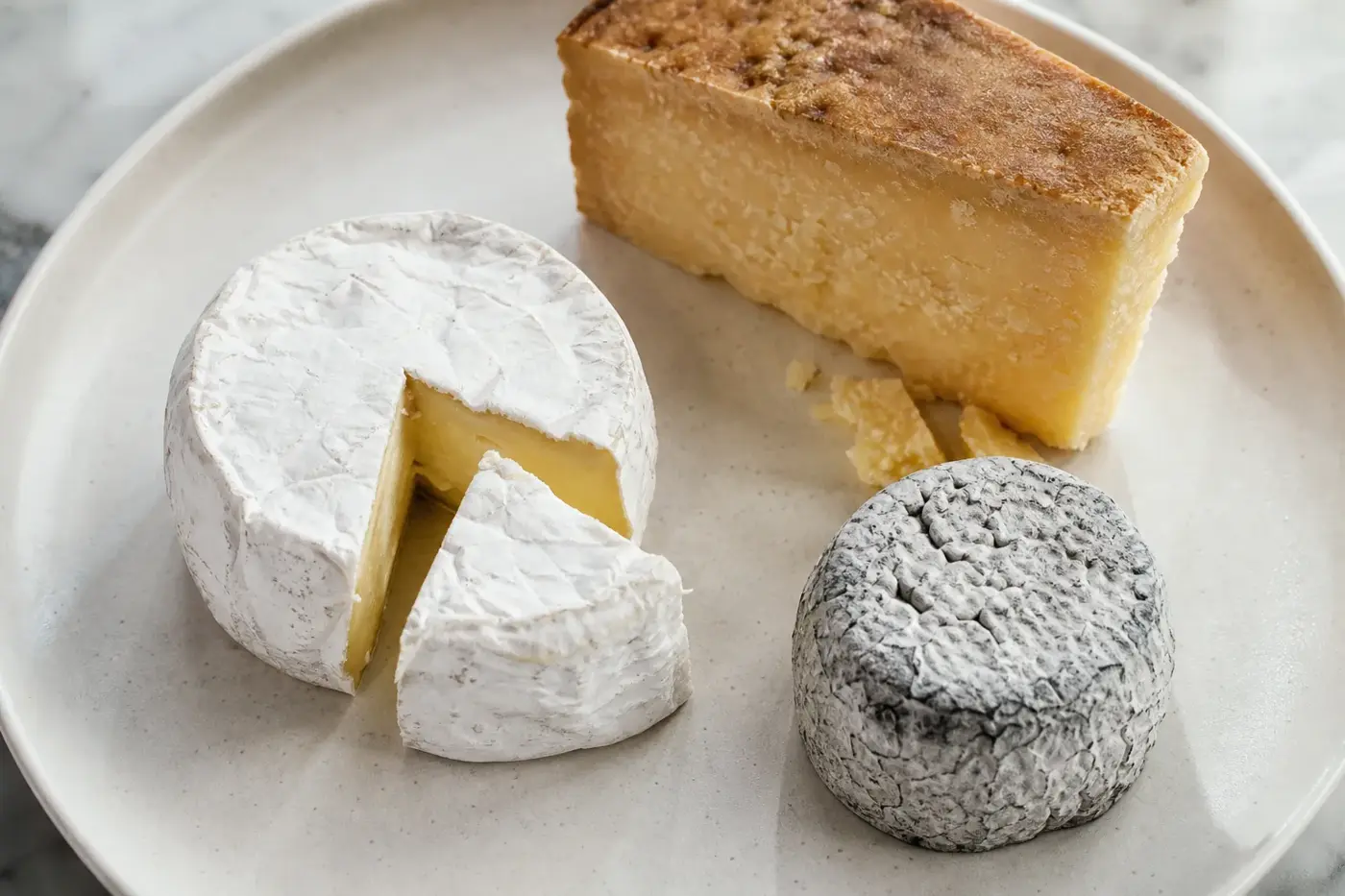
You peel back the wrapping on a Brie. There is its familiar white coat, looking comfortably overdressed for the fridge. Open a blue cheese and mould runs through the paste in veins: both can be deliberately introduced during cheesemaking. An unwanted patch is another matter, and what you do next depends partly on where you live. [1][2][3]
In England, Northern Ireland and Wales, the Food Standards Agency advises against eating mouldy food. US agencies allow certain hard cheeses to be trimmed under specific conditions. Your starting points are the mould, the type of cheese and your country's guidance, in that order. [1][2][3]
Found a patch? Start with this chart
Before you reach for a knife, work down the chart. The country branches reflect agency advice in November 2026. The cited FSA page applies to England, Northern Ireland and Wales. [1][2][3]
| What have you found? | Your next step |
|---|---|
| A recalled product or another safety concern? | Stop. Follow the recall notice or discard the affected cheese. Trimming cannot resolve the concern. [7][8] |
| In the UK, cheese past its use by date? | Do not eat unless cooked or frozen by that date and subsequently handled according to official instructions. Trimming cannot reset the date. [6] |
| Only mould intended during manufacture? | Follow the cheese's normal instructions and advice for your health group. [1][5] |
| Unwanted mould in England, Northern Ireland or Wales? | Discard under FSA advice. It gives no separate exception for trimming hard cheese. [3] |
| US: soft, grated, shredded, crumbled or sliced cheese? | Discard the affected cheese or packet. This includes soft mould-ripened cheese with unwanted mould. [1] |
| US: hard cheese eligible for trimming? | FSIS permits cutting away at least one inch, about 2.5 cm, around and underneath the spot. Keep the knife clear of mould, then rewrap the remaining cheese in fresh wrapping. Discard if growth is extensive. [1][2] |
The metric figure converts the USDA's one inch. This is US guidance, not the FSA's. If you cannot confidently place your cheese in an eligible US category, discard it rather than guessing. [1][3]
England, Northern Ireland and Wales: leave the knife alone
Food that is obviously rotten or contains mould should not be eaten, says the FSA's Home food fact checker. That advice covers food generally. You will not find separate instructions for hard and soft cheeses, or a measured cutting distance. [3]
The agency explains that removing mould with a substantial amount of surrounding food might remove unseen toxins. It cannot guarantee removing them all. Under this guidance, even firm cheese gets no exception: if you find unwanted mould, discard it. [3]
This page summarises published guidance from the official sources it cites. It is not medical advice. Guidance differs between countries and changes over time, so check the current source for where you live, and ask your doctor, midwife, pharmacist or dietitian about your own circumstances.
In the US, look at the cheese as well as the mould
A solid piece of hard cheese gets different treatment from soft cheese, or cheese already cut into slices, shreds or crumbs. The USDA Food Safety and Inspection Service, or FSIS, explains the distinction. Mould generally struggles to penetrate deeply into hard cheese, while high-moisture foods may be contaminated beneath the surface. [1]
Eligible hard cheese: cut around and underneath
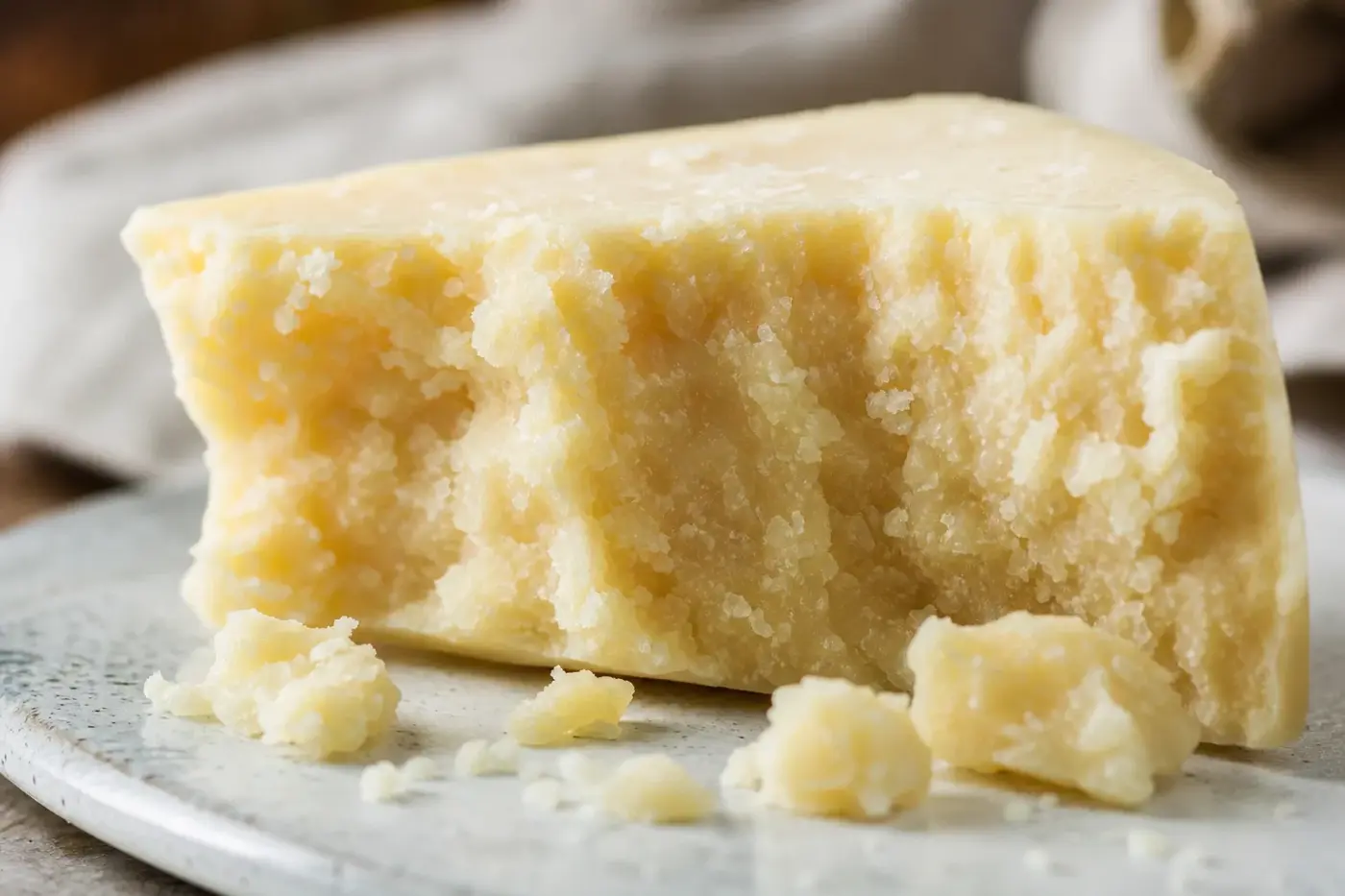
For eligible hard cheese, FSIS says: “Cut off at least 1 inch around and below the mold spot”. You need to remove both the surrounding cheese and the cheese beneath the growth. Simply shaving off the visible patch is not enough. [1]
Keep your knife out of the mould itself, so you do not contaminate the cheese you are keeping. Once you have trimmed it, put the remaining piece in fresh wrapping. [1]
If growth is extensive, discard the cheese. That limit comes from the FDA's Science and Our Food Supply reference guide, which says hard cheese can sometimes be saved by cutting out mould. The guide gives no measured cutting distance. [2]
Soft cheese: discard the whole affected product
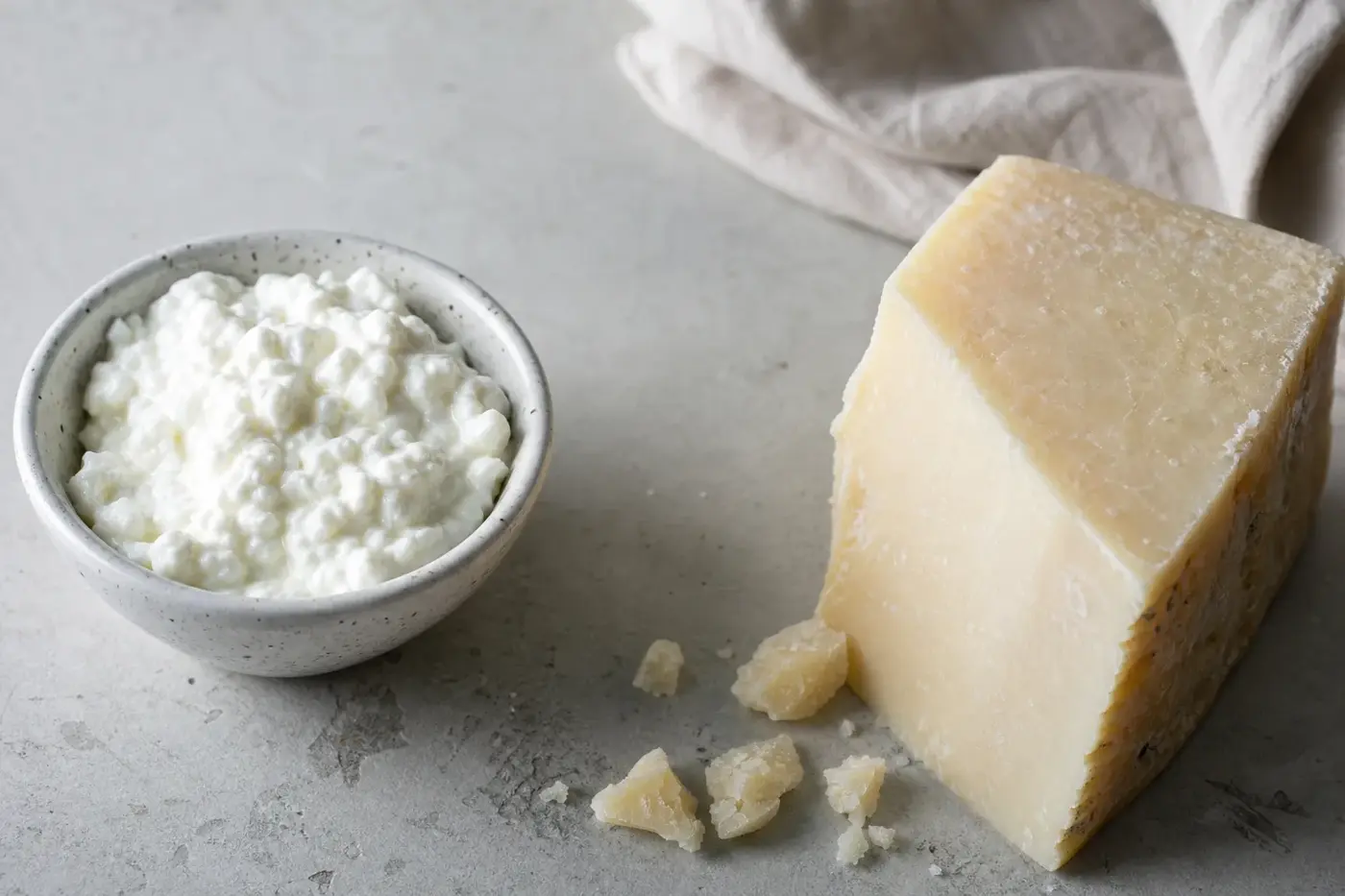
FSIS says to discard mouldy soft cheese, including cottage cheese and cream cheese. Scooping a patch out of your tub can leave contamination underneath. The agency also warns that bacteria can grow alongside mould in soft cheese. [1]
Grated, shredded, crumbled or sliced: discard the packet
The discard instruction covers all shredded, crumbled and sliced cheese, even if the original cheese was hard. For this decision, treat grated cheese as shredded cheese. What matters here is its current form, not its former firmness. [1]
Picking out affected strands or throwing away one slice does not follow the agency's instruction to discard the affected product. FSIS notes that the cutting instrument can spread contamination. [1]
The blue veins and white coats that belong
Those blue veins and that white coat can be part of a cheese's intended character. Cheese lovers are unusually happy to discuss a favourite food's fungi over lunch. FSIS identifies Penicillium roqueforti as a mould introduced into blue-veined cheeses, and describes the white surface moulds of Brie and Camembert as manufacturing moulds that are safe to eat. [1]
Aranda and colleagues' 2025 review also names Penicillium camemberti among the fungi deliberately introduced during cheesemaking. These are selected manufacturing organisms. If new growth appears later in your fridge, you need to consider it separately. [4]
For cheese made with mould, FSIS gives specific instructions. Discard soft cheeses such as Brie and Camembert if they develop mould outside the manufacturing process. Intended mould does not change the advice about unwanted growth. [1]
For surface mould on cheeses in its hard-cheese group, FSIS permits the hard-cheese trimming method. It gives Gorgonzola and Stilton as examples. Cut at least one inch, about 2.5 cm, around and below the spot, keep your knife clear of mould and use fresh wrapping afterwards. [1]
Colour cannot tell you whether unwanted mould is harmless. White, blue or green growth is no safety test. If you cannot establish that the mould belongs to the cheese's manufacture, discard the cheese. [1][2]
There is more to mould than the visible patch
Mould is a fungus, and its thread-like growth can reach into food beneath the visible surface. Some moulds can produce mycotoxins, substances capable of causing illness. The patch you can see tells you only part of what is happening inside the cheese. [1]
Aranda and colleagues reviewed research on cheese-associated fungi and their toxins. They report that spoilage fungi isolated from cheese can produce aflatoxins and ochratoxin A. Several other mycotoxins have also been detected in different cheeses; the compounds present depend on the organism and the conditions. [4]
Even intended moulds are not necessarily incapable of producing toxins. The review discusses detectable toxin production by P. camemberti and P. roeforti. At home, follow the agency's cheese categories and handling instructions rather than trying to identify a fungus, or judge its toxin production, by eye. [1][3][4]
When the cheese needs to go
Under the US guidance above, unwanted mould means discarding the whole affected soft cheese, tub, bag of shreds or packet of slices. Extensive mould growth also means throwing the cheese away. Under FSA guidance, discard cheese with unwanted mould rather than trimming it. [1][2][3]
A recall takes priority over trimming advice. Match the product name, pack details and batch information against the official notice, then follow its instructions for returning or disposing of affected cheese. Even a portion that looks clean remains part of the recalled product. [7][8]
In the UK, a use-by date concerns safety. Do not eat chilled cheese past that date, even if it looks and smells normal, unless you cooked or froze it by that date and subsequently handled it according to official instructions. Trimming cannot reset the date. [6]
A best before date concerns quality, but unwanted mould still calls for the decision above. Follow the storage instructions and the instructions for after opening, too. [6]
Once you have discarded mouldy food, FSIS advises cleaning the refrigerator or pantry area where it stood. Check nearby foods it may have touched. Do not sniff the mouldy item: inhaling it can cause respiratory problems. [1]
Serving someone who needs extra care?
The FSA particularly emphasises its advice for children, pregnant people, people aged 65 and people with weakened immune systems. If you are serving someone in one of these groups, follow the guidance for that person alongside the instructions about unwanted mould. [3]
Pregnancy guidance also applies when a cheese's mould is entirely intentional. The UK NHS advises thoroughly cooking mould-ripened soft cheeses with a white rind and soft blue-veined cheeses, whether made with pasteurised or unpasteurised milk. The cooking endpoint is steaming hot throughout, and this advice addresses Listeria bacteria. [5]
This does not mean you should cook suspect cheese to make it safe. Cheese with unwanted mould, a recall or another safety concern should instead be discarded or handled as the recall directs. Do not cook it in an attempt to rescue it. [3][5][7][8]
In the US, FSIS also advises anyone with a known mould allergy to discard the entire food item containing mould. If you have questions about allergy, pregnancy or a weakened immune system, ask your doctor, midwife or specialist team for advice suited to your circumstances. Never taste a suspect cheese to see whether it causes a reaction. [2][9]
When buying or serving cheese for someone else, keep the packaging so you can check the precise product and its instructions. If you are unsure which guidance applies to their health needs, choose another food while you seek advice. [5][6]
Questions people ask
Can I cut mould off hard cheese in England, Northern Ireland or Wales?
The Food Standards Agency advises against eating food containing mould and gives no separate exception for hard cheese. See the FSA's Home food fact checker.
Can I cut mould off hard cheese in the US?
For eligible hard cheese, the US Food Safety and Inspection Service permits cutting away at least one inch, about 2.5 cm, around and below the mould. Keep the knife clear of the mould and rewrap the cheese in fresh wrapping; discard it if mould growth is extensive.
Can I remove the mouldy pieces from a packet of grated cheese?
The US Food Safety and Inspection Service says to discard the affected packet of shredded cheese, including grated cheese. Its instruction also covers crumbled and sliced cheese, even when the original cheese was hard.
Can I eat Brie or blue cheese during pregnancy?
The NHS advises thoroughly cooking soft cheeses with a white rind and soft blue cheeses until steaming hot throughout, whether they are made with pasteurised or unpasteurised milk. See the NHS pregnancy guidance for its advice.
Can I eat cheese after its use by date if it looks and smells normal?
In the UK, a use by date concerns safety, and chilled cheese should not be eaten after that date even if it looks and smells normal. The page notes an exception if it was cooked or frozen by that date and subsequently handled according to official instructions.
Sources
[1] USDA Food Safety and Inspection Service. Molds on Food: Are They Dangerous? Web page undated; PDF revised August 2013. Read the official guidance.
[2] US Food and Drug Administration. Science and Our Food Supply. Teaching guide; edition date not established. Read the official guide.
[3] Food Standards Agency. Home food fact checker. Updated 21 August 2026; applies to England, Northern Ireland and Wales. Read the FSA guidance.
[4] Aranda C, Rodriguez R, Fernández-Baldo MA and Durán P. Mycotoxins in Cheese: Assessing Risks, Fungal Contaminants, and Control Strategies for Food Safety. Foods, 2025;14(3):351. Published 22 January 2025. DOI: 10.3390/foods14030351. Read the review.
[5] NHS. Foods to avoid in pregnancy. Current web guidance retrieved November 2026, “Cheese, milk and other dairy”. Read the NHS guidance.
[6] GOV.UK. Understanding food labelling: Best before and use-by dates. Current web guidance retrieved November 2026. Read the date guidance.
[7] Food Standards Agency. Alerts. Live recall and allergy-alert service, retrieved November 2026. Check FSA alerts.
[8] US Food and Drug Administration. Recalls, Market Withdrawals, & Safety Alerts. Live index; retrieved filtered view, November 2026. Read the retrieved FDA index.
[9] USDA Food Safety and Inspection Service. Can molds cause allergic reactions? Updated 6 September 2024; official indexed text retrieved November 2026. Read the FSIS answer.
Last checked: November 2026
Last checked November 2026.
The editors suggest you read next
How to Store Cheese at Home
Open the fridge and a strongly aromatic cheese may introduce itself before you have found the milk.