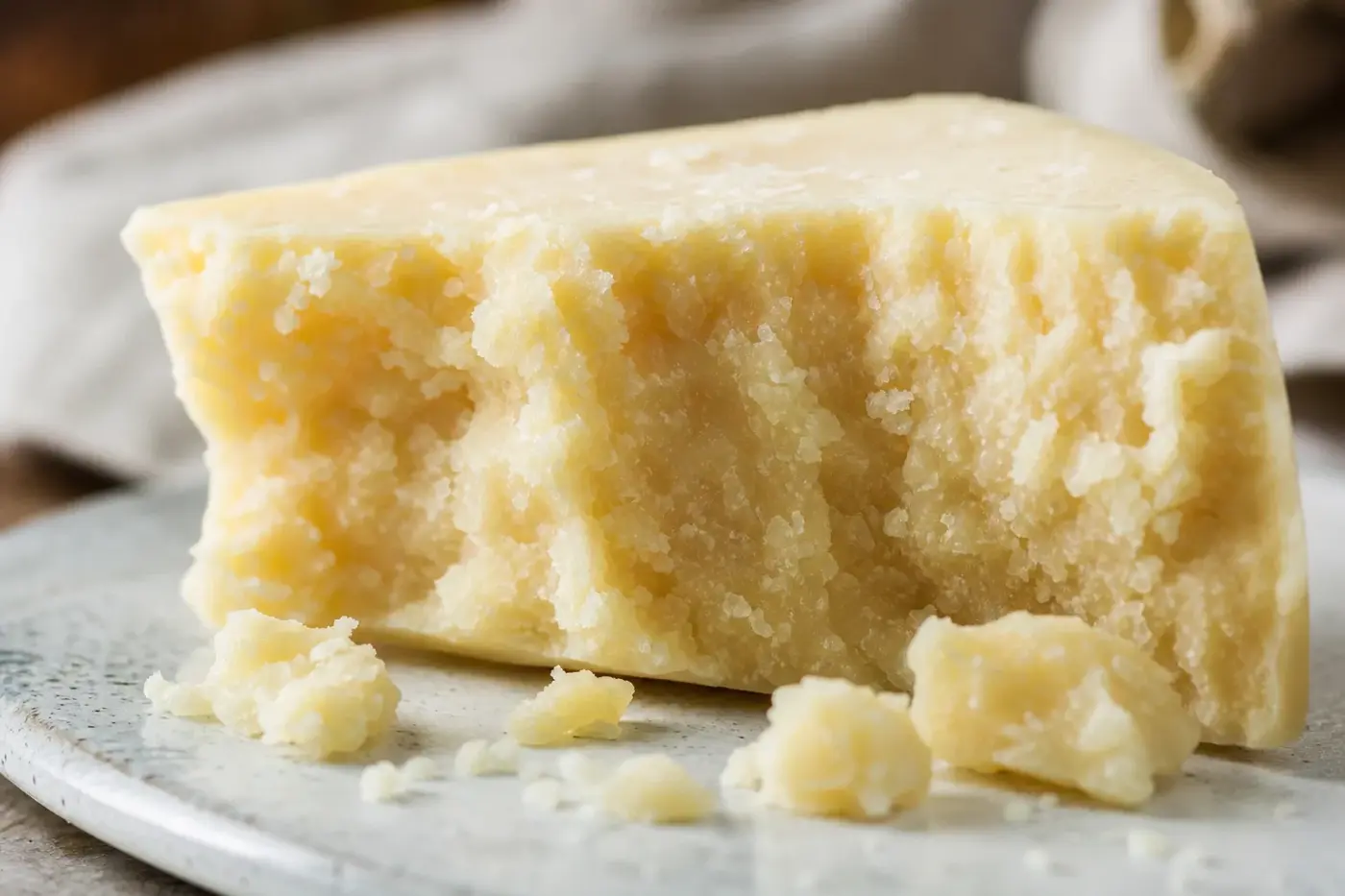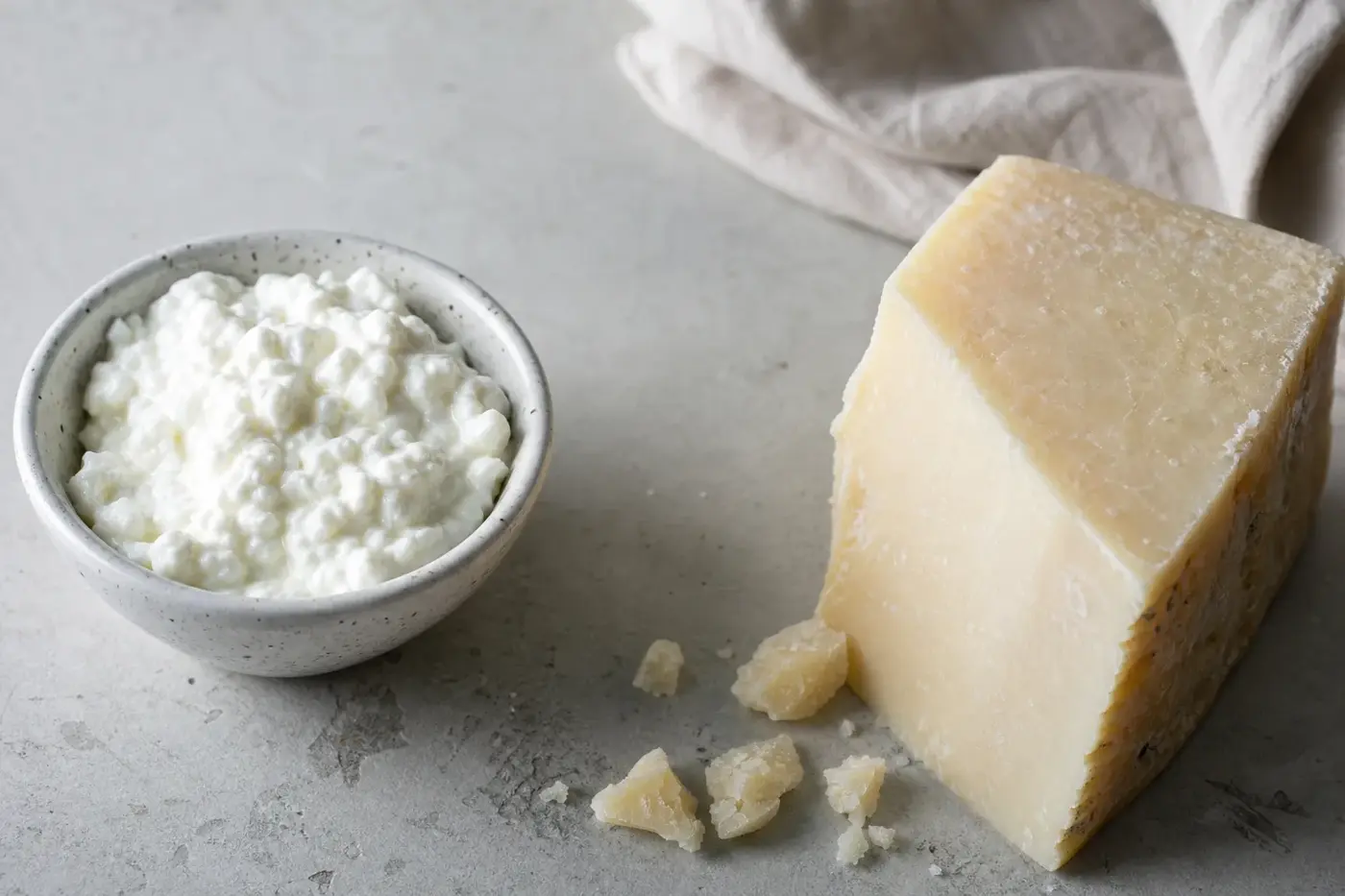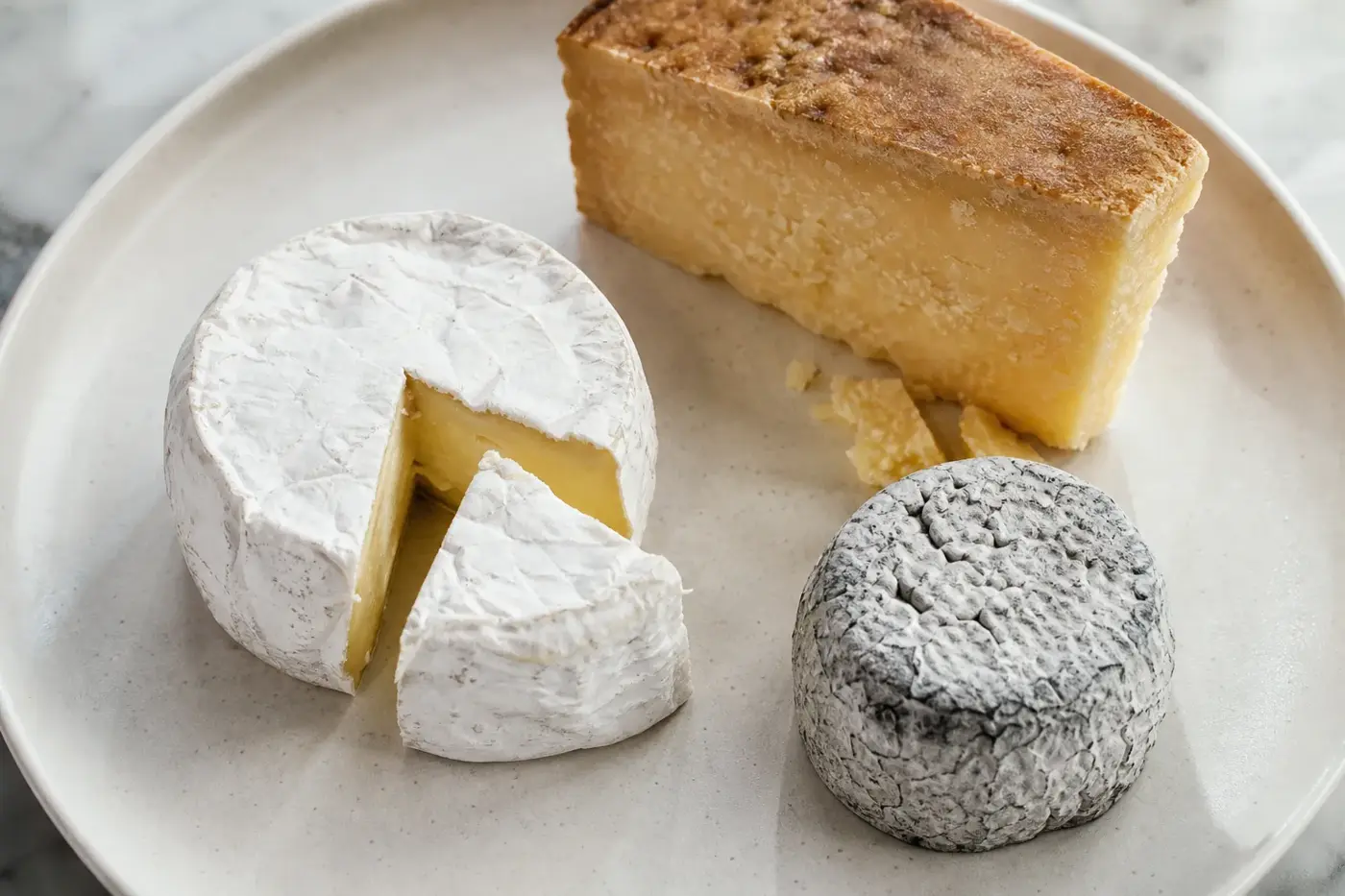
The soft middle has gone. You have reached the hard edge of your Parmigiano Reggiano, and now comes the small kitchen dilemma: save it or leave it? That outer layer is cheese, hardened by dehydration, and its consortium says it is edible once thoroughly cleaned. Brie’s white bloom is edible too, but wax, plastic and cloth must come off, so first you need to know what you have. [1,2,6,7,8]
Before you bite, meet the outside
A rind develops during maturation or forms with an applied surface treatment. You might find soft mould, a surface encouraged by washing, or a firm outer layer left as cheese loses moisture. A protective covering can sit over that rind, so the very outside is not automatically edible. [1,7,8]
| Surface or covering | What you have | What to do |
|---|---|---|
| Bloomy rind | Deliberately developed mould, familiar on Brie and Camembert | Commonly eaten; follow product instructions and official advice for your circumstances and country. [1,2,12,13] |
| Washed rind | A repeatedly washed surface, sometimes peach or orange coloured | Check your particular cheese; its rind character depends on maturation. [1,4] |
| Natural hard rind | A firm outer layer formed during ageing, as on Parmigiano Reggiano | Confirm it is suitable for eating or cooking. [7] |
| Edible ash | A fine applied coating, sometimes beneath a wrinkled rind | Eat only when identified as an edible part of the cheese. [5] |
| Wax, plastic or cloth | A casing, film or fabric covering | Remove before eating or cooking. [2,6,8] |
Colour alone will not settle the question. An orange washed surface and a coloured protective covering call for different decisions, however similar they look. For the bigger picture, see how to tell cheese styles apart. [1,8]
Brie’s white coat earns its place
The white coat on Brie and Camembert is part of their intended maturation. Neal’s Yard Dairy explains that cheesemakers introduce cultures, then guide their growth through temperature and humidity. That living surface helps develop the cheese beneath it, known as the paste. [1,12]
You will often find these rinds eaten with the cheese, their flavour part of the pleasure. Neal’s Yard Dairy’s published tasting notes describe the Brie-style Baron Bigod as mushroomy and vegetal, with a silky breakdown immediately beneath the rind. Keep that cheesemonger’s description in mind as you explore it. [2,3]
Deliberately developed bloom is not the same as an unexpected patch appearing during storage. White alone cannot tell you which you have. Keep the label, or ask the seller what your particular cheese’s rind should look like. [2,11]
Washed rinds: follow the brine, not just your nose
Repeated washing helps create a distinctive surface community. Neal’s Yard Dairy describes using brine to encourage a peach-coloured rind with a substantial bacterial component. That washing belongs to cheesemaking and maturation, rather than your kitchen chore list. [1]
A powerful aroma need not mean an equally powerful flavour. The same cheesemonger describes Rollright as milky with woody notes, its thin orange rind developed through repeated brine washing. A spruce band supports the cheese and contributes a pine note. [4]
The rind and its supporting material are separate things. Ask whether the cheese’s surface is intended to be eaten. Then remove any band or covering according to the seller’s instructions. [2,4]
Hard rinds: that last edge may have more to give
Parmigiano Reggiano’s rind is hardened cheese, not a separate barrier. Its consortium explains that dehydration creates the outer layer, which receives no preserving treatment. You can eat it, provided you clean it thoroughly before use. [7]
Edible does not necessarily mean enjoyable to chew beside a slice. Eataly describes this particular rind as potentially too hard and tough for that. Its recommendation is to enrich cooked dishes with it instead, remembering that it adds saltiness. [16]
Do not give every hard cheese the same treatment. A similarly firm edge may have a coating or surface treatment. Identify your particular cheese and its rind before saving it for the saucepan. [7,8]
Look beneath Dorstone’s dark coat
Dorstone’s grey or black surface starts with edible vegetable ash. Neal’s Yard Dairy describes the cheese being rolled in it after draining. A yeast called Geotrichum then helps form those fine surface wrinkles. [5]
Here, an applied edible coating and a developing rind work together. The cheesemonger describes Dorstone as having bright citrus flavours and gentle acidity. That dark coat does not mean a burnt flavour awaits you. [5]
Look for an explicit description such as “edible vegetable ash”. If you cannot identify the coating, ask before eating it. Appearance alone cannot tell you what someone has applied. [2,5]
Wax, plastic and cloth: unwrap before you tuck in
A close-fitting covering is still a covering, however neatly it hugs the cheese. Babybel’s instructions tell you to pull the tabs and peel away the wax casing before eating. Neal’s Yard Dairy likewise identifies clothbound coverings as something not to eat. [2,6]
Plastic films and protective coatings need separating from the cheese too. Industry guidance hosted by the European Commission tells processors to remove packaging, waxes and coatings before using cheese as an ingredient. [8]
At the counter, ask: “Can I eat this outer layer, and has it had any surface treatment?” Keep a wrapped piece’s instructions until you have finished the cheese. For the other details worth noticing, turn to reading a cheese label.
An absent ingredient list will not identify an unfamiliar covering for you. In England, Wales and Northern Ireland, FSA labelling guidance says ingredient lists generally include additives, while recognising exemptions. In Great Britain, Article 19 of the food information regulation exempts certain simply composed cheeses from an ingredient list. [9,10]
An edible rind is an invitation, not homework
Once you know the rind is edible and the cheese is suitable for you, your taste gets a vote. Neal’s Yard Dairy advises eating an edible rind according to whether you enjoy its flavour. There is no prize for finishing it. [2]
Try a little with the paste, rather than tackling a large piece of rind alone. The outside can taste stronger and feel tougher than the centre, while a hard rind may be better saved for cooking. If you prefer the paste alone, leave the rind. [2,16]
First, establish what the surface is. Whether you enjoy eating it is a separate question, and one you get to answer for yourself.
This page summarises published guidance from the official sources it cites. It is not medical advice. Guidance differs between countries and changes over time, so check the current source for where you live, and ask your doctor, midwife, pharmacist or dietitian about your own circumstances.
Intended rind or unexpected mould? Know the difference
Mould can be part of cheese production or a sign of unintended change. The FSA makes that distinction explicitly in its cheese recovery guidance. That guidance addresses businesses, rather than household trimming. [11]
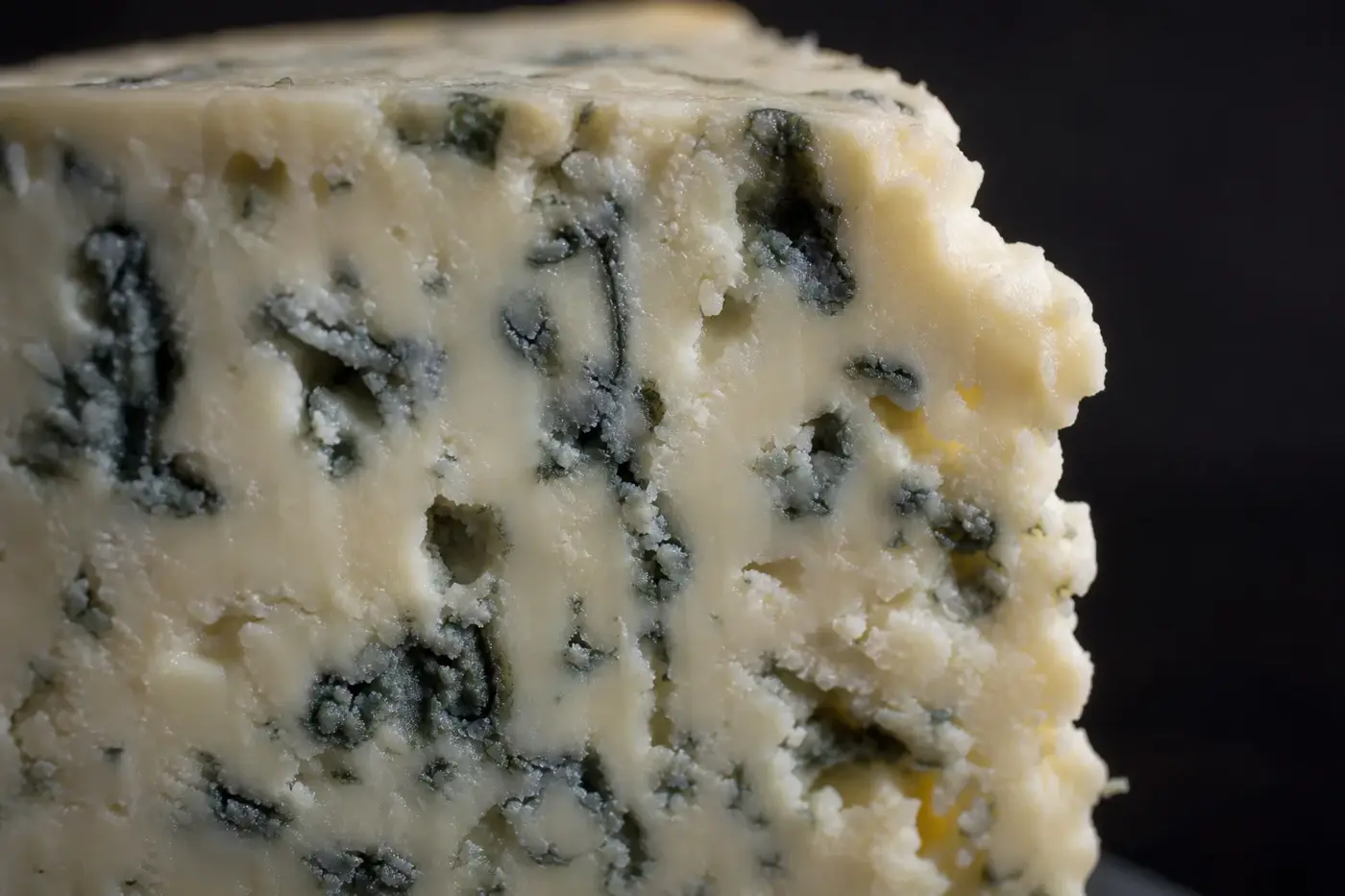
A cheese’s expected surface is not always a pristine white coat. Neal’s Yard Dairy documents that Dorstone may develop blue, green and grey surface spots during maturation. That describes Dorstone, not every cheese wearing coloured mould. [5]
Unexpected mould, new slime or another unexplained change is a reason to ask questions, not take a test bite. Ask the seller about that particular surface. For the separate question of disposal, see Mould on Cheese: When to Cut and When to Bin.
Follow storage instructions and use-by dates. UK official guidance distinguishes use-by dates, which concern safety, from best-before dates, which concern quality. They are not interchangeable. [14]
At greater risk? Look at the whole cheese
For UK readers, the NHS identifies pregnancy, weakened immunity and increasing age as factors associated with greater risk of serious listeriosis. Follow current official advice for the particular cheese, including its rind. The outside is only part of your decision. [13]
The NHS pregnancy guidance dated November 2026 says not to eat soft cheeses with a white coating, including Brie, Camembert and soft goat's cheese, unless cooked until steaming hot. The same advice applies to soft blue cheeses, including Danish blue, gorgonzola and roquefort. [12]
Hard cheeses sit in a separate category. The same guidance lists Cheddar, Gruyère and Parmesan among suitable choices during pregnancy, whether pasteurised or unpasteurised. Keep those categories distinct when you look up your cheese. [12]
Consult the linked NHS guidance and the FSA’s published listeria guidance for current UK information, or your national authority elsewhere. [12,13,18] For the practical business of storage, continue with how to store cheese at home.
Give a suitable hard rind one last turn in the pot
The easily grated cheese may be gone, but a suitable hard rind can still bring savoury flavour to your meal. Parmigiano Reggiano is a documented example. Its consortium confirms that the rind is edible, and producer Caseificio Sociale Fior di Latte recommends it for broths, soups and ragù. [7,15]
The technique below is specifically for Parmigiano Reggiano rind. It draws on that producer’s preparation advice and Eataly’s cooking guidance. Both businesses sell cheese, and this is their method. [15,16]
- Start with an identified edible rind. Choose a sound piece with a known surface treatment. Remove packaging and labels, and keep unidentified coatings out of your pot. [7,8]
- Give it a thorough clean. Fior di Latte recommends washing its cheese’s rind under running water and scraping the outermost layer with a grater. Use clean equipment on a stable surface. [15]
- Let it join a simmering dish. Eataly suggests soup, tomato sauce or ragù. Bean soup or vegetable stock gives you another use for the same broth-making approach. [15,16]
- Save the final seasoning for later. The rind adds saltiness, as Eataly notes. Taste the cooked dish before reaching for more salt. [16]
- Lift out what remains before serving. Remove any tough piece rather than expecting the rind to dissolve completely. [16]
Never cook with a spoiled rind. Washing and scraping prepare a sound piece; they do not rescue cheese showing a safety concern. Follow the label’s storage and use-by instructions, and observe any applicable recall notice. [11,14,17]
Questions people ask
Can you eat the white rind on Brie?
The white bloom on Brie is part of its intended maturation and is commonly eaten. Follow product instructions and official advice for your circumstances and country.
Can you cook with Parmigiano Reggiano rind?
The rind is edible once thoroughly cleaned and can be used in soups, broths and ragù. Eataly notes that it adds saltiness and recommends removing any tough remainder before serving.
Can you eat wax or cloth on cheese?
Wax, plastic and cloth are coverings that should be removed before eating or cooking. Babybel advises pulling the tabs and peeling away its wax casing.
Can you eat Brie rind during pregnancy?
The NHS advises that soft cheeses with a white coating, including Brie, should not be eaten during pregnancy unless cooked until steaming hot. See the NHS pregnancy guidance for current advice.
Does coloured mould on a cheese rind mean it has spoiled?
Neal’s Yard Dairy says Dorstone may develop blue, green and grey surface spots during maturation, but that is not a guide to every cheese with coloured mould. If you notice unexpected mould or another unexplained change, ask the seller about that particular surface rather than tasting it.
Sources
[1] Neal’s Yard Dairy. Rinds: a window into the interaction between the cheese and its environment. Online maturation account, 2021. Source.
[2] Neal’s Yard Dairy. FAQs, “Can I eat the rind?” Undated online edition. Source.
[3] Neal’s Yard Dairy. Baron Bigod. Undated product and maturation description. Source.
[4] Neal’s Yard Dairy. Rollright. Undated product and maturation description. Source.
[5] Neal’s Yard Dairy. Dorstone. Undated product and maturation description. Source.
[6] Babybel. Frequently Asked Questions, “How do you eat Mini Babybel?” Undated US website edition. Source.
[7] Consorzio del Formaggio Parmigiano Reggiano. FAQ, “Can you eat Parmigiano Reggiano rind?” Undated online edition. Source.
[8] European Dairy Association and Eucolait. Guidance on Cheese as Raw Material, adopted 1 February 2018, sections 5.3.3 and 5.4.1. Industry guidance hosted by the European Commission. Source.
[9] Food Standards Agency. Packaging and labelling. Online guidance linked from the publication updated 4 September 2026; applies to England, Wales and Northern Ireland. Source.
[10] UK legislation publisher. Assimilated Regulation (EU) No 1169/2011, Article 19(1)(d), current online provision retrieved November 2026. Source.
[11] Food Standards Agency. Cheese recovery guidance. Current retrieved PDF; guidance first published in 2007. Source.
[12] NHS. Foods to avoid in pregnancy, “Cheese, milk and other dairy”. Current online edition retrieved November 2026. Source.
[13] NHS. Listeriosis. Page reviewed 10 November 2023; retrieved November 2026. Source.
[14] UK Government. Understanding food labelling: Best before and use-by dates. Current online edition retrieved November 2026. Source.
[15] Caseificio Sociale Fior di Latte. Can You Eat the Rind of Parmigiano Reggiano? Undated producer guidance. Source.
[16] Eataly. How to Use Leftover Parmigiano Reggiano Rinds. Undated culinary guidance. Source.
[17] Food Standards Agency. Alerts. Live official alert index, retrieved November 2026. Source.
[18] Food Standards Agency. Listeria. Current GOV.UK destination retrieved November 2026; substantive passage verification remains outstanding as recorded below. Source.
This piece was researched from official UK safety and labelling sources, cheesemonger maturation accounts, and attributed producer and culinary guidance.
Last checked: November 2026
Last checked November 2026.
The editors suggest you read next
How to Store Cheese at Home
Open the fridge and a strongly aromatic cheese may introduce itself before you have found the milk.