How to Taste Cheese: A Step-by-Step Guide
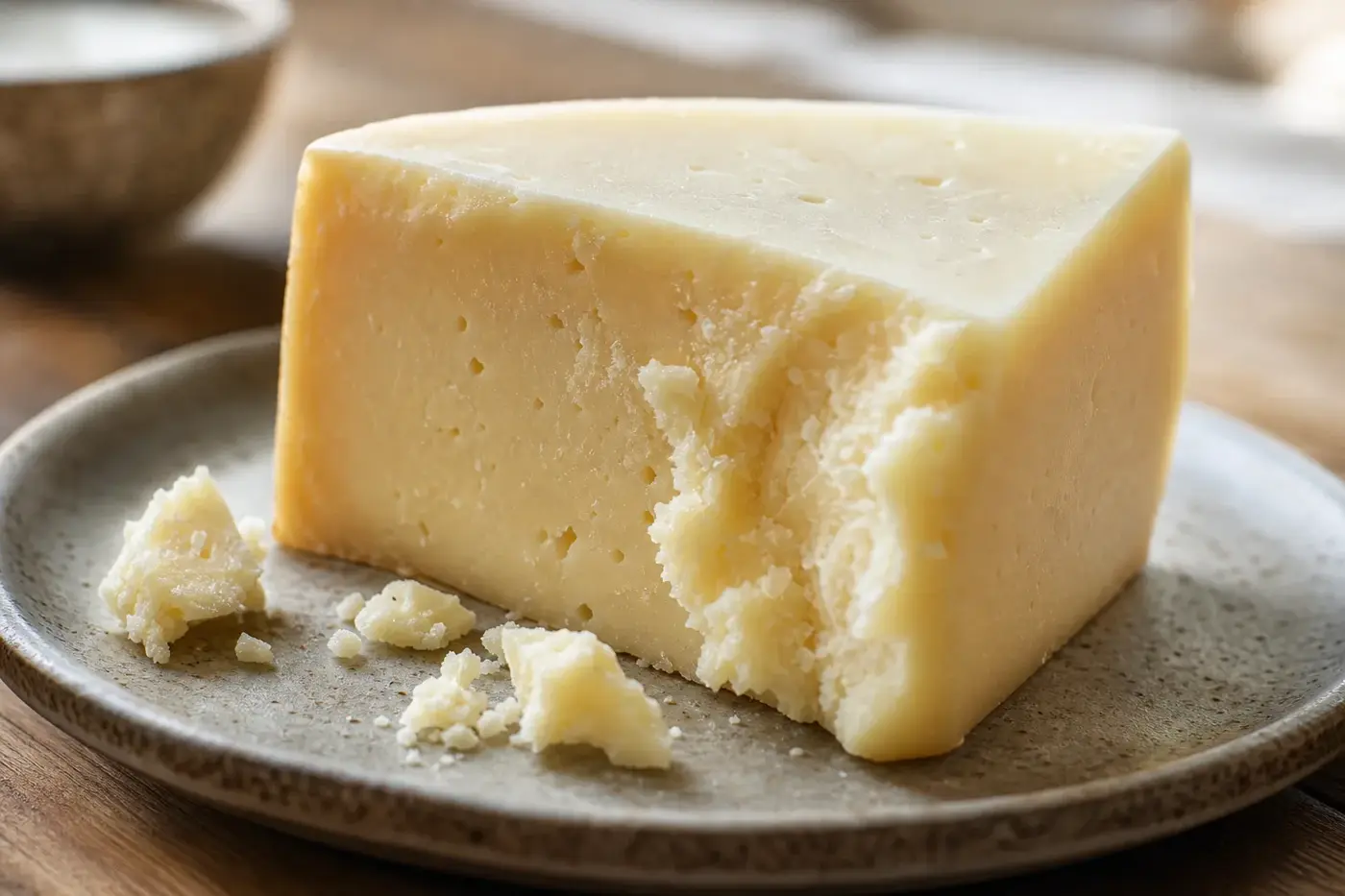
Break a little cheese and bring the freshly exposed centre to your nose.
Break a little cheese and bring the freshly exposed centre to your nose. Then take a bite and chew slowly. There is more going on than that first sniff lets on: aroma compounds travel from your mouth to your nose as you chew. In a 2024 cheese study, researchers followed this unfolding experience by pairing the changing sensory reports of 12 assessors with measurements of aroma in their nasal airflow. [7]
You only need two or three contrasting cheeses to start exploring. Look, smell, feel a small piece, then chew slowly. Does it crumble or bend, and does cutting release a different smell? Notice what stays after swallowing: a few simple questions can reveal plenty, without turning your cheese board into an examination.
1. Give your board a little contrast
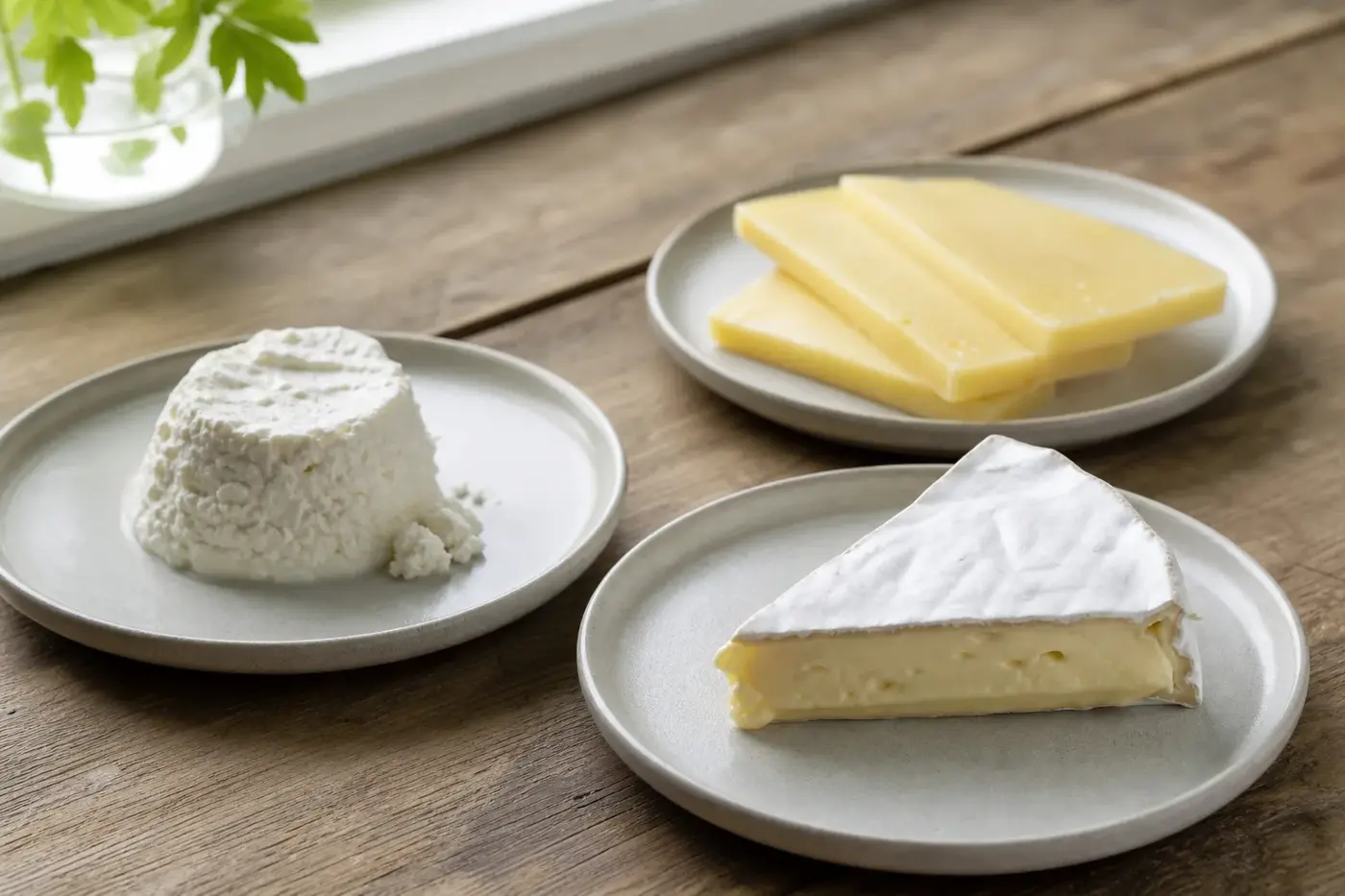
Set a fresh, rindless cheese beside a firm cheese and a soft, surface-ripened cheese. Or begin with just two: one that slices cleanly and one that breaks into flakes. Choose the actual products around the people tasting them. You want a clear contrast, not a crowded board.
Cut enough for several small bites and a second comparison. For cheese with a rind, take a narrow section running towards the centre. Separate a little paste from near the edge and a little from the middle. Paste simply means the cheese's interior, and those two pieces may have different things to show you.
Keep the labels beside your notes and record the name, maker and any stated age. A favourite is much more useful when you can find it again. For help choosing contrasts, use how to tell cheese styles apart.
2. Make everyone welcome at the table
Ask about food allergies before choosing your cheese. For England, Wales and Northern Ireland, the Food Standards Agency advises checking ingredients, keeping allergens separate and thoroughly cleaning equipment and surfaces. Keep the packaging for cheese, bread and crackers, including precautionary allergen statements. Separate knives help organise your tasting, but allergy precautions also require clean preparation and separation. [3]
Milk is among the allergens the FSA lists, alongside ingredients found in accompaniments, such as wheat, sesame and nuts. Lactose free dairy is unsuitable for someone with a milk allergy; cheese made from goat, sheep or buffalo milk is not a safe substitute either. Plan food with the person concerned rather than offering a small sample to try, and ask a doctor or dietitian about individual needs. See cheese allergy vs lactose intolerance for the distinction. [3]
For pregnancy in the UK, consult the NHS pregnancy guidance before choosing cheese. [4] In the US, pregnant people, adults aged 65 or over and people with weakened immunity can consult the CDC guidance on preventing listeria infection. The guidance here reflects these sources as at November 2026. [5]
3. Take the chill off your tasting portions
Keep your fridge between 0 and 5 °C (32 to 41 °F), refrigerate dairy products and follow the packaging's storage instructions and dates. This is FSA guidance for England, Wales and Northern Ireland as at November 2026. Keep chilled food out for the shortest possible time, with a maximum of four hours during preparation. [6]
The Academy of Cheese recommends taking the chill off cheese before assessment. Bring out only the portions you will taste and leave the rest refrigerated. Let those pieces lose some fridge chill while you set up, rather than waiting for a whole wheel to warm. Note when they came out and use your country's official time limit where it differs. [1,6]
For longer-term handling, see how to store cheese at home. Check the FSA's alerts or FDA's recall notices for the products you have chosen. [10,11]
4. Give the cheese a quiet moment
Plain plates, separate knives, drinking water and plain bread or crackers are enough. Give each cheese its own plate or a separate space on your board. The Academy of Cheese recommends neutral accompaniments and a clean palate. Save chutney, fruit preserves and strongly flavoured drinks for after the first comparison: the chutney can wait its turn. [1]
Choose somewhere away from scented candles, perfume and cooking smells. Keep a pencil and paper within reach. If you are tasting with friends, ask everyone to write one observation before the conversation starts. That leaves each person room to find their own words.
5. Begin gently, then build the flavour
Taste from milder to stronger flavours, following the Academy of Cheese's suggested progression. Ask the cheesemonger about intensity or use the maker's description to arrange your cheeses. You can adjust the order after your first round if needed. [1]
Record smell and flavour intensity separately. A strong aroma cannot tell you how salty, sour or persistent a cheese will seem in your mouth. Smelling and eating reveal different aspects of its sensory character, so give both your attention. If one cheese dominates, pause, drink water and return to the quieter one. [2,7]
6. Have a good look before you bite
Look closely at the outside and the freshly cut face. Use the Academy's visual assessment categories as prompts: colour, rind, consistency and the distribution of any blueing. Is the surface dry or moist? Is the paste evenly coloured, or can you see a darker band just beneath the rind? [8]
Notice holes, cracks, layers and visible grains. Be precise: “close-textured with tiny openings” or “breaks along uneven lines” tells you more than “hard”, if that is what you see. Compare your pieces from near the rind and the centre. Describe the difference before trying to explain it.
7. Follow your nose into the centre
A newly exposed interior gives your nose somewhere else to explore. Smell the piece before eating, then break or cut it and smell again. Compare rind and paste separately, and return later to see whether the slightly warmer portion seems different. The Academy treats aroma as a separate part of assessment. [8]
Start with broad associations: milk, plants, fruit or something savoury. Get more specific if it comes naturally. “Like the inside of a mushroom” is a good personal note if that is what you notice. Otherwise, leave a blank rather than borrow someone else's words.
8. Find out how the cheese feels
Press a small piece gently with clean hands, using a portion intended for your own plate, or use a fork. Does it resist, spring back, crumble or smear? The American Cheese Society includes manipulating a small portion when assessing the cheese's body. Your question is simple: what happens when you press it? [2]
Remove wax, plastic coatings and cloth before eating; the Academy identifies these as external coverings. Babybel's own instructions, for example, say to peel away its wax and recommend against eating it. For other rinds, check the maker's instructions or ask the cheesemonger whether that particular rind is intended to be eaten. [1,9]
If the rind is edible, taste the paste first, then try a little with rind attached. You can leave an edible rind if you dislike its texture.
9. Let a small bite tell its story
Taste without bread first. Take a small bite, chew naturally and follow the opening impression, the middle and what remains. Look for saltiness, sourness, sweetness, bitterness and savouriness before reaching for an elaborate flavour description. The American Cheese Society distinguishes these basic tastes in its sensory vocabulary. [2]
Now give texture your attention. Does the cheese stay springy, break into crumbs or become smooth as it warms? Is it creamy, grainy or sticky? Keep touch and smell distinct in your notes: a smooth texture and a milky aroma are different observations. [8]
That changing aroma has a route, and a name. Retronasal smell is the route by which aroma reaches your nose from inside your mouth during chewing. It helps explain why the experience changes as you eat, beyond what your first sniff revealed. [7]
After swallowing, wait before reaching for a cracker. The finish is the flavour impression that continues afterwards. Does it fade quickly, or does one sensation linger? Note what remains and how long it seems to last. [1,7]
10. Compare, revisit and find your favourite
Between cheeses, drink water and, if you want, eat a little plain bread or cracker. Approach the next cheese with the same questions, then make one direct comparison. Which feels firmer, tastes saltier or has the longer finish? Compare one feature at a time so your answer stays clear. [1]
For a second round, compare the centre and near-rind pieces from one cheese. On another occasion, try two cheeses of the same style with different stated ages. Write your question before tasting, then record what you find. A focused comparison gives you something specific to look for, with no score required.
Keep your notes short. The imaginary examples below give you a simple format for your own observations, not homework to hand in.
| Cheese | What you see and feel | What you smell and taste | What stays with you |
|---|---|---|---|
| Sample A | Firm; breaks into flakes | Slightly sour; little aroma | Fades quickly |
| Sample B | Soft; sticks to the knife | Milky smell; salt first | Saltiness lingers |
Finally, return to the cheese you most want another bite of. What draws you back: texture, tang, smell or a combination? Finish with one sentence about when you would choose it. Your tasting note now has a useful job the next time you are choosing cheese.
General information only, not medical advice: follow the official guidance where you live.
Questions people ask
What cheeses should I choose for a tasting?
Start with two or three contrasting cheeses. For example, put a fresh, rindless cheese beside a firm cheese and a soft, surface ripened cheese.
What order should I taste cheeses in?
The Academy of Cheese suggests tasting from milder to stronger flavours. Ask the cheesemonger about intensity or use the maker's description, then adjust the order after the first round if needed.
Should cheese be brought out of the fridge before tasting?
The Academy of Cheese recommends taking the chill off cheese before assessment. Bring out only the portions you will taste and leave the rest refrigerated. The Food Standards Agency advises keeping chilled food out for the shortest possible time, with a maximum of four hours during preparation in England, Wales and Northern Ireland.
Can I eat the rind on cheese?
Remove wax, plastic coatings and cloth before eating. For other rinds, check the maker's instructions or ask the cheesemonger whether that particular rind is intended to be eaten.
Can someone with a milk allergy try lactose free or goat's cheese?
The Food Standards Agency says lactose free dairy is unsuitable for someone with a milk allergy. Cheese made from goat, sheep or buffalo milk is not a safe substitute either. Consult the Food Standards Agency's allergen guidance and ask a doctor or dietitian about individual needs.
Sources
-
Academy of Cheese. The Ultimate Guide To Tasting Cheese, undated online edition, retrieved November 2026. Preparation, assessment, tasting order and recording a finish.
-
American Cheese Society. American Cheese Society Cheese and Dairy Product Lexicon and Glossary, version 1, 1 February 2018; online text retrieved November 2026. Surface-to-core differences, tactile assessment and basic tastes.
-
Food Standards Agency. Food allergy and intolerance advice for consumers, current online edition, 2026. Applies to England, Northern Ireland and Wales. Ingredient checks, retained packaging, separation and cleaning.
-
NHS. Foods to avoid in pregnancy, current online edition, retrieved November 2026. UK pregnancy guidance, “Cheese, milk and other dairy”.
-
US Centers for Disease Control and Prevention. Preventing Listeria Infection, 31 January 2025 edition, retrieved November 2026. Higher-risk groups and cheese-specific prevention advice.
-
Food Standards Agency. How to chill, freeze and defrost food safely, published 18 December 2017; current online text retrieved November 2026. Applies to England, Northern Ireland and Wales.
-
Centre des Sciences du Goût et de l'Alimentation and collaborating laboratories. Influence of Cheese Composition on Aroma Content, Release, and Perception, Foods, 2024. Primary experimental research, particularly sections 4.5 and 5.
-
Academy of Cheese. Cheese Tasting, undated online teaching resource, retrieved November 2026. Separate visual, textural and aromatic assessment.
-
Babybel, Bel Brands USA. Frequently Asked Questions, undated US online edition, retrieved November 2026. The maker's instructions for removing its wax and its recommendation against eating it. This is a commercial producer's source.
-
Food Standards Agency. Alerts, live official notice index, retrieved November 2026.
-
US Food and Drug Administration. Recalls, Market Withdrawals, & Safety Alerts, live official notice index, retrieved November 2026.
Researched from official food-safety guidance, cheese education resources, a producer's handling instructions and primary sensory research, synthesised into a repeatable home tasting routine.
Last checked: November 2026
Last checked November 2026.
The editors suggest you read next
Mild or Strong Cheese? Where Beginners Should Start
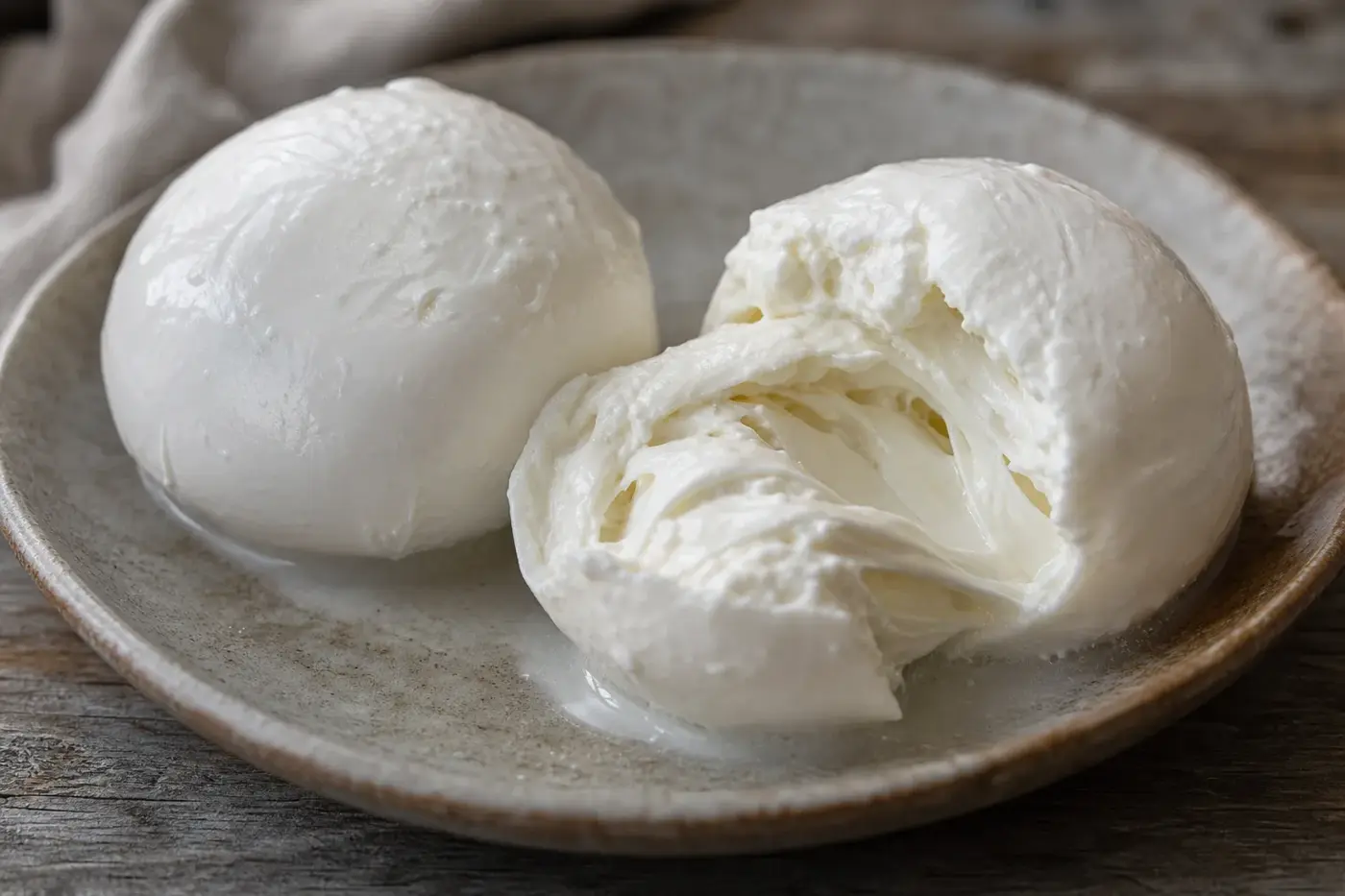
Pull apart fresh mozzarella and you find soft, elastic layers, with a little milky liquid tucked between them.