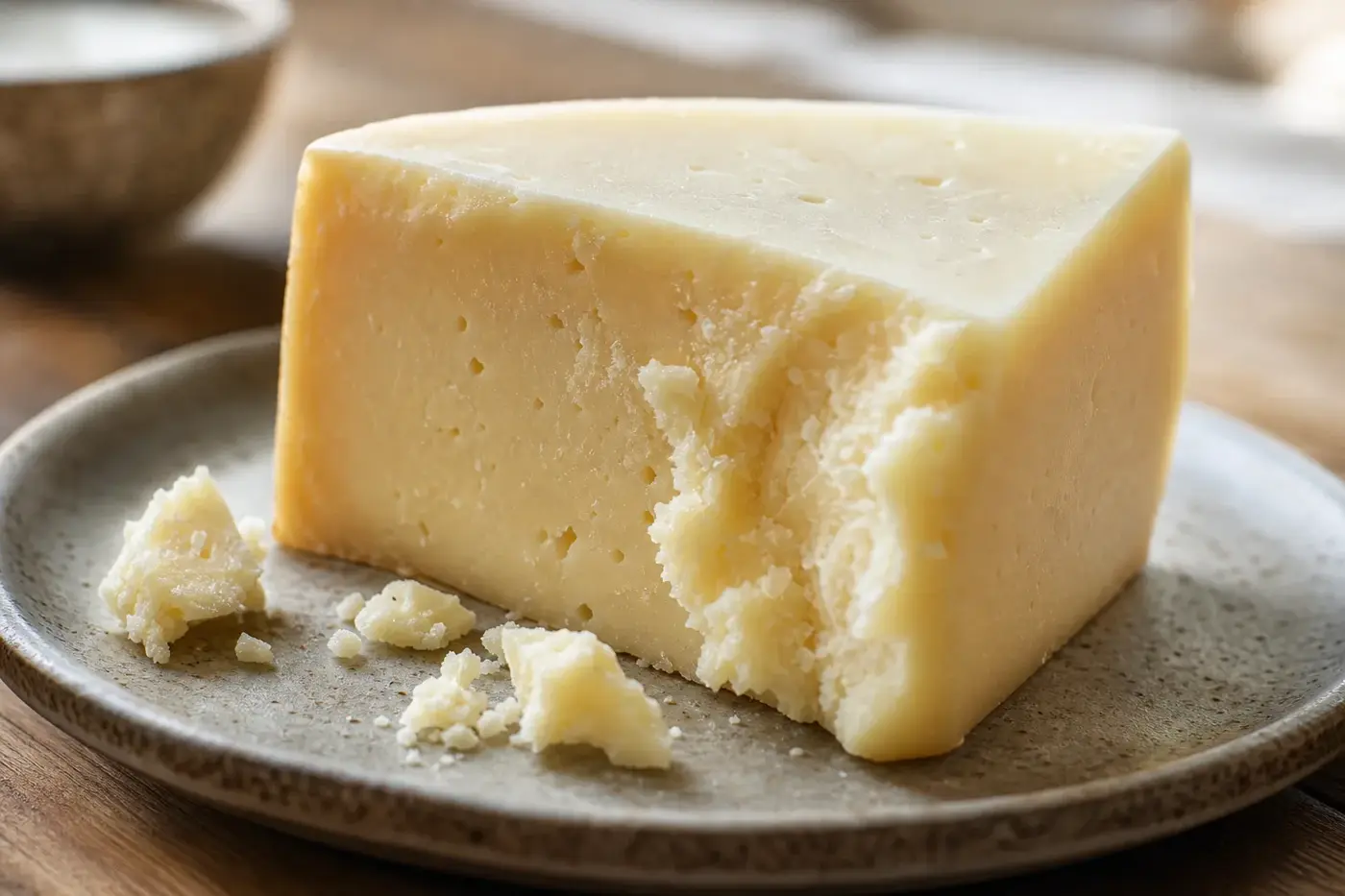
Mild or Strong Cheese? Where Beginners Should Start
Pull apart fresh mozzarella and you find soft, elastic layers, with a little milky liquid tucked between them.
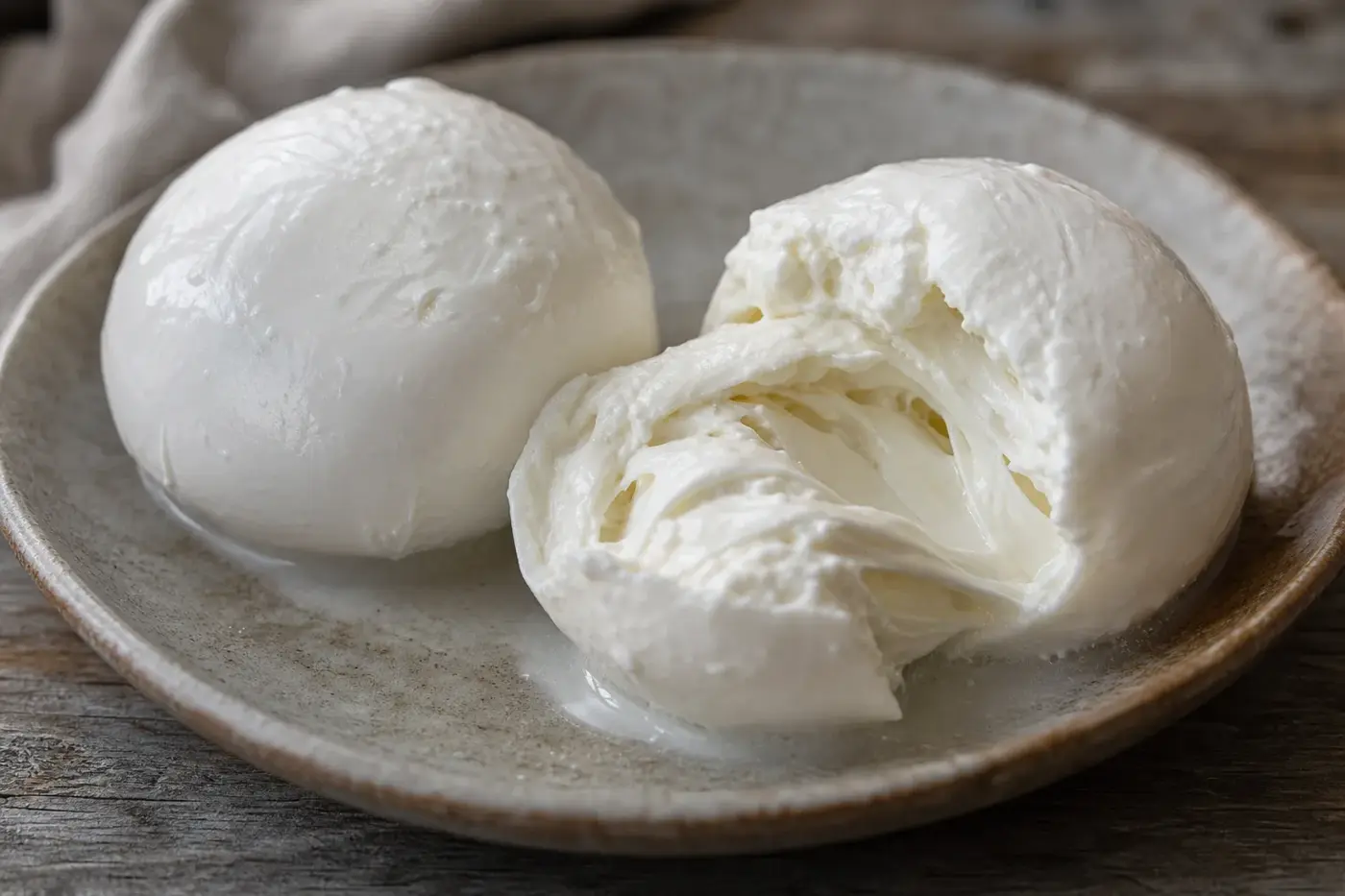
Pull apart fresh mozzarella and you find soft, elastic layers, with a little milky liquid tucked between them. It is a quiet first taste of cheese, not a grand entrance. Codex describes this high-moisture cheese as smooth, unripened and rindless.[3]
From there, you could try young Gouda, then savoury mature Cheddar, then blue or washed-rind cheese. Or start further along if assertive flavours already appeal. Stay with mild cheese if that makes you happy. Nobody is handing out medals for the most formidable cheeseboard.
What does “strong” mean to your taste buds?
“Strong” cheese might be salty, tangy, deeply savoury, pungent, or several of those things at once. “Mild” suggests an impression that stays gentle. Neither is a single measurement. What helps is naming the part that catches your attention.
Aroma is what you smell; taste includes sensations such as saltiness and acidity. Flavour brings the experience together as you eat, including aromas reaching your nose from your mouth. For your first tasting, make separate notes for “smell” and “flavour”. Give the bite a chance before an unfamiliar aroma gets the final word.[1]
You might love Cheddar's sharpness but dislike a fragrant rind. Someone else might happily choose a soft, aromatic cheese over a firm one. Notice what delights you and what makes you hesitate. Strong cheeses are not all strong in the same way.
Let age tell part of the story
Inside a ripening cheese, enzymes break down proteins and fats into smaller compounds and flavour building blocks. Cultures, the microorganisms used in cheesemaking, help determine which changes happen. Time lets those processes develop. The cheese itself and its ripening conditions shape where they lead.[1]
Moisture helps create the working environment for microbes and enzymes, alongside salt, acidity and temperature. That is why a soft cheese can be assertive while a firmer one stays relatively gentle. Texture tells you about the bite. It cannot tell you much about intensity on its own.[2]
Moulds and rind treatments take different routes. Blue mould develops inside the cheese; washing a rind helps select a community of microorganisms on its surface. Their activity can give even a relatively young cheese a pronounced aroma. Comparing ages is therefore most useful within the same cheese, rather than across unrelated styles.[2]
Older does not mean stronger in every respect. Makers use different cultures, moisture targets and maturing conditions, so cheeses of the same age can develop differently. Ask how this particular piece tastes now. Its age is only part of the answer.[1]
Ease in with mozzarella and young Gouda
For a soft first taste, look for fresh mozzarella sold in liquid, not the firmer mozzarella intended for grating. The high-moisture form described by Codex offers soft, smooth, elastic layers. There is no rind between you and that first bite.[3]
Try it plain before adding tomato, herbs or oil. Does this gentle, milky starting point seem sweeter, saltier or tangier than you expected? Enjoy the texture without waiting for a powerful finish. The mozzarella guide explains the different forms.
Next, try young Gouda: a sliceable cheese rather than a moist ball. The published specification for Gouda Holland describes its texture at four weeks as slightly soft to pliable, becoming firmer as it matures. The European Commission describes the young flavour as sweet.[5,6]
Ask for a young, plain example without added spices. Gouda is the wider style name; Gouda Holland is a particular name registered as a protected geographical indication in the EU. That specification describes that cheese. Read the description of whichever Gouda you choose.[5,6]
Pull up a place for mature Cheddar
Mature Cheddar takes you somewhere firmer and more savoury. Ask for a piece described as rounded and savoury, or tangy if that appeals. You need not request the strongest available. Codex describes Cheddar as a ripened hard cheese with a firm body.[4]
Taste it beside your young Gouda. Is the biggest difference the acidity, how long the flavour lasts, or the way it breaks down as you chew? If the Cheddar feels too insistent, return to the Gouda and save it for another tasting. You have found a preference, not failed an entrance exam.
Follow your curiosity towards blues and fragrant rinds
Blue cheese brings mould into the interior. The ripening mould releases enzymes that break down fat, helping produce piquant notes and characteristic aroma compounds. Think of it as a different kind of intensity, rather than simply a stronger Cheddar. You are exploring another set of flavours.[2]
Ask for a blue described as gentle. Take a small bite containing both cheese and veining, then notice the balance of salt, sharpness and mould flavour. If it does not appeal, ask next time for a contrasting texture or flavour description. One cheese need not settle your opinion of the whole family.
Washed-rind cheese develops through attention to its surface, often including washing with dilute salt brine. Surface microbes can produce sulphur-containing aroma compounds, helping explain that conspicuous smell.[2] Ask the cheesemonger to describe the centre and rind separately. Then decide whether you fancy a bite.
Leave blue and washed-rind cheeses for another day if you prefer. Or try them early if their aromas intrigue you. Your appetite is a better guide than a prescribed graduation from mild to strong.
Keep your tasting small and pleasurable
Spread your tasting over several occasions, or keep one sitting focused. Mozzarella, young Gouda and mature Cheddar give you plenty to compare, with just one optional blue or washed-rind cheese. A small selection gives every comparison a purpose. It also leaves you room to notice what changes from bite to bite.
- Begin with mozzarella. Smell it, take a plain bite and choose one word for its texture.
- Move to young Gouda. Notice the change from soft layers to a pliable slice.[3,5]
- Compare mature Cheddar. Describe its acidity and finish beside the Gouda, using your own words.
- Try the optional cheese. Take a small bite, pause and decide whether you want another.
- Return to a favourite, or stop. Skip anything unappealing. Keep unused cheese refrigerated.[7]
Give the cheesemonger something to go on
At a staffed counter, ask whether samples are available. Describe the experience you want: “a gentle, sliceable cheese”, “a savoury Cheddar without too much sharpness”, or “a first blue with a softer texture”. Each gives the seller more to work with than “something suitable for beginners”.
Buy small portions that suit your planned tasting. Note the maker and the cheese's age or maturity description, so you can find that same example again. With packaged cheese, look for descriptions of texture and flavour. A strength number alone only takes you so far.
Check the storage instructions and date too.[7,8] The guide to reading a cheese label helps you put the flavour description alongside the practical information. Both deserve your attention before you buy.
Give the first bite the stage
Taste the cheese alone first. If you want an accompaniment, follow with plain bread or an unflavoured cracker. Save chutney, pickles and strongly seasoned crackers until after that first comparison. Water is a straightforward drink for this tasting.
Explore temperature with small pieces and keep the rest refrigerated. Compare a cool bite with one that has briefly lost its fridge chill, then decide which you prefer. There is no need to leave your whole purchase out.
For households in England, Wales and Northern Ireland, the Food Standards Agency's advice as of November 2026 is a fridge between 0 and 5 °C (32 to 41 °F). It also advises keeping chilled food out for the shortest possible time, with a maximum of four hours during preparation. Follow the pack's instructions. Count preparation and tasting together.[7]
Get to know the rind, and keep the label
That conspicuous washed-rind aroma can be part of normal ripening.[2] Ask the seller what smell and surface appearance to expect from the particular cheese you are buying. At home, keep its label and storage instructions. Smell alone is not a safety guide.
UK official guidance as of November 2026 distinguishes a use-by date, which concerns safety, from a best-before date, which concerns quality. Follow storage instructions for after opening as well as the printed date. Do not eat cheese after its use-by date, however appealing it smells.[8]
Rind and wrapping need separate decisions. Codex describes fresh mozzarella as rindless and Cheddar as sold with or without a rind, which may be coated.[3,4] Ask the producer or seller whether the rind is intended to be eaten. Remove non-food coverings such as wax, plastic or cloth; Babybel's producer, for example, instructs consumers to peel off its wax casing.[9]
Even an edible rind is optional. Start with the centre if the rind's aroma feels daunting. Keep cheese refrigerated according to its label, including instructions for its liquid or packaging.[7] The guides to storing cheese at home and mould on cheese cover the detailed decisions.
Let your own words lead to the next favourite
Write down one thing you liked and one thing you would change. “Supple texture, less salt next time” tells you more than a score. On your next visit, ask for a cheese that changes just one of those features.
Return to Cheese for Beginners for the wider learning route. Cheese: The Complete Guide provides the broad reference. How to Tell Cheese Styles Apart: Milk, Rind, Texture and Method connects your tasting words with the way a cheese is made.
General information only, not medical advice: follow the official guidance where you live.
Questions people ask
What cheese should a beginner try first?
Fresh mozzarella sold in liquid is a gentle, milky starting point. Young Gouda offers a sliceable contrast, followed by savoury mature Cheddar if you want to explore further.
Does older cheese always taste stronger?
No. Cheeses of the same age can develop differently because makers use different cultures, moisture targets and maturing conditions. Age comparisons are most useful within the same cheese rather than between unrelated styles.
What is the difference between blue cheese and washed rind cheese?
Blue mould develops inside the cheese and helps produce piquant notes and characteristic aromas. Washed rind cheese develops a community of microbes on its surface, often with the help of dilute salt brine.
Can you eat a cheese rind?
Ask the producer or seller whether the rind is intended to be eaten. Remove non food coverings such as wax, plastic or cloth; Babybel's producer instructs consumers to peel off its wax casing.
How should I store cheese for a tasting?
For households in England, Wales and Northern Ireland, the Food Standards Agency advises a fridge temperature between 0 and 5 °C. It advises keeping chilled food out for the shortest possible time, with a maximum of four hours during preparation. Follow the pack's instructions and see the Food Standards Agency guidance.
Sources
-
Society of Dairy Technology, Biochemistry of cheese ripening, International Journal of Dairy Technology, volume 57, issues 2 and 3, 2004. Published paper; retrieved full text.
-
American Society for Microbiology, The Basics of Cheesemaking, Microbiology Spectrum, 2013, DOI 10.1128/microbiolspec.CM-0002-2012. Published article.
-
FAO and WHO, Codex Alimentarius Commission, Standard for Mozzarella, CXS 262-2006, amended through 2023, section 2. Codex is an international reference standard. Standard.
-
FAO and WHO, Codex Alimentarius Commission, Standard for Cheddar, CXS 263-1966, revised 2007, amended through 2022, section 2. Codex is an international reference standard. Standard.
-
European Commission, Publication of an application pursuant to Article 6(2) of Council Regulation (EC) No 510/2006: Gouda Holland, 2008/C 61/12, 6 March 2008, specification summary, section 4.2. Published specification summary. This historical document supplies the attributed sensory description.
-
European Commission, Commission Regulation (EU) No 1122/2010, 2 December 2010, registration of Gouda Holland; and Gouda Holland PGI / Noord-Hollandse Gouda PDO, undated explanatory page, checked November 2026. Registration regulation; Commission product account.
-
Food Standards Agency, How to chill, freeze and defrost food safely, published 18 December 2017, current retrieved guidance checked November 2026. Applies to England, Northern Ireland and Wales. Official guidance.
-
GOV.UK, Understanding food labelling: Best before and use-by dates, current retrieved guidance checked November 2026. Official guidance.
-
Bel Brands USA, Babybel, Frequently Asked Questions, undated producer guidance, checked November 2026, “How do you eat Mini Babybel?”. Producer instructions. This commercial source is used for its own wax-removal instruction.
-
Food Standards Agency, Alerts, live official notice index, retrieved November 2026. Official alerts.
This piece combines desk research from cheese standards, published specifications, dairy science and official household guidance with an editorial tasting sequence.
Last checked: November 2026
Last checked November 2026.
The editors suggest you read next
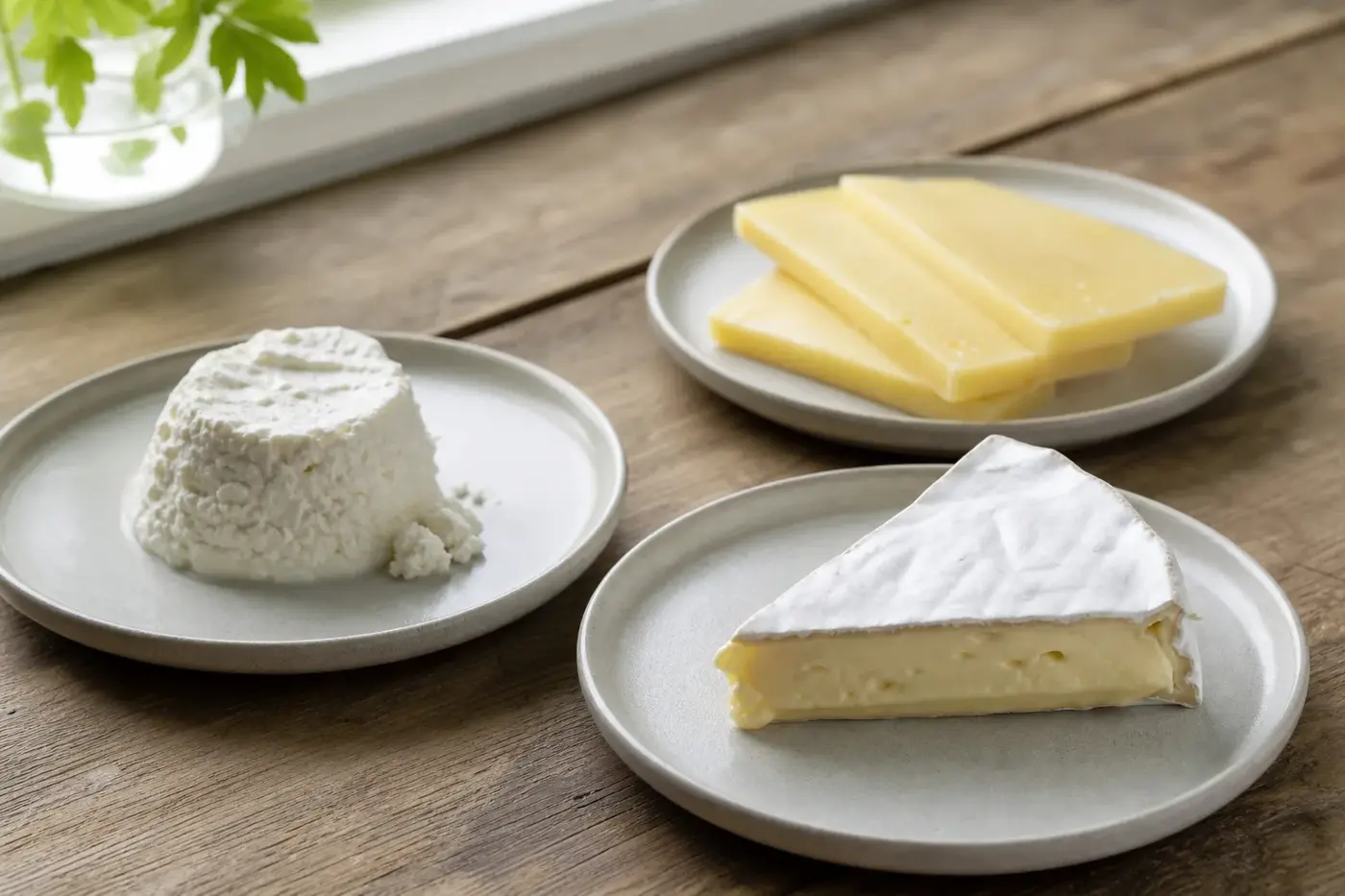
How to Taste Cheese: A Step-by-Step Guide
Break a little cheese and bring the freshly exposed centre to your nose.