How to Tell Cheese Styles Apart: Milk, Rind, Texture and Method
Watch mozzarella curd being worked and stretched in hot water.
Watch mozzarella curd being worked and stretched in hot water. Before the finished cheese reaches the counter, that stretching has already told you something its appearance cannot. It is a good place to begin if you want to understand what makes one cheese different from another. [2,3]
Ask four questions: which animal supplied the milk, what covers the outside, how firm is the centre, and how was it made? Each answer gives you a different clue. There is no need to make a cheese choose just one identity: mozzarella can be both fresh and stretched-curd. [2,3]
Start with the animal behind the milk
Cow, goat, sheep and buffalo milk all have a place at the cheese counter. Start with the label, or ask your cheesemonger which animal supplied it. That gives you one part of the cheese's identity, alongside coagulation, moisture control and ripening. [4]
“Fresh goat's cheese” tells you the milk species and maturity in one neat phrase. “Goat's milk blue cheese” pairs the species with a ripening characteristic instead. Neither gives you the whole story, but each offers two useful clues before you have even picked up a knife. [4]
Keep the animal separate from the milk treatment. Species tells you where the milk came from; treatment tells you what happened before cheesemaking. With a mixed-milk cheese, note every species the maker declares: there is no reason for one animal to take all the credit. [2,4]
Look beneath the cheese's coat
Wax may cover a cheese, but it is not a rind. A rind develops from the cheese's own outer material during ripening, often with less moisture than the centre. A coating is a separate material applied to the outside, so you need to describe what lies underneath it too. [1]
- No developed rind: fresh cheeses such as quark have no developed ripening rind. Some matured cheeses are rindless too, because they ripen in film. [1,3]
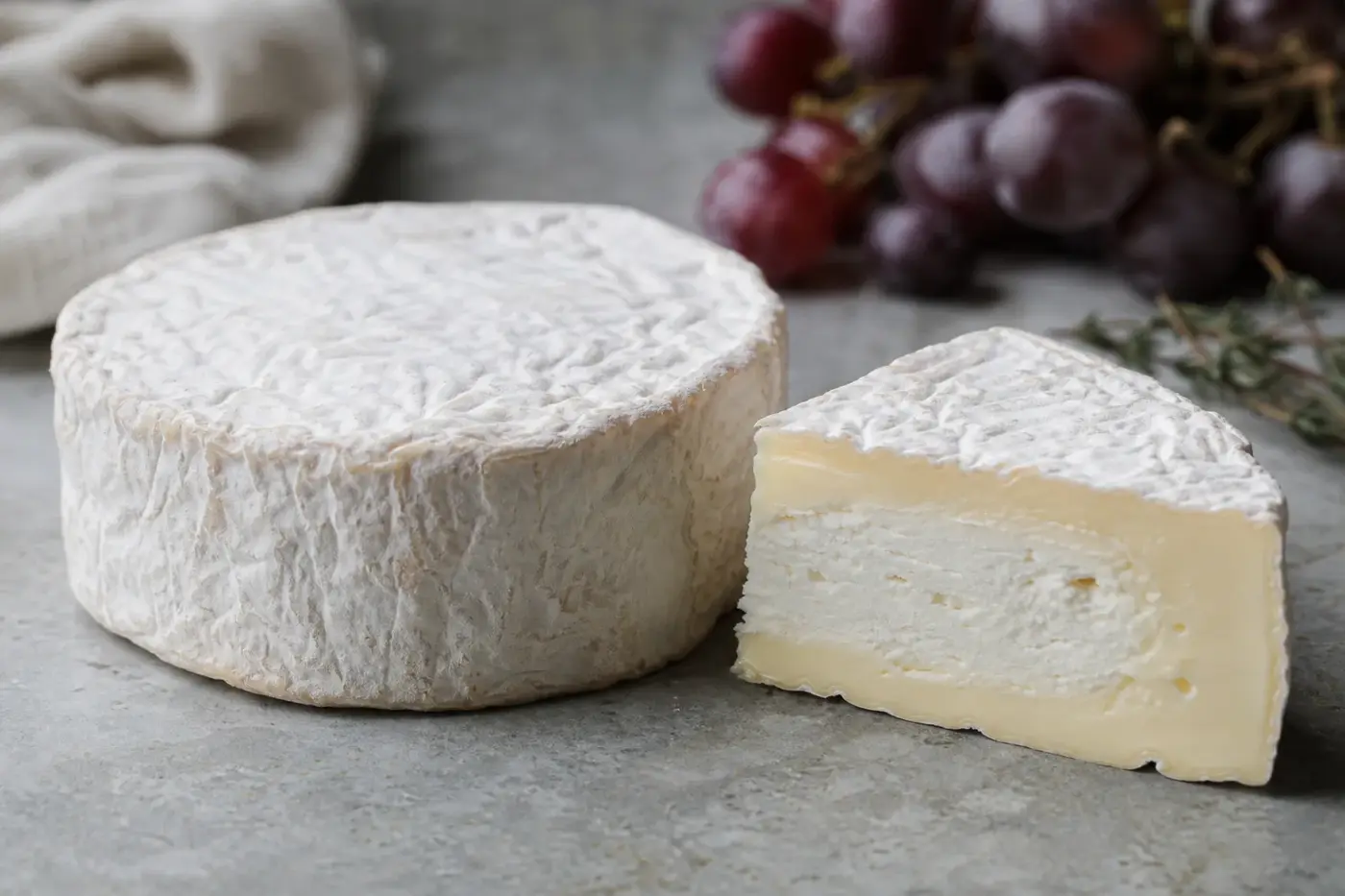
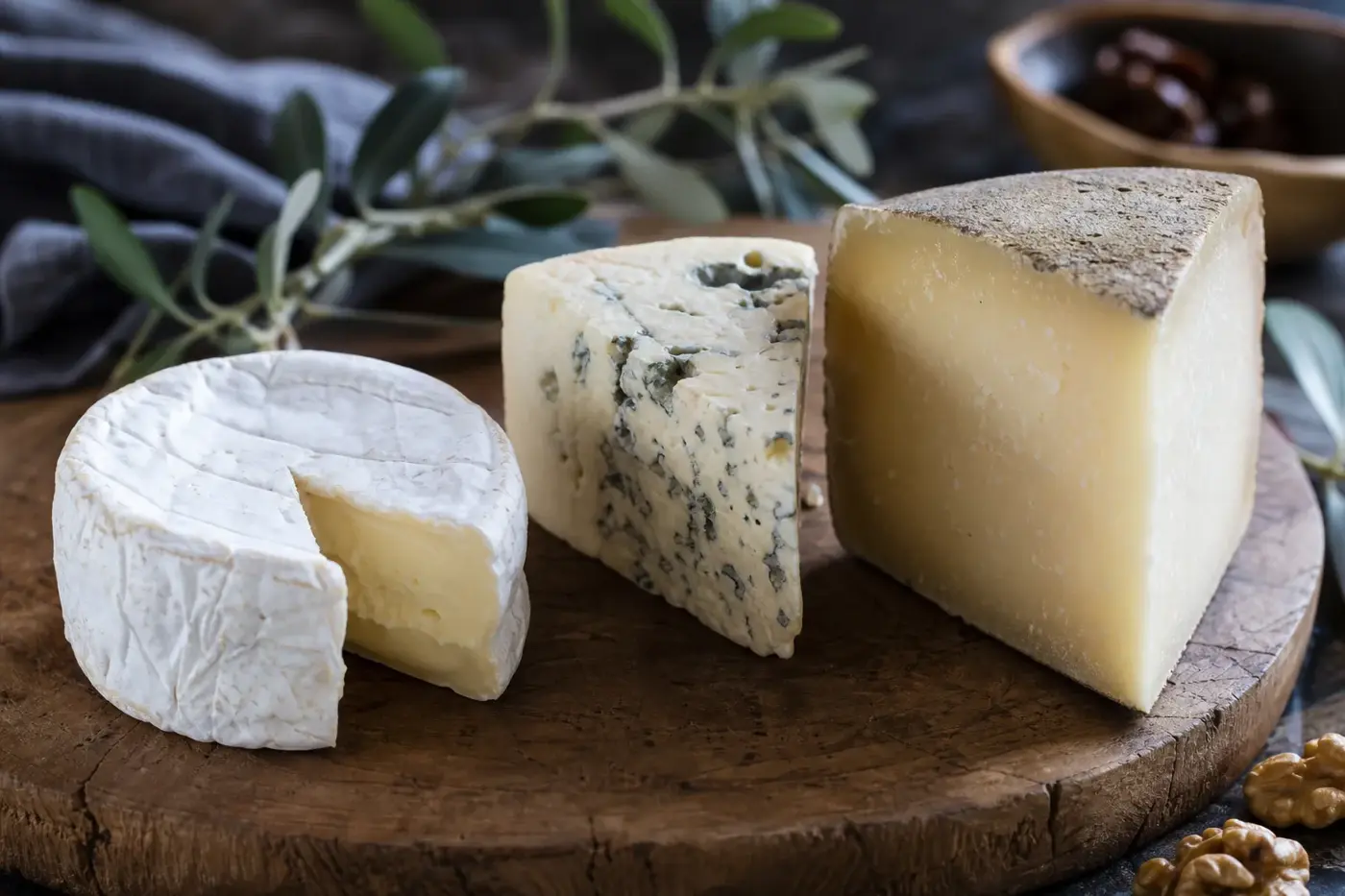
- Bloomy rind: surface mould creates the characteristic covering you see on Brie and Camembert styles. [3,5]
- Washed rind: washing during ripening encourages a surface community of bacteria and yeasts, often called a smear. Limburger is one example to look for. [2,5,7]
- Natural rind: this practical term describes an exposed, developed rind, rather than a separate wax or plastic covering. Think of rind-ripened Cheddar. [1,4,5]
- Waxed or coated: an applied layer protects the cheese. Describe the cheese beneath it separately, as you would with wax-coated hard cheese. [1,7]
Here is a distinction worth remembering at the counter: washed rind is not washed curd. In Gouda and Colby manufacture, washing the curd removes lactose during cheesemaking. Rind washing happens later, as a surface treatment during maturation. The names sound close; the jobs are quite different. [2,3,5]
Find out what the centre tells you
Look inside and start with words you already use. Is the cheese spreadable, sliceable, crumbly or hard enough to grate? Those descriptions serve you well in everyday life, but a measured classification asks a more precise question. [1,4]
Codex uses moisture on a fat free basis, abbreviated MFFB. This expresses water as a percentage of everything in the cheese except its fat. That last detail matters: you are not measuring water against the weight of the whole cheese. [1,4]
Codex CXS 283-1978, section 7.1.1: descriptive firmness classes, November 2026. [1]
| Codex firmness description | Moisture on a fat free basis |
|---|---|
| Extra hard | Less than 51% |
| Hard | 49 to 56% |
| Firm/Semi-hard | 54 to 69% |
| Soft | More than 67% |
You will notice that the printed bands overlap. A value of 50% fits both Extra hard and Hard; 55% fits Hard and Firm/Semi-hard; 68% fits Firm/Semi-hard and Soft. Keep those overlaps when you use the reference: the bands describe firmness, rather than mutually exclusive cheese families. [1]
MFFB equals moisture weight multiplied by 100, divided by (total cheese weight minus fat weight). [1]
Try it with a teaching example: 100 g of cheese containing 40 g of water and 30 g of fat. You calculate 40 multiplied by 100 divided by 70, giving about 57.1% MFFB. The whole-cheese moisture remains 40%; both percentages concern water, but compare it with different parts of the cheese. [1]
Codex is an international reference, with texts that remain voluntary until given effect through national rules. This table offers optional descriptions when the food is named simply “cheese”. A named variety may have a more specific standard of its own. [1,8]
Follow the curd through the making
Milk becomes a gel through coagulation, then the solid curd is separated from the liquid whey. What formed that curd, and what happened afterwards, can distinguish cheeses that look remarkably alike at the counter. Some terms describe the first transformation; others take you further along, into handling or maturation. [2]
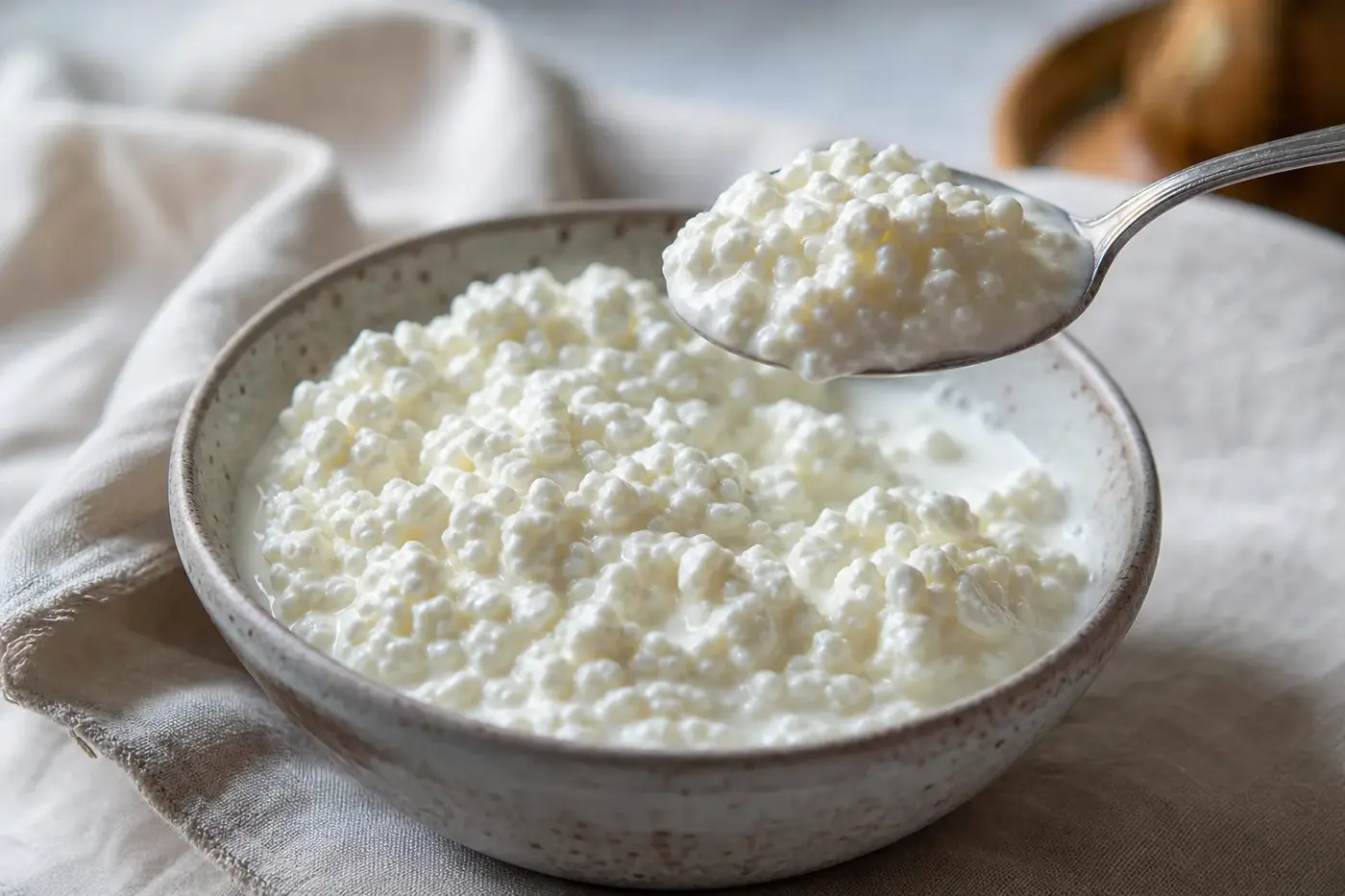
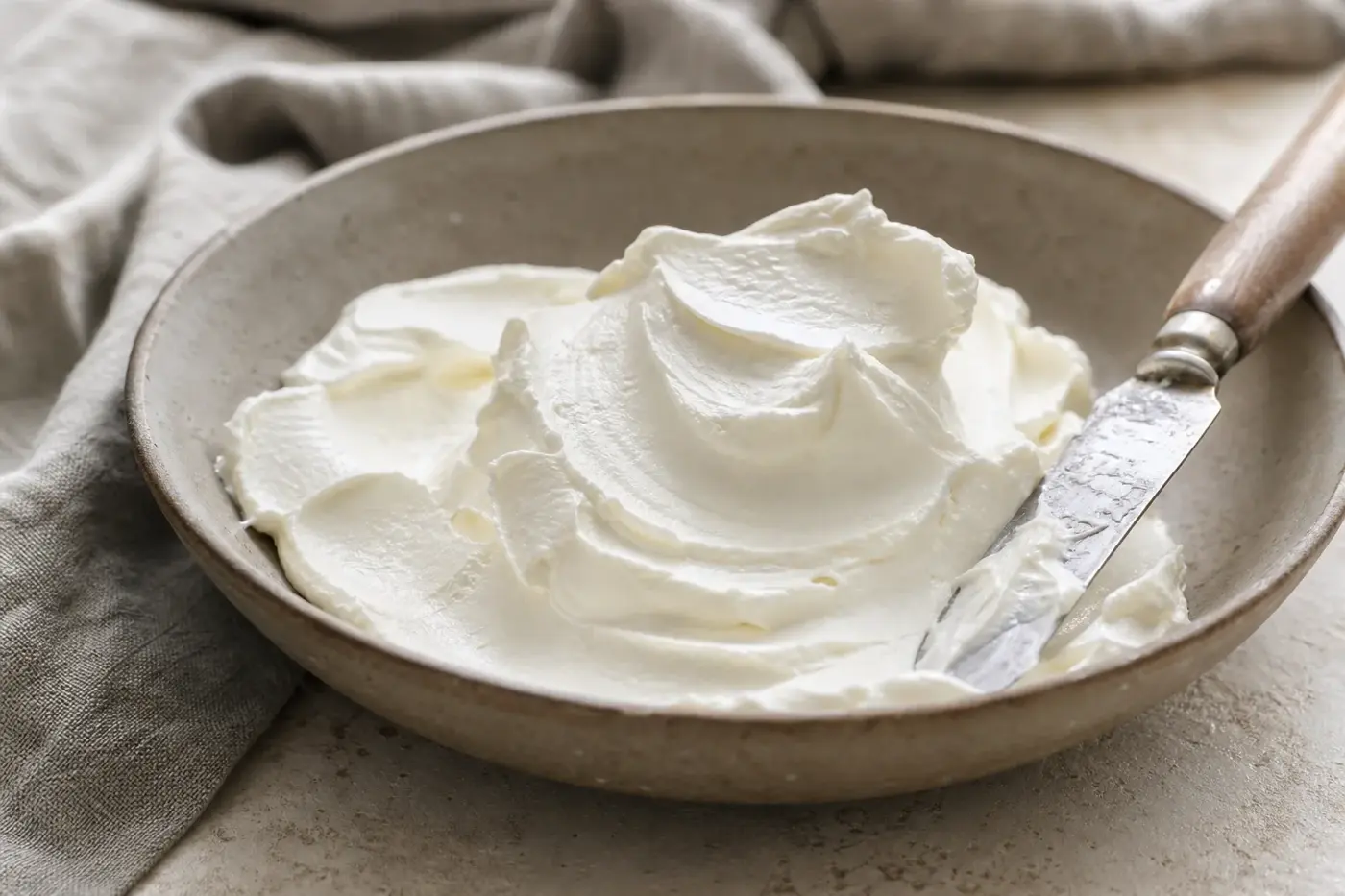
- Acid set: acidification brings milk proteins together into curd, often through cultures producing lactic acid. In the University of Guelph's classification, you will find quark, cottage cheese and cream cheese among the examples. [2,3]
- Rennet set: rennet is a preparation of milk-clotting enzymes. Enzymatic coagulation starts many styles, including Cheddar; draining, salting and ripening then shape their different structures. [2,3]
- Pasta filata: curd is worked and stretched in hot water, as in mozzarella styles. This comes later in production, so your cheese can be both rennet-set and pasta filata. [3,4]
- Brined: cheese matures or is kept in a salt solution, as in Guelph's feta example. That differs from a brief immersion in brine for salting, as with Gouda. [1,2,3]
- Whey cheese: traditional ricotta gives you an example of this method. Heat and acid recover proteins from whey, sometimes with added milk. The starting material matters just as much as the way the curd forms. [6]
Heat and acid also make cheeses directly from milk, including paneer and queso blanco. These share a coagulation approach with ricotta, but not necessarily its whey-based starting material. Fresh, acid-set and whey cheese therefore tell you different things about production; you cannot use the labels interchangeably. [2,6]
Cut into blue, then look beyond ripening
With blue cheese, you need to look beyond the outside. Blue veining is an internal ripening characteristic: mould develops within the body, rather than only on the surface, and needs oxygen to grow. Danablu is an example, so give the cut face as much attention as the exterior. [1,4,5]
Processed cheese takes you to another stage of manufacture. It begins with cheese that is mixed and heated into a uniform mass; under the US standard for “pasteurized process cheese”, an emulsifying agent is part of that preparation. The clue you are looking for is that further manufacturing stage, not a particular rind or ripening organism. [7]
Put the clues together at a glance
Use this table to gather what you know, then turn to the product description for the finer detail. Milk species and texture can vary within these groups. Think of the entries as useful distinguishing features, not fixed recipes that every cheese in a group must follow. [2,3,4,5,6,7]
| Style or example | Milk clue | What is on the outside? | Texture clue | What happens during making? |
|---|---|---|---|---|
| Fresh, such as quark [2,3] | Check the species | Usually rindless | Soft | Ready shortly after making |
| Bloomy, such as Brie [3,5] | Check the species | Surface mould | Soft-ripened | Mould-led surface ripening |
| Washed rind [5] | Check the species | Smear | Varies | Surface washing during ripening |
| Blue [4,5] | Check the species | Varies | Varies | Internal mould ripening |
| Pasta filata [3,4] | Check the species | Varies | Varies | Curd stretched in hot water |
| Brined [1,3] | Check the species | Usually rindless | Varies | Kept in salt solution |
| Cheddar [2,3,5] | Check the label | Rind or film | Firm | Curd ripening, milling and pressing |
| Whey, such as ricotta [6] | Whey, sometimes milk | Usually rindless | Fresh curds | Heat and acid |
| Processed [7] | Cheese ingredients | No ripening rind | Uniform | Cheese heated and mixed |
Read US and EU labels on their own terms
Cross a border and the terminology deserves a closer look. In the United States, certain general cheese categories in 21 CFR Part 133 measure moisture in the whole cheese. Section 133.150 sets a maximum of 39% moisture for its hard cheeses. [7]
Section 133.187 sets more than 39% but no more than 50% for semisoft cheeses. Both categories require at least 50% milkfat in their solids. They apply where a more specific standard does not govern. [7]
For the EU, Regulation (EU) No 1308/2013, Annex VII, Part III reserves dairy names including cheese, but supplies no EU-wide firmness bands. Read national or product-specific terms in their own context. Before comparing figures, look at their basis: a US moisture percentage and a Codex MFFB percentage use different denominators. [1,7,9]
Take four good questions to the counter
Start with whatever information you are missing. Ask, in order: “Which milk is it made from?”, “What sort of rind does it have?”, “How firm is the centre?” and “Is there a distinctive production method?” Keep more than one answer wherever it helps you describe the cheese. [1,3,4,5]
A fresh cheese can also be rennet-set. A ripened cheese can have a developed rind or a film-wrapped surface. You are building a description, not making each cheese squeeze into a single box, however fond cheese lovers may be of a well-stocked one. [1,3,4,5]
If the description stops at “soft cheese”, stay curious. Fresh cream cheese and mould-ripened Brie reach a soft body by different routes. Put method beside texture and you have a much more useful comparison, whether you are choosing cheese to cook with or to serve. [2,3]
Follow your next cheese curiosity
Has one of those clues caught your attention? These related guides are in preparation, ready to take the story further:
- Fresh Cheeses Explained: explore cheeses ready to eat shortly after manufacture.
- Bloomy-Rind Cheese: A Guide to Soft, White-Rind Styles: follow surface mould ripening in more detail.
- Pasta Filata: What Makes Stretched-Curd Cheese Different?: understand what stretching contributes to a cheese's structure.
Questions people ask
How can I tell cheese styles apart?
Ask which animal supplied the milk, what covers the outside, how firm the centre is and how the cheese was made. A cheese can belong to several groups at once, such as fresh and stretched curd.
What is the difference between washed rind and washed curd?
Washing the curd removes lactose during the making of cheeses such as Gouda and Colby. Washing a rind happens later, during ripening, and encourages a surface community of bacteria and yeasts.
How is ricotta different from paneer?
Traditional ricotta is made by using heat and acid to recover proteins from whey, sometimes with added milk. Paneer is made directly from milk using heat and acid.
What makes blue cheese blue?
The mould develops within the body of the cheese and needs oxygen to grow. Danablu is an example of a blue cheese.
What is processed cheese?
Processed cheese begins with cheese that is mixed and heated into a uniform mass. Under the US standard for pasteurized process cheese, an emulsifying agent forms part of that preparation.
Sources
- Codex Alimentarius Commission. General Standard for Cheese, CXS 283-1978, English edition incorporating amendments through 2013. Sections 2 and 7.1.1, and Appendix.
- University of Guelph. Dairy Science and Technology eBook, chapter 29: Cultured Dairy Products and Cheese. Undated online edition.
- Arthur Hill and Mary Ann Ferrer, University of Guelph. Cheese Making Technology e-Book, chapter 2: Cheese Families. Undated online chapter.
- Arthur Hill and Mary Ann Ferrer, University of Guelph. Cheese Making Technology e-Book, chapter 3: Other Technological Criteria. Undated online chapter, including Table 3.1.
- Arthur Hill and Mary Ann Ferrer, University of Guelph. Cheese Making Technology e-Book, chapter 14: Ripening and Packaging. Undated online chapter.
- Arthur Hill and Mary Ann Ferrer, University of Guelph. Cheese Making Technology e-Book: Heat-Acid Precipitated Cheese. Undated online chapter, ricotta discussion.
- US Food and Drug Administration. 21 CFR Part 133: Cheeses and Related Cheese Products, particularly sections 133.150, 133.152, 133.169 and 133.187. eCFR displayed as updated through 4 November 2026.
- Codex Alimentarius Commission. About Codex texts. Undated official explanation of the voluntary status of Codex texts.
- European Parliament and Council. Regulation (EU) No 1308/2013, consolidated version dated 18 August 2026, Annex VII, Part III.
This guide combines desk research in Codex reference texts, US cheese standards and University of Guelph teaching materials with the supplied A024 fact sheet.
Last checked: November 2026
Last checked November 2026.
The editors suggest you read next
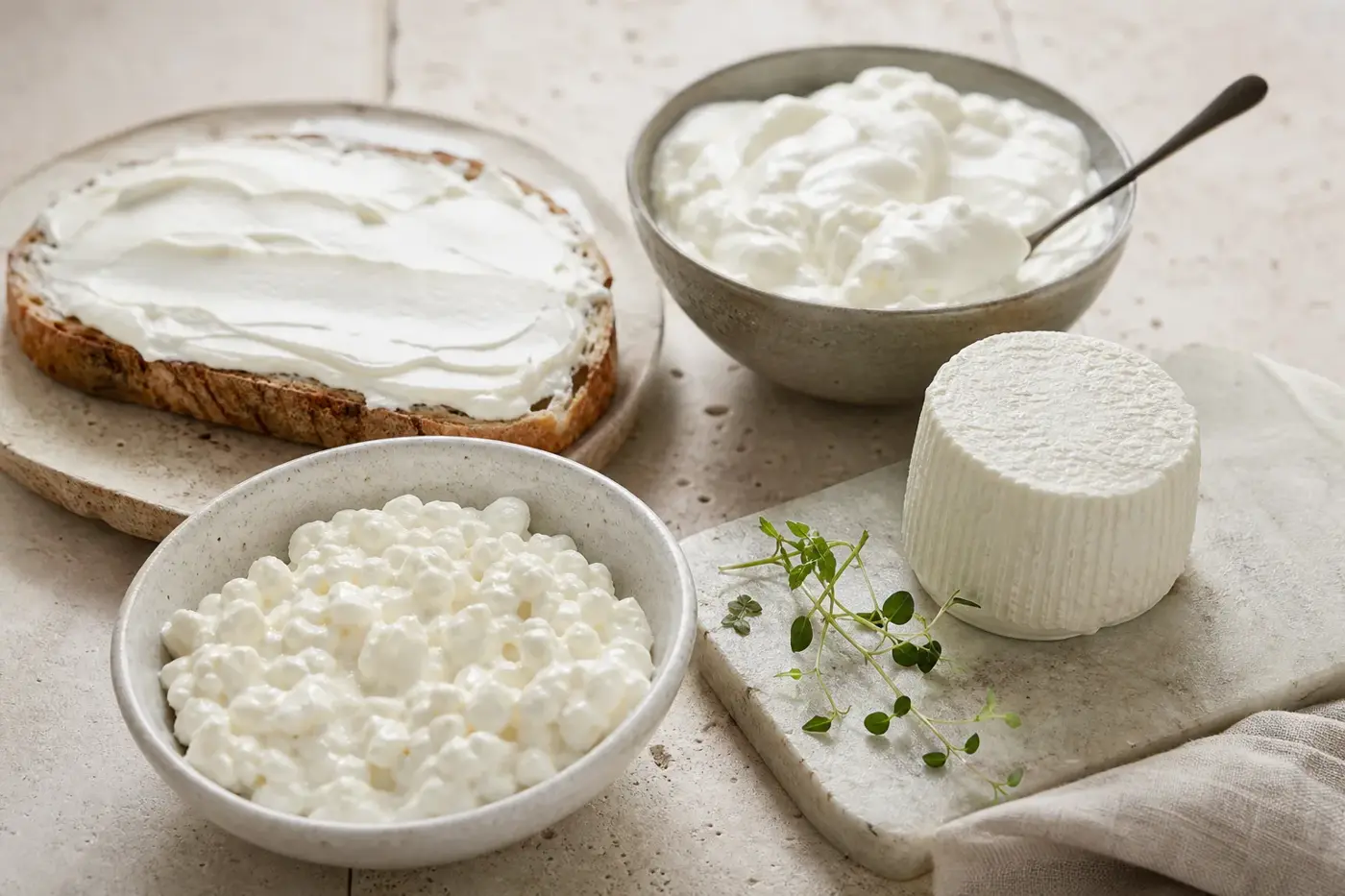
Fresh Cheeses Explained
Push your spoon through cottage cheese and the curds part; try a smooth spread or a yielding fresh goat cheese and it is quite another mouthful.