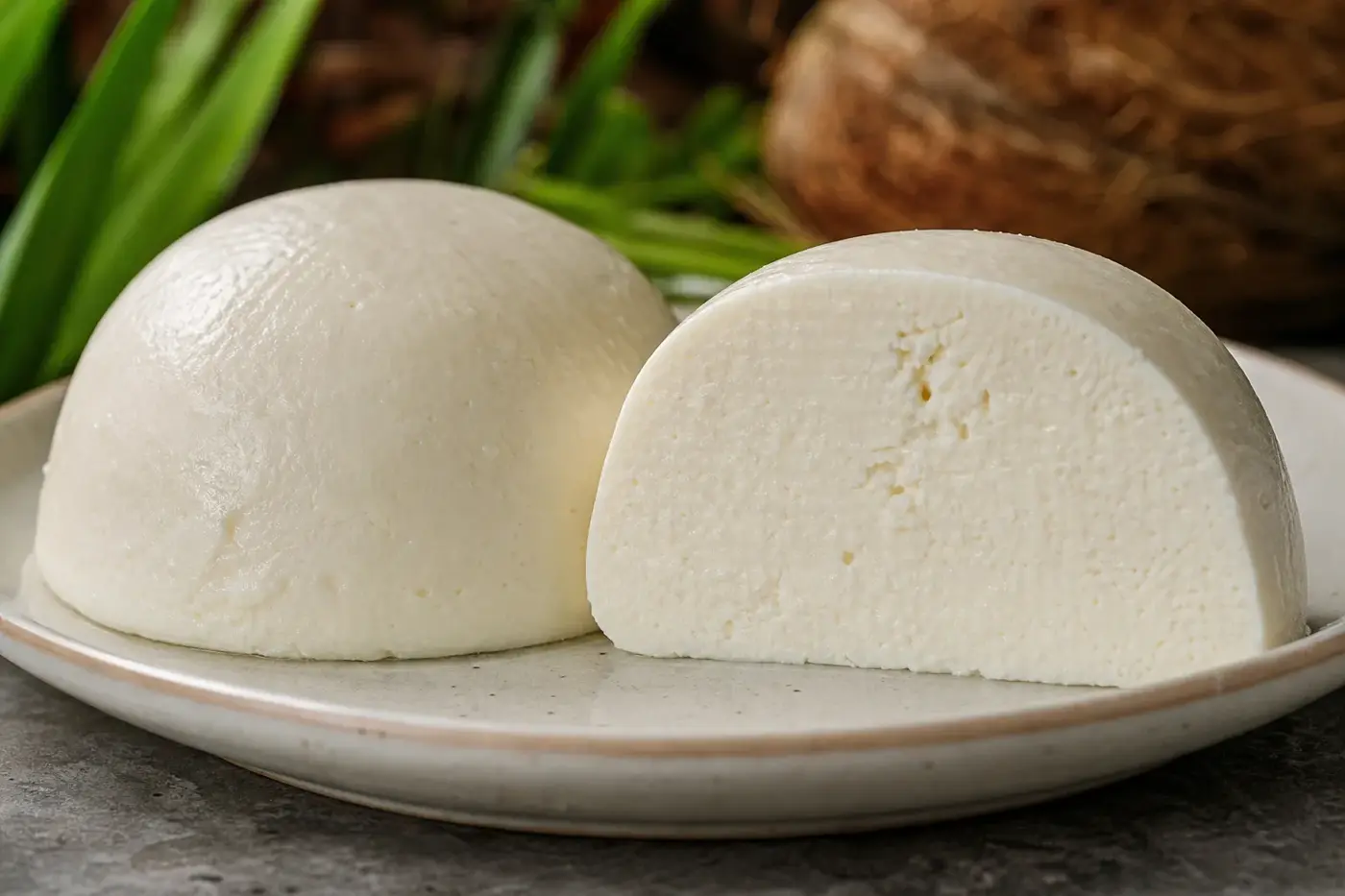
Kesong Puti
Split a warm pandesal roll and tuck soft white cheese inside.
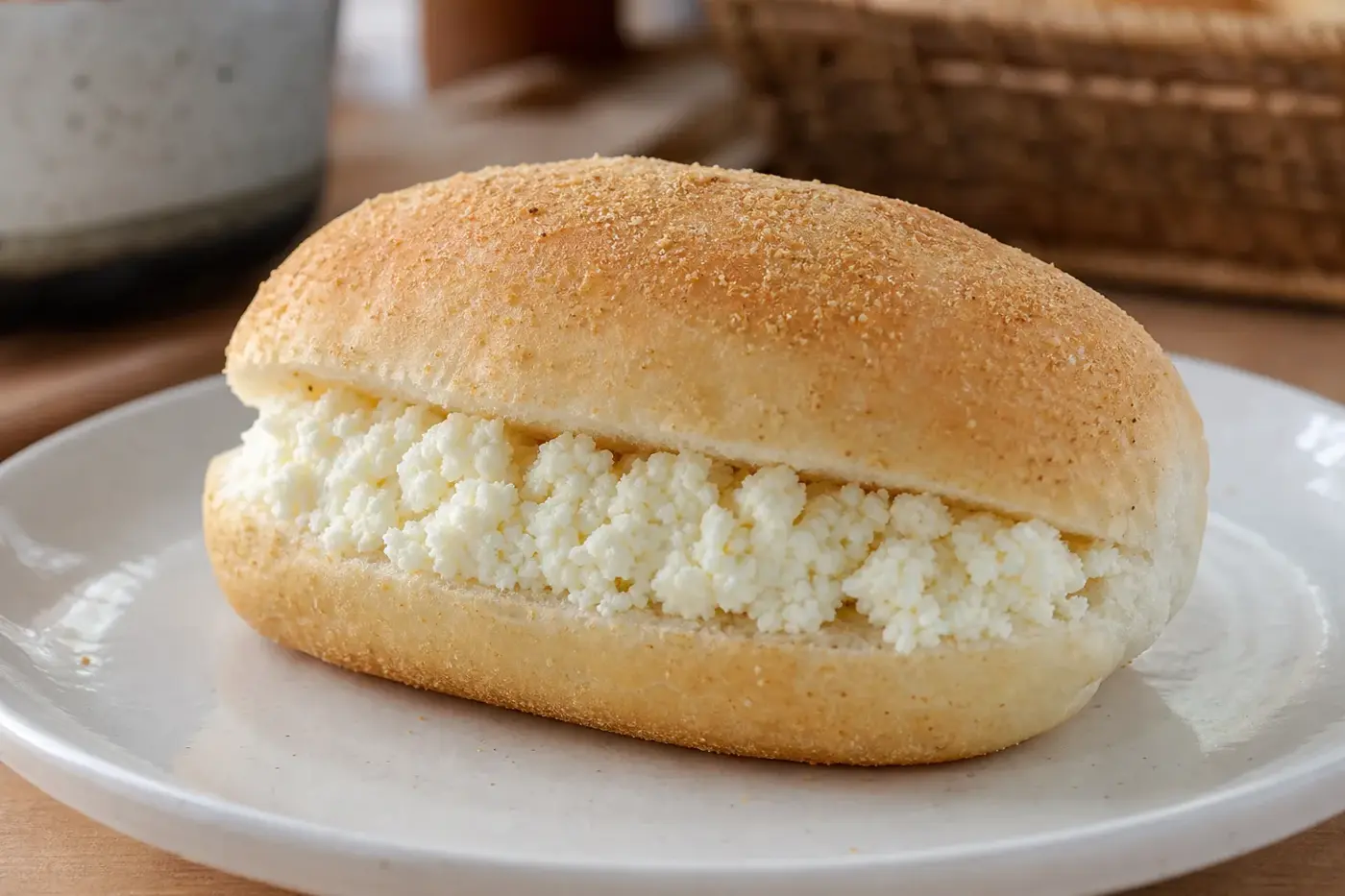
Split a warm pandesal roll and tuck soft white cheese inside. This Filipino breakfast pairing, documented by the Philippine Carabao Center, puts Kesong Puti exactly where you want it: within easy reach. Closely associated with carabao milk and local dairying, its name means “white cheese” in Tagalog. Your parcel might be delicate and gently tangy, or firmer and more noticeably salted, depending on its maker.[1][2]
| Your quick guide | What to look for |
|---|---|
| Familiar name | Kesong Puti, meaning white cheese.[1] |
| Traditional homes | Philippine Carabao Center publications associate it with Laguna, Bulacan, Samar and other Philippine localities.[1][2] |
| Milk in the mix | Traditionally carabao milk; cow and goat milk versions are also documented.[3][4][5] |
| How the curd sets | Vinegar or rennet; one published Laguna preparation also uses lemon juice.[2][4] |
| Style | Fresh, soft, white and unripened.[1][2] |
| Milk treatment | The Philippine Carabao Center’s published method includes pasteurisation; check the individual product.[6] |
| Allergen | Milk; check the full label for other ingredients.[5] |
Unwrap the name, meet the maker
Pick up two parcels of Kesong Puti and you need not find identical cheeses. This established Filipino food follows no single manufacturing recipe. The Philippine Carabao Center, a Department of Agriculture institution, describes an unripened white cheese made from buffalo milk, eaten with pandesal or toasted bread.[1][2]
That gives you a starting point, rather than the whole story. The Center documents both vinegar and rennet coagulation, while Philippine agricultural publications describe different ways of salting, draining and packaging. The name introduces the cheese; the maker’s ingredients and method tell you what has gone into your parcel.[2][4][6]
Follow your breakfast back to the farm
Carabao milk sits at the heart of the cheese’s institutional description. The Philippine Carabao Center’s technical handout specifies pure buffalo milk. In its account of cheesemaking in Lumban, Laguna, that milk comes from local dairy farmers, linking your breakfast with dairy animals, farmers and the households processing their milk.[6][7]
Cow milk has an established place in contemporary production too. A Philippine university study made Kesong Puti from cow milk, while Malagos Farmhouse describes its version as pasteurised cow milk cheese with less salt. The Agricultural Training Institute’s regional food guide also records versions made with carabao or goat milk.[3][4][5]
Read the milk declaration rather than assuming buffalo milk is inside. Look for the treatment separately: “carabao milk” tells you which animal supplied it, while “pasteurised” describes a treatment applied to that milk. Those are two different questions, and you need both answers.[5][6]
Find your soft spot, or a firmer slice
Expect a white, moist paste, rather than the dry interior of an aged cheese. The Philippine Carabao Center describes vinegar-coagulated Kesong Puti as slightly sour and less firm. Its rennet version is firmer, without vinegar’s sourness, though the maker’s cheese remains your best guide to the precise flavour and texture.[2]
Draining changes the picture too. The Agricultural Training Institute’s preparation distinguishes softer curd from firmer cheese made by removing more whey, the liquid separated from the curd. You might spread or spoon a delicate example; a more thoroughly drained cheese is easier to portion.[4]
Then comes the salt. Philippine Carabao Center research reporting from the Visayas links different additions of salt and vinegar with differences in saltiness, acidity and sourness. For a contemporary producer’s take, Malagos Farmhouse describes its cow milk version as less salted.[5][8]
From milk to a neatly wrapped parcel
The transformation starts when milk proteins gather into curd, which is then separated from the whey. Published Philippine accounts describe two main routes to this coagulation: vinegar supplies acid, while rennet is an enzyme preparation that helps the milk set. Either route begins the journey from milk to cheese.[2][6]
In the Philippine Carabao Center’s rennet method, the milk is pasteurised, cooled and coagulated. The curd is cut and some whey removed, then a salt solution is added before the mixture drains through a cloth-lined perforated tray. Finally, the cheese is cut into blocks and packaged.[6]
The Agricultural Training Institute’s Laguna preparation takes the acid route. Vinegar and lemon juice produce curd that drains in cheesecloth, with extra weight removing more whey if required. The drained cheese is wrapped in banana leaf, placed in a covered container or bag, and refrigerated.[4]
Banana leaves belong to the documented practice, but modern packaging has a place too. The Center’s technical handout allows banana leaves or plastic sachets, while a contemporary producer lists vacuum-packed blocks. The wrapping does not define your cheese; for the wider process, see how cheese is made.[5][6]
Meet the hands behind Laguna, Bulacan and Samar
In Lumban, Laguna, one family has passed cheesemaking skills through several generations. A 2010 Philippine Carabao Center report describes their hand production using carabao milk, banana leaves and an extract from a cow’s abomasum. That stomach compartment supplies a traditional source of the enzymes that coagulate milk.[7]
This is a close look at one local practice at a particular date, not a recipe for an entire province. Alongside it sits the Agricultural Training Institute’s acid-coagulated Laguna preparation. You need both approaches to see the fuller picture.[4][7]
The Center also associates Kesong Puti with Bulacan and Samar.[1] Its Visayas research reporting uses the name keseo for soft cheese and describes manufacturers adjusting their salt and vinegar additions. These accounts show regional practices, rather than one defining method for either province.[8]
When you buy, ask three questions: where was it made, which milk was used, and how was it coagulated? Those answers tell you more than a provincial name alone. They are especially useful when you are choosing between softer, sharper and firmer styles.[2][4][6]
Fresh is the point, not a waiting game
This is cheese for eating fresh. Philippine dairy sources classify Kesong Puti as unripened, and the published methods move from coagulation and draining to packaging and refrigerated storage. There is no maturation stage in those accounts.[1][4][6]
The pleasure lies in newly formed curd, its moisture and salt, and the acidity contributed by the method. Keeping it longer is storage, not an ageing programme for developing a rind or mature paste. Follow the producer’s consumption instructions: this is not a cheese that needs a long retirement.[2][5][6]
Give it warm pandesal, then room to roam
Pandesal is your natural starting point. Both the Philippine Carabao Center and the Agricultural Training Institute document the pairing for breakfast and snacks. Split a warm roll and add the cheese just before eating, spreading a softer piece or slicing a firmer one.[1][4]
Toast is another documented companion. Beyond bread, the Center recommends Kesong Puti in vegetable salads and records grilled, fried and breaded preparations, as well as cheesecake. You can enjoy the fresh curd simply or give it a place in a cooked dish.[1][6][7]
Taste a small piece before reaching for salt or an acidic dressing. Sharper vinegar-set cheese and mild rennet-set cheese bring different qualities to your plate. Fold delicate pieces gently into salad, and choose your preferred sandwich consistency rather than expecting every block to submit to the same knife.[2][4][8]
Keep the cheese refrigerated until you need it. US FDA consumer guidance limits perishable food’s time out of refrigeration to two hours. When the air temperature exceeds 32 °C (90 °F), that limit becomes one hour.[9]
Choose your parcel with a little care
Start with the label and the refrigerated display. Look for the producer’s identity, milk type, pasteurisation statement, date marking and storage instructions. For fresh cheeses of comparable style, the US FDA advises choosing sealed packaging and avoiding unrefrigerated, swollen or apparently spoiled products.[10]
If vegetarian suitability matters to you, ask about the coagulant. Documented Kesong Puti methods include vinegar and animal-derived abomasal extract, plus rennet preparations whose origin needs checking with the maker. The words “fresh white cheese” cannot tell you which was used.[2][7]
The food’s name is only part of what a label needs to tell you. For help separating its identity from claims about an individual product, see reading a cheese label.
Make room in the fridge, and follow the pack
Your particular pack’s instructions come first, including any shorter limit after opening. Malagos Farmhouse specifies refrigeration at 2 to 4 °C (36 to 39 °F), no freezing and consumption within three days of opening for its Kesong Puti. Those directions apply to that producer’s product.[5]
The Philippine Carabao Center’s handout gives its preparation a refrigerated life of seven to ten days and warns that freezing damages texture. Those different published limits make the maker’s directions especially valuable. Do not borrow one product’s shelf life for another.[6]
At home, the US FDA advises keeping your refrigerator at 4 °C (40 °F) or below, storing food covered and refrigerating it promptly. Food can cause illness without looking, smelling or tasting spoiled. Discard obviously mouldy food, and never taste it to establish safety.[9]
Discard cheese if the packaging is bloated or the contents appear spoiled. If a recall applies, follow its instructions. Cooking is not a substitute for following the recall.[9][10]
This page summarises published guidance from the official sources it cites. It is not medical advice. Guidance differs between countries and changes over time, so check the current source for where you live, and ask your doctor, midwife, pharmacist or dietitian about your own circumstances.
Find the right guidance for pregnancy and higher risk
If you are pregnant, consult the current US CDC guidance on soft cheeses and queso fresco type cheeses, alongside official advice for where you live. That guidance does not name Kesong Puti specifically.[11]
The US FDA identifies adults aged 65 or older and people with weakened immune systems as groups at increased risk from listeriosis. It also explains that fresh cheese can become contaminated after pasteurisation. Consult these official sources, dated here to November 2026, alongside the guidance where you live.[10]
If you would like more context on that risk, further reading is available. See Listeria and cheese safety.
Let your dish choose the cheese
The Philippine Carabao Center compares Kesong Puti with paneer, queso blanco and cottage cheese for texture and slightly salty flavour. That comparison concerns eating qualities, not preparation methods.[1] The Center’s own accounts show how much vinegar and rennet versions of Kesong Puti can differ in acidity and firmness.[2]
Choose with your dish in mind. A soft, moist parcel suits gentle serving, while a firmer piece is easier to portion. If you substitute another fresh cheese, consider saltiness, moisture and structure: white colour alone tells you little about how it will behave.[2][4][8]
Questions people ask
What is Kesong Puti made from?
Kesong Puti means white cheese in Tagalog. It is traditionally made from carabao milk, but cow and goat milk versions are also documented.
What does Kesong Puti taste like?
The Philippine Carabao Center describes the vinegar version as slightly sour and less firm. Its rennet version is firmer and does not have the sourness supplied by vinegar.
How is Kesong Puti eaten?
It is eaten with pandesal or toasted bread. The Philippine Carabao Center also records its use in vegetable salads, grilled, fried and breaded dishes, and cheesecake.
Can you eat Kesong Puti during pregnancy?
The US CDC publishes pregnancy guidance on soft cheeses and queso fresco type cheeses, but it does not name Kesong Puti. Consult the current CDC guidance alongside the official advice for where you live.
How long does Kesong Puti keep?
The Philippine Carabao Center gives its preparation a refrigerated life of seven to ten days. Malagos Farmhouse specifies consumption within three days of opening for its own Kesong Puti, so follow the instructions on the particular pack.
Sources
[1] Philippine Carabao Center. Must-try products Milka Krem showcases 4 local stand out cheeses, 2016. Sections “White Cheese” and associated production account.
[2] Philippine Carabao Center. Factors Affecting the Yield Recovery and Quality of Kesong Puti, iASK Series B-02-2017, 2017. Opening description and comparison of vinegar and rennet coagulation.
[3] University of Southern Mindanao, Journal of Agricultural Research, Development, Extension and Technology. Effects of varying concentrations of calcium chloride (CaCl₂) on the quality of Filipino white cheese (kesong puti) made from frozen-thawed cow’s milk, volume 3, issue 1, pages 88 to 95, 2021.
[4] Department of Agriculture, Agricultural Training Institute. Agriculturally Awesome Farm Tourism Travel Guide, volume 3, undated edition retrieved from the institutional repository. “Laguna Delicacies”, Kesong Puti preparation and accompanying description.
[5] Malagos Farmhouse. Our Cheeses, undated live product catalogue, checked November 2026. Kesong Puti description, ingredients, packaging and storage instructions. Commercial producer source.
[6] Philippine Carabao Center. Facilitators’ Guide to Farmer Livestock School on Dairy Buffalo Production, volume II, Technical Handouts, 2020 repository edition. “Kesong Puti”, printed page 193 and following method.
[7] Philippine Carabao Center. PCC Newsletter, volume 9, number 4, October to December 2010. Lumban cheesemaking feature, printed pages 22 onwards. Used for documented cultural practice and culinary uses, not its historical storage advice.
[8] Philippine Carabao Center. PCC R&D Highlights, September 2010. “Study recommends 2:4 salt and vinegar ratio for soft cheese-making”, printed page 11.
[9] US Food and Drug Administration. Are You Storing Food Safely?, live consumer guidance, checked November 2026. Refrigeration, time limits, spoilage and mould advice. Direct link: Not verified.
[10] US Food and Drug Administration. Queso Fresco-type Cheeses Consumer Guidance, live guidance, checked November 2026. Fresh-cheese risks, higher-risk groups, purchasing and handling.
[11] US Centers for Disease Control and Prevention. Safer Food Choices for Pregnant Women, live guidance, checked November 2026. Cheese comparison table.
This piece synthesises Philippine dairy and agricultural publications, a university research paper, a producer’s product instructions and current US official food-safety guidance.
Last checked: November 2026
Last checked November 2026.
The editors suggest you read next