Southeast Asian Cheese
A coconut shell gives the curds their shape.
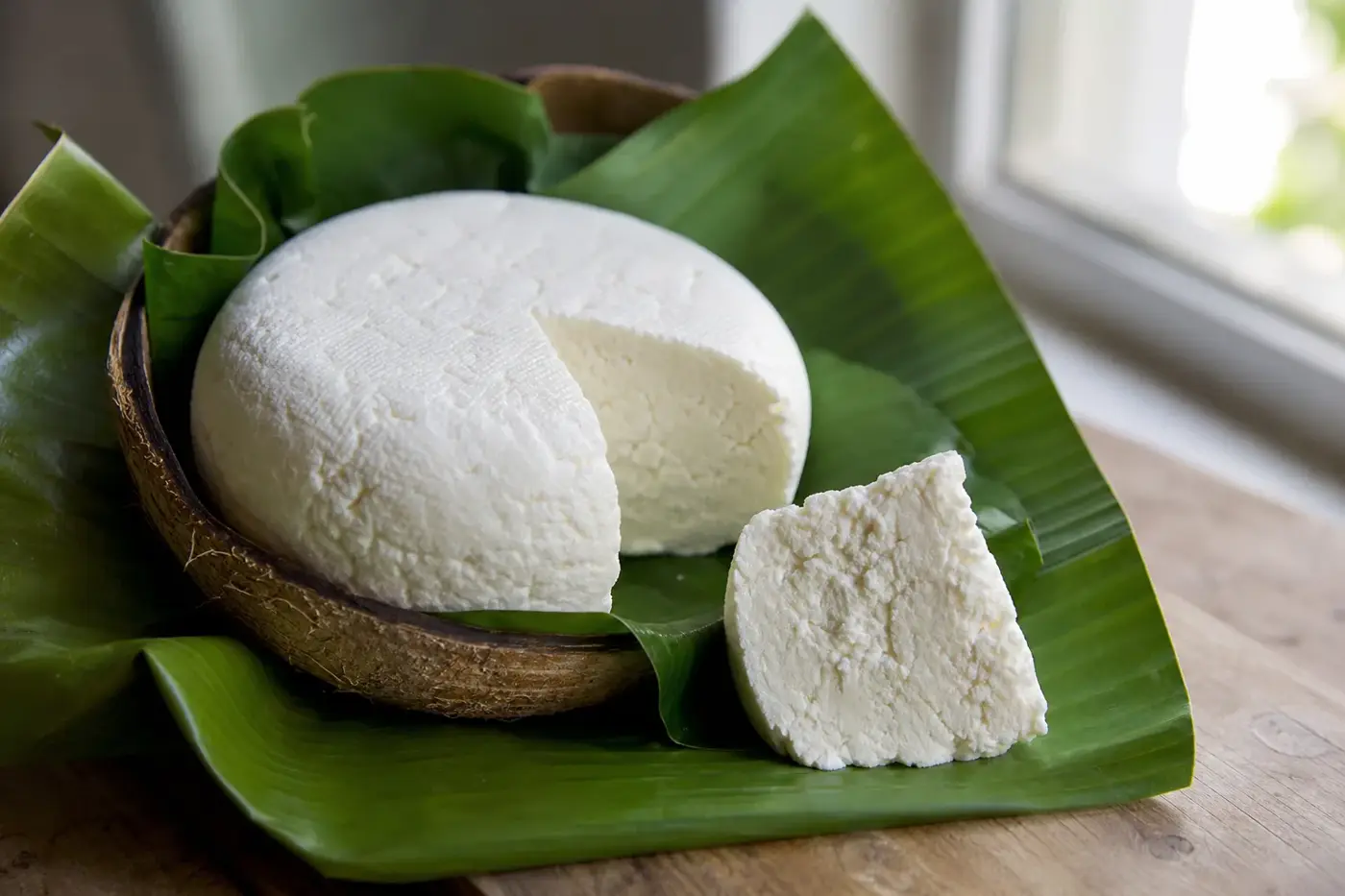
A coconut shell gives the curds their shape. Banana leaves make the final parcel. In South Sulawesi, Indonesia, dangke makers turn local milk into fresh cheese with papaya latex. In the Philippines, unwrap kesong puti and another cheesemaking tradition opens up. [2][5][7]
Buffalo milk connects the two, though dangke makers also use cow's milk. Beyond these traditions, contemporary businesses make internationally familiar styles within the region. There is plenty for you to discover, but start with a particular maker rather than a sweeping label. Cheese rarely fits neatly into a pigeonhole, even when it fits beautifully into a leaf. [2][5][7][9]
Find your place on the cheese map
Follow the United Nations statistical grouping and Southeast Asia comprises Brunei, Cambodia, Indonesia, Laos, Malaysia, Myanmar, the Philippines, Singapore, Thailand, Timor-Leste and Vietnam. That is this article's geographical boundary. Within it, the stories worth lingering over belong to communities that milk buffaloes, make cheese and bring it to the table. [1][4][6]
A Philippine field study documents different cheesemaking practices across provinces. Research on dangke takes you to Enrekang in South Sulawesi. Begin with those places rather than national labels. Their fresh cheeses deserve your attention alongside the imports and newer local products you might encounter as a traveller or resident. [4][5][9][10]
Unwrap the tender curds of kesong puti
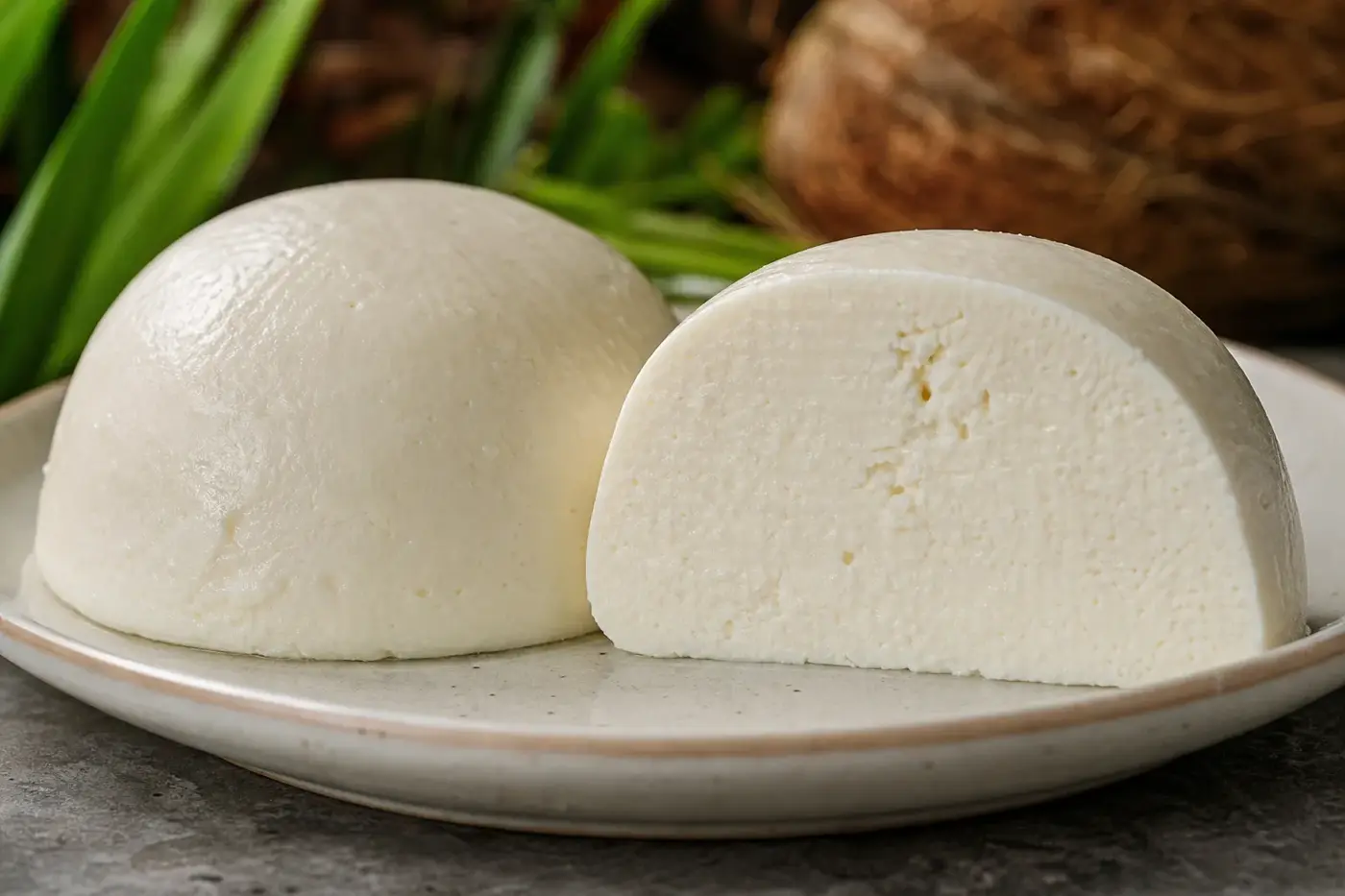
Open a parcel of kesong puti and you find a fresh, white, soft cheese, particularly associated with carabao milk. That is the milk of the Philippine water buffalo. The Philippine Carabao Center describes the cheese as unaged. Its pleasure is tender fresh curd for the table or a bread filling, rather than a ripened rind. [3]
There is more than one route from milk to that parcel. A Department of Agriculture training guide uses carabao milk, cane vinegar and lemon juice, then drains the curds and wraps them in banana leaves. Curds are the solids separated from liquid whey. Remove more of that liquid and you get a firmer cheese rather than a softer one. [2]
Enzymes offer another route. Rennet is an enzyme preparation that coagulates milk; a Carabao Center report on a Lumban producer records bahay-asim, an extract from a cow's abomasum, or fourth stomach. If you are choosing cheese for a vegetarian, ask which coagulant that particular maker uses. The guide to rennet explains the different sources. [3]
Save a place for kesong puti at breakfast
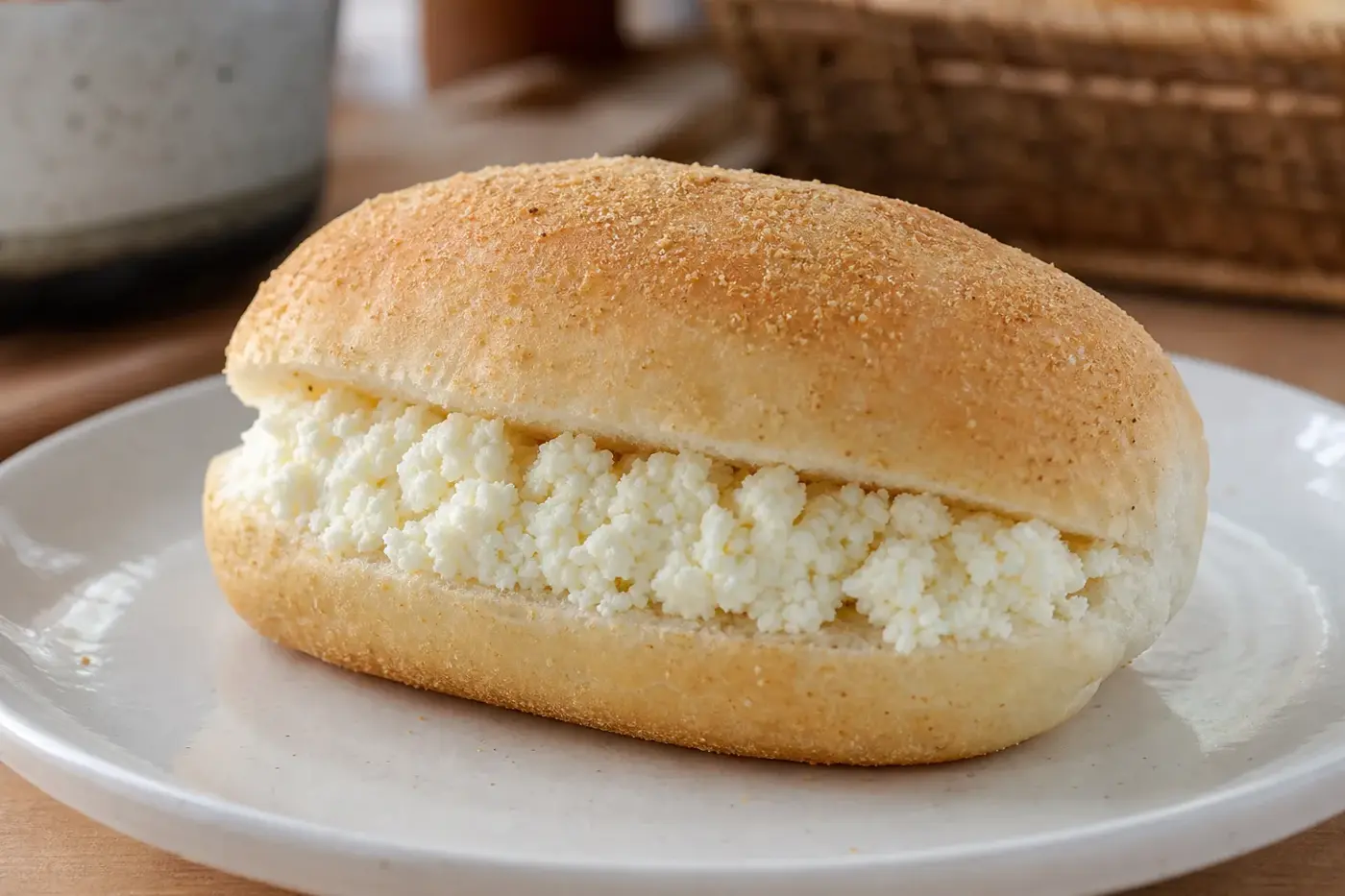
Warm pandesal, the Philippine bread roll, gives you an inviting first companion for kesong puti. The Carabao Center records this breakfast pairing at a festival in Talavera, Nueva Ecija. Its older producer reporting also describes the cheese grilled, fried or served on vegetable salads. Bread and fresh cheese, though, make a wonderfully straightforward beginning. [3][17]
Follow the local names and the picture grows richer. Fieldwork published in 2021 records kasilyo in Cavite, kesiyo or queseo in Cebu, and keseo in Samar. Banana leaf wrapping connects these provincial examples, while heating, pressing and coagulants differ. These are particular makers' practices, not a single recipe speaking for an entire province. [4]
As you taste, notice whether the cheese spreads or slices, how much moisture it releases and how assertively it is salted. One leaf parcel need not feel like the next. The agricultural guide distinguishes lightly drained curds from more firmly pressed ones. That gives you a useful opening question for the maker: how was this cheese drained and pressed? [2]
Meet dangke, shaped in a coconut shell
In Enrekang, South Sulawesi, papaya latex helps turn milk into dangke. Indonesian research describes heating the milk, adding latex to form curds, then separating them from the whey and shaping them in a coconut shell. The shell does two jobs, letting liquid drain while giving the cheese its form. Banana leaves provide the final wrapping. [5][7]
The active enzyme in that latex is papain, which acts on milk protein. A 2024 experiment compared processing conditions and latex concentrations using cow's milk collected from smallholder farms in Enrekang. Its method involved pressing curd in coconut shells while whey drained away. It brings you close to the process, specifically under the conditions that study tested. [5]
Buffalo milk is central to dangke's documented tradition, but cow's milk has an established place too. An Enrekang survey investigated the move towards cow's milk as buffalo milk became scarcer. It brought together local production information, consumer questionnaires and sensory testing. When you choose dangke, one simple question tells you something important: which milk did this maker use? [6]
Bring rice, palm sugar or lime sambal to dangke
Dangke belongs in everyday meals, not only on a tasting plate. The Enrekang survey describes it alongside rice and as a snack with palm sugar or a lime sambal. You can start with the sweetness of palm sugar. Or take the savoury route, with rice and the sharpness of lime sambal. [6]
A 2018 food science paper describes dangke as a fresh soft cheese, linking a slight bitterness to the papaya latex used to make it. Keep that in mind as a tasting clue, not a promise about every batch. Ask the producer how people normally serve it locally. Then try a small piece plain before reaching for its accompaniment. [7]
Follow buffalo milk into West Sumatra's bamboo tubes
In West Sumatra, buffalo milk takes a different path. Primary microbiological research classifies dadih as fermented buffalo milk. Traditional makers put the milk in bamboo tubes covered with banana leaves, where spontaneous fermentation thickens it. Unlike dangke making, which separates curds from whey, dadih production keeps the fermenting milk in its container. [8][7]
Researchers used bacterial DNA sequencing to compare products from several West Sumatran producers. Microbial communities differed between producers and processing practices, and the researchers identified hygiene concerns requiring further work. Dadih belongs beside this cheese discussion as a regional milk food with its own character and process. Approach it through fermentation, rather than automatically adding it to your list of cheeses. [8]
Get to know the people behind the milk
Keeping buffaloes and milking them for cheese are different uses of livestock. Philippine fieldwork distinguishes established, localised buffalo milk traditions from newer dairying supported by specialist institutions. At the Talavera festival, you can see that dairy network at work. The Carabao Center reports that milk for the cheese came from its processing plant and local dairy farmers. [4][17]
In Enrekang, cattle milk has helped sustain a cheese associated with buffalo milk. Together, these examples show cheesemaking adapting to local supplies, processing knowledge and demand. When you seek out cheese, a particular dairy or community often tells you more than a country name. A milk food made and eaten in one locality need not be shared across the surrounding country. [5][6]
Explore Singapore's cheese advertisements and today's dairies
On 4 July 1930, The Singapore Free Press and Mercantile Advertiser pointed readers towards an advertisement for cheeses. A small detail, but a telling one: cheese was part of colonial-era Singapore's advertised food trade. Decades before today's specialist restaurants and dairies, it already had a place in the port's retail world. [10]
Colonial history belongs alongside local dairying and later trade in the region's cheese story. That newspaper documents an advertised market, but the origins of an individual cheese need their own historical evidence. Today, distinguish imported cheese from an internationally familiar style made locally. A style name alone tells you little about where the milk was processed. [10][9]
In Vietnam, Pizza 4P's advertises its own homemade mozzarella on its website, as of November 2026. The business's description shows a contemporary route into local cheesemaking through restaurant demand. Locally made mozzarella and traditional fresh cheeses both have a place in Southeast Asia's cheese story. For more on the stretched-curd style itself, see mozzarella. [9]
This page summarises published guidance from the official sources it cites. It is not medical advice. Guidance differs between countries and changes over time, so check the current source for where you live, and ask your doctor, midwife, pharmacist or dietitian about your own circumstances.
Look beyond lactose to the wider food story
Lactose malabsorption and lactose intolerance are not interchangeable terms. Malabsorption means lactose, milk's sugar, is incompletely absorbed; intolerance refers to symptoms. A Thai hospital study published in 2004 tested young adult volunteers who habitually drank milk. Of the 45 participants analysed, 23 showed malabsorption after a drink containing 25 g of lactose, and 21 reported symptoms. [11]
Those findings describe a selected group under particular test conditions, including that lactose drink. Set them beside the dairying, family habits and food preferences documented elsewhere in the region. Lactose digestion alone cannot explain an entire food culture. Nor can it explain the distinct histories of kesong puti and dangke. [6][11]
For UK readers, the NHS distinguishes lactose intolerance from food allergy and advises seeking medical help for persistent symptoms. Use that guidance and consult a suitable clinician when making personal dietary decisions. You can explore the distinctions further in lactose in cheese and allergy versus intolerance. [12]
Take four useful questions to the cheese counter
Begin your search with the producing locality, a documented dairy or a specialist retailer who can identify its supplier. Ask about four things: milk species, milk treatment, coagulant and storage instructions. Philippine and Indonesian records show why those questions matter. A familiar cheese name can cover different milk sources and different ways of turning milk into curd. [2][3][5]
For handling cheese at home, the advice below follows Food Standards Agency guidance for England, Wales and Northern Ireland as of November 2026. Keep your fridge between 0 and 5 °C, as the agency recommends. Follow the product's storage instructions too. [13]
- Put cheese sold chilled into the fridge promptly. Keep it chilled until you need it.
- Follow the maker's instructions after opening, including any shorter period for eating it.
- Keep chilled food outside the fridge for the shortest possible preparation time. The FSA gives a maximum of four hours.
- Respect the use-by date. UK government guidance explains that this concerns safety; a best before date concerns quality. [13][14]
Let the actual product's instructions tell you how soon to eat it. UK guidance warns that improper storage can make food unsafe even before its use-by date. For more on refrigeration and packaging, see how to store cheese at home. [14]
Serve simply, and call a substitute a substitute
Start with the documented pairings: kesong puti with pandesal, or dangke alongside rice with its accompaniments. Serve a small portion, then replenish it from the fridge rather than putting everything out at once. Keep the cheese refrigerated until needed and follow its storage instructions throughout. [3][6][13]
If you need a substitute, think about its job in the meal. For a kesong puti bread filling, mild fresh mozzarella, drained and sliced, is a useful starting point. For a firmer piece to accompany rice, try plain paneer. You want something that works in a similar way, not an identical cheese.
Taste your replacement before adding salt or sharp accompaniments, and choose a texture that suits the dish. Keep the original name for the original cheese and describe any replacement plainly. A substitute can be helpful without borrowing somebody else's identity.
Where dietary restrictions matter, look at the whole meal and the substitute's label. The NHS identifies milk as a common food allergen. If you are managing an allergy, follow your own clinical advice rather than choosing a substitute by texture alone. [16]
Let a maker introduce your next cheese
The strongest accounts connect a food to a place and a method. Philippine provincial fieldwork, Enrekang production research and West Sumatran microbiology all do that. Documentation is uneven, but these detailed records build a useful regional picture. They bring particular traditions into focus without assigning every country an ancient cheese history. [4][5][8]
For the next cheese you encounter, ask three questions: where was it made, from which milk, and how does its maker expect it to be eaten? Those answers give a broad regional label substance. Better still, they bring you to a particular food, made by particular people, with a place at a particular table.
Questions people ask
What is kesong puti made from?
Kesong puti is a fresh, soft, white cheese particularly associated with carabao milk, the milk of the Philippine water buffalo. A Department of Agriculture guide uses cane vinegar and lemon juice to form the curds, which are drained and wrapped in banana leaves.
How is dangke usually eaten?
An Enrekang survey describes dangke as an accompaniment to rice. It is also eaten as a snack with palm sugar or a lime sambal.
Is kesong puti vegetarian?
It depends on the coagulant used by the particular maker. One guide uses cane vinegar and lemon juice, while a report on a Lumban producer records the use of bahay asim, an extract from a cow's fourth stomach.
What can I use instead of kesong puti?
For a bread filling, mild fresh mozzarella, drained and sliced, is a starting point. It offers a similar use rather than an identical cheese.
How should fresh cheese be stored?
The Food Standards Agency advises keeping the fridge between 0 and 5 °C and following the product's storage instructions. It also advises observing the use by date and keeping chilled food outside the fridge for the shortest possible preparation time, up to a maximum of four hours. Check the agency's guidance for England, Wales and Northern Ireland.
Sources
- United Nations Statistics Division. Standard country or area codes for statistical use (M49), online classification, checked November 2026. South-eastern Asia grouping.
- Philippine Department of Agriculture, Agricultural Training Institute, CALABARZON. Agriculturally Awesome Farm Tourism Travel Guide, volume 3, official PDF hosted September 2022, publication year not verified. “Laguna Delicacies”, kesong puti preparation. Official guide.
- Philippine Carabao Center. Producer feature on Lumban kesong puti, PCC Newsletter, volume 9, number 4, October to December 2010, pages 22 to 23. Official publication.
- Southeastern Philippines Journal of Research and Development. “The Conventional and Modern Uses of Water Buffalo Milk in the Philippines”, volume 26, number 2, 2021. Research article.
- Indian Journal of Agricultural Research. “Physicochemical Properties of Dangke-cheese by Different Temperature Processing and Papaya-latex as Coagulant”, volume 58, number 5, 2024, pages 911 to 916. Publisher's full text.
- Jurnal Ilmu dan Teknologi Peternakan. “Survey on the Potency of Cow Milk Dangke as an Alternative to Buffalo Milk Dangke in Enrekang, South Sulawesi”, volume 3, number 1, pages 40 to 50; publication year not verified. Publisher's article and full text.
- International Journal of Food Science. “Extending Shelf Life of Indonesian Soft Milk Cheese (Dangke) by Lactoperoxidase System and Lysozyme”, 2018, article 4305395. Research article.
- MicrobiologyOpen. “Microbiota composition of dadih, a traditional fermented buffalo milk of West Sumatra”, 2019 journal edition. Archived full text.
- Pizza 4P's. Vietnam website, “Homemade Mozzarella Cheese”, undated company material, checked November 2026. A commercial business's account of its own product. Company website.
- National Library Board, Singapore, NewspaperSG. Singapore Free Press and Mercantile Advertiser, 4 July 1930, page 1 advertising index. Digitised newspaper issue.
- Journal of the Medical Association of Thailand. “Lactose Intolerance in Thai Adults”, volume 87, number 12, 2004, pages 1500 to 1504. Full-text research paper.
- NHS. Lactose intolerance, current online guidance, checked November 2026. Official guidance.
- Food Standards Agency. How to chill, freeze and defrost food safely, published 18 December 2017, current online version checked November 2026. Applies to England, Northern Ireland and Wales. Official guidance.
- GOV.UK. Understanding food labelling: Best before and use-by dates, current online guidance, checked November 2026. Official guidance.
- Food Standards Agency. Alerts, live listing retrieved November 2026 for the editorial recall check. Official alerts.
- NHS. Food allergy, current online guidance, checked November 2026. Official guidance.
- Philippine Carabao Center. Meters-long ‘Kesong Puti’ takes center stage in N.E.’s 1st Kesong Puti Festival, official event report, publication year not verified. Official report.
This desk-researched article brings together Philippine agricultural documentation, Indonesian production and microbiological research, a contemporary company account, a historical newspaper and official UK consumer guidance.
Last checked: November 2026
Last checked November 2026.
The cheeses of Southeast Asia
The editors suggest you read next
French Cheese: The Complete Guide
Picture Normandy’s pastures, then follow the milk towards the Loire’s goat dairies, the Jura’s shared cheesemaking traditions and the sheep country of the Pyrenees.