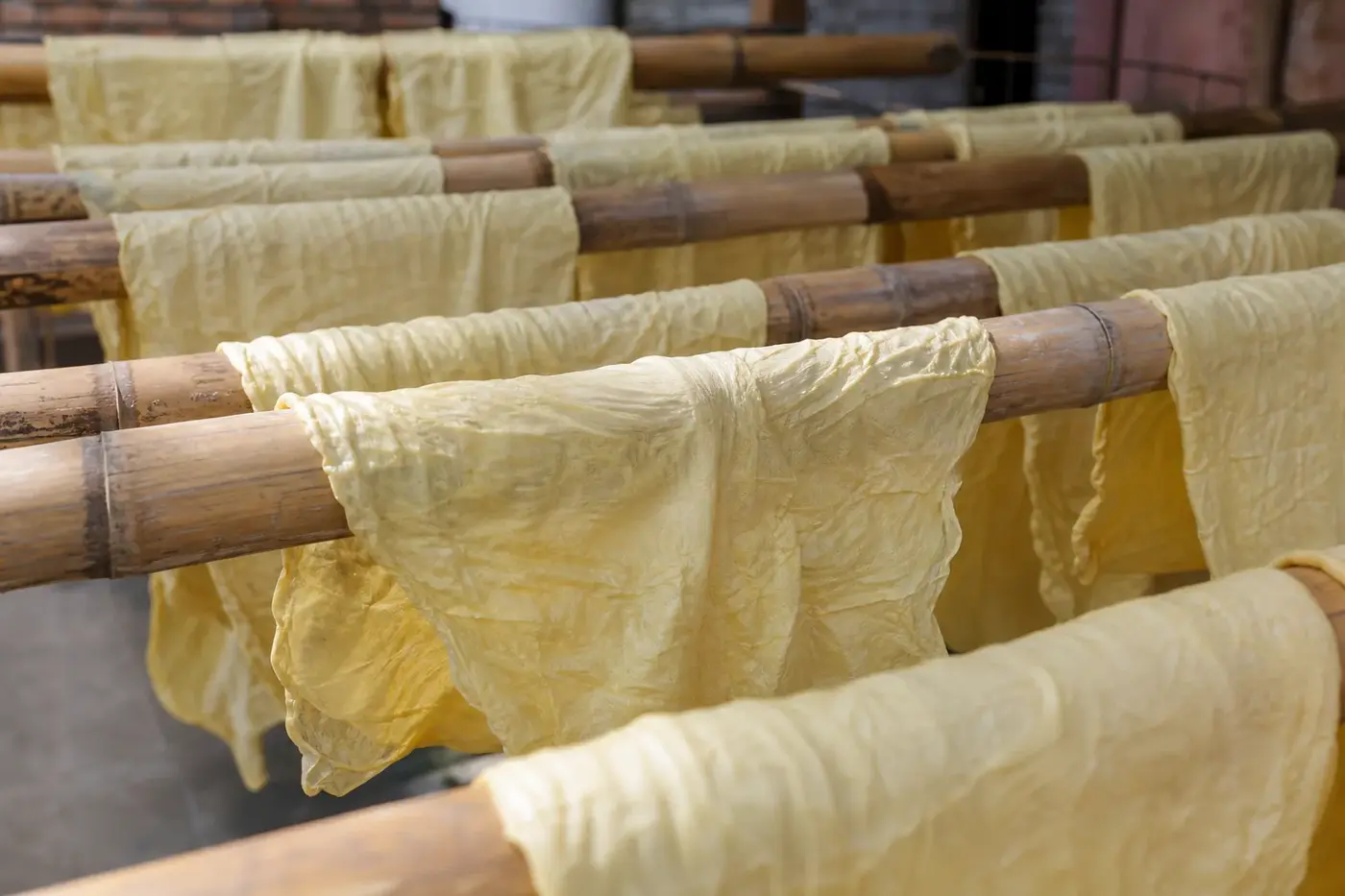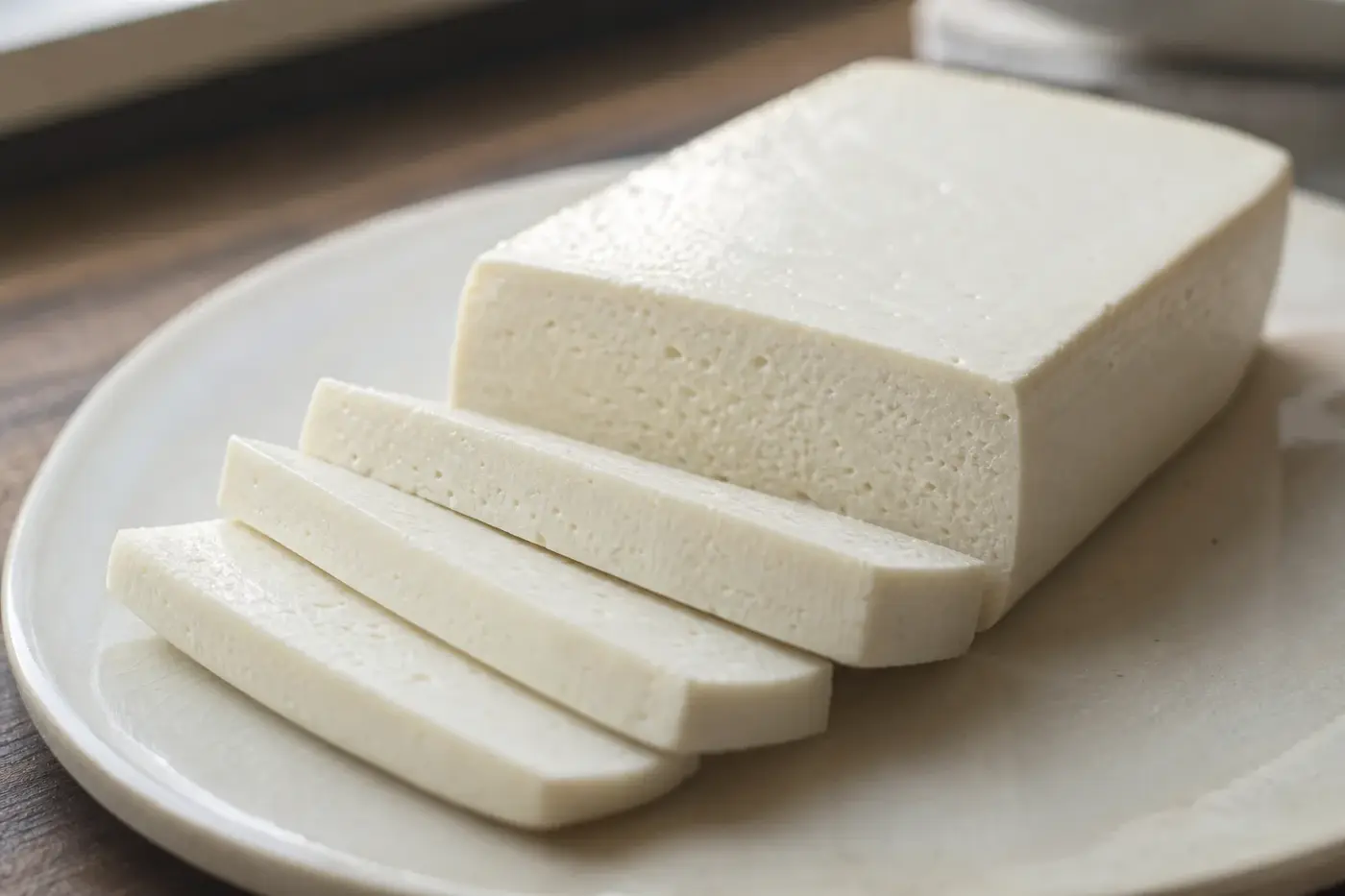
Morning milking, then evening milking. In one Sani household observed in Shilin, Yunnan, the rhythm carried straight into cheesemaking: goat’s milk heated and curdled, then gathered into cloth and pressed into fresh white blocks. This was Rubing, ready for cooking and sharing. Closely associated with Sani communities around Shilin and Bai cheesemaking further west, it is traditionally made with goat’s milk, though cow’s milk versions are documented too. [1][2]
Your first encounter with Rubing
- Meet naiteng, a plant based souring liquid described in one Bai field account. [2]
- Salt or sugar? Fried Rubing leaves that happy decision to you. [2]
- Look at the shape: Rubing becomes a compact cake; Rushan is stretched into thin sheets and dried. [2][9]
| Get to know Rubing | What you’ll find |
|---|---|
| Familiar name | Rubing; 乳饼, also written 乳餅. [2] |
| What the name means | “Milk cake”. [2] |
| Where it is traditionally made | Yunnan, southwest China, including Shilin, Jianchuan and Heqing. [1][2] |
| Milk | Traditionally goat’s milk; cow’s milk documented in Jianchuan. [2] |
| How the curd sets | Heat and acidification, using locally documented souring agents. [1][2] |
| Appearance | White to creamy white, usually a compact cake or rectangular block. [2][3] |
| Texture | Sliceable, with a spongy or chewy character. [2][3] |
| When to eat it | Fresh after curdling and shaping. [2] |
| Registered name, authority and register ID | Not specified here |
| Protection status by jurisdiction | Not specified here |
Follow the milk cake from hillside to market
Rubing’s story takes you from rocky grazing land to household kitchens and city markets. Ethnographic research in Shilin, formerly called Lunan, records goat keeping alongside crop cultivation, with animals grazing land difficult to farm. Milk cake linked households with local buyers and traders supplying Kunming. In the Sani household researchers observed, both morning and evening milking led to cheesemaking. [1]
Further west, a separate field account introduces Bai makers around Jianchuan and Heqing. Their cheese travelled to markets in Dali and Xiaguan, but it also had a place at banquets and on the table for guests. Behind the white cake sit those relationships: makers, traders, hosts and the people they fed. [2]
The story extends beyond the communities making it. Research on Naxi food culture records Rubing among the cheeses eaten around Lijiang, with locally familiar ways of serving it. You are encountering overlapping food cultures, not a single household recipe preserved unchanged. Making and eating practices vary between homes. [3]
Start with the milk, and ask the maker
Goat’s milk sits at the heart of the documented Shilin tradition. Research published in 2026 also identifies Rubing as a handmade goat’s milk cheese of Yunnan, investigating the fermented whey used in its making. [1][4]
The older Bai field account adds an important regional distinction. Makers in Heqing used goat’s milk; in Jianchuan, cow’s milk was often substituted. There is room for both in Rubing’s story. [2]
When you buy, ask which milk went into the cheese rather than relying on the English description “goat cheese”. Ask about milk treatment separately: which animal supplied it and how it was treated are different questions. The guide to raw, thermised and pasteurised milk helps you make sense of the terminology.
Watch warm milk become a firm little cake
Heat and acidity begin the change. An acidic liquid goes into heated milk, separating it into curd, the collected milk solids, and whey, the liquid left behind. Draining and pressing gather those solids into a coherent cake. Published accounts share this sequence, though their souring agents differ. [1][2][5]
Meet the liquids that set the curd
In the Shilin household observed during ethnographic fieldwork, the maker brought goat’s milk towards the boil before adding soured whey or vinegar. As the curds formed, she lifted them into cloth, folded them and pressed them into rectangular blocks. You can trace each step from liquid milk to a cake ready for slicing. [1]
The Bai account introduces naiteng, meaning “milk vine”. This souring liquid came from the dried stems and leaves of a cultivated vine. After adding it, the maker warmed the milk further until white curds and yellowish whey separated. The account does not establish the plant’s botanical identity. [2]
Fermented whey contributes its own microbial character. A 2026 study compared it with the resulting Rubing through metagenomic sequencing, a method that examines genetic material from microbial communities. Here, whey deserves attention as an ingredient in its own right, rather than simply an interchangeable source of acidity. [4]
Give the curds cloth, boards and time under pressure
Cloth holds the loose curds together while whey drains away. The Bai account describes wrapped curds compressed between wooden boards; a dairy research paper also describes draining and pressing in clean white cloth. That pressure brings the fresh cheese into its compact shape. [2][5]
It helps to think of setting and shaping as separate jobs. Acidification makes the curd; draining and pressing make it firm enough for you to handle and slice. For the wider vocabulary, turn to how cheese is made.
Get to know that firm white slice
Rubing ranges from white to creamy white. Descriptions include rounded, brick-like cakes with a spongy texture, as well as firm, chewy blocks. [2][3] If tofu comes to mind, the resemblance is useful as well as visual: both can reach your kitchen as pale blocks ready for cutting. [2][3][6]
Do not read that firmness as a sign of age. Rubing gets its compact body from gathering and pressing fresh curd, and it is shaped and eaten fresh. This is a different sort of firmness from that of an aged hard cheese. [2]
How it was made matters in your kitchen, too. Ethnographic research comparing products available during fieldwork found packaged factory Rubing denser, firmer and drier than unpackaged farmhouse examples. Two cakes may therefore behave differently in your pan, even when they share a name. [1]
Taste the milk before turning up the heat
Milk, rather than prolonged ripening, is the usual starting point for describing Rubing’s fresh character. That does not mean every cake tastes alike. A sensory study of seven Yunnan goat milk cakes, first published in 2020, found substantial differences between samples. Researchers combined sensory assessment with instrumental analysis and experiments that reconstructed or removed particular aroma compounds. [7]
Some compounds were associated with milky aromas. Fatty acids contributed animalic, goat-like and other stronger notes, while samples from different locations had different aroma profiles. You may meet a mild Rubing or one with a more pronounced character. Both belong in the picture. [7]
Over heat, Rubing remains a distinct piece of cheese rather than becoming a flowing sauce. Field accounts describe it holding its shape, while Naxi food research records a chewy texture in grilled or pan-fried cheese. Expect a slice on your plate, not a cheese auditioning for the longest stretch. [2][3]
When you taste, give the cheese and its seasoning separate attention. Start with texture, then consider milk aroma, acidity and any pronounced goat character. With a cooked dish, note the accompaniment too. Salt, sugar or pepper should not do all the descriptive work.
Choose your finish: salt, sugar, pan or steamer
A plate of fried Rubing can take a sweet or savoury turn. The Bai field account records salt or sugar sprinkled over shallow-fried slices, alongside another preparation coated in egg and cornflour batter before deep-frying. Each finish changes the dish without making the cheese unrecognisable. [2]
In rural Shilin, ethnographic research records pan-fried milk cake seasoned with salt and sometimes ground Sichuan peppercorns. Naxi food research describes grilling or pan-frying, followed by sweetening or salting. These preparations have much in common, but their local details are worth keeping in view. [1][3]
Then comes the steamer. A 2025 Yunnan local report names huojia rubing, cheese slices interleaved with ham and steamed, among Shilin’s traditional dishes. It also identifies shuijian rubing, commonly translated as water-fried Rubing. There is a place for this cheese in composed dishes as well as in a pan on its own. [8]
For your first taste, choose a preparation where you can still see the slices. That gives you a clear introduction to the defining texture. You can explore dishes with several ingredients once you have a feel for the cheese itself.
Rubing and Rushan: let the shapes introduce them
Start with the shapes and the distinction is clear. Rubing is gathered into a compact cake; Rushan is worked into thin sheets and dried. They share a regional dairy context and acid-setting principles. What happens after curdling takes them in strikingly different directions. [2][9]
| What to look for | Rubing | Rushan |
|---|---|---|
| Documented milk | Goat’s milk, with regional cow’s milk variants. [2] | Cow’s milk in the cited production study. [9] |
| How it takes shape | Drained and pressed into cakes or blocks. [2] | Warm curd kneaded, stretched and arranged on bamboo supports. [9] |
| What reaches your kitchen | Compact fresh cheese. [2] | Thin, dried sheets. [9] |
| Documented texture when cooked | Chewy; holds its shape. [3] | Can puff and become crisp when fried. [3] |
The Rushan study worked with local makers in three Yunnan locations. It used a controlled production method, including cow’s milk and fruit-derived acidic water, and its preparation section documents stretching and drying directly. Those details give you a useful basis for telling the cheeses apart. Their names are not interchangeable. [9]
Find the Rubing that suits your dish
Ask where the cheese was made and which milk it contains. Find out whether it is intended for cooking, and how to store it before and after opening. Read the ingredients for the whole product, especially if you are buying it already seasoned or battered.
Keep a short buying note with the maker, production location, milk, packaging and intended dish. Those details make your next purchase easier to judge. “The softer cake used for steaming” tells you more than expecting every Rubing to match the first one you tried.
If you buy it packaged, keep the label until you have finished the cheese. The guide to reading a cheese label helps you distinguish ingredient, origin and storage information.
Make room in the fridge and plan for leftovers
Keep your fridge between 0 and 5 °C, refrigerate dairy products and follow the packaging instructions. This is the Food Standards Agency guidance cited here for England, Northern Ireland and Wales, with November 2026 as the reference date. Use a fridge thermometer to check the temperature. [10]
Leave Rubing refrigerated until you need it, then return the unused portion promptly. Follow its stated use-by and opening instructions rather than assigning every fresh cake the same number of days. During preparation, the agency advises keeping chilled food out of refrigeration for the shortest possible time. [10]
Cool cooked leftovers and refrigerate them within one to two hours. Then eat them within 48 hours or freeze, following the agency’s general household guidance alongside the product’s own directions. For the broader routine, see how to store cheese at home. [10]
Let the cake lead you back to its maker
Rubing brings milk production, household skill, market exchange and cooking together in one fresh cheese. Its documented variations include milk species, souring agents, degrees of firmness, and sweet or savoury ways of serving it. The cheese remains recognisable without one definitive recipe calling all the shots. [1][2][3]
Begin with the cake in front of you. Ask where it comes from, how its maker describes it and what the cook intends to do with it. Those details connect a fresh white block to the people and places behind it. Your first slice is a good place to start.
General information only, not medical advice: follow the official guidance where you live.
Questions people ask
What is Rubing and where is it made?
Rubing is a fresh cheese whose name means “milk cake”. It is associated with communities in Yunnan, southwest China, including Shilin, Jianchuan and Heqing.
Is Rubing always made from goat’s milk?
Rubing is traditionally made with goat’s milk. A Bai field account records that makers in Heqing used goat’s milk, while cow’s milk was often substituted in Jianchuan.
How is Rubing made?
An acidic liquid is added to heated milk to separate it into curds and whey. The curds are then drained in cloth and pressed into a compact cake or block.
How do people cook Rubing?
Rubing can be pan fried or grilled and served with salt or sugar. In the Shilin dish huojia rubing, slices of cheese are interleaved with ham and steamed.
What is the difference between Rubing and Rushan?
Rubing is drained and pressed into a compact fresh cake. Rushan is stretched into thin sheets and dried, and can puff and become crisp when fried.
Sources
- SOAS University of London, Heritagizing Local Cheese in China: Opportunities, Challenges, and Inequalities, accepted manuscript for Food and Foodways, 2018. Original ethnographic research on Rubing production and consumption. Retrieved manuscript.
- SIL International researchers, Mozzarella of the East (Cheese-making and Bai culture), 2005, retrieved reproduction of the original field account. Retrieved text.
- Firenze University Press, Looking at China’s cultural complexity, chapter on Naxi foodways, retrieved publisher PDF, 2022. Retrieved chapter.
- Food Research International, Metagenomic sequencing reveals the similarities and differences in microbial community structure and diversity between fermented whey and Rubing cheese, a fresh goat milk cheese, volume 237, article 119400, 2026. Abstract retrieved through PubMed. Retrieved record.
- Yunnan Agricultural University, Preservative Effect of a Pickering Emulsion Containing Antimicrobial Peptide MOp2 from Moringa oleifera Seeds on Milk Cake, Journal of Dairy Science and Technology, volume 45, number 3, 2022. Retrieved paper.
- Shanghai Municipal Government Information Office, 来自云南白族的风味奶制品-乳扇, 23 February 2018, English-language account of Rushan and Rubing. Retrieved account.
- Journal of Food Science, Characterization of the key aroma compounds in Yunnan goat milk cake using a sensory-directed flavor analysis, first published 16 October 2020. Retrieved publisher abstract.
- Yunnan Net, “石林乳饼”贴上“国标”从此有了“全球唯一编号”, 15 April 2025. Local reporting used for named serving preparations only. Retrieved report.
- Frontiers in Microbiology, Bacterial Diversity in Chinese Rushan Cheese From Different Geographical Origins, volume 9, article 1920, 2018. Retrieved paper.
- Food Standards Agency, How to chill, freeze and defrost food safely, published 18 December 2017, current retrieved version, November 2026. Applies to England, Northern Ireland and Wales. Official guidance.
This desk-researched article compares original field accounts, production and sensory research, local reporting and official household food safety guidance.
Last checked: November 2026
Last checked November 2026.
The editors suggest you read next