Cheese in China and Tibet
A thin sheet of rushan meets the frying pan and puffs into a light, crisp mouthful.
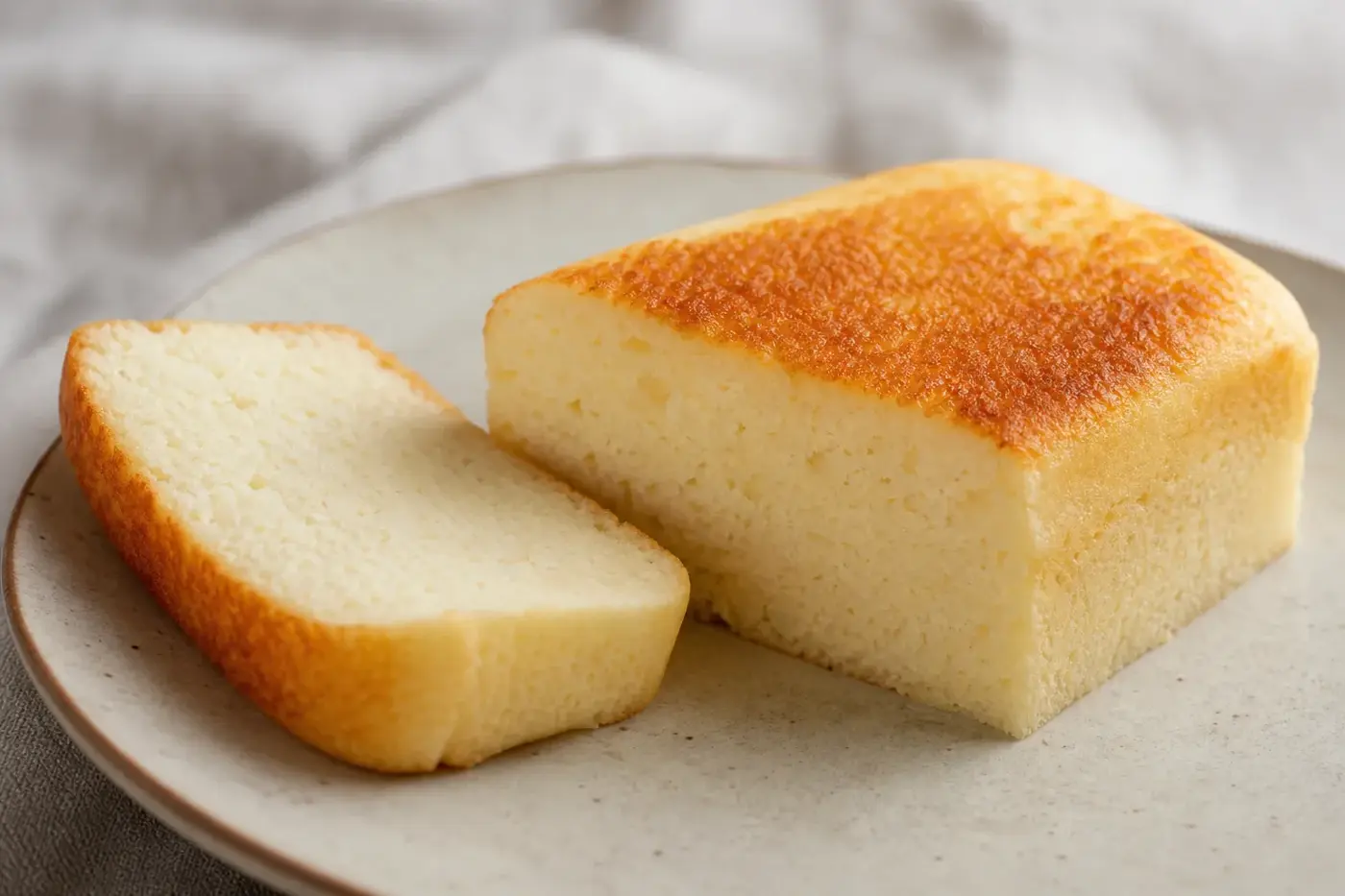
A thin sheet of rushan meets the frying pan and puffs into a light, crisp mouthful. Regional fieldwork in Yunnan records that transformation, but your next encounter with milk here might look entirely different.[1] Rubing comes in fresh, firm cakes; rushan stretches into sheets; on the Tibetan Plateau, curds and dried dairy foods take their place. Each belongs to a distinct regional food culture, shaped by animals, landscapes and the practical business of making milk last.[1][2][3]
Three traditions worth getting to know
- Rubing belongs to several communities, including Bai and Sani communities.[1]
- Rushan is associated particularly with Bai communities around Dali.[2]
- Inner Mongolian huruud has its own documented methods and local names.[4]
Let the cheese lead you beyond the borders
Ask about cheese in China and you will need more than one answer. Research on Yunnan’s rubing, Bai rushan and Inner Mongolian huruud takes you into particular communities, each making and eating distinct foods. Those local stories offer much more than an argument about whether cheese belongs to a single national cuisine.[1][2][4]
Tibet calls for a little geographical care, too. Here, it means a cultural and geographical setting as well as an administrative one. The Tibetan Plateau extends beyond the Tibet Autonomous Region into Qinghai and parts of Sichuan, Gansu, Yunnan and Xinjiang. Its story does not fit within the boundaries of any single province or autonomous region.[5]
Meet rubing, Yunnan’s pale milk cakes
Picture small, rounded bricks, pale and spongy. Fieldwork among Bai communities describes rubing (乳饼) this way: a fresh, firm cheese traditionally made from goat’s milk, its name often translated as “milk cake”. The same account finds rubing among Sani communities near Kunming, so its cultural roots reach beyond the Bai.[1]
The making begins with heating and souring milk. Makers drain the curds through cloth, then press them into cakes. Fieldwork records a souring liquid derived from plants, with cow’s milk replacing goat’s milk in some production. If you want to know what is in your rubing, the maker is the person to ask.[1]
Follow rubing into restaurants and markets and another story emerges: food as an expression of local identity. Ethnographic research published in 2018 traces its production, marketing and consumption, following a regional goat milk cheese into the world of heritage food. Remember that journey when a menu offers you one version as the taste of an entire province.[6]
Rushan, the milk fan shaped on bamboo
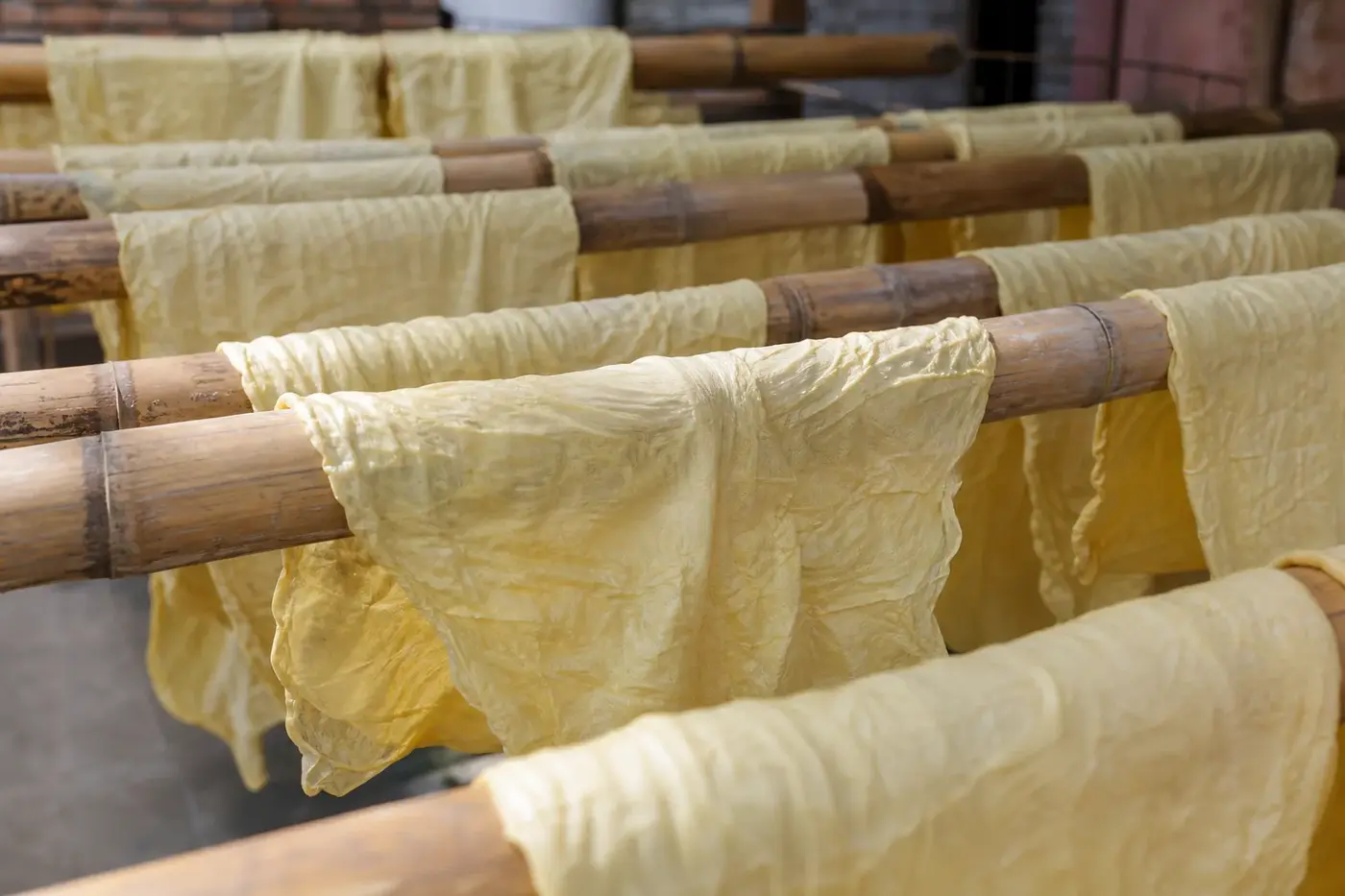
Where rubing forms a compact cake, rushan opens into a sheet. Rushan (乳扇), the “milk fan”, is associated particularly with Bai communities around Dali. Makers work warm cow milk curd, support it on bamboo and dry it. Stretching and drying, rather than mould ripening, give it that recognisable shape.[2]
A 2018 study followed local residents making rushan in Weishan, Eryuan and Jianchuan. They mixed a fruit based acidic liquid with milk, kneaded the curd, stretched it into an oval sheet and wrapped it around a bamboo support. For the study’s experimental batches, researchers used UHT milk.[2]
Even those experimental cheeses had their differences. Bacterial DNA sequencing of fifteen cheeses revealed variation between the three locations. Those findings describe the samples, not a microbial profile you can assume every cheese from each place shares.[2]
Then you get to eat it. Regional fieldwork records fried rushan’s light, crisp texture and its role in Bai three-course tea, where pieces join walnut and brown sugar in the sweet course. Look for either preparation on a menu. Each offers you a particular introduction to this cheese.[1]
On the Tibetan Plateau, start with butter
On the plateau, curd making often follows butter making. It is one stage in a continuous sequence of milk processing, rather than an isolated task. The FAO’s account of yak products describes butter as a principal output, with soft foods resembling cottage cheese made from the skimmed milk left behind. Taking fat for butter still leaves milk proteins available for curd.[3]
Fresh curd preparations hold more moisture; drying concentrates the milk solids further.[3] Names and preparations vary with place and language. Ask whether yours has been drained, and whether it is fresh or dried, to get a clearer sense of what you are being offered.
Tibetan communities live across provincial borders, while the wider plateau supports several communities and livestock systems. A milk food in Qinghai may have a different name, recipe and role from one served in a Tibetan household in Sichuan. Village, producer and language are part of its identity. They deserve your attention as much as its texture.[3][5]
Get to know the animal behind the milk
Yak milk is central to the plateau examples above, while the Tibetan sampling study also documents cow milk fermentation. In Yunnan, goat milk rubing and cow milk rushan offer another contrast. Regional descriptions help you find your bearings, but for a particular purchase, look to the producer’s declaration of the milk used.[1][2][8]
Sheep and goats belong in this landscape too: the Yunnan fieldwork places them in hillier grazing country. Inner Mongolian research describes a broader dairy repertoire involving several milk animals, although the huruud directly sampled was made from cow’s milk. A region’s livestock story is not an ingredients list for every cheese you find there.[1][4]
Huruud, from pastoral family kitchens to milk tea
Huruud, also written hurood in research, brings you into Inner Mongolia’s own dairy vocabulary and methods. Researchers in Baotou and Bayannur describe a dried cow milk curd made by heating spontaneously fermented milk, then squeezing the separated solids. Their samples came from products made by pastoral families.[4]
In Xilin Gol, a separate study followed hurood through milk fermentation, whey separation, further heating and moulding. Its twenty-four samples covered household, workshop and factory production. Put the studies together and “milk curd” begins to sound like a rather small label for a busy subject. Processing, shape and moisture distinguish one preparation from another.[10]
Research records hurood eaten directly and added to milk tea. You may also encounter urum, a local surface cream preparation, distinct from the drained curd called huruud. Give these Mongolian dairy foods room to tell their own story, rather than treating them as Tibetan products with different names.[4][11]
What acid, heat and drying bring to the plate
Acid coagulation sounds technical, but you can follow the central action quite easily. Milk becomes acidic enough for its proteins to gather into solid curds, separating from liquid whey. Rushan research records acid and heat working together; hurood studies describe fermentation followed by heating. Both routes concentrate milk, with the method helping shape the finished texture.[2][10]
Stretching works curd into a sheet or another form, while drying removes more moisture. Butter follows a different route, concentrating milk fat through separation or churning; fermented milk drinks remain liquid. These foods may begin with a shared milk supply, but their ingredients and methods are distinct.[2][3][4]
If you would like a closer look at that transformation, explore how cheese is made. It explains curd formation and the removal of whey.
Making milk last without making tradition stand still
Drying allows milk solids to outlast the moment of milking, a useful skill in a dairy economy. Butter making and curd making can work together, using different fractions of the same milk. The FAO’s account describes yak dairy products moving between pastoral households and neighbouring settlements through sale and barter.[3]
Tradition, though, does not mean standing still. The rubing ethnography examines heritage making through production, marketing and consumption, while hurood research includes factories alongside households. Regional identity can endure even as equipment, distribution and the people eating a food change.[6][10]
Meet the newer cheeses in China’s story
Alongside established regional foods, Chinese cheesemakers have developed newer styles using techniques associated with other countries. Le Fromager de Pékin’s website says it began in 2009 and describes making French style cheeses with local milk in Beijing. Its present production status remains uncertain.[12]
Technical experimentation has a place in this story too. A hurood study evaluated selected lactic acid bacterial starters against a commercially available product, comparing composition, texture and flavour characteristics. That work connects household fermentation knowledge with efforts to make production more consistent. Regional dairy traditions and newer cheesemaking sit side by side in the story of cheese made in China.[11]
Shop with curiosity, then ask how to serve it
Before you plan a cheeseboard, ask what the food is meant to do. A fresh cake, a dried sheet and a hard curd need different preparation, even when a seller calls all three cheese. Find out how the producer or cook normally serves yours. Your cheese knife can wait its turn.
For a first taste, try a regional preparation rather than a mixed board. That could mean a cooked rubing dish in Yunnan, rushan prepared by a Bai cook, or local milk tea with the dairy food normally offered alongside it. Ask what changes between fresh and dried versions. That conversation may teach you more about buying and serving than a comparison with a European cheese.
Take these questions shopping:
- Who made it, and where? Ask for the maker, production locality, milk animal and product name in its original script where available. Record the seller’s own name for it. A familiar English spelling may cover several preparations.
- What went into it? Ask whether the milk was pasteurised and whether sugar, flavourings or other ingredients were added. A traditional name cannot tell you how the milk in the packet was treated. The guide to raw and pasteurised cheese explains the distinction.
- How should you store it? Follow refrigeration and opening instructions, and do not eat the product after its use by date. For England, Wales and Northern Ireland, the FSA advises keeping a home fridge at 5 °C (41 °F) or below.[13] Find further guidance in how to store cheese.
- How is it normally eaten? Ask whether a dried curd is eaten directly, softened in a drink or incorporated into food. Ordering a locally prepared dish gives you a useful first encounter with its intended texture.
For UK advice on raw milk and dairy products, including advice for people at higher risk, consult the NHS dairy guidance (November 2026).[14] You can also read cheese food safety.
Before you bring cheese home to Great Britain
Travelling directly from China to Great Britain with cheese for personal use? Before you go, consult the current traveller guidance for your product and any exceptions.[15] Look up any transit country’s requirements too. For other destinations, consult the relevant authority’s current rules.
General information only, not medical advice: follow the official guidance where you live.
Questions people ask
What is the difference between rubing and rushan?
Rubing is a fresh, firm cheese traditionally made from goat’s milk and shaped into compact cakes. Rushan is made from cow’s milk curd stretched into thin sheets and dried.
How is rushan eaten?
Regional fieldwork records rushan being fried until light and crisp. It also appears with walnut and brown sugar in the sweet course of Bai three course tea.
What is huruud and how is it served?
Huruud, also written hurood, is an Inner Mongolian dairy food. Research records it being eaten directly and added to milk tea.
How is curd made on the Tibetan Plateau?
Curd making often follows butter making as part of a continuous sequence of milk processing. The FAO describes soft curd foods made from the remaining skimmed milk, with some curds dried to concentrate the milk solids further.
Can I bring cheese from China to Great Britain?
Before travelling directly from China with cheese for personal use, check the current GOV.UK traveller guidance for the product and any exceptions. Check any transit country’s requirements too.
Sources
- Ethnorema and SIL International, Mozzarella of the East (Cheese-making and Bai culture), issue 1, 2005, especially the regional setting and cheesemaking sections, pages 20 to 22. Published paper.
- Frontiers in Microbiology, Bacterial Diversity in Chinese Rushan Cheese From Different Geographical Origins, volume 9, article 1920, 2018. Introduction, production method and sequencing results. Published paper.
- Food and Agriculture Organization of the United Nations, The Yak, second edition, 2003, chapter 10, Products from yak and their utilization. Chapter.
- Korean Journal for Food Science of Animal Resources, Isolation and Identification of Lactic Acid Bacteria from Traditional Dairy Products in Baotou and Bayannur of Midwestern Inner Mongolia and q-PCR Analysis of Predominant Species, 2016. Introduction and sample collection methods. Published paper.
- State Council Information Office of the People’s Republic of China, Ecological Progress on the Qinghai-Tibet Plateau, July 2018. Preamble and regional references. Official text.
- Food and Foodways, Heritagizing local cheese in China: Opportunities, challenges, and inequalities, volume 26, issue 1, 2018. Retrieved abstract describing original ethnographic research. Article record.
- Tibetan Plateau yak milk: A comprehensive review of nutritional values, health benefits, and processing technology, online review, version indexed and retrieved November 2026. Passage on qula and tsampa. Article record.
- Comparison of nutrition and microbiological compositions between two types of fermented milk from Tibet in China, 2009. Abstract describing the sampled products. PubMed record.
- Journal of Ethnic Foods, Appraisal of some ethnic milk products from minor milch animal species around the world: a review, 2023. Passage discussing kurut terminology. Published review.
- Foods, Impact of Manufacturing Stages and Processing Scales on the Microbial Profile of Hurood, volume 15, issue 13, article 2261, 2026. Retrieved introduction and sample collection methods. Published paper.
- Journal of Dairy Science, Optimization of lactic acid bacterial starter culture to improve the quality and flavor characteristics of traditional Hurood, online article version retrieved November 2026. Introduction and experimental comparison. Published paper.
- Le Fromager de Pékin, official Chinese-language website, undated company account retrieved November 2026. Commercial primary source for its own history and methods. Company account.
- Food Standards Agency, How to chill, freeze and defrost food safely, GOV.UK publication and linked guidance, version retrieved November 2026. Official publication.
- NHS, Dairy and alternatives in your diet, web guidance retrieved November 2026. Sections on pasteurisation and vulnerable groups. Official guidance.
- GOV.UK, Bringing food into Great Britain: Meat, dairy, fish and animal products, current web guidance retrieved November 2026. Section on countries outside the listed European group. Official guidance.
This desk-researched article brings together regional fieldwork, dairy research, an FAO reference and official British guidance; serving suggestions are editorial recommendations rather than recorded tastings.
Last checked: November 2026
Last checked November 2026.
The cheeses of China and Tibet
The editors suggest you read next
French Cheese: The Complete Guide
Picture Normandy’s pastures, then follow the milk towards the Loire’s goat dairies, the Jura’s shared cheesemaking traditions and the sheep country of the Pyrenees.