Shanklish
The flatbread is out, the tomato and onion are chopped, and Shanklish crumbles into the middle of the plate.
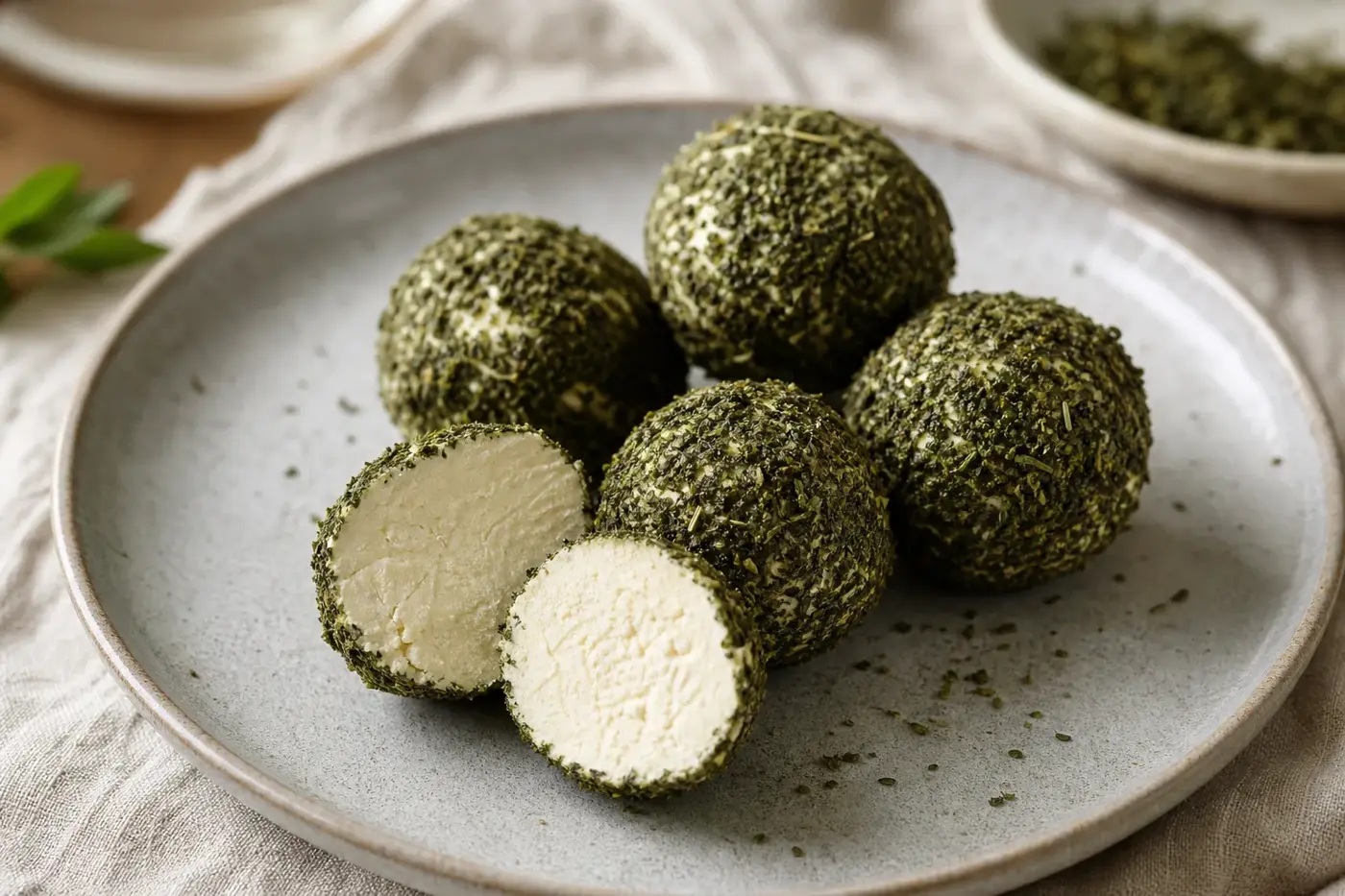
The flatbread is out, the tomato and onion are chopped, and Shanklish crumbles into the middle of the plate. Add olive oil and you have a salty, pungent introduction to a cheese rooted in the mountain villages of northern Lebanon’s Akkar Governorate. There, it belongs to muneh, the preparation of winter provisions: cultured dairy becomes salted, dried balls, sometimes matured with surface mould and often finished with herbs or spices. Syria and Lebanon are its particular heartlands.[1][2]
| What to know | A little more detail |
|---|---|
| Name to look for | Shanklish; also written Shankleesh.[1][3] |
| Places it calls home | Syria and Lebanon, including northern Lebanon’s Akkar Governorate.[1] |
| Milk in the cheese | Documented versions use cows’, goats’ or sheep’s milk.[2][3] |
| Where the cultured base begins | Defatted yoghurt or fermented buttermilk in documented methods.[2][3] |
| Shape and finishing touches | Dried balls, often coated with ground herbs or spices.[1][2] |
| Allergen to know | Contains milk; check all ingredients, including the coating.[2][10] |
| Time spent ageing | Varies by production method and product.[2][4] |
Winter preparations, with a taste of Akkar
In Akkar’s mountain villages, making Shanklish means thinking ahead to winter. The iHERITAGE Mediterranean cultural inventory places this tradition in Syria and northern Lebanon, particularly Akkar, where it belongs to muneh. Cultured dairy becomes something concentrated, seasoned and capable of further maturation.[1]
You will meet more than one English spelling along the way. Contemporary production research uses Shanklish; earlier Lebanese research and technical literature use Shankleesh. Neither spelling tells you which milk went into the ball, how mature it is or what seasoning coats it.[3][4]
Think of the name as an invitation to a regional tradition, rather than a promise of one fixed recipe. Published accounts describe differences in ingredients, processing and ripening. Those are useful things to ask about when you choose your cheese.[4]
First comes the yoghurt or buttermilk
Before there is a ball of cheese, there is milk that has already been cultured. In the Akkar method recorded by iHERITAGE, milk becomes laban, or yoghurt. Churning removes the butter, leaving a fermented liquid that is heated to produce the material for draining and shaping.[1]
Earlier Lebanese research describes Shankleesh as a by-product of ghee processing. It also examines cheeses made from cows’, goats’ and sheep’s milk. Yoghurt and buttermilk both appear in accounts because those accounts join the dairy-making sequence at different points.[3]
Here, buttermilk means the fermented liquid associated with butter-making. Ask which milk and cultured base the maker used, rather than expecting the English spelling to tell you. For the wider distinction between milk treatments, see raw, thermised and pasteurised cheese.[3][4]
From draining cloth to seasoned ball
Heat, drainage, salt, shaping and drying each have a job to do. In the Akkar account, the heated fermented liquid separates, and the solids drain in cotton cloth. The cheese is then salted, rolled into individual balls and dried before maturing in containers.[1]
A Lebanese technical account begins with heated defatted yoghurt. Salt and pepper go into the cheese before shaping, drying and ripening. After maturation, the surfaces are washed, then the balls are rolled in olive oil and powdered thyme.[2]
That gives you two things to explore: the concentrated dairy interior and its separately seasoned surface. Seasoning may run through the cheese, sit on the outside or appear in both places. Two balls can share a name without agreeing on the details.[1][2]
These descriptions are not a complete home cheesemaking method. Use a specialist-reviewed method with verified controls, rather than copying traditional drying or jar-ripening conditions from a short account. For more on curds, the separated milk solids, and whey, the liquid they release, see how cheese is made.
Fresh or mature? Your first question
Start by asking whether your cheese is fresh or matured, then ask about its actual maturation history. You want to know what the maker intended, not simply how it looks. Research identifies ripening period as one factor shaping Shanklish’s texture, appearance and flavour.[4]
For a fresh cheese, take your lead from the maker’s description. You need not go hunting for the forceful aroma of a mature ball. With a matured one, ask whether surface mould developed during production and whether it was removed before the coating went on.[2][4]
The calendar tells only part of the story. Research also identifies milk type, milk composition, geographical region and traditional processing method as sources of variation. When you compare makers, look beyond the number of weeks or months on the label.[4]
Get acquainted with the herb and spice coat
A green, herb-covered ball and a pepper-seasoned one offer you different possibilities. Lebanese technical literature describes powdered thyme, while the Akkar heritage account records oregano and different pepper mixtures. All are documented Shanklish finishes.[1][2]
The seasoning story does not stop there. Research on the related eastern Mediterranean product surk records chilli among a much broader collection of possible spices. Its authors include Shanklish and Shankleesh among names used for that product, so there is no single compulsory spice blend for every Shanklish.[5]
At the counter, ask what is in the thyme mixture and how much chilli is used. Find out whether the seasoning was mixed through the cheese or applied outside. You will get a clearer picture of both the flavour and the full ingredient list.
Look at the coating, then try the crumble
Give the coating and the cut cheese their own moment of attention. The ball’s identifiable herb or spice finish tells you about its seasoning. Inside, you can see how thoroughly the cheese has dried and how readily it breaks into crumbs.[1][2]
The cultural inventory describes Shanklish as salty and pungent. A published Lebanese serving account describes a semi-firm, thyme-crusted cheese whose flavour grows strong with age. Keep those descriptions in mind for mature examples, then let the maker introduce you to the particular cheese before you.[1][6]
At the table, follow the cheese’s lead and work with that crumble. Break it into pieces rather than trying to negotiate neat, thin slices.[6]
Make room for tomato, onion and olive oil
Crumble the cheese, add chopped tomato and onion, then dress with olive oil. In the Akkar heritage record, the cheese sits in the middle of a plate, surrounded by vegetables and ready to mix before eating. A Lebanese recipe account brings pita bread to the table.[1][6]
For your first encounter, keep everything separate until serving. Balance the amount of cheese against the tomato and onion, especially if the maker describes it as strongly matured. You can find the proportions you enjoy without committing the whole plate.
Use the bread to gather up the dressed crumbs and vegetables. Parsley appears in the heritage account; the published recipe uses spring onions and a little lemon juice. Each gives you a documented variation on that central combination.[1][6]
Following FSA advice for England, Northern Ireland and Wales, wash vegetables thoroughly before eating them raw. Use clean hands, utensils and surfaces when preparing food. Serve ready-to-eat food shortly after taking it from refrigeration.[8]
Before you buy, ask for the ball’s story
Begin with four questions: which milk, which cultured base, what maturation and what coating? Ask the seller about the particular cheese you are buying, rather than Shanklish in general. Research shows that production differences can affect both composition and sensory character.[4]
Next, look for milk treatment, ingredients, storage instructions and the date mark on the package. If you buy loose cheese, get those details from the supplier before taking it home. Keep the label or written instructions with it, especially when several differently seasoned balls look similar.[7][9][10]
For a first purchase, choose a cheese whose maker can explain its intended maturity and finished appearance. That conversation is especially useful when deliberate surface ripening has been part of production. It helps you understand the cheese you are bringing home.[2]
Home with your cheese? Head for the fridge
The FSA advises keeping a domestic fridge between 0 and 5 °C and refrigerating dairy products in England, Northern Ireland and Wales. Follow the maker’s storage instructions. Pay particular attention to any directions for the cheese once opened.[7]
Drying or maturation outside refrigeration during production does not override those instructions. The FSA’s household advice is to refrigerate food promptly after purchase. Follow its storage directions and use-by date.[8]
A use-by date concerns safety. Official UK guidance says not to eat food after that date, even if it looks or smells acceptable. If you transfer the cheese to another container, keep the date information with it.[9]
For help with wrapping, containers or arranging your fridge, see how to store cheese at home.
This page summarises published guidance from the official sources it cites. It is not medical advice. Guidance differs between countries and changes over time, so check the current source for where you live, and ask your doctor, midwife, pharmacist or dietitian about your own circumstances.
Milk allergy and unpasteurised dairy: what to ask
[SAFETY UNCHECKED: Verify and report the NHS distinction between milk allergy and lactose intolerance, including milk protein, lactose free dairy and milk from other species. Check the cheese, coating and accompaniments, and direct readers to the official advice and a suitable healthcare professional.]
For England, Northern Ireland and Wales, the FSA identifies pregnant people, people with weakened immunity and older people as groups at higher risk of serious listeriosis. Its list of relevant ready-to-eat foods includes unpasteurised dairy products and soft mould-ripened cheeses.[8]
[SAFETY UNCHECKED: Verify and report the current NHS pregnancy advice for the relevant cheese categories, including its cooking exceptions, with the source, jurisdiction and check date. Do not assign every Shanklish product to one category.]
[SAFETY UNCHECKED: Verify and report the current NHS advice for babies and young children, including any cooking exception, with its jurisdiction and check date.]
Know the difference between ripening and spoilage
Some documented Shanklish methods deliberately encourage mould during maturation. The surface is then cleaned and seasoned. That production stage is different from unexpected growth on a purchased cheese in your fridge.[2]
If your finished cheese changes unexpectedly, leave it out of the meal and ask the supplier about its intended appearance. Follow any applicable recall notice. The FSA warns that looking, smelling or tasting cannot reliably detect harmful bacteria.[8]
Do not improvise mould ageing at home or leave purchased balls unrefrigerated to strengthen their flavour. Controlled production needs more information than a traditional sequence supplies. For the separate household question of unwanted growth, see mould on cheese.
Questions people ask
Where does Shanklish come from?
Shanklish is associated especially with Syria and Lebanon. The iHERITAGE Mediterranean cultural inventory places it in Syria and northern Lebanon, particularly the mountain villages of Akkar.
What is Shanklish made from?
Documented versions use cows’, goats’ or sheep’s milk, with defatted yoghurt or fermented buttermilk as the cultured dairy base. The cheese is salted, shaped into balls and dried, sometimes developing surface mould during maturation.
What does Shanklish taste like?
The cultural inventory describes it as salty and pungent. A Lebanese serving account describes a thyme coated cheese that develops a strong flavour with age.
How is Shanklish traditionally served?
It is often crumbled with chopped tomato and onion, then dressed with olive oil. The Akkar account also includes parsley, while a Lebanese recipe serves the combination with pita bread.
How should I store Shanklish?
The FSA advises keeping a domestic fridge between 0 and 5 °C and refrigerating dairy products in England, Northern Ireland and Wales. Consult the FSA’s food storage guidance and follow the maker’s instructions and use by date.
Sources
[1] iHERITAGE and the Network of Castles and Medieval Towns. Register of Intangible Cultural Heritage of Mediterranean Countries, October 2023, “Shanklish or Arisheh cheese”, pp. 263 to 264. Regional associations, production account and serving tradition.
Read at enicbcmed.eu
[2] IntechOpen. The Goat Dairy Sector in Lebanon, in Goat Science, 2017, section 4.3, “Shankleesh”. Descriptive manufacturing account, milk species and thyme finishing.
Read at pdfs.semanticscholar.org
[3] American University of Beirut, ScholarWorks. Ripening changes and sensory properties of bovine, caprine and ovine Shankleesh, 1992, repository abstract. Spelling, milk species and connection with ghee processing.
Read at scholarworks.aub.edu.lb
[4] International Dairy Journal. Innovative improvement of Shanklish cheese production in Lebanon, 2019, publisher’s indexed abstract and introductory extract. Factors contributing to product variation.
Read at sciencedirect.com
[5] International Dairy Journal. Bacterial and yeast microbial diversity of the ripened traditional middle east surk cheese, 2021, publisher’s indexed abstract. Regional naming and documented spice ingredients.
Read at sciencedirect.com
[6] Nadouda’s Atayeb. Shankleesh, undated, published recipe and description. Crumbling, tomato, spring onion, olive oil and pita serving.
Read at nadoudasatayeb.com
[7] Food Standards Agency. How to chill, freeze and defrost food safely, published 18 December 2017, current retrieved version. Applies to England, Northern Ireland and Wales.
Read at gov.uk
[8] Food Standards Agency. Listeria, current retrieved PDF, checked November 2026. Higher-risk groups, relevant foods, hygiene and storage precautions.
Read at food.gov.uk
[9] GOV.UK. Understanding food labelling: Best before and use-by dates, current retrieved version, checked November 2026.
Read at gov.uk
[10] NHS. Dairy and alternatives in your diet, current retrieved version, checked November 2026. Milk allergy, lactose intolerance, unpasteurised dairy and advice for children.
Read at nhs.uk
[11] NHS. Food allergy, current retrieved version, checked November 2026. Distinguishing allergy from intolerance and seeking professional advice.
Read at nhs.uk
[12] NHS. Foods to avoid in pregnancy, current retrieved version, checked November 2026. Product-category advice for cheese and unpasteurised dairy.
Read at nhs.uk
[13] Food Standards Agency. Alerts, live listing inspected November 2026.
Read at alerts.food.gov.uk
This desk-researched article brings together regional heritage documentation, published dairy research, a documented serving account and official UK consumer guidance.
Last checked: November 2026
Last checked November 2026.
The editors suggest you read next
Darfiyeh
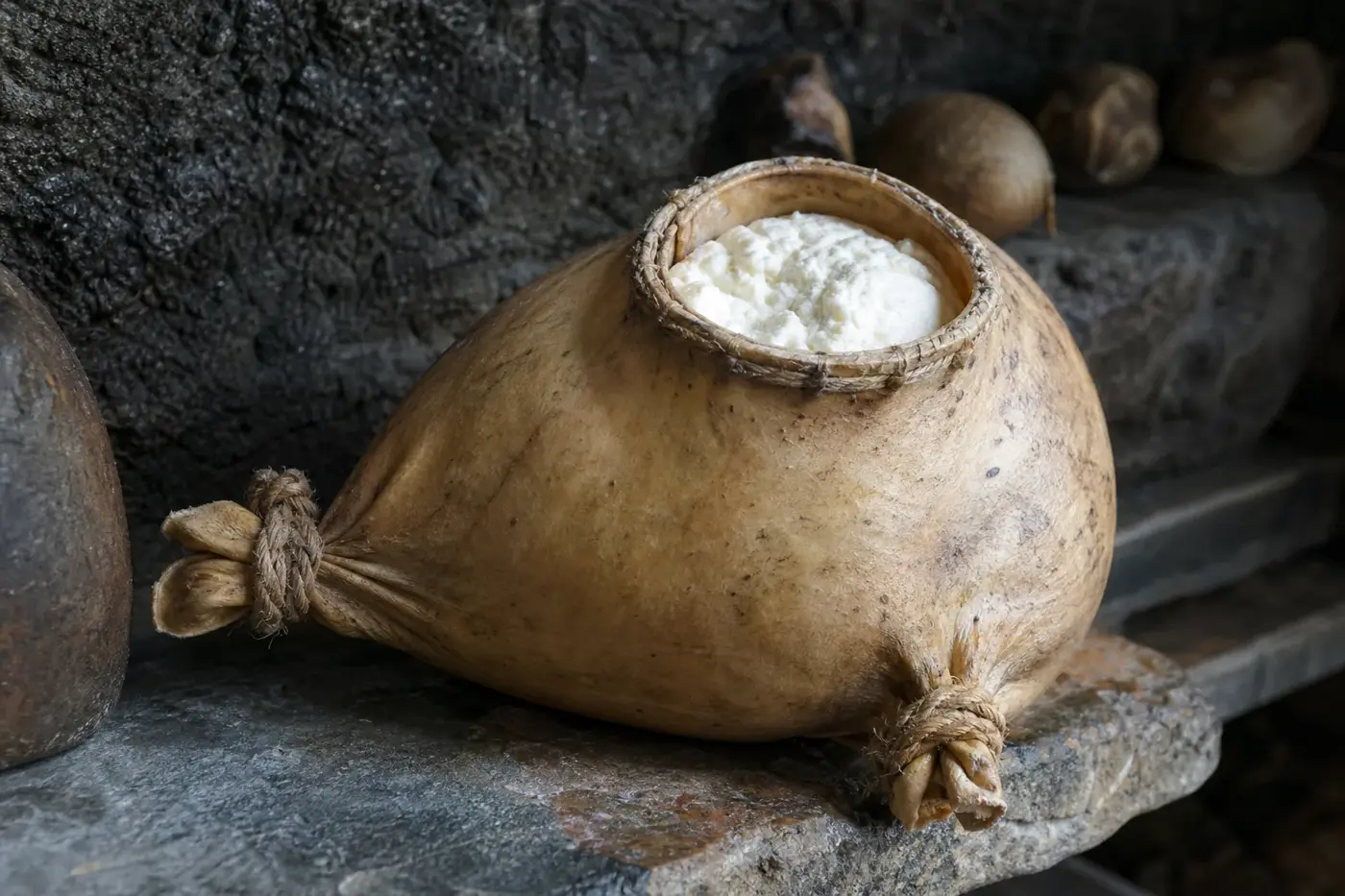
In the mountains of northern Lebanon, a cleaned and salted goatskin waits to be filled.