Telemea
Taste the salt at Ibănești and you have a thread to follow: naturally occurring spring brine from Orșova gives Telemea its local signature.
Taste the salt at Ibănești and you have a thread to follow: naturally occurring spring brine from Orșova gives Telemea its local signature. In Sibiu, the story turns to raw sheep’s milk and pastoral cheesemaking.[2][3] The same familiar Romanian cheese name takes you somewhere quite different.
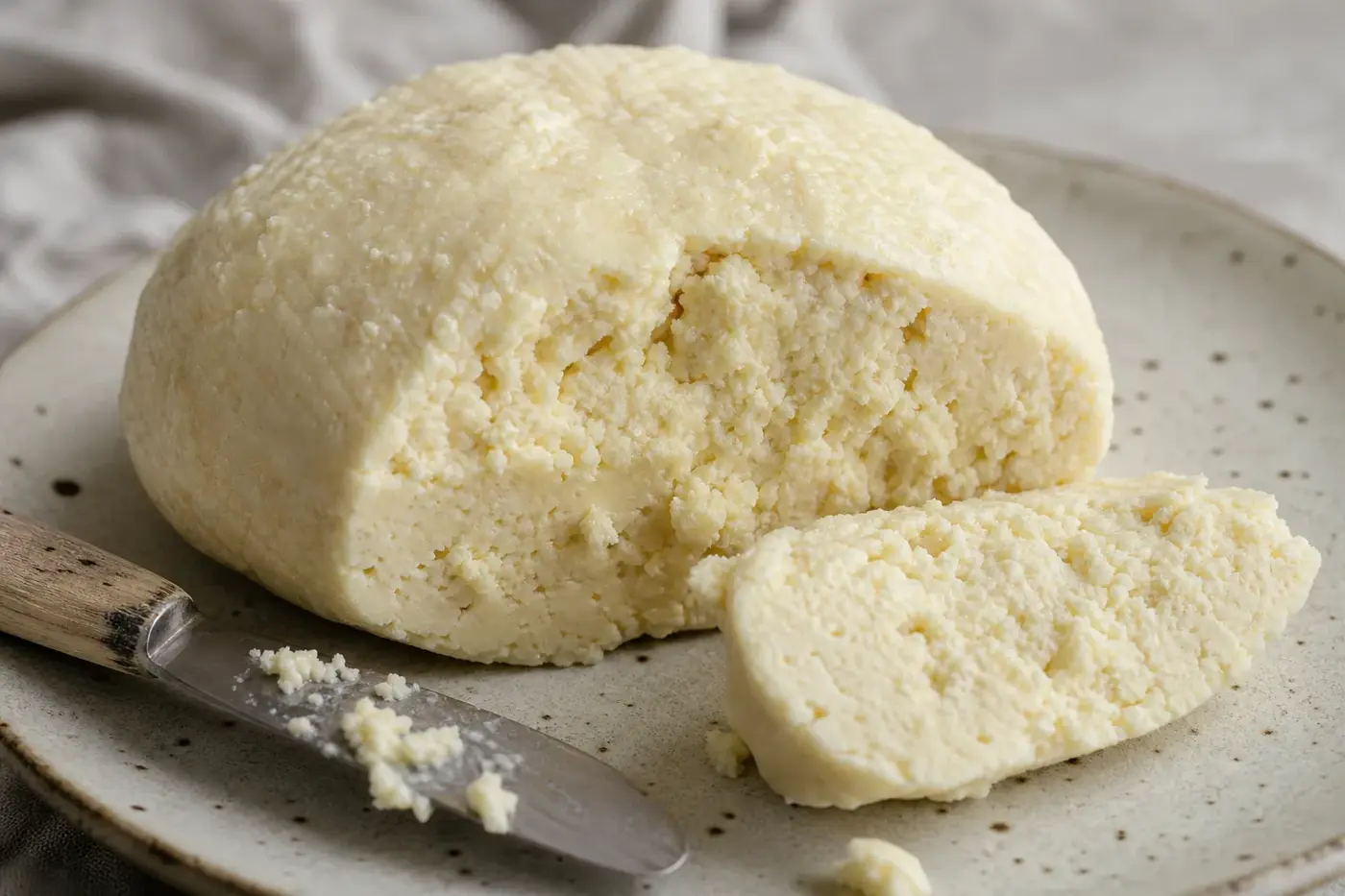
Your everyday brined cheese changes with its milk, salt and maturation. It might have a tender white paste or come as a block firm enough to slice. Named regional versions lead you back to particular places and methods, with rather more to tell you than “something white for the salad”.[1][2][3]
| What to look for | Your guide to Telemea |
|---|---|
| Familiar name | Telemea, a Romanian brined cheese name.[1] |
| Milk | Commercial ranges include cow, sheep, buffalo and mixtures; goat’s milk versions are also described.[4] |
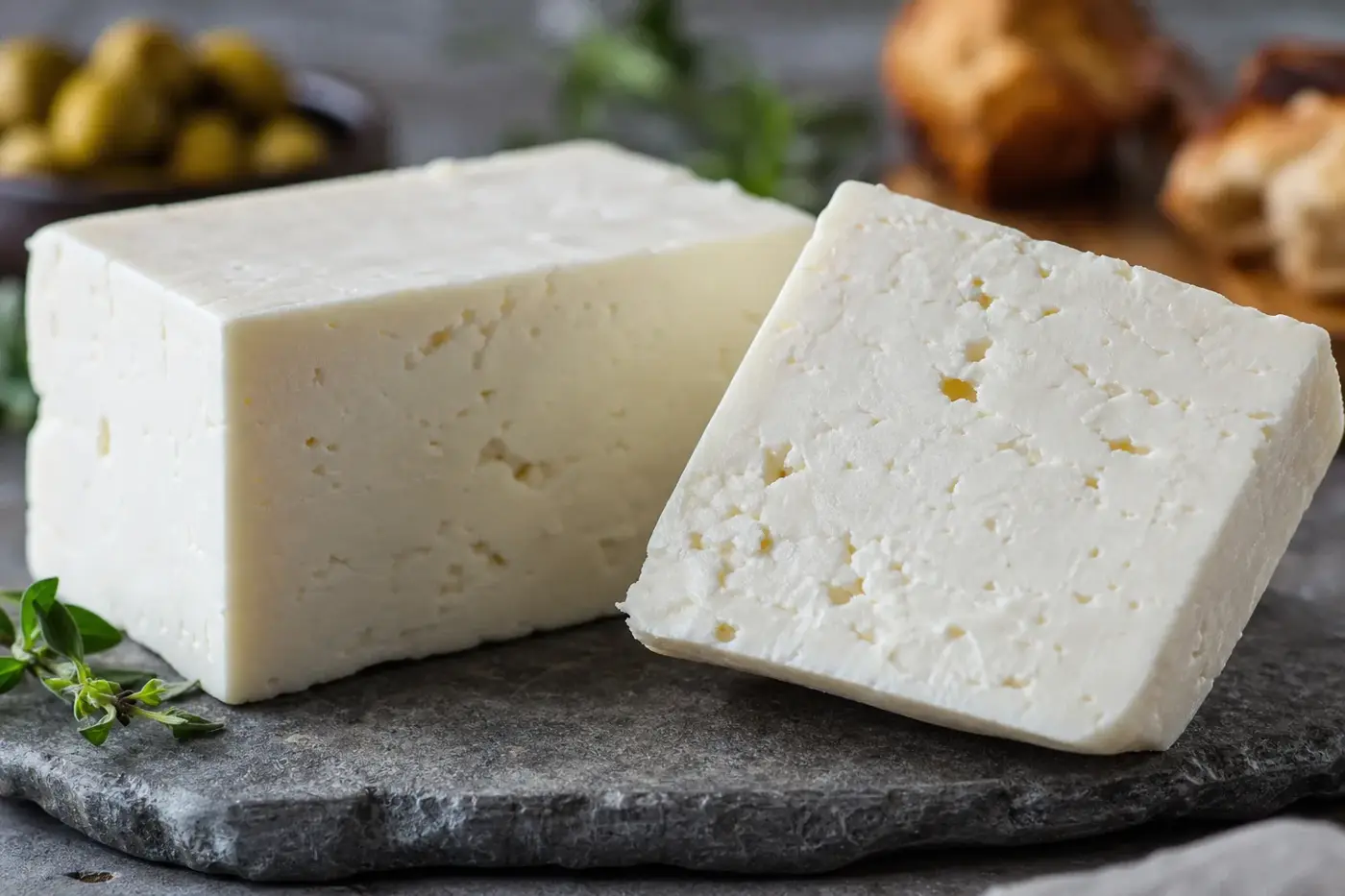
| What it looks like | Telemea de Sibiu is specified as white, rindless blocks; other varieties differ.[2] No general Romanian authority description is included here. |
| Milk treatment | Depends on your product: documented examples include pasteurised commercial cheeses and raw milk Telemea de Sibiu.[2][3][4] |
| Regional names to recognise | Telemea de Ibănești; Telemea de Sibiu.[1][2] |
| Registration authority and identifier | European Commission: Telemea de Sibiu application reference PGI-RO-02473. Telemea de Ibănești register identifier: not supplied here.[1][2] |
| Great Britain protection, November 2026 | Telemea de Ibăneşti: registered PDO. Telemea de Sibiu: registered PGI. Both entered the GB scheme on 31 December 2020.[5][6] |
| Current EU register records | Not supplied here. |
| Minimum maturation across all Telemea | No family minimum stated here. |
| UK pregnancy guidance | NHS, Foods to avoid in pregnancy, November 2026.[7] |
Find the hay, the tang and that satisfying break
Start with Telemea de Sibiu. Its published EU specification describes a tangy fresh cheese and a more intense matured version, with sheep’s milk aromas and notes of hay and mature grasses.[2] These descriptions come from the specification, rather than this site’s tasting notes. They give you something worth looking for beyond salt.
Then consider the texture. The same document describes a compact cheese that breaks into pieces without disintegrating. A Romanian producer’s catalogue describes milder cow’s milk Telemea and a particularly creamy buffalo version.[2][4] The name introduces the family; the milk and particular product introduce what is on your plate.
Look at the cut surface as well as the outside. A firm block suits slices beside vegetables, while you can break a yielding piece over a salad. Choose the texture your dish needs: firmness is not a quality score.
Follow the milk to your favourite
The milk species on the label is a useful first clue. De Colțești’s published range includes cow’s, sheep’s and buffalo milk, plus a mixture of cow and sheep. Its catalogue also describes goat’s milk Telemea.[4] One name leaves you plenty of room to explore.
The producer describes its cow’s milk cheese as milder, with sheep’s milk contributing a stronger flavour. In its buffalo Telemea, creaminess takes the spotlight.[4] Think about how you want the cheese to feel, as well as how boldly you want it to taste.
Those descriptions belong to De Colțești’s range, not every Telemea made from those milks.[4] For goat’s milk or a mixture, ask the maker or seller about that particular cheese’s flavour and texture. Milk species and milk treatment are separate questions, too: see raw, thermised and pasteurised milk.
Behind the block: cloth, curd and patient pressing
Before that neat block reaches you, there is careful cutting, cloth drainage and pressing. The published Telemea de Sibiu account begins with rennet coagulation and ends with brining. Each stage helps establish the finished consistency.[2] Salt may get the attention, but it does not do all the work.
Coagulation means milk setting into a gel. Rennet, a preparation of enzymes, brings about that setting; the solid part becomes curd, while the liquid released is whey. In the Sibiu account, the coagulum is lifted into cheesecloth, carefully cut and pressed to remove whey and develop the required consistency.[2]
The aim is a cheese that holds together but breaks readily. Cutting and pressing help find that balance, and you may spot cloth impressions on the surface. Earlier Romanian documentation also records wooden vessels called putini in the handling and storage tradition.[2][8]
Each named variety brings its own details. Mirdatod declares pasteurised cow’s milk, rennet, lactic acid and calcium chloride for its Telemea de Ibănești product.[3] That declaration belongs to this cheese, rather than serving as a recipe for the family. For the broader sequence, see how cheese is made.
Fresh or matured? Give dinner a say
For Telemea de Sibiu, fresh and matured have a precise distinction. Its published EU document allows both forms and requires at least 21 days for the matured cheese.[2] Read those terms alongside the full name. They do not give you one maturation rule for every Telemea.
An earlier Romanian account describes fresher Sibiu cheese as softer and milder. Time in brine makes it firmer and saltier.[8] That is a useful picture of this regional cheese’s development, rather than a timetable for every variety.
At the counter, ask whether your cheese is fresh or matured and how the maker describes its texture. For salad, a piece that breaks cleanly may matter more than greater age. Beside warm mămăligă, you might want something gentler and softer.
Let the meal make the decision. Age describes a cheese; it does not award it a medal.
Follow the brine back to its spring
Brine is salt dissolved in water, but there is more to it than that first salty impression. Romanian documentation for Sibiu links storage in brine with preservation and describes the cheese becoming firmer and saltier as it ages.[8] The liquid helps shape both the texture and the keeping tradition.
At Ibănești, you can follow it to a named local source. Mirdatod says it salts its cheese with naturally occurring spring brine from Orșova. Its published information also distinguishes salt levels between fresh and matured forms.[3] Here, the salting liquid belongs to the product’s identity.
Before reaching for the salt, taste your cheese with tomato or bread. Then decide what the dish needs. Portion size changes the balance, too: a little distributed through a salad gives you a different experience from a thick slice eaten alone.
Meet Ibănești and Sibiu, names with a place behind them
Telemea de Ibănești and Telemea de Sibiu identify regional products with their own records and requirements. The EU act registering Telemea de Ibănești expressly preserves continued use of “Telemea” on its own, subject to applicable EU rules.[1] The compound name is what receives protection.
Telemea de Ibănești takes you to the Gurghiu Valley. Mirdatod identifies Ibănești, Gurghiu and Hodac in Mureș county as its production and milk sourcing area, and declares pasteurisation for its cow’s milk product.[3] Great Britain’s register lists Telemea de Ibăneşti as a registered protected designation of origin, or PDO.[5]
Telemea de Sibiu takes a different path through the milk. Its published EU document specifies entirely raw sheep’s milk, with animal rearing, milk production, cheesemaking and maturation all taking place within Sibiu county.[2] Great Britain’s register lists it as a registered protected geographical indication, or PGI.[6]
Those names earn their space on your label. They point towards a particular milk, place and production document, rather than simply adding regional decoration. You can explore the schemes in protected names explained.
Telemea, Feta or Sirene? Look beyond the colour
Put Telemea beside neighbouring brined cheeses and you have plenty to discuss without losing its Romanian identity. With Feta, Sirene or Telemea, start with the individual product rather than the resemblance. A similar colour cannot tell you whether the composition is the same.
Look at milk species, milk treatment, maturation and firmness. Telemea’s documented commercial milk choices alone show how much variation a familiar name can hold.[4] Those details give you a more useful comparison than appearance.
In the kitchen, ask what you need your cheese to do. For salad, should the pieces hold their shape or crumble? For pastry, you need a suitable balance of moisture and salt.
Substitution is a practical cooking decision. A protected name, by contrast, identifies a separately documented product. The Feta guide takes you further into that cheese’s identity.
Make room for tomatoes and warm mămăligă
Start simply with sliced tomatoes, Telemea and bread. Arrange the cheese alongside the tomatoes rather than mixing everything straight away, so you can find your own balance. Taste before adding extra salt. The salt cellar can wait for an invitation.
For a warm, soft contrast, try mămăligă, the Romanian maize porridge. Break Telemea over your serving, or keep the textures distinct with slices alongside. These are serving suggestions, not a tested recipe. Choose the softness and flavour that appeal to you.
For salad, let the texture guide your knife. Keep a yielding piece in larger chunks and break a firmer one more finely. Tomatoes, cucumber, sweet peppers and herbs give you a practical framework without an elaborate dressing.
For savoury pastries, choose a recipe written for a brined cheese filling and follow its draining instructions. Cheese taken straight from a container of liquid may change the filling’s moisture. Taste before seasoning, then follow the recipe’s cooking and handling directions.
Give the label a little attention
Do not stop at “Telemea” on the front of your pack. Look for the milk species, pasteurisation status, fresh or matured description, ingredients and storage instructions. The documented commercial range includes starter cultures and rennet, while Mirdatod’s Ibănești declaration includes additional cheesemaking ingredients.[3][4]
For England, Wales and Northern Ireland, the Food Standards Agency advises keeping your home fridge at 5 °C or below.[11] Follow the product’s storage instructions and use by date. Keep the instructions for your particular cheese to hand.
If your Telemea comes in brine, read the pack’s directions about keeping it in that liquid after opening. Hold on to the packaging information until you have finished the cheese. You will have the details when you need them.
Buying an unpackaged portion? Ask the seller for the relevant storage advice, rather than borrowing a storage period from another product. For wider household guidance, see how to store cheese.
This page summarises published guidance from the official sources it cites. It is not medical advice. Guidance differs between countries and changes over time, so check the current source for where you live, and ask your doctor, midwife, pharmacist or dietitian about your own circumstances.
Pregnancy: look at the particular cheese
For the UK, the NHS lists feta made from pasteurised milk among cheeses that can be eaten during pregnancy.[7] When considering that guidance, use the information for the particular product in your hand. The broad cheese name does not tell you everything you need.
Telemea de Sibiu’s published specification requires raw sheep’s milk, while pasteurised Telemea products are documented elsewhere.[2][3][4] If the milk treatment is unclear, ask the seller. Consult the current NHS guidance and your midwife or doctor about your own circumstances.[7]
Questions people ask
What is Telemea?
Telemea is a Romanian brined cheese name. Its white paste can be tender or firm enough to slice.
What milk is Telemea made from?
Commercial ranges include cow, sheep and buffalo milk, as well as mixtures. Goat’s milk versions are also described.
What is the difference between Telemea de Ibănești and Telemea de Sibiu?
Telemea de Ibănești is associated with the Gurghiu Valley, and Mirdatod declares pasteurised cow’s milk for its product. Telemea de Sibiu is specified as being made entirely from raw sheep’s milk, with production and maturation taking place in Sibiu county.
How is Telemea made?
In the published Telemea de Sibiu account, rennet sets the milk before the curd is lifted into cheesecloth, cut and pressed. The resulting block is then brined.
What can you eat with Telemea?
Telemea can be served with tomatoes and bread, or broken over mămăligă, a Romanian maize porridge. It can also be used in salads or savoury pastries.
Sources
- European Commission. Commission Implementing Regulation (EU) 2016/365, adopted 11 March 2016, published 15 March 2016. Articles 1 to 3 and recitals 6 to 9 establish registration and the distinction between the compound name and “Telemea”.
- European Commission. Single document: Telemea de Sibiu, 2019/C 203/06, published 17 June 2019, Official Journal C 203, pages 7 to 10.
- Mirdatod. Telemea de Ibănești DOP, undated product information, retrieved November 2026. Producer source with a commercial interest.
- De Colțești. Product catalogue, 2024, Telemea entries. Producer source with a commercial interest.
- Department for Environment, Food & Rural Affairs. Telemea de Ibăneşti, Great Britain protected food names register, published 4 January 2021, retrieved November 2026.
- Department for Environment, Food & Rural Affairs. Telemea de Sibiu, Great Britain protected food names register, published 4 January 2021, retrieved November 2026.
- NHS. Foods to avoid in pregnancy, “Cheese, milk and other dairy”, checked November 2026. [SAFETY UNCHECKED: Add the verified link to the current guidance before publication.]
- Romanian State Office for Inventions and Trademarks, publishing the applicant association’s documentation. Buletinul Oficial de Proprietate Industrială: Indicații geografice, 2 July 2012, “Telemea de Sibiu”, Articles 2 and 5. Historical documentation, not the current EU specification.
- European Commission. Feta PDO, undated explanatory page, retrieved November 2026.
- Wikipedia contributors. Sirene, retrieved November 2026. Used only for the broad cultural identification of Bulgarian white-brined cheese.
- Food Standards Agency. How to chill, freeze and defrost food safely, published 18 December 2017, current retrieved version; applies to England, Northern Ireland and Wales.
This desk-researched draft compares official registration documents, Romanian historical documentation, producer declarations and national consumer guidance.
Last checked: November 2026
Last checked November 2026.
The editors suggest you read next