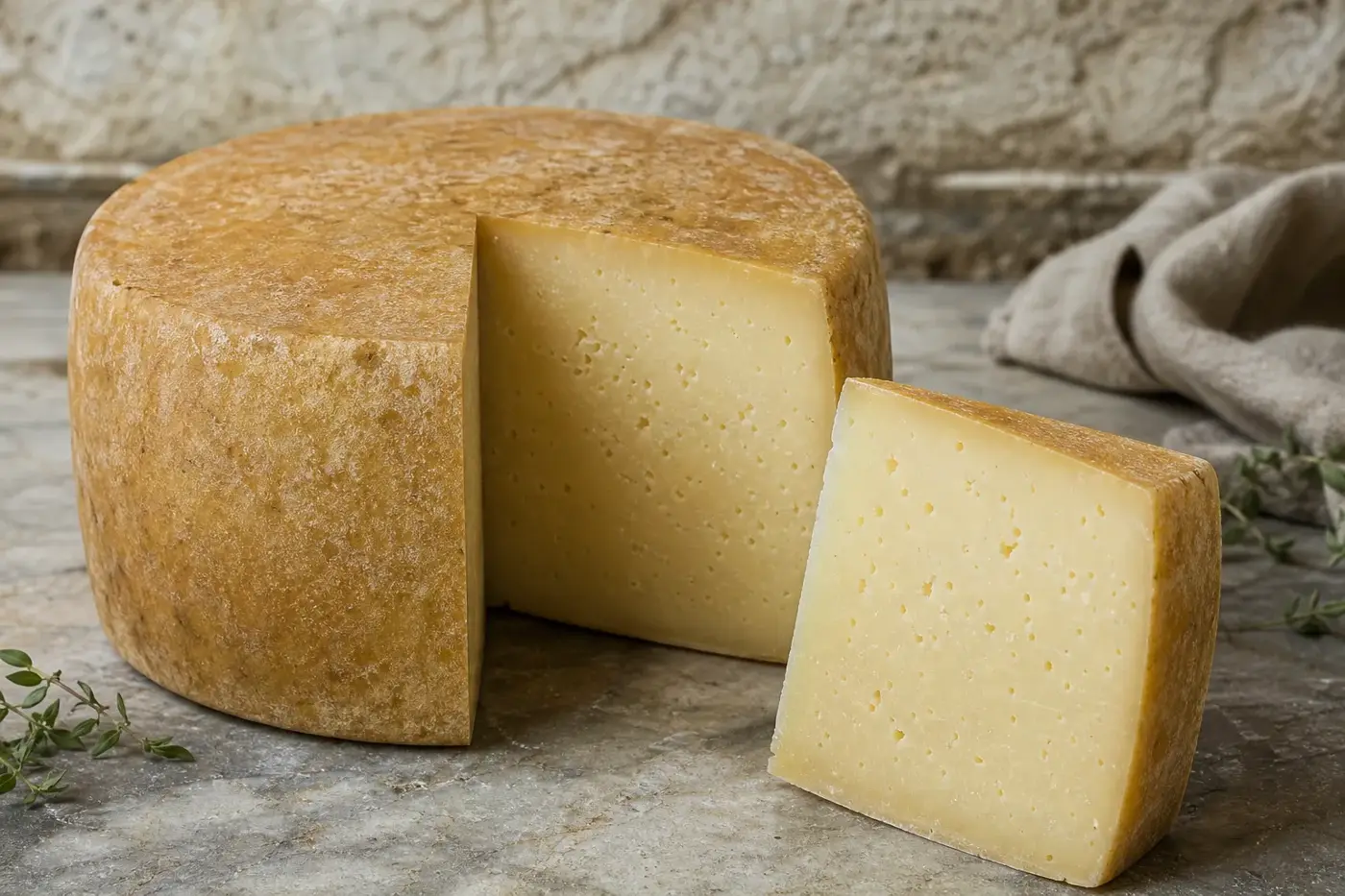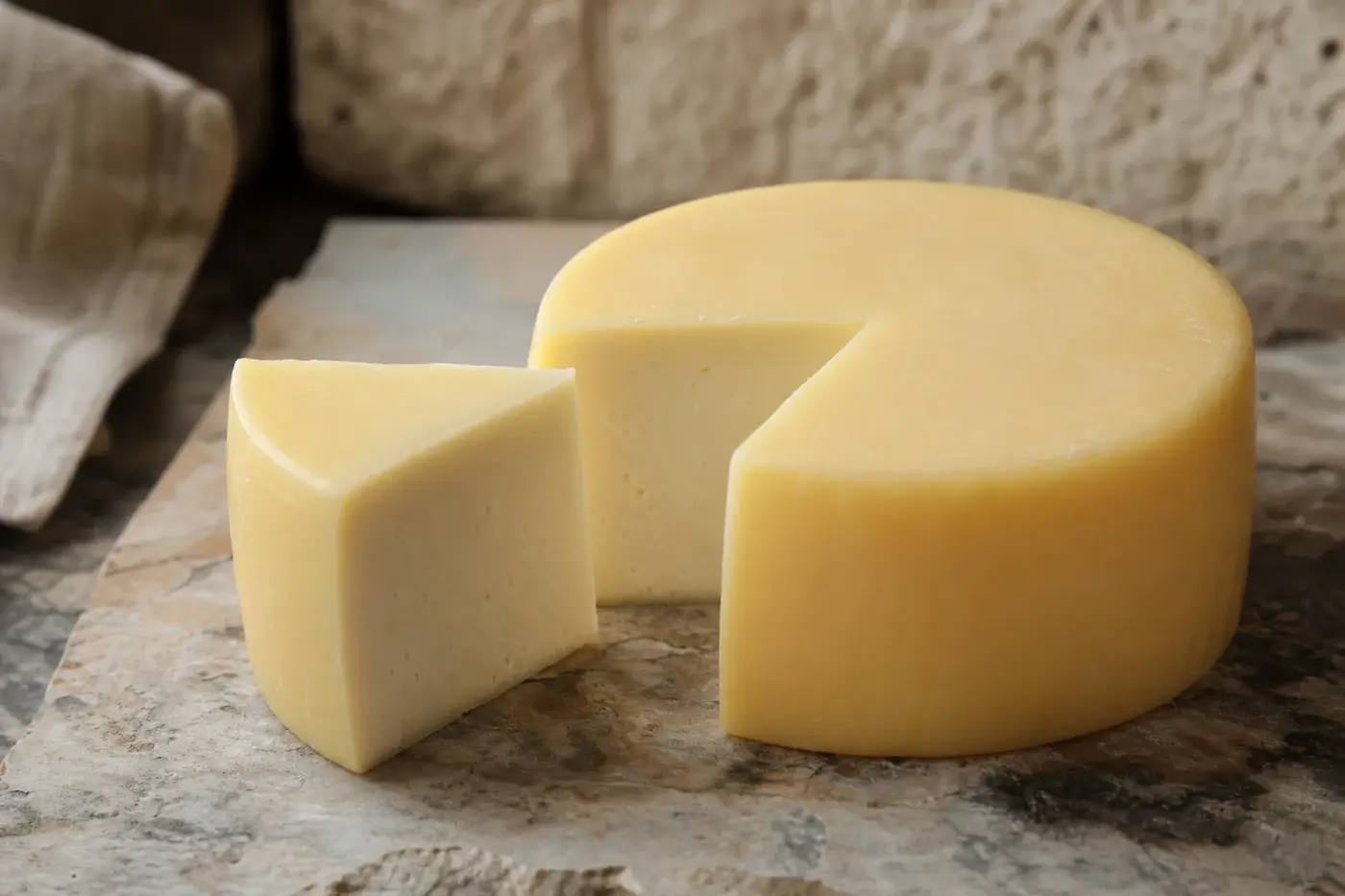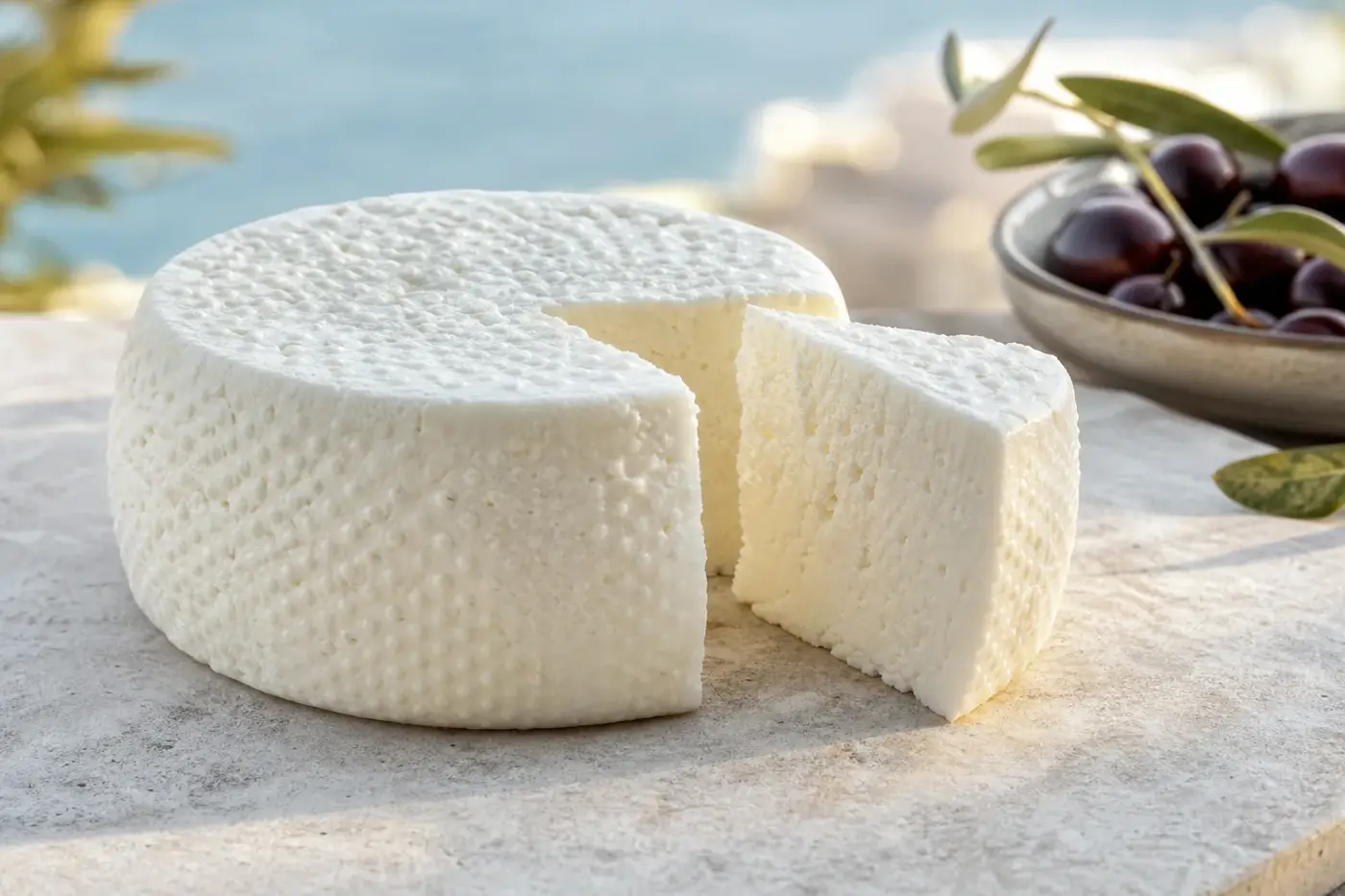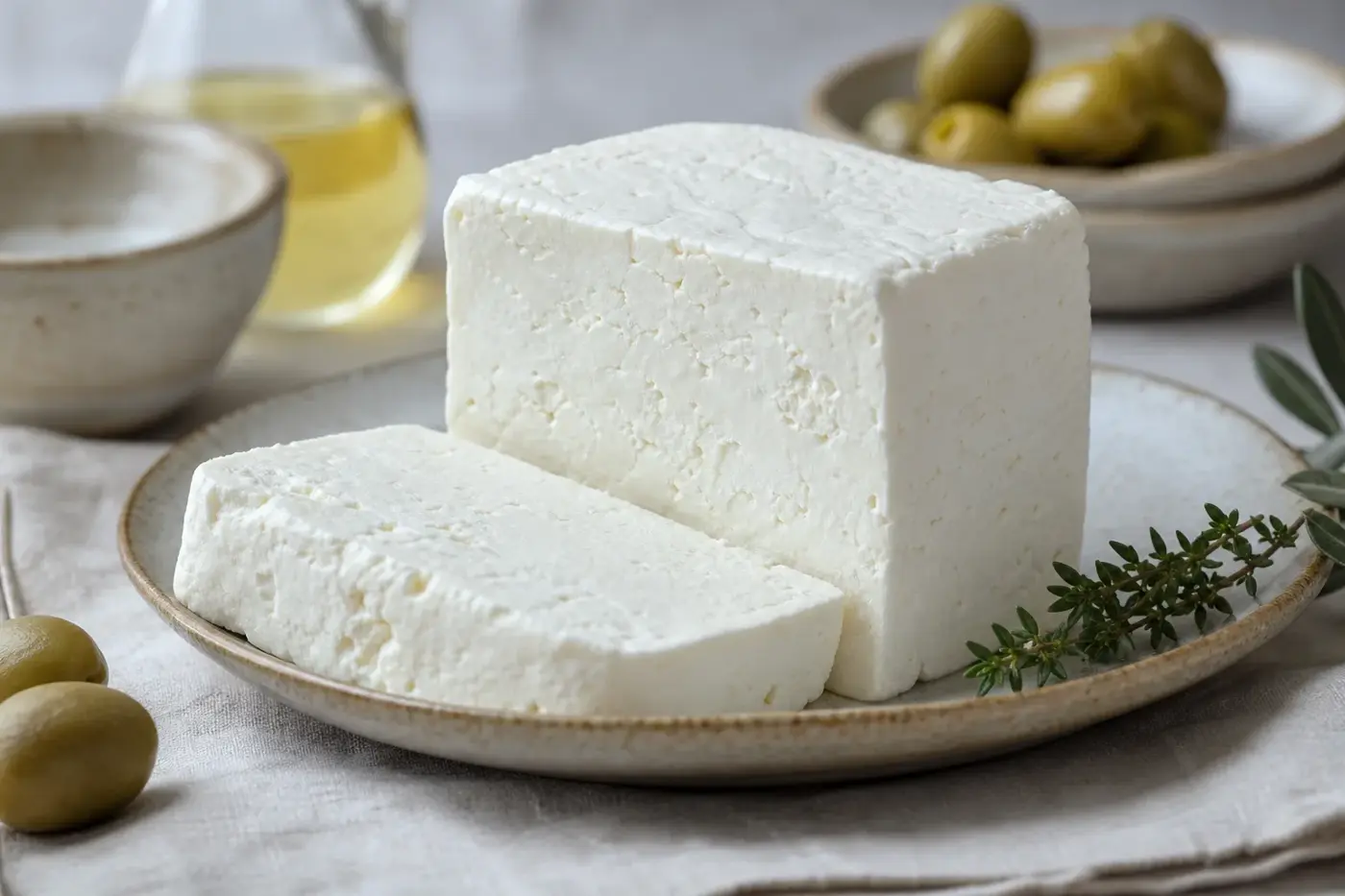
First comes the salt. Then that slightly acidic bite, with a white, compact texture that gives you something to linger over. Behind it are sheep’s milk, Greek grazing land and brine, the foundations described in feta’s registration specification.[6]
Feta is made from sheep’s milk alone or with up to 30% goat’s milk, then ripened and kept in brine. In the European Union, its protected designation of origin, or PDO, reserves the name for cheese meeting the Greek specification, including its defined production area. That protection survived a court challenge in 2005 and extended to EU production for export in 2022.[1][2][3][4]
| Your first taste of the details | What you need to know |
|---|---|
| Familiar and registered names | Feta; Φέτα / Feta.[1] |
| EU registration | Registered PDO, file PDO-GR-0427; registered 15 October 2002.[1] |
| Registration instrument | Commission Regulation (EC) No 1829/2002 of 14 October 2002.[5] |
| Where it is made | Defined areas of mainland Greece, including Epirus, and the prefecture of Lesbos.[6] |
| Milk | Sheep’s milk, alone or with goat’s milk not exceeding 30% of the milk net weight.[2] |
| Time to ripen | At least two months.[2] |
| How it is made | Natural draining, dry salting and ripening in brine.[2] |
| Great Britain registration | Registered PDO from 31 December 2020.[7] |
| Status reference date | November 2026.[1][7] |
Get to know the character behind the cube
Look beyond the familiar cube and you find a cheese with a very particular character. The registration specification describes a compact texture with few or no holes. It links sheep’s and goat’s milk to feta’s distinctive aroma and pungent character, rounded out by that slightly acidic, salty taste.[6]
Behind those details are animals, grazing land and a production history. The PDO rule book ties the milk to traditionally reared sheep and goats within the designated area, eating a diet drawn from its vegetation. The white cube may look modest, but its backstory is rather particular.[2][6]
The distinction to keep in mind is between Greek PDO Feta and the wider family of white brined cheeses. You may recognise a shared appearance or method, but colour, shape and serving suggestions are not enough. The registered name belongs to cheese that meets the Greek specification.[3][6]
Follow the milk from grazing land to brine
Goat’s milk is welcome, but not compulsory. Feta can be made entirely from sheep’s milk; if goat’s milk joins it, the registration summary sets a ceiling of 30% of the milk net weight. Cow’s milk sits outside the PDO description.[2]
The full specification takes you through named prefectures in Central Mainland Greece, the Peloponnese, Thessaly, Epirus, Macedonia and Thrace, together with Lesbos prefecture. Epirus is expressly included, with Ioannina, Thesprotia, Arta and Preveza listed. Picture several Greek regions, rather than one village or a single island.[6]
Inside the dairy, the process begins with coagulation: the milk forms a gel. The curd goes into moulds and drains naturally. Once stabilised, it is dry salted, then moved into wooden or metal vessels holding brine, a solution of salt in water.[2]
That brine has its own specification: 7% sodium chloride, with a total ripening period of at least two months. It belongs to the making and maturing of feta, rather than being merely liquid poured into a retail pack. Those two months also mark the distinction between ripened cheese and freshly drained curd.[2]
These conditions apply to the dairy’s controlled process, not to a recipe for your fridge. At home, follow the pack’s storage instructions and the relevant food safety advice.[2][17]
How feta’s Greek name reached the courtroom
Could “feta” have become generic, a common name for a type of cheese regardless of where it came from? That was the central legal question. Germany and Denmark argued that production and consumption beyond Greece supported that view.[3]
The Court considered those arguments alongside Greek production, consumer understanding, national legislation and the presentation of cheese sold elsewhere. Longstanding production outside Greece formed part of the evidence. So did the long tradition of making white brined cheeses across the Balkans and the south-eastern Mediterranean under other names.[3]
That wider tradition mattered, but the name before the Court was specifically “feta”. In its judgment of 25 October 2005, the Court found that the Commission could lawfully conclude that the name had not become generic. The finding concerned the validity of that assessment; the outcome was dismissal of Germany’s and Denmark’s actions seeking annulment of the registration.[3]
The labels supplied a telling detail. The Court’s accompanying account highlighted how cheese made elsewhere often carried words or imagery referring to Greece. Those presentations supported the continuing link between the name and Greek origin.[8]
Trace the dates behind feta’s protection
The current EU registration did not arrive in one tidy step. An earlier registration was annulled, followed by a renewed examination. These are the dates that take you through that legal history.[3][5]
| Date | What happened | Why it mattered |
|---|---|---|
| June 1996 | Commission Regulation (EC) No 1107/96 included Feta in the first EU registration scheme.[3][5] | The original registration, subsequently annulled in 1999. |
| 16 March 1999 | Judgment in Joined Cases C-289/96, C-293/96 and C-299/96 annulled that registration in part.[3][5] | The assessment had not sufficiently considered the situation in other Member States. |
| 15 October 2002 | Regulation 1829/2002 registered Φέτα / Feta again.[1][5] | The registration date recorded by the EU register. |
| 25 October 2005 | Judgment in Joined Cases C-465/02 and C-466/02 dismissed the challenges.[3] | The renewed registration survived. |
| 14 July 2022 | Judgment in Case C-159/20 found Denmark had failed to stop misuse for exports.[4][9] | Protection covered EU production for third-country markets. |
The 2022 case concerned Danish producers calling non-compliant cheese “Feta” when it was intended for countries outside the EU. By not preventing or stopping that use, Denmark had failed its obligations under Article 13(3) of Regulation 1151/2012. The Court dismissed the remainder of the Commission’s action, which concerned sincere cooperation.[4][9]
The important boundary here is production within the EU for export. How an importing country governs the name remains a separate question.[4]
See what happens when the name crosses borders
Travel with feta and the rules change. Registration, treaty protection and transitional arrangements differ between markets, so you will not find the same legal position everywhere. This table gives the position as at November 2026, with Canada’s exceptions explained below.
| Where you are | Where the name stands | The rule or qualification |
|---|---|---|
| European Union, including Greece | Registered PDO from 15 October 2002.[1] | Greek specification; Regulation 1829/2002.[2][5][6] |
| Great Britain | Registered PDO from 31 December 2020.[7] | UK GI register. |
| Northern Ireland | Protected through the EU GI scheme.[10] | Defra distinguishes this from the Great Britain scheme. |
| Switzerland | Protected through the EU-Switzerland agricultural agreement.[11] | Annex 12 lists Φέτα; historical transitional provisions applied. |
| Canada | Listed GI from 21 September 2017.[12] | Trademarks Act section 11.17 includes prior-use and qualifying-term exceptions.[13] |
| United States | Name protection status unspecified here. | No feta-specific standard appears in 21 CFR Part 133.[14] |
| Australia | Future protection announced under an agreement not yet in force.[15] | DFAT says established continuous users can retain the term. |
| New Zealand | Treaty registration from 1 May 2024.[16] | Qualifying continuous prior users have a maximum nine-year transition, without misleading consumers about origin. |
Read the small print on Canadian labels
Canada’s GI listing comes with statutory exceptions, which matter when you read a label. Section 11.17(3) disapplies the section 11.15 prohibition for business use of “Feta”, “Φέτα” and translations in certain circumstances. The person, or their predecessor in title, must have used the indication in cheese-related business or commercial activity before 18 October 2013.[13]
A separate exception, section 11.17(4), allows a qualifying term such as “kind”, “type”, “style” or “imitation”. The cheese’s geographical origin must also be clearly displayed on the cheese or packaging, or otherwise associated with it so the recipient receives notice of its origin. The qualifying word alone does not meet the whole requirement.[13]
The predecessor provision has a limit, too. Under section 11.17(8), someone who transferred only the right to use the indication or translation does not qualify as a predecessor in title. Together, these exceptions explain why a Canadian label can lawfully differ from one permitted under EU PDO rules.[13]
Make room for feta’s white brined neighbours
Feta belongs to a much broader cheese tradition. The 2005 judgment expressly recognised white brined cheese production across the Balkans and south-eastern Mediterranean. It also distinguished the names used for those cheeses from “feta”.[3]
Beyaz Peynir and Sirene deserve your curiosity under their own names. Forthcoming articles, Beyaz Peynir and Sirene, will explore them separately, while Brined Cheeses Explained will cover the shared method. Keeping the names distinct leaves room for each tradition’s milk choices, methods and history.
You get a richer understanding of the family that way. Not every white cheese sitting in brine needs to audition for the role of Greek PDO Feta.
Bring feta home: your fridge and the pack
Keep feta refrigerated and follow its packaging instructions. For household storage in England, Wales and Northern Ireland, the Food Standards Agency advises a fridge temperature between 0 and 5 °C and refrigeration for dairy products. After opening, follow any directions about the brine alongside the other pack instructions, and observe the use-by date.[17]
Pregnancy and food safety advice differs by country, so your location matters. In the UK, the NHS lists pasteurised Feta among the soft cheeses that can be eaten during pregnancy. In Canada, Health Canada's September 2026 guidance advises people at greater risk of food poisoning to avoid uncooked soft cheese such as Feta, even when made with pasteurised milk.[18]
In the United States, the CDC’s advice for people at increased risk of listeriosis includes pregnant people, adults aged 65 or over and people with weakened immunity. It states: “Choose instead: ... feta, and mozzarella, when made with pasteurized milk”. That advice is dated 31 January 2025.[19]
In Australia and New Zealand, Food Standards Australia New Zealand advises people who are pregnant, elderly or have weak immune systems to avoid “soft, semi-soft and surface-ripened cheeses such as brie, camembert, ricotta, blue and feta (unless thoroughly cooked)”. The reference date for this advice is November 2026.[20]
General information only, not medical advice: follow the official guidance where you live.
Questions people ask
What milk is feta made from?
PDO Feta can be made entirely from sheep’s milk. Goat’s milk may be added, but it must not exceed 30% of the milk net weight. Cow’s milk falls outside the PDO description.
Where is PDO Feta made?
Its defined production area includes named prefectures across several regions of mainland Greece, as well as Lesbos prefecture. Epirus is expressly included.
How is feta made?
The milk is coagulated and the curd is placed in moulds to drain naturally. Once stabilised, it is dry salted and transferred to wooden or metal vessels containing brine for ripening.
Is the name feta protected?
Feta is a registered PDO in the European Union and Great Britain. Protection differs elsewhere: Canada has a geographical indication listing with exceptions, while the page did not verify protection of the name in the United States.
Can you eat feta during pregnancy?
In the UK, the NHS lists pasteurised Feta among the soft cheeses that can be eaten during pregnancy. In Canada, Health Canada advises people at greater risk of food poisoning to avoid uncooked soft cheese such as Feta, even when made with pasteurised milk. Check the current NHS guidance or [Health Canada guidance](https://www.canada.ca/en/health-canada/services/publications/food-nutrition/safer-cheese-choices-people-greater-risk-food-poisoning.html), as appropriate for where you live.
Sources
[1] European Commission. eAmbrosia: Φέτα / Feta, PDO-GR-0427. Live register record, checked November 2026. Official register entry.
[2] European Commission. Feta: application summary, EL_0017_0427_SUM_EN. Registration application, 1994. Official application summary.
[3] Court of Justice. Germany and Denmark v Commission, Joined Cases C-465/02 and C-466/02, judgment of 25 October 2005, ECLI:EU:C:2005:636. Official judgment.
[4] Court of Justice. Commission v Denmark, Case C-159/20, judgment of 14 July 2022. Official judgment.
[5] European Commission. Commission Regulation (EC) No 1829/2002 of 14 October 2002. OJ L 277, 15 October 2002. Official regulation record.
[6] European Commission. Feta: product specification, EL_0017_0427_SPE_EN. Registration file, undated. Official specification.
[7] Defra. Φέτα / Feta. UK protected food names register, published 4 January 2021; live entry checked November 2026. Great Britain register entry.
[8] Court of Justice. Judgment in Joined Cases C-465/02 and C-466/02. Press release 92/05, 25 October 2005. Official court account.
[9] Court of Justice. Judgment in Case C-159/20, Commission v Denmark (PDO Feta). Press release 125/22, 14 July 2022. Official court account.
[10] Defra. Protected geographical food and drink names: UK GI schemes. Guidance, live version checked November 2026. Official guidance.
[11] Council of the European Union. Decision 2011/738/EU, 20 October 2011, including Annex 12 and its appendices. Official agreement text.
[12] Canadian Intellectual Property Office. Feta, geographical indication 1858552. Entered on the list 21 September 2017; live record checked November 2026. Official Canadian entry.
[13] Department of Justice Canada. Trademarks Act, R.S.C. 1985, c. T-13, section 11.17(3), (4) and (8). Consolidation current to 19 October 2026, last amended 1 April 2025. Official statutory text.
[14] US Government Publishing Office and Office of the Federal Register. 21 CFR Part 133: Cheeses and Related Cheese Products, structure dated 4 November 2026. Official section list.
[15] Australian Department of Foreign Affairs and Trade. Dairy geographical indications. Australia-EU FTA, not-yet-in-force agreement guidance, checked November 2026. Official government statement.
[16] Intellectual Property Office of New Zealand. Geographical indications register: Φέτα (Feta), IP number 4199. Registered by treaty on 1 May 2024; live record checked November 2026. Official register entry.
[17] Food Standards Agency. How to chill, freeze and defrost food safely. Published 18 December 2017; live guidance checked November 2026. Official storage guidance.
[18] NHS. Foods to avoid in pregnancy. Live guidance checked November 2026. Official pregnancy advice.
[19] Centers for Disease Control and Prevention. Preventing Listeria Infection. 31 January 2025. Official US advice.
[20] Food Standards Australia New Zealand. Listeria in food. Updated 2 October 2025. Official Australian and New Zealand advice.
This desk-researched article compares the registration documents, court records, national registers and official food safety guidance.
Last checked: November 2026
Last checked November 2026.
The editors suggest you read next
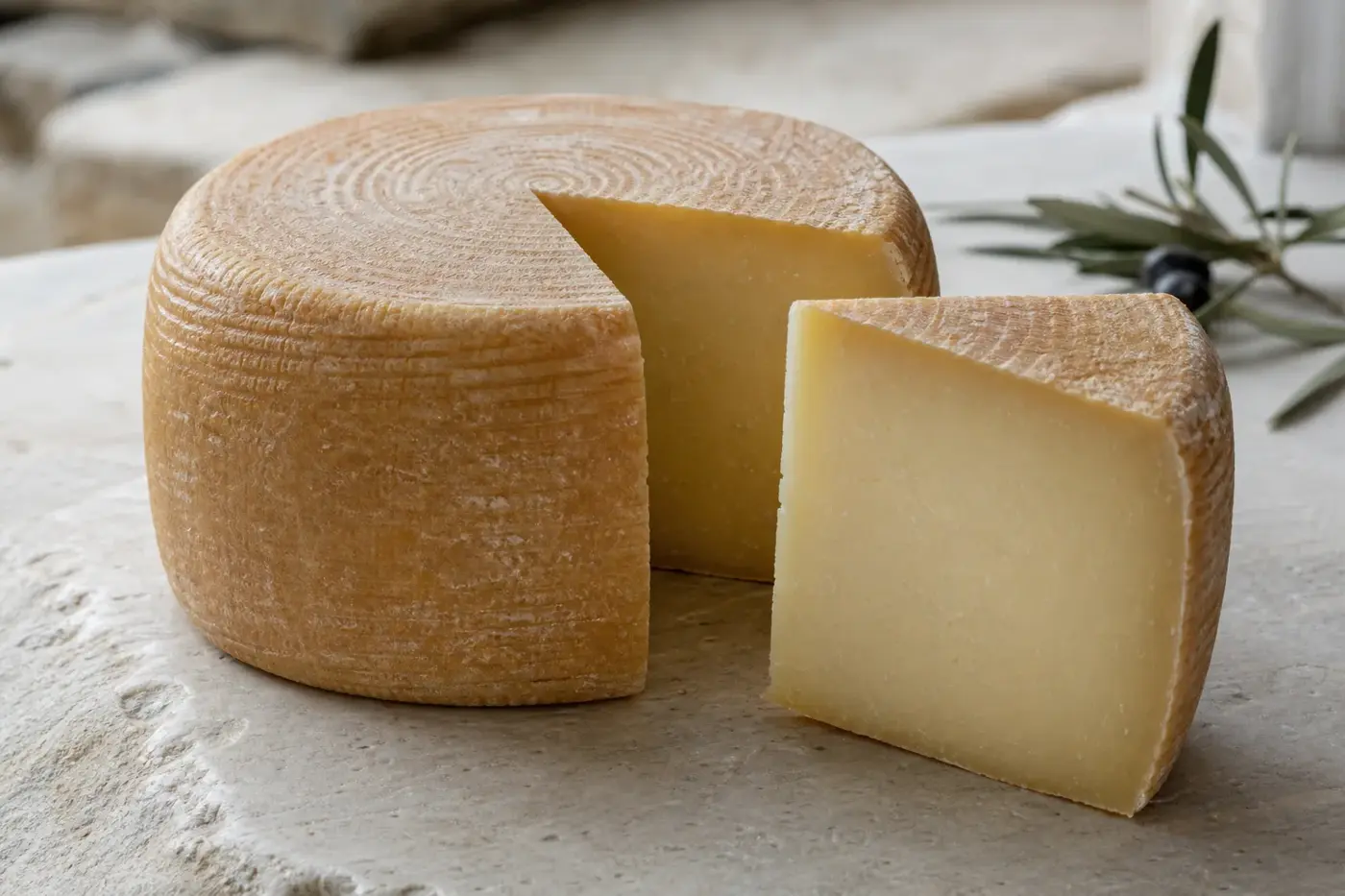
Kefalotyri
A golden surface, a squeeze of lemon, and cheese softening in the pan: this is Kefalotyri in saganaki mode.