Animal Welfare in Dairy
A calf is born, and its first feed cannot wait.
A calf is born, and its first feed cannot wait. England’s regulations require bovine colostrum, that first milk, as soon as possible after birth and within the first six hours.[8] Before milk ever reaches a cheese vat, birth, feeding, company and care are shaping a dairy animal’s life.
That life is what you are asking about when you ask about welfare. It includes health, comfort, behaviour and emotional experience, right through transport and killing. For you as a cheese buyer, the strongest evidence brings together identifiable milk sourcing, observable welfare outcomes and inspection against published standards.[1][2][3]
The essentials to take shopping
- Pasture access alone does not establish an animal’s welfare.
- Mastitis is inflammation of the udder.[5]
- Check which species, activities and parts of the supply chain a certificate covers.
Start with the animal, not the promises
A comfortable bed sounds reassuring. But can an animal use it without being pushed out? Plenty of feed means little to a timid animal that cannot reach it. Welfare is about what a farm provides and how its animals actually live.[1][4]
Across England and Wales, Scotland and Northern Ireland, welfare duties recognise several needs. These include a suitable environment, an appropriate diet, normal behaviour, suitable social arrangements and protection from suffering, injury and disease. They give you a practical framework for asking about dairy farming.[1][2][3]
Physical health is only part of the picture. Fear during handling and distress associated with isolation matter too. England’s cattle code includes freedom from fear and distress among its principles. Its goat code recognises goats as social animals needing individual attention, even in a large herd.[5][6]
Before the milk, there is a birth
Milk connects the lives of adult females and their offspring. Breeding, pregnancy, birth, lactation and decisions about subsequent breeding each bring different welfare needs. Care must change with those stages, rather than stay fixed throughout an animal’s productive life.[5][6][7]
For cows, the period around calving calls for close attention to feeding, body condition and observation, with help when birth becomes difficult. England’s cattle code recommends close supervision as calving approaches. It also calls for a diet that meets lactating cows’ nutritional needs without damaging body condition or metabolism.[5]
Ewes and goats need equally thoughtful care, tailored to their species. The sheep code addresses pregnancy, lambing, artificial rearing and milk sheep separately. The goat code emphasises nutrition during late pregnancy and nursing, clean kidding accommodation and recognising when veterinary help is needed.[6][7]
You cannot tell from a cheese label whether animals give birth annually. England’s goat code recognises that goats can keep milking for an extended period with adequate nutrition. Ask the producer how breeding and lactation work, including how animals are managed between milking periods.[6]
Make room for calves, lambs and kids
A photograph of a mother tells you less than the details of her offspring’s care. Young animals deserve attention in their own right: early feeding, warmth, hygiene, social contact and prompt care all matter. England’s calf regulations require bovine colostrum, the first milk after birth, as soon as possible and within the first six hours.[8]
Ask exactly how separation and rearing work. Immediate separation, a period of maternal contact, partial contact and rearing alongside other young animals are different arrangements. Feeding and eventual weaning need their own questions. You want the story of this particular farm, not an answer offered as true of every dairy.
Artificial rearing takes skilled management. The government goat code stresses supervision, cleanliness, suitable feeding and a dry, bedded lying area. The England code also addresses humane treatment of unwanted kids. Ask about every offspring, including those that will never join the milking herd.[6]
With calves, individual accommodation and social isolation are separate questions. When are animals paired or grouped, and what contact do neighbours have? Ask how sick animals are accommodated and why exceptions are made. National calf provisions set detailed housing conditions, so look to the rules for the farm’s jurisdiction.[8][9][10]
Ask directly what happens to male offspring and who remains responsible after they leave. Are they kept for breeding, reared for meat, transferred to another rearer or killed on the farm? Request a documented policy covering destinations and care. Do not assume one route applies across a species or supply chain.
Room to rest, eat and get along
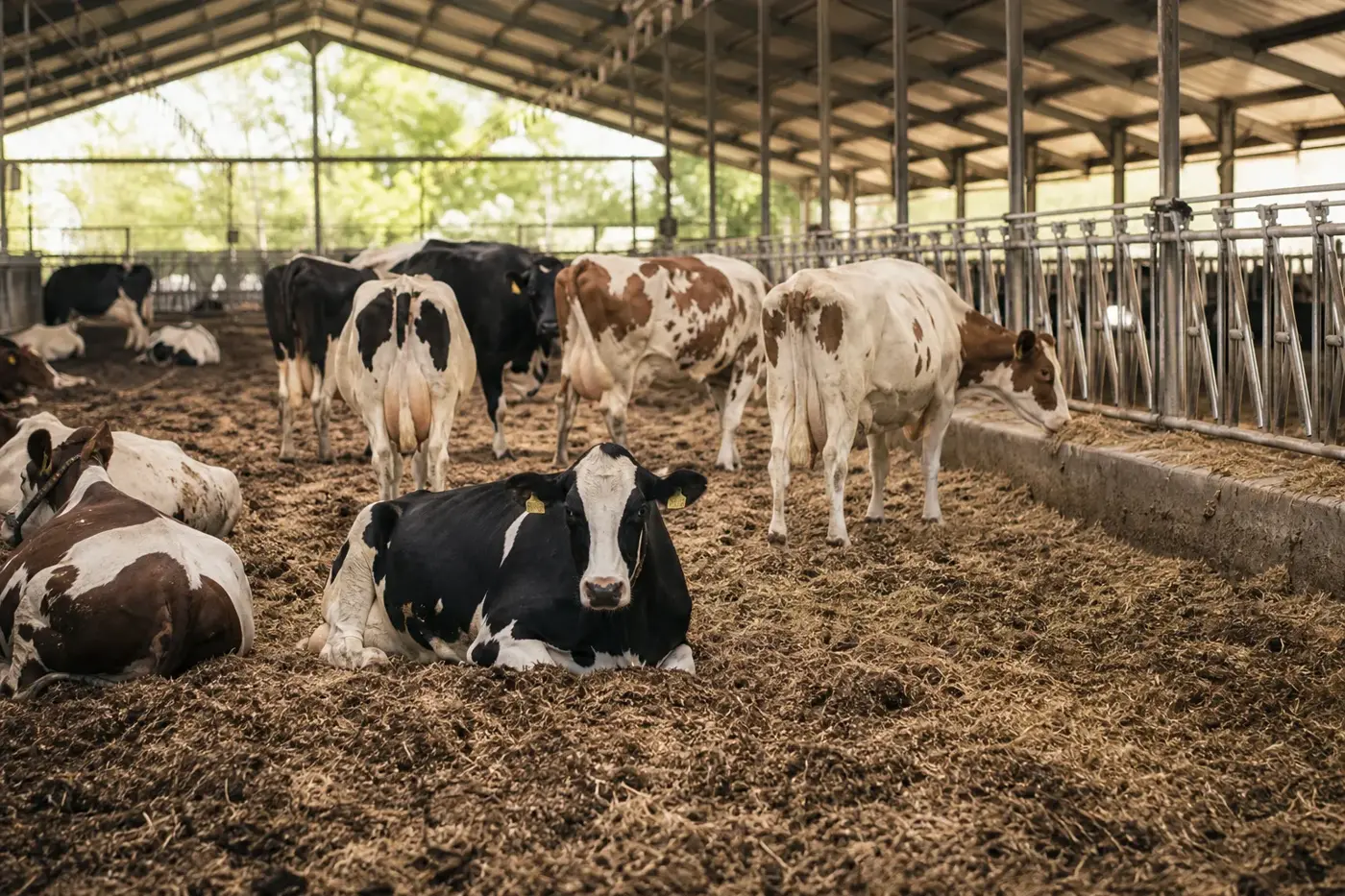
Good housing lets animals use a space, not merely occupy it. In England, Scotland and Northern Ireland, farmed animal regulations address accommodation, harmful materials, air conditions, lighting, equipment and freedom of movement.[8][9][10] A roof and a floor area are the start of your questions, not the finish.
Ask about dry resting places, comfortable bedding, secure footing, ventilation and access to feed and water. Can every animal rest, and can subordinate animals move away from dominant ones? A spacious pen can still have an awkward entrance or a feeding point that animals compete to use.[4][5]
Species matters here. Goats browse, explore and live socially; their government code calls for shelter, suitable feeding arrangements and accommodation that avoids injury. Sheep and cattle have their own behavioural and management needs. Ask what animals can actually do, rather than stopping at a promise of “natural conditions”.[5][6][7]
Look beyond that lovely pasture photograph
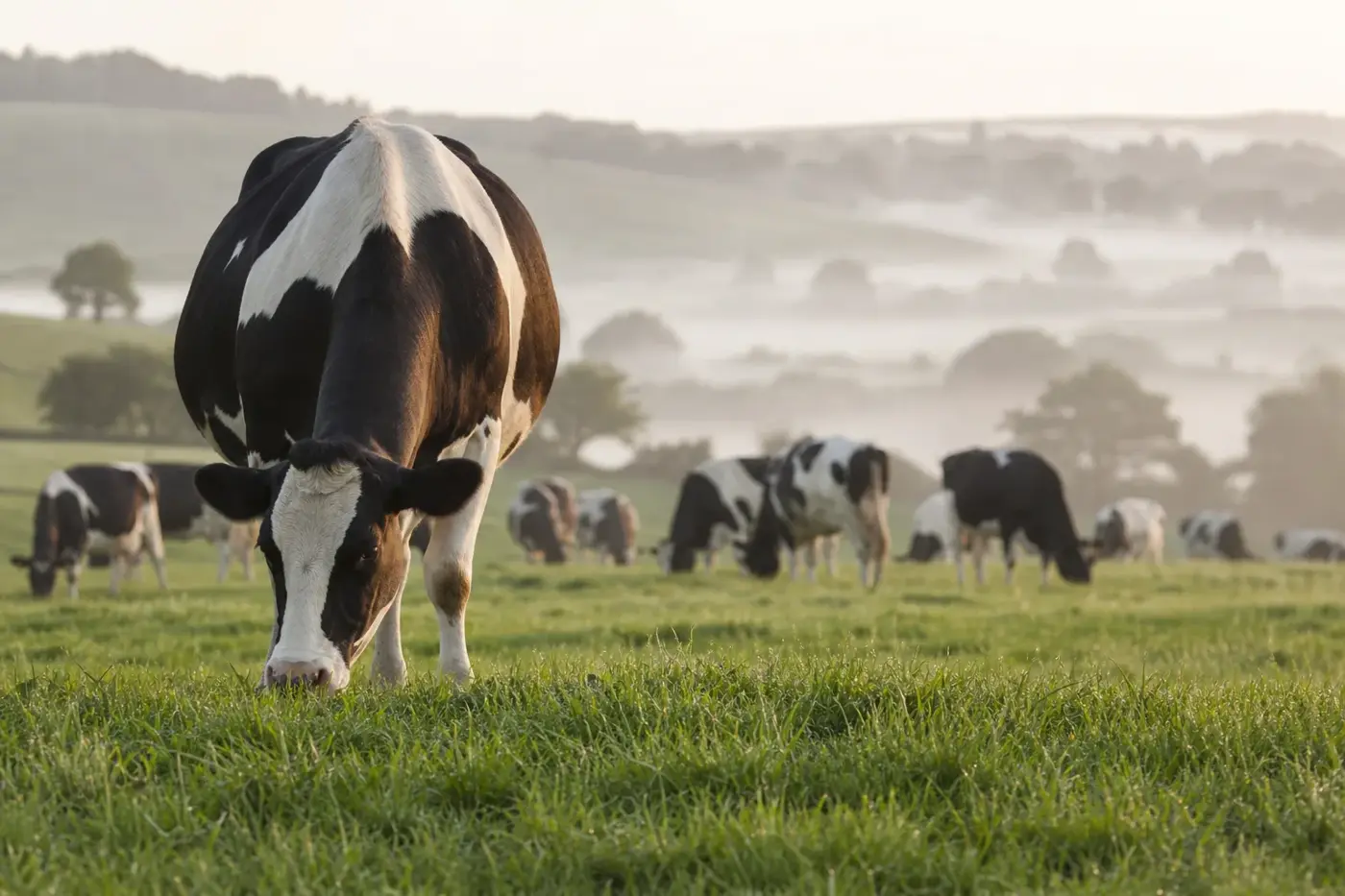
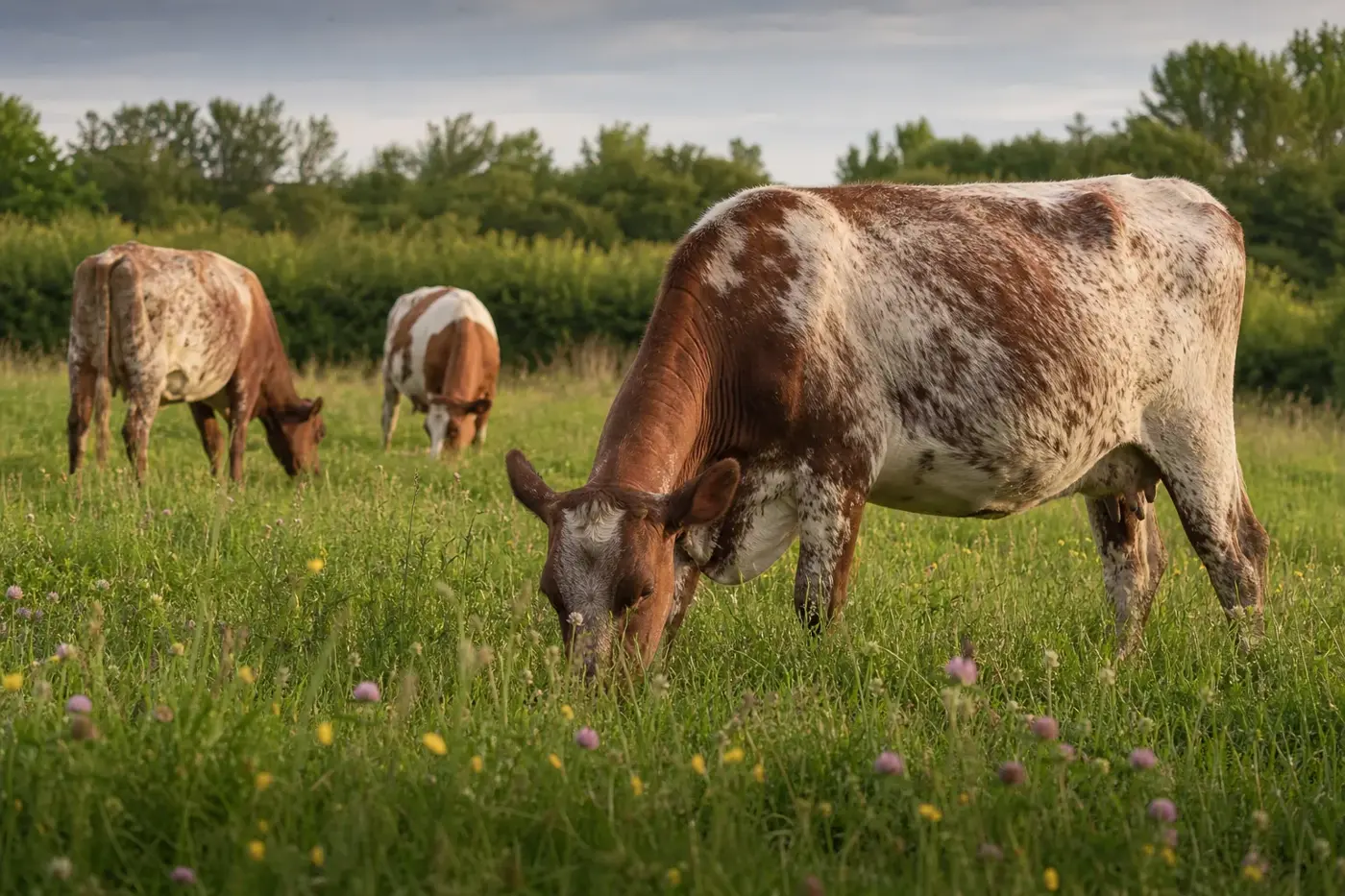
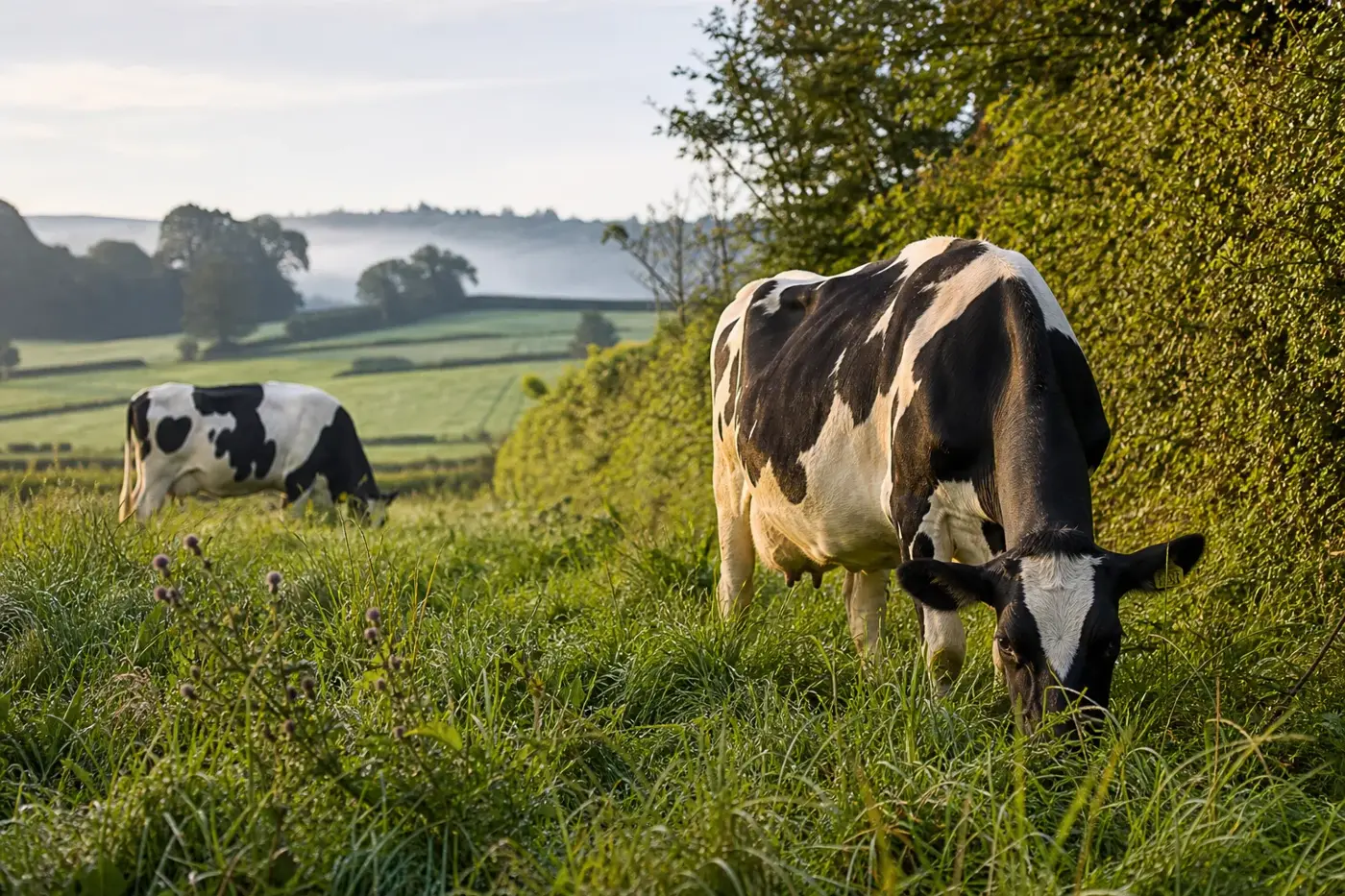
Pasture access tells you something about an animal’s opportunities, but it cannot settle the welfare question. Ask when animals go outside, which groups have access, what they can eat and where they find water and shelter. Then ask how their condition and health are monitored.[4][7][9]
Outdoor systems need active care. Farmed animal regulations address protection for animals kept outside, while the sheep code discusses feeding, health and management across different conditions.[7][9] A lovely field may do excellent work on a label; it cannot answer your questions.
Indoor systems deserve the same close attention. They must provide appropriate conditions, care and freedom of movement, and their performance depends on design and management. Neither “pasture” nor “housed” tells you the whole of an individual animal’s experience.[4][9]
The useful answer gets specific. Which animals are housed, why, during which periods, and with what recorded outcomes? Those details tell you more than a reassuring category.
Follow the feet, the udders and the care
Lameness and mastitis belong at the heart of your welfare questions. England’s cattle code identifies both as signs of ill health and includes foot care and mastitis control within a written herd health and welfare plan. This is about the animal’s condition, not simply milk quantity or quality.[5]
Lameness assessment considers how comfortably an animal moves. Mastitis is inflammation of the udder. Ask how cases are recognised, how quickly animals receive attention, whether recurring problems are investigated and what changes follow the findings.[5]
Give nutrition the same attention. Ask about body condition through lactation and pregnancy, access to feeding space and provision for different groups. A ration on paper cannot show whether animals in differing condition, or competing for access, get what they need.[4][5]
Published outcome records can make this conversation much more useful. Soil Association’s Great Britain farming standards include welfare assessment and records covering lameness, body condition, animals needing further care, mastitis and losses. These measures track different problems, so you need to consider them together.[11]
Look at the period covered, the animals included and the assessment method. “Cases recorded this year” and “animals affected at today’s inspection” answer different questions. A credible account also explains what changed when results deteriorated. That is where figures acquire practical meaning.
Ask what breeding means for an animal’s life
Breeding shapes future welfare as well as production. The Animal Welfare Committee’s opinion on breeding and breeding technologies examines how selection and reproductive technologies affect commercial livestock. It puts welfare within decisions about the animals being produced.[12]
You can ask more than “How much milk does this breed give?” Which health, fertility, mobility, lifespan and functional traits does the farm consider alongside yield? How do those breeding choices fit the feeding resources, accommodation and management available?
Longevity needs a companion question: what was that life like? Ask why animals leave the herd or flock, how many departures are planned and how many follow illness, injury or other problems. Soil Association’s published standards distinguish planned culls, unplanned losses and enforced culls in dairy records. Those distinctions reveal more than age alone.[11]
Look at both the breeding programme’s stated objectives and the lives of the resulting animals. Intention and outcome belong in the same conversation. You need both to understand what those choices mean in practice.
Care must continue after the last milking
The last milking does not end an animal’s welfare needs. Calm handling, appropriate facilities and competent staff matter during movement and at the slaughterhouse. The Food Standards Agency describes checks on unloading, holding, restraint, stunning and bleeding in the establishments it oversees.[13]
Ask who decides whether an animal is fit to travel, how its destination is chosen and what happens if transport would cause suffering. Ask separately about emergency decisions on the farm. A supplier policy should make clear who takes responsibility at these difficult points.
The UK slaughter framework generally requires stunning before slaughter, with permitted exceptions for slaughter in accordance with specified religious rites. The FSA explains that effective stunning renders animals unconscious. Checks must establish that they show no signs of consciousness or sensibility between stunning and death.[14]
In England, official guidance limits religious slaughter without prior stunning to specified circumstances. These include an approved slaughterhouse, competent personnel and meat intended for Jewish or Muslim consumption. Halal slaughter can include stunning, so that word alone does not tell you the method used.[14][15]
Find the rules for the farm’s corner of the UK
Location matters because animal welfare is devolved. England and Wales share the Animal Welfare Act 2006; Scotland and Northern Ireland have their own principal Acts. Farmed animal regulations add detailed requirements to those wider duties.[1][2][3][8][9][10]
| Nation | Main welfare duty | Farmed animal rules |
|---|---|---|
| England | Animal Welfare Act 2006, section 9.[1] | Welfare of Farmed Animals (England) Regulations 2007.[8] |
| Wales | Animal Welfare Act 2006, section 9.[1] | Consult the applicable regulations for Wales. |
| Scotland | Animal Health and Welfare (Scotland) Act 2006, section 24.[2] | Welfare of Farmed Animals (Scotland) Regulations 2010.[9] |
| Northern Ireland | Welfare of Animals Act (Northern Ireland) 2011, section 9.[3] | Welfare of Farmed Animals Regulations (Northern Ireland) 2012.[10] |
The general duty and detailed husbandry rules do different jobs. Suitable feeding, care, accommodation and behaviour sit within the wider duty; species-specific provisions address particular management conditions. For calf housing, look to its own legal requirements rather than drawing conclusions from adult cattle rules.[1][8][9][10]
Government welfare codes turn responsibilities into husbandry practice. Defra explains that the codes are not themselves law, but failure to follow them can be used as evidence in proceedings. Its publication pages also warn that some legislative references in older codes are outdated.[16][17]
Make the certificate earn your confidence
A farm assurance claim becomes useful when you can connect it to a published standard, an identifiable inspection process and corrective action. The Animal Welfare Committee describes voluntary schemes covering matters including housing, feed, transport and husbandry. Requirements vary between schemes.[12]
Look for the standard covering the relevant species and activity. A certificate for one operation should prompt questions about the rest: supplying farms, youngstock rearers, transport and slaughter. Establish which parts of the cheese’s milk supply are covered and how that connection is documented.
Organic certification adds production requirements alongside ordinary welfare responsibilities. Soil Association, for example, publishes separate farming standards for Great Britain and Northern Ireland. Its Great Britain document includes welfare outcome assessment, livestock records and restrictions on specified husbandry practices.[11]
Inspection needs follow-through, not just paperwork. Soil Association Certification describes annual farm inspection preparation, an inspection report and an Action Summary Form where non-compliances need attention. Its process requires corrective responses and can request supporting evidence.[18]
Ask to see the current certificate, its scope, the applicable standard and the response to shortcomings. Put those alongside the farm’s account of its animals. Now you have something concrete to examine, rather than a claim to take on trust.
Seven questions to take to the cheese counter
Start with the milk source. A cheesemaker using its own animals and one buying pooled milk will need different routes to the evidence. If the answer is unavailable at the counter, ask the retailer to pass detailed questions to the person responsible for sourcing.
You do not need to ask everything at once. Choosing cheese can already involve quite enough deliberation. Pick the questions most relevant to the cheese and use them as a short enquiry:
- Where does the milk come from? Ask for the farm or defined supplying group, and whether that changes.
- How are young animals reared? Ask about maternal contact, social housing, feeding and weaning.
- What happens to male offspring? Ask about destinations and responsibility after transfer.
- What access do animals have to pasture or other outdoor space? Ask which groups, when and under what conditions.
- Which welfare outcomes are recorded? Request dated information on mobility, udder health, body condition, losses and reasons for leaving.
- Who checks the system? Ask for the certifier, standard, inspection scope and handling of non-compliances.
- What happens at the end of life? Ask about transport decisions, slaughter arrangements and stunning.
A useful answer names the practice, the evidence and the person accountable. For help separating the different information presented on a pack, see how to read a cheese label.
Give welfare and the environment their own questions
Welfare and environmental sustainability answer different questions. Welfare concerns what animals experience. Pasture management, biodiversity and climate assessment bring additional questions about land, habitats, resources and emissions. Each needs its own evidence and measurements.
When you discuss organic farming or pasture access, pursue both enquiries. What opportunities and care do animals receive, and what environmental outcomes are measured? Ask producers to explain how a farming practice connects to each result they claim.
For cheese buying, keep the order practical: establish the milk source, examine the animals’ lives, understand inspection arrangements, then consider environmental evidence alongside them. A detailed, dated answer about a difficult issue tells you more than an attractive image without a supporting record.
Questions people ask
Does pasture access guarantee good dairy animal welfare?
No. Pasture access offers opportunities, but it does not settle the welfare question. Ask which animals go outside, when they have access and how their condition and health are monitored.
Are dairy calves always separated from their mothers immediately?
The page describes several arrangements, including immediate separation, a period of maternal contact and partial contact. It recommends asking how separation and rearing work on the particular farm.
What happens to male offspring on dairy farms?
The page lists several possible routes: they may be retained for breeding, reared for meat, transferred to another rearer or killed on the farm. It recommends asking for a documented policy covering their destinations and care.
Does an animal welfare certificate cover the whole cheese supply chain?
A certificate for one operation does not necessarily establish what happens across the rest of the supply chain. Check its species, activities and scope, and ask how coverage of the cheese’s milk supply is documented.
Are animals always stunned before slaughter in the UK?
The UK framework generally requires stunning before slaughter, with permitted exceptions for specified religious rites. Halal slaughter can include stunning, so the word alone does not establish the method used.
Sources
- UK Parliament. Animal Welfare Act 2006, chapter 45, original enacted text, particularly sections 4 and 9. 2006. Official text.
- Scottish Parliament. Animal Health and Welfare (Scotland) Act 2006, 2006 asp 11, original enacted text, particularly sections 19 and 24. 2006. Official text.
- Northern Ireland Assembly. Welfare of Animals Act (Northern Ireland) 2011, chapter 16, original enacted text, particularly sections 4 and 9. 2011. Official text.
- Scottish Government. The Welfare of Farmed Animals (Scotland) Regulations 2010, SSI 2010/388, original instrument, general conditions. 2010. Same document as source 9.
- Defra. Code of recommendations for the welfare of livestock: cattle, PB7949, 2003 code, HTML publication updated January 2024. Published code.
- Defra. Code of recommendations for the welfare of livestock: goats, code effective September 1989, HTML publication August 2023. Published code.
- Defra. Code of recommendations for the welfare of livestock: sheep, PB5162, HTML publication updated August 2023. Published code.
- UK Government. The Welfare of Farmed Animals (England) Regulations 2007, SI 2007/2078, original instrument, especially Schedules 1 and 6. 2007. Official text.
- Scottish Government. The Welfare of Farmed Animals (Scotland) Regulations 2010, SSI 2010/388, original instrument. 2010. Official text.
- Northern Ireland Government. Welfare of Farmed Animals Regulations (Northern Ireland) 2012, SR 2012/156, original instrument, especially Schedules 1, 6 and 7. 2012. Official text.
- Soil Association. Soil Association Organic Standards for Great Britain, farming standards PDF retrieved November 2026; revision date not verified. Published standards.
- Animal Welfare Committee. Opinion on breeding and breeding technologies in commercial livestock agriculture, government publication retrieved November 2026. Published opinion.
- Food Standards Agency. Animal welfare, published account of regulatory responsibilities, retrieved November 2026. Official account.
- Food Standards Agency. Food Fact Check: Animal welfare in abattoirs and slaughterhouses, 3 June 2026. Official explanation.
- Defra. Slaughter without stunning, England, updated June 2023. Official guidance.
- Defra. Beef cattle and dairy cows: on-farm welfare, updated January 2024. Publication and legislative context.
- Defra. Goats: on-farm welfare, August 2023. Publication and legislative context.
- Soil Association Certification. Organic farm inspections, current webpage retrieved November 2026. Inspection and corrective-action arrangements.
This desk-research draft draws on legislation, government husbandry codes, official slaughter guidance and published certification documents; outstanding verification is recorded below.
Last checked: November 2026
Last checked November 2026.
The editors suggest you read next
Sustainability in Cheese: The Complete Guide
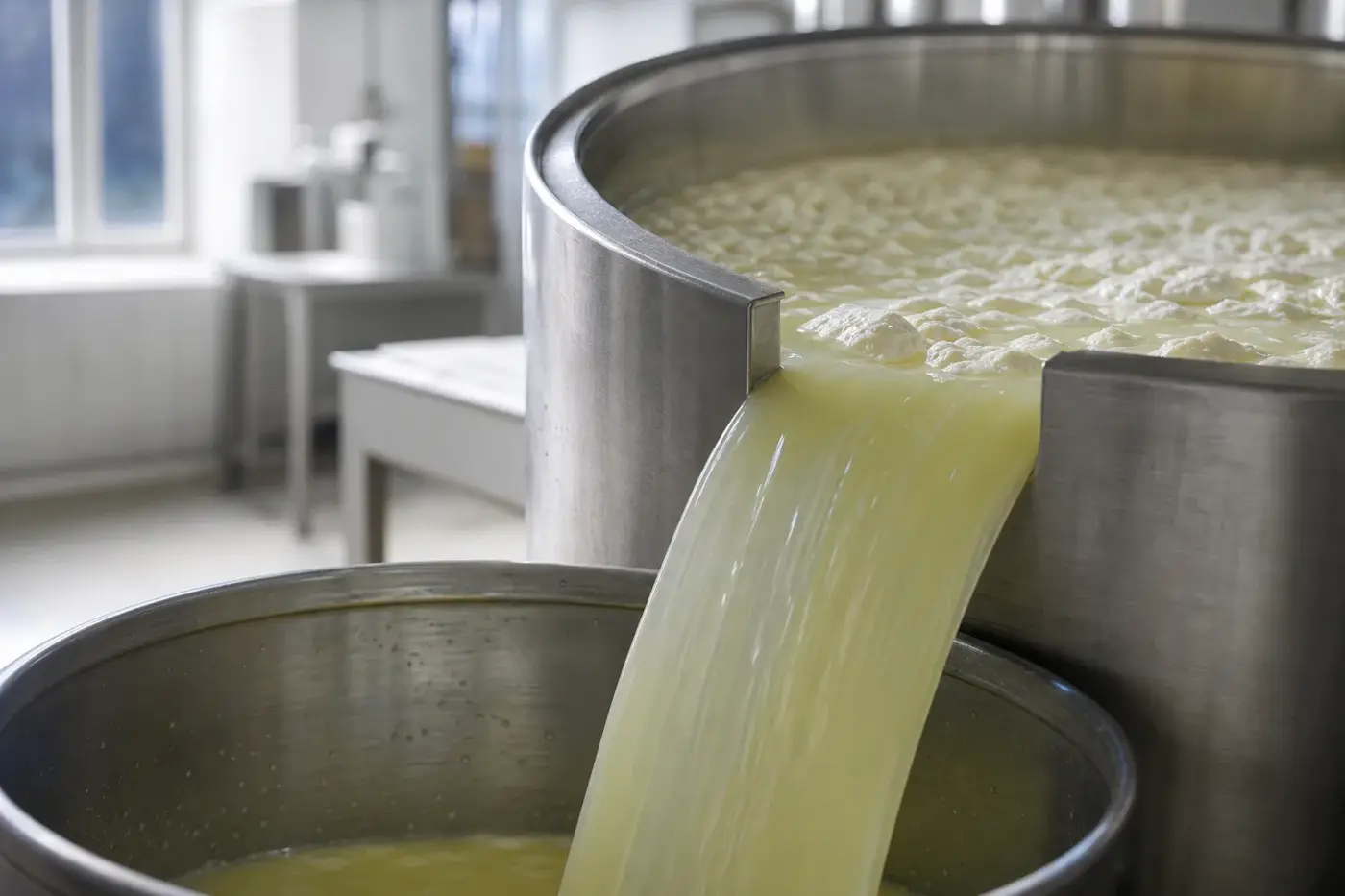
At the cheese vat, curd parts company with liquid whey.