In a mountain dairy, matured sheep’s cheese meets the grinder. In goes the salt. Out comes something soft and white, sometimes finely granular, sometimes ready to spread, carrying the salty tang described in the regional specifications. This cheese has no intention of keeping its shape. [1][2][3][4]
If bryndza is just a name to you, start with that transformation. Across southern Poland and Slovakia, a shared method produces distinct cheeses, including two protected designations of origin and one protected geographical indication. There is a family resemblance, but nobody could accuse them of being identical. [1][2][3][4]
| Bryndza at a glance | What you need to know |
|---|---|
| The familiar name | Bryndza, a family of related regional cheeses. [1][2][3] |
| How it comes together | Matured sheep’s cheese, sometimes combined with cow’s cheese, broken down and mixed with salt under individual specifications. [1][2][3] |
| What you will see | White to creamy white; soft, granular or spreadable. [2][4] |
| Protected names to look for | Bryndza Podhalańska, Slovenská bryndza and Liptovská bryndza. [2][5][6] |
| EU protection categories | Bryndza Podhalańska: PDO; Slovenská bryndza: PGI; Liptovská bryndza: PDO. [2][5][6][7] |
| Published EU application identifiers | Bryndza Podhalańska: PL/PDO/005/0450/18.02.2005; Slovenská bryndza: SK/PGI/005/0427/13.10.2004; Liptovská bryndza: PDO-SK-03316. [2][3][8] |
| Current eAmbrosia record identifiers | Not supplied here |
| Ingredient to pay attention to | Milk; the particular cheese determines the use of sheep’s milk and permitted cow’s milk. [1][2][3] |
A second act for matured cheese
With bryndza, draining and maturing the curd is not the end of the story. Rather than selling that intermediate cheese whole, the producer crumbles or mills it, adds salt and works it into a paste. You get fermented flavour in a texture made for spreading or mixing through food. [1][2][3]
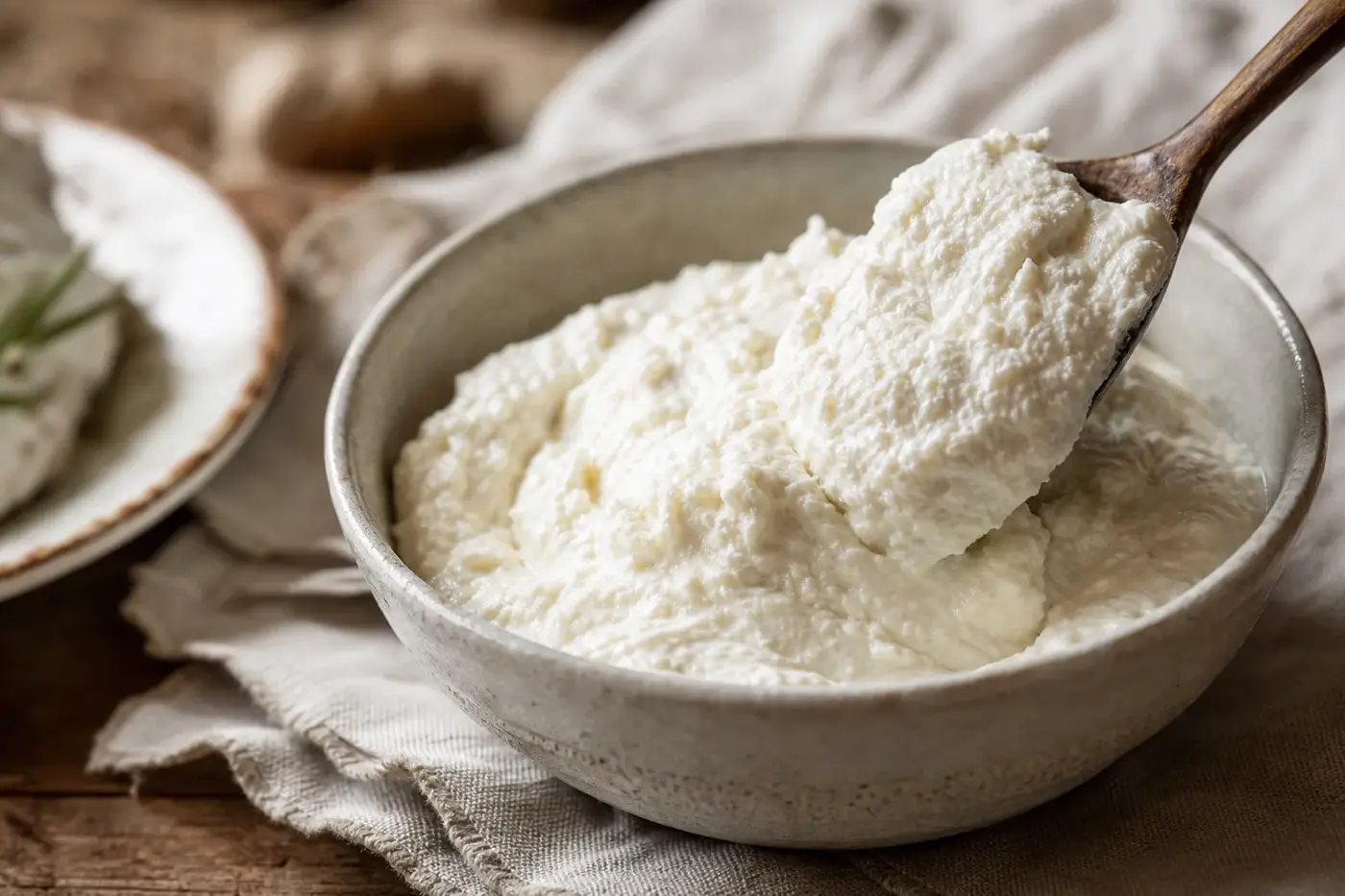
Granular yet spreadable? Both can be true. The Slovenská bryndza specification describes those qualities together, while Poland’s agriculture ministry calls Bryndza Podhalańska paste-like, sometimes finely grainy or slightly lumpy. Picture a worked cheese paste rather than the clean-cut face of a firm block. [2][4]
The flavour descriptions give you something just as particular to look for. Poland’s ministry describes Bryndza Podhalańska as salty and piquant, sometimes slightly sharp or sour. For Slovenská bryndza, the specification describes a pleasantly sour sheep’s-cheese flavour, with a slightly spicy, salty character. [2][4]
Follow the sheep into the mountains
Sheep farming and mountain grazing connect the bryndzas of southern Poland and northern Slovakia. In both places, sheep’s milk becomes cheese that can undergo further fermentation and working. The mountain-dairy background is shared; the regional identities remain distinct. [1][3]
For Bryndza Podhalańska, the Polish specification takes you to Podhale and neighbouring defined districts. For Liptovská bryndza, it is the mountains and foothills of northern Slovakia. Beyond these regions, the wider tradition reaches into neighbouring parts of Central and Eastern Europe. [1][3]
Read the whole name when you choose your cheese. Podhalańska points you towards the Polish regional cheese, Slovenská towards the Slovak PGI, and Liptovská towards the more tightly delimited Liptov PDO. Each gives you a much clearer picture than bryndza alone. [2][3][5][6]
Three questions help you find your way: which milk goes in, where is the cheese made, and how does the intermediate cheese mature? The mountain setting explains the family resemblance. The individual specifications reveal the differences worth seeking out.
Sheep’s milk leads, with a little label reading
Sheep’s milk sits at the heart of all three cheeses, although the rules measure its contribution differently. For Bryndza Podhalańska, cow’s milk may account for no more than 40% of the total milk used. The specification names Polish Mountain Sheep and permits milk from Polish Red cattle. [1][8]
Slovenská bryndza begins with matured lump sheep’s cheese, either alone or mixed with lump cow’s cheese. Sheep’s cheese must make up more than 50% of that mixture. The distinction matters: this percentage measures cheese, while the Polish limit measures milk entering production. [2]
Liptovská bryndza follows a different path. It uses 100% lump sheep’s cheese made from raw sheep’s milk. That gives it a specified identity distinct from bryndza made with a mixture of sheep’s and cow’s cheeses. [3]
So “made with sheep’s milk” gives you the opening line, not the whole story. Look for cow’s milk or cow’s cheese too. Whenever you see a percentage, check exactly which ingredient it measures.
From curd to crumble to a spoonable paste
First comes the intermediate cheese. Rennet, an enzyme preparation, sets the milk into curd, which is separated from whey, the liquid released during cheesemaking, and drained. Maturation and mechanical working then take that initial cheese somewhere quite different. [1][3]
In the Polish method, that intermediate cheese is called bundz or bunc. It matures for 4 to 12 days before the producer crumbles it. Salt follows, then mixing into a uniform mass and beating to give the cheese its final form. [1]
For Slovenská bryndza, milling matured lump cheese is likewise the defining move. Keep that order in mind: fermented cheese is being worked into a new texture. This is not simply a matter of salting freshly drained curds. [2]
Liptovská bryndza gives its lump sheep’s cheese two to four weeks to ripen before grinding. The published specification sets out sorting, maturation, pressing, grinding and mixing with salt or brine. Each step has its place in the prescribed production sequence. [3]
You can explore the earlier curd formation and drainage stages in how cheese is made. Bryndza’s distinguishing moment comes afterwards. Matured cheese is broken down and worked into that finely textured, salted paste.
Why one spoonful differs from the next
Start with the season. The Polish specification explicitly links changes in composition to the season and to the milk’s quality and composition. Its published EU summary also limits production to May through September. [1][8]
Then comes maturation, giving the intermediate cheese time to develop before grinding. The Polish and Liptov cheeses have different specified periods. An ageing figure only helps you when it belongs to the right cheese and the right production stage; there is no single maturation period for the family. [1][3]
The working matters too. Crumbling, milling and mixing determine how thoroughly the matured cheese breaks down. Fine granules can remain in a paste that spreads readily, so you need not expect spreadable to mean completely smooth. [1][2]
Milk treatment gives you another useful detail to look for on the label. Liptovská bryndza requires raw sheep’s milk, but that rule does not apply to everything called bryndza. For the terminology, turn to raw, thermised and pasteurised cheese. [3]
Get to know the three protected names
Bryndza Podhalańska, Slovenská bryndza and Liptovská bryndza each have their own specification and registration. Slovenská bryndza holds a protected geographical indication, or PGI. The Polish and Liptov names hold protected designations of origin, or PDOs. [5][6][7]
Your guide to places, milk and maturation
| Name to look for | Where it comes from | Sheep and cow ingredients | Time for the intermediate cheese |
|---|---|---|---|
| Bryndza Podhalańska | Nowy Targ and Tatra districts, plus Milówka, Węgierska Górka, Rajcza, Ujsoły, Jeleśnia and Koszarawa in Żywiec district. [1] | Sheep’s milk; cow’s milk may not exceed 40% of total milk. [1] | Bunc matures for 4 to 12 days. [1] |
| Slovenská bryndza | Slovakia; detailed boundary not supplied here. [6] | More than 50% matured lump sheep’s cheese; lump cow’s cheese is permitted. [2] | Matured cheese; precise maturation requirements not supplied here. [2] |
| Liptovská bryndza | Liptovský Mikuláš and Ružomberok districts in northern Slovakia. [3] | 100% lump sheep’s cheese from raw sheep’s milk. [3] | Lump cheese ripens for two to four weeks. [3] |
Keep an eye on those percentages as you compare. Milk entering production and matured cheese going into a mixture are different measurements. Both tell you about the place of sheep’s milk in your cheese, but you cannot read them interchangeably.
Liptovská bryndza takes its place: Regulation (EU) 2026/590
Commission Implementing Regulation (EU) 2026/590 registered Liptovská bryndza as a PDO in the EU. It was adopted on 11 March 2026 and published on 18 March 2026. Entry into force followed on 7 April 2026, the twentieth day after publication. [7]
The registration adds Liptovská bryndza to the Union register. It does not replace the separate Slovenská bryndza PGI, so the two protected names retain their own identities. When you match the label, the exact registered spelling is Liptovská bryndza, with a lower-case “b”. [6][7]
Shopping in Great Britain? Start with its register
Great Britain’s official register lists Bryndza Podhalańska as a registered PDO and Slovenská bryndza as a registered PGI. Both entries give 31 December 2020 as their UK-scheme registration date. [5][6]
| Name | Great Britain protection |
|---|---|
| Liptovská bryndza | Status not supplied here |
If you want a protected regional cheese, match the complete name and its protection category. Both matter when you read the label. The guide to PDO, PGI and TSG explains the schemes in more detail.
Make room for bread, potatoes and dumplings
Bread gives you a simple first taste. Spread a thin layer, try the cheese alone, then add sliced radish, cucumber or chopped chives if you like. Bryndza brings the salt and fermented tang, while you can still get to know its granular or spreadable texture.
A freshly cooked potato makes another good starting point. Spoon on a little bryndza, or serve it alongside boiled potatoes rather than mixing everything at once. Keep some separate so you can each adjust the amount to taste.
For dumplings, try bryndzové halušky, with bryndza and small potato dumplings. Work with the cheese’s own consistency before adding anything to loosen it. Taste the finished combination before reaching for more salt; enthusiasm is not always a reliable seasoning measure.
Bring out what you need, rather than the entire supply. The Food Standards Agency’s household guidance for England, Wales and Northern Ireland says chilled food should spend the shortest possible time out of refrigeration. During preparation, the maximum is four hours. [9]
Let the name, not the mountain picture, guide you
Begin with the full product name. If you want a protected regional cheese, look for the complete registered wording rather than relying on a picture of sheep or mountains. The name connects your cheese to specified ingredients, places and production methods. [1][2][3]
Next, read the milk species, milk treatment and ingredient percentages. Ask the seller about anything the packaging leaves unclear, especially if your cheese has been portioned from a larger container. The cheese-label guide gives you a broader checklist.
White colour alone tells you very little. Bryndza’s more revealing features are its worked, granular or spreadable consistency and its production from matured intermediate cheese. Judge feta or another white variety by its own name and method; choose bryndza when you want a fermented cheese paste. [1][2][4]
Finally, choose a pack you can finish within the maker’s stated period after opening. Keep the packaging until you have finished the cheese. That way, you still have the date, batch and storage information to hand.
Keep it chilled and keep the label handy
Keep bryndza refrigerated and follow the pack. For households in England, Wales and Northern Ireland, the FSA advises a refrigerator temperature between 0 and 5 °C and refrigeration of dairy products. Follow the maker’s storage instructions, any shorter period after opening, and the date on the pack. [9]
That pleasantly sour flavour belongs in the published sensory description of several bryndzas. It cannot tell you how long an opened pack will keep. Treat flavour and storage life as separate questions, using the product’s instructions to plan when to finish it. [2][3][9]
Look for unpasteurised milk on the label, and consult current NHS guidance on dairy products and food poisoning. Your doctor, midwife, pharmacist or dietitian can advise on your own circumstances. [10]
A protected name tells you which specified cheese you have and where it comes from. If you are making personal food choices during pregnancy or illness, take those product details to your doctor, midwife or dietitian. Follow the current official advice where you live.
General information only, not medical advice: follow the official guidance where you live.
Questions people ask
What is bryndza made from?
Bryndza is made by breaking down matured sheep’s cheese, adding salt and working it into a soft paste. Some varieties also permit cow’s cheese or milk.
Does bryndza contain cow’s milk?
It can, depending on the variety. Bryndza Podhalańska permits up to 40% cow’s milk, while Slovenská bryndza can include cow’s cheese. Liptovská bryndza uses 100% lump sheep’s cheese.
Is bryndza made with raw milk?
Liptovská bryndza must be made from raw sheep’s milk. That requirement applies to this particular cheese, not to everything sold as bryndza.
How is bryndza eaten?
Bryndza can be spread on bread or served with boiled potatoes. It is also used in bryndzové halušky, a dish with small potato dumplings.
How should bryndza be stored?
For households in England, Wales and Northern Ireland, the Food Standards Agency advises refrigerating dairy products at 0 to 5 °C. It also says chilled food should spend as little time as possible out of refrigeration, with a maximum of four hours during preparation. See the Food Standards Agency’s household guidance and follow the pack instructions.
Sources
[1] Department for Environment, Food & Rural Affairs. Product specification: Bryndza Podhalańska, English specification supplied through the Great Britain register, undated document retrieved November 2026. Product specification.
[2] European Commission. Publication of an application: Slovenská bryndza, 2007/C 232/10, Official Journal C 232, 4 October 2007, specification summary. Official Journal document.
[3] European Commission. Publication of an application for registration of a geographical indication: Liptovská bryndza, C/2025/6349, 21 November 2025, single document. Official Journal document.
[4] Polish Ministry of Agriculture and Rural Development. Bryndza podhalańska, dated 3 June 2018. Official product account.
[5] Department for Environment, Food & Rural Affairs. Bryndza Podhalańska, Great Britain protected food-name register, published 4 January 2021, retrieved November 2026. Register entry.
[6] Department for Environment, Food & Rural Affairs. Slovenská bryndza, Great Britain protected food-name register, published 4 January 2021, retrieved November 2026. Register entry.
[7] European Commission. Commission Implementing Regulation (EU) 2026/590 of 11 March 2026 on the registration of the geographical indication ‘Liptovská bryndza’ (PDO), Official Journal, 18 March 2026, Articles 1 and 2 and document information. Registration regulation.
[8] European Commission. Publication of an application: Bryndza Podhalańska, 2006/C 230/02, Official Journal C 230, 23 September 2006, specification summary. Official Journal document.
[9] Food Standards Agency. How to chill, freeze and defrost food safely, published 18 December 2017, current retrieved guidance, November 2026. Official household guidance.
[10] NHS. Dairy and alternatives in your diet, current retrieved guidance, November 2026. Official dairy guidance.
This desk-researched draft compares official specification material, registration records and published UK household guidance; the outstanding verification requirements are recorded below.
Last checked: November 2026
Last checked November 2026.
The editors suggest you read next