Parenica
Follow that ribbon of cheese as it curls into two connected coils, neatly held together with cheese string.
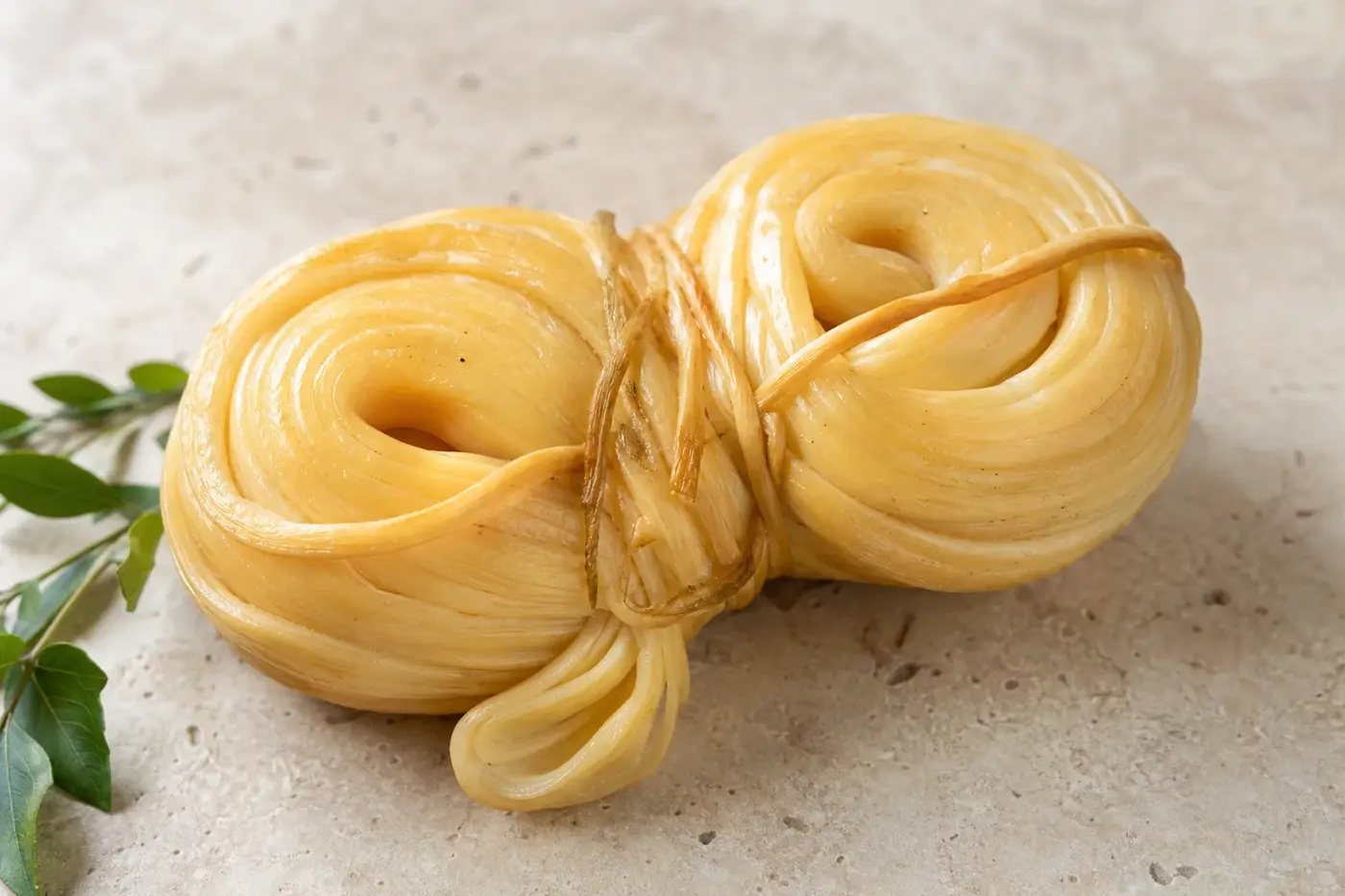
Follow that ribbon of cheese as it curls into two connected coils, neatly held together with cheese string. Parenica makes quite an entrance before you have taken a bite. Its protected Slovak expression, Slovenská parenica, is lightly smoked and registered as a Protected Geographical Indication, or PGI, rather than a Protected Designation of Origin, or PDO.[1][2]
| What to know | The details |
|---|---|
| Familiar name | Parenica.[1] |
| Full registered name | Slovenská parenica.[1][2] |
| Registration authority and identifier | European Union; PGI-SK-0485. GIview record EUGI00000013743.[1] |
| EU status, November 2026 | Registered PGI.[1] |
| Great Britain status, November 2026 | Registered PGI; GB registration dated 31 December 2020.[3] |
| Registration legislation | Commission Regulation (EC) No 656/2008, Article 1 and Annex.[2] |
| Legally defined production area | Not established here. |
| Milk specified for Slovenská parenica | Raw sheep’s milk, or raw sheep’s and cow’s milk mixed together, with at least 50% sheep’s milk.[1] |
| Coagulant | Not established here. |
| The shape to look for | Two connected coils in an S shape, bound with cheese string or a cheese chain.[1][4] |
| Published dimensions | Coils 6 to 8 cm in diameter and 5 to 8 cm high.[1] |
| Smoking | The protected cheese is described as lightly smoked.[1][4] |
| Seasonal requirements | Not established here. |
| Legal minimum ageing | Not established here. |
Before the knife, a closer look
Look closely at those two rolls. In the registered description of Slovenská parenica, they stay connected in an S shape: one wound ribbon, not two separate cylinders sitting side by side. A cheese string or chain holds the arrangement together.[1][4]
Give that handiwork a moment at the table before reaching for your knife. Follow the ribbon and see how its layers sit together, rather than cutting the whole cheese straight into cubes. For your first encounter, leave part of the coil intact and offer another part in small pieces.
Everyone gets to appreciate the shape as well as taste the cheese. It is a rare occasion when admiring your food counts as useful preparation. The double coil makes the introduction, but read the name and milk information too, especially if you want the registered Slovak product.[1][3]
Meet the sheep behind the ribbon
Raw milk from grazing sheep sits at the heart of Slovenská parenica. The official registered description names the Valaška, improved Valaška, Cigája and East Friesian breeds. Those names connect the cheese to Slovakia’s sheep’s-milk cheesemaking tradition, even when cow’s milk joins the mixture.[1]
The mountain setting belongs in the picture, too. Research into traditional smoking in the Polish and Slovak Carpathian Mountains includes Slovenská parenica among the region’s cheeses. It places the stretched cheese, elaborate hand-formed shape and smoking within that setting.[4]
When you choose a particular example, ask what milk it contains and where it was made. Those answers bring you closer to the cheese on your plate. They offer more substance than an unsubstantiated claim about an ancient recipe.
Look for the full Slovak name
Slovenská parenica is an EU PGI, not a PDO. The Annex to Commission Regulation (EC) No 656/2008 records that distinction explicitly. The regulation was adopted on 10 July 2008 and published on 11 July 2008; Article 2 provided for entry into force on the twentieth day after publication.[2]
That full name deserves your attention. For a cheese labelled simply Parenica, turn to its own description, ingredients and manufacturing information. The shorter name alone does not establish every characteristic specified for Slovenská parenica.
Great Britain has a separate register, which also identifies Slovenská parenica as a registered PGI. Registration under the UK scheme is dated 31 December 2020. The EU and GB register status given here is for November 2026.[1][3]
Want to understand the difference between the schemes? Turn to protected names explained. When you shop, start with the full product name, then look at the producer and accompanying information.
Sheep’s milk has the leading role
At least half the milk in protected Slovenská parenica must come from sheep. The registered description permits freshly milked, raw, untreated sheep’s milk, or a mixture of raw, untreated sheep’s and cow’s milk containing at least 50% sheep’s milk. An all-cow’s-milk cheese does not meet that published requirement.[1]
Think of the specification as your guide to the registered cheese, and the packet as your guide to the one you are buying. If your Parenica has a shorter or different name, read the declared milk species and treatment. Do not assume it has the protected product’s composition.
You can explore those terms in raw, thermised and pasteurised cheese. Understanding them is particularly important if you follow pregnancy guidance or other advice concerning unpasteurised dairy products.
From workable cheese to winding ribbon
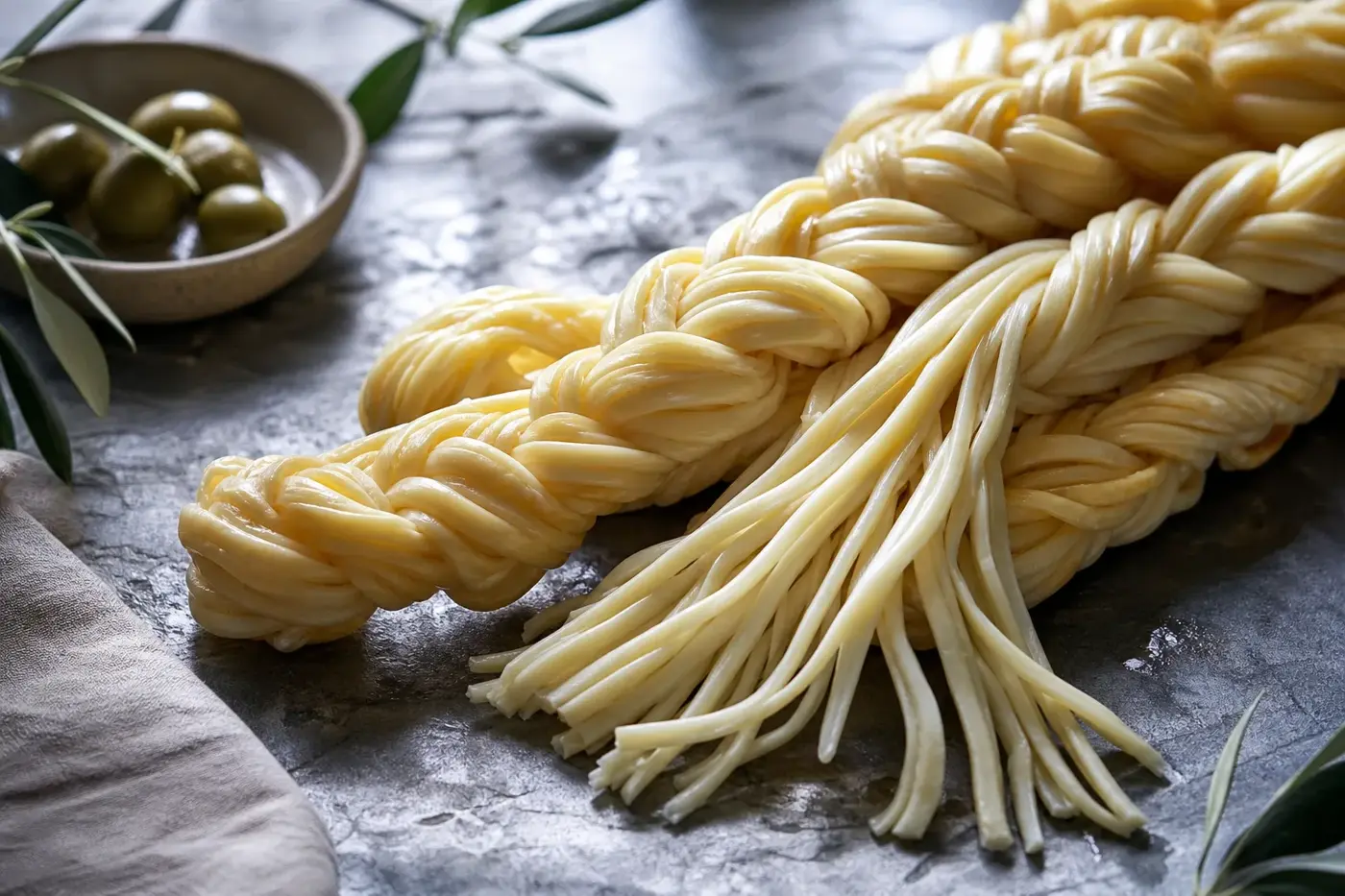
The transformation starts with a workable cheese mass and ends with a ribbon ready to wind. Published descriptions identify Slovenská parenica as a steamed or stretched cheese, formed into connected rolls and lightly smoked.[1][4]
The finished coil holds the shape given to that ribbon during forming. A mould does not provide its final outline; the cheese is arranged into its characteristic rolls. Even the binding is part of the construction, with cheese string or a cheese chain specified in the published description.[4]
For the earlier stages, visit how cheese is made. It explains curd, the coagulated part of milk, and whey, the liquid separated from it. For heating, salting and forming details specific to a particular cheese, turn to the maker’s documented account or the applicable specification.
Let the light smoke speak
Light smoking belongs to Slovenská parenica’s published identity. The research account describes the protected cheese as soft, steamed and lightly smoked. The registered description emphasises those connected coils.[1][4]
For the cheese you are buying, ask whether it is smoked and read its ingredients and description. Smoke gives you something to explore, but it is not the sole measure of quality. If you compare smoked and unsmoked cheeses, choose similar examples where possible.
Otherwise, differences in milk, manufacture or storage can muddy the comparison. Try a plain piece before adding bread, vegetables or a drink. Give the cheese the first word.
Look at the surface and interior separately, then consider the aroma and impression of salt. Notice how the ribbon separates as you taste. Those observations make a more useful personal tasting record than jumping straight to “mild” or “strong”.
Five useful stops on the label
For Slovenská parenica, start with the complete registered name. If you are exploring Parenica more broadly, focus on the individual product’s milk, smoking declaration and storage instructions.[1][3][5]
These five points keep the practical details manageable. Work through them before you put the packet away:
- Name: identify the food, including the complete registered name where applicable.
- Milk: check the declared species and milk treatment.
- Ingredients and allergens: read the information for your particular product.
- Date: distinguish a use-by date from a best-before date.
- Storage: read the instructions for both unopened and opened packaging.[5][6]
A use-by date concerns safety; a best-before date concerns quality. UK government guidance makes that distinction and explains that correct storage matters before either date. Follow your packet’s instructions rather than assigning every coiled cheese the same storage life.[6]
Need a hand bringing those details together? See reading a cheese label.
Give the coil the centre of the table
Let the cheese hold the centre of a simple plate. Offer plain bread with washed cucumber, radishes or tomatoes, and put pickled vegetables in a separate dish. Keeping things apart lets you taste the cheese on its own before combining flavours.
Start with water if you want a straightforward comparison. An alcohol-free apple drink is another option to explore. These are serving suggestions, not documented traditional pairings or the results of a site tasting.
Bring out a modest amount of cheese and replenish it from the fridge as needed. For England, Northern Ireland and Wales, the Food Standards Agency advises keeping chilled food out of refrigeration for the shortest possible time during preparation.[7]
Comparing several cheeses? Keep the packets beside your notes rather than beside the food, and record each product’s name, milk information and smoking declaration before tasting. Your future self will appreciate not having to identify a cheese from the note “the lovely one”.
A cold fridge and a label worth keeping
Refrigerate your cheese as directed, and keep its label after opening. For England, Northern Ireland and Wales, the Food Standards Agency’s published chilling guidance recommends a fridge temperature between 0 and 5 °C. It also recommends following the storage instructions on the packaging.[7]
The NHS advises keeping chilled ready-to-eat foods cold and following label instructions. Use ready-to-eat food within two days of opening unless the packaging says otherwise. Keep raw and ready-to-eat foods separate, and eat, cook or freeze food by its use-by date.[8]
Pay particular attention to that use-by date. UK government guidance warns that incorrect storage can make food unsafe before it, and that eating the food afterwards could cause illness. Follow any applicable recall notice for the exact product and batch.[6]
For the broader picture at home, turn to how to store cheese at home. Keep your particular packet’s instructions close at hand.
This page summarises published guidance from the official sources it cites. It is not medical advice. Guidance differs between countries and changes over time, so check the current source for where you live, and ask your doctor, midwife, pharmacist or dietitian about your own circumstances.
Pregnancy and higher-risk readers: find the right guidance
If you are pregnant in the UK, consult the current NHS guidance on cheese and milk. Then check the particular product and its milk treatment.[9]
The NHS identifies pregnant people, newborn babies, people with weakened immunity and older people as groups at greater risk of serious illness from listeriosis. Its advice includes refrigeration, careful attention to use-by dates and following storage instructions.[8]
Read the official sources for your country and discuss your circumstances with your doctor, midwife, pharmacist or dietitian. For further background, Listeria and cheese safety brings together the separate questions of contamination, handling and higher-risk groups.
Questions people ask
What is Parenica?
Parenica is a ribbon of cheese wound into two connected coils and tied with cheese string. The protected Slovak expression, Slovenská parenica, is soft and lightly smoked.
What milk is used in Slovenská parenica?
It is made with raw sheep’s milk or a mixture of raw sheep’s and cow’s milk. Sheep’s milk must make up at least 50% of the milk.
Is all Parenica protected?
The registered name is Slovenská parenica, which has PGI status in the EU and Great Britain. The shorter name Parenica alone does not establish all the characteristics specified for the protected cheese.
How should Parenica be stored?
The Food Standards Agency advises a fridge temperature between 0 and 5 °C and following the packaging’s storage instructions. The NHS advises using ready to eat food within two days of opening unless the packaging says otherwise.
Can I eat Parenica during pregnancy?
The page advises consulting the current NHS guidance on cheese and milk and checking the particular product and its milk treatment. The NHS identifies pregnant people as a group at greater risk of serious illness from listeriosis.
Sources
- European Union Intellectual Property Office, GIview: Slovenská parenica, record EUGI00000013743, file PGI-SK-0485, live record retrieved November 2026. Registered status, milk description and physical format.
- European Commission, Commission Regulation (EC) No 656/2008 of 10 July 2008 registering certain names in the Register of protected designations of origin and protected geographical indications, Official Journal L 183, 11 July 2008, pages 15 to 16.
- Department for Environment, Food & Rural Affairs, Slovenská parenica, GB protected food and drink names register, published 4 January 2021, live entry retrieved November 2026.
- Traditional smoking of Wallachian cheeses and sausages in Polish and Slovak parts of the Carpathian Mountains, research paper deposited in the University of Agriculture in Kraków repository, indexed extract retrieved November 2026. Bibliographic edition and full text require verification before publication.
- UK Government, Understanding food labelling: Overview, live guidance retrieved November 2026.
- UK Government, Understanding food labelling: Best before and use-by dates, live guidance retrieved November 2026.
- Food Standards Agency, How to chill, freeze and defrost food safely, published 18 December 2017, applicable to England, Northern Ireland and Wales, retrieved November 2026.
- NHS, Listeriosis, page last reviewed 10 November 2023, retrieved November 2026.
- NHS, Foods to avoid in pregnancy, live guidance retrieved November 2026.
This desk-researched draft draws on official registration records and public health guidance; the outstanding specification and specialist checks are recorded below.
Last checked: November 2026
Last checked November 2026.
The editors suggest you read next