Cheese, Histamine, Tyramine and MAOI Medicines
Picture two batches of goat's cheese, both made from identical pasteurised milk.
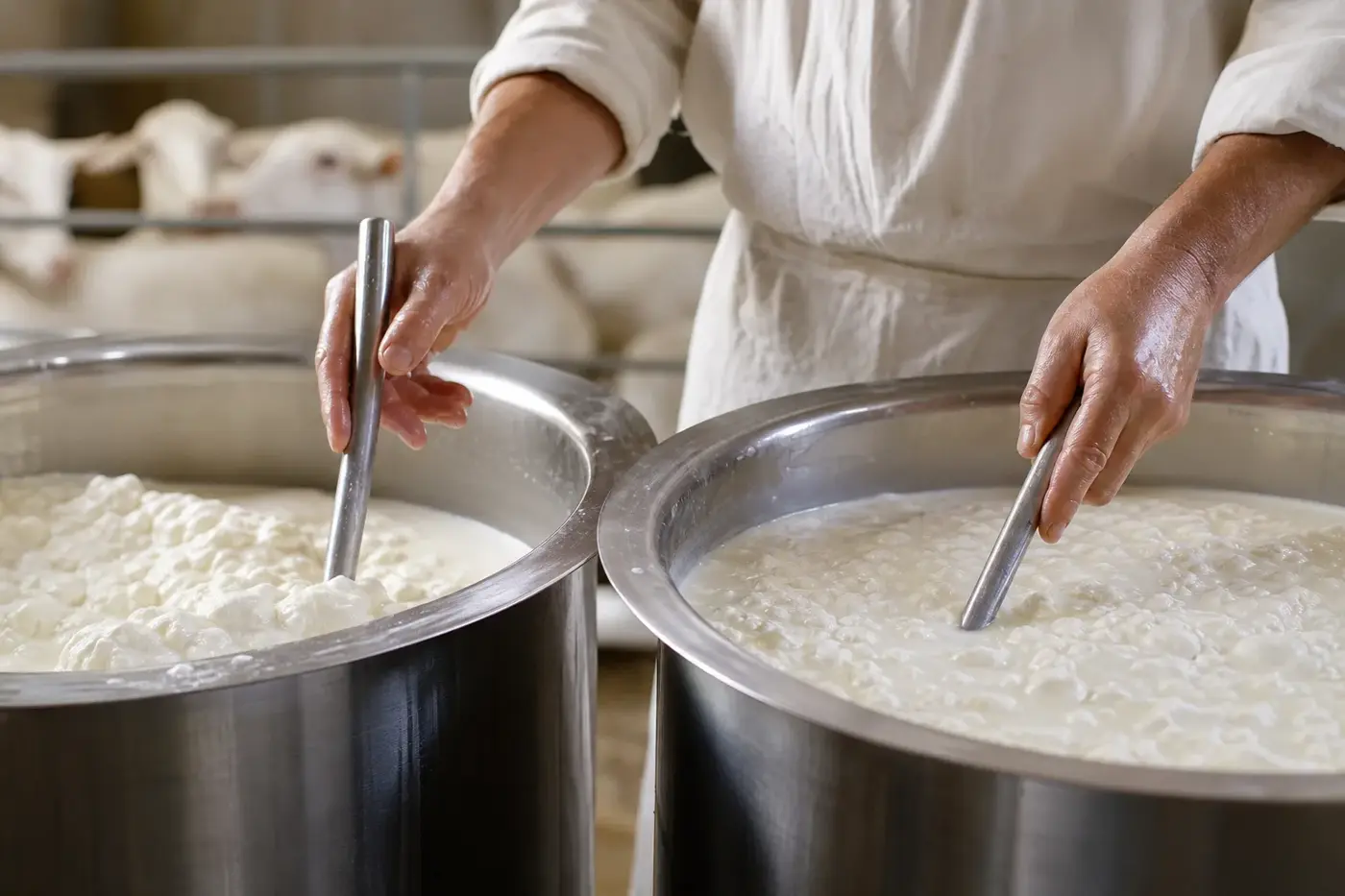
Picture two batches of goat's cheese, both made from identical pasteurised milk. Change the starter cultures, and something you cannot see changes too: the batches develop different biogenic amine profiles.[4] Maturation matters, but the microorganisms have a say of their own.
If you're wondering about cheese and health, you have two separate questions to untangle. Could histamine contribute to recurring symptoms? Could tyramine interact dangerously with your medicine? Evidence for histamine sensitivity remains uncertain, but the tyramine interaction with certain monoamine oxidase inhibitor (MAOI) medicines is recognised and can cause a hypertensive crisis, a dangerous rise in blood pressure.[1,2,6]
Meet the tiny workers inside your cheese
Histamine and tyramine begin with amino acids, the building blocks of protein. Both are biogenic amines, compounds that can form when microbial enzymes called decarboxylases remove carbon dioxide from an amino acid. Histidine becomes histamine; tyrosine becomes tyramine.[6,13]
As cheese matures, its proteins break down and release amino acids that suitable bacteria can use. Time plays a part, but so do the organisms present. In that goat-cheese experiment, different starter cultures produced different amine profiles from identical pasteurised milk. These cultures are the microorganisms deliberately added to help make cheese.[4]
“Strong cheese”, then, only tells you so much. It is a tasting description, not the cheese's full biography. The production method tells you more about what's happening inside; for the wider journey from milk to ripening, explore how cheese is made.[3,4]
Your piece of cheese has its own story
In 2018, researchers surveyed 151 commercial cheeses and found wide variation in histamine and tyramine concentrations. Some individual products accounted for unusually high results. The researchers used ultra-high-performance liquid chromatography, a laboratory separation technique. What you get from the findings is a picture of variation, not a dependable cheese ranking.[5]
An experiment with ewe's-milk cheese found that ripening, milk pasteurisation and starter selection all affected the amines produced. One detail is particularly telling: a starter associated with more histamine was associated with less tyramine than the comparison starter. You cannot treat the two compounds as interchangeable.[3]
Age and style give you context, not a measurement of the piece in your fridge. Milk treatment and culture choice can change the outcome within a cheese style. Nor can you simply apply an analysis of one production batch to another.[3,4]
Recurring symptoms need more than a suspect list
Flushing, itching, nausea, diarrhoea, abdominal pain, dizziness and a racing heart all appear among reported reactions in the specialist guideline from German, Austrian and Swiss allergy societies. These symptoms also have other possible explanations. The guideline describes the evidence linking ordinary dietary histamine to reproducible symptoms as limited and contradictory.[6]
A symptom list cannot give you a diagnosis. In a 2023 retrospective study, 59 people with suspected histamine intolerance underwent single-blind, placebo-controlled histamine challenges. Investigators excluded the diagnosis in 50 people; 37 reported symptoms after placebo. These people had been referred for clinical assessment, rather than sampled from the general population.[7]
The societies' guideline finds no reliable laboratory test that confirms or excludes the condition. It also rejects serum diamine oxidase (DAO) activity as a diagnostic measure. There is no established personal threshold that turns a published cheese analysis into a dependable serving allowance for you.[6]
If possible food-intolerance symptoms keep returning, the NHS advises seeing a GP. Clinical assessment can explore the pattern and consider other causes before you begin a restrictive diet.[17]
Similar symptoms, different questions
Milk allergy, lactose intolerance and foodborne infection need different assessments. If you're trying to make sense of symptoms, these NHS distinctions matter:[8,9,10]
| Problem | How the NHS describes it (UK) |
|---|---|
| Milk allergy | An immune-system reaction to food, including cows' milk. Symptoms can include hives, swelling, wheezing and digestive symptoms.[8] |
| Lactose intolerance | Difficulty digesting lactose, the sugar in dairy foods. Common symptoms include bloating, wind, abdominal pain and diarrhoea.[9] |
| Food poisoning | Illness from contaminated food. Symptoms can include vomiting, diarrhoea, abdominal pain and fever.[10] |
Digestive symptoms alone cannot tell you which explanation fits. The guides to cheese allergy and lactose intolerance and lactose in cheese explore those separate questions. For signs of a serious allergic reaction, including sudden swelling of the mouth or throat or difficulty breathing, the NHS advises calling 999.[8]
Tyramine and MAOIs: an interaction to take seriously
Tranylcypromine stops tyramine being broken down, its UK patient leaflet explains. Tyramine can then accumulate and cause very high blood pressure. This recognised clinical interaction is the reason for the dietary warnings that come with certain MAOIs.[2]
The consequences can be severe. Phenelzine's UK prescribing information describes hypertensive crises associated with intracranial bleeding, sometimes fatal. Tranylcypromine's information also records severe, occasionally fatal hypertensive reactions associated with tyramine-containing foods.[1,11]
If you take one of these medicines, follow its dietary instructions. This applies even if eating cheese has never caused you a noticeable reaction before.[1,11]
Start with your own medicine's instructions
Different MAOIs have different dietary instructions, so the exact medicine matters. These examples summarise UK product information retrieved in November 2026. The Summary of Product Characteristics (SmPC) is the prescribing document; the patient information leaflet comes with your medicine.[1,2,12]
| Medicine | What the UK dietary instructions say | How long to follow them |
|---|---|---|
| Phenelzine | Avoid cooked or plain cheese.[1] | During treatment and up to 14 days after stopping.[1] |
| Tranylcypromine | Avoid matured cheeses, including processed cheese made from mature cheese.[2] | During treatment and for two weeks after stopping.[2] |
| Moclobemide | Generally no special dietary restrictions, but all patients should avoid large amounts of tyramine-rich food.[12] | During treatment; the cited SmPC gives no separate post-treatment dietary interval.[12] |
Moclobemide is a selective, reversible inhibitor. Its SmPC describes the tyramine interaction as slight and short-lasting, which explains the different wording, but the warning about large amounts still applies. It also specifies taking doses after meals, when potentiation of tyramine's blood-pressure effect is lower.[12]
Talk to your pharmacist about both the drug and your prescribed dose. The phenelzine and tranylcypromine documents cited here give dietary precautions without a lower-dose exemption. A smaller tablet dose is not a reason to set those instructions aside.[1,2]
Fresh or aged? Look beyond the label
Maturation can allow amines to accumulate, explaining the focus on aged cheese in MAOI warnings. Fresh, unripened cheese has a different production history, but that description alone cannot establish its tyramine content. Analytical studies and manufacturing experiments show how much depends on the individual product and process.[3,4,5]
If you take phenelzine, the cited UK instruction to avoid cheese includes cooked cheese and gives no fresh-cheese exception. If you take tranylcypromine, follow that medicine's own list and ask your prescriber or pharmacist about uncertain products. An online list for another medicine or country may have different restrictions.[1,2]
Why cooking is not a workaround
Stopping amines from forming is different from removing those already present. In the ewe's-milk experiment, pasteurising the milk reduced amine concentrations in the subsequently ripened cheese. That tells you something about how cheese develops, not how to remove amines from finished cheese at home.[3]
Researchers studying pasteurised and sterilised processed cheeses still detected tyramine after processing and storage. Other production factors were insufficiently controlled, so the study could not isolate the effects of heating or storage. It offers you no dependable household treatment for eliminating amines.[13]
Do not rely on cooking, milk pasteurisation or ordinary storage to remove histamine or tyramine already present. Phenelzine's restriction explicitly includes cooked cheese. For microbial hazards and everyday handling, follow the separate general cheese safety guidance.[1,3,13]
Know the warning signs and when to call 999
A throbbing headache can be an early warning of hypertensive crisis, according to tranylcypromine's UK prescribing information. Other reported features include neck pain or stiffness, chest pain, abnormal heartbeats, sweating and pallor. Severe reactions need urgent medical assessment.[11]
In the UK, call 999 for a sudden, extremely painful headache, symptoms of a heart attack such as chest pain, or signs of a stroke such as facial drooping, arm weakness or difficulty speaking. NHS guidance identifies these as emergency warning signs. Do not drive yourself to hospital.[14,15,16]
Seek emergency help for stroke symptoms even if they have stopped, the NHS advises. Tell emergency services which MAOI you take and, if possible, bring the medicine or its packaging. Outside the UK, use the local emergency number.[14,16]
Get support before narrowing your diet
Cutting out foods without guidance can leave you short of important vitamins and minerals. The NHS advises seeking help from a GP or dietitian. It recommends a food and symptom diary as one possible aid to assessment, and warns that commercial intolerance tests can lead to harmful restrictions.[17]
For suspected histamine reactions, the allergy societies favour individual assessment and supported dietary adjustment, not an indefinite blanket exclusion list. The aim is to investigate your symptoms while keeping your diet as varied as the assessment allows.[6]
If you take an MAOI, bring three specific questions to your prescriber or pharmacist:
- Which dietary instructions apply to this exact medicine and prescribed dose?
- Does the cheese or cheese-containing dish I want to eat fit those instructions?
- How long must precautions continue if my treatment is changed or stopped?
Bring your current patient leaflet and details of the food, including whether it contains matured cheese. Resolve uncertainty before choosing the food. Keep following the dietary instructions for any specified period after treatment ends.[1,2]
Do not stop treatment or change your dose to accommodate a meal. UK prescribing information for phenelzine, tranylcypromine and moclobemide describes gradual withdrawal or warns against abrupt withdrawal. Your prescriber should manage any treatment change.[1,11,12]
General information only, not medical advice: follow the official guidance where you live.
Questions people ask
Can cheese cause histamine intolerance symptoms?
Flushing, itching, nausea and abdominal pain are among the reported reactions, but the allergy societies’ guideline describes the evidence linking ordinary dietary histamine to reproducible symptoms as limited and contradictory. The guideline says there is no reliable laboratory test that confirms or excludes the condition. The NHS advises seeing a GP if possible food intolerance symptoms keep returning.
Which cheeses should people taking MAOIs avoid?
UK prescribing information for phenelzine says to avoid cooked or plain cheese during treatment and for up to 14 days after stopping. The UK patient leaflet for tranylcypromine says to avoid matured cheeses, including processed cheese made from mature cheese, during treatment and for two weeks afterwards. Moclobemide generally has no special dietary restrictions, but its UK prescribing information says all patients should avoid large amounts of tyramine-rich food.
Is fresh cheese suitable when taking an MAOI?
Fresh, unripened cheese has a different production history from matured cheese, but its description alone cannot establish its tyramine content. The UK phenelzine instruction to avoid cheese gives no exception for fresh cheese. The page advises anyone taking tranylcypromine to ask their prescriber or pharmacist about uncertain products.
Does cooking cheese remove histamine or tyramine?
The page says not to rely on cooking, milk pasteurisation or ordinary storage to remove histamine or tyramine already present. Researchers detected tyramine in processed cheeses after processing and storage, but the study could not isolate the effects of heating or storage. Phenelzine’s UK restriction explicitly includes cooked cheese.
What are the warning signs of a serious MAOI reaction?
Tranylcypromine’s UK prescribing information says a throbbing headache can be an early warning of a hypertensive crisis, with other reported features including neck pain or stiffness, chest pain and abnormal heartbeats. The NHS advises calling 999 for a sudden, extremely painful headache, symptoms of a heart attack such as chest pain, or signs of a stroke such as facial drooping, arm weakness or difficulty speaking. The NHS advises seeking emergency help for stroke symptoms even if they have stopped.
Sources
- Neon Healthcare Ltd. Nardil 15 mg film-coated tablets: Summary of Product Characteristics. Text revised 2 July 2025, particularly sections 4.4, 4.5 and 4.8. UK prescribing information published through the electronic Medicines Compendium.
- Electronic Medicines Compendium. Tranylcypromine 10mg Film-Coated Tablets: Patient Information Leaflet. Displayed version retrieved November 2026, particularly section 2, food, drink and alcohol.
- Journal of Food Protection. Formation of Biogenic Amines in Idiazábal Ewe's-Milk Cheese: Effect of Ripening, Pasteurization, and Starter. Volume 60, issue 11, 1997, pages 1371 to 1375. Original experimental research; retrieved abstract.
- Journal of Dairy Science. Influence of Starter and Nonstarter on the Formation of Biogenic Amine in Goat Cheese During Ripening. 2002. Original experimental research; retrieved abstract.
- Food Control. UHPLC analysis of biogenic amines in different cheese varieties. 2018. Original analytical study of 151 commercial cheese samples; retrieved abstract and highlights.
- German, Austrian and Swiss allergy societies. Guideline on management of suspected adverse reactions to ingested histamine. English publication, 2021, hosted in the AWMF guideline register.
- The Journal of Allergy and Clinical Immunology: In Practice. Placebo-Controlled Histamine Challenge Disproves Suspicion of Histamine Intolerance. 2023. Original retrospective clinical study, hosted by the American Academy of Allergy, Asthma & Immunology.
- NHS. Food allergy. Current online guidance retrieved November 2026.
- NHS. Lactose intolerance. Current online guidance retrieved November 2026.
- NHS. Food poisoning. Current online guidance retrieved November 2026.
- Electronic Medicines Compendium. Tranylcypromine 10mg Film-Coated Tablets: Summary of Product Characteristics. Displayed version retrieved November 2026, particularly sections 4.4, 4.5 and 4.8.
- Sandoz Limited. Moclobemide 300 mg film-coated tablet: Summary of Product Characteristics. Text revised 6 October 2023, particularly sections 4.2, 4.4 and 4.5. UK prescribing information published through the electronic Medicines Compendium.
- Czech Journal of Food Sciences. Biogenic amine content in sterilised and pasteurised long-term stored processed cheese. Volume 23, issue 5, 2005, pages 209 to 216. Original analytical research.
- NHS. Headaches. Reviewed 17 April 2024. Emergency symptoms and hospital travel advice.
- NHS. Heart attack. Current online guidance retrieved November 2026. Emergency chest-pain advice.
- NHS. Symptoms of a stroke. Reviewed 12 September 2024. FAST symptoms and emergency advice.
- NHS. Food intolerance. Reviewed 18 June 2026. Clinical assessment, dietetic referral, food diaries and dietary restrictions.
Researched through UK prescribing documents, NHS guidance, specialist consensus guidance and original clinical and cheese-analysis studies, distinguishing experimental findings from practical medicine instructions.
Last checked: November 2026
Last checked November 2026.
The editors suggest you read next