Cheesemaking and UNESCO Intangible Cultural Heritage
Between May and October, cattle, sheep and goats head for Switzerland’s high pastures.
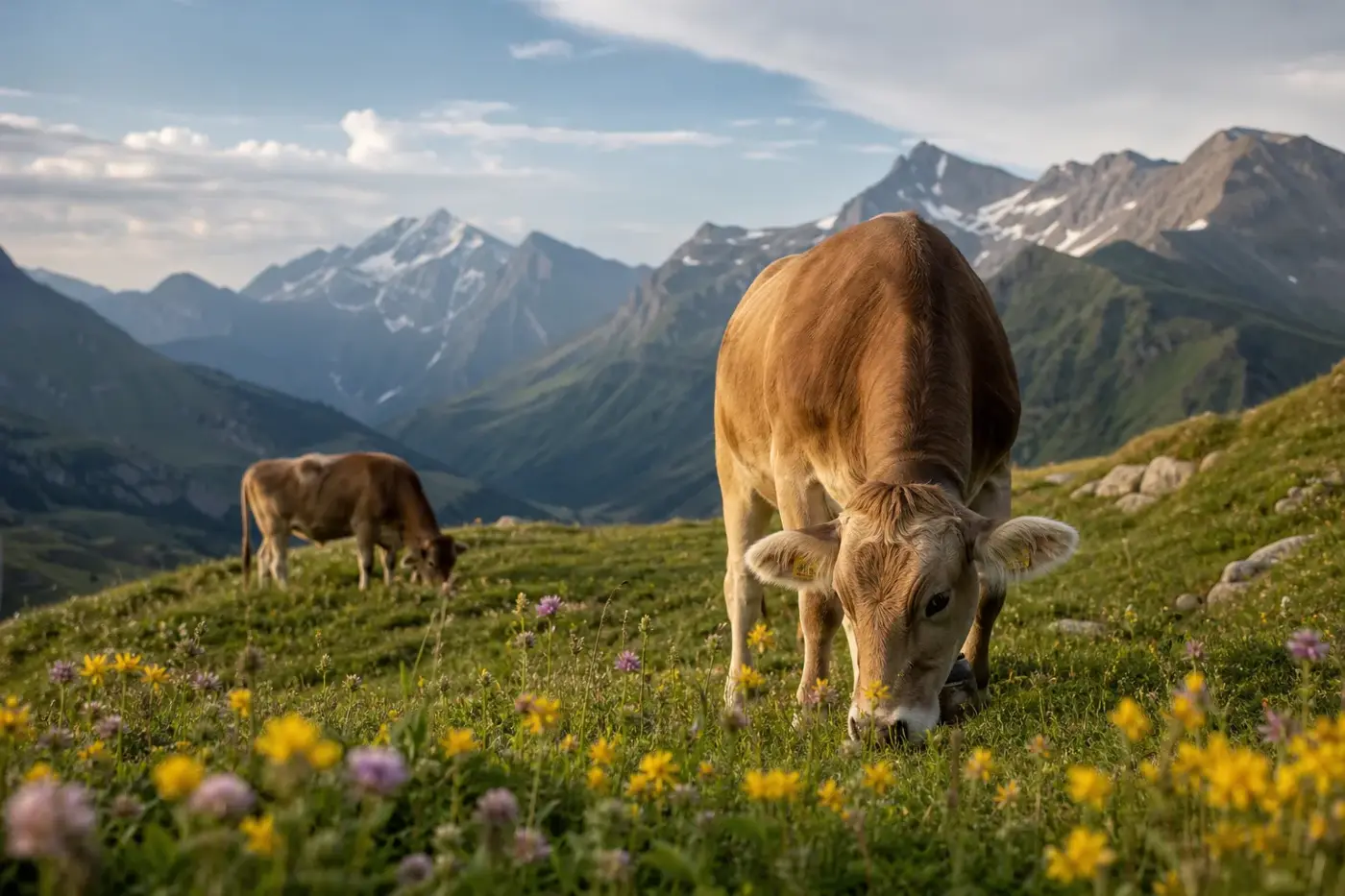
Between May and October, cattle, sheep and goats head for Switzerland’s high pastures. Farmers tend the animals, care for the grazing land and turn milk into cheese. You might come for a taste, but behind it lies a whole season of work, held together by skills and customs passed between generations. [1][2]
That living knowledge is what UNESCO recognises through intangible cultural heritage. The recognition belongs to the practice and the people keeping it alive, not to a particular cheese. No wheel gets to keep the award all to itself. [1][2]
Look past the wheel and meet the people
Who taught the cheesemaker? Who will learn next? Those questions bring you closer to intangible cultural heritage: knowledge that people use in daily life, rather than simply preserve for display. [2]
Under UNESCO’s definition, communities, groups and sometimes individuals recognise practices, expressions, knowledge and skills as their heritage. They pass them between generations, continually recreating them in response to their surroundings and history. Associated objects and cultural spaces belong to that heritage too. [2]
For you as a cheese lover, that shifts attention from the finished wheel to the relationships behind it. Where can learning happen, and who makes room for it? Keeping a practice alive can mean adapting it, not simply repeating it. [2]
Meet the Convention with practitioners at its heart
UNESCO adopted the Convention for the Safeguarding of the Intangible Cultural Heritage on 17 October 2003. It entered into force on 20 April 2006. Its purposes include safeguarding heritage, respecting its practitioners, raising awareness and encouraging international cooperation. [2]
The people doing the work are central to this. States that are parties to the Convention identify heritage with community participation. Article 15 calls for the widest possible participation of those who create and transmit it, and their active involvement in managing it. [2]
UNESCO’s inscription criteria also require community participation and free, prior and informed consent. [3] For you as a visitor, the practical lesson is straightforward: listen first to practitioners, including employees and younger learners. An official inscription opens the conversation; it does not finish it.
Two lists and a register, each with a purpose
An inscription might catch your eye first. The mechanism behind it tells you what kind of safeguarding is involved. UNESCO’s two lists and its register each have a different job. [3][4]
| Mechanism | What it helps to do | What to look for |
|---|---|---|
| Representative List of the Intangible Cultural Heritage of Humanity | Build visibility, awareness and dialogue about cultural diversity. [3] | The practice itself and the measures that help safeguard it. |
| List of Intangible Cultural Heritage in Need of Urgent Safeguarding | Support heritage whose continued practice and transmission are at risk. [3] | The threats facing it and its safeguarding plan. |
| Register of Good Safeguarding Practices | Share programmes, projects and activities reflecting the Convention’s principles. [4] | Approaches that another community could adapt. |
Spend a little time with the register if you want to see what recognition can lead to. It brings teaching, organisation and cooperation into view: the less conspicuous work that helps a practice survive. UNESCO presents these experiences as potential models, adaptable to other circumstances. [4]
Spend a season on Switzerland’s high pastures
Alpine pasture season was inscribed for Switzerland on the Representative List in 2023. UNESCO describes cattle, sheep and goats travelling to high pastures for additional forage between May and October. Farmers care for livestock, maintain grazing land, fences and buildings, and process milk into cheese and other products. [1]
The entry reaches beyond those daily jobs. Prayers and blessings, clothing, livestock competitions and local festivities belong to it too. So do the ties between alpine farmers, villagers and the wider population. [1]
Seen this way, cheesemaking becomes part of a shared season, rather than a story on its own. You begin to notice how everyday maintenance holds that season together, just as surely as gatherings and celebrations do. [1]
Follow the herds and find cheese’s place
Follow the livestock and you encounter transhumance: their seasonal movement between geographical or climatic regions. UNESCO’s entry, Transhumance, the seasonal droving of livestock, records a multinational Representative List inscription in 2023. The Austrian Commission for UNESCO identifies Austria as participating alongside nine other countries. [5][6]
Where does cheese come into it? That depends on the place. Switzerland’s entry explicitly includes cheesemaking, while the Austrian inventory’s account of sheep drives in the Ötztal Alps centres on routes, herders, grazing arrangements and customs shared across a border. [1][6]
Each community’s account explains its seasonal movement, including whether dairying belongs to it. Moving livestock is a pastoral practice; processing milk is work within a particular pastoral economy. Ask which animals move, who goes with them and what happens when they reach their seasonal destination.
Find out who teaches the next generation
In the Swiss entry, knowledge travels through families, between seasonal employees, and through alpine societies and cooperatives. Regional training centres contribute too. Learning beside an experienced practitioner and learning through organised education both help sustain the same living practice. [1]
The season provides the tasks, along with the responsibility for getting them done. Livestock need care; pastures, fences and buildings need maintenance; milk needs processing into cheese and other products. Experienced workers pass knowledge to learners through that work. [1]
If you want the technical sequence, begin with how cheese is made. Then ask the bigger heritage question: how does someone learn to take responsibility for it? That means understanding the animals, the place and the people around them too.
Celebrate the practice, not a cheese prize
UNESCO’s criteria concern heritage, participation and safeguarding. Switzerland’s inscription covers Alpine pasture season as a whole. An individual cheese’s composition, origin and production requirements belong to a separate system of evidence and controls. [1][3][7]
Sustaining a cultural practice and assessing a product are different jobs. If you see a cheese described as connected with UNESCO heritage, ask which practice is listed and how the cheese relates to it. That tells you more than treating recognition as a tasting judgement. [3]
Inscription criteria address cultural significance and safeguarding, not the sensory grading of cheeses. [3] UNESCO is not hovering over the cheeseboard with a tasting notebook. For the product information itself, turn to how to read a cheese label.
UNESCO and PDO: two questions worth separating
A protected designation of origin, or PDO, concerns a product name with a particularly strong geographical link in the European Union. The European Commission explains that production, processing and preparation must all take place in the specified region. Geographical indications establish intellectual property rights associated with particular products and their origin. [7]
UNESCO’s Convention asks instead about the viability and transmission of living heritage. The approaches can involve related knowledge, but they answer different questions. How can a community continue its practice? Under what geographical and production conditions may a product name be used? [2][7]
For a particular cheese, check its register entry and specification in the jurisdiction concerned. You can explore the separate roles of PDO, PGI and TSG in the guide to protected names. Keep that product enquiry alongside cultural heritage, rather than folding one into the other.
Notice what puts pastures and knowledge under pressure
A custom needs somewhere to continue. In its account of the Ötztal Alps, the Austrian Commission for UNESCO identifies construction associated with winter tourism as a threat because it destroys parts of the sheep pastures. Safeguarding means caring about the land as well as the knowledge of those using it. [6]
Climate brings further pressures. In its August 2026 account of work with pastoralists, UNESCO discusses drought, land degradation and changing climate. It also describes research documenting pastoral communities’ environmental knowledge. [9]
That international work connects cultural transmission with practical decisions about land and livelihoods. Its scope is pastoralism internationally, not conditions on every Swiss pasture. [9]
Changing livelihoods also raise questions you can put to any safeguarding plan. Can younger people find a place in the work, and can teaching fit into a demanding season? Can practitioners influence decisions about their surroundings? Look for those answers alongside recordings, exhibitions and public celebrations.
Give living heritage room to carry on
Documentation matters, but so do opportunities for communities to keep practising and teaching. Safeguarding can combine both. [2] Tourism should benefit practitioners, not displace them from their workplaces.
When you read a proposal, ask what will change for practitioners afterwards. Will a recording become teaching material they can use? Will a public event strengthen local participation?
Then think about the working day behind the visit. Will a visitor programme leave time for the work itself? Visibility is most useful when it supports the conditions that allow knowledge to continue.
Find the entry, then visit on your hosts’ terms
Start with UNESCO’s entry for the practice, then follow its nomination documents and decision. Read the inscription year, participating countries and list together. Those details help you understand exactly what you are looking at. [5]
Compare them with later nomination material. UNESCO’s 2026 material includes a further transhumance nomination, while its next Committee session is scheduled for 30 November to 5 December 2026. [10][11]
Planning a visit? The checklist below draws on UNESCO’s emphasis on community involvement and locally beneficial tourism. [8]
- Check with your hosts. Confirm whether visits are offered, whether booking is needed and what accessibility arrangements exist. Ask which parts of the season and working day suit visitors. If you plan to bring cheese home for personal use, check current official import and transit guidance for every country on your route.
- Ask who leads and benefits. Choose an experience where practitioners explain their own work and have a clear role in organising the encounter. Ask how your visit supports that work.
- Let the work set the pace. Ask before photographing people or entering working spaces. Follow your hosts’ directions around animals, paths and buildings. Let a demonstration end when other responsibilities call.
- Make room for ordinary knowledge. Ask about learning, pasture maintenance and seasonal decisions, not just the finished cheese. A conversation about who taught whom may reveal more than a staged spectacle.
Before you leave, ask where you can read the community’s own account of the practice. It gives you somewhere to keep learning after your visit. It also helps you understand what changes once the season ends.
Questions people ask
Does UNESCO recognise a particular Swiss cheese?
No. Switzerland’s inscription covers Alpine pasture season as a whole, including the work of turning milk into cheese.
What is Alpine pasture season?
Between May and October, cattle, sheep and goats are taken to Switzerland’s high pastures for additional forage. Farmers tend the animals, maintain grazing land, fences and buildings, and process milk into cheese and other products.
What is the difference between UNESCO heritage and PDO?
UNESCO’s Convention focuses on the viability and transmission of living heritage. In the European Union, a PDO concerns a product name whose production, processing and preparation must take place in a specified region.
How is Swiss alpine cheesemaking knowledge passed on?
Knowledge passes within families, between seasonal employees, and through alpine societies and cooperatives. Regional training centres also contribute.
How can I visit an alpine cheesemaking community respectfully?
Check with the hosts whether visits are offered and which parts of the season and working day suit visitors. Ask before photographing people or entering working spaces, and follow the hosts’ directions around animals, paths and buildings.
Sources
- UNESCO, Alpine pasture season, nomination file 01966, Representative List entry, inscription 2023. Official entry.
- UNESCO, Convention for the Safeguarding of the Intangible Cultural Heritage, adopted 17 October 2003, entered into force 20 April 2006, particularly Articles 1, 2, 11 and 15. Published Convention.
- UNESCO, Procedure of inscription of elements on the Lists and of selection of Good Safeguarding Practices, undated guidance, retrieved November 2026. Inscription guidance.
- UNESCO, Good Safeguarding Practices, undated guidance, retrieved November 2026. Register guidance.
- UNESCO, Transhumance, the seasonal droving of livestock, nomination file 01964, Representative List entry, inscription 2023. Official entry.
- Austrian Commission for UNESCO, Transhumance, sheep drive in the Ötztal Alps, national inventory entry, inscribed nationally in 2011; international inscription information referring to 2023. Inventory account.
- European Commission, Directorate-General for Agriculture and Rural Development, Geographical indications and quality schemes explained, undated explanatory page, retrieved November 2026. Commission guidance.
- UNESCO, Operational Directives for the Implementation of the Convention for the Safeguarding of the Intangible Cultural Heritage, edition incorporating amendments through June 2018, particularly Chapter VI. 2018 directives.
- UNESCO, UNESCO’s work with pastoralists highlights lessons for COP17, published 5 August 2026, updated 18 August 2026. UNESCO account.
- UNESCO, Photos: Transhumance, the seasonal droving of livestock, nomination file 02434, Representative List nomination material for 2026. Nomination material.
- UNESCO, UNESCO Intangible Cultural Heritage: 64 practices to be examined, as countries join forces to safeguard living heritage across borders, 21 October 2026. Committee announcement.
This desk research brings together UNESCO’s Convention, inscription information, safeguarding guidance and pastoral accounts, with European Commission guidance used for the product protection comparison.
Last checked: November 2026
Last checked November 2026.
The editors suggest you read next
Cheese Around the World: How Different Countries Eat It
Curds dry in the Mongolian sun, on their way to becoming aaruul, a portable food suited to nomadic life.