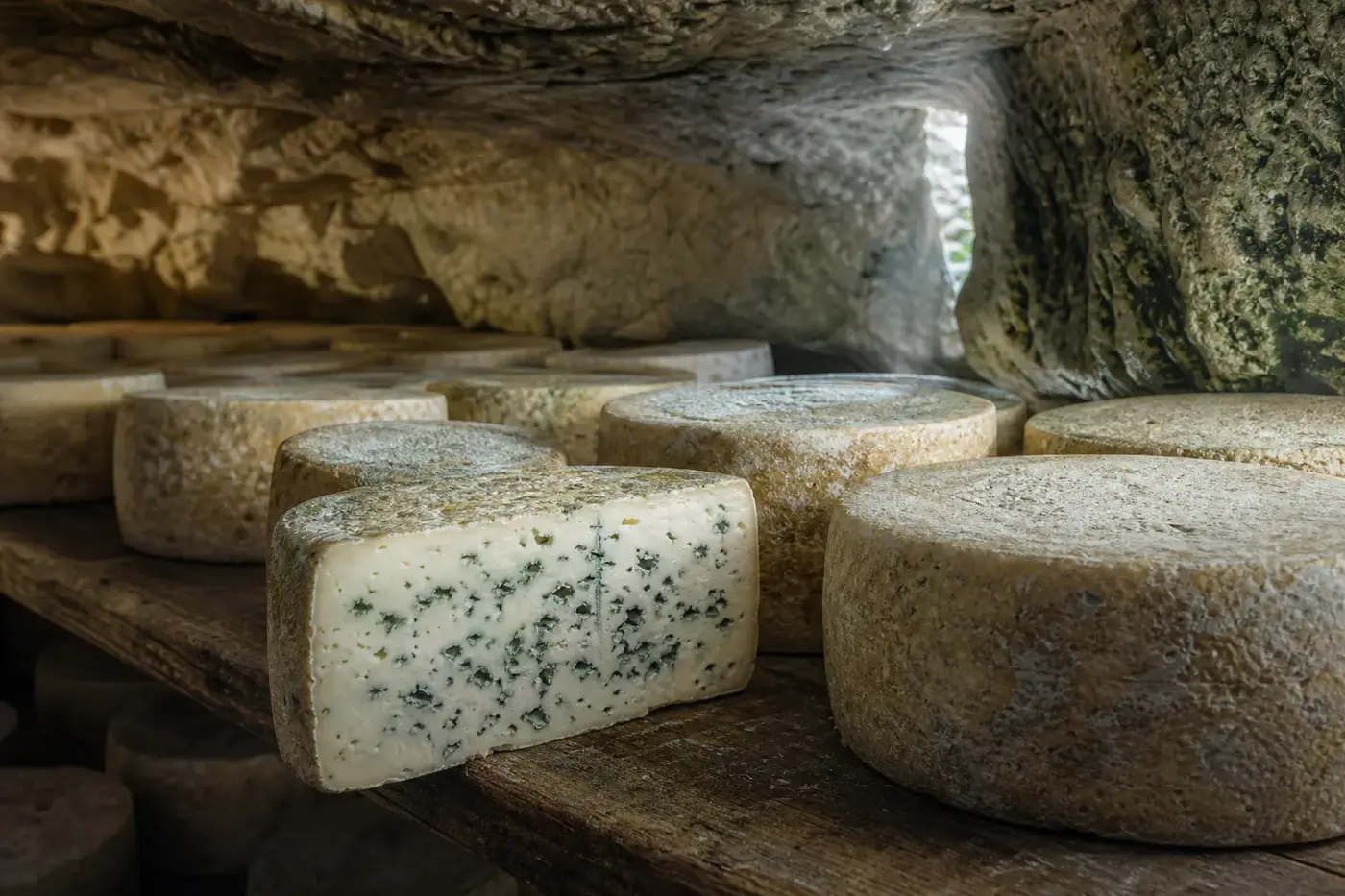
British Cheese Culture: Ploughman's, Pubs and Cheeseboards
The pickled onion cracks between your teeth.
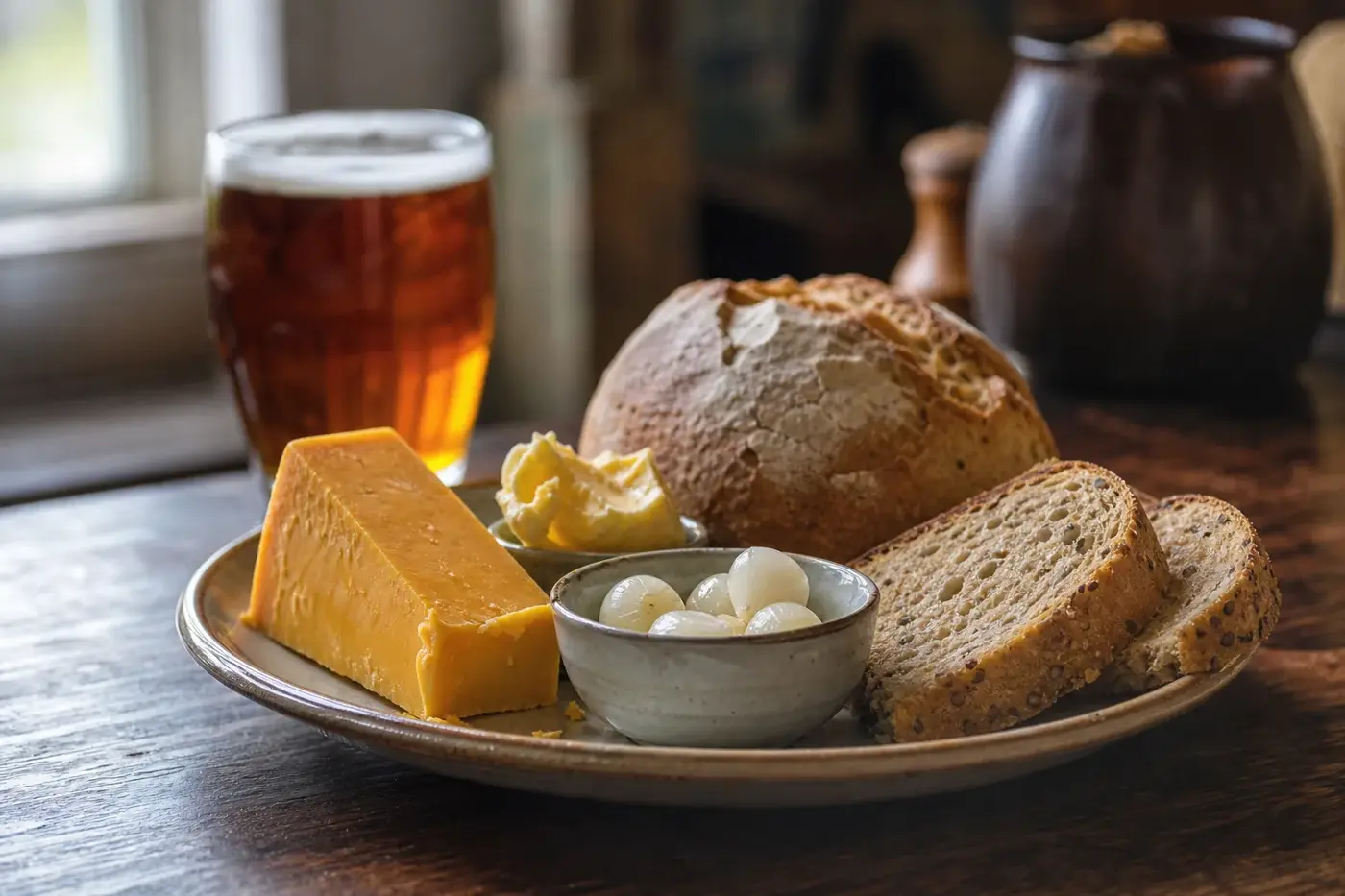
The pickled onion cracks between your teeth. Then comes the cheese, rich against all that sharpness. Behind this small pleasure sits a surprisingly organised campaign: in July 1956, a Brewers' Society report described the Cheese Bureau promoting bread, beer, cheese and pickles in public houses as a revival after rationing. Making simple ingredients into a familiar pub lunch took more than putting them on a plate. [1]
Follow that lunch and you find a wider British cheese culture. There is the pint beside your bread, the cheeseboard passed round after dinner, and the local makers whose work gives everyone something to discuss. Your own tastes belong in the conversation, too. [4]
Give your ploughman's something sharp
Start with bread and cheese, then add butter and something pickled. An onion brings sharpness and crunch; sweet chutney offers a softer, fruitier mouthful. You want contrast, not a garnish attendance register. Bread, beer, cheese and pickles were already the combination in the Cheese Bureau's promotional activity recorded in 1956. [1]
Your plate can be spare or substantial, with lettuce, an egg or cold meat joining in. The bread might be a thick slice or a small loaf. A June 1957 promotional lunch, described in a reproduced trade report, included lettuce, hard-boiled eggs and cold sausages alongside bread and cheese, making even this early example more varied than the simplest modern shorthand. Give the accompaniments their moment, but if cheese is why you ordered lunch, let it lead. [1]
The publicity behind that rustic plate
The ingredients have one history; the name and its advertising have another. Those beginnings are not the same story as the campaigns described here. These accounts do not settle the name's earliest appearance or its first use in those campaigns.
The July 1956 Brewers' Society report reaches you through a later transcription. It describes the Cheese Bureau promoting bread, beer, cheese and pickles in public houses, presenting a revival after rationing. It does not give a date for the meal's beginnings. [1]
The History of Advertising Trust supplies a firm institutional date: the Cheese Bureau was formed in 1955 to promote Cheddar and Cheshire. Its members included dairy organisations beyond Britain, giving this apparently English rural lunch a wider organisational backdrop. The archive is clear about its purpose: the Bureau promoted cheese rather than selling it directly. The familiar plate and the commercial effort behind it grew together. [2]
Nor did the promotion end with the 1950s. The Museum of English Rural Life's catalogue describes a 1965 Milk Marketing Board film about collective cheese advertising through television, magazines and leaflets. Together, these records show sustained work across different media. Eating simple ingredients together was established practice; making cheese a recognisable pub lunch choice needed organised attention. [3]
Pull up a chair and pass the bread
A table, bread to share and time to talk: cheese asks remarkably little of an occasion. A ploughman's feeds people without requiring them to eat alike. You can pile pickle onto your cheese while someone else leaves the onion untouched or reaches for more bread. There is no prescribed order of mouthfuls.
Cheese is just as comfortable later in the meal. Cubitt House's spring 2026 pudding menu lists a British cheese plate with seasonal chutney, fruit and homemade crackers alongside the sweet dishes. It can bring you to the table at midday or keep you there after a cooked meal. Ask what is on the board, though, rather than assuming every pub serves a ploughman's. [9]
Find your maker in England, Scotland and Wales
At an English cheese counter, Cheddar and Cheshire are useful opening enquiries. Ask where each was made and who made it, then compare textures rather than letting the names do all the work. Neal's Yard Dairy includes Cheddar in its hard-cheese cheeseboard selection and recommends Cheshire with hoppy beer. The guide to Cheddar helps you distinguish the broad style from the work of individual makers. [4]
On the Isle of Mull, begin with the working herd. Sgriob-ruadh describes making cheese on the island from its own cows' milk, giving you a direct connection between farm and counter. That place and practice tell you more than treating Scottish cheese as a single recipe or flavour ever could. If you are planning a visit, use the farm's own information to find out what you can see. [5]
In Wales, Holden Farm Dairy makes Hafod from its farm's milk. Its current account describes slower Cheddar making and a recent move away from cloth binding. The dairy describes brighter acidity in the finished cheese, with a texture that is firmer yet more succulent. Those are things you can look for in a mouthful, rather than a vague promise of regional character. [6]
Get to know the hands behind your cheese
A maker's name matters, but so does the batch you take home. Farmhouse cheese culture continues long after the milk becomes cheese: someone selects it, tends it through maturation, explains it to customers and gets it onto pub or restaurant menus. Neal's Yard Dairy describes selection, maturation and sales as connected parts of its work. Its account of choosing individual batches shows why a maker's name cannot tell you everything about every wheel. [7]
Local networks give you a way to follow those connections. The Welsh Cheese Company's producer directory brings together dairies from different parts of Wales, revealing more variety than any single national cheese could. At the counter, ask which dairy supplied your cheese, what has changed since the previous batch and which local shop or pub also serves it. A recommendation becomes much easier to follow when you have a maker and a place. [8]
Pour a drink you will enjoy
Choose the cheese you want to eat first, then something you like drinking alongside it. Ale and cider sit comfortably beside a pub plate; wine offers another route at the dining table. Neal's Yard Dairy suggests hoppy beer with Cheshire, cider with Cheddar, and drier white wines or lighter reds with a cheeseboard. Consider them starting points, not instructions carved in cheese. [4]
Give alcohol-free drinks the same attention. The dairy suggests fruit juice, and apple juice is a useful place to start with bread, cheese and pickles. Still water suits a tasting when you want to compare cheeses without another flavour joining in. [4]
Offer drinks separately so your guests can choose their combinations. Alcoholic pairings are for adults of legal drinking age who choose to drink, in small servings. [4]
You need not make one bottle suit every cheese on the table. For more detailed matching, turn to the cheese and wine pairing guide.
Build a board worth passing round
A good cheeseboard gives you differences you can actually taste. Neal's Yard Dairy suggests starting with a hard, soft and blue combination. Use the steps below to make that framework into a relaxed meal, with the guide to cheese styles nearby if the descriptions at the counter are unfamiliar. [4]
-
Choose textures with something to say. Ask for a firm cheese to slice, something softer to spread and a third cheese that brings a clear contrast. If your guests dislike blue cheese, choose something else. You are feeding people, not completing a formula.
-
Give each cheese a clear introduction. Put bread and crackers beside the board, with pickles and chutney in separate dishes. Your guests can then taste each cheese on its own before adding something sweet or sharp.
-
Make sharing feel easy. Give each cheese suitable utensils and leave enough space for cutting. Tell your guests the names and makers, or put that information nearby. A thoughtful board offers something to talk about as well as something to eat.
Give cheese its moment in the meal
Let cheese fit the meal you want to serve. Before dessert, it takes the table from savoury food towards something sweet; afterwards, it offers another course for anyone happy to linger. Cheese and fruit can replace a separate pudding, too. Tell your guests the plan so they know to leave room.
The Cubitt House menu puts cheese and puddings together, letting you choose between them. You can do the same at home: a substantial board with bread can be supper, while a smaller selection may be more welcome after several courses. Let the occasion decide the quantity and sequence. The pleasure lies in having time to notice what is on your plate, not following a prescribed order. [9]
This page summarises published guidance from the official sources it cites. It is not medical advice. Guidance differs between countries and changes over time, so check the current source for where you live, and ask your doctor, midwife, pharmacist or dietitian about your own circumstances.
Shop for the occasion, then store with care
Tell your cheesemonger when you plan to eat the cheese and whether it is for lunch or a final course. Ask who made it, what the current batch is like and how to store it. Read the label as well as the display card: the guide to reading cheese labels helps you separate useful product information from an appealing description. Buy for a particular meal rather than letting your fridge become a cheese collection with no opening date.
At home, the Food Standards Agency's published advice for England, Northern Ireland and Wales is to keep your fridge between 0 and 5 °C and follow packaging instructions and date marks. Its guidance says chilled food should spend the shortest possible time outside the fridge during preparation, with a maximum of four hours. Keep serving periods brief. If your meal will stretch over time, bring out smaller portions. [10]
For fuller handling advice, turn to the home cheese storage guide. Keep the packaging or your cheesemonger's instructions until you have eaten the cheese. That way, the relevant information stays with it.
Let a favourite cheese take you somewhere
A market counter lets you ask about several dairies in one conversation. Borough Market's official trader page describes Neal's Yard Dairy's selection of cheeses from specialist makers and its separate maturation work in Bermondsey. Plan your trip using the market's current visitor information, then ask where a cheese you enjoy was made. Your visit now has somewhere else to lead. [11]
For a farm shop or dairy visit, begin with the producer's official website. The Isle of Mull farm has dedicated visitor information, including links for its café, shop and tours. Check booking, accessibility, seasonal changes and whether production areas are included before travelling: browsing a shop and seeing cheesemaking are different experiences. If you are bringing cheese home, check the current official personal import rules for your origin, destination and any transit countries. [5]
Give a cheese festival the same attention. Consult the current organiser's programme, see which makers are attending and confirm the location and access arrangements. In a pub, ask whether the cheese selection changes and whether the menu names its suppliers.
Those questions can turn lunch into the beginning of a local route. You might connect a market, shop and dairy through a cheese you have actually eaten. It is a satisfying way to put a place to a flavour.
Leave room for a new favourite
Hafod's move away from cloth binding offers a revealing glimpse of cheese culture. Here is a maker drawing on older Cheddar methods while changing its practice through observation. Continuity need not mean standing still. Your familiar cheese lunch can welcome another maker, a different accompaniment or an alcohol-free drink without losing the pleasure of bread and cheese eaten together. [6]
Households and generations have their own preferences, so ask your guests when they would like cheese: before pudding, afterwards or as the meal itself. Find out which textures they enjoy and what they want to drink. A regional selection can open a conversation without requiring everyone to agree. Your next cheese worth seeking out may be the one recommended by the person across the table.
Questions people ask
What is in a ploughman's lunch?
Bread and cheese are at its centre, with butter and something pickled alongside. Lettuce, an egg or cold meat can make it more substantial.
Where did the ploughman's lunch come from?
A July 1956 Brewers' Society report described the Cheese Bureau promoting bread, beer, cheese and pickles in public houses as a revival after rationing. The earliest securely documented use of the name remains unverified against the original sources.
What cheeses should I put on a cheeseboard?
Neal's Yard Dairy suggests starting with a hard, soft and blue combination. If your guests dislike blue cheese, choose another cheese for contrast.
What drinks go with British cheese?
Neal's Yard Dairy suggests hoppy beer with Cheshire and cider with Cheddar. For a cheeseboard, it suggests drier white wines or lighter reds, and it also suggests fruit juice as an alcohol free option.
How should I store cheese at home?
For England, Northern Ireland and Wales, the Food Standards Agency advises keeping the fridge between 0 and 5 °C and following packaging instructions and date marks. It says chilled food should spend the shortest possible time outside the fridge during preparation, with a maximum of four hours. Check the Food Standards Agency's current guidance for details.
Sources
-
Brewers' Society, A Monthly Bulletin, July 1956 and June 1957. Extracts reproduced in Zythophile, article dated 16 July 2007. The reproduced passages, rather than the original issues, were available for inspection. Retrieved transcription.
-
History of Advertising Trust, Cheese Bureau, catalogue reference HAT50/1/39, collection dated 1954 to 1971, undated administrative history. Archive catalogue record.
-
Museum of English Rural Life, University of Reading, Milk Marketing Board films, catalogue entry SR MMB PH6/29, 1965 Advertising (Cheese and butter), 1965; catalogue file published online in 2017. Archive catalogue.
-
Neal's Yard Dairy, Tips for putting together the perfect cheeseboard, 6 June 2022. Commercial cheesemonger's own selection and pairing advice. Published guidance.
-
Sgriob-ruadh Dairy Farm and Distillery, Sgriob-ruadh, undated current website. Producer's account of its location, milk source and visitor-information links. Official website.
-
Holden Farm Dairy, Holden Farm Dairy and Hafod Cheese, undated current website. Producer's account of its Welsh farm, milk, methods and recent changes; sensory descriptions are the producer's. Farm introduction and Hafod account.
-
Neal's Yard Dairy, Our Work, undated current website. Company's account of batch selection, maturation, retail and wholesale work. Published account.
-
The Welsh Cheese Company, Welsh Cheese Producers, undated current directory. Commercial distributor's regional organisation of its producer network. Producer directory.
-
Cubitt House, Pudding menu, spring 2026 edition, published in its March 2026 website directory. Used as a dated menu example, not current availability. Published menu.
-
Food Standards Agency, How to chill, freeze and defrost food safely, published 18 December 2017, live guidance retrieved November 2026. Stated coverage: England, Northern Ireland and Wales. Official guidance.
-
Borough Market, Neal's Yard Dairy, undated current trader profile. Market operator's account of the trader's selection and maturation activities. Official trader profile.
-
Food Standards Agency, Alerts, live official index, retrieved November 2026. Used for the preliminary editorial recall check only. Official alerts index.
This piece was researched through advertising and agricultural archive catalogues, reproduced trade reports, published menus, official food guidance and attributed accounts from producers, cheesemongers and market operators.
Last checked: November 2026
Last checked November 2026.
The editors suggest you read next
Cheese Around the World: How Different Countries Eat It
Curds dry in the Mongolian sun, on their way to becoming aaruul, a portable food suited to nomadic life.