Cheese in Italian Life
Pumpkin gnocchi, smoked ricotta, a mouthful of Friuli Venezia Giulia.
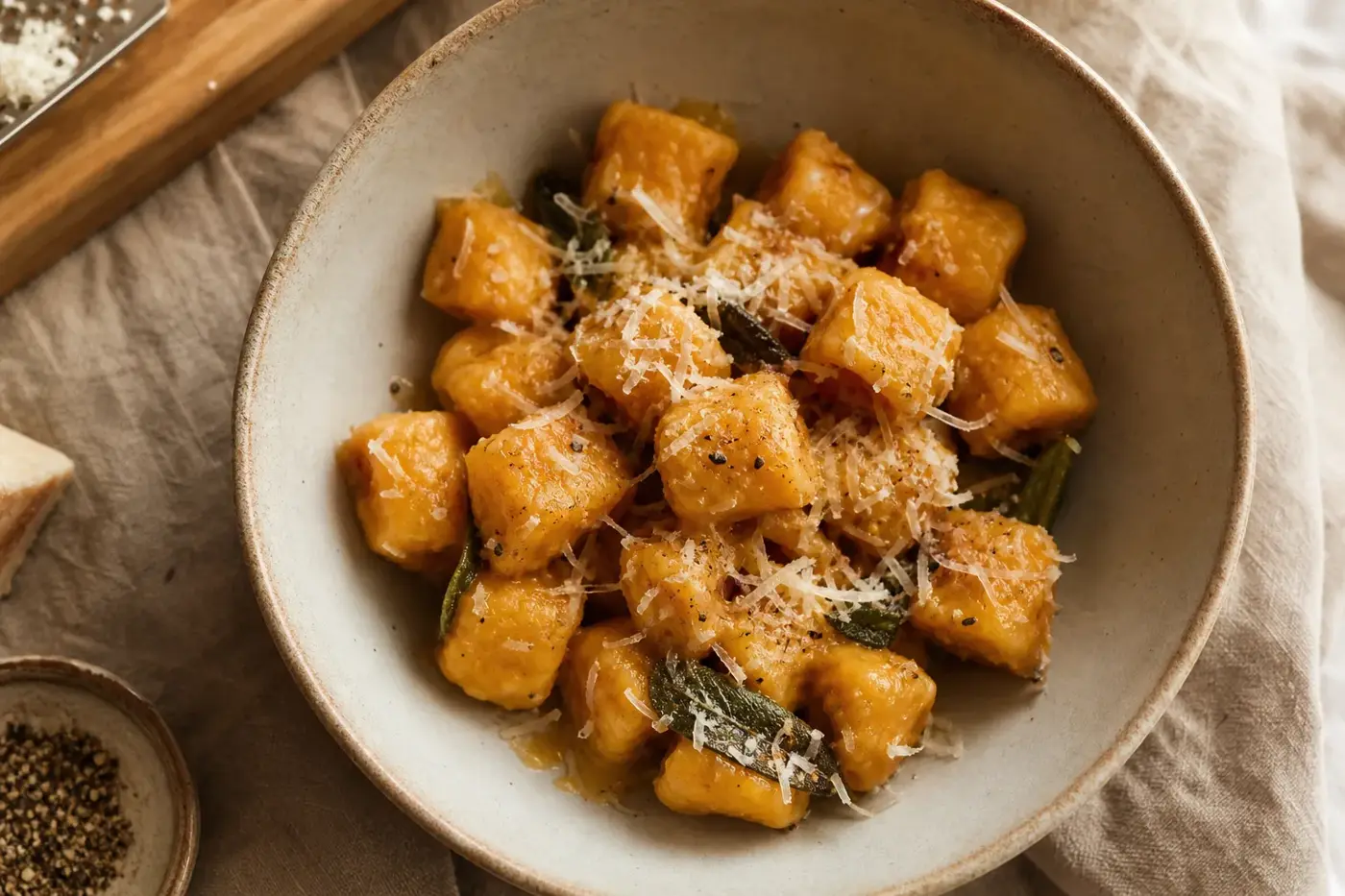
Pumpkin gnocchi, smoked ricotta, a mouthful of Friuli Venezia Giulia. You will also find that ricotta in cjarsons, filled pasta whose versions may include herbs, potatoes or raisins.[4] Here, cheese slips into a dish as naturally as it sits beside a piece of bread.
Follow that thread and Italy opens up. From the forage-fed cattle of the Parmigiano Reggiano area to sheep dairies in Sardinia and buffalo dairies around Caserta, you encounter distinct farming systems and regional kitchens. There is no single cheese story here. That is precisely the pleasure.[1,2,3,6]
First, meet the land behind the cheese
Start with what the animals eat. Parmigiano Reggiano's specification connects cow's milk to locally grown forage, while the Pecorino Romano document describes sheep-farming territory shaped by pasture, climate and soil. Regional character begins with that milk supply and the daily work of cheesemaking, not a single national recipe.[1,2]
Then history pulls up a chair. Friuli Venezia Giulia's regional tourism account describes a cuisine shaped by Mediterranean, Balkan and Central European encounters. Follow its mountain itinerary and you meet dairy products from cows, goats and sheep, including the smoked ricotta used in local pasta dishes.[4]
Four milks, four delicious routes into Italy
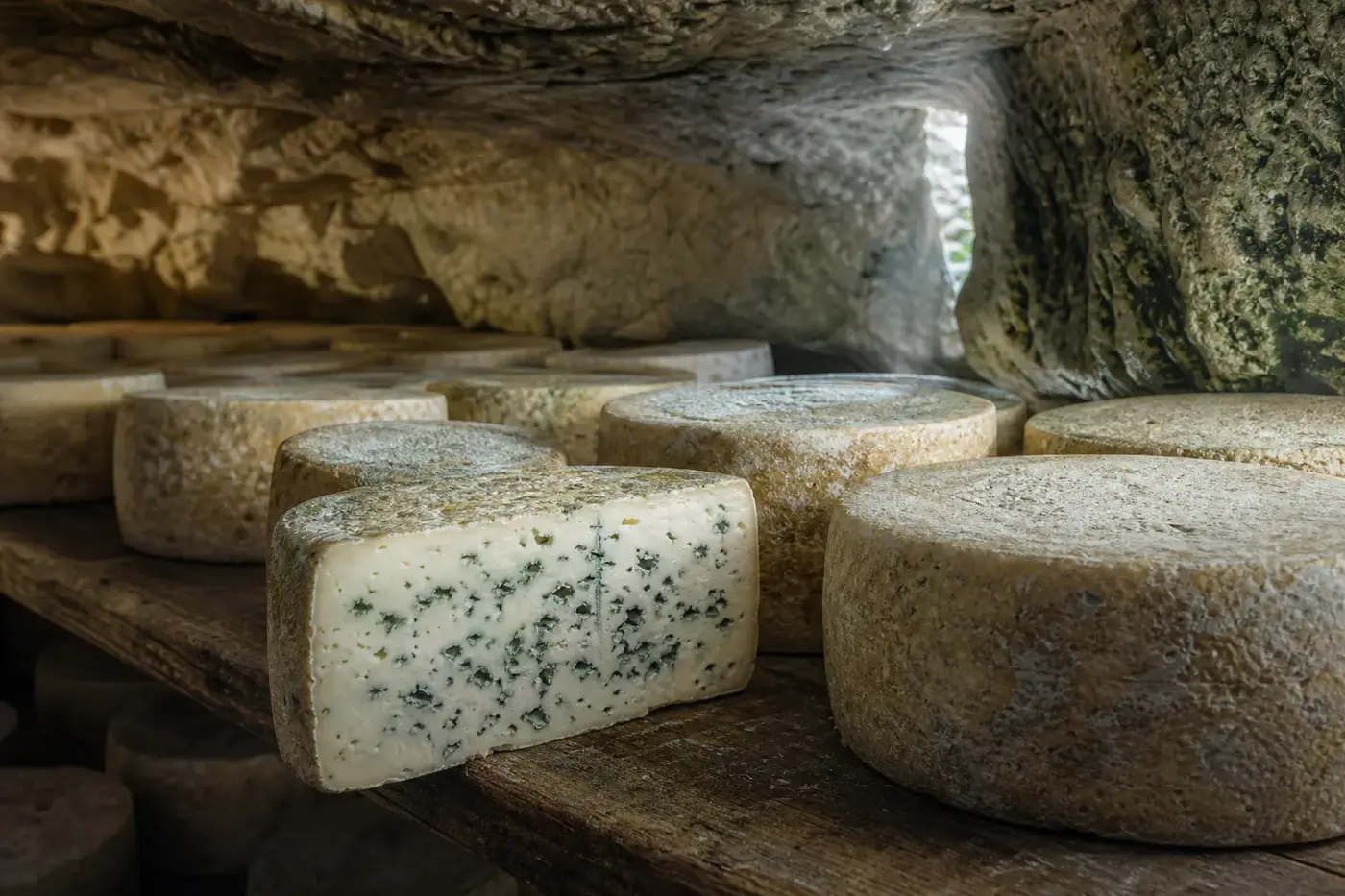
Cow's milk: Parmigiano Reggiano has a life beyond your grater, useful though that relationship is. Made from raw milk, it comes from Parma, Reggio Emilia and Modena, plus Bologna on the left of the Reno and Mantua on the right of the Po. A dairy visit helps you connect cattle feeding, milk collection and maturation with the cheese you taste.[1]
Sheep's milk: Do not let the name keep you in Rome. Pecorino Romano's production area includes Sardinia, Lazio and Tuscany's province of Grosseto. Its specification describes a compact paste, with a mildly pungent table cheese becoming more intense after substantial maturation.[2]
Buffalo milk: Mozzarella di Bufala Campana uses fresh whole buffalo milk from its defined area. That includes Caserta and Salerno, plus specified territories elsewhere in Campania, Lazio, Puglia and Molise. Its geographical name points you towards a regulated production territory that crosses regional borders.[3]
Goat's milk: Friuli's tourism route brings goats into the story alongside sheep and cows. At the counter, ask which dairy made the cheese and whether it uses exclusively goat's milk.[4]
Pull up a chair for bread and cheese
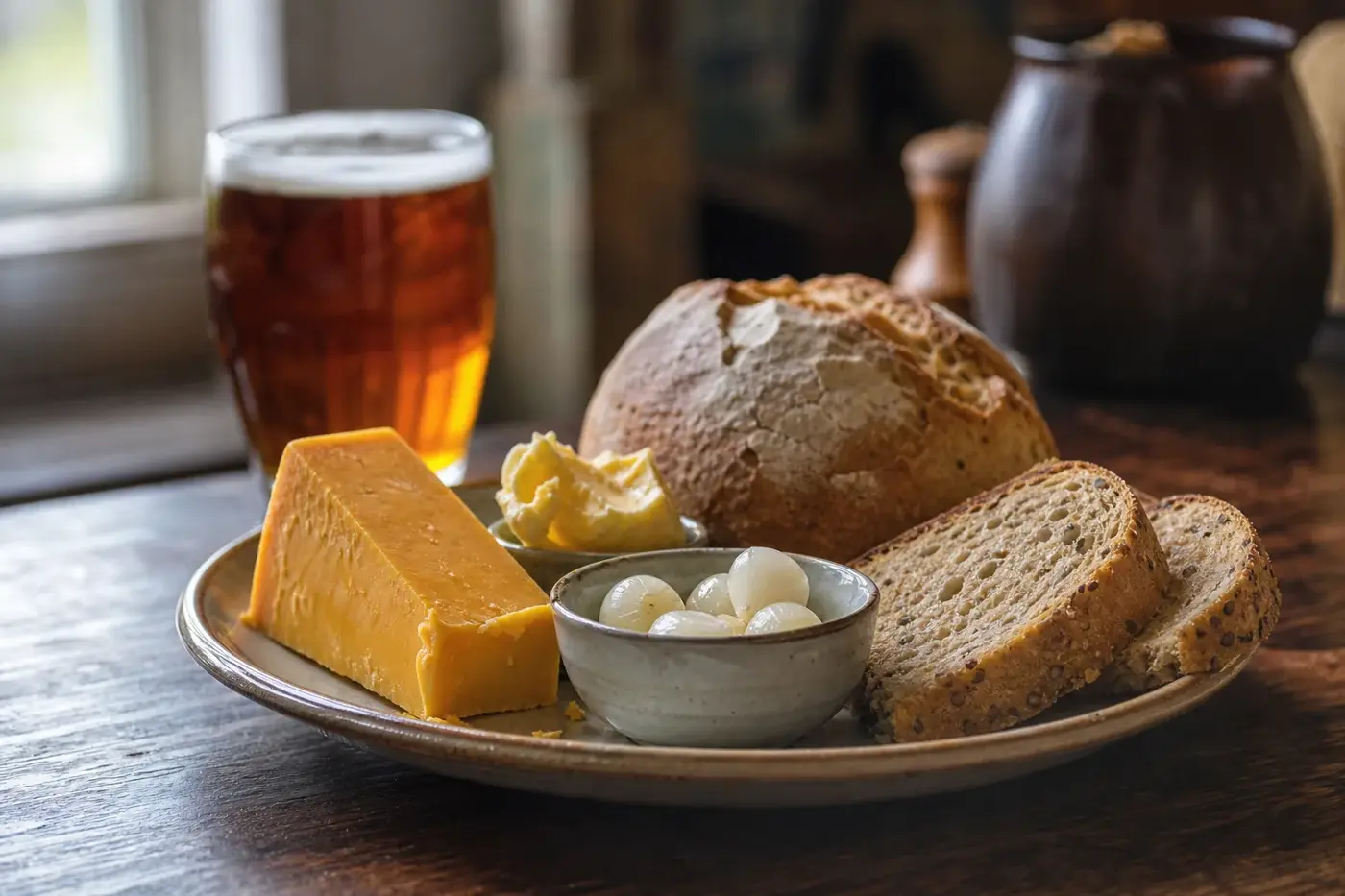
Bread and a locally chosen cheese give you a wonderfully simple way into a place. Treat that as a visitor's tasting idea, though, not a portrait of a typical Italian breakfast. Breakfast and snack choices vary between households and regions.
Regional food accounts offer you more than a national timetable could. Puglia's tourism material describes farm meals with dairy produce, seasonal fruit and other farm products, then points visitors towards village cheese shops. In Friuli, you can encounter cheese alongside local foods at osmize, traditional refreshment places sometimes found in private homes.[4,5]
Into the pan, onto your fork
Try Parmigiano Reggiano in a risotto or filled pasta dish, then taste a small piece on its own. Notice what it brings to the dish, and what you discover when nothing else shares the mouthful. This suggested comparison gives you a route into northern cooking; the Parmigiano Reggiano guide takes you deeper into the cheese itself.
In Rome, begin with Pecorino Romano. The city's tourism authority documents its use with pasta dishes, while the cheese consortium offers a cacio e pepe variation with broad bean cream. Its collection also includes wild asparagus risotto. A regional cheese need not spend its whole life in its best-known dish.[6,7]
Then try Friuli's frico: potatoes, onions and plenty of cheese cooked in a pan, as described by the regional tourism route. Consider it alongside the region's smoked ricotta with filled pasta. You have one region, but several quite distinct ways to bring dairy to the table.[4]
Make a little room for cheese
You might try small pieces with an aperitivo before dinner, cheese among the antipasti at the start of a meal, or a selection towards the end. Ask what your host has planned. Find a moment that suits your appetite, rather than expecting the same sequence everywhere.
The Pecorino Romano consortium's collection moves from cheese pralines to vegetable fondue and cheese served on its own. Notice how its role changes with the preparation. You might meet it as a mouthful before dinner, an ingredient in a dish or the focus of a separate course.[7]
Let the cheese counter start a conversation
Three questions will get you started at a market stall or specialist counter: who made it, where was it made, and what is it like at this age? Tell the seller whether you want cheese for lunch, cooking or a later tasting. You do not need to know every local name. A clear purpose gives you both somewhere useful to begin.
Ask about freshness and season separately. With fresh cheese, ask when it was made and follow its labelled storage instructions; with matured cheese, ask about production season as well as age. Pecorino Romano's production document, for instance, records a production period from October to July.[2]
Give the label a little attention, too. The cheese label guide helps you distinguish the product name, maker and other information before you choose.
Get to know those three letters: DOP
Those three letters carry a story of place and method. DOP is the Italian abbreviation corresponding to protected designation of origin, or PDO. Under the EU scheme, a product's qualities or characteristics are linked to its geographical environment, including natural and human factors.[8,9]
Production steps take place within the defined area, with detailed rules set out in the individual cheese's specification.[8,9] That tells you about origin and production, but cannot promise a match for your taste. Ask about age, milk treatment, texture and intended use; the protected names guide explains the schemes in more detail.
Meet the work behind your mouthful
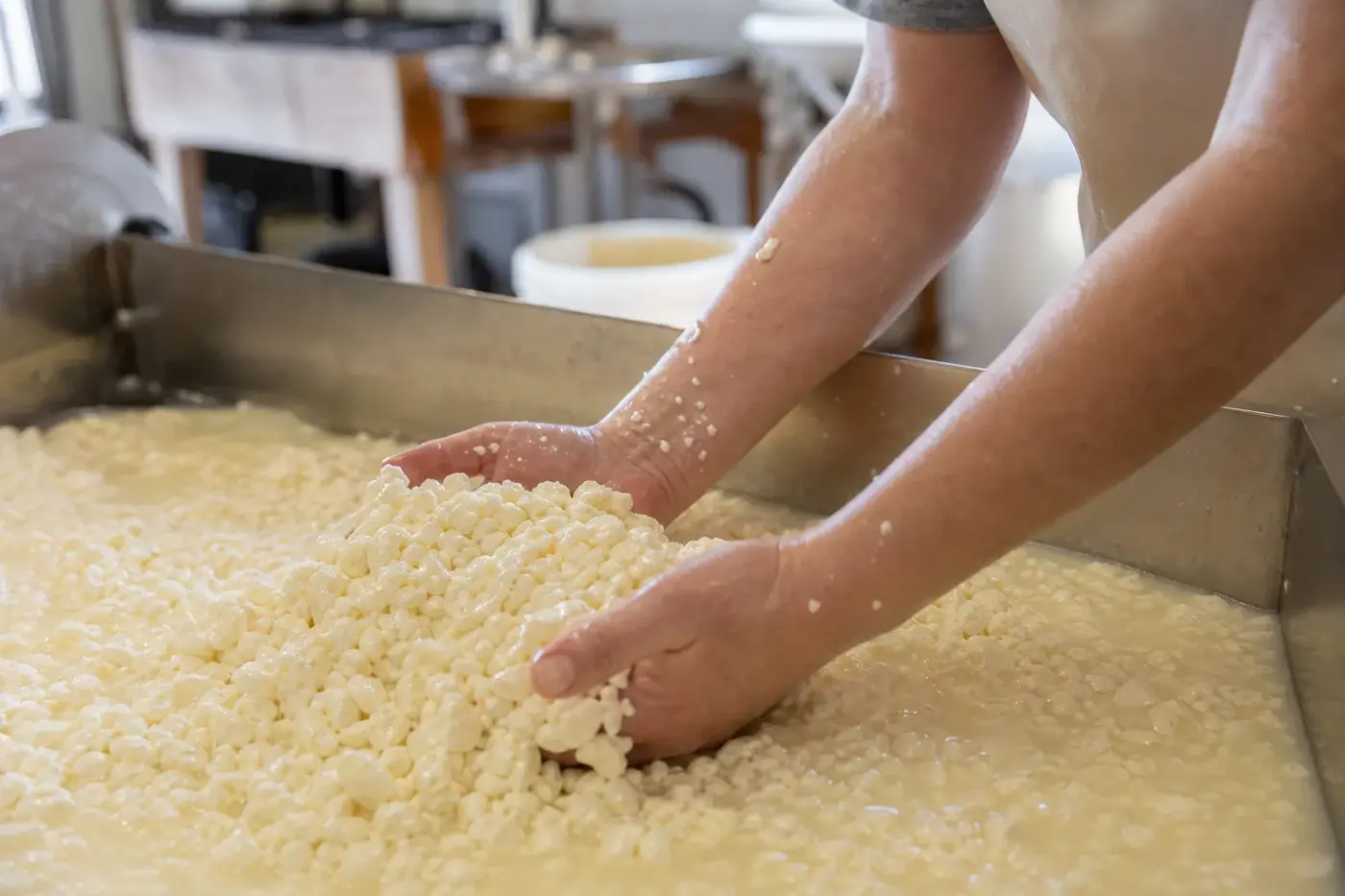
Before you can describe a cheese's flavour, someone has to feed the animals. Excessive rain can damage hay as it dries, while excessive heat can reduce forage production. Both pressures appear in the 2026 Pecorino Romano document. Climate enters the cheese story through a very practical daily task.[2]
That document also covers whole, portioned and grated cheese.[2] On a dairy visit, use those formats to open a conversation. How does the team balance making, maturing and preparing cheese for sale, and which skills must a new cheesemaker learn? The formats themselves do not tell you how consumer habits have changed.
A good dairy visit starts with a good guest
A working dairy is a place of production first, however tempting the tasting may be. The Parmigiano Reggiano consortium offers a booking route for tourist dairy visits; use its official booking information, then confirm arrangements directly with your host. This suggested checklist helps you understand what is included while keeping the dairy's work at the centre of your visit.[10]
- Find out what you will see. Ask whether you will enter production rooms, see maturation, visit only the shop or attend a tasting. Confirm the language and accessibility arrangements.
- Let the dairy lead. Arrive as agreed, wear any protective clothing provided and ask before taking photographs. Leave equipment and cheese untouched unless invited.
- Plan your tasting ahead. Explain dietary requirements and ask what information your host can provide about ingredients and milk treatment. Request an alcohol-free option if wanted.
- Give your comparison a focus. Ask to compare two ages or two local milk types, rather than requesting everything, however persuasive everything sounds. Note the maker and age of anything you particularly enjoy.
- Plan the journey home. Before buying cheese to take across a border, consult the destination's current official import guidance, including any transit requirements.
Bread first, then a little contrast
Give the cheese a simple accompaniment first. In Puglia, try a local fresh cheese with bread or taralli, the ring-shaped baked snacks included in the region's tourism account. In Friuli, start with mountain cheese and plain bread before adding anything sweet. Both are tasting suggestions guided by foods documented in those regions.[4,5]
Next, add a piece of fresh pear or a fig. Do you prefer the contrast? If you are an adult of legal drinking age and choose wine, a regional white alongside a Friulian cheese offers a starting experiment; the tourism route documents both.[4]
Your preference matters more than matching a map, and water deserves an equal place as an alternative. Keep any wine tasting to small servings. For current UK pregnancy guidance, consult the NHS advice.[11]
Look beyond the name to the milk
A cheese's name cannot tell you everything about its milk treatment. Parmigiano Reggiano's specification requires raw milk, while the Mozzarella di Bufala Campana specification permits raw milk that may be thermised or pasteurised. Ask about the actual product; the milk treatment guide explains the distinctions.[1,3]
If you need current UK pregnancy guidance on cheese, go to the NHS guidance.[11] Keep that advice alongside your questions about the cheese you are choosing.
Where will your next tasting take you?
- Cheese and Wine Pairing: The Complete Guide: take your pairing experiments beyond regional matches.
- Cheese Food Safety: The Complete Guide: find the safety information relevant to your circumstances.
General information only, not medical advice: follow the official guidance where you live.
Questions people ask
What does DOP mean on Italian cheese?
DOP is the Italian abbreviation corresponding to protected designation of origin, or PDO. Under the EU scheme, the product’s qualities or characteristics are linked to its geographical environment, and its production steps take place within the defined area.
Is Pecorino Romano made only in Rome?
No. Its production area includes Sardinia, Lazio and Tuscany’s province of Grosseto.
Are Parmigiano Reggiano and buffalo mozzarella made with raw milk?
Parmigiano Reggiano’s specification requires raw milk. The Mozzarella di Bufala Campana specification permits raw milk that may be thermised or pasteurised, so ask about the actual product.
What cheese dishes are traditional in Friuli?
Frico is made with potatoes, onions and plenty of cheese cooked in a pan. Smoked ricotta is also used in pumpkin gnocchi and filled pasta.
Can you visit a Parmigiano Reggiano dairy?
The Parmigiano Reggiano consortium provides a booking route for tourist dairy visits. Use its official booking information and confirm the arrangements directly with the host.
Sources
- Consorzio del Formaggio Parmigiano Reggiano. Production specifications for Parmigiano Reggiano cheese. Undated English PDF retrieved November 2026, sections on production standards, feeding and geographical boundaries. Specification.
- European Commission. Publication of the communication of an approved standard amendment to a product specification of a geographical indication in accordance with Article 5(4) of Commission Delegated Regulation (EU) 2025/27. Pecorino Romano, C/2026/4125, published 2 September 2026, including the single document. Official publication.
- Regione Campania. Disciplinare di produzione della DOP “Mozzarella di Bufala Campana”. Undated official PDF retrieved November 2026, Articles 2 and 3. Specification.
- Italia.it. The wine & taste route in Friuli Venezia Giulia. Undated regional tourism account retrieved November 2026. Regional account.
- Italia.it. Puglia of flavours: a journey through tradition and taste. Undated tourism account retrieved November 2026. Regional account.
- Roma Capitale, Turismo Roma. Traditional cuisine. Undated municipal tourism account retrieved November 2026, section on pasta dishes. Municipal account.
- Consorzio per la Tutela del Formaggio Pecorino Romano. Recipe collection, linked as Download all recipes. Undated PDF retrieved November 2026; contents page inspected visually. The consortium promotes the cheese and has a commercial interest in its use. Recipe collection.
- European Commission, Directorate-General for Agriculture and Rural Development. Geographical indications and quality schemes explained. Undated guidance retrieved November 2026, protected designation of origin section. Commission guidance.
- European Parliament and Council. Regulation (EU) 2024/1143, adopted 11 April 2024, original Official Journal text, Articles 46 and 49. Binding text.
- Consorzio del Formaggio Parmigiano Reggiano. Book a formal visit. Undated page retrieved November 2026, including its reference to the tourist booking platform. Visit information.
- NHS. Foods to avoid in pregnancy. Reviewed 15 June 2026, sections on cheese, milk and other dairy, and drinks. Official guidance.
Researched through production specifications, an EU amendment publication, official tourism accounts, consortium material, EU legislation and NHS guidance, with editorial tasting suggestions identified separately.
Last checked: November 2026
Last checked November 2026.
The editors suggest you read next
Cheese Around the World: How Different Countries Eat It
Curds dry in the Mongolian sun, on their way to becoming aaruul, a portable food suited to nomadic life.