Cheese Around the World: How Different Countries Eat It
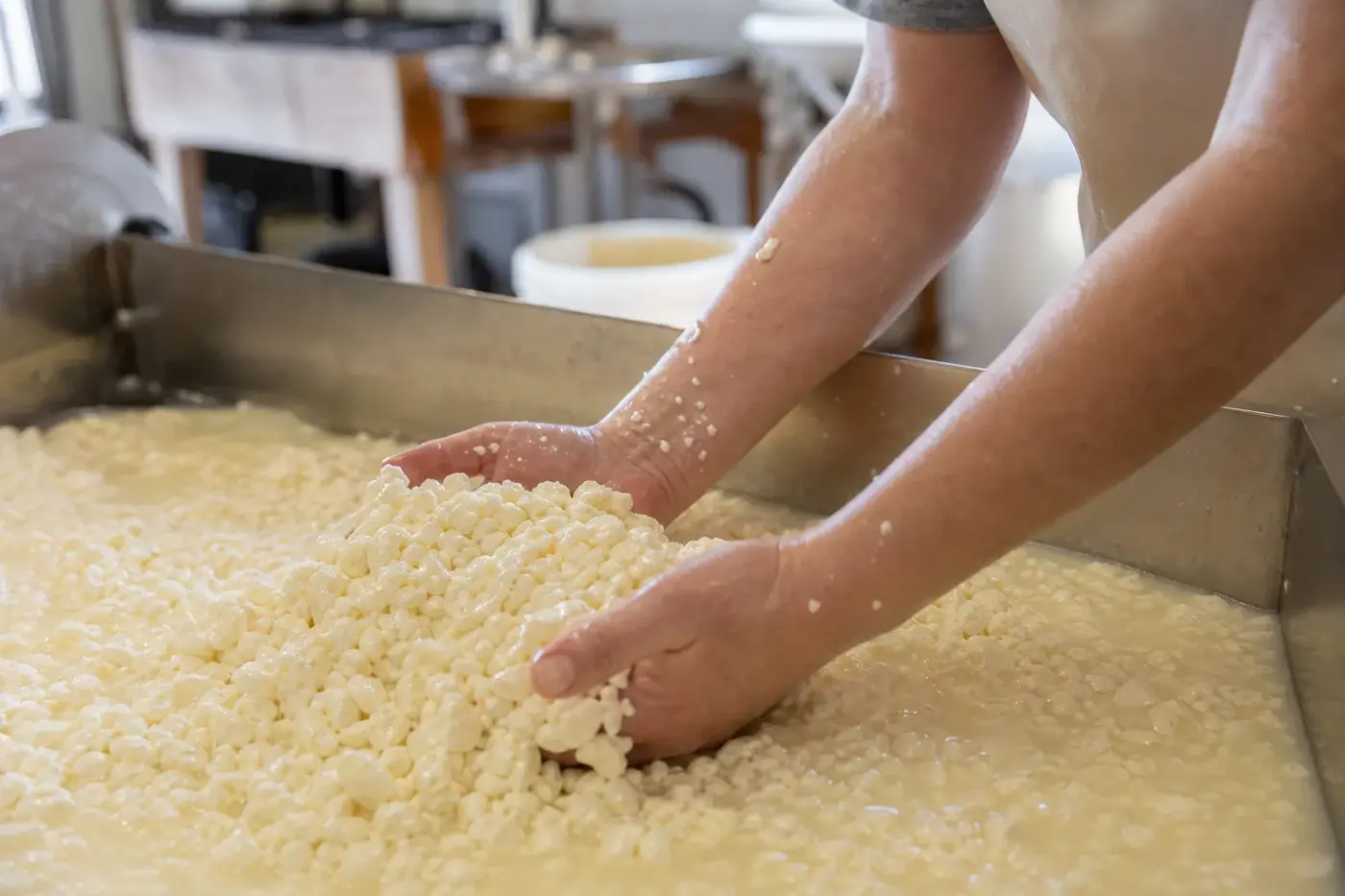
Curds dry in the Mongolian sun, on their way to becoming aaruul, a portable food suited to nomadic life.
Curds dry in the Mongolian sun, on their way to becoming aaruul, a portable food suited to nomadic life. At a Turkish breakfast table, cheese keeps company with olives. At a French celebratory meal, it has a course between the main dish and dessert. You begin with milk. Where you end up depends on whose table you join. [1][3][5]
Follow cheese through a meal and you find breakfast spreads, bread fillings, cheeseboards and milk curds turned into sweets. Behind each are local ingredients, pastoral life and people on the move. Where a cheese comes from matters, of course. But ask how you eat it, and the story gets particularly inviting. [1][3][5]
Follow your appetite beyond the cheeseboard
What is cheese doing on your plate? Fresh curds beside a dish, cheese tucked into bread and aged cheese grated into cooking all have different roles. Georgian khachapuri and Ethiopian ayib make the contrast clear: one encloses cheese in dough; the other can arrive as an accompaniment. [4][6][7]
Look beyond the wheel and you will find less familiar dairy foods, too. Mongolian aaruul belongs to a tradition that includes yoghurt, clotted cream and other curds. South Asian milk sweets offer another world of textures and techniques. The boundaries between cheese, curds and other milk foods deserve exploring, even if your cheeseboard needs a bigger job description. [5][10]
For some starting vocabulary, how to tell cheese styles apart explains differences in milk, texture and method. Here, you will follow the meal instead. Notice what arrives together, what cooks together and what gets a moment all to itself.
France and Italy: a course of its own, or into the oven
At the French gastronomic meal described by UNESCO, you reach cheese after the main course and before dessert. The order is explicit: starter, fish or meat with vegetables, cheese, then dessert. This celebratory social practice includes birthdays and reunions. It is not a prescription for every weekday dinner. [1]
That place in the meal gives cheese your attention. The principal dishes have gone; now there is something new to discuss and share, rather than a snack before dinner. The Library of Congress’s account of French dining also places cheese after the main meal. Its settings range from formal to casual. [2]
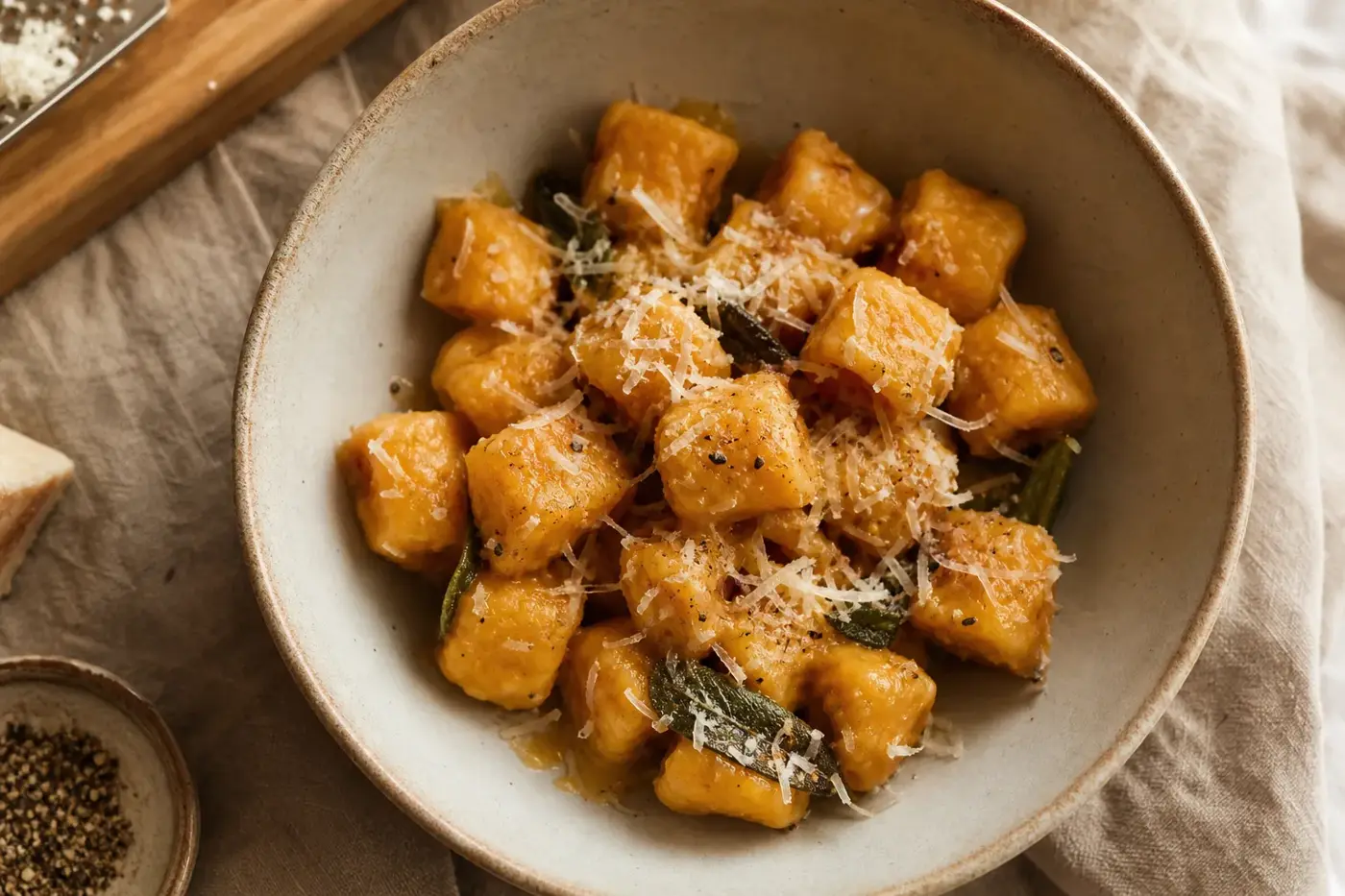
Italian cooking offers another possibility: cheese becomes part of the dish, as well as something you can eat on its own. One published Italian baked-pasta recipe combines mozzarella with Parmigiano Reggiano, then finishes with browning in the oven. Here, cheese helps build the dish. You do not wait for a separate course afterwards. [8]
Try that distinction at your own table. Eat a small piece separately, then compare it with cheese incorporated into a prepared dish. What changes when pasta, bread or vegetables share the mouthful? The answer tells you more than a single national rule about when cheese ought to appear.
Britain and the United States: pub plates and travelling skills
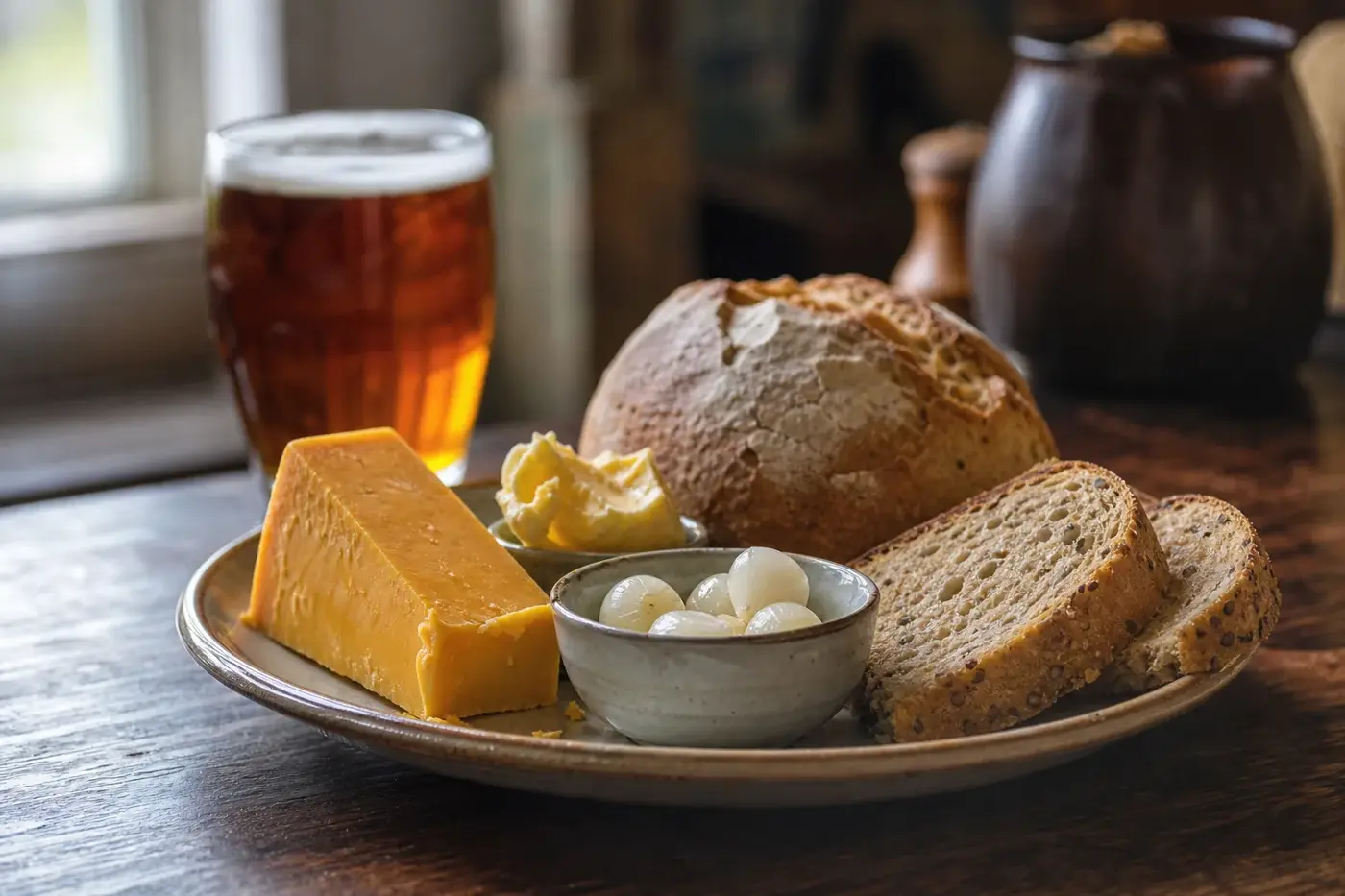
Bread, cheese, pickles: you have the makings of a British pub lunch. A ploughman’s commonly gathers them on one plate, while a cheeseboard encourages you to give individual cheeses more attention. One assembles a meal. The other invites you to compare pieces, an activity cheese lovers rarely need asking to do twice.
The pleasure lies in the company those foods keep, not in strict etiquette. You can examine a cheese closely over a pub plate, just as you can turn a board into an informal supper. Bread, pickles and other accompaniments shape the experience as surely as the order of courses.
Across the United States, regional histories give cheese culture much of its character. Wisconsin offers a well-documented example. The Wisconsin Historical Society describes settlers from New York bringing commercial dairying skills. German and Scandinavian immigrant families followed, making European-style cheeses for their customers. [9]
The University of Wisconsin adds Swiss cheesemaking in Green County and Italian cheese production associated with settlements elsewhere in the state. Different communities brought particular skills into particular local circumstances. You get a richer story than one immigrant tradition lifted from somewhere else and planted, unchanged, in another place. [11]
Set that history beside a British pub lunch and you find another connection between cheese, place and community. You are comparing particular settings, not attempting to sum up two countries. One is an established way to assemble a meal; the other is a regional industry shaped by migration. Each offers a revealing taste of its country’s food culture.
Georgia: meet the breads behind khachapuri
With khachapuri, bread and cheese become inseparable. Look more closely, though, and regional forms differ in shape, filling and cooking method. Georgia’s national tourism organisation describes Imeretian khachapuri as especially widespread, with cheese enclosed in relatively thin dough. It also records cooking in a clay pan called a ketsi. [4]
You may recognise the open, boat-shaped Adjarian version, from the Black Sea region of Adjara. A separate Georgian tourism account describes its filling of cheese, egg and butter. It places khachapuri at breakfast, among quick snacks and at a supra, a feast. Bread and cheese find several ways into the day. [12]
The fillings give you more to explore. The national tourism account describes Svan petvraali containing millet and Ossetian khabizgina combining cheese with potato. This family of breads draws its variety from regional ingredients and the practices of particular communities. Those details are part of its appeal. [4]
Give the regional name a moment when you read a menu. “Khachapuri” tells you that bread and cheese are involved, but the description reveals their shape, their companions and how they come together. Before the food reaches your table, you already have a little more to look forward to.
Türkiye: pull up a chair for breakfast
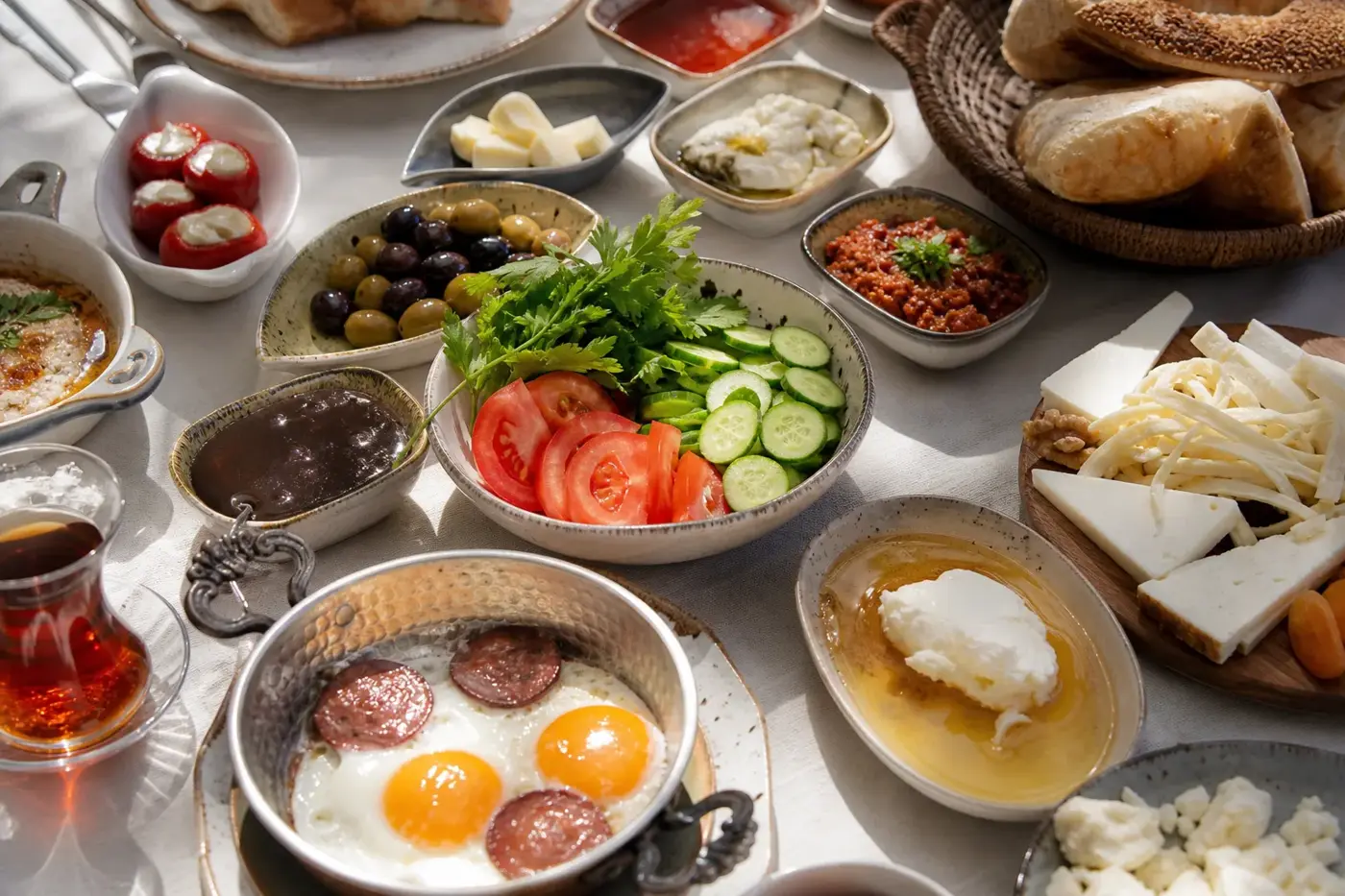
White cheese, bread, olives, tomatoes, cucumbers and eggs can all meet at a Turkish breakfast table. GoTürkiye also lists kaşar, tulum, çökelek and mihaliç among breakfast cheeses. If you have been picturing just one white cheese, you have plenty more to discover. [3][13]
Explore the arrangement a mouthful at a time. Try cheese with bread, then follow it with a vegetable or an olive. Each food remains available in its own right, ready for you to combine. Nothing has to arrive as one finished dish.
Sometimes, cheese comes tucked into the bread instead. GoTürkiye describes rolls such as poğaça, which may contain cheese among other fillings. A breakfast spread can offer you both arrangements. Cheese sits separately on the table and comes incorporated into something from the bakery. [13]
To try this at home, keep it simple. Put a white cheese beside bread, cucumber, tomato and olives, then taste them separately and together. You do not need to reproduce an entire breakfast spread. That small comparison shows you how the foods sit alongside one another, while leaving room for household and regional variations.
India and South Asia: follow curds towards something sweet
Give paneer its due in Indian savoury cooking. It has a substantial role, including in dishes that combine it with vegetables or a sauce. When you try those dishes, approach them on their own terms. Paneer belongs to their identity, rather than merely standing in for something else.
South Asian milk sweets take curd in another direction. Chhena, also written chhana, is an acid-set milk curd associated with sandesh, rasgulla and ras malai. It is closely related to paneer. But a shaped sweet and a firm piece used in savoury cooking are distinct preparations, offering you different experiences. [10]
Not every milk sweet starts with curds, either. Their diversity rewards a little curiosity, so ask what a particular sweet contains and how it is prepared. “Milk-based” opens the door to a broad family of foods. It does not make every member cheese.
For a useful comparison, try a prepared paneer dish and a curd-based sweet on separate occasions. Notice the curd’s texture, the ingredients around it and its place in the meal. Both begin with milk transformed by decisions in the kitchen. What makes them fascinating is how differently those decisions shape what you eat.
Mongolia and East Asia: curds for the journey, familiar foods abroad
The sun does important work in making Mongolian aaruul. The Australian National University’s Mongolia Institute describes these regularly eaten, sun-dried curds as made from milk or yoghurt. Their tastes and textures depend on the milk and the animals supplying it. Some versions contain sugar or vanilla. [5]
Drying gives aaruul a life beyond the immediate meal. The institute describes a portable snack associated with nomadic life that can be kept for extended periods. An ethnographic glossary published by Cambridge University Press records curds pressed, sliced and dried, with or without sugar. You can see preparation and practicality coming together. [5][14]
A piece of curd connects you with the work of managing milk from herds. Dried, portable food that can be kept does a different job from fresh cheese served beside a cooked dish. Preservation is part of the explanation for aaruul’s place in daily life. How you prepare milk shapes when and where you can eat it.
Elsewhere, migration and trade bring foods into East Asian settings. A Brazilian academic study discusses pão de queijo among foods supplied to Brazilian consumers abroad, including in Japan and China. Set beside Mongolia’s dairy practices, this gives you two rewarding paths to follow. One leads through established regional foods; the other through foods arriving with newer connections. [15]
Both belong in the picture. Ask who makes or buys a food, and where it fits into their meals. Those local details tell you more than a fixed list of what a region supposedly eats.
Ethiopia: find ayib beside the main dish
Ayib’s story starts before the cheese itself. A National Research Council account describes this Ethiopian fresh curd cheese traditionally being made from soured milk after butter has been removed. Heating then separates curds from the remaining liquid. You are seeing another use for the milk within a sequence of dairy preparations. [6]
One documented place to find it is beside kitfo. An Addis Ababa cultural restaurant lists kitfo served with ayeb, another spelling of ayib, and gomen, a greens accompaniment. Here, cheese supports the dish. You do not wait for it to take a course of its own. [7]
The menu also distinguishes these dishes from its fasting preparations. That detail matters: ayib beside kitfo is a particular combination, not a description of every Ethiopian meal. Read the dish and its accompaniments together. You get a more precise picture of how it is eaten. [7]
Such distinctions make exploring a food culture more rewarding. An accompaniment does something different from an everyday staple or a celebratory dish. Knowing which you have encountered helps you place cheese within the meal. It also saves one preparation from having to represent an entire cuisine.
Brazil and Colombia: give cassava and maize their moment
Look beneath the cheese in Brazilian pão de queijo and you find cassava starch, known as polvilho. A Minas Gerais legislative publication describes versions made with sour starch, sweet starch or a mixture. Belo Horizonte’s official tourism portal publishes a preparation containing cheese, starch, milk and butter. There is more than cheese at work here. [16][17]
Pão de queijo’s association with Minas Gerais belongs to a wider regional kitchen. The state’s heritage account identifies cassava and its derivatives as foundations of that food culture. It specifically names polvilho as the basis of pão de queijo. Cheese joins a preparation rooted in local ingredients and techniques; it does not tell the whole story by itself. [18]
Colombian arepas con queso begin with maize, taking you into a different family of foods. The Colombian government’s Caribbean regional platform documents grilled maize arepas offered with cheese among their fillings. Bogotá’s tourism institute also records a preparation with cheese enclosed inside a shaped arepa. [19][20]
Give the starch as much attention as the cheese. Cassava starch and maize make different foods, even when both keep cheese company. One is not simply a local version of the other. Taste with both parts in mind and you give each preparation its due.
A Colombian recipe writer brings you into the household, describing cheese arepas eaten at breakfast. Butter and additional cheese are among the accompaniments, for anyone concerned that the first helping of cheese looked lonely. That personal account sits alongside the institutional examples. It offers another way to encounter the food among its regional preparations. [21]
Beyond the dairy: follow the herds, crops and people
Preserving milk helps explain several traditions you have encountered. In Mongolia, drying makes curds portable within pastoral life. In Ethiopia, ayib makes further use of milk after butter production. The available animals, and the ways people handle their milk, help shape what you find to eat. [5][6]
Crops matter just as much to the finished dish. Cassava starch underpins pão de queijo, maize forms the basis of many arepas, and Georgian regional fillings pair cheese with millet or potato. To understand cheese in these meals, look beyond the dairy. Bread, crops and kitchen practices belong to the same story. [4][18][19]
People carry skills as well as foods when they move. Wisconsin’s records trace cheesemaking knowledge arriving with different settler communities. The Brazilian study describes foods supplied overseas that can help people maintain familiar eating habits after migration. Continuity and adaptation work together, leaving room for new local traditions to develop. [9][11][15]
Before you set the table, ask your guest
Planning a tasting? Start by asking what your guests eat. A national tradition tells you little about an individual’s religious observance, vegetarian choices or relationship with dairy. Read product information rather than relying on a dish name to answer those questions.
Vegetarian suitability and religious requirements need separate attention. The Orthodox Union explains that its kosher requirements for cheese cover ingredients, equipment and supervision. Some requirements still apply when non-animal rennet is used. A vegetarian description alone therefore does not establish kosher status. [22]
For the manufacturing distinction, turn to rennet explained. For lactose and individual cheese choices, continue to lactose in cheese. Cultural custom can guide your exploration, but personal dietary needs deserve attention of their own.
Four delicious comparisons for your own table
Choose one comparison rather than squeezing everything onto a “world cheese” board. Give the dish and its setting enough room to hold your attention:
- Give cheese its own course: try a small selection after a main dish. Notice whether that separate place in the meal changes the attention you give it.
- Let breakfast lead the tasting: try a white cheese alone, then with bread, vegetables and olives. Follow what changes from one mouthful to the next.
- Explore cheese inside a staple: try a prepared khachapuri, pão de queijo or cheese arepa. Give the bread or starch as much attention as the filling.
- Follow curds from savoury to sweet: explore a paneer preparation and a chhena-based sweet separately. Ask how each uses the curd and what the surrounding ingredients contribute.
Keep the dish name and, where you can, its regional description. Those details lead you towards the people and practices behind the food. Your tasting becomes more revealing than a collection of national labels.
Curious about the processes behind these preparations? how cheese is made takes you one step back, from the meal to the milk.
Questions people ask
When is cheese served in a French meal?
In the French gastronomic meal described by UNESCO, cheese follows the main course and comes before dessert. UNESCO describes a celebratory social practice, including birthdays and reunions, rather than every weekday dinner.
What is khachapuri and how do its regional varieties differ?
Khachapuri is Georgian bread containing cheese. Imeretian khachapuri encloses cheese in relatively thin dough, while the open, boat shaped Adjarian version contains cheese, egg and butter.
What cheeses are eaten at a Turkish breakfast?
White cheese can share the table with bread, olives, tomatoes, cucumbers and eggs. GoTürkiye also lists kaşar, tulum, çökelek and mihaliç among breakfast cheeses.
What is the difference between paneer and chhena?
Chhena is an acid set milk curd closely related to paneer. Chhena is associated with sweets such as sandesh, rasgulla and ras malai, while paneer has a substantial role in Indian savoury cooking.
How do Brazilian pão de queijo and Colombian arepas con queso differ?
Brazilian pão de queijo is based on cassava starch, known as polvilho. Colombian arepas con queso start from maize and can have cheese among their fillings or enclosed inside.
Sources
- UNESCO, Gastronomic meal of the French, Representative List inscription, 2010. The description records the celebratory context and sequence of courses.
- Library of Congress, French Cuisine & Café Culture in Paris: Fromages de France, undated research guide.
- GoTürkiye, Traditional Turkish Breakfast: ‘The Golden Meal of the Day’, undated institutional account.
- Georgian National Tourism Administration, Khachapuri: True Symbol of Georgian Cuisine, undated web edition.
- Australian National University Mongolia Institute, White Foods, undated field account.
- National Research Council, Applications of Biotechnology to Traditional Fermented Foods, chapter “The Microbiology of Ethiopian Ayib”, 1992.
- Fafresh Cultural Kitchen, Addis Ababa, published menu, undated web edition. A commercial primary source for the restaurant’s own serving combinations.
- Lo spicchio d’aglio, Pasta mozzarella e Parmigiano, undated recipe.
- Wisconsin Historical Society, Dairy industry in Wisconsin, undated web edition.
- Wikipedia, Chhena, retrieved web edition. Secondary background source requiring replacement with primary culinary documentation before publication.
- University of Wisconsin-Madison, Max Kade Institute, Ethnic Groups in Wisconsin: Historical Background, undated web edition.
- Georgian National Tourism Administration, Rediscovering Khachapuri, Georgia’s must-try classic, undated web edition.
- GoTürkiye, What’s All a Part of a Traditional Turkish Breakfast?, undated web edition.
- Cambridge University Press, Living with Herds: Human-Animal Coexistence in Mongolia, glossary in published front matter, 2011.
- Universidade Federal de Lavras repository, academic study of pão de queijo, retrieved repository extract. Full bibliographic details require confirmation.
- Assembleia Legislativa de Minas Gerais, Nossa comida tem história, “Pão de Queijo”, retrieved publication edition.
- Portal Oficial de Belo Horizonte, Pão de queijo, traditional recipe collection, undated web edition.
- Agência Minas, Cozinha Mineira é patrimônio cultural imaterial de Minas Gerais, 2023.
- Ministério das Comunicações, Conecta Região Caribe, Arepa de queso, undated producer listing. A commercial contributor’s description hosted on a government platform.
- Instituto Distrital de Turismo, Bogotá, Bogotá, entre relatos y recetas, retrieved publication edition.
- My Colombian Recipes, Arepas de Queso (Cheese Arepas), retrieved web edition. A recipe writer’s account of their own breakfast practice.
- Orthodox Union, OU Kosher, FAQs, entries on cheese ingredients, supervision and non-animal rennet, undated web edition.
This desk-researched draft brings together institutional cultural accounts, published culinary descriptions, historical research and attributed accounts of particular serving practices.
Last checked: November 2026
Last checked November 2026.
The editors suggest you read next
Cheese in French Life
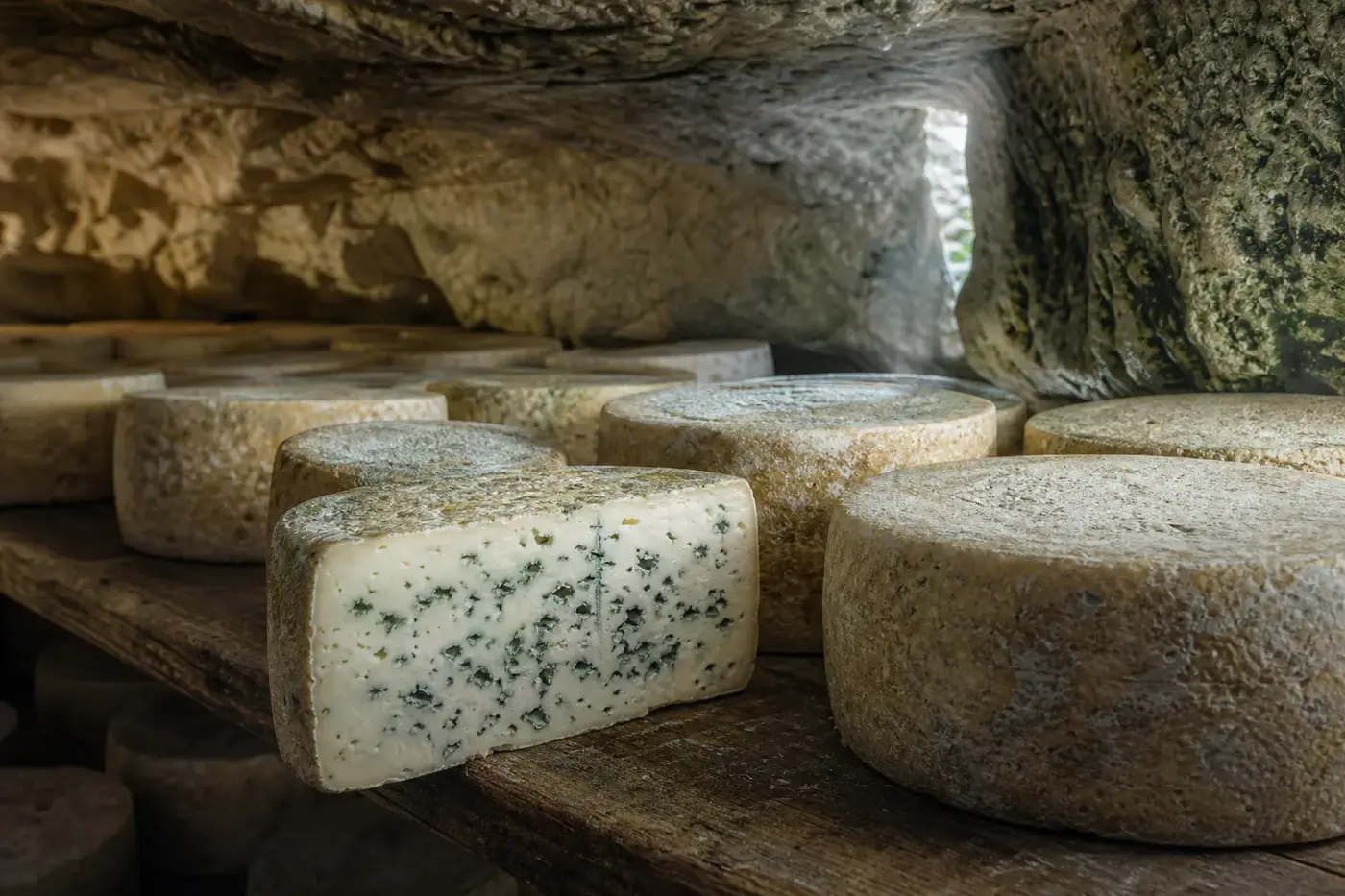
Cool, humid air slips through the natural fissures called fleurines and into the maturing caves of Roquefort-sur-Soulzon.