Does What Animals Eat Change Cheese? Pasture, Hay and Silage
On three mountain dairy farms, the animals moved to pasture and their cheese changed with them.
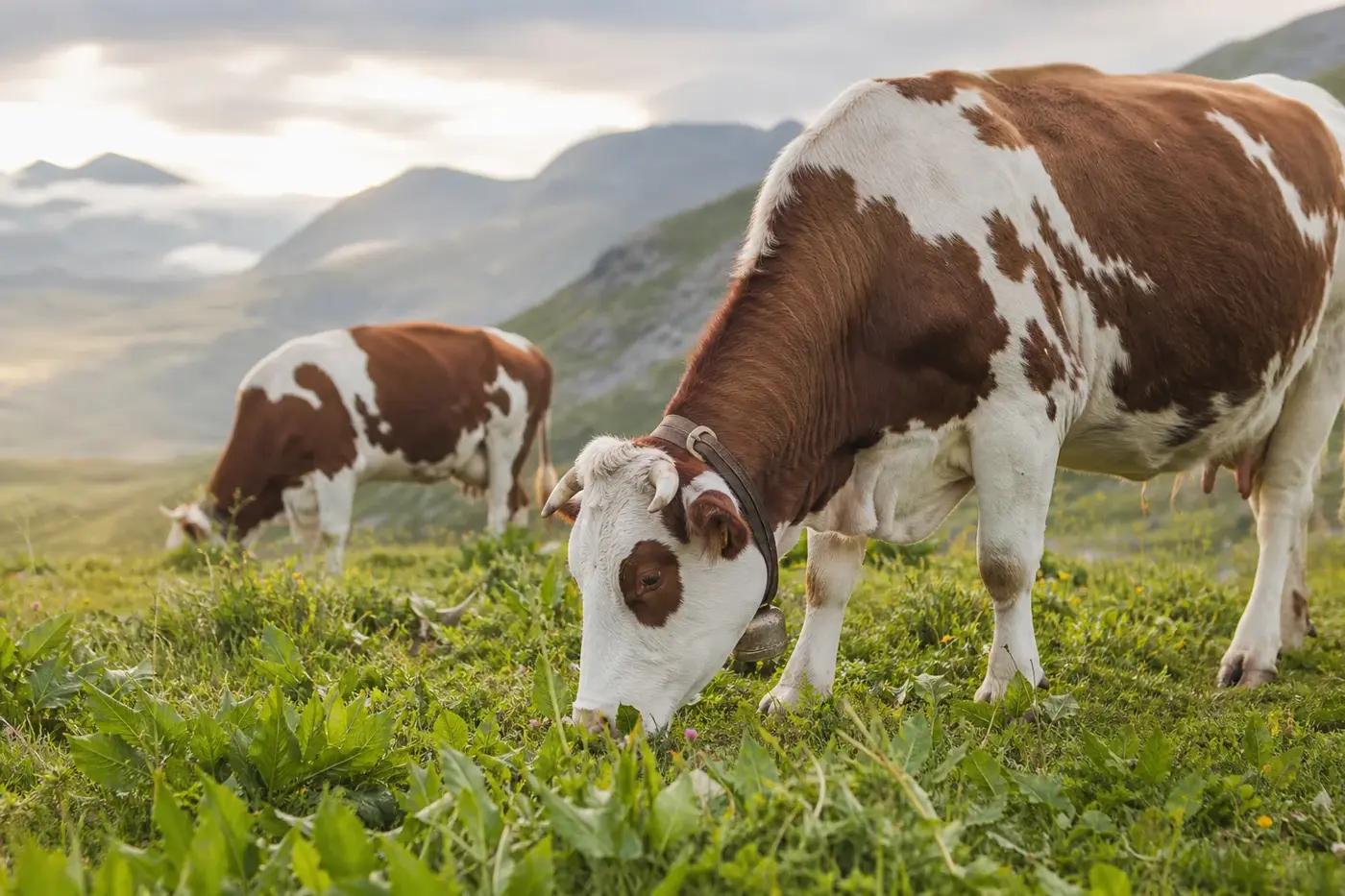
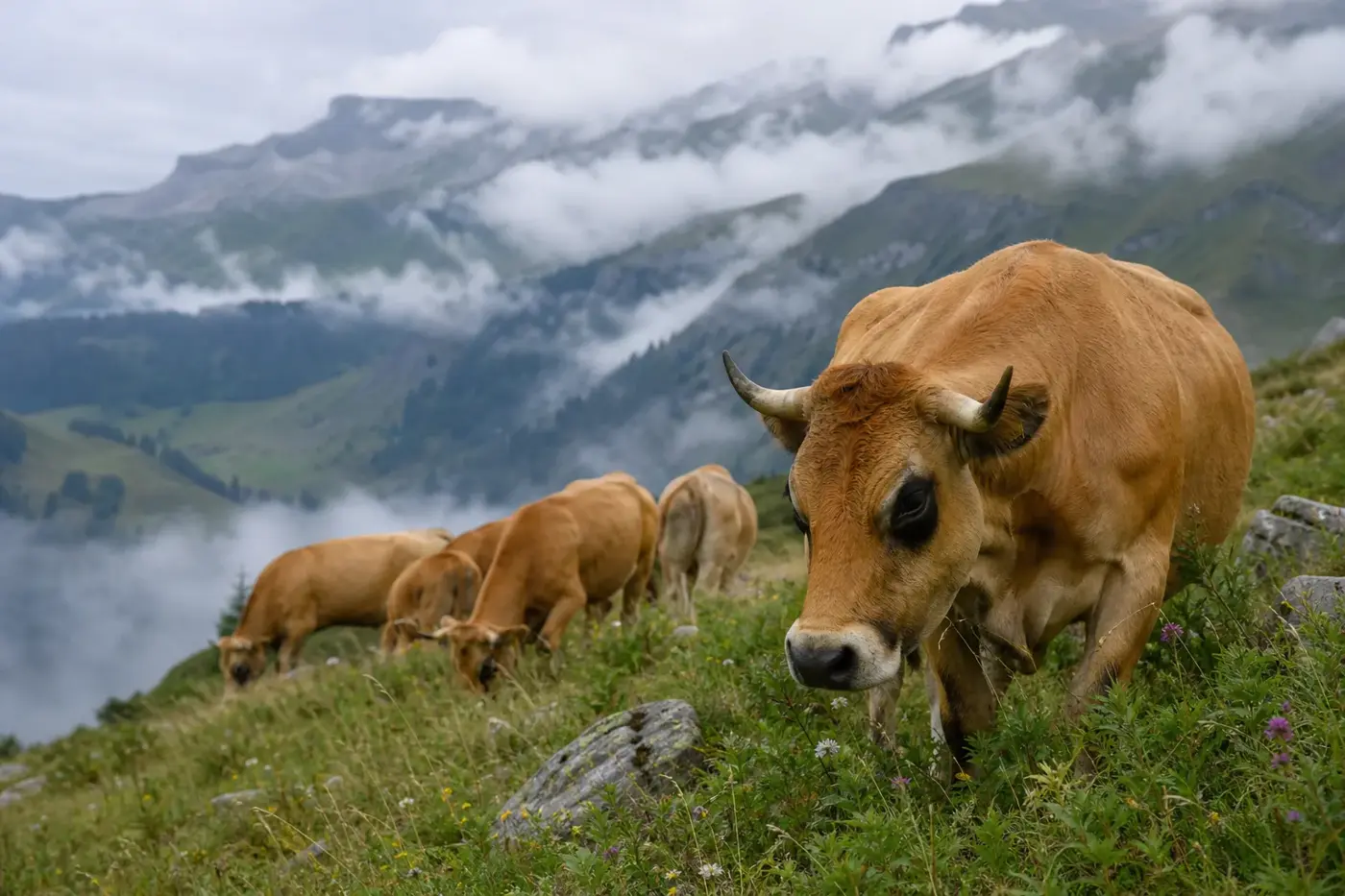
On three mountain dairy farms, the animals moved to pasture and their cheese changed with them. Its fatty acids shifted. Under the tasters’ attention, the texture proved more friable and grainy. You cannot see a field in a cut piece of cheese, but something of it can reach your plate. [3][4][7]
What dairy animals eat can alter the fatty acids, pigments and aroma compounds in milk. Some of those differences survive cheesemaking. Feed leaves a trace; the animal, the making and the maturation help decide what you eventually taste. [3][4][7]
Pasture, hay and silage: pull up a chair
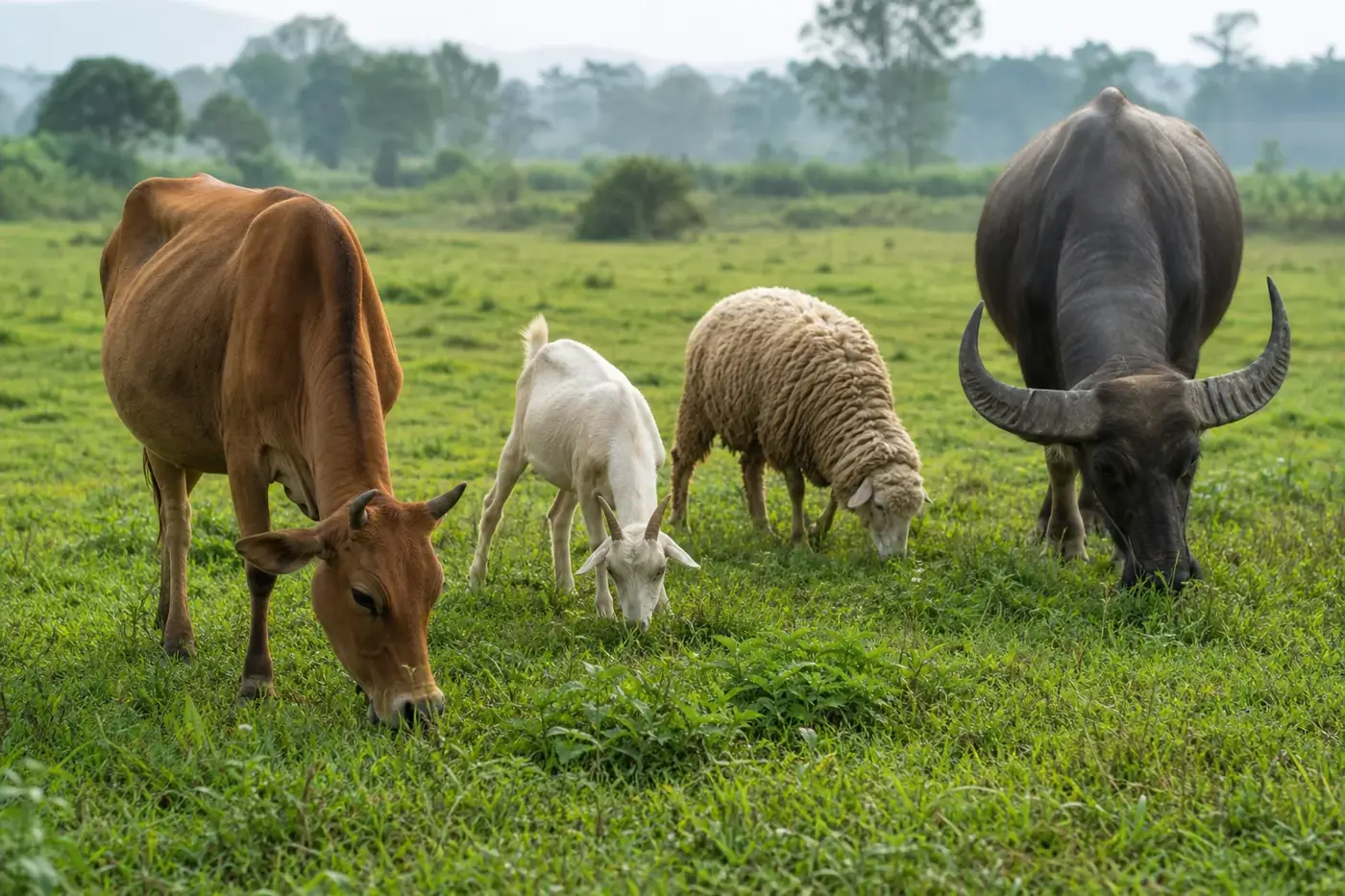
Start with the plants. Pasture is growing vegetation that animals graze, often grasses, sometimes mixed with clovers and other plants. Hay is cut forage preserved by drying; silage is moist forage preserved by fermentation without oxygen. “Forage” means the plant material livestock eat, rather than just its grain. [1][2]
These are ways to supply a ration, not three separate farming worlds. A cow may graze for part of the year, eat conserved forage for another and have complementary feeds alongside. Weather, suitable crops and storage facilities shape the farmer’s choices. Animals still need feeding when fresh growth is unavailable. [1][4]
Fresh grass can come indoors, too, cut and carried to the animals. Read feeding descriptions closely: fresh forage tells you what they eat; outdoor grazing also tells you where. In a controlled comparison, cheeses from grazing cows differed from those fed fresh herbage indoors, despite similar milk composition. [8]
Follow the leaves all the way to the cheese
The clearest evidence follows the whole journey: feed, milk, cheese. In the study on three mountain dairy farms, pasture periods were associated with higher proportions of alpha-linolenic acid and certain other unsaturated fatty acids in milk. The proportion of palmitic acid was lower. The cheeses largely reflected their milk’s fatty acid profiles. [4]
“Grass”, though, is a rather vague dinner order. Upland pasture research has investigated the mix of plants, their stage of development and grazing management. A young, leafy sward and a mature stand offer different starting materials, even under the same grassy label. Growing conditions reach cheese through the plants the animals actually eat. [3]
You may notice changes in physical character, too. Sensory assessment in the three-farm study described cheeses from pasture periods as more friable and grainy. That is a useful, specific finding, not a reason to assume grazing always makes softer cheese. The relationship between composition and texture needs measuring in the particular cheese. [4]
Where cow milk cheese gets its golden colour
The yellow in your cheese can begin in a plant. Yellow-orange beta-carotene belongs to the carotenoids, a group of plant pigments, and some passes from forage into cow milk fat. From there, it can give cheese a yellow colour. [3]
Research comparing grazing systems found a more intense yellow-red colour in cheeses from cows fed on pasture than in those fed hay and concentrates. Seasonal colour changes were also linked to herbage maturity. As the plants mature, their carotenoid concentrations decline. [3]
The animal has a say in that colour, too. Experimental work comparing cattle and goats found differences in the enzyme activity that converts beta-carotene towards vitamin A. Researchers following a sheep flock on mountain pasture detected no carotene in its milk or cheese. They did, however, find retinol derived from dietary beta-carotene. [5][6]
A pale cheese can therefore still come from animals fed on pasture. The yellow clue you see in cow milk cheeses does not transfer directly to sheep or goat milk cheeses, because species handle pigments differently. Read the milk species and feeding information alongside the colour. Colour cannot tell you the whole story. [3][5][6]
The long journey from forage to aroma
Some forage compounds travel quite a distance before they reach your cheese. They, or products formed from them during digestion and metabolism, enter the bloodstream and reach the mammary gland. From there, they may pass into milk and cheese. Volatile compounds can contribute to aroma, but finding one does not prove you can smell or taste it. [5][7]
In the mountain sheep study, major terpenoids and tocopherols found in the pasture also appeared prominently in milk and cheese. Terpenoids are a broad family of plant compounds that includes aromatic substances; tocopherols are a separate group of fat-soluble compounds. Finding them at each stage traces their route through production. It does not write your tasting note for you. [5]
One revealing experiment with semi-hard cheese compared milk fractions from cows fed on pasture and hay, alongside raw and pasteurised milk treatments. Terpenes were more abundant in cheeses associated with hay feeding, yet flavour differences between the feeding groups were very slight. The raw milk cheeses had a stronger flavour than their pasteurised counterparts. [7]
Chemical analysis and sensory assessment answer different, related questions. A compound may help identify where milk came from without making an obvious contribution to what you smell. Keep that distinction handy whenever you read about feed and flavour. [5][7]
A flowering meadow cannot write your tasting notes
A meadow description tells you about the animals’ surroundings. It cannot tell you exactly how their cheese will taste. Tracing plant compounds through one flock’s milk and cheese establishes a connection, but it cannot predict the flavour of every cheese made from grazing animals. [5]
Nor do more plant-derived compounds necessarily mean a more herbal flavour. In the semi-hard cheese experiment, differences associated with the milk’s native microorganisms were substantial. A floral note needs sensory evidence. Flowers beside grazing animals make a promising picture, but they are not a tasting panel. [7]
Saving the crop: hay dries, silage ferments
Haymaking removes water until the crop is dry enough to keep. Ensiling takes another route: it preserves moisture while excluding air and encouraging bacteria to ferment plant sugars into organic acids, especially lactic acid. Acidity and oxygen exclusion work together to preserve the crop. [1][2]
Haylage is a drier form of silage. A wrapped bale may therefore contain fermented forage rather than dry hay. The wrapping alone does not tell you which is inside. [1][2]
Both methods need care. Hay needs suitable drying conditions; silage needs effective air exclusion, acidification and management once the store is opened. Whichever method is used, some nutrients begin to be lost after cutting. The harvested crop’s condition and handling matter alongside the preservation method. [1][2]
A 2021 experiment made an unusually direct comparison, using hay and silage harvested from the same plot on the same day. It allocated 48 cows among four feeding treatments, then assessed the resulting small Cantal-type cheeses after nine weeks. Hay and silage produced relatively few sensory differences, mainly in appearance. The fresh-herbage treatments differed more clearly from conserved forage. [8]
When unwanted fermentation reaches the cheese
Late blowing is a transformation no cheesemaker wants. It disrupts the interior of some hard and semi-hard cheeses when unwanted fermentation produces gas. Clostridium tyrobutyricum is an important organism involved. Its spores, resistant survival forms, can contaminate milk before cheesemaking. [10]
Inside cheese, suitable oxygen-free conditions allow those spores to germinate. The bacteria can then ferment, producing cavities, distortion and undesirable flavours. What reaches the milk matters as much as what goes into the feed. [10]
The chief route from feed to milk is contamination. A study of 49 dairy farms followed spores through silage, mixed feed, faeces and milk, finding the highest counts in spoiled parts of maize silage. Greater faecal contamination was associated with greater milk contamination. Dirty teats can carry that material into milk during milking. [9]
Careful management helps break the chain. The farm study found that good silage management, animal cleaning and good milking practice together helped keep milk spore contamination low. Feeding silage does not inevitably cause late blowing. [9]
Apparently good fermentation results cannot settle the question, either. Research comparing laboratory and farm silages found that apparently good fermentation chemistry did not reliably predict spore counts at farm scale. Testing and control therefore remain important. [11]
The useful distinction is between a feeding system and how well it is run. For cheesemaking, ask how many unwanted microbes reach the vat, and whether conditions inside the cheese allow them to grow. Simply asking whether the ration includes silage misses those crucial steps. [9][10][11]
Meet the rest of the cast: animal, season and age
Feed never works alone. Species affects how dietary pigments appear in dairy products, while season can change both the available ration and the plants’ stage of growth. Breed deserves attention, too: the 2021 feeding trial deliberately balanced its groups between Holstein and Montbéliarde cows. These details help you make sense of an apparent feeding effect. [3][5][8]
Then cheesemaking begins, bringing another set of influences. The raw and pasteurised milk comparison shows how much that can matter. Follow how milk becomes cheese for the steps between incoming milk and the maturing wheel. [7]
Maturation keeps the transformation going. Microbial and enzymatic activity changes compounds involved in aroma and texture, so differences linked to feed may become more or less noticeable with age. Compare cheeses of the same style and age. A result after nine weeks of ripening describes that stage of the trial, not every point in a cheese’s life. [8]
Protected cheeses: look beyond the mountain picture
A mountain scene tells you far less than a written specification. Protected specifications turn broad descriptions of feed into defined production requirements. PDO means protected designation of origin in the EU system. Look at what the rules actually require for each cheese. [12][13]
| Cheese and where its rules apply | What the feeding rules require | Which version to look for |
|---|---|---|
| Comté, France | Producing or storing silage and other fermented feeds, including wrapped bales, on the milk-producing holding is prohibited, as is feeding them to its animals. | Published January 2026. [12] |
| Parmigiano Reggiano, Italy | Silage use and possession are prohibited on dairy farms and restocking units, with provisions for entirely separate activities in other production chains. | Specification presented as in force from 24 April 2025. [13] |
These rules define production methods for those systems. Compliance establishes how a cheese is produced; flavour and food safety need their own evidence. The rules do not make every cheese from animals fed silage inferior in taste. The controlled hay-versus-silage experiment found only limited sensory differences. [8][12][13]
Read feed requirements alongside the rest of the specification. Protected names explained sets out the distinction between origin protection and a general description. That gives you a more useful starting point than a mountain or meadow image alone.
Read the description, then taste for yourself
Treat a feed claim as the start of an enquiry, not the final answer. Ask which animals and which period it covers, and whether it means grazing or fresh forage brought indoors. What conserved forage or complementary feed is used? If a producer names a scheme, check its actual feeding standard and which products it covers. [8][12][13]
Specifics beat an attractive adjective. Look for the production season, the forage being fed, the cheese’s age and whether the description covers the whole ration. How to read a cheese label helps you separate information on the pack from questions worth asking a producer or cheesemonger.
- Give your comparison a fair start. Look for the same cheese from the same maker at a similar age, with a documented difference in feeding period or ration. Unrelated styles introduce too many other changes. Record the production season where available, so you have a clear starting point. [4]
- Write down what you notice first. Describe colour, firmness, how the paste breaks, aroma and finish. Choose words for what you actually notice, rather than hunting for grass or flowers because the pasture description mentions them. Keep your observations separate from possible explanations. [7]
- Put the feeding descriptions out of sight. If possible, ask someone else to code the samples, then taste before revealing the details. This informal exercise reduces expectation; it is not a controlled trial. Record similarities as carefully as differences, including when neither sample seems clearly distinguishable.
- Make your next question more precise. If one cheese seems yellower, check milk species and production season. If textures differ, check age and method before putting everything down to feed. Ask what changed between these batches, rather than which feeding system is best. [3][4]
Follow the story beyond the field
- Raw Milk, Thermised and Pasteurised Cheese: discover where milk treatment fits into the production picture.
- How to Tell Cheese Styles Apart: Milk, Rind, Texture and Method: explore the structural differences that can complicate your feed comparison.
Questions people ask
Can what animals eat change the taste of cheese?
Feed can change compounds in milk, and some of those differences survive cheesemaking. In one experiment, flavour differences between pasture and hay feeding groups were very slight, while raw milk cheeses had a stronger flavour than their pasteurised counterparts.
Why can pasture make cow milk cheese yellower?
Some yellow orange beta carotene from forage reaches cow milk fat and can give cheese a yellow colour. This clue does not transfer directly to sheep or goat milk cheeses because species differ in how they process pigments.
What is the difference between pasture, hay and silage?
Pasture is growing vegetation that animals graze, while hay is cut forage preserved by drying. Silage is moist forage preserved by fermentation without oxygen.
Does silage cause late blowing in cheese?
Silage feeding does not inevitably cause late blowing. The defect occurs when unwanted fermentation produces gas inside cheese, and careful silage management, animal cleaning and good milking practice can help keep milk spore contamination low.
Are cows producing milk for Comté and Parmigiano Reggiano allowed to eat silage?
The Comté specification prohibits producing or storing silage and other fermented feeds on the milk producing holding, as well as feeding them to its animals. The Parmigiano Reggiano specification prohibits silage use and possession on dairy farms and restocking units, with provisions for entirely separate activities in other production chains.
Sources
[1] North Carolina State University Extension. Forage Conservation: Troubleshooting Hay and Silage Production, 2013, online edition accessed November 2026. Definitions, conservation losses and practical differences between hay and silage.
[2] North Carolina State University Extension. Silage and Haylage Production, 2024, online edition accessed November 2026. Fermentation, oxygen exclusion, acidification and haylage terminology.
[3] American Dairy Science Association, Journal of Dairy Science. Milk fatty acid composition and cheese texture and appearance from cows fed hay or different grazing systems on upland pastures, 2011. Primary research extract covering pasture management, plant maturity and cheese colour.
[4] American Dairy Science Association, Journal of Dairy Science. Fatty acid and sensory profiles of Caciocavallo cheese as affected by management system, 2014. Primary research abstract, PubMed PMID 24534504.
[5] University of the Basque Country, Lactiker research group. Case study of a commercial sheep flock under extensive mountain grazing: Pasture derived lipid compounds in milk and cheese, 2016. Primary research abstract, PubMed PMID 26616996.
[6] National Autonomous University of Mexico, International Journal for Vitamin and Nutrition Research. Low cleavage activity of 15,15'dioxygenase to convert beta-carotene to retinal in cattle compared with goats, is associated with the yellow pigmentation of adipose tissue, volume 70, issue 5, 2000, pages 199 to 205. Primary experimental research record.
[7] American Dairy Science Association, Journal of Dairy Science. Influence of Pasteurization and Fat Composition of Milk on the Volatile Compounds and Flavor Characteristics of a Semi-hard Cheese, volume 81, issue 12, 1998, pages 3097 to 3108. Primary experimental research abstract.
[8] ETH Zurich, INRAE and collaborating research institutions, Journal of Dairy Science. Feeding cows with hay, silage, or fresh herbage on pasture or indoors affects sensory properties and chemical composition of milk and cheese, volume 104, 2021, pages 5285 to 5302. Full research paper retrieved.
[9] American Dairy Science Association, Journal of Dairy Science. Dairy farm management practices and the risk of contamination of tank milk from Clostridium spp. and Paenibacillus spp. spores in silage, total mixed ration, dairy cow feces, and raw milk, 2019. Primary research abstract, PubMed PMID 31326179.
[10] American Society for Microbiology, Applied and Environmental Microbiology. Quantitative Detection of Clostridium tyrobutyricum in Milk by Real-Time PCR, 2007. Primary research article, introduction and study summary.
[11] Research Institute for Livestock Feeding and Nutrition, Netherlands Journal of Agricultural Science. Comparison of the content of clostridial spores in wilted grass silage ensiled in either laboratory, pilot-scale or farm silos, volume 38, 1990, pages 423 to 434. Full research paper retrieved.
[12] French Ministry of Agriculture and INAO. Cahier des charges de l'appellation d'origine « Comté », amended specification published in the ministry's Bulletin officiel, 8 January 2026, section 5.1.5.1(e).
[13] Consorzio del Formaggio Parmigiano Reggiano. Production specifications, English document linked by the consortium as the specification in force from 24 April 2025, feeding regulation, Article 5. The consortium represents the protected cheese's producers.
Researched through agricultural extension guidance, primary feeding and cheesemaking studies, and published protected-cheese specifications, separating compositional findings from sensory results.
Last checked: November 2026
Last checked November 2026.
The editors suggest you read next