Dairy Breeds and Why They Matter
High in the mountains where Beaufort is made, Tarine cattle turn coarse winter forage into milk.
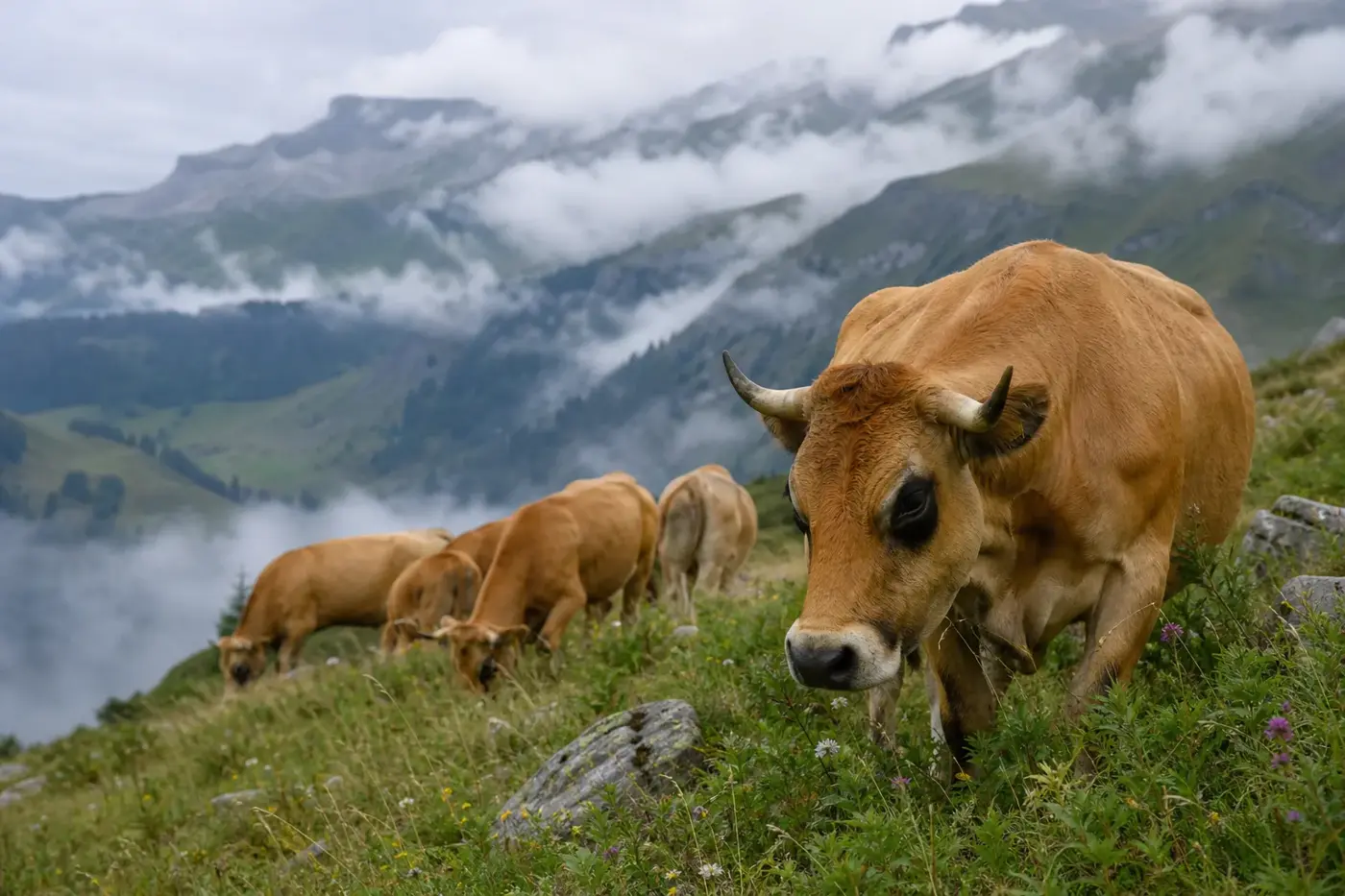
High in the mountains where Beaufort is made, Tarine cattle turn coarse winter forage into milk. Their place in the cheese is written into its production rules: only specified breeds are allowed. The animal belongs to the story as surely as the cheesemaker does. [10]
That story continues in the vat. Inherited differences can influence how concentrated milk is, how quickly it sets and how firm the curd becomes. Feeding, the individual animal and the cheesemaker shape what happens next. [3,4]
Meet the breed behind the milk
A breed is a recognised population within a species, shaped by ancestry, selection and breeding practices. Its identity is cultural as well as biological. As FAO explains, breeders help define and maintain breeds, rather than working to one universal biological boundary. [1]
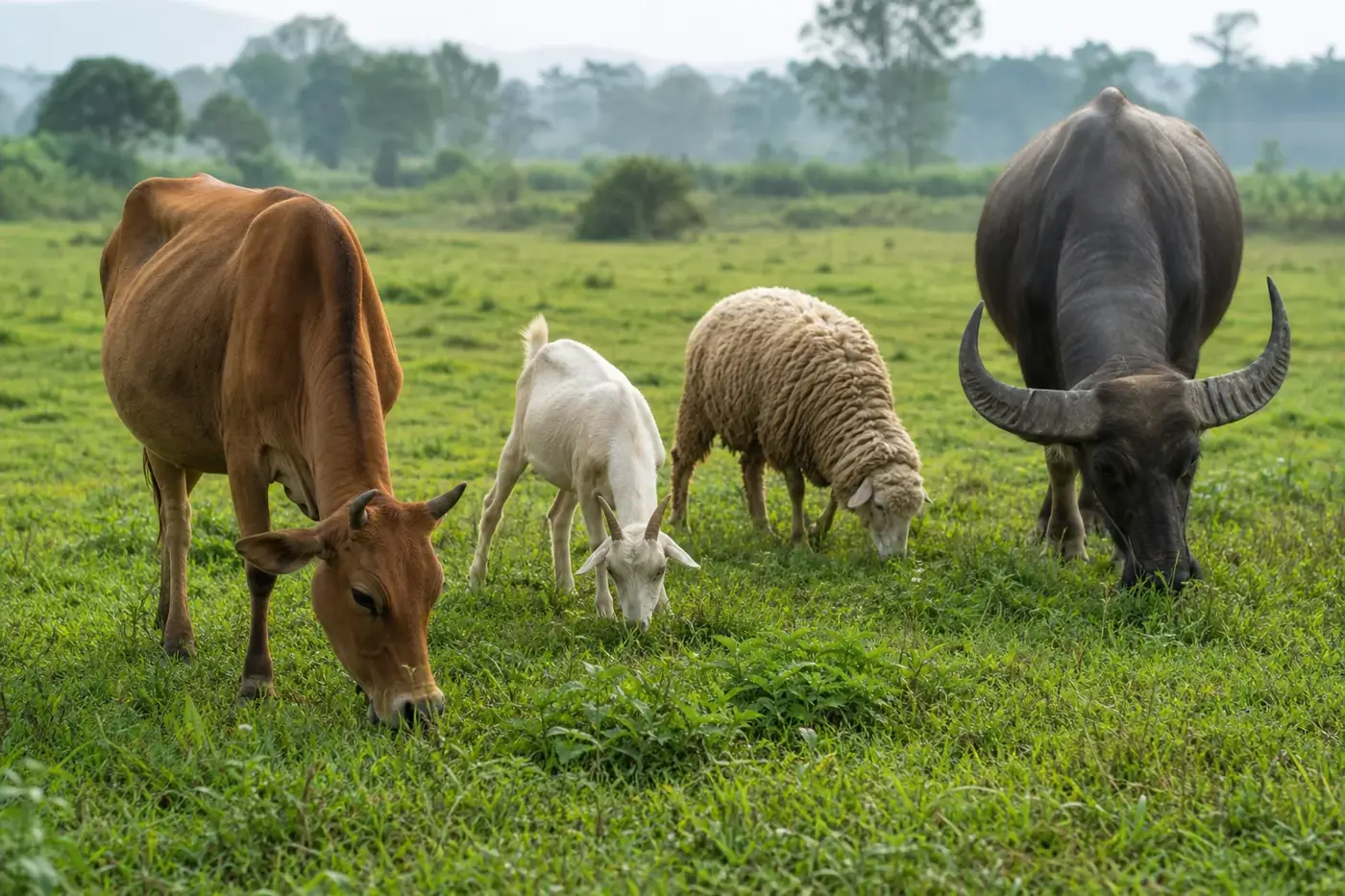
Holstein, Jersey and Guernsey are cattle breeds. Alpine and Saanen are goat breeds. Moving from cattle to goats changes the species, not just the breed. When you read a cheese description, “goat's milk” identifies the animal, while a breed name tells you more about its ancestry. [1,2,8]
Holstein, Jersey and Guernsey: richness in numbers
Jersey milk had the highest fat and protein concentrations of these three breeds in Agriculture and Agri-Food Canada's official supervised milk records for 2025. Holstein milk recorded 4.21% fat and 3.38% protein; Jersey, 5.28% and 3.96%; and Guernsey, 4.73% and 3.49%. These figures describe recorded populations in Canada, with November 2026 as the reference date here. [2]
The figures capture both inherited potential and the conditions in which the animals were kept. They give you a useful comparison of those populations, but not a league table for every dairy. A controlled trial is needed to separate the effects of breeding from those of management. [2,3]
Where fat and protein become curd
Casein supplies the framework of a rennet-set curd; fat is held within it. Casein is a family of milk proteins, and curd is the solid mass formed when milk coagulates, or sets. Whey is the liquid released as that mass drains. For a cheesemaker, the central question is how much fat and protein can be recovered in the cheese. [3,4]
Fat contributes to composition and mouthfeel, but its balance with protein matters too. More fat does not simply mean firmer cheese. Protein structure, retained water and the manufacturing method work together. In a controlled comparison of Jersey and Friesian milk, researchers adjusted the protein-to-fat ratio before making Cheddar, then tested what happened when they also matched milk solids. [3,4]
Here, milk richness begins to become cheese texture. Composition determines the material available, but the cheese must still be made, drained and ripened. A breed name gives you part of that starting point, not a tasting note in advance. Follow the broader sequence in how cheese is made. [3,7]
The inherited proteins at work in your curd
Two animals of the same breed can carry different combinations of milk proteins. Caseins occur in genetic variants, giving milk protein an inherited identity as well as a concentration. Kappa-casein is especially relevant to rennet coagulation: the formation of a gel after an enzyme acts on the milk's protein particles. [4,5]
An Israeli study tested milk from 359 Holstein cows on 15 farms, measuring setting time and curd firmness. The firmest curds came from cows with the BB kappa-casein genotype. Combinations containing B also performed better for firmness than AA or AE. These letters describe inherited combinations at one gene, not separate breeds, so individual genetics matter even within a Holstein herd. [5]
A breed name describes a population; a protein genotype identifies a specific part of an animal's inheritance. Both help explain the milk, but they answer different questions. For the enzyme's part in setting the curd, see rennet explained. [1,5]
Why litres tell only half the yield story
Jersey milk yielded 10% more Cheddar per kilogram of milk in a controlled Jersey and Friesian trial, until researchers matched the milk's solids concentration. Then the difference disappeared. The trial involved 29 cows of each breed, grazing together under the same management. All had the same AB kappa-casein phenotype, and the protein-to-fat ratio was standardised before the initial comparison. [3]
Cheese yield per kilogram of milk is one measure; total cheese production from a herd is another. Total production also depends on how much milk the animals give. More concentrated milk can improve yield per kilogram, while a larger volume of less concentrated milk can still deliver substantial amounts of fat and protein. You need both in the calculation. [2,3]
Compare finished cheeses at a similar moisture content, too. Retained water adds weight. A useful yield comparison asks what was recovered and what was measured, rather than stopping at the litres delivered to the dairy. [7]
What feed, seasons and milking cycles bring to the vat
Milk changes through an animal's milking cycle, and breed is only one influence. Lactation stage is the point reached in the milk-producing cycle after giving birth; parity is the number of times the animal has given birth. Researchers studying coagulation record both alongside composition and genetics. The Israeli study also accounted for udder health when selecting samples. [4,5]
A study of 1,146 milk samples from Holstein-Friesian, Jersey and Simmental cattle found that casein concentration increased over lactation. Clotting time, however, did not change significantly with lactation stage in that study. Autumn and winter milk also differed from spring and summer milk, despite year-round feeding with a total mixed ration, a blended feed offered to the cows. Composition and setting behaviour each need measuring. [6]
Feed deserves as much attention as pedigree. In a feeding experiment, researchers compared grazing cows receiving different supplements and measured differences in moisture-adjusted Cheddar yield. The ration could alter the outcome in the vat. When you compare breeds across different farms, farming conditions are part of the comparison too. [7]
Beyond cattle: getting to know goat, sheep and buffalo breeds
Breed matters beyond cattle, though species is still the first distinction to establish. You also need to separate recognition of a dairy breed from a documented association between that breed and a particular cheese. They are different pieces of the story. [1,8,9]
Capgènes lists Alpine and Saanen as dairy goat breeds. CREA documents mozzarella production using milk from Mediterranea Italiana buffalo. One identifies dairy breeds; the other connects a named breed with cheesemaking. [8,9]
Capgènes is France's goat breeding organisation. CREA, Italy's agricultural research body, also records that whey from mozzarella made with Mediterranea Italiana milk is used for buffalo ricotta. Mediterranea Italiana identifies the buffalo population, while mozzarella and buffalo ricotta describe the products made from its milk and whey. [8,9]
Beaufort: when breeds belong in the rulebook
For Beaufort, breed is part of the production specification. Section 5.1 of the specification published in April 2025 permits milk only from herds of the local Tarine and Abondance breeds. Tarine is another name for Tarentaise. The specification also sets requirements for identifying animals through the herdbook or recognised physical characteristics. [10]
INAO identifies Beaufort as an appellation d'origine protégée, or AOP. Breed requirements sit alongside rules governing the production area, feeding and cheesemaking. Milk from Tarine cattle therefore fulfils only one part of the requirements, rather than establishing compliance with the whole specification. [10,11]
Production rules and the territory in which a name has legal protection are distinct subjects, explained in protected names. This Beaufort example concerns the French production specification, with November 2026 as the reference date here. [10]
Local breeds, and the places that suit them
A farmer needs an animal suited to a place and a farming system, as well as milk for the vat. FAO's assessment of animal genetic resources emphasises retaining diversity and the capacity to adapt to changing conditions. Keeping local breeds in use can preserve options that selection for milk quantity alone would overlook. [1]
Beaufort brings that relationship into focus. Its specification describes a pastoral system using Tarine and Abondance cattle, and records the Tarine's ability to use coarse winter forage in demanding mountain conditions. Here, the connection between place and cheese begins with the animal and its available feed. It starts long before you find the story on a wrapper. [10]
How cheesemakers get to know their milk
Cheesemakers can adjust composition rather than simply accept a breed average. The Jersey and Friesian experiment used protein-to-fat standardisation and ultrafiltration, a membrane process that concentrated the Friesian milk. Once solids were matched, the cheese yield difference disappeared. Processing choices changed the outcome of the breed comparison. [3]
Setting time and curd firmness are valuable observations at the vat because milk with the same broad breed description can behave differently. The Israeli study measured both directly; the seasonal study showed why concentration alone could not stand in for clotting behaviour. Measure the milk and its response, then work within the cheesemaking method and any applicable specification. [5,6]
Take your curiosity to the cheese counter
Start with a cheese you enjoy, then let breed information sharpen your questions. Does the milk come from one breed, a mixed herd or a blend of suppliers? Does the producer adjust its composition, and how is the cheese made? The answers help separate the milk's origin story from an explanation of the finished texture. [1,3]
A Jersey label invites interest in milk solids, especially when the maker explains how they use them. A Tarine reference on Beaufort connects to a specific production rule. To understand the cheese's age, remaining moisture and maturation, pair that breed information with the maker's description and how to read a cheese label. [2,3,10]
For a revealing comparison, choose cheeses made by a similar method and at a similar age. Record the milk breed alongside the texture and the maker's published tasting description: a perfectly respectable reason to keep cheese notes. Treat differences as questions worth exploring. A controlled trial can isolate a cause, while a cheese counter comparison usually brings several changing factors together. [3,6]
Questions people ask
What is the difference between a dairy breed and a species?
A breed is a recognised population within a species, shaped by ancestry, selection and breeding practices. Holstein and Jersey are cattle breeds, while Alpine and Saanen are goat breeds.
Which has richer milk, Jersey or Holstein?
In Canada's official supervised milk records for 2025, Jersey milk had 5.28% fat and 3.96% protein. Holstein milk had 4.21% fat and 3.38% protein; the figures describe recorded populations in Canada.
Does a dairy breed determine how cheese tastes and feels?
A breed describes part of the milk's starting point, rather than supplying a finished tasting note. Feeding, the individual animal and the cheesemaker also shape what happens.
Why can milk from cows of the same breed set differently?
Animals of the same breed can carry different combinations of milk proteins. In a study of 359 Holstein cows, the firmest curds came from cows with the BB kappa casein genotype.
Which cattle breeds can provide milk for Beaufort?
The Beaufort specification permits milk only from herds of the local Tarine and Abondance breeds. Tarine is another name for Tarentaise, and breed is only one part of the specification.
Sources
-
Food and Agriculture Organization of the United Nations. The State of the World's Animal Genetic Resources for Food and Agriculture, 2007. Part 4, Section A, on breed identity; foreword and conservation sections on diversity and adaptive capacity. Source document.
-
Agriculture and Agri-Food Canada. Average milk production by breed based on milk recording, table headed “Official, Supervised records in Canada, 2025”. Official data.
-
Journal of Dairy Research. A comparison of the composition, coagulation characteristics and cheesemaking capacity of milk from Friesian and Jersey dairy cows, 2004. Original experimental research, abstract available through PubMed. Research record.
-
Dairy. A Study of Milk Composition and Coagulation Properties of Holstein-Friesian, Jersey, and Their Cross Milked Once or Twice a Day, volume 4, issue 1, 2023. Original research. Research article.
-
Animals. Estimating the Effect of the Kappa Casein Genotype on Milk Coagulation Properties in Israeli Holstein Cows, published December 2023, January 2024 collection. Original research, methods and results. Open research article.
-
Annals of Animal Science. Influence of Production Season and Lactation Stage on the Technological Suitability of Milk from Cows of Various Breeds Fed in the TMR System, volume 14, issue 3, 2014. Original research, abstract. Research record.
-
Journal of Dairy Science. Incorporating mixed rations and formulated grain mixes into the diet of grazing cows: Effects on milk composition and coagulation properties, and the yield and quality of Cheddar cheese, 2016. Original research, retrieved indexed passages describing treatments and moisture-adjusted yield. Research article.
-
Capgènes. Races Caprines laitières, undated catalogue, entries updated December 2025. Breeding organisation's catalogue.
-
CREA. Cibo che si (r)innova/7: la Ricotta di bufala lisciata, buona e sostenibile, 28 September 2023. Opening description of the milk breed, mozzarella manufacture and resulting whey. Research organisation's account.
-
French Ministry of Agriculture. Cahier des charges de l'appellation d'origine « Beaufort », approved by the relevant INAO national committee on 20 March 2025, published in Bulletin officiel number 15, 10 April 2025. Sections 5.1, 5.2 and 6. Official specification.
-
INAO. Beaufort, current official product record and linked regulatory documents, checked November 2026. Official product record.
This desk-researched draft brings together official milk-recording data, experimental dairy research, breeding records and the French Beaufort specification.
Last checked: November 2026
Last checked November 2026.
The editors suggest you read next