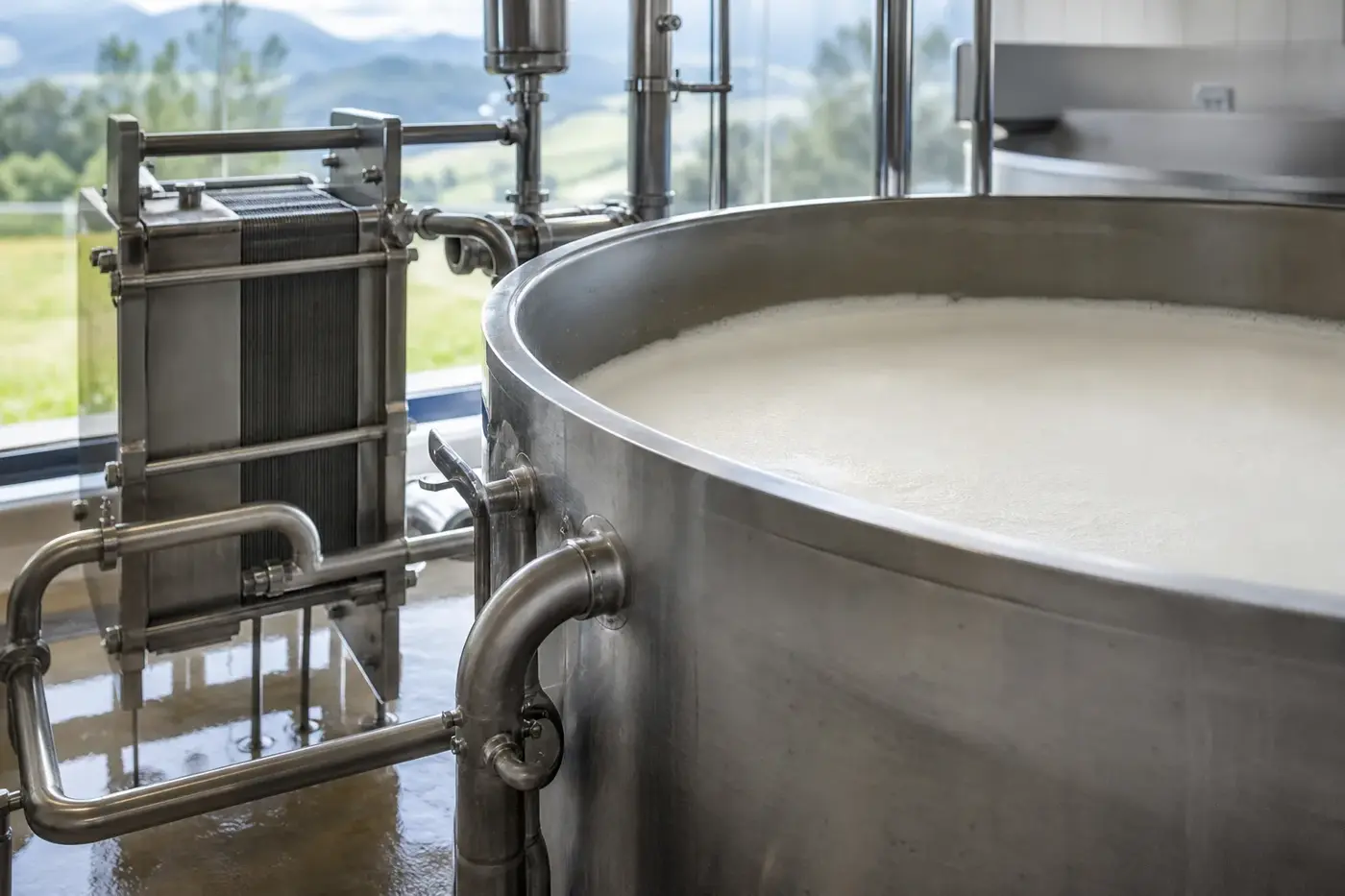
Milk Quality and Testing for Cheesemaking
Beside a farm tank, a small sample carries the weight of a whole delivery.
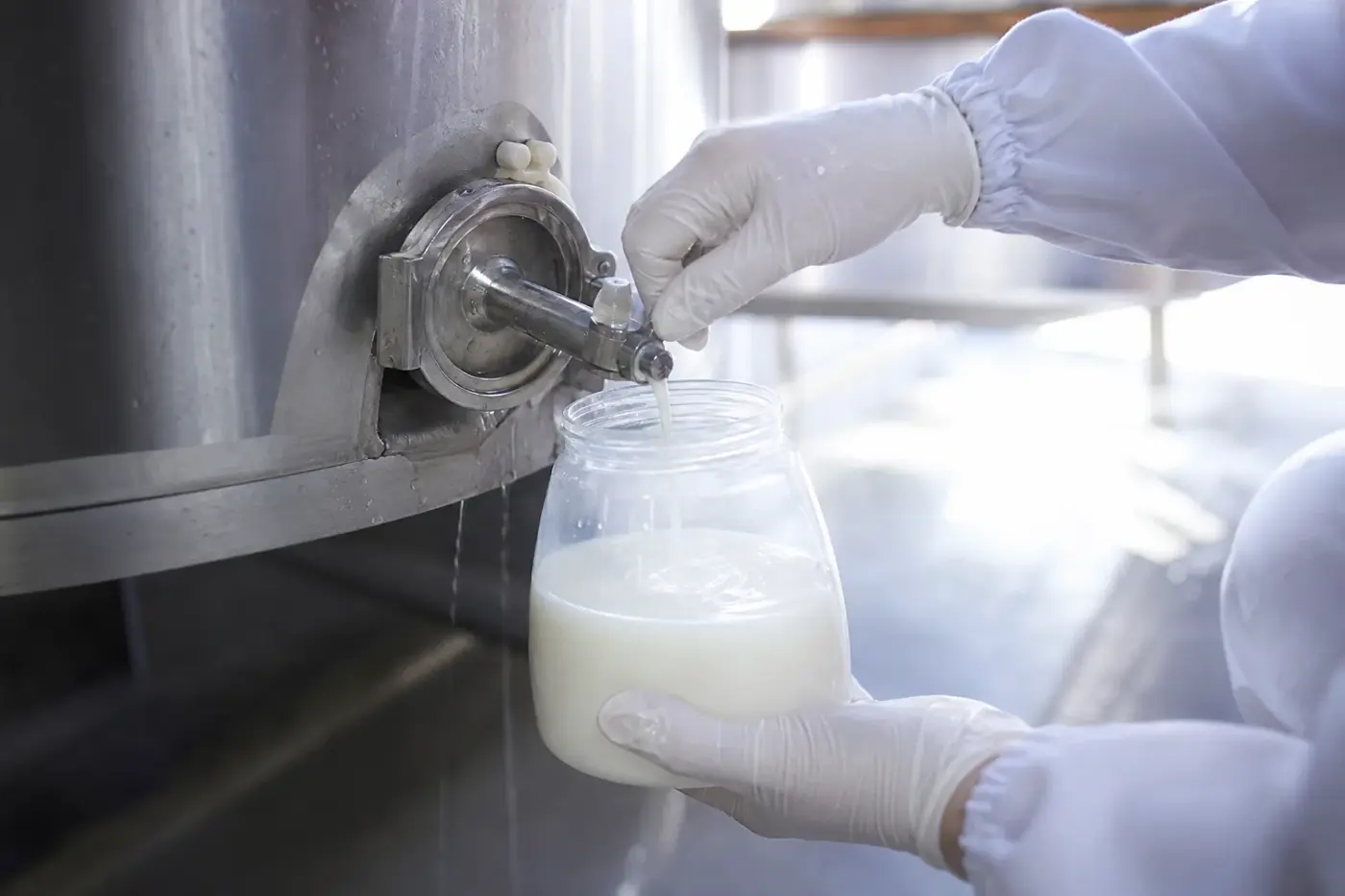
Beside a farm tank, a small sample carries the weight of a whole delivery. You need it to answer two questions: is this milk acceptable, and how will it behave in the cheese vat? Milk that clots beautifully can still carry hazards; milk that meets hygiene requirements can leave you with a disappointingly weak curd. Composition measurements, microbiological checks and process records help you see the fuller picture. [1, 5]
Good milk begins long before the tanker
Start at the teat, not the laboratory. Clean udders, healthy animals, clean milking equipment and properly washed storage tanks reduce contamination entering the milk. Cooling then restrains bacterial multiplication. The Food Standards Agency's dairy inspection manual asks inspectors to look beyond the temperature display, checking equipment cleanliness, cleaning records and whether tank thermometers can be trusted. [2]
For the Great Britain regulatory examples here, Regulation (EC) No 853/2004 requires immediate cooling to no more than 8 °C for daily collection, or 6 °C for less frequent collection. During transport, the cold chain must normally hold, with milk arriving at no more than 10 °C. If the milk meets the applicable criteria, exceptions include processing within two hours of milking, or a higher temperature needed for certain dairy products and authorised by the competent authority. [1]
Give the whole tank a voice
That creamier milk at the surface cannot speak for everything beneath it. Appropriate mixing, clean sampling points, sterile containers for microbiology and careful handling help you get meaningful results. The FSA's official sampling procedure sets out the essentials: mix the bulk milk, avoid cross contamination, identify the sample and transfer it promptly to cooled transport. [2]
Follow the laboratory's instructions for each test's container, transport conditions and interval before analysis. Record the farm or tanker compartment, collection time and temperature so you can trace an unusual result. A warm, poorly identified sample can develop problems in the bottle that never existed in the tank. [2]
Fat and protein: what your curd has to work with
Casein builds the curd network, trapping much of the milk's fat inside it. As the main cheese-forming protein group, it tells you more about the intended make than total protein alone. Fat and protein measurements reveal how much useful material has arrived; available casein brings that picture into sharper focus. [5, 6]
Dairies commonly measure composition with calibrated infrared instruments, considering individual percentages and the balance between fat and protein. Alter that balance and you change the relationship between the protein structure and the fat it holds, affecting texture and solids recovery. Where a cheese's production rules allow it, standardising milk composition can make production more consistent. [4, 5]
When you compare yields, keep cheese moisture on a consistent basis. More retained water means more cheese weight, but not necessarily more recovered milk solids. The scales, alas, cannot tell the whole story. [5]
Acidity and pH: keep up with your starter
pH and titratable acidity give you different views of milk. pH measures its acid and base condition; titratable acidity measures the alkali needed to reach a defined endpoint. Proteins and mineral salts buffer milk, resisting pH changes. Titratable acidity therefore includes those natural buffering components as well as acidity developed during storage or fermentation. [6]
In the vat, starter cultures are selected microorganisms that turn lactose, the milk sugar, into acid. Their activity depends partly on pH, and accumulating acid can slow them down. Track pH through successive stages and you get a clearer view of their progress than a single delivery reading can offer. [6]
That acidification helps shape the cheese you eventually eat. It affects rennet coagulation, the release of liquid whey from curd and mineral retention. Each contributes to the finished texture. [6]
Bacterial counts: read the milk's recent past
Refrigeration restrains bacterial growth, but some cold-tolerant spoilage bacteria can still multiply during storage. Some produce protein-degrading or fat-degrading enzymes that survive subsequent heat treatment and impair dairy products. A plate count helps you follow milking hygiene and storage history by estimating organisms able to grow under the stated culture conditions. It does not identify every organism present. [3, 7]
In Great Britain, the raw milk criteria in Regulation (EC) No 853/2004 are rolling geometric averages. They are not limits for individual deliveries. [1]
| Milk category | Plate count at 30 °C, per ml | How the average is worked out |
|---|---|---|
| Raw cows' milk | No more than 100,000 | Two months, at least two samples monthly |
| Other species | No more than 1,500,000 | Two months, at least two samples monthly |
| Other species for products made without heat treatment | No more than 500,000 | Two months, at least two samples monthly |
You will find these criteria and sampling frequencies in Annex III, Section IX. [1]
Pathogen tests: know what the answer means
A low general bacterial count cannot stand in for a pathogen test. The tests answer different questions: pathogen testing looks for a specified disease-causing organism in the tested portion, using a particular method. You need it alongside supplier controls, hygienic handling, validated processing and environmental monitoring. [5, 7]
A negative result applies to the portion examined and the method's detection capability. It can miss contamination elsewhere in the tank, an organism below that capability or contamination introduced later. Dairies therefore interpret results within their hazard analysis and critical control point, or HACCP, system. This identifies hazards and establishes controls throughout production. [5]
For the wider controls, including checks after milk leaves reception, see cheese food safety. Your safety picture extends beyond the intake sample.
Somatic cells: listen to the udder
An elevated somatic cell count can signal inflammation, including mastitis, an infection or inflammation of the udder. These cells come from the animal, principally immune cells and cells shed from udder tissue. Species and herd matter when you interpret the result. A cow milk threshold should not simply be applied to goat milk. [3]
For raw cows' milk in Great Britain, the criterion is no more than 400,000 cells per ml as a rolling geometric average over three months. Normally, that includes at least one sample monthly. Regulation 853/2004 sets no equivalent somatic cell criterion for other species. [1]
Udder inflammation can alter milk composition and enzyme activity, weaken clotting performance and reduce recovery of useful protein. Treat the count as your prompt to investigate milk quality alongside animal health. It does not directly measure cheese yield. [3]
Medicine residues: protect the starter's work
Antibiotics used to treat an animal can also inhibit the bacteria you deliberately add to a cheese vat. A slowed starter may not deliver the acidification you expect. Control begins on the farm: keep treatment records, identify treated animals and observe the prescribed withdrawal period before their milk returns to the food supply. [4, 8]
Rapid receptor tests screen for particular antibiotic groups, while microbial inhibitor tests detect substances that suppress a test organism's growth. Coverage and sensitivity vary. The FSA therefore advises risk-based testing with a test suited to the medicines used, appropriate controls and investigation of presumptive failures. [8]
Maximum residue limits are substance-specific legal limits, not one general antibiotic allowance. The Veterinary Medicines Directorate maintains the Great Britain framework separately from the EU rules followed in Northern Ireland. Assess screening results against the relevant substance, the test's capability and the jurisdiction. [8, 9]
Freezing point: follow the clues to added water
Dissolved substances make milk freeze below the freezing point of pure water. Add water and that point usually moves towards zero. A cryoscope measures this property, giving you another intake check to consider alongside composition when investigating possible dilution. [4]
An unusual result deserves a look at the milk's expected composition and handling history, not an instant accusation. Natural changes in dissolved solids and water left in inadequately drained equipment need different explanations from deliberate adulteration. Cross-checking results gives you a clearer answer than one abnormal number alone. [3, 4]
Clotting tests: see your curd take shape
A small-scale rennet test lets you watch milk chemistry become something you can see. Under controlled conditions, the dairy adds a measured coagulant dose, records the time to visible clotting and follows the firmness that develops. Keep temperature, dose and observation method consistent, and you have a useful way to compare deliveries or track seasonal changes. [12]
Rennet is an enzyme preparation that destabilises casein, allowing it to form a network. Calcium balance, acidity, protein composition and previous milk treatment affect how that network forms and how strong it becomes. Heating can change soluble calcium and cause whey proteins to associate with casein, interfering with rennet coagulation. [6, 12]
A clotting test can help explain a fragile gel, though the curd does not come with its own troubleshooting notes. The right response depends on the make. Read rennet explained for the enzyme's role and milk heat treatments for the differences between raw, thermised and pasteurised milk.
The alkaline phosphatase test: understand the heat treatment
Pasteurisation inactivates alkaline phosphatase, an enzyme naturally present in milk and usually shortened to ALP. Measuring its residual activity helps you assess the heat treatment. Recognised combinations include at least 72 °C for 15 seconds, at least 63 °C for 30 minutes, or an equivalent treatment. [10]
For pasteurised cows' milk in Great Britain, Regulation (EU) 2019/627 specifies EN ISO 11816-1 as the reference method. A negative result is no more than 350 milliunits of enzyme activity per litre. Validated alternative methods are allowed under the regulation's conditions. You are measuring enzyme activity here, not counting surviving pathogens. [11]
A positive result calls for investigation. Possible causes include insufficient heat treatment, contamination with raw milk, microbial phosphatase or reactivation of milk ALP after heating. EFSA recommends testing immediately after treatment and considering factors that affect residual activity. Read a later positive result alongside the processing record. [10]
Species matters too: EFSA reports lower baseline activity in goat milk and higher activity in sheep milk than in cow milk, with substantial variation. Its proposed interpretation thresholds for goat and sheep milk are scientific assessments, distinct from the cow milk legal criterion. Camel and equine milk present further limitations. Your laboratory must therefore confirm that the method suits the species and product. [10]
Bring every result back to the vat
At intake, laboratory findings meet the rest of the delivery's story. The dairy considers temperature records, supplier history, animal treatment information and the planned cheese process alongside the results. A result outside a legal requirement calls for the prescribed corrective action. A composition change within specification may instead need a permitted adjustment to the make. [3, 8]
Good records connect each supply to its vat, its treatment, the speed of starter acidification and the developing curd. Patterns across deliveries can reveal a cooling fault or changing composition more clearly than an isolated test. Keep the practical distinction clear: withholding a questionable supply is not the same decision as adjusting compliant milk to suit the cheese. [3, 4]
Follow your milk a little further
- How Cheese Is Made: From Milk to Cheese: follow the complete manufacturing sequence beyond milk reception.
- Raw Milk, Thermised and Pasteurised Cheese: compare the treatments whose effects you encounter in milk testing.
General information only, not medical advice: follow the official guidance where you live.
Questions people ask
How should milk be sampled for testing?
The Food Standards Agency's sampling procedure says to mix the bulk milk, avoid cross contamination, identify the sample and transfer it promptly to cooled transport. Follow the laboratory's instructions for the container, transport conditions and interval before analysis.
What bacterial count is allowed in raw cows' milk in Great Britain?
The plate count at 30 °C must be no more than 100,000 per ml as a rolling geometric average over two months. At least two samples must be taken monthly.
Does a negative pathogen test mean the whole milk tank is safe?
A negative result applies to the portion examined and the detection capability of the method. Contamination elsewhere in the tank, an organism below that capability or contamination introduced later can escape the test.
Why are antibiotic residues a problem in cheesemaking?
Antibiotics used to treat an animal can inhibit the bacteria added to a cheese vat. A slowed starter may fail to deliver the expected acidification.
How can a dairy check whether pasteurisation has worked?
A dairy can measure residual alkaline phosphatase activity, because pasteurisation inactivates this enzyme. For pasteurised cows' milk in Great Britain, a negative result is no more than 350 milliunits of enzyme activity per litre. The test measures enzyme activity rather than counting surviving pathogens.
Sources
- European Parliament and Council. Regulation (EC) No 853/2004 laying down specific hygiene rules for food of animal origin, Annex III, Section IX. Official consolidation dated 11 March 2011. Retrieved legislative text.
- Food Standards Agency. Manual for Official Controls: Chapter 2.9 Dairy Hygiene Inspection, Amendment 95, 2020. Retrieved inspection manual.
- Tetra Pak. Dairy Processing Handbook: Raw Milk Quality, online edition, publication year not stated, retrieved 2026. Manufacturer's technical documentation. Retrieved chapter.
- Tetra Pak. Dairy Processing Handbook: Collection and Reception of Milk, online edition, publication year not stated, retrieved 2026. Manufacturer's technical documentation. Retrieved chapter.
- American Cheese Society. Best Practices Guide for Cheesemakers, second edition, February 2017. Industry guidance. Retrieved guide.
- Tetra Pak. Dairy Processing Handbook: The Chemistry of Milk, online edition, publication year not stated, retrieved 2026. Manufacturer's technical documentation. Retrieved chapter.
- Tetra Pak. Dairy Processing Handbook: Microbiology, online edition, publication year not stated, retrieved 2026. Manufacturer's technical documentation. Retrieved chapter.
- Food Standards Agency. Information and guidance on the testing of milk for antibiotic residues, 2018. Retrieved guidance.
- Veterinary Medicines Directorate. Maximum Residue Limits (MRLs), updated 12 November 2025. Retrieved guidance.
- European Food Safety Authority. The use of alkaline phosphatase and possible alternative testing to verify pasteurisation of raw milk, colostrum, dairy and colostrum-based products. EFSA Journal, 19(4):6576, 2021. Retrieved scientific report.
- European Commission. Commission Implementing Regulation (EU) 2019/627, Annex III, Chapter II. Original published text, 17 May 2019. Retrieved legislative text.
- Tetra Pak. Dairy Processing Handbook: Cheese, online edition, publication year not stated, retrieved 2026. Manufacturer's technical documentation. Retrieved chapter.
Researched through desk research comparing official legislation, agency publications and dairy technical documentation, with outstanding verification recorded below.
Last checked: November 2026
Last checked November 2026.
The editors suggest you read next