How Plant Based Cheese Is Made
Your knife slips through a chilled block.
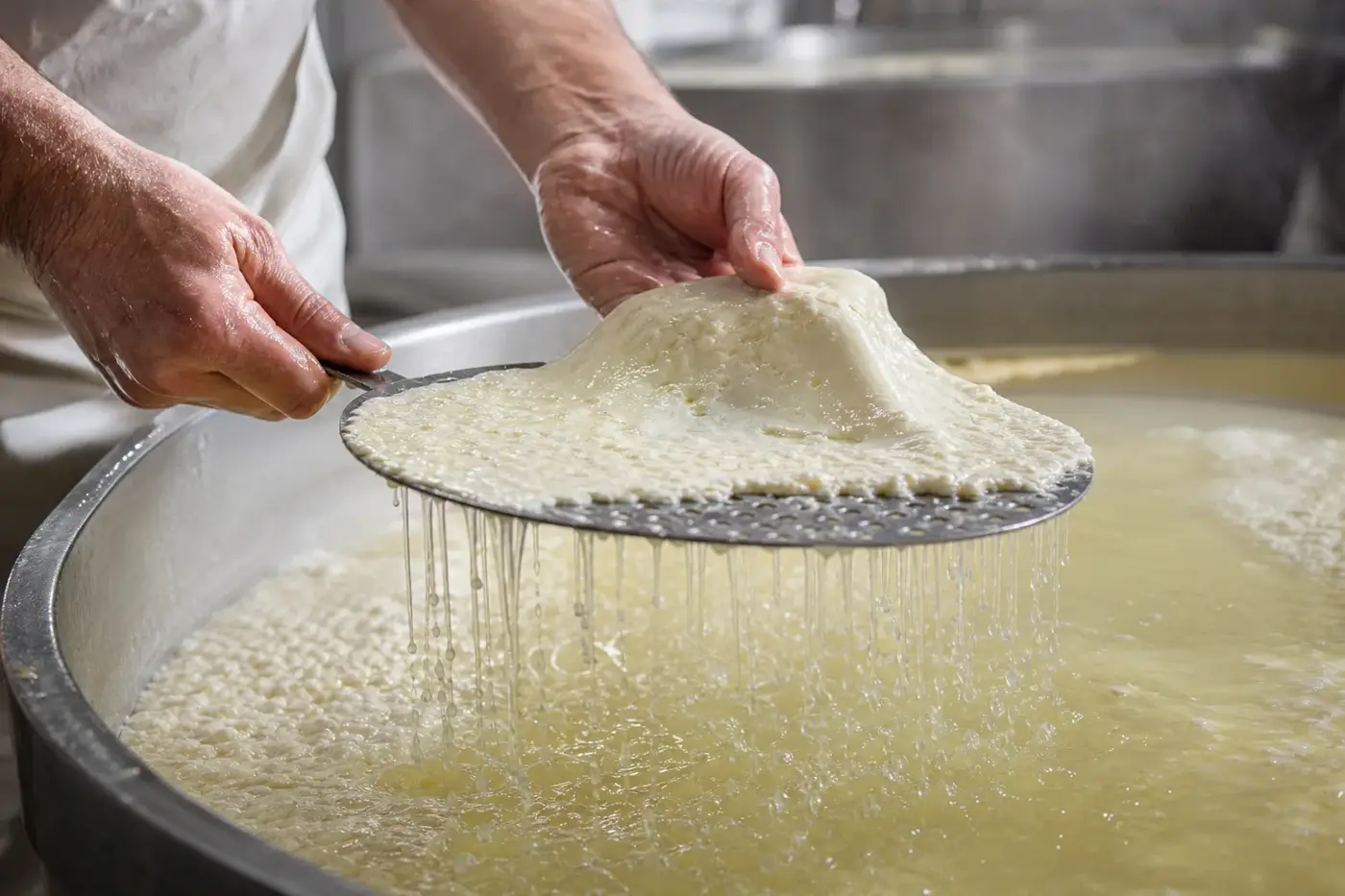
Your knife slips through a chilled block. Beside it sits a tangy cashew spread, perhaps even a round with a carefully grown rind. They may share space on your plate, but they have taken very different routes to get there.
Soaked cashews can become a spread; a hot blend of starch, water and coconut fat can cool into a sliceable block. Behind both sit milling, heating, acidification, fermentation and, sometimes, maturation. The cheese board, it turns out, has quite a backstage crew.[2][3]
Different routes to a good sandwich
Picture a smooth sandwich slice beside a spoonable cultured spread. Each needs its own structure. Dairy cheese usually begins with a network of casein, milk's principal cheese-making protein, holding fat and water. Plant ingredients bring different proteins, fats and carbohydrates, so makers must build something suited to the job.[14]
Some alternatives are cooked emulsions, with fat droplets dispersed through water. Others begin as fermented plant pastes, while some combine both approaches. If you want to follow the dairy route, visit how cheese is made.[1][2]
The name has boundaries, too. In Great Britain, assimilated Regulation (EU) No 1308/2013, Annex VII, Part III reserves “cheese” for milk products, subject to specified exceptions. Northern Ireland follows the EU dairy-designation rules. The everyday phrase in this article's title means plant based alternatives.[5]
Meet the ingredients behind the texture
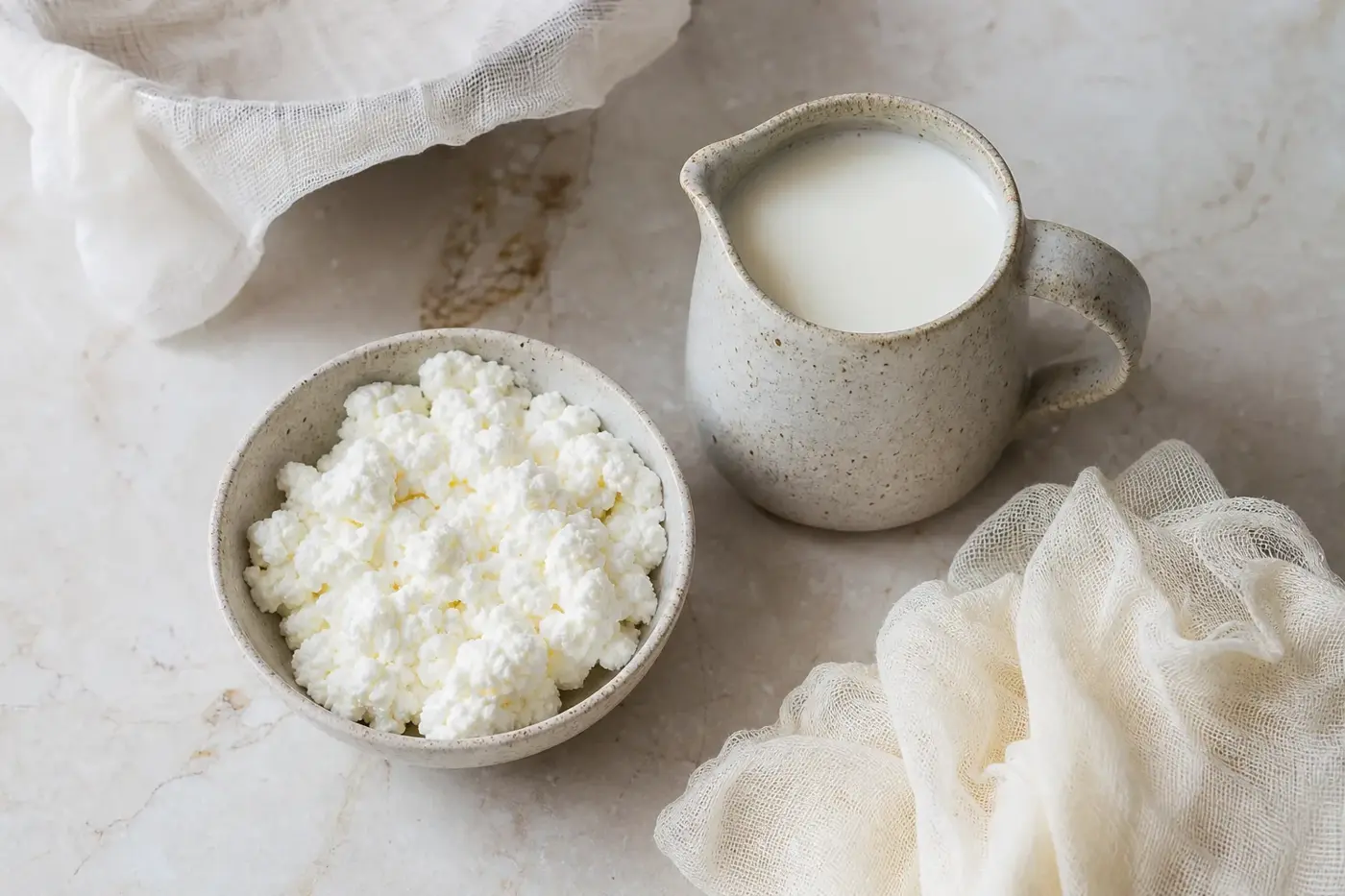
Cashews and almonds bring more than flavour to a cultured paste. Their fat, protein and finely milled solids can give it body. Researchers developing experimental mould-ripened alternatives have used cashew mixtures and combinations containing soya flour.[2]
Pulses offer another route. Researchers have compared pea, lentil, faba bean and soya protein ingredients in formulations with coconut oil and waxy maize starch. Even when the recipes were broadly similar, each protein ingredient affected melting and oil retention differently.[4]
Coconut fat supplies firmness when chilled, while starch can build much of the supporting network. That is a different job from the one whole nuts do. An almond-based formulation, for instance, may still depend on added potato starch and coconut oil for its final texture.[3][6]
How a handful of ingredients becomes a block
First comes an evenly mixed base. Whole nuts may be soaked and milled into a fine paste; protein powders and starches are dispersed into water. Fine grinding reduces the size of solid particles, while thorough mixing distributes the ingredients before the structure sets.[2][6]
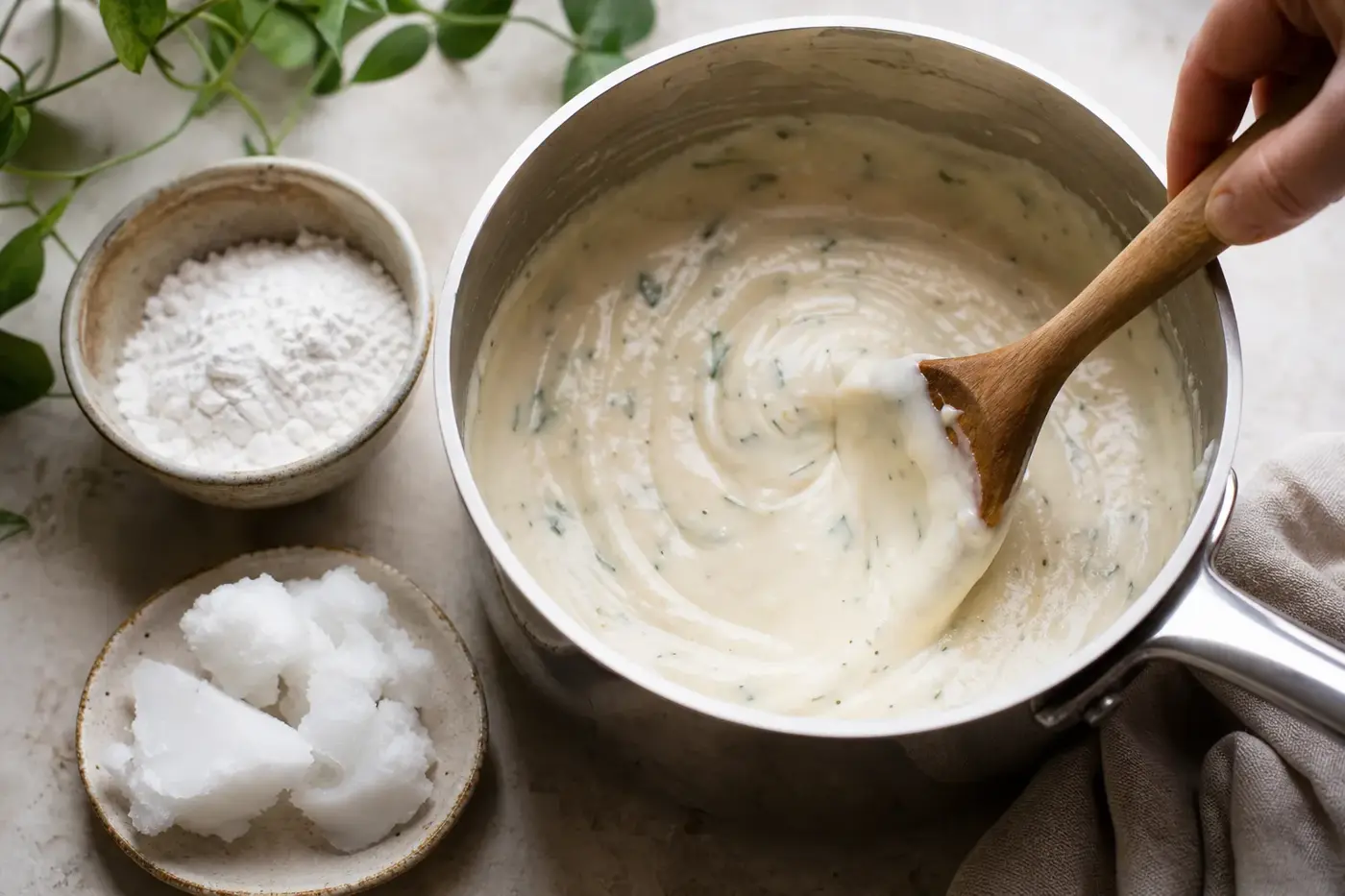
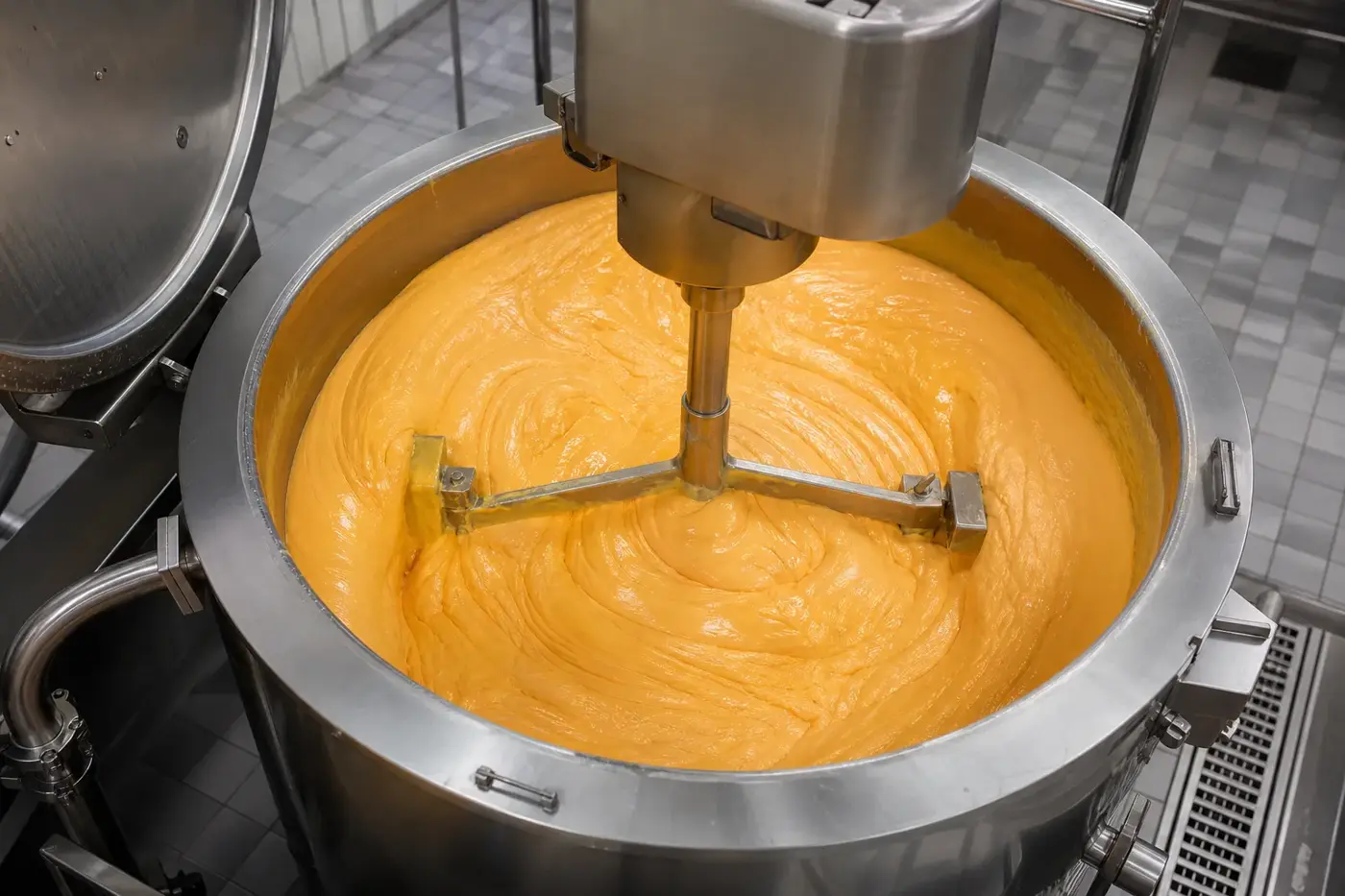
For a cooked starch-based product, the maker blends water, fat, starch, protein where used, and flavouring ingredients. Heat and mixing work together: starch absorbs water, the mixture thickens, and oil disperses throughout it. The hot mass then goes into moulds or packs and cools into its final body.[6][14]
Fermentation needs a carefully chosen place in that sequence. Selected microorganisms need conditions in which they can work, while hot processing changes both the ingredients and microbial survival. You cannot simply tack fermentation onto a finished block. The order must suit the formulation.[2][8]
Water does more than you might think
Heat starch with enough water and its granules swell, losing their ordered structure. This is gelatinisation, which produces a paste that helps hold everything together. As it cools, starch molecules can reassociate through retrogradation, changing firmness and how the product responds to reheating.[1][3]
Water is doing structural work here, not merely making the mixture wetter. Proteins and starch compete for it. The amount available affects swelling, interactions between particles and whether you get a firm gel or a soft paste.[1][14]
Fat brings lubrication and firmness that changes with temperature. In one experimental series, increasing coconut oil relative to sunflower oil made chilled samples harder, but did not continually improve melt or stretch. A firm block in your fridge and a flowing topping under heat are two separate achievements.[3]
Plant proteins can bind water, interact with droplets or sit as particles inside a starch network. Adding them changes structure as well as composition. Swap one protein isolate for another and you can change the finished result.[4]
Follow the tang back to its source
That tang can come from added acid or fermentation. Direct acidification means adding an acid to adjust acidity; fermentation gives selected microorganisms time to transform available substrates. Lactic acid bacteria can produce lactic acid, bringing tang and changing conditions inside the paste. What they achieve depends on the culture and the plant base.[7][8]
For experimental mould-ripened alternatives, researchers have tested lactic cultures alongside Geotrichum candidum and Penicillium camemberti, organisms also associated with dairy ripening. A separate study of eleven European ripened alternatives found Lactococcus lactis and Leuconostoc mesenteroides among the dominant bacteria. Those two fungi were prominent too.[2][7]
A cultured round needs time to change
Water removal helps decide whether your cultured alternative spreads, holds a cut face or develops a firmer outer layer. Draining removes liquid; salting changes flavour and the environment for microorganisms. Maturation then allows further biochemical change.[2][7]
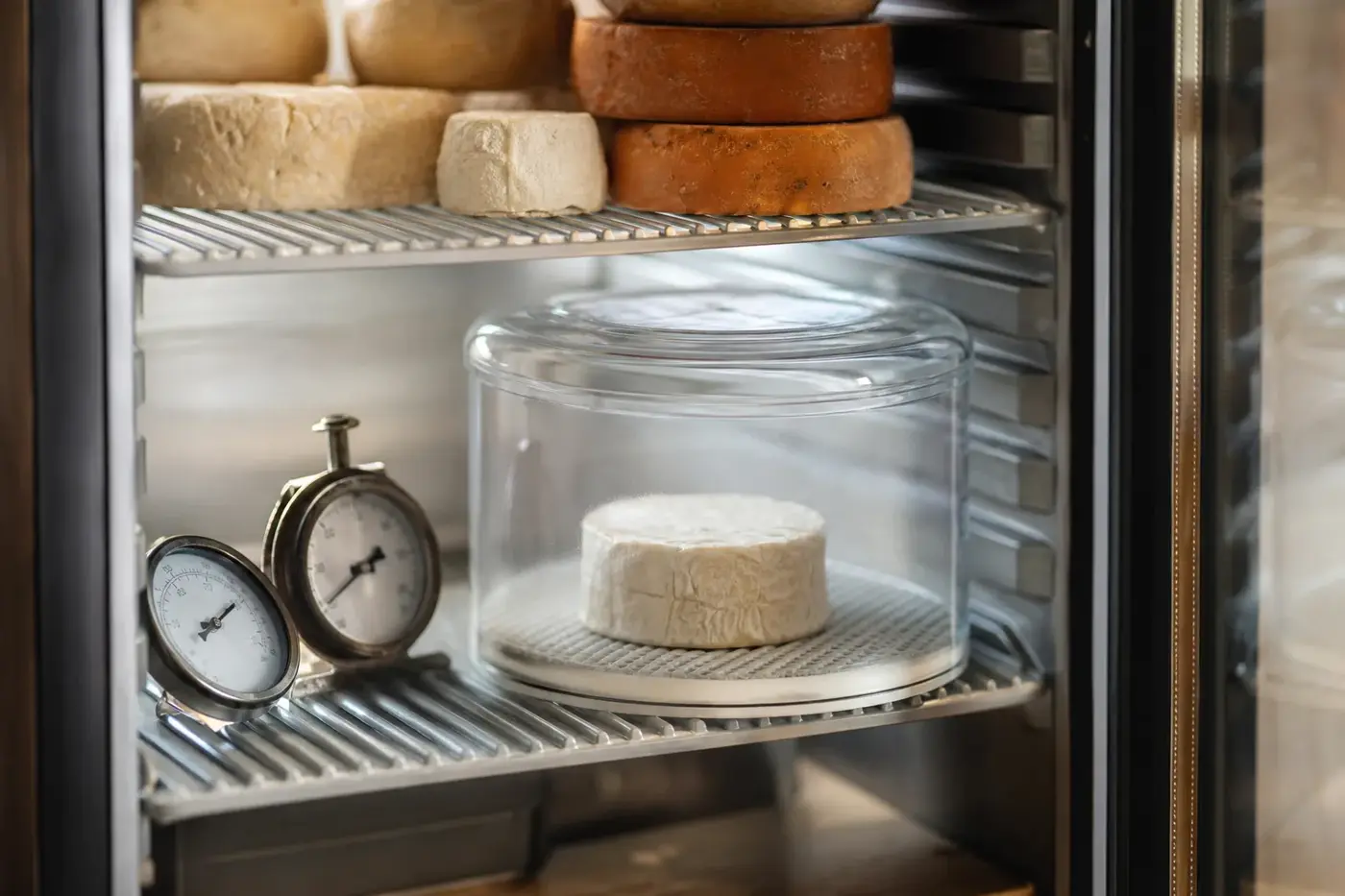
In surface-ripened versions, selected fungi grow on the outside and produce a rind. Their enzymes act on the plant material beneath. Even a culture shared with dairy cheese has different material to work on here: plant proteins and fats give its enzymes a different starting point.[7][8]
This is why an aged nut-based round and a cooked starch-based slice can be markedly different. The round develops through microbial activity and moisture management. The slice may get its intended texture during cooking and cooling.[13][14]
Keep the oil settled and let flavour speak
An emulsifier helps keep oil dispersed through water. A stabiliser can thicken the mixture or strengthen a gel, helping it hold its intended consistency. Proteins and starches have overlapping functions, so look at the whole formulation rather than giving one additive all the credit.[1][4]
Seasonings and added flavourings bring character alongside fermentation. You can find clues to the maker's approach in the ingredient list. Research on an almond-based formulation assessed aroma compounds alongside texture, melting and oil separation. Flavour and physical performance both need attention.[6]
What do you want it to do?
Start with the job you have in mind: spreading, slicing or melting. These are the approaches makers use to pursue different textures, but the individual formulation decides the result. Your sandwich and your hot topping may have rather different recruitment criteria.[1][3][4][13]
| Style | What holds it together | What to expect |
|---|---|---|
| Spreadable | A soft, finely dispersed paste with water and lubrication to help it spread | May soften further without flowing like a melting slice |
| Sliceable | A network that holds together when cold, often helped by solid fat | Can soften while keeping its shape |
| Meltable | A network that weakens sufficiently under heat | Flow, stretch and oil release depend on starch, protein and fat working together |
| Mould-ripened | A cultured base with controlled surface growth and moisture change | Rind development and maturation are separate from melting performance |
Melting fat is only part of getting a flowing topping. A strong surrounding network can soften yet stay put. If that network releases oil, you may get a greasy surface rather than a cohesive melt. That is why experimental work measures spread, stretch and oil loss separately.[4][14]
This page summarises published guidance from the official sources it cites. It is not medical advice. Guidance differs between countries and changes over time, so check the current source for where you live, and ask your doctor, midwife, pharmacist or dietitian about your own circumstances.
From fridge to rind, put safety first
Fermentation and a white rind are not substitutes for safety controls. Makers need to control raw materials, contamination, acidification and the conditions where intended cultures grow. An acceptable experimental sample establishes a result under those particular test conditions.[8]
Do not improvise home ageing by leaving nut paste warm or introducing mould from another food. A suitable method needs product-specific controls and specialist assessment. For everyday handling, follow the official sources and the food safety guide.[8]
For England, Wales and Northern Ireland, the FSA advises keeping your home fridge between 0 and 5 °C. Follow the product's storage instructions, including its limit after opening. The official guidance covered here is dated November 2026.[9][10]
UK Government guidance distinguishes a use by date, which concerns safety, from a best before date, which concerns quality. It advises against eating, cooking or freezing food after its use by date. Separate guidance covers food cooked or frozen before that date.[10]
Look beyond “vegan” on the label
Dairy-free does not mean free of every animal-derived ingredient. Check the complete ingredients and the maker's vegan information. The FSA explains that vegan labelling means animal ingredients were not intentionally used, but cross-contamination can still happen. If you have allergies, it advises checking the label rather than assuming vegan food is suitable.[11]
For England, Wales and Northern Ireland, the FSA's allergen guidance here is dated November 2026. Where an ingredients list is required for prepacked food, listed allergens must be declared and emphasised within it. Cashews, almonds and soya are particularly relevant bases, while other ingredients can introduce further allergens. Read precautionary “may contain” statements too.[12]
Nutrition follows the recipe, not the appearance. A product built around coconut oil and starch differs from one with substantial nut solids or added pulse protein. Compare protein, saturated fat and salt per 100 g, then check whether calcium or vitamins have been added. Fortification is a formulation choice; a slice's appearance or a developed rind tells you little about it.[3][4][7]
For wider label checks, turn to how to read a cheese label. To explore the distinction between reactions, see cheese allergy vs lactose intolerance.
Questions people ask
How is a plant based cheese block made?
For a cooked starch based product, water, fat, starch, flavourings and sometimes protein are blended and heated. The thickened mixture is put into moulds or packs and cooled to develop its final body.
Why do some plant based alternatives not melt well?
Melting fat is only part of making a flowing topping. A strong surrounding network can leave a product softer but still in place, while a network that releases oil can make its surface greasy.
How do plant based alternatives develop a rind?
Selected fungi grow on the outside of surface ripened versions to produce a rind. Their enzymes also act on the plant material beneath during maturation.
Is a vegan label enough to show that a product is safe for someone with an allergy?
The FSA says vegan labelling means animal ingredients were not intentionally used, but cross contamination can still occur. It advises people with allergies to check the label rather than assume vegan food is suitable; see the FSA guidance on vegan labelling and allergens.
How should plant based alternatives be stored?
For England, Wales and Northern Ireland, the FSA advises keeping a home fridge between 0 and 5 °C. Follow the product’s storage instructions, including its limit after opening, and see the FSA and UK Government food safety guidance.
Sources
- Wageningen University and Research, Food Hydrocolloids. Melting properties of vegan cheese: Effect of emulsion and protein addition on the thermal behaviour of starch gels, volume 144, article 108917, 2023. Experimental starch-gel model systems.
- Foods. Plant-Based Alternatives to Mold-Ripened Cheeses as an Innovation among Dairy Analogues, 2024. Experimental plant matrices fermented with bacterial and fungal starter cultures.
- Current Research in Food Science. Effect of saturated and unsaturated fat on the physical properties of plant-based cheese, volume 9, article 100832, 2024. Experimental coconut-oil and sunflower-oil blends assessed by texture, melting, stretching and rheological measurements.
- Food Hydrocolloids. Physicochemical and functional characterization of plant protein isolates and their influence on plant-based mozzarella cheese performance, volume 164, article 111222, 2025. Comparison of pea, lentil, faba bean and soya protein isolates in experimental formulations.
- Food Standards Agency, Food allergen labelling and information requirements technical guidance, page updated 3 November 2026, including its explanation of reserved dairy designations; UK legislation publisher, Regulation (EU) No 1308/2013, Annex VII, historical version dated 31 January 2020.
- Science and Technology of Food Industry. Optimization of the Preparation Process and Quality Analysis of Almond-Based Plant-Based Cheese, volume 47, issue 23, 2026. English abstract of formulation, processing and quality experiments.
- Food Research International. Nutritional and microbial profiles of ripened plant-based cheese analogs collected from the European market, 2024. Examination of eleven European soft-ripened alternatives.
- Brazilian Journal of Microbiology. Microbiological safety and antimicrobial resistance in cashew-based plant-based cheese analogues, 2026. Microbiological examination, microbial identification and antimicrobial-resistance investigation.
- Food Standards Agency, How to chill, freeze and defrost food safely, published 2017, current page retrieved November 2026. Applies to England, Northern Ireland and Wales.
- UK Government, Understanding food labelling: Best before and use-by dates, current online guidance, retrieved November 2026.
- Food Standards Agency and UK Government, Understanding food labelling: Vegan food labelling, current online guidance, retrieved November 2026.
- Food Standards Agency, Food allergen labelling and information requirements technical guidance, page updated 3 November 2026. Applies to England, Northern Ireland and Wales.
- Foods. Comparative Analysis of Composition, Texture, and Sensory Attributes of Commercial Forms of Plant-Based Cheese Analogue Products Available on the Irish Market, 2025. Commercial-product composition and structural comparison.
- Food Structure. Exploration of structural differences between dairy and plant-based cheese, 2025. Experimental comparison of structure and heating behaviour.
This desk-researched article synthesises primary food-science studies and official UK guidance; access limitations and outstanding publication checks are recorded below.
Last checked: November 2026
Last checked November 2026.
The editors suggest you read next
How Processed Cheese Is Made
Inside the cooker, pieces of cheese soften, turn and merge as heat and mixing do their work.