Home Cheese Ageing: Temperature, Humidity and Safety
A white, felt-like coat spreads across a Camembert-style cheese.
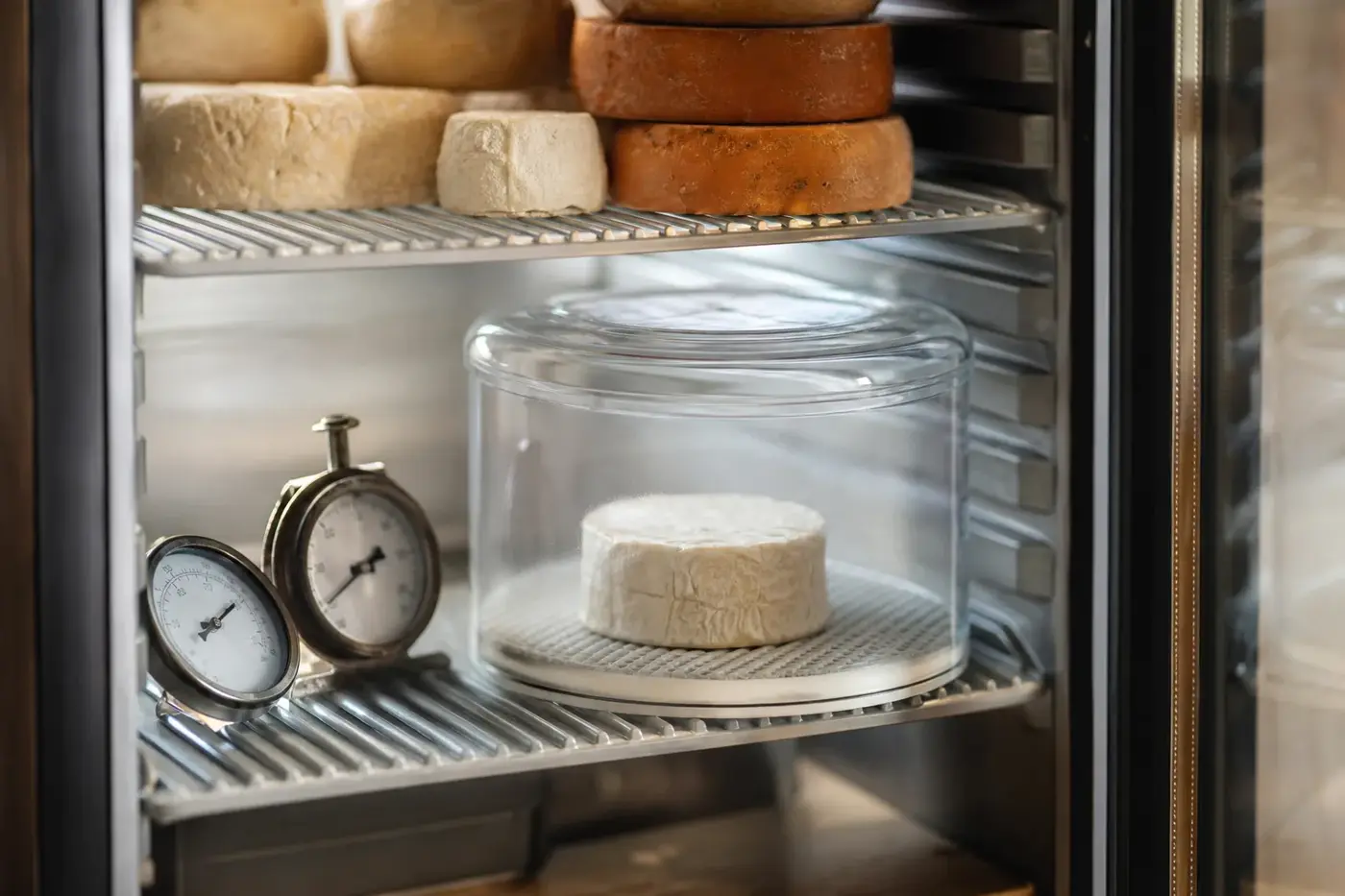
A white, felt-like coat spreads across a Camembert-style cheese. Beneath it, something rather lovely is happening. In New England Cheesemaking Supply Company’s method, enzymes in that surface soften the cheese from the outside towards the centre. The conditions around your cheese help this quiet transformation along. [4]
Your household fridge keeps food cold. An ageing space has a different job: supporting a particular cheese’s development. The warmer, humid conditions that encourage a rind also demand a suitable cheesemaking recipe, close monitoring and careful hygiene. Start with the complete method, then choose equipment that can maintain its conditions. [1][2]
Beneath the rind, the real work begins
As your cheese ages, its aroma, flavour and structure change. Enzymes break down proteins, fats and carbohydrates, while microorganisms can transform the surface. Moisture escapes, shaping the rind and the texture beneath it. You will hear this process called ripening, ageing or affinage. [2]
Not every cheese takes the same route. New England Cheesemaking Supply Company’s Camembert-style method develops that softening white coat. Its Cheddar method protects a pressed cheese with wax or cloth for a much longer maturation. Some cheeses settle in for quite a stay. [3][4]
Temperature, humidity and airflow work alongside acidity, salt, moisture and cultures. Conditions that suit one rind can damage another, so there is no universal setting to dial in and forget. You can follow the wider sequence in how cheese is made. [2]
Start with the curd, not the cabinet
Your ageing project begins long before you put cheese on a shelf. Choose a complete method covering preparation, acidification, salting, surface treatment and maturation. Even a beautifully controlled cabinet cannot put an unsuitable curd right. [2][5]
Fresh cheese needs refrigerated storage according to its recipe. Ordinary shop-bought cheese belongs wherever its label directs, not somewhere warmer for an experiment. For everyday keeping, follow how to store cheese at home. [1][8]
Choose pasteurised milk for home cheesemaking. Pasteurisation gives you one protective step, not permission to relax the rest. Clean equipment and a properly controlled method remain necessary throughout production and ageing. [2][10][11]
Find your cheese a space of its own
Keep ordinary food refrigeration separate from warmer cheese ripening. For household fridges, FSA guidance applicable to England, Wales and Northern Ireland recommends 0 to 5 °C. Use a fridge thermometer to check yours. [1]
A dedicated fridge or suitable cooler gives you temperature control. A lidded food container helps manage the smaller environment immediately around your cheese. Neither the thermostat setting nor the room temperature tells you what is happening beside the rind. [5][6]
Use an independent thermometer alongside the controller, plus a hygrometer for relative humidity. If your cheeses sit inside boxes, take measurements inside those boxes too. Relative humidity means moisture in the air, not moisture in the cheese. [5][6]
Before committing a batch, test the shelf position you intend to use. Can it maintain the recipe’s conditions? Keep the arrangement stable, leave space for air around the cheese and use a mat to lift its underside clear of accumulated moisture. [5][6]
Let the recipe set the temperature
These examples come from New England Cheesemaking Supply Company, a commercial supplier publishing its own methods. Notice how conditions change between recipes and stages. Follow the complete method and its controls, rather than lifting a promising temperature from the table. [3][4]
| Method and stage | Temperature to maintain | Relative humidity | Turning and maturation |
|---|---|---|---|
| Cheddar, waxed or clothbound | Approximately 11 to 13 °C (52 to 56 °F) | 80 to 85% | Turn weekly; mature for 3 to 9 months or longer, depending on moisture. [3] |
| Camembert-style, surface development | Approximately 11 to 13 °C (52 to 56 °F) | 92 to 95% | Turn once or twice daily during this stage. [4] |
| Same Camembert-style method, final ripening | Approximately 6 to 7 °C (42 to 45 °F) | Not specified for this stage | Move cooler after surface development; ripen for several more weeks. [4] |
Even one cheese can need a change of conditions as it matures. Keep each stage’s temperature, duration and surface treatment together when you follow the recipe. They are a package, however tempting it is to collect only the convenient bits. [4]
Humid air, yes. A soggy underside, no
Look beneath your cheese as well as above it. Droplets on the lid, a wet mat and a persistently damp underside can signal too much moisture. A young cheese releases moisture itself, sometimes enough to maintain humidity inside its container. Check the hygrometer and container before adding water. [5]
The supplier’s ageing guidance describes raising humidity with a damp paper towel kept away from the cheese. For excess moisture, it recommends letting some escape and wiping condensation from the lid and container when turning. Keep standing water and drips off the rind. [5]
Air needs to move, too. Opening a box regularly allows accumulated gases to exchange with fresh air; a raised mat lets air reach underneath. Follow the recipe’s handling schedule, reassess humidity after changes and never leave a wet box sealed indefinitely. [5][13]
Make cleaning part of your cheese ritual
Clean hands, surfaces and equipment matter at every stage. In England, Wales and Northern Ireland, follow the FSA’s guidance: wash hands with soap and warm water, and clean work surfaces, utensils and containers. Wash your hands again after handling raw food. [7]
Keep ageing equipment away from raw meat, fish, unwashed produce and their preparation tools. FSA cross-contamination guidance recommends separating raw and ready-to-eat foods, using separate boards and utensils where possible. A dedicated ageing cabinet makes that separation easier to organise. [8]
Give the smaller pieces of kit the same attention: mats, lids, turning boards and rind-care tools. Follow manufacturers’ cleaning instructions and your method’s sanitising requirements. Wash or change cloths regularly and dry them before reuse; the FSA warns that dirty, damp cloths encourage bacterial growth. [2][7]
Turn your cheese, and turn a notebook page
Do not wait for your cheese to look uneven before turning it. Follow the recipe’s rhythm. Those published examples call for weekly turning for Cheddar, but once or twice daily during the Camembert-style cheese’s surface-development stage. [3][4]
Rind care is just as particular. Washing, brushing, wrapping and leaving an intended mould surface undisturbed create different environments. Visible growth on two cheeses is no reason to borrow one cheese’s washing routine for the other. [2]
Give each batch a simple record: recipe and version, milk treatment, make date, prescribed conditions, actual readings, turning, rind care and observed changes. Include missed checks and equipment problems, not only the good days. Your notebook puts the American Cheese Society’s emphasis on documented process conditions to practical use at home. [2]
Get to know the rind, and its limits
What you should expect depends on the recipe and stage. The Camembert-style example calls for a white surface; mould beneath an intact wax coating would be unexpected in the Cheddar example. Colour alone cannot identify an organism or tell you whether the cheese is fit to eat. [3][4][9]
Stop and seek competent advice if you find unexpected mould, an unexplained off smell, persistent slime or unplanned swelling. Do not taste the cheese to investigate. Describe the changes and consult your batch record; if safety cannot be established, discard the whole cheese. [2][4]
One recipe describes a slightly slippery surface during its yeast development stage. That does not explain every slimy rind. Neither appearance nor smell establishes microbiological safety: laboratory sampling has detected harmful bacteria in aged cheeses, even after extended maturation. [4][10]
This page summarises published guidance from the official sources it cites. It is not medical advice. Guidance differs between countries and changes over time, so check the current source for where you live, and ask your doctor, midwife, pharmacist or dietitian about your own circumstances.
Know when a mould spot means goodbye
US USDA FSIS guidance treats solid hard cheese differently from soft cheese. For an isolated mould spot on hard cheese, it advises cutting away at least 2.5 cm (1 inch) around and below the spot. Keep your knife out of the mould, then use fresh wrapping. [9]
The same US guidance says to discard mouldy soft cheeses and mouldy shredded, crumbled or sliced cheeses. Soft mould-ripened cheeses must also go if mould develops outside their intended manufacturing process. An intended rind and unexpected growth are not the same thing. [9]
That hard-cheese trimming advice addresses a particular storage problem. If your home batch’s manufacture, conditions or unexpected growth cannot be assessed, seek specialist advice and discard it if safety cannot be established. Never trim cheese in response to a recall: follow the notice, and see mould on cheese for further distinctions. [2][9][14][15]
Why more time cannot cure contamination
An ageing calendar cannot promise safety. The US FDA’s sampling programme found pathogens in raw-milk cheeses aged for at least 60 days. Its published explanation explicitly states that this period may fail to eliminate or adequately reduce disease-causing bacteria. Ageing does not reliably eliminate harmful bacteria, so time is no dependable remedy for contamination. [10]
Contamination can also happen after milk treatment. The American Cheese Society identifies equipment, water and the ageing environment among potential sources during handling. Protect your pasteurised milk from contamination throughout the process. [2]
In the UK, the FSA warns that raw drinking milk may contain harmful bacteria. It advises pregnant people, people aged 65 or over, infants, small children and people with compromised immunity against consuming it. This advice concerns raw milk and cream; you need to consult cheese-specific guidance separately. [11]
Plan your first batch with extra care in mind
For pregnancy in the UK, NHS guidance dated November 2026 advises avoiding soft cheeses with a white coating and soft blue cheeses unless cooked until steaming hot. It also lists cheeses that can be eaten and specifies other exceptions. Consult the full NHS guidance rather than treating that short list as the whole picture. [12]
Newborn babies, older people and people with weakened immunity are among those the NHS identifies as being at greater risk of serious listeriosis. Consult the linked NHS guidance dated November 2026 for UK advice on listeriosis and food precautions. Discuss your individual circumstances with a healthcare professional. [16]
If you are beginning, fresh cheese made with pasteurised milk avoids weeks of rind development. Pasteurisation alone, however, does not make a method safe. Choose a complete fresh or aged cheese method with safety controls assessed by a qualified cheesemaking specialist, and follow its refrigeration instructions. Have your recipe, equipment and monitoring routine ready before you make the batch. [1][2]
Questions people ask
What temperature and humidity does cheese need for ageing?
Conditions depend on the cheese and its stage. New England Cheesemaking Supply Company’s Cheddar method uses approximately 11 to 13 °C and 80 to 85% relative humidity, while its Camembert method uses the same temperature and 92 to 95% humidity during surface development. The Camembert then moves to approximately 6 to 7 °C for final ripening.
How often should I turn an ageing cheese?
Follow the recipe’s schedule. The published Cheddar method calls for weekly turning, while the Camembert method calls for turning once or twice daily during surface development.
How can I check conditions inside a cheese ageing box?
Use an independent thermometer and a hygrometer, and take readings inside the box as well as in the cabinet. Check the container for condensation, a wet mat or a persistently damp underside, which can signal excess moisture.
Can I cut mould off cheese?
USDA FSIS guidance advises cutting at least 2.5 cm around and below an isolated mould spot on solid hard cheese, keeping the knife out of the mould and using fresh wrapping. It says to discard mouldy soft cheeses and mouldy shredded, crumbled or sliced cheeses. See the USDA FSIS guidance for its distinctions.
Can I eat soft cheese during pregnancy?
In the UK, the NHS advises avoiding soft cheeses with a white coating and soft blue cheeses unless cooked until steaming hot. Its guidance also lists cheeses that can be eaten and specifies other exceptions. Consult the full NHS guidance.
Sources
- Food Standards Agency. How to chill, freeze and defrost food safely, published 2017, current web edition retrieved November 2026. Applies to England, Northern Ireland and Wales. Official guidance.
- American Cheese Society. Best Practices Guide for Cheesemakers, 2025 edition, particularly section 3, cheesemaking and ageing, and its guidance on records and equipment hygiene. Technical guide.
- New England Cheesemaking Supply Company. Cheddar Cheese Making Recipe, undated web edition retrieved November 2026, particularly “Prepare for Aging” and “Aging”. Commercial supplier’s own method. Published method.
- New England Cheesemaking Supply Company. Camembert Recipe, undated web edition retrieved November 2026, particularly surface development and final ripening. Commercial supplier’s own method. Published method.
- New England Cheesemaking Supply Company. Aging Cheese FAQ, undated web edition retrieved November 2026, particularly “Using Boxes to Regulate Moisture”. Commercial supplier’s practical guidance. Ageing guidance.
- New England Cheesemaking Supply Company. Aging Caves and Other Spaces, undated web edition retrieved November 2026. Commercial supplier’s equipment guidance. Monitoring guidance.
- Food Standards Agency. Why is cleaning important, current web edition retrieved November 2026. Official cleaning guidance.
- Food Standards Agency. Why avoiding cross-contamination is important, current web edition retrieved November 2026. Official separation guidance.
- US Department of Agriculture, Food Safety and Inspection Service. Molds on Food: Are They Dangerous?, undated archived agency leaflet, retrieved November 2026 from Gallatin City-County Health Department. See “Moldy Food: When to Use, When to Discard”. Agency leaflet.
- US Food and Drug Administration. FDA Shares Completed Survey and Data from Ongoing Sampling Program, 2016, reporting sampling conducted in 2014 and 2015. FDA findings.
- Food Standards Agency. Raw drinking milk, current web edition retrieved November 2026. Official raw-milk advice.
- NHS. Foods to avoid in pregnancy, current web edition retrieved November 2026, “Cheese, milk and other dairy”. Official pregnancy guidance.
- New England Cheesemaking Supply Company. The Cheese Making Process, undated web edition retrieved November 2026, “Aging Cheese & At Home Cheese Cave”. Commercial supplier’s practical guidance. Process guidance.
- Food Standards Agency. Alerts, live notice index, retrieved November 2026. Official alerts.
- US Food and Drug Administration. Recalls, Market Withdrawals, & Safety Alerts, live notice index, retrieved November 2026. Official notices.
- NHS. Listeriosis, current web edition retrieved November 2026, particularly “Risks of listeriosis”. Official listeriosis guidance.
Researched through official consumer safety guidance, an industry technical guide and attributed supplier methods, comparing their different purposes and limits.
Last checked: November 2026
Last checked November 2026.
The editors suggest you read next
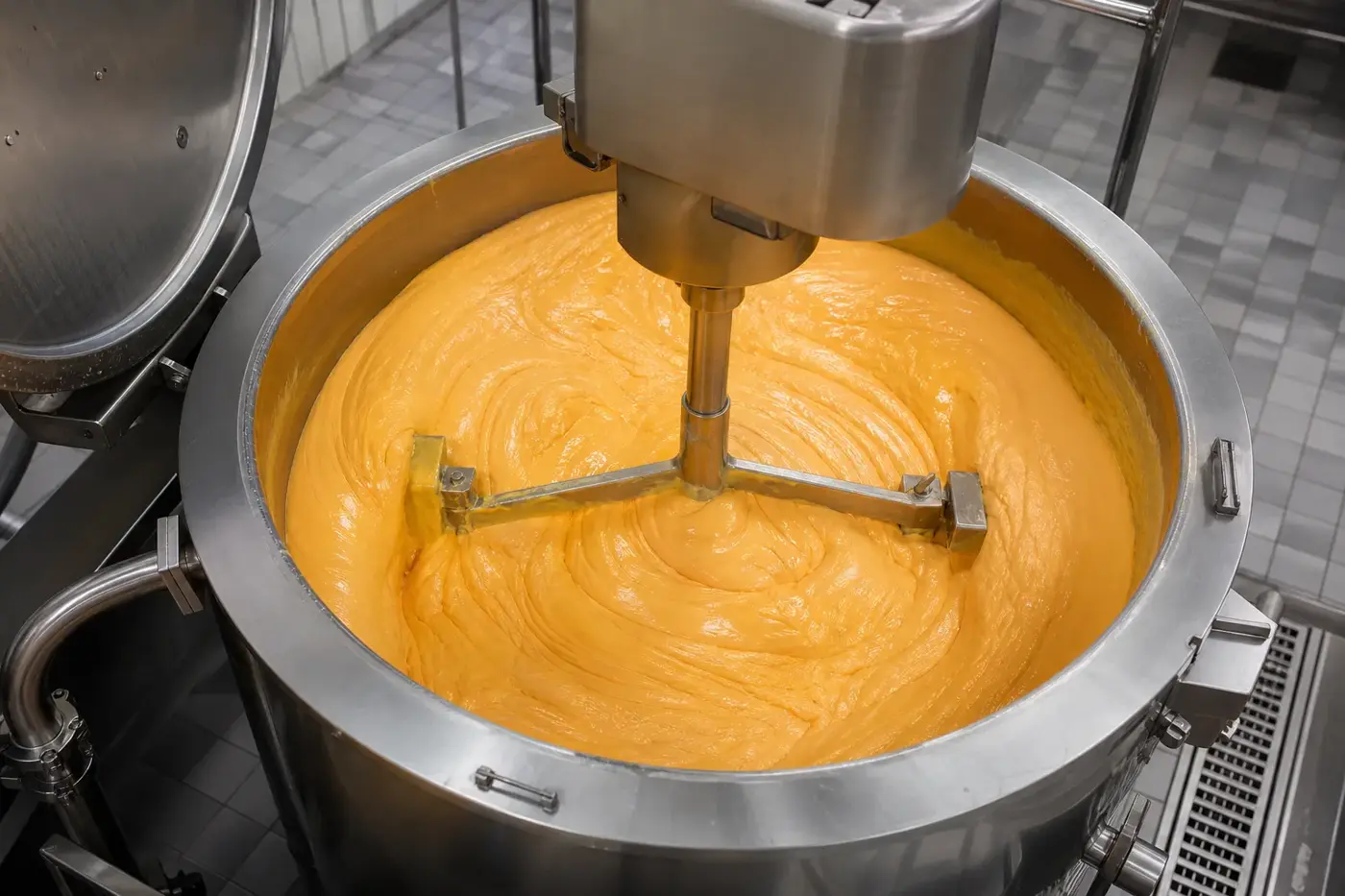
How Processed Cheese Is Made
Inside the cooker, pieces of cheese soften, turn and merge as heat and mixing do their work.