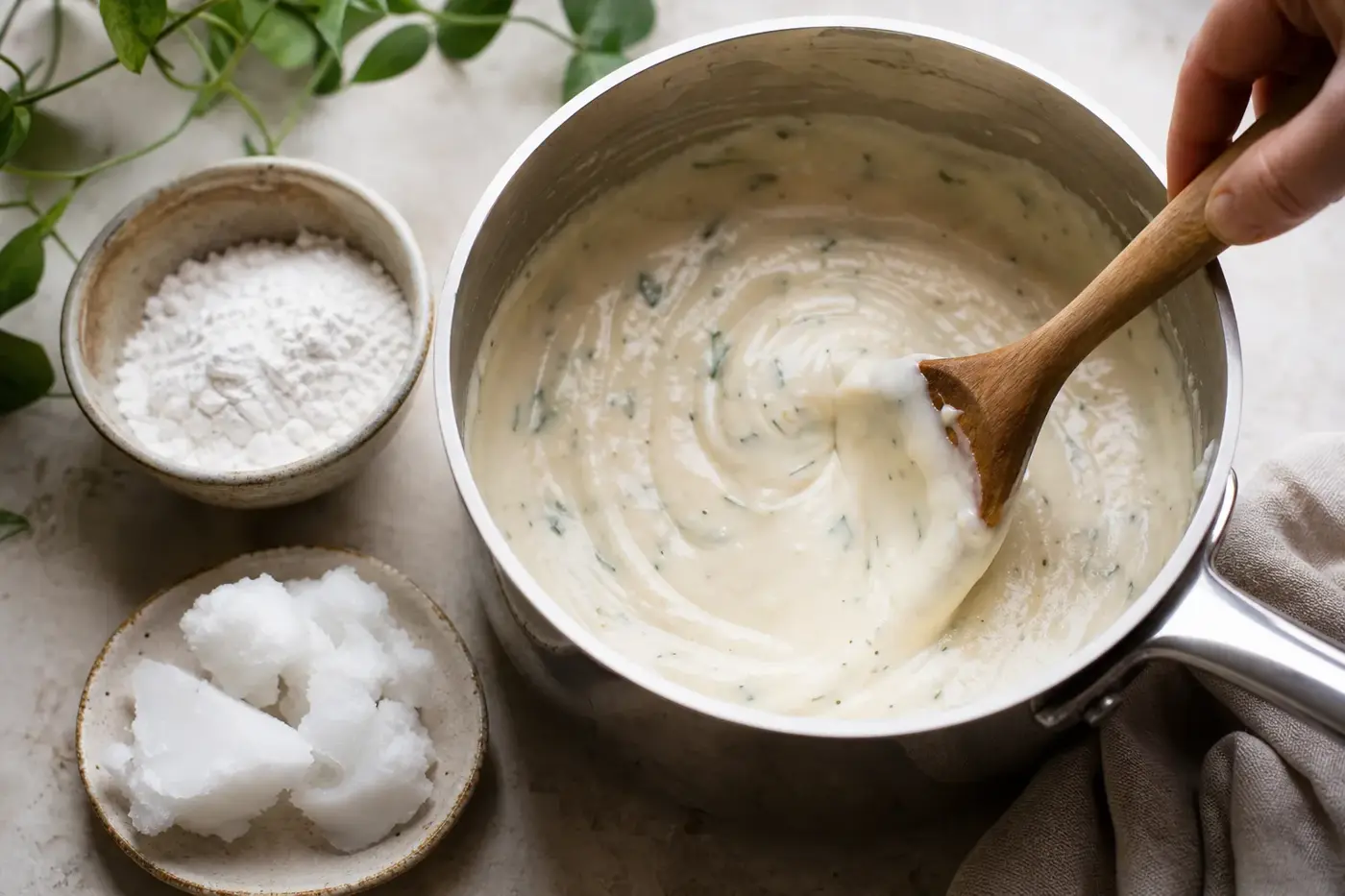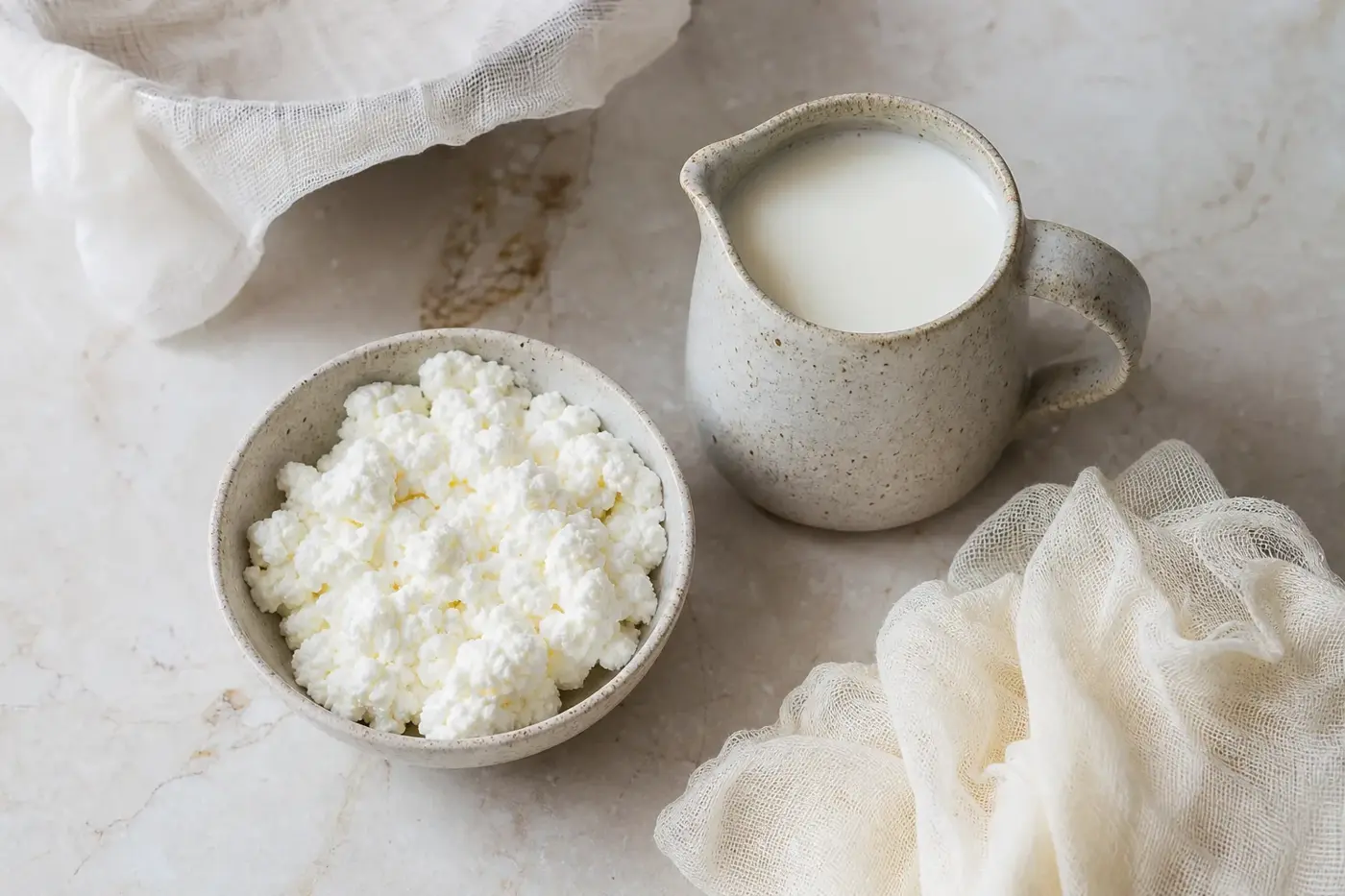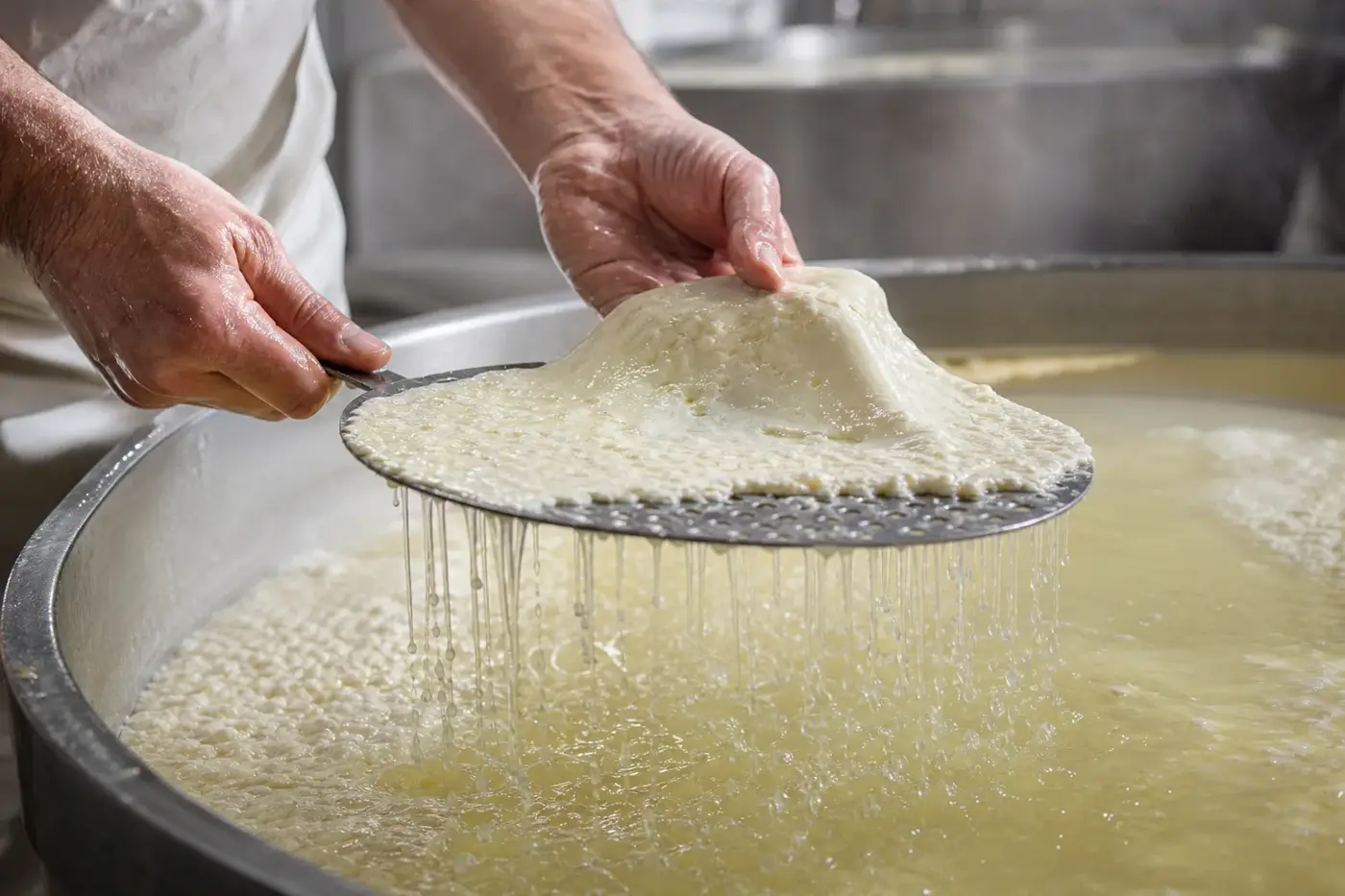
Watch the surface of heated whey. A fragile layer of pale curds gathers, waiting for a gentle lift and a chance to drain. The first cheese has already left the vat, but there is still something worth bringing to your table. [1,4]
Heat, sometimes helped by an adjustment to acidity, gathers the remaining proteins into another cheese. Follow the whey towards a brown whey product, though, and the maker concentrates the liquid itself. One starting material, two very different destinations: whey is not quite ready to leave the party. [1,4,7]
After the first cheese, plenty remains
Look beyond the curd and you will find more than water leaving the cheesemaking vat. As casein, milk’s main structural protein, gathers into a network, it holds on to fat and some water. Much of the remaining water drains away as whey, carrying dissolved lactose, minerals and proteins still dispersed in the liquid. [1]
Those whey proteins offer the makings of a second cheese. Their structures and cheesemaking properties differ from casein’s, though, so repeating the first vat’s treatment will not do. The maker needs a process suited to what is left. [1,3]
You can follow the wider journey in how cheese is made. It takes you from milk preparation through coagulation, when proteins gather into curd, to drainage.
Sweet or acid? Get to know your whey
“Sweet” and “acid” tell you how the whey came about and describe its acidity. Sweet whey generally comes from rennet-coagulated cheesemaking, where enzymes set the casein network forming. Acid whey comes from processes in which acidification does the main work of separating the curd. [1,2]
Both contain milk solids, including lactose, but you cannot treat them as interchangeable liquids. As milk becomes more acidic, minerals associated with casein become more soluble and move into the whey. Alongside its lower pH, acid whey can therefore have a different calcium and mineral balance, affecting what happens later. [1,2]
Think of those names as starting points, not recipes. Research sampling whey from six dairies in Amman found differences in protein, lactose, acidity and salts between the resulting sweet and acid whey concentrates. For the maker, knowing what is actually in the vat matters more than expecting every whey to behave alike. [2]
Turn up the heat, unfold the proteins
Heat changes the shape of whey proteins. They begin as compact, folded molecules, then unfold through a process called denaturation. Newly exposed parts can interact, gathering into aggregates large enough to separate from the liquid. [3]
Acidity and mineral conditions help decide how those aggregates develop. In an experimental comparison of two whey protein concentrates, researchers examined aggregation using electrophoresis, chromatography and electron microscopy. Concentrates from cheese whey and mineral-acid whey behaved differently, showing that heat was only part of the story. [3]
One published continuous ricotta process lets you follow the sequence:
| Stage | What happens in this experimental process |
|---|---|
| Warm it through | Successive heating stages bring the liquid to 92 °C. |
| Allow a little time | A holding stage lets whey proteins denature. |
| Add the acid | Citric acid induces coagulation. |
| Collect the curds | A draining belt separates curds from the remaining liquid. |
The study investigated both a whey and whole-milk blend and concentrated whey. You are looking at the conditions for a working process, not a universal recipe for whey cheese. [4]
A gentle hand for delicate curds
A perforated ladle or sieve can be enough to gather these delicate curds. In traditional batch production, forming particles may float and collect at the surface. The maker lifts them, lets liquid escape, then leaves the collected curds to drain. [1]
There is none of the extensive cutting and firm pressing you might associate with hard cheeses. A skimmer and draining container have a different task from a curd knife and cheese press. These fragile protein aggregates reward a light touch, not an impressive display of upper-body strength. [1,4]
Continuous production can replace hand collection with mechanical separation, as the experimental draining belt shows. Either way, the challenge remains: separating fragile curds from a much larger volume of liquid. [4]
Why ricotta feels different on your spoon
The difference starts with the proteins building the cheese. Casein forms the main network in a conventional rennet cheese. In whey-based ricotta, heat aggregation recovers proteins left after much of that casein has gone. [1,4]
That helps explain fresh ricotta’s fine, particulate body, rather than the continuous structure you find in a pressed cheese. Yet one ricotta can feel quite different from another. A 2025 investigation of 40 retail ricottas from four producers measured substantial differences in texture and composition among products sharing the name. [8]
So “whey cheese” tells you about a production approach, not a promised consistency. How much milk goes into the vat, and how the curds are handled, also shape what reaches your plate. [4,8]
What milk and cream bring to the vat
Milk brings proteins and fat; cream changes the balance chiefly through fat. Both give makers ways to adjust a whey-based product’s composition. They need not depend entirely on the solids the first cheese left behind. [4,8]
In one treatment, the continuous-process study used 80% sweet whey and 20% whole milk. The Polish retail investigation found ingredient lists ranging from whey-only formulations to products containing milk, or milk and sweet cream. You may see the same name on the tub, but the starting mixture can be quite different. [4,8]
What a maker may add depends on the product. A commercial formulation tells you what a producer used; a protected product’s specification tells you what its registered name permits. Ricotta Romana brings that distinction into focus. [5,8]
Follow Ricotta Romana home to Lazio
For Ricotta Romana, place belongs in the story. Its European Union protected designation of origin, or PDO, ties production to Lazio, Italy. The official single document specifies whey obtained from whole sheep’s milk, with milk production, ricotta processing and packaging all taking place within the defined area. [5]
The rules allow whole sheep’s milk to join the whey as it heats to 50 to 60 °C, up to 15% of the whey’s volume. They also say that acidity adjusters are not added. Here you have a useful reminder: whey cheese does not always need added acid. [5]
Fresh, white and lumpy, with a sweetish, milky taste: that is how the specification describes the finished cheese. Those requirements and that description belong to this particular product and method. They do not apply to every cheese called ricotta. [5]
For more on regional production rules and broader cheese terminology, turn to protected names explained.
Fresh ricotta or ricotta salata? Reach for a spoon or grater
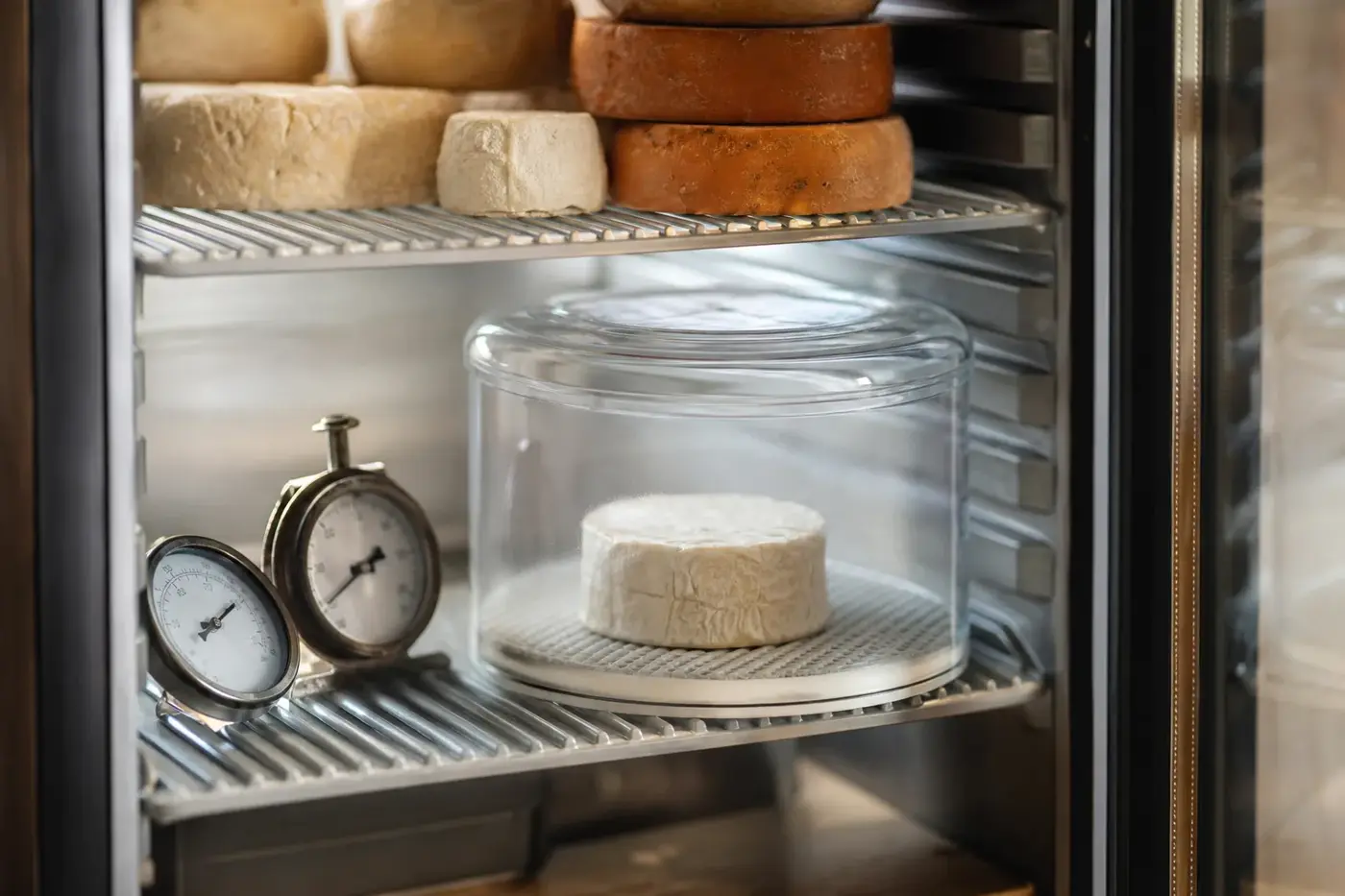
Fresh ricotta is collected and drained, ready to eat without maturation. Ricotta salata goes further, through salting and drying or maturation. You get a firmer cheese with a different job to do in your kitchen. [5,6]
Anemos Bio describes draining fresh ricotta, covering it with sea salt and maturing it for 10 to 30 days to make its seasoned ricotta salata. The company describes a firm cheese, stronger-flavoured than fresh ricotta and suitable for grating. That maturation period belongs to its product, rather than setting a minimum for every ricotta salata. [6]
Choose according to what your dish needs. A spoonful of fresh ricotta brings moisture and a soft filling; grated ricotta salata brings firmer texture and concentrated seasoning. Sharing a name does not make them straightforward substitutes. [5,6]
Brunost keeps the whey in the pan
Now picture the whey staying in the pan. For Norwegian brunost and other brown whey products, makers boil it down into a concentrated product. Instead of lifting out pale protein curds and draining away the liquid, they take a different route. [7]
On its Ostelandet website, Norwegian industry organisation HANEN describes brunost as made from concentrated, caramelised whey. It records variations in the whey, the cooking process and additions such as milk or cream. Those choices give individual brown whey products their differences. [7]
Concentration brings their characteristic colour and flavour. HANEN describes golden-brown colour and sweet taste; TINE describes its cow-and-goat-milk Gudbrandsdalsost as sweetish and caramel-like. Set those descriptions beside Ricotta Romana’s specified white appearance and milky taste, and you can appreciate just how differently whey can turn out. [5,7,9]
Let your dish have a say
With fresh whey cheese, moisture and fine curd structure matter. In the retail ricotta study, instrumental measurements and sensory assessment distinguished products with different hardness, brittleness and other textural characteristics. Ingredient lists differed too, helping explain why one tub may behave differently from the next. [8]
For spooning, spreading or filling, choose soft fresh ricotta. For grating, the firmer salted product described by Anemos has another role. Before you substitute, ask whether your dish needs moisture or a dry finishing ingredient. [5,6,8]
Neither fresh nor matured cheese is inherently better. Each does a different job, and the ingredient list helps you choose. Whey alone, whey with milk, and whey with milk and cream are materially different starting mixtures, even when the finished products sit together on the cheese counter. [5,6,8]
Keep it fresh, and read the label
Fresh whey cheese has a short keeping life. Its moisture and relatively mild acidity make careful refrigeration and handling important. [1] For consumers in England, Wales and Northern Ireland, the Food Standards Agency’s November 2026 guidance is to keep your fridge at 5 °C or below and follow packaging instructions, including storage directions after opening. [10]
Follow your product’s own date and storage directions, rather than giving every ricotta the same number of days. UK official guidance distinguishes a use-by date, which concerns safety, from a best-before date, which concerns quality. [11] You will find more practical guidance in storing cheese at home.
Whey comes from milk, so the label matters if you have an allergy. In England, Wales and Northern Ireland, the FSA identifies milk as an allergen to look for on food labels. In England, the NHS distinguishes food allergy from intolerance and advises avoiding foods containing an ingredient to which you are allergic, under its November 2026 guidance. [12,13]
Whey also retains lactose, measured directly in research following acid whey across a year. Recovering proteins does not make the finished cheese lactose-free. [14] Read milk allergy and lactose intolerance for the distinction, and seek individual advice from your clinician.
After the second cheese, another chapter
Lift out the curds and another liquid remains. Recovering whey proteins makes further use of the milk, but this second whey still contains dissolved material, including lactose and salts. The dairy must manage it as another processing stream. [4,15]
Researchers have investigated using ricotta cheese whey in fruit-based beverages, so protein recovery need not be its final use. What happens next depends on the liquid’s composition and the dairy’s processing arrangements. The story carries on beyond the cheese you take home. [15]
If you want a domestic method, continue to the separate home ricotta guide. These production principles explain what happens in the vats. A home method also needs its own specified ingredients, handling and storage controls.
General information only, not medical advice: follow the official guidance where you live.
Questions people ask
How is whey cheese made?
Heat unfolds proteins remaining in whey, allowing them to gather into curds. Makers collect and drain the delicate curds, sometimes adjusting acidity during the process.
What is the difference between sweet whey and acid whey?
Sweet whey generally comes from cheesemaking in which rennet enzymes start the formation of a casein network. Acid whey comes from processes where acidification does the principal work of separating the curd. Both contain milk solids, but their composition differs.
Does ricotta contain milk or cream as well as whey?
It can. A Polish retail investigation found ingredient lists ranging from whey alone to whey with milk, or whey with milk and sweet cream. Milk adds proteins and fat, while cream changes the balance chiefly through fat.
What is the difference between fresh ricotta and ricotta salata?
Fresh ricotta is collected and drained without maturation. Ricotta salata is salted and dried or matured, becoming firmer. Anemos Bio describes its ricotta salata as suitable for grating.
How is brunost different from ricotta?
Makers of brunost boil down whey into a concentrated product rather than lifting out and draining pale protein curds. The Norwegian industry organisation HANEN describes brunost as made from concentrated, caramelised whey, with a golden brown colour and sweet taste.
Sources
- American Society for Microbiology, The Basics of Cheesemaking, Microbiology Spectrum, 2013. Sections on casein, whey proteins and coagulation.
- Alsaed and colleagues, Characterization, Concentration and Utilization of Sweet and Acid Whey, Pakistan Journal of Nutrition, volume 12, 2013. Original research involving samples from six dairies.
- Heat-induced aggregation of whey proteins: comparison of cheese WPC with acid WPC and relevance of mineral composition, 2002. Experimental study, abstract indexed by PubMed.
- Modler, Development of a Continuous Process for the Production of Ricotta Cheese, Journal of Dairy Science, volume 71, 1988. Retrieved abstract.
- European Commission, Publication of the communication of an approved standard amendment to a product specification of a geographical indication, C/2026/4828, 17 September 2026. Ricotta Romana single document, reference PDO-IT-0298-AM01.
- Anemos Bio, Organic Seasoned Ricotta Salata, undated product and production account. Commercial source describing its own product.
- HANEN, Ostelandet Norge, Brunost, undated industry account. Norwegian-language production and style description.
- A Comparison of the Physicochemical Properties and Sensory Attributes of Ricotta Cheeses Purchased from Retail Outlets in Poland, 2025. Original research, including ingredient declarations, instrumental analysis and sensory assessment.
- TINE, TINE® Gudbrandsdalsost, undated product account, current page retrieved November 2026. Producer’s own flavour description.
- Food Standards Agency, How to chill, freeze and defrost food safely, published 2017, current guidance retrieved November 2026. Applies to England, Northern Ireland and Wales.
- GOV.UK, Understanding food labelling: Best before and use-by dates, current guidance retrieved November 2026.
- Food Standards Agency, Food allergy and intolerance advice for consumers, current guidance retrieved November 2026. Applies to England, Northern Ireland and Wales.
- NHS, Food allergy, current guidance retrieved November 2026.
- Chemical characterisation and application of acid whey in fermented milk, 2015. Original research, including weekly sampling from November 2011 to November 2012.
- Ricotta Cheese Whey-Fruit-Based Beverages: Pasteurization Effects on Antioxidant Composition and Color, Beverages, volume 3, 2017. Retrieved research abstract.
Research combined official product documentation and consumer guidance with experimental dairy research and attributed producer accounts.
Last checked: November 2026
Last checked November 2026.
The editors suggest you read next
How Processed Cheese Is Made
Inside the cooker, pieces of cheese soften, turn and merge as heat and mixing do their work.