Leipäjuusto
Lower a wedge of pale, brown-spotted cheese into hot black coffee.
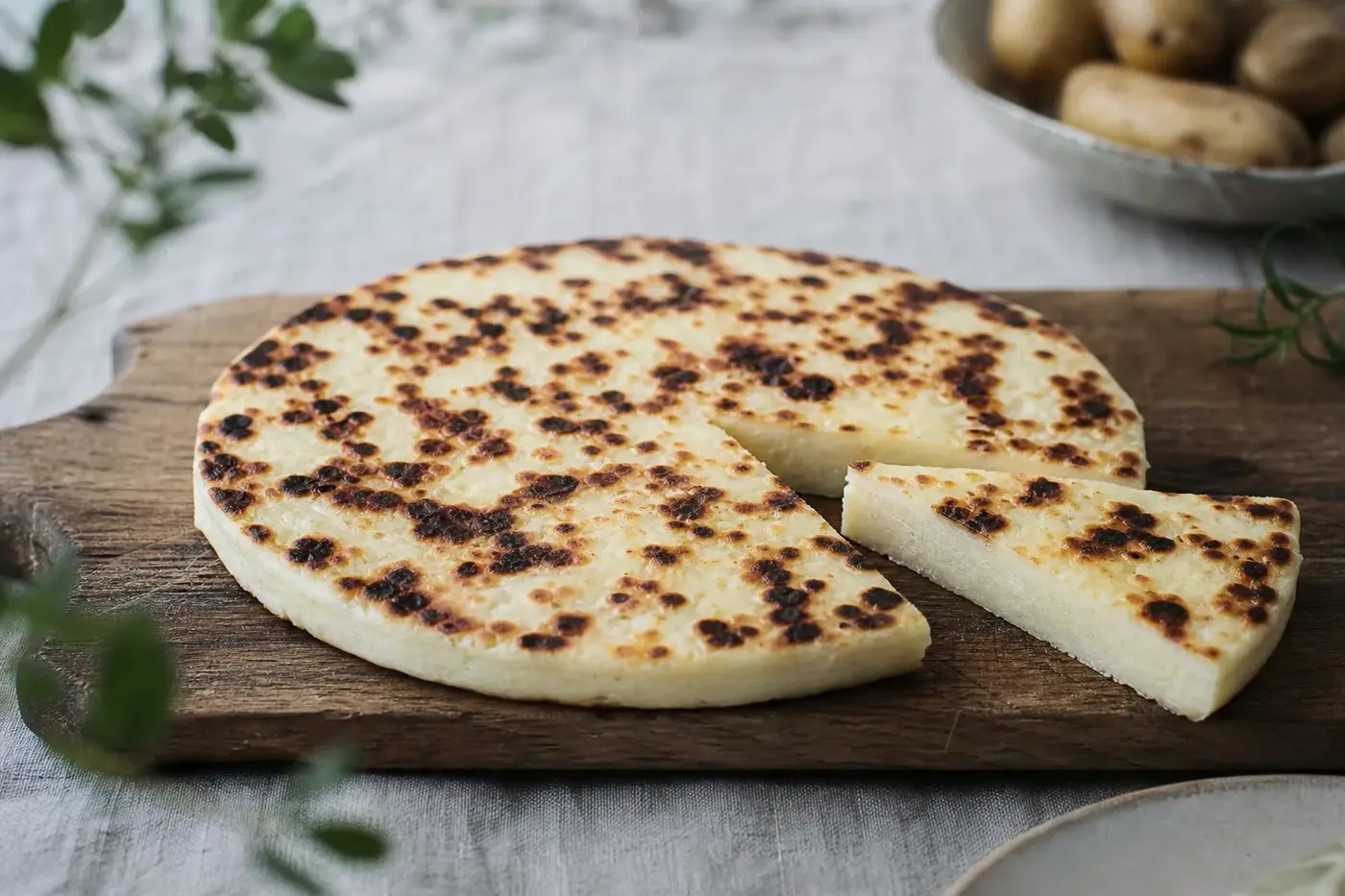
Lower a wedge of pale, brown-spotted cheese into hot black coffee. Take a bite, and there it is: the squeak. You have met leipäjuusto, served in a Sámi tradition described by Visit Finland.[1][2][3]
This Finnish fresh cheese is baked after shaping, then eaten cold or warmed, often with cloudberry jam or coffee. Those toasted spots belong to a food with deep roots in northern kitchens. Give it a little attention, and there is plenty to discover beneath them.[1][2][3]
Your first taste: the essentials
- Name: Leipäjuusto, also called juustoleipä in Kainuu.[4][5]
- English name: Bread cheese.[1]
- Style: Fresh cheese, shaped and browned by heat.[2][4]
- Traditional home: Ostrobothnia, Kainuu and northern Finland.[2][3][5]
- Milk: Commonly cow’s milk; historical reindeer-milk use is recorded in Lapland.[1][6]
- How it sets: Rennet.[2][4]
- EU registration details: See the source for the registered name, authority, register ID and protection status.[11]
Two names, one cheese, no loaf required
Leipäjuusto usually becomes “bread cheese” in English. Finnish leipä means bread and juusto means cheese. Reverse them and juustoleipä literally means cheese bread, although you can put the bread knife down for now.[1][2][4]
The bread connection lies in the browning. Finland’s living heritage collection explains that the shaped cheese is browned rather like a loaf being baked. Its two names also offer you a small lesson in regional geography.[2][4]
The language journal Kielikello identifies juustoleipä as the Kainuu name. The Finnish public libraries’ reference service places leipäjuusto more widely in Ostrobothnia and Peräpohjola in northern Finland. So a packet marked juustoleipä can hold the familiar browned cheese, simply wearing its local name.[4][5]
Keep both names in mind when you look for it. Kielikello favours leipäjuusto in standard Finnish because its final element identifies the food as cheese. If you are learning, recognising the pair will serve you better than choosing a side.[4]
Meet the toasted spots and the squeaky bite
Dark toasted spots catch your eye against a white or cream-coloured surface. The traditional shape is a flat round, with the living heritage account describing discs roughly 1 to 2 cm thick. Slice into one and you find a browned face over a pale body, rather than a crust surrounding a tall wheel.[2]
Visit Finland describes the taste as mild and the bite as squeaky. For your first mouthful, try a small piece with a spoonful of berries beside it. Give that distinctive texture a moment of its own.
Cooking creates the browned surface that makes leipäjuusto so recognisable. It also helps you place it among cheese styles: this is a fresh cheese whose appearance comes from heat. The Finnish Food Authority describes rectangular forms and portions too, so your wedge or packet of cubes belongs to the same tradition as the flat round.[3]
How summer’s milk reached the winter table
When cows were dry in winter, cheese carried summer’s milk into the colder months. The Finnish Food Authority describes households making cheese during the productive summer season and eating it through winter. Across Ostrobothnia, Kainuu and Lapland, that seasonal rhythm secured leipäjuusto a place in household food stores.[2][3]
Drying offered another way to make it last. A community contribution to Finland’s living heritage collection records cheese being left to dry, then softened by a fire before eating. Warmth did useful work here: it made stored, hardened cheese pleasant to eat again, as well as finishing a freshly made one.[2]
Cheese had a place in celebrations and relationships, too. The authority records it at festive meals and communal working gatherings, and as a reward for help with haymaking. A piece could acknowledge both a special occasion and a helping hand.[3]
In Kainuu, farms passed the skill from one generation to the next. Industrial production by the regional cooperative dairy followed in the 1960s. When you find leipäjuusto on a cheese counter today, both household cheesemaking and dairy manufacture belong to its story.[3]
Cow’s milk today, reindeer milk in its past
Cow’s milk is the common modern ingredient, according to Visit Finland. In Lapland, though, reindeer milk belongs to leipäjuusto’s earlier history, as Visit Levi records. Kielikello also notes reindeer-milk cheese within the wider Finnish cheesemaking tradition.[1][4][6]
The name alone cannot tell you which animal supplied the milk. For that, turn to the actual packet. It is a useful little habit as you get to know this cheese.[1][4][6]
An agricultural research collection held by Finland’s Natural Resources Institute adds another chapter. Its report on reindeer milk found that ordinary commercial rennet produced a firm curd suitable for a leipäjuusto-type product. Alongside the history, you have a technical account of how that milk behaves in cheesemaking.[7]
From milk to that beautifully spotted disc
Set the milk, drain the curd, shape it and brown it. Those are the essential steps. Coagulation turns milk into curd, the solid portion, while whey is the liquid that separates.[2][4]
Rennet, the enzyme preparation used to set the milk, gets the process started. The curd is then gathered into the cheese’s characteristic low form. At this point, you can begin to recognise the familiar flat shape.[2][4]
The living heritage record describes adding rennet to heated milk, collecting or straining the curd, and forming a flat disc. Cooking follows until dark spots appear. According to the Finnish Food Authority, traditional wooden boards and moulds helped make thin cheeses that could brown quickly in the heat of an open fire.[2][3]
Modern oven baking continues that visible finishing stage. Visit Finland describes milk being curdled before the cheese is baked to produce its spotted exterior. Making it and warming it for your table are separate steps: your ready-to-eat piece already has its characteristic browning before it reaches the kitchen.[1]
Set a place for cloudberries and coffee
Cloudberry jam is the established sweet companion. Visit Finland describes leipäjuusto served with cloudberries or cloudberry jam, and identifies dipping wedges into hot black coffee as a Sámi tradition. You can enjoy the same mild cheese as a small plated dessert or try a piece in the coffee itself.[1]
Visit Levi describes another northern preparation: pieces warmed with cream, then served with cloudberry jam. Heating softens the cheese, its account says. Aim for a softer bite with recognisable pieces, rather than continuing to cook in pursuit of a cheese sauce.[6]
For your first serving, put a plain piece on a plate with a little jam alongside and coffee separately. That leaves you free to adjust each mouthful without covering the whole cheese. If the coffee pairing appeals, try the documented dipping custom next.
Water is an equally straightforward choice when you want to focus on texture. Not every mouthful needs a supporting cast.
Cut, warm and bring it to the table
-
Choose how you want to eat it. Cut wedges for a plate or dipping, or smaller, evenly sized pieces for a dish with cream. Divide a flat round across its browned face. Similar-sized pieces make it easier to follow the packet’s heating directions consistently.[1][6]
-
Warm only what you plan to serve. Follow the maker’s method and stop when its instructions are satisfied. The browned finish is already there, so further darkening need not be your goal. For a cream-based serving, keep the pieces together in an ovenproof dish rather than spreading them across a large tray.[6][10]
-
Serve it straight away. Follow the maker’s warming instructions. The Finnish Food Authority advises serving prepared food immediately.[8]
Want to explore what temperature does to the texture? Compare a cold piece with a warmed portion from the same packet, handling both according to its instructions. Keep the accompaniments identical so your attention stays on the cheese.
That small tasting gives you a direct comparison between the firmer bite and the softened version. You can then choose which you would most like to bring to the table for others.
Find it in the fridge, keep it chilled
Look in the refrigerated cheese section, where Visit Finland says leipäjuusto is sold in different sizes. You might choose a larger piece to cut at the table or smaller portions for a dish. Those brown spots have charm, but they cannot tell you the milk species, ingredients, date or storage directions: check the packet.[1][10]
At home, keep it chilled and follow the maker’s storage directions. The Food Standards Agency’s guidance for England, Northern Ireland and Wales, dated here to November 2026, advises a fridge temperature of 5 °C (41 °F) or below.[10]
Read both the sealed-packet storage information and the instructions for use after opening. They cover different stages in the product’s life, so consult both before deciding when to serve what remains. The cheese label guide explains those details, while home cheese storage covers the broader routine.[10]
For a cooked dish containing the cheese, the Food Standards Agency advises cooling leftovers as quickly as possible, ideally within 1 to 2 hours, then refrigerating them. Eat leftovers within 48 hours or freeze them, according to its guidance. Check the product’s freezing instructions first.[10]
Take your curiosity a little further
- How Cheese Is Made: From Milk to Cheese: follow the curd as it forms and drains.
- Raw Milk, Thermised and Pasteurised Cheese: get to know the milk-treatment terms on your packet.
General information only, not medical advice: follow the official guidance where you live.
Questions people ask
What is leipäjuusto?
Leipäjuusto is a Finnish fresh cheese known in English as bread cheese. It has a pale interior, a browned, spotted surface and a mild, squeaky bite.
What is the difference between leipäjuusto and juustoleipä?
Juustoleipä is the name used in Kainuu for the familiar browned cheese. Leipäjuusto is used more widely in Ostrobothnia and Peräpohjola in northern Finland.
How is leipäjuusto made?
Rennet is added to heated milk, and the resulting curd is collected or strained and shaped into a flat disc. The cheese is then cooked until dark spots appear.
What do you eat with leipäjuusto?
Leipäjuusto is often served with cloudberries or cloudberry jam. Visit Levi also describes warming pieces with cream and serving them with cloudberry jam.
What milk is leipäjuusto made from?
Cow’s milk is the common modern ingredient, according to Visit Finland. Reindeer milk was used in its earlier history in Lapland, according to Visit Levi.
Sources
-
Visit Finland, What to eat in Finland: guide to iconic Finnish foods, undated web edition, section 6, “Leipäjuusto”. Source for the mild, squeaky character, common cow’s milk ingredient, oven browning, refrigerated retail presentation and serving customs. Source.
-
Finnish Heritage Agency’s Living Heritage Wiki, Leipäjuusto, community contribution by a Jedu Nivala student group, revision dated 8 May 2024. This is a contributed cultural account hosted in the collection. Source.
-
Finnish Food Authority, Pohjalainen leipäjuusto ja Kainuulainen juustoleipä halutaan nimisuojata, 20 December 2023. Used for its historical and descriptive passages. Source.
-
Institute for the Languages of Finland, Kielikello, Juustojen nimistä, issue 2/1983. Used specifically for Finnish terminology, Kainuu usage, traditional manufacture and historical reindeer-milk cheese. Source.
-
Finnish public libraries, Ask a Librarian, Kumpi on oikea termi, juustoleipä vai leipäjuusto?, answer dated 20 December 2023. The answer reports the regional distribution given by Finnish language sources. Source.
-
Visit Levi, A taste of Lapland: Part 1, undated web edition. Used for its account of historical reindeer milk and cheese softened with cream. Commercial destination information. Source.
-
Natural Resources Institute Finland, Jukuri research repository, Poronmaidon erityispiirteet, research-project account in a collected publication, publication year not verified, printed pages 31 to 32. Source PDF.
-
Finnish Food Authority, Food handling and storage, updated 27 October 2021. Source.
-
Finnish Food Authority, Reheating, updated 16 November 2022, food-sector hygiene guidance. Source.
-
Food Standards Agency, How to chill, freeze and defrost food safely, published 18 December 2017, current retrieved web edition. Applies to England, Northern Ireland and Wales. Source.
-
Finnish Food Authority, Pohjalainen leipäjuusto-Kainuun juustoleipä, updated 3 June 2025. Regional application records consulted; current EU register status remains unverified. Source.
-
Finnish Food Authority, Elintarvikkeiden takaisinvedot, current recall listing consulted for the editorial recall check. Source.
This desk-researched article brings together Finnish language records, official cultural and historical accounts, agricultural research, documented serving customs and national food-handling guidance.
Last checked: November 2026
Last checked November 2026.
The editors suggest you read next
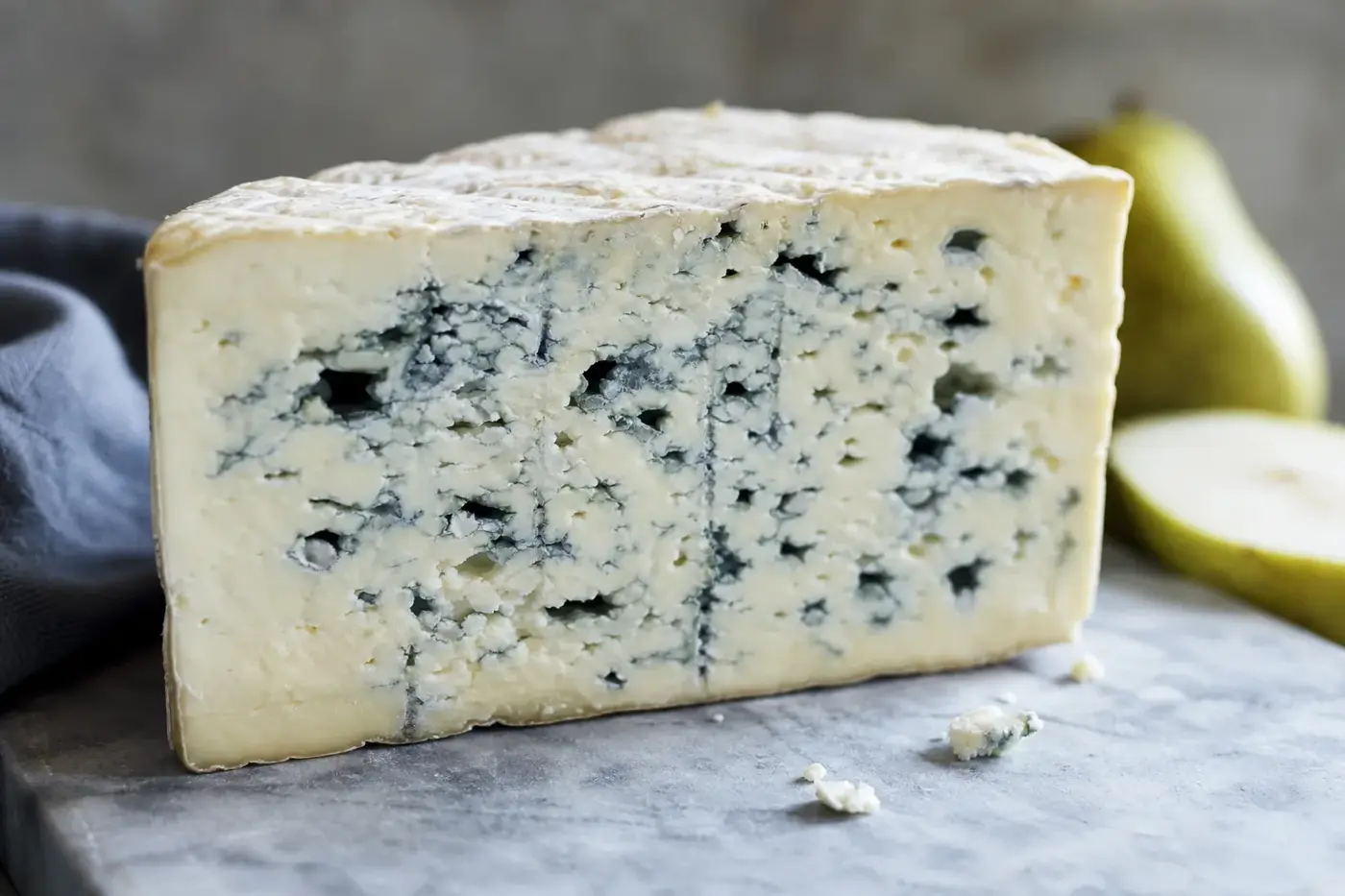
Aura
Scatter Aura over rye crispbread and the salty tang arrives before you have considered a second piece.