Rennet Explained: Animal, Microbial and Fermentation Produced
In Spain, cardoon thistle meets raw ewes' milk, and Torta del Casar begins to take shape.
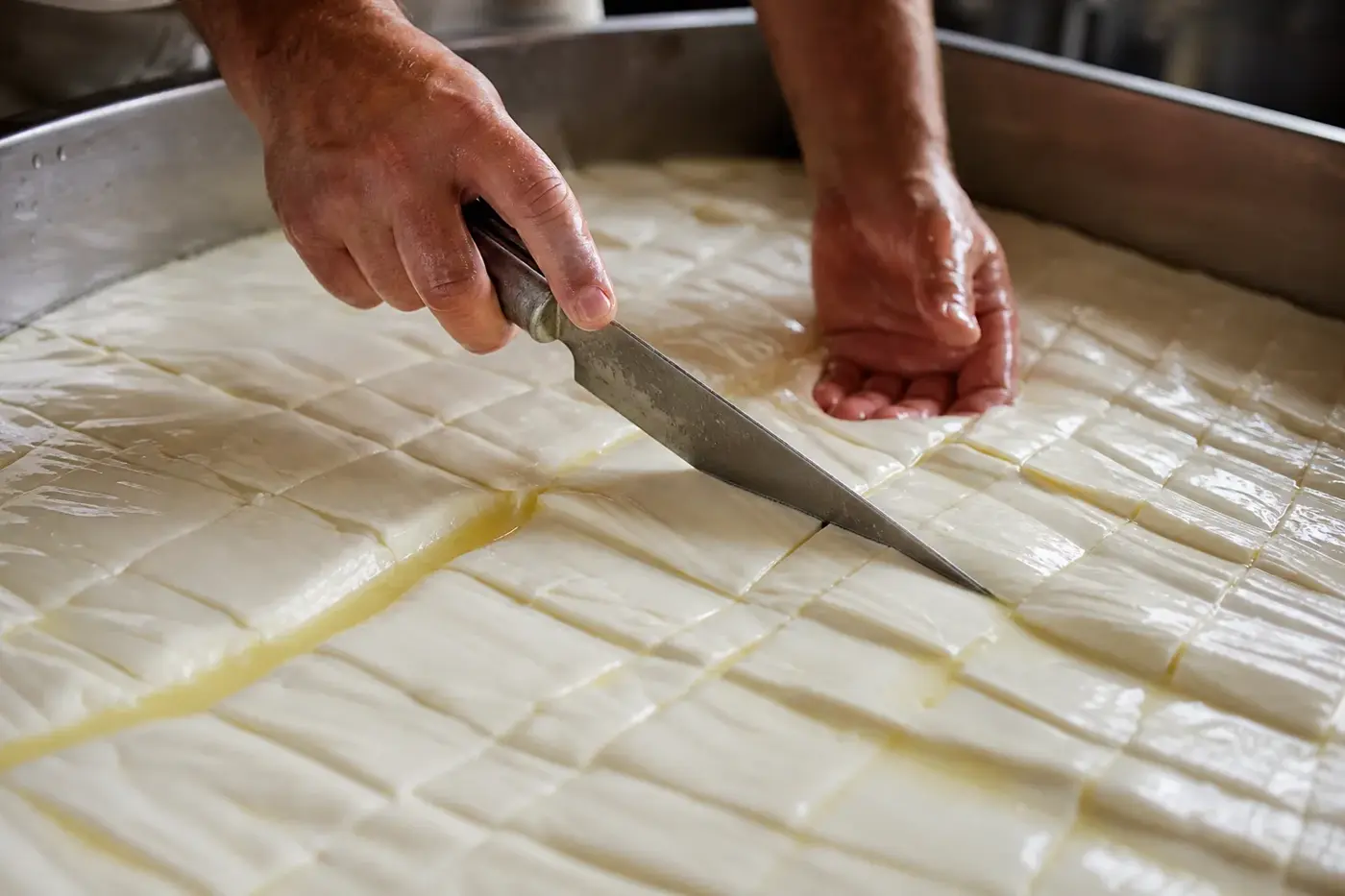
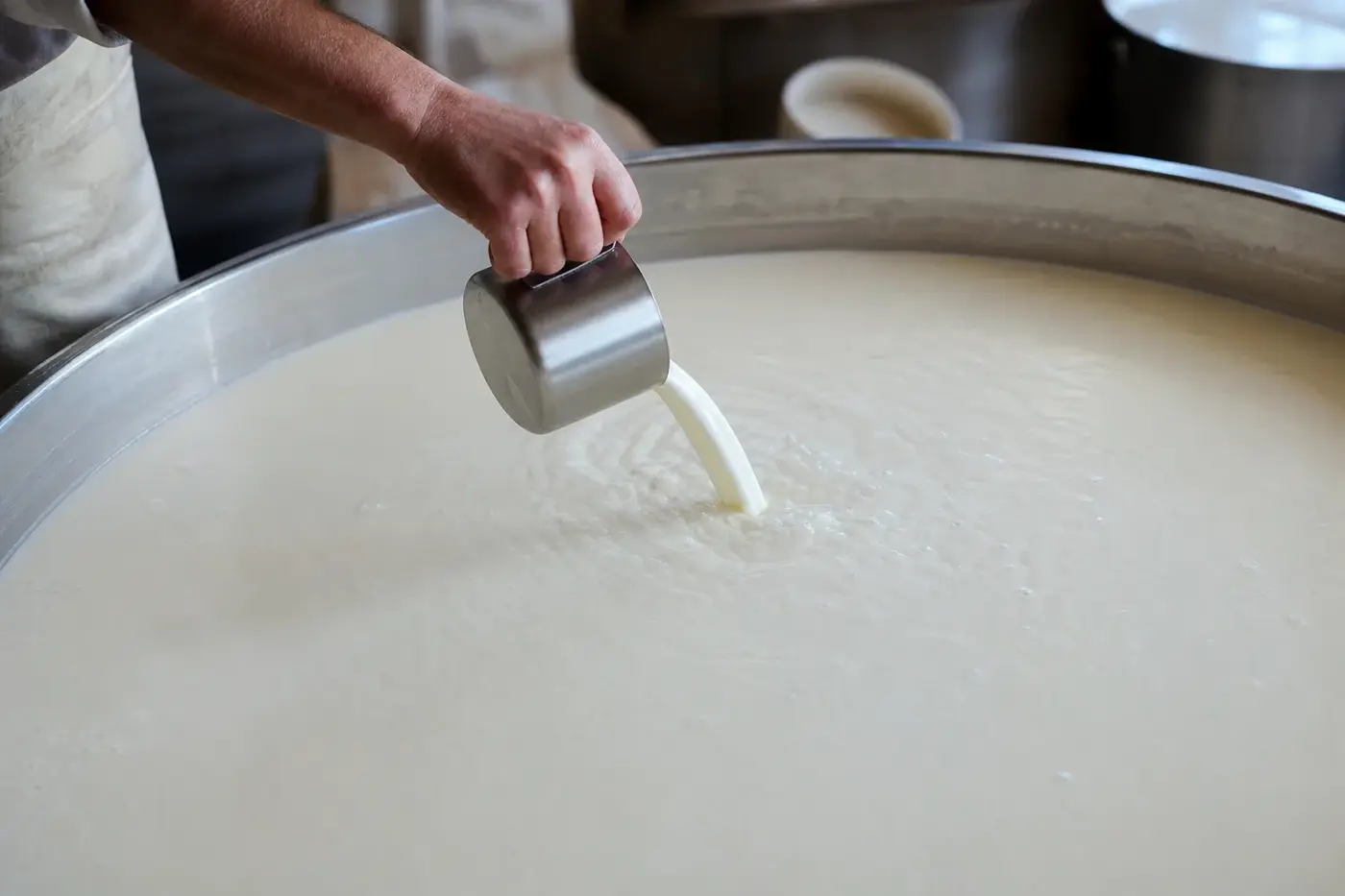
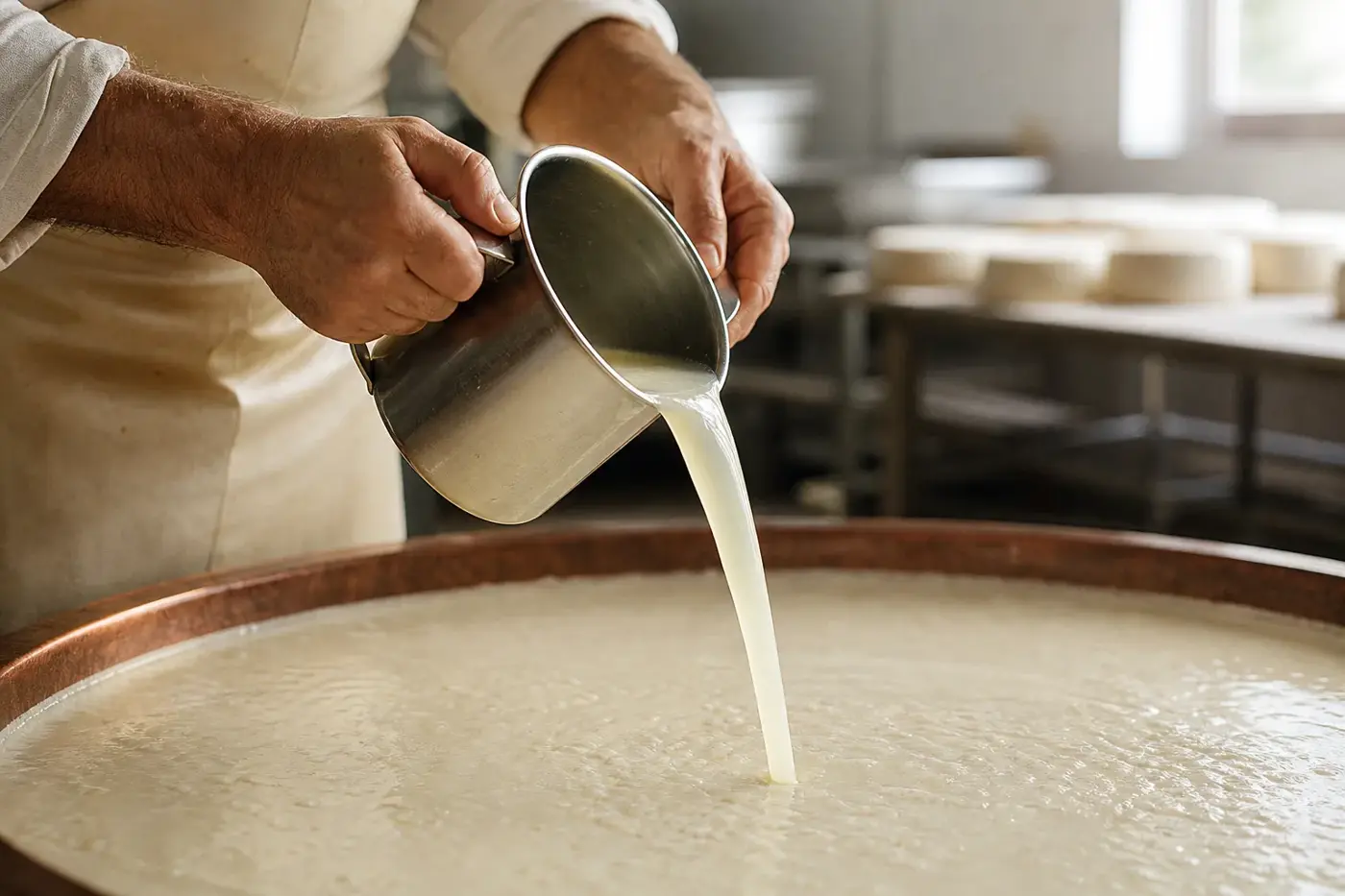
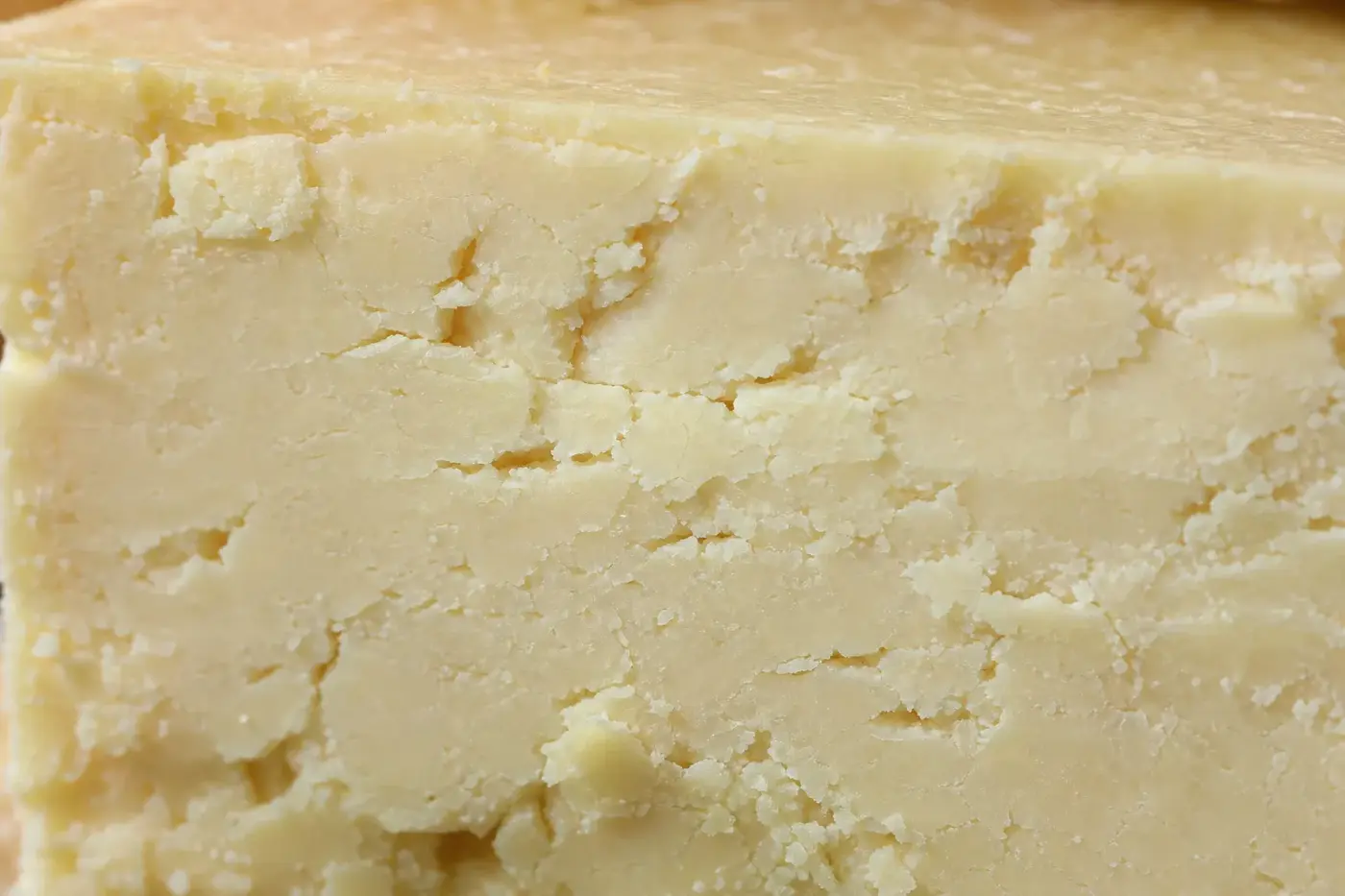
In Spain, cardoon thistle meets raw ewes' milk, and Torta del Casar begins to take shape. For Parmigiano Reggiano, only calf rennet will do: its specification says so. Two cheeses, two routes from liquid milk to curd, the solid material from which cheese is made. Quite a lot happens before you reach for the crackers.[6][10]
Behind that transformation is rennet, a preparation of enzymes. Animal rennet comes from stomach tissue; alternatives include microbial enzymes, fermentation produced chymosin and plant coagulants. If you're looking for vegetarian cheese, the particular product and its maker's declaration matter more than the cheese's name alone.[1][2][3]
Inside the moment milk becomes curd
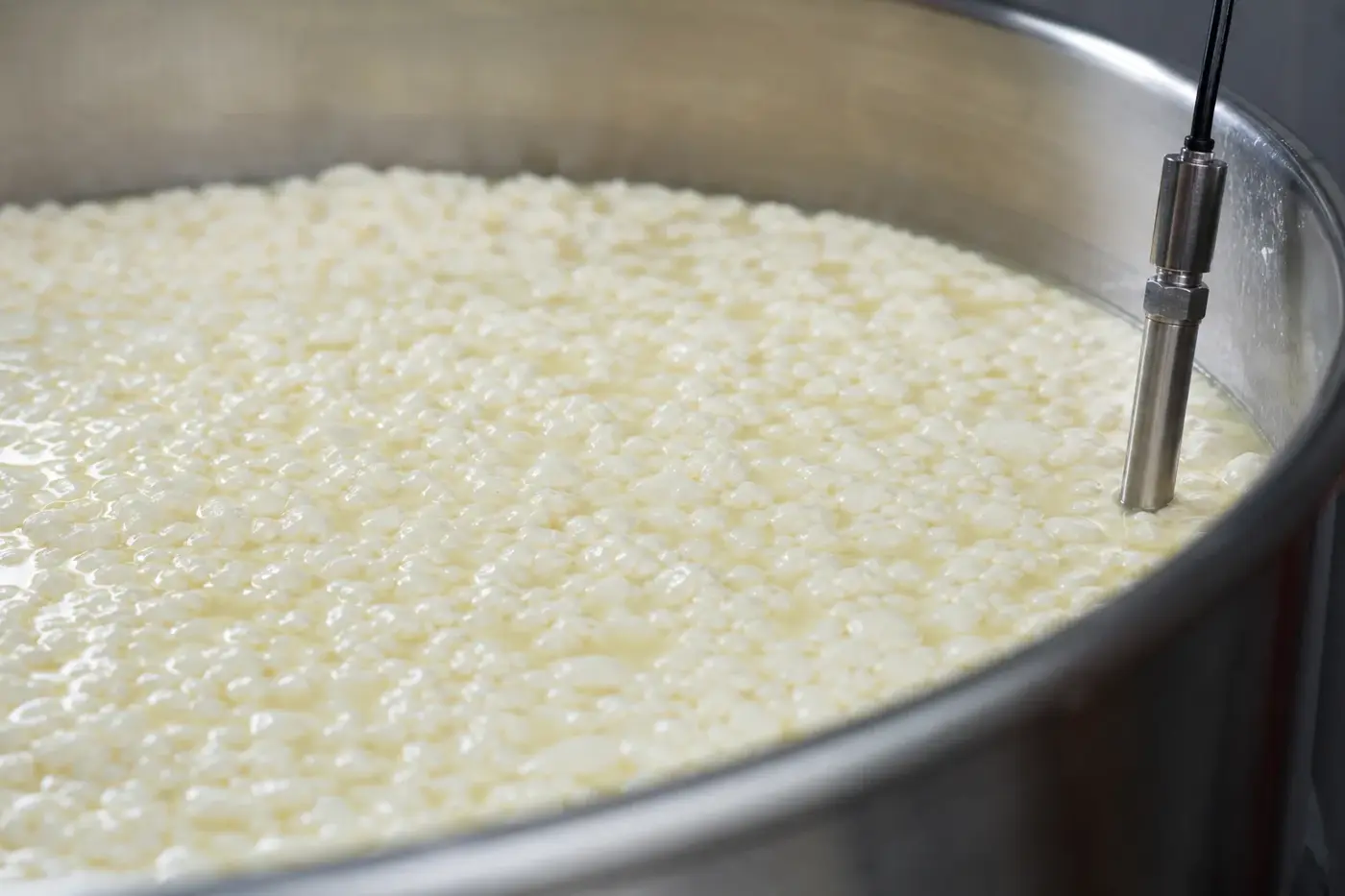
The action starts with milk's proteins. Casein proteins gather into tiny structures called micelles, and chymosin, a protein-cutting enzyme, acts on kappa-casein to destabilise them. The milk clots. Cheesemaking then separates the curd from whey, the liquid released when the curd is cut and drained.[2][4]
Animal rennet can contain both chymosin and pepsin A. They're not two names for the same thing: pepsin cuts proteins more broadly than chymosin. EFSA's assessment of a calf and cow rennet preparation identifies and describes both activities.[2]
The starter culture has a different job. In the US Cheddar process, lactic acid-producing bacteria develop acidity before clotting enzymes set the milk. You can follow those separate processes in Starter Cultures Explained and Acid Set vs Rennet Set Cheese.[4]
Four routes into the cheese vat
Where a coagulant comes from is one question; how it's produced is another. Here's how the four routes compare, alongside documented uses. The FDA date belongs to one fermentation-produced chymosin preparation in the United States, not the first use or authorisation of every kind of rennet.
| Coagulant | Where it starts | How it is made | Documented US regulatory date | Where you'll find it |
|---|---|---|---|---|
| Animal rennet | Calf, kid or lamb abomasum | Extracted from prepared fourth stomachs | No date given here | Parmigiano Reggiano, Grana Padano and Comté under their EU specifications.[1][6][7][8] |
| Microbial coagulant | Microorganisms, including Mucor miehei | Enzymes obtained by fermentation | No date given here | US cheeses whose standards permit it.[5] |
| Fermentation produced chymosin | Microorganisms carrying a chymosin gene | Fermentation followed by enzyme recovery | US FDA, 23 March 1990: E. coli K-12 preparation.[1][9] | Cheese where the applicable rules permit it.[1] |
| Plant coagulant | Thistle, Cynara cardunculus | Coagulating material obtained from the plant | No date given here | Torta del Casar and Queijo Serra da Estrela.[10][11] |
Each regulatory entry belongs to a particular organism, manufacturing process and permitted use. That date applies to that preparation, not everything sold as rennet. US rules address animal rennet, chymosin preparations and microbial milk-clotting enzymes in separate provisions.[1][5][9]
Animal rennet: look beyond the calf
You might hear “animal rennet” and immediately think of calves. But the abomasum is a ruminant's fourth stomach, and the US definition explicitly includes rennet preparations from calves, kids and lambs. A cheese's own specification can narrow that choice to one animal source, as the Italian examples below do.[1][6][7]
For vegetarians, the distinction is straightforward: the Vegetarian Society regards animal rennet as unsuitable. Its guidance also flags “animal enzymes”, “traditional rennet” and “pepsin” as wording worth investigating. If you spot those terms, ask the maker exactly which preparation goes into the cheese.[3]
Microbial enzymes and FPC: get to know the difference
Both routes put microorganisms to work, but they don't necessarily produce the same coagulant. A microbial coagulant can be a fungus's own milk-clotting enzyme. Fermentation produced chymosin, often shortened to FPC, is chymosin made by a microorganism carrying the gene needed to produce it.[1][5]
The US microbial enzyme regulation names Mucor miehei and Mucor pusillus, among other organisms. It also includes a genetically modified Aspergillus oryzae that produces a Rhizomucor miehei enzyme. The useful distinction for you is this: genetic modification describes a production route, not another name for chymosin.[5]
On 23 March 1990, the US Food and Drug Administration's first documented US FPC decision took effect. The final rule affirmed a chymosin preparation derived from Escherichia coli K-12 as generally recognised as safe, or GRAS. Pfizer Central Research was the petitioner; the date belongs to that specific US decision.[9]
The US regulation also lists chymosin preparations from Kluyveromyces marxianus variety lactis and Aspergillus niger variety awamori. All are fermentation-derived enzyme preparations. They are distinct from rennet extracted from stomach tissue.[1]
Under the US microbial enzyme rule, the production organism must be completely removed from the enzyme product. The organism doing the manufacturing is therefore separate from the preparation added to milk. A fungus used to make an enzyme is not, simply by doing that job, being added to your cheese as a ripening culture.[5]
Three famous cheeses with calf rennet written in
Parmigiano Reggiano, Grana Padano and Comté all have EU PDO status. Their cited specifications also require calf rennet. If you're choosing vegetarian cheese, that required ingredient tells you more than a general description of traditional cheesemaking.[6][7][8]
| EU PDO name | Where to find the rule | Coagulant required | Specification version |
|---|---|---|---|
| Parmigiano Reggiano | Article 3 | Calf rennet only | In force from 24 April 2025.[6] |
| Grana Padano | Article 5 | Calf rennet | Version date not shown.[7] |
| Comté | Production method and control point 29 | Calf rennet | Homologated 18 December 2025; published 7 January 2026.[8] |
Parmigiano Reggiano's Article 3 leaves no room for alternatives: only calf rennet is used. Grana Padano's Article 5 specifies calf rennet after the addition of natural whey starter. In both cheeses, the animal source is written into the specification.[6][7]
Comté's control point 29 identifies rennet made from calf stomach. Its production clause requires commercial bovine rennet to contain at least 520 mg chymosin per litre, without added pepsin. For your vegetarian choice, the calf origin is decisive, whether or not pepsin has been added.[8][3]
West Country Farmhouse Cheddar gives you a different answer. Its Great Britain specification permits either animal or vegetable rennet. If you're vegetarian, you'll need to ask which option the individual producer uses.[12]
Meet the thistle with a cheesemaking role
For Spain's Torta del Casar, cardoon thistle, Cynara cardunculus, is the required plant coagulant for raw ewes' milk. In Portugal, Queijo Serra da Estrela likewise uses thistle to coagulate raw ewes' milk, as documented by DGADR. Here, the thistle has a job rather more consequential than looking picturesque.[10][11]
These cheeses give plant coagulants an identity of their own. Thistle coagulation uses material obtained from a plant; FPC uses fermentation to manufacture chymosin. The Vegetarian Society regards thistle rennet as vegetarian.[1][3][10][11]
Want to follow that plant route further? You'll find more on the category in Vegetable Rennet: Thistle and Other Plant Coagulants.
Buying vegetarian cheese: ask the useful questions
Start with the exact product, not the cheese style. The Vegetarian Society treats animal rennet as non-vegetarian, and microbial and thistle rennets as vegetarian. Its practical advice is simple: read the label, then ask the manufacturer if the answer remains unclear.[3]
First, look for an explicit statement that the product is suitable for vegetarians. Next, read the coagulant wording: animal rennet names the source directly, while microbial rennet identifies a different production route. If you see only “rennet” or “enzymes”, ask which preparation is used and whether any other animal-derived enzymes enter production.[3][4]
“Enzymes” deserves particular attention on US Cheddar. Its standard permits animal, plant and microbial clotting enzymes, all of which may be declared simply as enzymes. The same standard separately allows enzymes for curing or flavour development, so asking only about the coagulant can leave part of your vegetarian question unanswered.[4]
For FPC, ask the manufacturer to confirm that the particular cheese is suitable for vegetarians and identify any certification it relies on. Keep that question separate from any preference you have about genetic modification. How an enzyme is manufactured and whether the finished product is declared vegetarian are different matters.[1][3][5]
At a cheese counter or restaurant, ask for the actual cheese's name and producer, rather than an answer about the dish or style. Try: which coagulant and other enzymes does this producer use, and does it declare this product suitable for vegetarians? That keeps the conversation focused on the cheese you're about to eat.[3][4]
Vegetarian suitability and allergies: keep them separate
Dairy cheese made with a non-animal coagulant still contains milk. You need to consider vegetarian suitability and allergen information separately, especially when choosing food for someone else. Read the milk and other allergen information independently of any vegetarian statement.[3][13]
UK government guidance says there is no legal definition of vegan food in UK law, while requiring accurate, non-misleading labelling. EU food information law provides for rules on voluntary statements about vegetarian and vegan suitability. Those statements must not mislead consumers.[13][14]
A vegan label does not itself establish that a product is safe for someone with a milk allergy. Unintended contact with milk allergens can occur during production.[13][14] For allergy decisions, use the allergen information rather than treating a dietary label as an assurance.[13]
Two assumptions to leave at the cheese counter
Milk does not automatically make a cheese vegetarian. You need to know the enzyme source too. Parmigiano Reggiano, Grana Padano and Comté require calf rennet under the specifications above, while other cheeses permit a choice of coagulant.[3][6][7][8][12]
Vegetable rennet is not another name for genetically modified chymosin. Plant material and a fermentation product are different things. Torta del Casar and Queijo Serra da Estrela make that distinction tangible: their milk is coagulated using a plant, not FPC.[1][10][11]
Questions people ask
What is rennet and how does it make cheese?
Rennet is a preparation of enzymes that turns liquid milk into curd. Chymosin acts on a milk protein called kappa-casein, allowing the milk to clot; the curd is then separated from the liquid whey.
Are Parmigiano Reggiano, Grana Padano and Comté vegetarian?
Their cited EU specifications require calf rennet. The Vegetarian Society regards animal rennet as unsuitable for vegetarians.
What is the difference between microbial rennet and fermentation produced chymosin?
A microbial coagulant can be a fungus’s own milk clotting enzyme. Fermentation produced chymosin is chymosin made by a microorganism carrying the gene needed to produce it.
How can I tell whether a cheese is suitable for vegetarians?
Look for an explicit vegetarian statement and check the coagulant wording. The Vegetarian Society advises reading the label and asking the manufacturer if the answer is still unclear.
Can cheese be made with thistle instead of animal rennet?
Yes. Torta del Casar in Spain and Queijo Serra da Estrela in Portugal use thistle to coagulate raw ewes’ milk.
Sources
Source links: 1, 3, 4, 5, 6 (date: Read at parmigianoreggiano.com), 7, 8, 10, 11, 12, 13.
-
US Food and Drug Administration, Office of the Federal Register and Government Publishing Office. 21 CFR 184.1685: Rennet (animal-derived) and chymosin preparation (fermentation-derived). Current eCFR text retrieved November 2026, paragraphs (a) to (c) and source note.
-
EFSA Panel on Food Contact Materials, Enzymes and Processing Aids. Safety evaluation of the food enzyme rennet containing chymosin and pepsin A from the abomasum of calves and cows. EFSA Journal, 2023, 21(6), 8084, section 3.
-
The Vegetarian Society. Which cheeses are suitable for vegetarians and which aren’t? Published 19 May 2026. The charity's dietary position and consumer guidance.
-
US Food and Drug Administration, Office of the Federal Register and Government Publishing Office. 21 CFR 133.113: Cheddar cheese. Current eCFR text retrieved November 2026, paragraphs (a)(3), (b)(2), (b)(3)(iii) and (d)(1).
-
US Food and Drug Administration, Office of the Federal Register and Government Publishing Office. 21 CFR 173.150: Milk-clotting enzymes, microbial. Current eCFR text retrieved November 2026, paragraphs (a) to (d).
-
Consorzio del Formaggio Parmigiano Reggiano. Disciplinare di produzione della denominazione di origine protetta “Parmigiano Reggiano”. In force from 24 April 2025, as stated on the Consorzio's disciplinare page, Article 3.
-
Ministero dell'agricoltura, della sovranità alimentare e delle foreste. Disciplinare Grana Padano D.O.P. Version date not shown, Article 5.
-
French Ministry of Agriculture. Cahier des charges de l'appellation d'origine “Comté”. Homologated by arrêté of 18 December 2025, JORF of 7 January 2026, production method and control point 29.
-
US Food and Drug Administration. Direct Food Substances Affirmed as Generally Recognized as Safe; Chymosin Enzyme Preparation Derived From Escherichia Coli K-12. Final-rule inventory record, petition GRP 8G0337; 55 FR 10932, published and effective 23 March 1990.
-
Ministerio de Agricultura, Pesca y Alimentación. Pliego de condiciones de la D.O.P. “Torta del Casar”. File dated 19 January 2023, sections B and E.
-
Direção-Geral de Agricultura e Desenvolvimento Rural. Queijo Serra da Estrela DOP, product information, undated; and Caderno de Especificações Alterado Queijo Serra da Estrela DOP, amendment request of 2022, section B.
-
Department for Environment, Food and Rural Affairs. West Country Farmhouse Cheddar: Product specification. Version date not shown, method of production.
-
GOV.UK. Understanding food labelling: Vegan food labelling. Undated guidance retrieved November 2026.
-
European Union. Regulation (EU) No 1169/2011, Article 36(3)(b), consolidated version of 1 January 2018. EUR-Lex.
Researched through desk research comparing official enzyme regulations, published cheese specifications, an EFSA assessment and attributed vegetarian guidance.
Last checked: November 2026
Last checked November 2026.
The editors suggest you read next