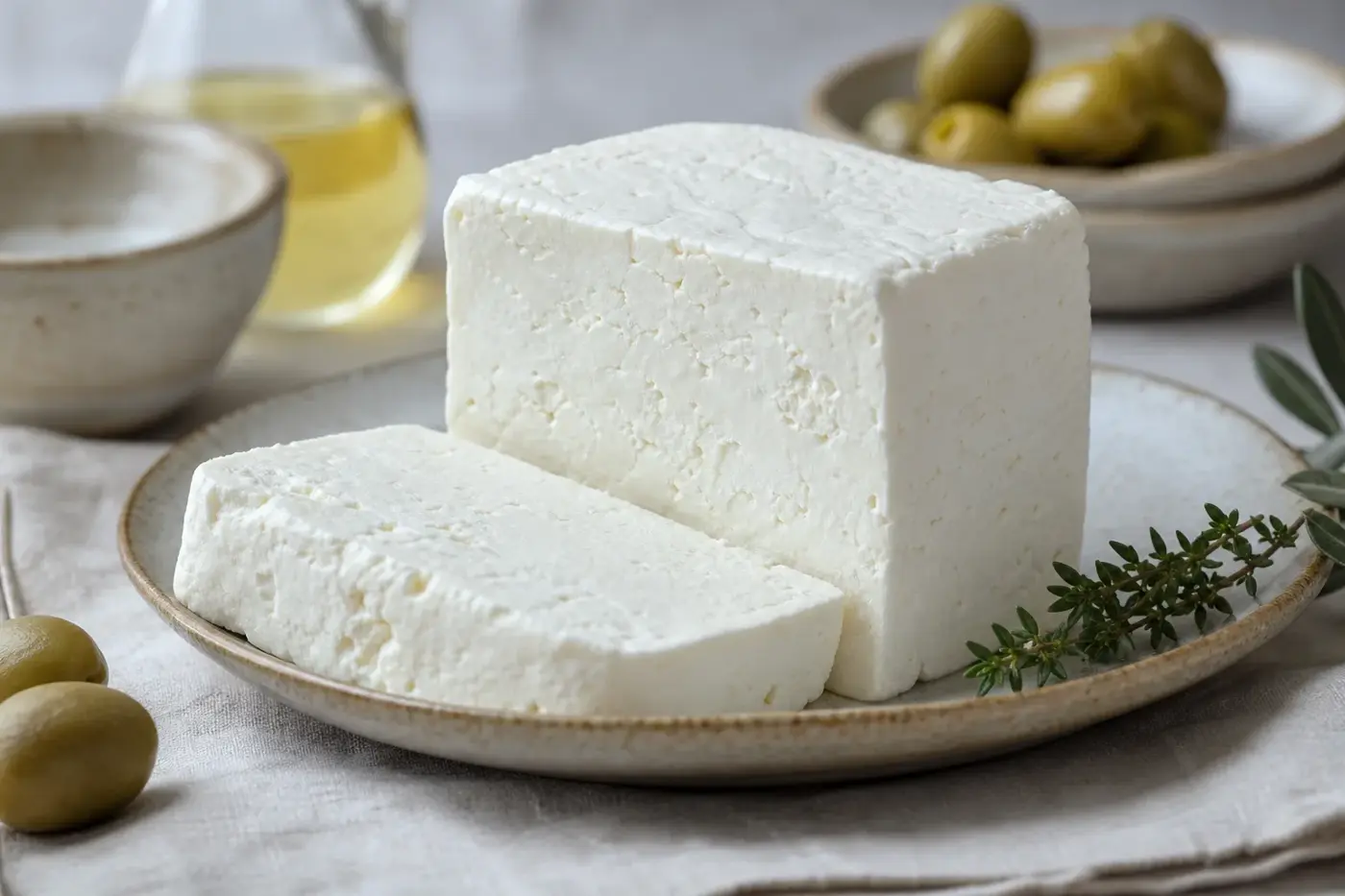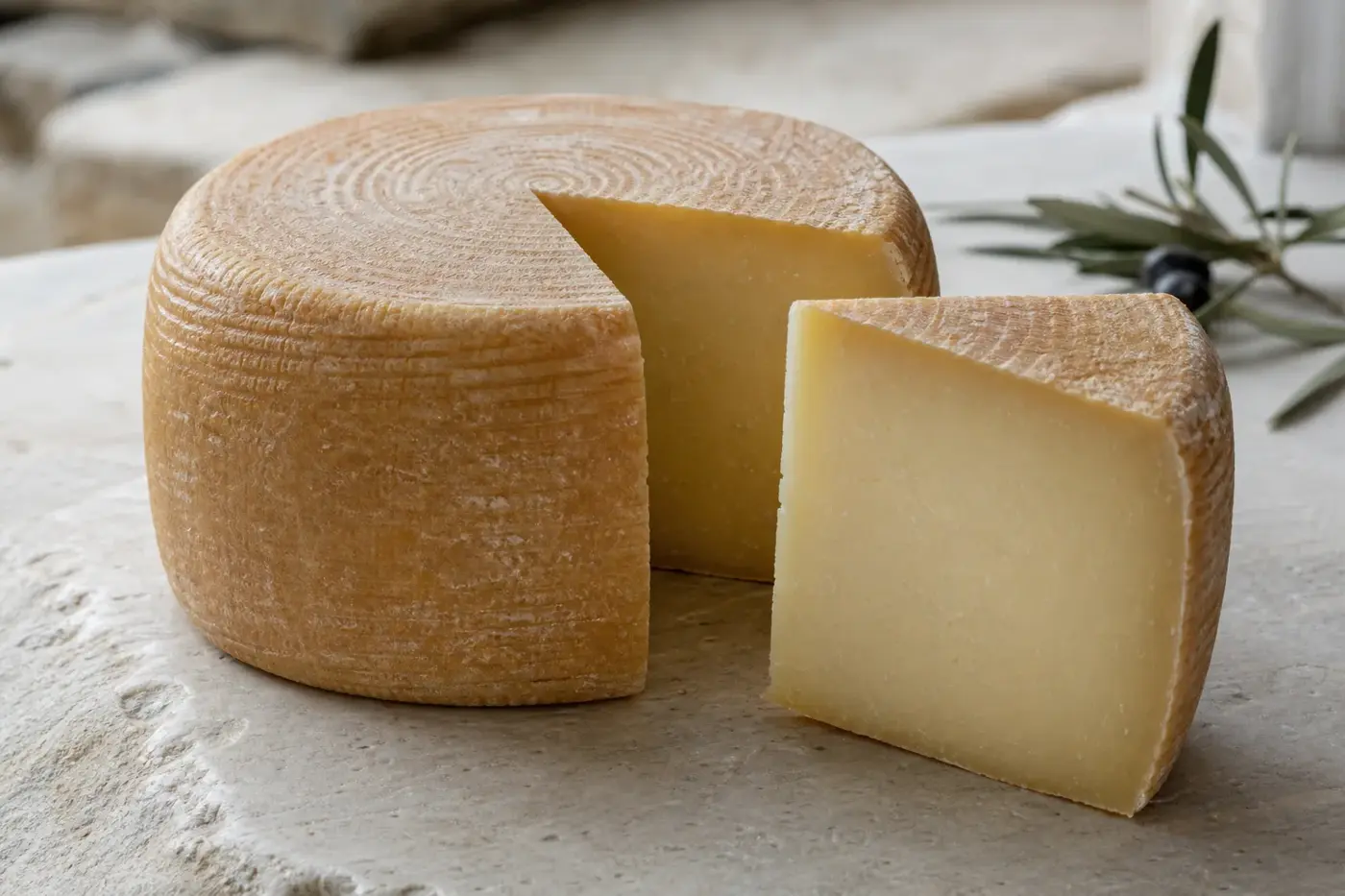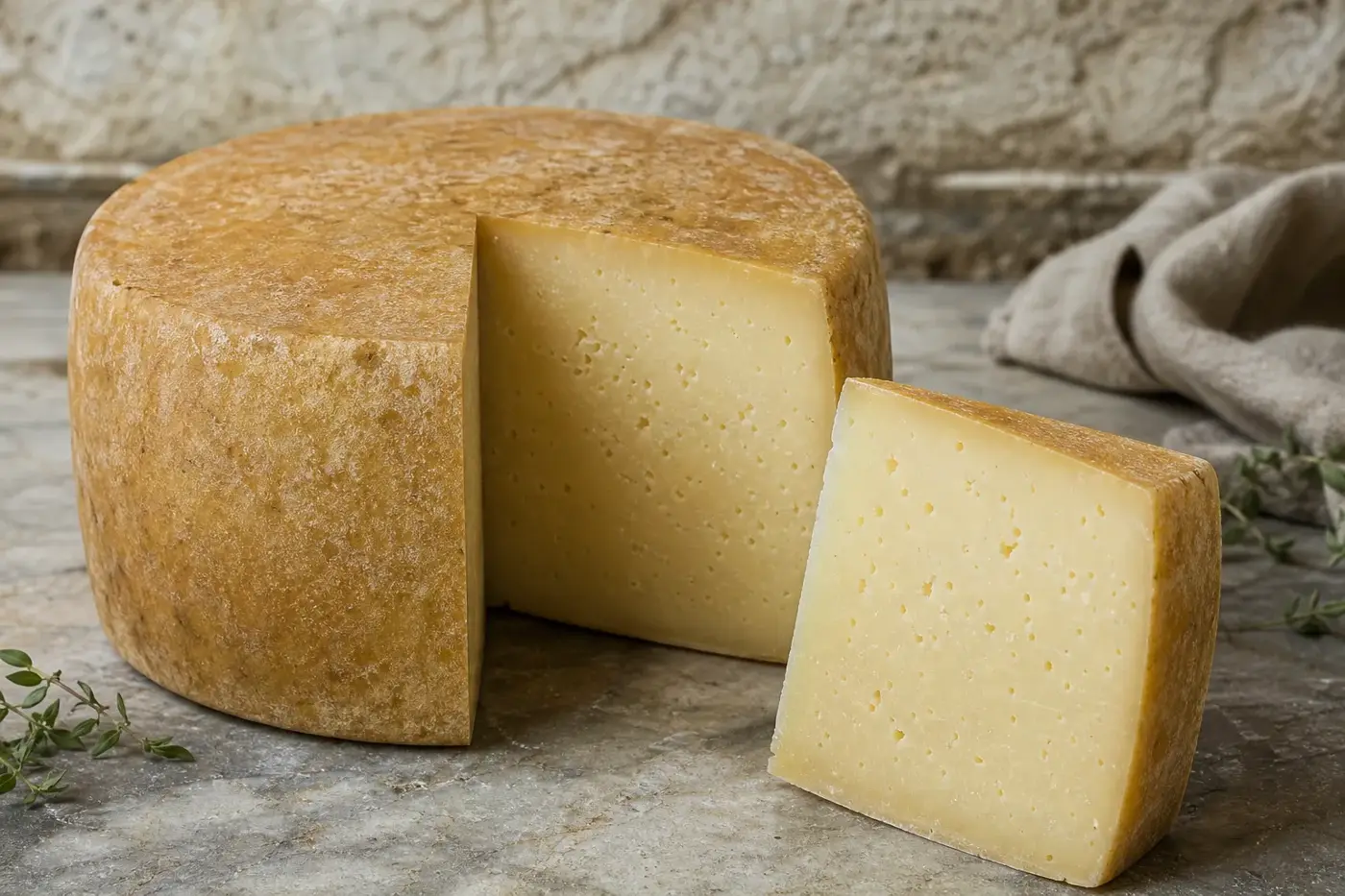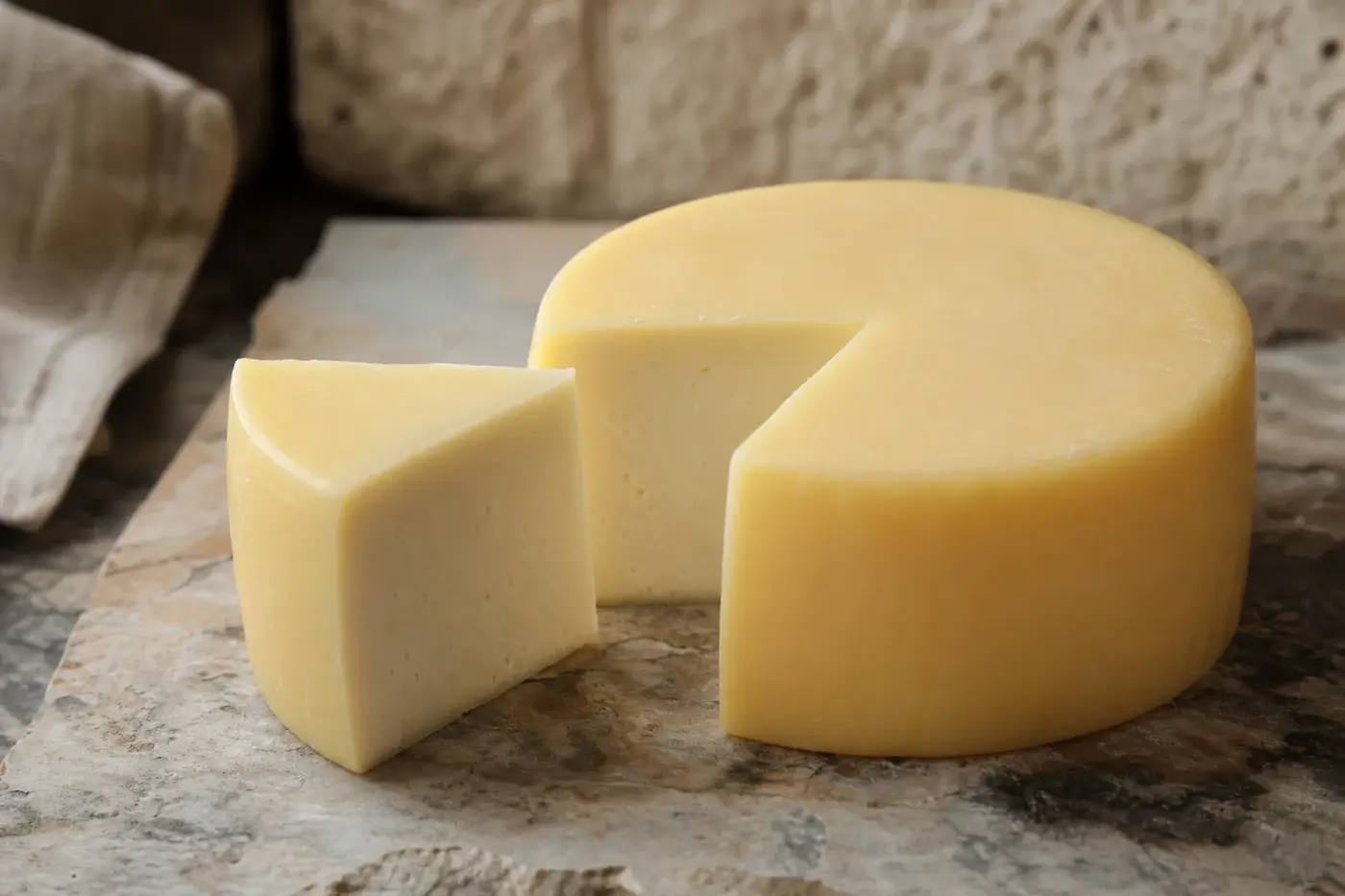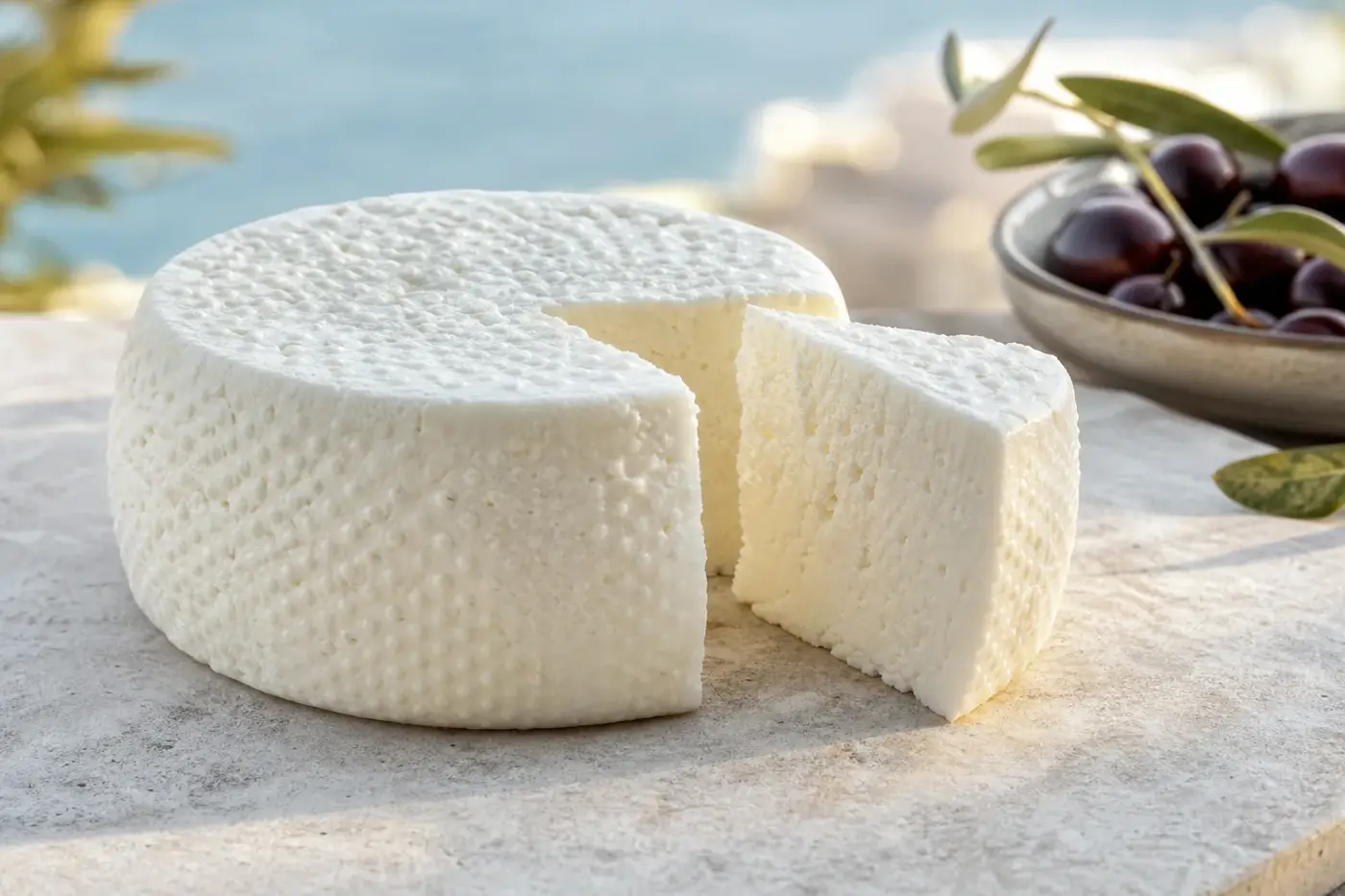
A slice beside tomatoes and herbs. Another with fruit and a little honey. With Manouri, you need not settle the sweet or savoury question before reaching for a plate.
This soft, white Greek cheese gives sheep’s or goat’s milk whey, or a mixture of both, a second life. Enriched with milk or cream in Central Macedonia, Western Macedonia and Thessaly, it is mild, creamy and comfortable on either side of the menu. [1][3][4]
| What you might want to know | The detail |
|---|---|
| Familiar name | Manouri. [2] |
| Exact registered name | Μανούρι / Manouri, on the Great Britain register. [2] |
| Registration authority | Department for Environment, Food & Rural Affairs, Great Britain register. [2] |
| Great Britain status | Registered PDO, as at November 2026; UK scheme registration dated 31 December 2020 at 23:00. [2] |
| EU registration history | Defra records original EU registration on 21 June 1996. Current EU register status: Not verified. [2] |
| Where it is made | Central Macedonia, Western Macedonia and Thessaly, Greece. [1] |
| Dairy ingredients | Sheep’s or goat’s milk whey, or their mixture, with sheep’s or goat’s milk or cream. [1] |
| Maturation and rind | Eaten fresh, without ripening; no developed ripened rind. [3] |
| Your product’s treatment and coagulant | Look for the manufacturer’s statement for your product |
| Pregnancy guidance | UK NHS guidance, November 2026; see source [6] and the section below. |
Meet Manouri, rich without raising its voice
Try your first bite without accompaniments. Manouri offers richness without the forceful flavour of an aged cheese. Greek producer Arvanitis describes its version as having a milk aroma, a rich aftertaste and a delicate, soft flavour, and recommends it as a dessert cheese. Simple company lets those qualities shine. [4]
Expect something compact yet tender, rather than a spread you scoop with a spoon. Research describes Manouri’s delicate texture, while a small comparative study found differences in hardness, springiness and crumbliness between samples. Both a neat slice and a more crumbly piece belong in the picture. [3]
See how your piece behaves under the knife. Does it cut cleanly, or break a little at the edge? Save clean slices for a plate, then scatter loose pieces over vegetables or fold them into a softer filling. Not every pack has ambitions to become identical cubes.
Find its roots in Macedonia and Thessaly
Manouri’s protected origin means more than the address on a dairy door. Its specification defines the production area as Central and Western Macedonia and Thessaly. It also connects the whey, added milk and cream to sheep and goats traditionally reared there. Those ingredients belong to the geographical story too. [1]
You will see PDO, meaning protected designation of origin, associated with the name. In Great Britain, Defra lists Μανούρι / Manouri as a registered PDO, with Greece as its country of origin. The register records the original EU registration separately from its entry into the UK scheme. [2]
Look for the registered name and clear producer information on your pack. An importer’s or distributor’s address tells you something different from where the cheese was produced, so give both a moment. For the wider distinction between an origin designation and a general style name, see protected names explained.
From leftover whey to something worth slicing
Once the first cheese curd has been separated, whey is the liquid left behind. For Manouri, it gets another purpose and an extra helping of dairy richness. The official specification describes enriching it with sheep’s or goat’s cream, then adding milk or cream during heating. [1]
The specified process heats the mixture to 88 to 90 °C while stirring. Salt and the additional dairy ingredients go in during heating. The collected curd then goes into cloth sacks to drain for four to five hours. This is the prescribed production process, not a home cheesemaking method. [1]
Heat changes the structure of whey proteins through a process called denaturation. They gather into a coagulum, the mass that becomes the cheese. Draining removes liquid and brings that mass together. Manouri is eaten without a ripening stage, so there is no developed ripened rind. [3]
The cloth supports the tender curd as it drains, before the finished cheese is portioned for sale. A representative manufacturer’s technical sheet lists larger vacuum packs alongside smaller vacuum-packed portions. [5] You can follow the broader journey from milk to curd in how cheese is made.
Leave room for that delicate flavour
Think fresh dairy rather than mature rind when you taste Manouri. Arvanitis emphasises milk aroma and a soft, delicate taste. A little honey, a few herbs or some fruit gives you a good starting point, with room left for the cheese itself. [4]
Take the same gentle approach to acidity. Start with less lemon or vinegar than you think you need. Taste before adding more, and let the balance of the dish guide you.
Give the texture a little consideration too. Keep attractive salad slices intact and scatter any broken edges around them. In a filling, those fragments are useful ingredients rather than something to tidy away. A loose arrangement can suit a tender portion better than a row of matching cubes.
Manouri, Feta, Mizithra or Anthotyros: which belongs on your plate?
A row of pale cheeses can look deceptively similar. Their starting ingredients and handling tell you much more about what to expect on your plate. This comparison draws on Manouri’s specification and representative producer descriptions. Products sold under the other names can vary. [1][4]
| Cheese | What makes it different in the cited sources | When it earns its place |
|---|---|---|
| Manouri | Enriched sheep’s or goat’s whey cheese. [1] | When you want a delicate dairy centrepiece. |
| Feta | Brined cheese, distinct from the whey cheeses. [3][4] | Keep Feta when its brined character is essential to your recipe. |
| Fresh Mizithra | Arvanitis describes its version as soft, fresh whey cheese with a slightly sour taste. [4] | Read the product details before making a swap. |
| Fresh Anthotyros | Arvanitis describes its version as soft white whey cheese made with sheep’s, goat’s and cow’s dairy ingredients. [4] | Match its ingredients and consistency to your dish. |
Before swapping, ask what job you need the cheese to do. A filling can usually accommodate a different consistency more readily than a dish built around an intact grilled slice. Add your replacement before adjusting the final seasoning, rather than assuming the original salt quantity still fits. Read more about Feta before replacing it where it supplies the main seasoning.
Let the label guide your choice
Read the name, ingredients and storage instructions together. One representative Manouri manufacturer lists sheep’s and goat’s whey, sheep’s and goat’s cream, and salt. That describes its own product. The pack in your hand remains your reference for the cheese you are buying. [5]
Look specifically for milk treatment. Heating whey during the traditional process does not replace a clear statement about pasteurisation. If that matters to your choice, ask the maker or retailer for the specification covering the exact product. Raw milk, thermised and pasteurised cheese explains the distinction between those treatments.
Choose a portion you can use within the pack’s instructions after opening. If you are buying a cut piece, ask for the original product name, producer, date information and storage directions. When those details come separately from the wrapping, take a photograph so they stay with your cheese.
Think about your dish before choosing the piece. An intact portion leaves you free to cut substantial slices. A broken portion can be just as convenient if you plan to mix it into something.
Make a plate with fruit, herbs and very little fuss
Start with one combination, rather than several strong dressings competing for attention. You want to taste the cheese, not conduct a search for it. These serving ideas build on the delicate dairy character described by the producer. [4]
For something sweet, put a slice beside fresh figs, pear or berries, then add honey sparingly. Leave some fruit undressed so you can change the balance from one mouthful to the next. Bread or plain toast makes the plate more substantial without asking you to prepare another elaborate accompaniment.
For a savoury plate, try tomatoes, cucumber, olive oil and torn mint or dill. Dress the vegetables first, then lay the cheese on top so it needs little stirring. Taste before adding salt, especially if olives or another salty ingredient are already involved.
With bread, offer slices separately before turning everything into a spread. Broken pieces work over warm toast, finished with herbs. You can put an uneven portion to good use and keep that pleasing contrast between bread and cheese.
Put out only what you need and refrigerate the rest. FSA guidance for England, Wales and Northern Ireland says chilled food should spend the shortest possible time out of the fridge during preparation. [7]
Take a gentle approach to the grill and oven
Keep Manouri’s tenderness in mind when you grill it. Try substantial slices, a lightly oiled flat griddle or frying pan, and a broad turner that supports the whole piece. A flat surface is easier to manage than widely spaced barbecue bars.
Handle it as little as possible. Try one slice first, then adapt the remaining pieces to how your pack behaves. If it breaks, put the pieces over vegetables or bread and save the rest for baking or a filling. These are handling suggestions rather than a site-tested method.
For baking, think of a vegetable tart, a pastry filling with herbs, or a sweet filling with fruit. Decide before mixing whether you want visible pieces of cheese or an even filling. Add wet vegetables and liquid seasonings thoughtfully, so you keep control of the consistency.
Use a complete, sourced recipe for quantities, oven settings and cooking times, especially when eggs or other ingredients are involved. A browned surface does not tell you that the dish has cooked through. During pregnancy, follow the NHS cooking advice below. [6]
Give fresh Manouri a properly chilled home
Start with the pack’s temperature and opening instructions. FSA domestic guidance for England, Wales and Northern Ireland recommends a fridge between 0 and 5 °C. A manufacturer’s 2018 sheet specified 2 to 4 °C for its Manouri. Use the current instructions for the product you buy. [5][7]
Keep the remaining cheese covered and refrigerated, with its date information attached. Opening may start a separate consumption period, so do not rely only on the unopened pack date. UK official guidance distinguishes use-by dates, which concern safety, from best-before dates, which concern quality. [8]
Do not eat, cook or freeze the product after its use by date. [8] Correct storage matters before that date too, and an acceptable appearance does not overrule the instructions. If a recall identifies your product and batch, follow the recall notice. [8][10]
For cooked leftovers, follow the FSA chilling guidance for England, Wales and Northern Ireland, as at November 2026. [7]
This page summarises published guidance from the official sources it cites. It is not medical advice. Guidance differs between countries and changes over time, so check the current source for where you live, and ask your doctor, midwife, pharmacist or dietitian about your own circumstances.
Find your way through rennet, milk allergy and pregnancy
Choosing vegetarian Manouri? Start with the whey
Look for the individual manufacturer’s statement, including how the whey was produced. Heat forms Manouri’s curd, but rennet may have been used for the original cheese that supplied that whey. Research describes this earlier rennet stage in traditional production. [3] Ask whether the finished product is suitable for vegetarians, taking that earlier stage into account.
Milk allergy: bring the product details to your appointment
Manouri contains dairy ingredients. [1][5] For UK readers, the NHS distinguishes food allergy from intolerance and advises consulting a GP if you think you or your child has a food allergy. Take the product information to your clinician or dietitian when discussing whether it is suitable. [9]
Pregnancy: let the product details and NHS guidance lead
The NHS pregnancy guidance, as at November 2026, includes pasteurised soft cheeses such as ricotta and Feta among foods that can be eaten during pregnancy. It gives separate advice for unpasteurised dairy foods and particular soft cheeses, including exceptions for some cheeses cooked until steaming hot. Read the relevant category in the full guidance. [6]
Manouri is not specifically named on that NHS page. Look for your actual product’s pasteurisation information. If its classification or ingredients are unclear, consult the linked guidance with your midwife. Outside the UK, follow your own national authority’s advice. [6]
Questions people ask
What is Manouri made from?
Manouri is made from sheep’s or goat’s milk whey, or a mixture of the two, enriched with milk or cream. Its defined production area is Central Macedonia, Western Macedonia and Thessaly in Greece.
How is Manouri different from Feta?
Manouri is an enriched whey cheese with a delicate dairy character. Feta is a brined cheese, distinct from the whey cheeses.
Is Manouri suitable for vegetarians?
Heat forms Manouri’s curd, but rennet may have been used for the original cheese that supplied the whey. Check the individual manufacturer’s statement and ask whether the finished product is suitable for vegetarians.
Can you eat Manouri during pregnancy?
The NHS includes pasteurised soft cheeses such as ricotta and Feta among foods that can be eaten during pregnancy, but Manouri is not specifically named. The NHS gives separate advice for unpasteurised dairy foods and particular soft cheeses, including exceptions for some cheeses cooked until steaming hot. Check the product’s pasteurisation information and consult the NHS pregnancy guidance at www.nhs.uk with your midwife if its classification or ingredients are unclear.
How should Manouri be stored?
Follow the pack’s temperature and opening instructions. The Food Standards Agency recommends a fridge between 0 and 5 °C in England, Wales and Northern Ireland.
Sources
- Greek Ministry of Agriculture, European Commission archive. Manouri cheese PDO: application summary, national application TY (PDO) 4, summarising Ministerial Decision 313028/11.1.94, 1994. Sections 5(b), 5(c), 5(e) and 5(f) cover ingredients, area, production and geographical linkage. Official specification summary.
- Department for Environment, Food & Rural Affairs. Μανούρι / Manouri, Great Britain protected food names register, published 2021, checked November 2026. Official register entry.
- Food and Bioprocess Technology. Comparative Analysis of Chemical, Microbiological, Sensory and Volatile Compound Profiles in Manouri PDO and Artisanal Manouri Cheeses: A Preliminary Study, published 11 February 2024, DOI 10.1007/s11947-024-03333-z. Four products from northern Greece were examined using chemical, microbiological, instrumental and sensory methods. Full research paper.
- Arvanitis. Product catalogue, 2019 edition, Manouri, Anthotyro, Myzithra and Feta descriptions. A commercial producer’s account of its own products. Producer catalogue.
- Tempi. Manouri, product description E1.11, first issue, 1 September 2018. Manufacturer’s technical sheet, used for its declared ingredients, packaging and refrigeration instructions only. Technical sheet.
- NHS. Foods to avoid in pregnancy, live guidance checked November 2026, cheese, milk and other dairy section. UK pregnancy guidance.
- Food Standards Agency. How to chill, freeze and defrost food safely, published 18 December 2017, live guidance checked November 2026; applies to England, Wales and Northern Ireland. Official chilling guidance.
- GOV.UK. Understanding food labelling: Best before and use-by dates, live guidance checked November 2026. Official date guidance.
- NHS. Food allergy, live guidance checked November 2026. Official allergy guidance.
- Food Standards Agency. Alerts, live listing checked November 2026; and Food Fact Check: What happens during a food recall?, 11 June 2026. Official alerts.
Research combined the official protected-name record and archived specification with published research, attributed producer documents and UK official consumer guidance; serving and handling suggestions are editorial synthesis.
Last checked: November 2026
Last checked November 2026.
The editors suggest you read next