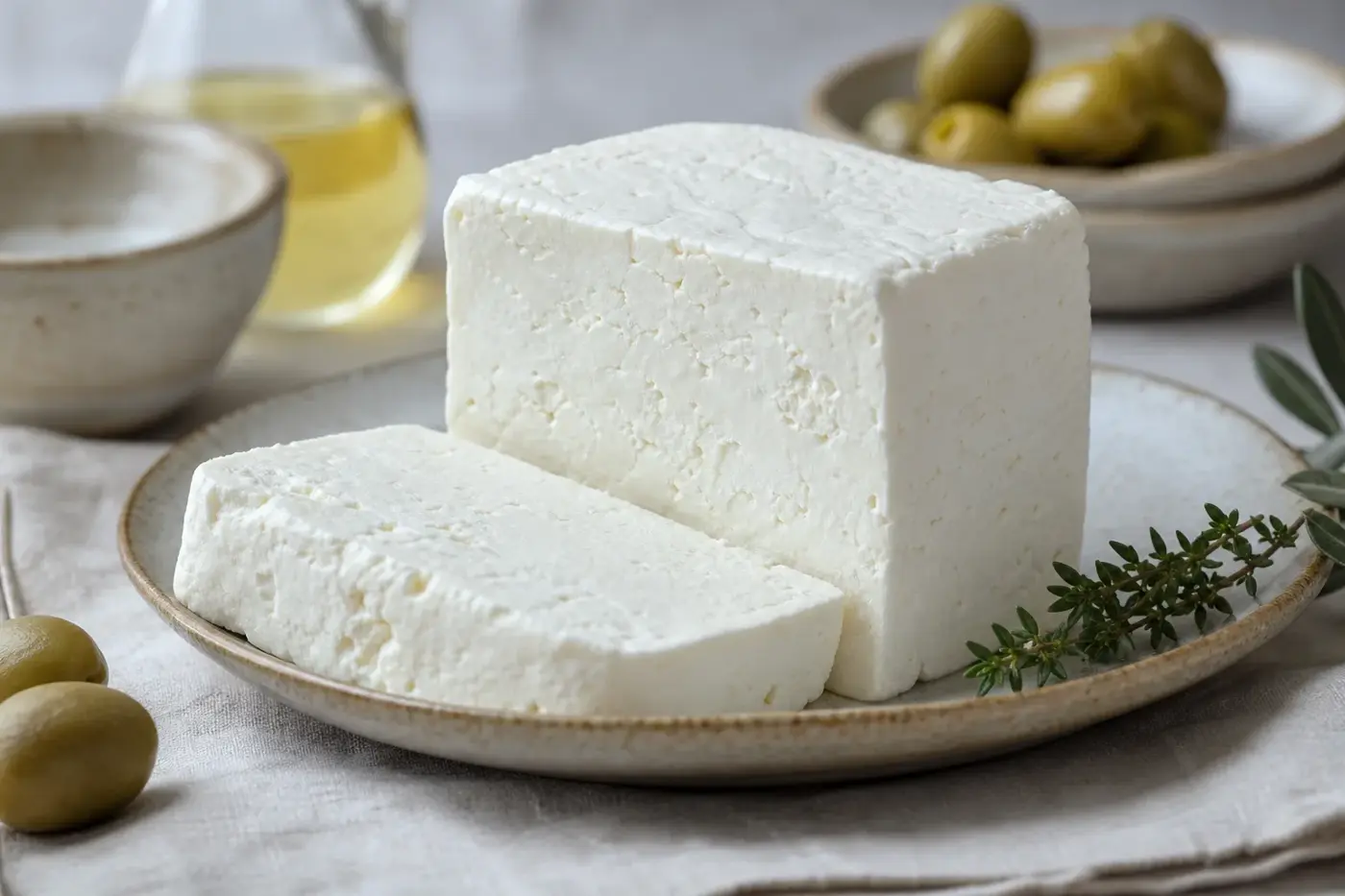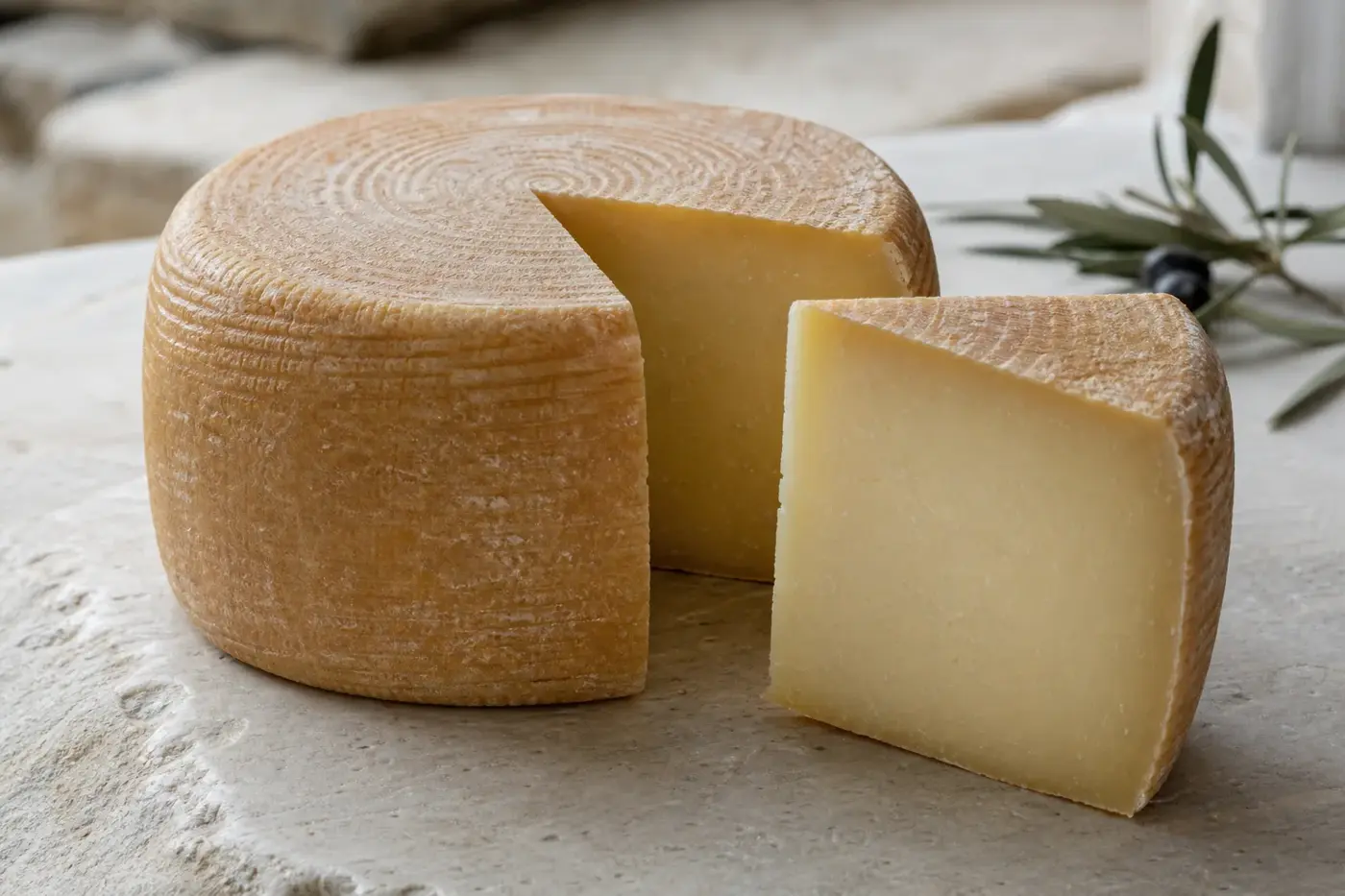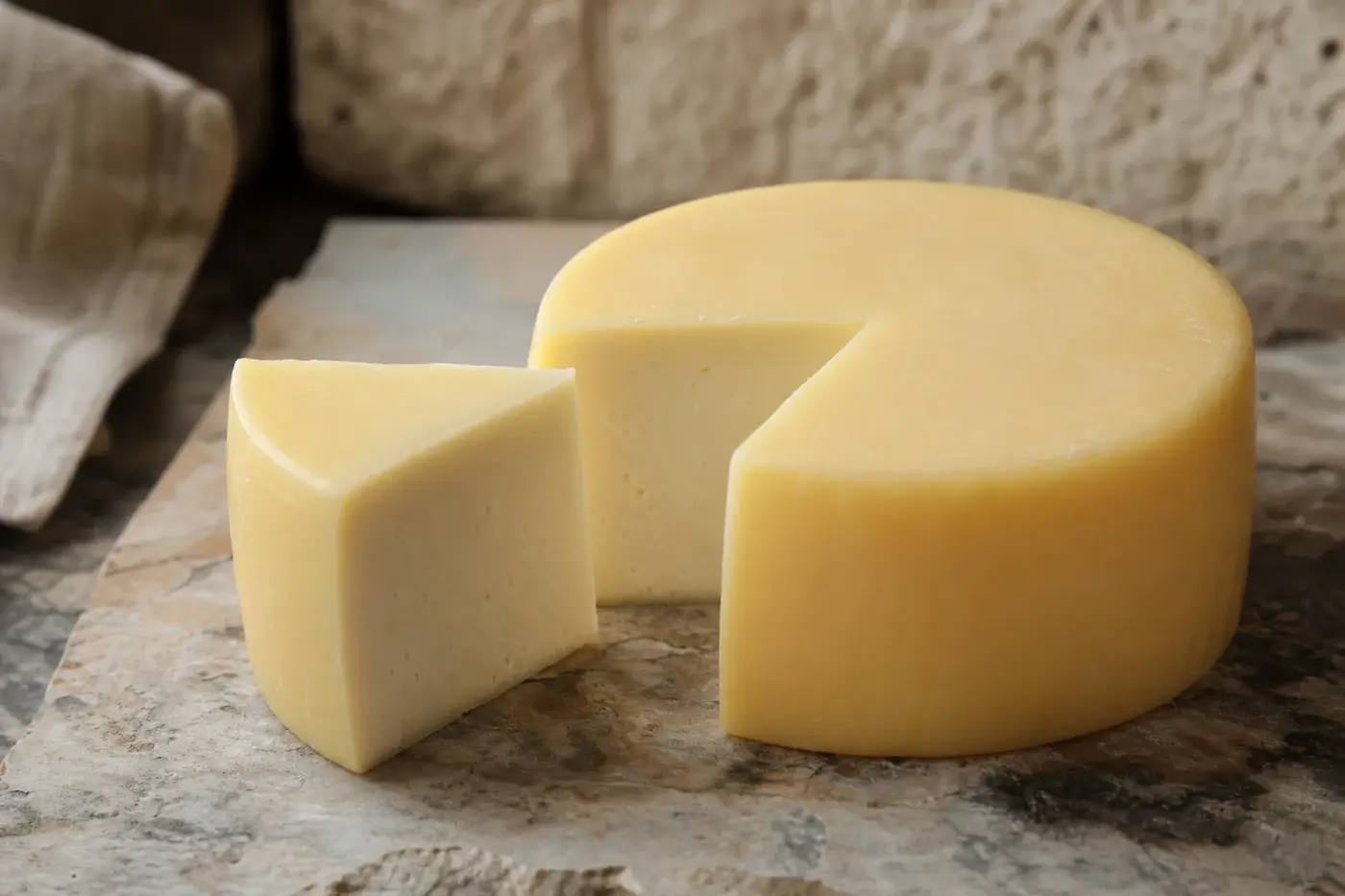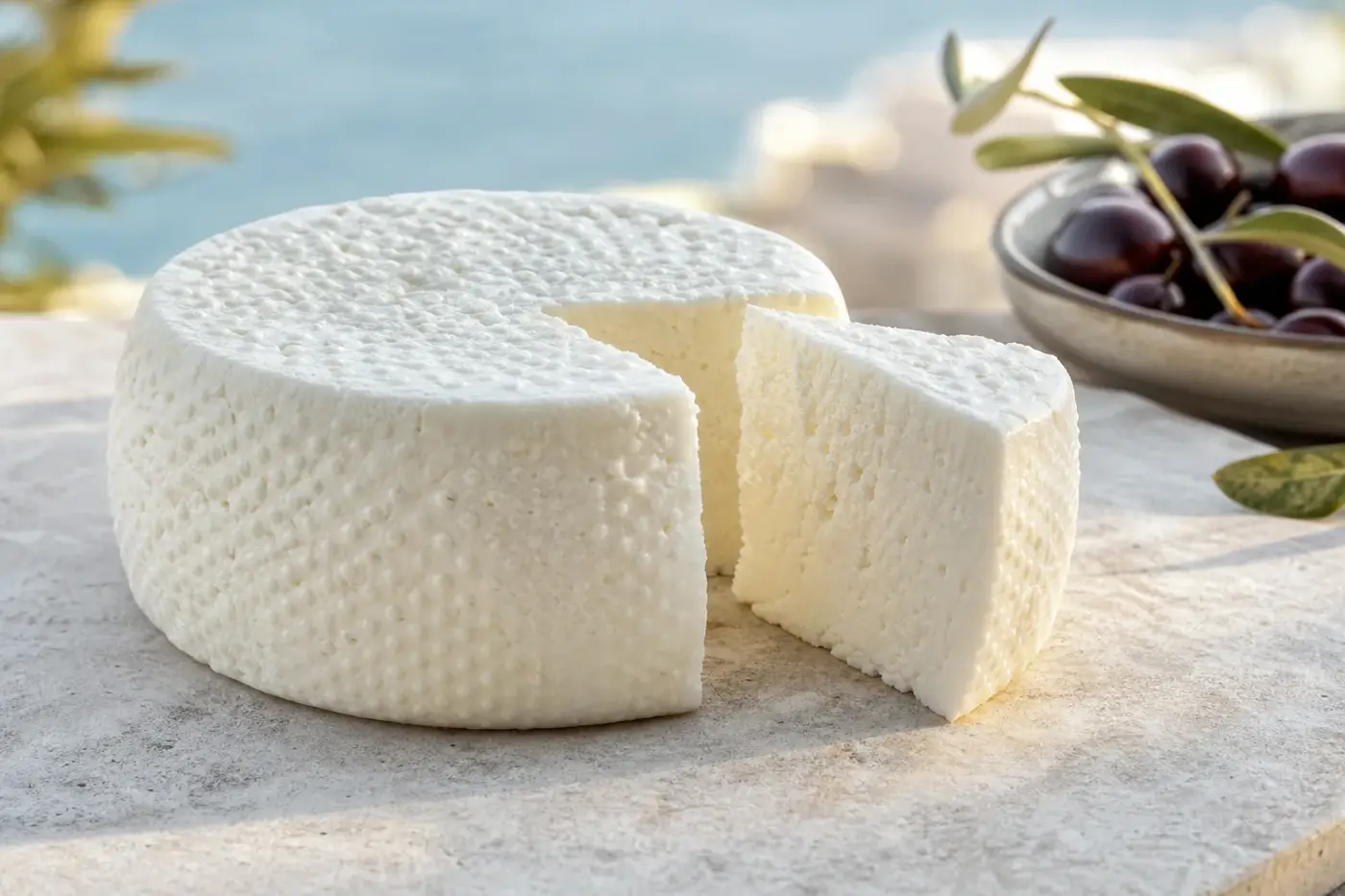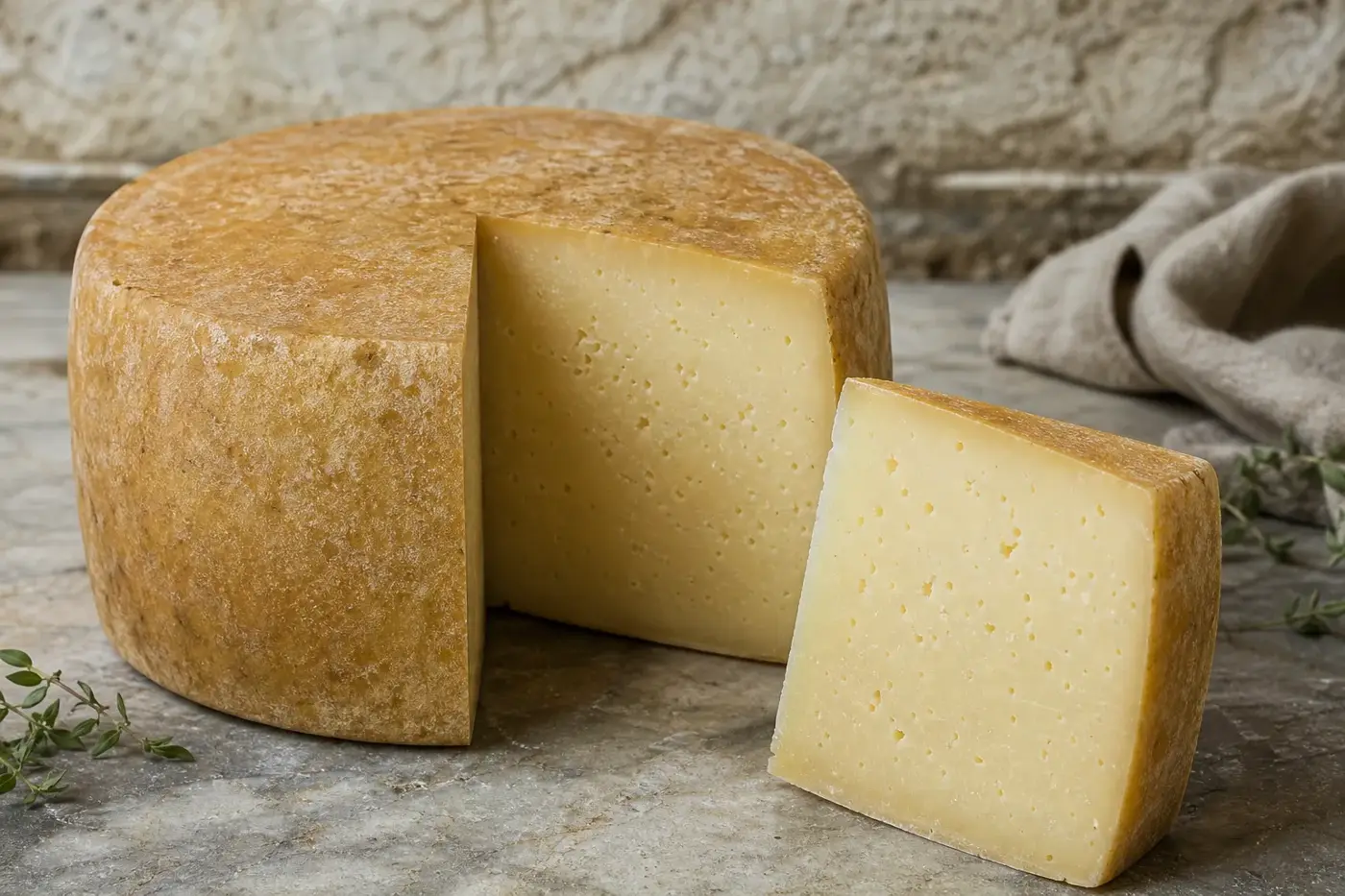
Set a wheel of Graviera on the counter and cut a slice. Before you taste it, the name has already taken you somewhere: to cows on Naxos, sheep on Crete or the Agrafa mountains, where sheep's milk may meet more goat's milk than the Cretan specification allows. [1][2][3]
You're meeting a family of firm Greek cheeses, not one recipe with several addresses. Get to know the regional names and the differences become part of the pleasure. This is one occasion when reading the label counts as travel. [1][2][3]
Get acquainted with the Graviera family
| What to know | The details |
|---|---|
| The family | Graviera, a Greek hard-cheese family. [6] |
| Names for your shopping list | Γραβιέρα Νάξου / Graviera Naxou; Γραβιέρα Κρήτης / Graviera Kritis; Γραβιέρα Αγράφων / Graviera Agrafon. [4] |
| EU protection | All three regional names appear as PDO cheeses in Greece's agriculture ministry listing; November 2026. [4] |
| Register authority | European Commission; individual register IDs: unconfirmed. [4] |
| GB protection | Graviera Naxou: registered PDO, effective 31 December 2020 at 23:00. Status of the other two names: unconfirmed. [5] |
| What sets the milk | The regional specifications permit traditional rennet or other enzymes with equivalent action. [1][2] |
Let the full name take you there
“Graviera” brings you into the family, but it doesn't hand you a single recipe. Nor does it limit you to the three places explored here. Makers produce Graviera across Greece, well beyond these regions. [4][6]
Each regional name registered as a PDO in the EU has its own geographical and production requirements. PDO means protected designation of origin, which makes the full name on your label worth reading. For the wider distinction between a cheese style and a registered geographical name, turn to protected names explained. [4][6]
Visit three places with three different milk traditions
| Regional cheese | Where it comes from and which milk goes in | Its time to mature |
|---|---|---|
| Graviera Naxou | Island of Naxos. Cow's milk, with sheep's and goat's milk together no more than 20% by weight. [2] | Brining, then 70 to 80 days in the ripening room. [2] |
| Graviera Kritis | Crete: Chania, Rethymno, Heraklion and Lasithi. Sheep's milk, with up to 20% goat's milk by weight. [1] | At least three months. [1] |
| Graviera Agrafon | Defined Agrafa localities in western Thessaly and Evrytania. Sheep's milk, with up to 30% goat's milk by weight. [1][3] | Three-month maturation programme. [1] |
These are the Greek production specifications as of November 2026. For Naxou, the 70 to 80 days cover the specified ripening-room stage after brining. They are not the cheese's entire age from manufacture. [1][2]
Naxos offers you the clearest contrast in milk. Its specification centres on cattle raised on the island and fed on local flora. It describes a pleasant flavour and a light aroma associated with propionic fermentation, the bacterial activity that also creates the scattered holes inside. [2]
On Crete, follow the sheep and goats between grazing grounds. The Greek trade office describes flocks moving towards milder coastal areas in winter, connecting Graviera Kritis with mountain and lower grazing alike. Its account emphasises a slightly sweet taste and a developed aroma. [3]
Agrafa takes you inland, into the mountain country of western Thessaly and Evrytania. The official description gives Graviera Agrafon a slightly sweet flavour and aromatic character. Ask about the actual blend: that higher permitted share of goat's milk is an allowance, not a recipe followed by every wheel. [1][3]
Cut a slice and take a closer look
Inside Graviera, you'll find pale yellow paste scattered with small holes. The wheel is cylindrical and the rind firm, though the regional descriptions also allow an elastic body. Hard cheese needn't crumble just because you've arrived with a knife. [1][2][3]
Look at the rind, too, because the regional accounts describe different surfaces. Naxou's specification calls it thin and dry. Kritis has a hard, dry rind with microbial growth during maturation. [1][2]
Age deserves your attention alongside geography. Greece's tourism organisation describes Cretan Graviera as sweet when young, becoming nutty and more pronounced as it matures. Let that progression guide your tasting, together with the maker's description and the actual maturity of the wheel in front of you. [6]
Follow Graviera's trail towards Gruyère
Graviera's connection with Gruyère leads you into the dairy school as well as the cheese room. A published ethnographic study draws on interviews conducted in Greece in 2011. In those interviews, cheesemakers describe learning Gruyère-derived methods through dairy schools. [7]
The researcher also watched Cretan makers cutting and heating curds, then pressing and brining their cheeses. These oral histories reveal people adapting methods to local milk, equipment and working conditions; they don't supply a complete history of the regional cheeses. Follow the Swiss cheese's own story in Le Gruyère. [7]
Step inside the making of a wheel
The work begins with rennet, an enzyme preparation that sets milk into curd. Curd is the solid material from which cheese forms; whey is the liquid released around it. Makers cut the curd, heat it while stirring, gather it into moulds and press it. [2][3]
For Naxou, the specification calls for curd grains the size of rice. It's a small detail with a role in establishing the finished cheese's close texture. Cutting, heating, moulding and pressing all help shape these regional cheeses. [2][3]
Salting and maturation have their own rhythms. The published production account describes brining followed by repeated dry salting for Kritis and Agrafon, with turning and controlled ripening conditions. Surface microorganisms contribute to the developing aroma. [2][3]
Agrafon moves through successive ripening conditions. For Naxou, the account specifies drying after brining, before the ripening-room stage. You can see the family resemblance without expecting every maker's routine to be the same. [2][3]
Ask directly about milk treatment at the counter. The published Agrafon and Kritis texts specify thermisation or pasteurisation, while the updated Naxou specification permits raw or pasteurised milk. The regional name alone cannot tell you what your particular maker uses. [1][2]
Taste the place, then get curious about the season
The specifications connect the milk with locally adapted animals and feeding based on each area's flora. Ask when your cheese was made, what the animals were eating and whether the maker changes the milk blend through the year. These are useful questions, though the specifications do not assign a particular flavour effect to each feeding regime. [1][2]
For a revealing tasting, try two ages from one maker side by side. Alternatively, compare similarly aged cheeses from two regions. Notice how readily each piece bends or breaks, how sweet or savoury it seems, and how long the flavour stays with you.
Give those observations room before reaching for an explanation. An island, a mountain or a milk species gives you a starting point for curiosity, not a verdict on taste.
Ask for the whole story at the counter
Begin with what you want your cheese to do. Will you serve slices at the table, shave it over a salad or cook with it? Ask for the full regional name, producer, milk species and actual age, then taste where possible.
For a PDO cheese, look for the complete name rather than a picture of an island. Distinguish the place of manufacture from the business address of a packer or seller. Those details tell you different things.
If you're buying a cut piece, ask the seller to retain the original product information and give you storage instructions. Keep those details with the cheese. The cheese label guide helps you work through them.
If you're vegetarian, ask specifically about the coagulant. The regional texts permit traditional rennet or other enzymes with similar action, so the protected name does not reveal the producer's choice. Look for an explicit product-level vegetarian statement or confirmation of the enzyme's source. [1][2]
Give your Graviera a simple welcome
Start with a few slices and country bread or barley rusks, followed by pear, grapes or figs. Keep honey on the side. Taste the cheese first, then decide how much sweetness you want alongside it.
With a firmer piece, try shavings rather than thick blocks. Sparkling water is a simple drink to serve alongside, leaving the cheese's flavour clear.
Let only the portion you intend to serve lose its refrigerator chill towards room temperature. Following US FoodSafety.gov guidance for perishable food, refrigerate within two hours, or one hour when the temperature exceeds 32 °C (90 °F). Keep the rest of your cheese refrigerated. [8]
Taste first, then grate, melt or fry
Give your Graviera a taste before putting it to work in the kitchen. Its character as a table cheese deserves a moment of your attention. Then try grating a firm piece over hot pasta, folding grated cheese into a vegetable filling or scattering it over an oven-baked dish.
Be cautious with other salty ingredients and taste before adding further seasoning. The cheese already has a say in the matter.
Try melting a small amount before committing your whole piece to a sauce or filling. For saganaki, ask the cheesemonger which wheel they recommend for frying, then choose a recipe written for that cheese. A slice that softens inside a browned exterior has a different job from cheese grated throughout a dish.
Choosing between Graviera, Kefalotyri and Kefalograviera
Kefalotyri and Kefalograviera have identities worth getting to know in their own right. Greece's tourism organisation describes Kefalotyri as hard and pungent, used mainly for grating. Greece's agriculture ministry separately lists Kefalograviera as an EU PDO cheese, while the official trade account describes its salty flavour and hard, elastic body. [3][4][6]
When you choose, taste for salt and pungency as well as firmness. A swap can change a recipe's seasoning and texture, even when both cheeses can be grated or fried. Keep the cheese's own name when you describe the finished dish.
Keep your Graviera happy in the fridge
Keep Graviera refrigerated and follow the package instructions. For households in England, Wales and Northern Ireland, the Food Standards Agency recommends a fridge between 0 and 5 °C (32 to 41 °F), with dairy products refrigerated. Use a fridge thermometer rather than relying on the appliance's dial alone. [9]
Retain the wrapping and its instructions. If you've bought a freshly cut piece, ask the seller how to rewrap it. Follow the stated shelf life after opening, and keep the date information with your cheese. [9]
Ask for the same details when you buy loose cheese. There is no reason to give every Graviera the same number of days. Follow the instructions for your particular piece. [9]
Use clean hands, knives and boards when handling your cheese. Keep ready-to-eat cheese separate from raw meat and its juices, in line with US FoodSafety.gov advice. [8]
If unexpected visible mould appears, consult your national food safety agency before deciding whether to trim or discard the cheese. The guide to mould on cheese explains the product distinctions that matter.
General information only, not medical advice: follow the official guidance where you live.
Questions people ask
What is the difference between Graviera Naxou, Kritis and Agrafon?
Graviera Naxou is based on cow’s milk, while Kritis and Agrafon are based on sheep’s milk. Kritis permits up to 20% goat’s milk, whereas Agrafon permits up to 30%.
What does Graviera taste like?
Greece’s tourism organisation describes Cretan Graviera as sweet when young, becoming nutty and more pronounced as it matures. Graviera Agrafon is officially described as slightly sweet and aromatic.
Is Graviera made with pasteurised milk?
The published Kritis and Agrafon specifications call for thermisation or pasteurisation. The updated Naxou specification permits raw or pasteurised milk, so ask which treatment the maker uses.
Is Graviera vegetarian?
The regional specifications permit traditional rennet or other enzymes with equivalent action, so the name alone does not identify the coagulant. Look for an explicit vegetarian statement or ask the producer to confirm the enzyme’s source.
Can you melt or fry Graviera?
The page suggests testing a small amount for melting before using a whole piece in a sauce or filling. For saganaki, it suggests asking the cheesemonger which wheel they recommend for frying.
Sources
-
Greek Ministry of Agriculture. Government Gazette, Series B, No. 16, 14 January 1994. Decisions 313045 and 313047, recognition and specifications of Graviera Agrafon and Graviera Kritis, particularly Articles 1 to 4. Official gazette PDF.
-
Greek Ministry of Rural Development and Food. Updated specifications of the registered designation Graviera Naxou, undated version currently linked by the ministry, retrieved November 2026. Sections 2, 3 and 5 cover description, geographical area and production. Official specification PDF.
-
Greek Ministry of Foreign Affairs, Sydney trade office. Market research: cheese, 2016. Cheese descriptions and production accounts for Kefalograviera and the three regional Gravieras. Official report PDF.
-
Greek Ministry of Rural Development and Food. Τυριά [Cheeses], official list of registered Greek cheese designations, dated 8 June 2026; retrieved November 2026. Official list and specification links.
-
Department for Environment, Food & Rural Affairs. Γραβιέρα Νάξου / Graviera Naxou, GB protected food name register entry, published 4 January 2021; retrieved November 2026. Official register entry.
-
Greek National Tourism Organisation. Greek Cheeses, undated current webpage, retrieved November 2026. Used for its published descriptions of Graviera's distribution, age-related flavour and Kefalotyri's culinary use. Official account.
-
Review of Agricultural, Food and Environmental Studies. Terroir products: a movable heritage feast?, 2021. Original ethnographic research, including Greek interviews conducted in 2011 and observations of Cretan cheesemaking. Section “Secular cheese missionaries and post-colonial simulacra”. Published research.
-
FoodSafety.gov. 4 Steps to Food Safety, current webpage retrieved November 2026. Clean, separate and chill guidance for US households. Official guidance.
-
Food Standards Agency. How to chill, freeze and defrost food safely, published 18 December 2017; current webpage retrieved November 2026. Applies to England, Northern Ireland and Wales. Official guidance.
Researched through official Greek specifications and public records, published ethnographic fieldwork and national food safety guidance, with serving suggestions identified as editorial recommendations.
Last checked: November 2026
Last checked November 2026.
The editors suggest you read next