Milk Standardisation and Ultrafiltration
Inside the separator, milk spins and cream peels away.
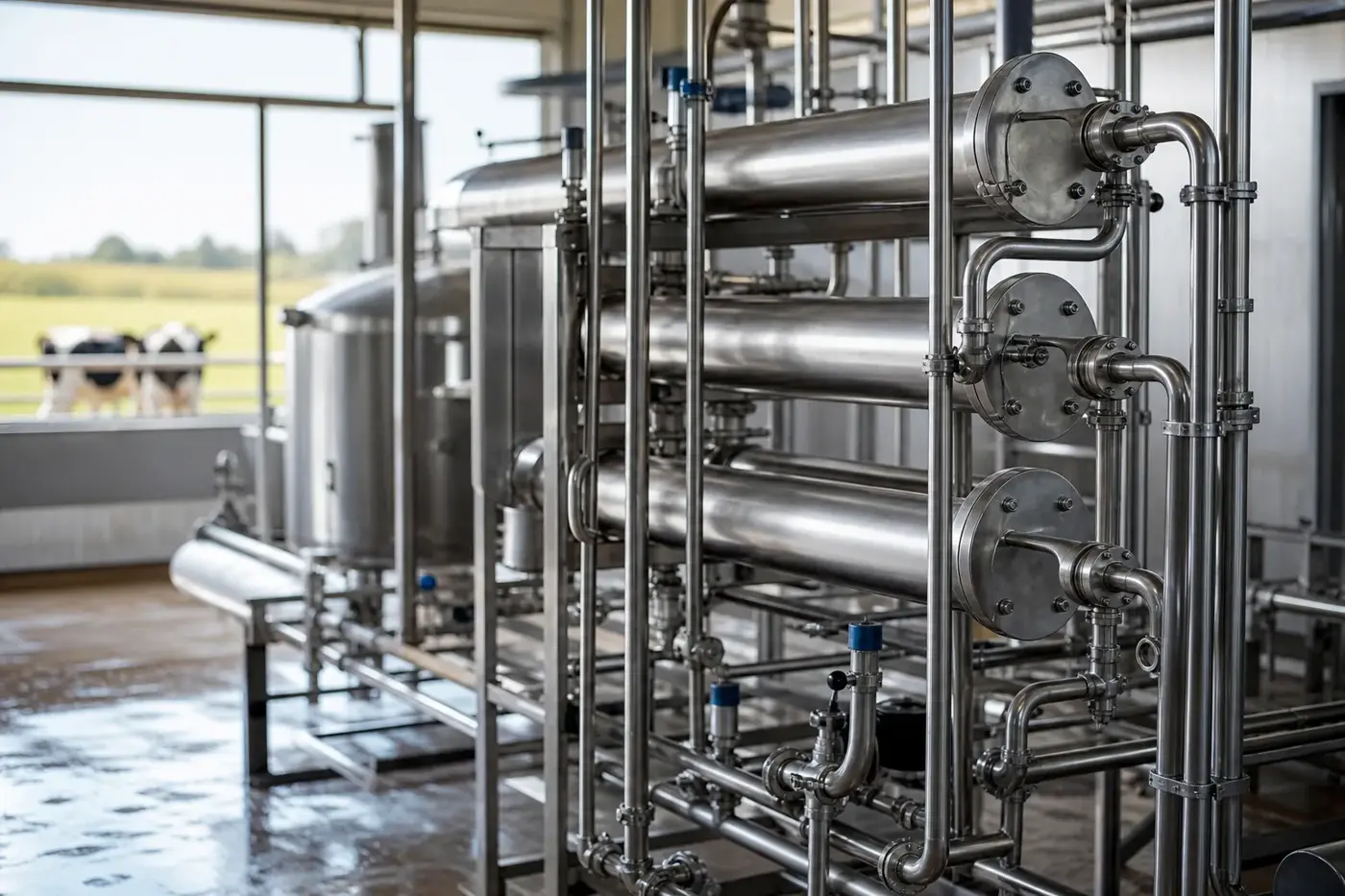
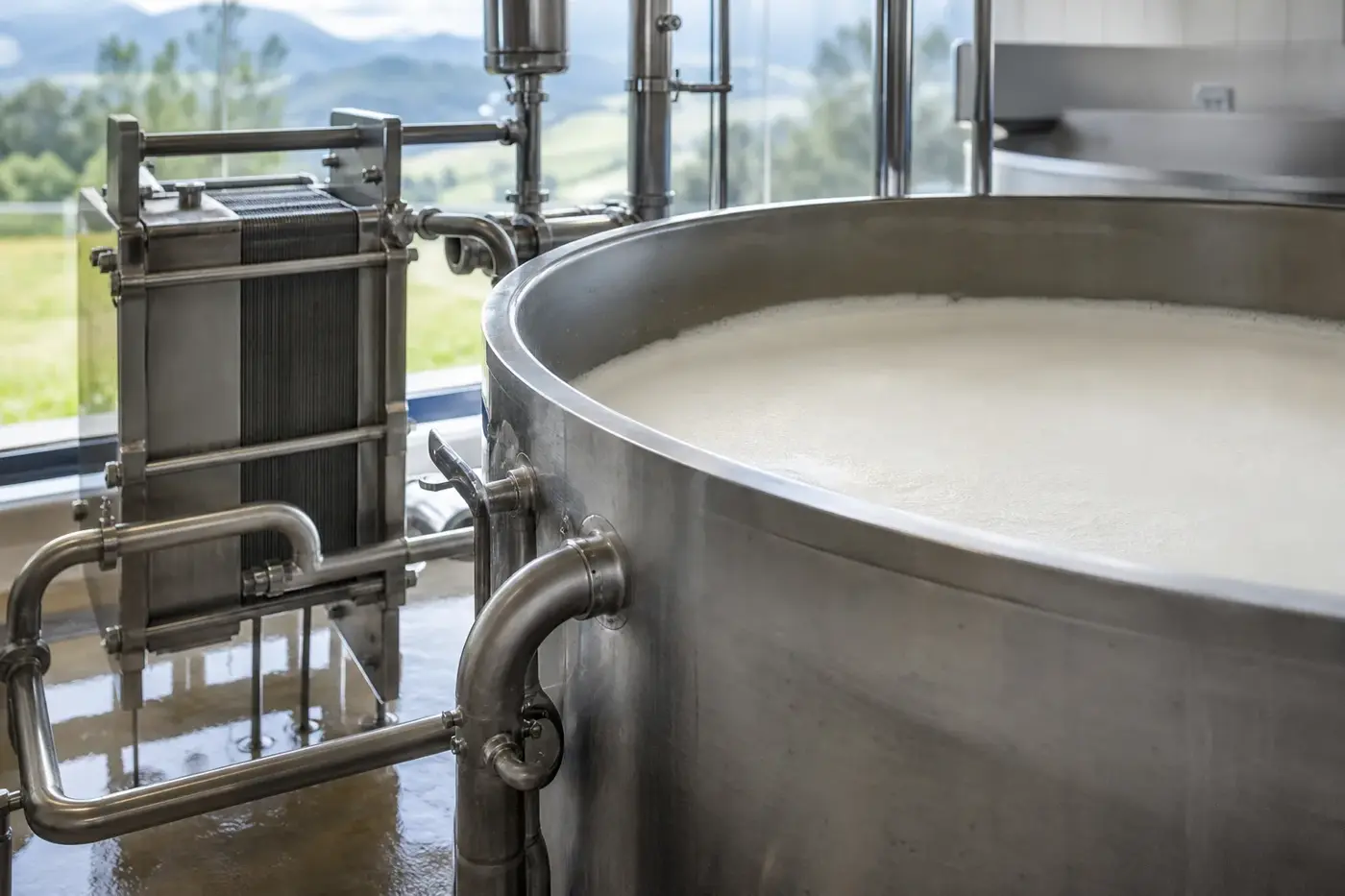
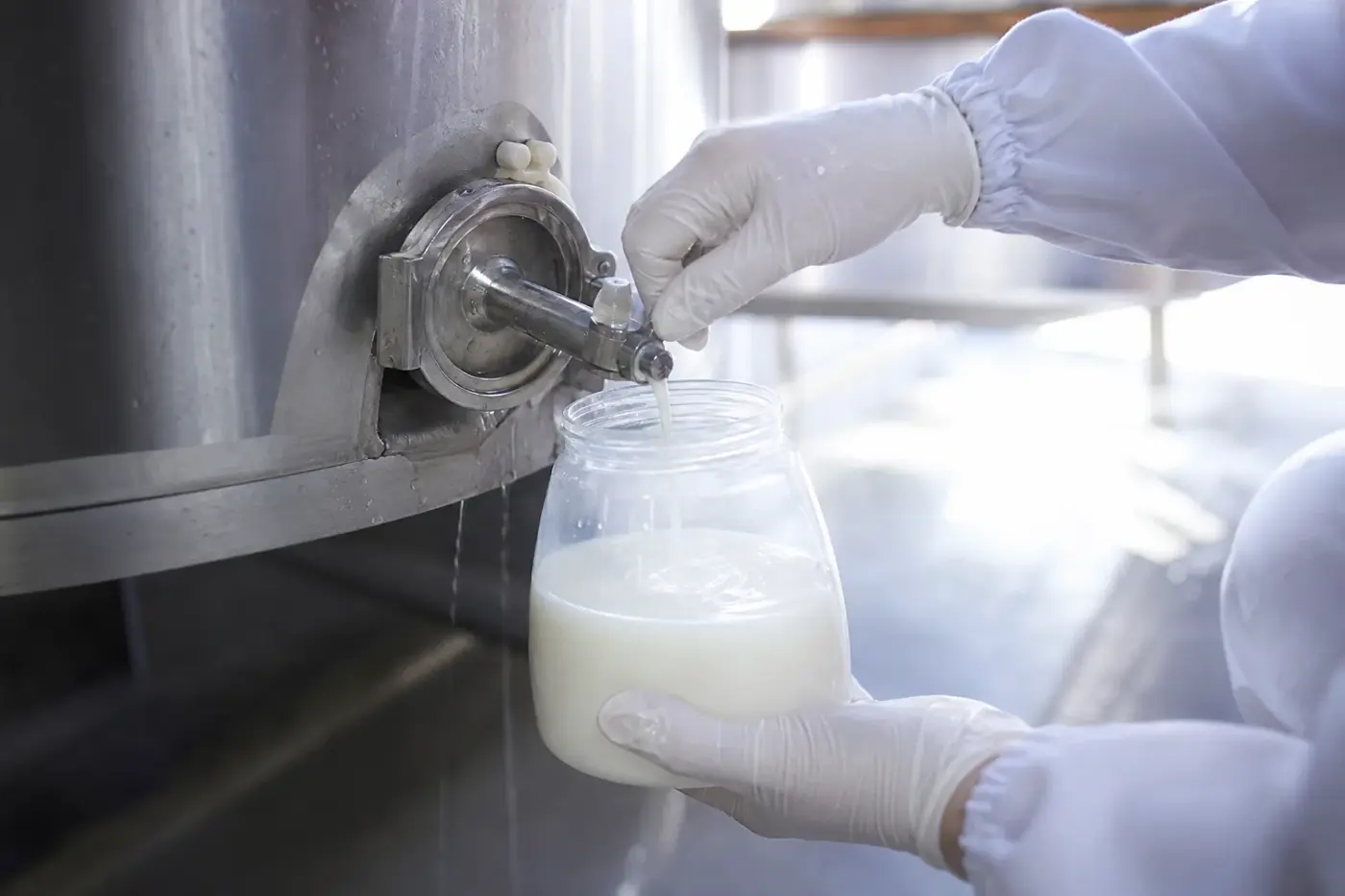
Inside the separator, milk spins and cream peels away. Elsewhere, a membrane holds back proteins while water and smaller dissolved substances slip through. Before your cheese reaches the vat, a composition test helps choose its route: milk standardisation adjusts milk towards a target, especially its fat and protein balance, while ultrafiltration makes a protein-rich concentrate and a separate liquid stream. [2][3][14]
Every milk delivery has a character of its own
Milk brings something of the animals that produce it and what they eat. Breed, diet, season and stage of lactation all influence its composition. For the cheesemaker, the starting material never arrives to a fixed recipe. Milk has not read the production schedule. [1][4]
Casein deserves a closer look. This group of proteins forms the main framework of rennet-set cheese, so two supplies with identical total protein can behave differently in the vat. Total protein tells you something, but it cannot tell you everything. [1][4]
Before adjusting anything, the cheesemaker measures fat and protein. Often, the useful target is the relationship between them, preferably fat relative to casein, rather than fat alone. That balance helps control the finished cheese's fat in dry matter: fat as a proportion of everything left when you exclude water. [2]
A consistent starting balance makes coagulation, when milk sets into a gel, more predictable. It also helps with the draining that follows. You can follow the wider journey in how cheese is made. [4]
A spin, a little cream, the right balance
Inside a centrifugal separator, milk divides into two streams. Cream carries a much higher proportion of fat; skimmed milk keeps most of the water and non-fat constituents. Controlled recombination then puts back the amount of cream needed for the chosen composition. [3]
This can happen continuously, with instruments and valves regulating both flows. A cheesemaker can also blend whole milk and skimmed milk in a tank or vat. Either approach may remove surplus fat, but standardisation means reaching a target, not simply making milk leaner. [2][3]
Protein can be adjusted too, using membrane concentration or suitable dairy ingredients where permitted. This is where standardisation meets ultrafiltration. Think of the first as the destination and the second as a technology that can help you get there. [2][8]
Ultrafiltration: the proteins stay for cheese
Picture milk flowing across a selective membrane under pressure. The portion that stays behind is the retentate; the portion that passes through is the permeate. That is ultrafiltration, usually shortened to UF. [14]
Cream separation works by density, separating a cream-rich fraction. UF instead concentrates proteins by letting water and sufficiently small dissolved constituents through the membrane. Both whole milk and skimmed milk can take this route. Concentrating skimmed milk, then adding cream afterwards, gives a dairy separate control over protein concentration and fat balance. [6][7][8][14]
How far you concentrate changes what happens next. A modest increase can prepare milk for an otherwise recognisable vat process. Much fuller concentration can produce cheese that sets directly in its package. [6][7][8]
What stays in, and what slips through?
Casein and fat largely stay in the concentrate. Water and smaller dissolved substances can pass through. The table gives you the typical dairy UF picture, though the precise split depends on the membrane and operating conditions, particularly for small proteins and minerals. [9][14]
| Component | Where it usually goes | What you should know |
|---|---|---|
| Casein micelles | Retentate | These protein clusters are strongly retained. |
| Fat globules | Retentate | They stay when fat is present in the starting milk. |
| Whey proteins | Mainly retentate | Substantial amounts stay, though some smaller proteins can pass through. |
| Water and lactose | Permeate, with some left in retentate | UF removes part of the total, not every molecule. |
| Minerals | Both streams | Dissolved salts can pass; minerals associated with casein tend to stay. |
This picture draws on technical guidance and experimental skimmed milk filtration. [9][14]
Calcium makes the story more interesting than a simple mineral sieve. Some sits in the milk serum, the watery phase, while some is associated with casein micelles. Temperature and acidity change that distribution, and therefore the proportion of calcium that travels into the permeate. [1][9]
The membrane needs the right conditions
A membrane sets the broad separation, but milk changes conditions at its surface. Proteins accumulate there, and deposits can reduce flow. Membrane material, channel design, pressure and circulation all affect performance, so a nominal separation rating alone cannot tell you what the finished retentate will be like. [5][6]
One controlled study shows the temperature trade-off clearly. Researchers used a 10 kDa membrane and triplicate filtration runs to ultrafilter skimmed milk at 5, 20 and 50 °C. The warmest treatment initially gave greater permeate flow, but also greater fouling and a faster decline in flow. Calcium and phosphorus passed through more readily at the two lower temperatures. [9]
Acidification shifts calcium phosphate away from its association with casein and towards the soluble phase. That changes both what can cross the membrane and the protein framework that must later become curd. Temperature and acidity are therefore tools for shaping composition, not just conditions to record. [1]
Two journeys from concentrate to cheese
One documented route begins with ultrafiltered skimmed milk. Cream brings it to the chosen casein-to-fat balance, then the cheese milk is pasteurised before rennet, the enzyme preparation that starts setting, is added. In a Cheddar study using 500 litre vats, researchers adjusted setting temperature as protein concentration increased, keeping curd firming manageable. [7]
After coagulation, the gel becomes curd: the solid material destined for cheese. Cutting, stirring and heating encourage syneresis, the contraction of curd and expulsion of whey. Draining and forming follow according to the cheese, with further handling, salting and pressing where the process calls for them. [2]
Full concentration gives certain fresh white cheeses a different journey. Tetra Pak's technical handbook describes concentrating milk towards the intended cheese composition, heat treating it, then adding the required culture or acid, rennet and other ingredients before it sets in the package. Much of the liquid separation has already happened at the membrane. That allows conventional vat cutting and extensive whey drainage to be bypassed. [2][8]
When you read about UF cheese, ask which journey is involved. Lightly concentrated milk that still needs cutting and draining is a different starting material from a concentrate designed to set as the finished product. That distinction tells you a great deal about what follows. [8]
More cheese sounds good. More of what?
A bigger cheese yield sounds straightforward, especially if you tend to consider a second helping a modest ambition. Yet concentrated milk contains more cheese solids from the start, so more cheese alone does not explain the gain. To judge improved recovery, ask how much useful material from the original milk reaches the cheese rather than leaving in permeate, whey or other streams. Yield needs that denominator. [4][10]
Keeping whey proteins in the concentrate can increase their contribution to cheese, especially when little drainage follows. But if curd is cut and whey removed, retention at the UF membrane and retention in the finished cheese are separate events. The drainage route still has the final say. [8][10]
Water complicates the picture too. Comparisons should distinguish actual cheese mass from yield adjusted to a common moisture content. In the vat study above, increasing milk protein reduced cheese moisture, so actual yield rose less quickly than moisture-adjusted yield. The proportions of fat and protein lost in whey did not change significantly. [7]
Texture can change alongside yield. A separate pilot-scale Cheddar experiment used cheese milk containing 3.7 to 5.8% protein by mass. Higher concentrations gave a more compact structure and greater hardness, but lower cohesiveness. [4]
At the highest concentration, changes in the gel and fat distribution accompanied greater fat loss than at intermediate concentrations. In that experiment, pushing concentration further was not a straightforward improvement. More was not automatically better. [4]
What reaches your palate?
Concentration changes the material available to ripening organisms and enzymes. Protein breakdown, mineral balance and the cheese's moisture environment can all shift, with possible consequences for flavour development. What you eventually taste depends on the cheese and how it is made. [7][11]
In the 500 litre vat study, higher milk protein reduced a measure of protein breakdown during ripening. Yet it had little influence on aroma and flavour scores at the reported assessment ages. Earlier experiments with much more concentrated milk gave different results across cheese styles, including Cheddar with less typical flavour. [7][11]
So ultrafiltration does not have a single sensory signature you can learn to recognise. The process and the cheese style shape what reaches your palate. [7][11]
Behind the membrane, a dairy's work continues
A membrane line brings pumps, filtration modules, instruments and temperature control into the dairy. As concentration rises, the liquid's changing viscosity has to be accommodated. Protein deposits and mineral fouling restrict flow, so cleaning must be followed by checks that membrane performance has been restored. Running the membrane becomes another production task alongside cheesemaking. [5][6][9]
Energy use only makes sense in the context of the whole dairy. Circulation takes power, and heat introduced by pumping can require cooling. Warm and cold operation bring different heating, cooling and fouling demands. A meaningful environmental comparison must include the actual plant and downstream processing, rather than treating membrane concentration in isolation. [5][6]
Then there is the permeate, which needs somewhere to go. Its water carries lactose and soluble minerals, creating another ingredient stream to collect and process. Technical guidance describes further membrane concentration of permeate; dairy fractionation systems recover lactose and make permeate powders. Less liquid leaving the cheese vat can mean more separation work elsewhere in the dairy. [12][14]
What the rules allow, and makers choose
For a protected cheese, start with the current product specification and the rules in the jurisdiction concerned. Look for provisions covering milk composition, skimming, concentration, permitted ingredients and the production method before deciding whether an adjustment is allowed. Permission for one treatment does not establish permission for another.
Then separate legal requirements from the maker's choices. A maker may keep an established method for continuity with a local tradition without being legally required to do so. Ask whether avoiding ultrafiltration is required by the specification or chosen for the cheese's behaviour.
Ask what standardisation means at that particular dairy, too. Cream separation and protein concentration are different operations. For the distinction between a cheese style and a registered name, see protected names explained.
Your label tells only part of the story
A label rarely gives you the detail of a technical production sheet. In Great Britain, Article 19(1)(d) of the food information regulation provides an ingredients-list exemption for cheese meeting specified conditions. Additions are limited to the listed dairy products, essential enzymes and cultures, with necessary salt also allowed for cheeses other than fresh and processed cheese. [13]
An ingredients list is therefore a poor guide to every processing step. Before drawing conclusions because the words standardised or ultrafiltered are absent, check any product-specific disclosure requirements. Silence on the label does not tell you the whole process. [13]
For a fuller picture, ask the dairy whether it adjusts the fat-to-casein ratio, concentrates milk protein or uses a fully concentrated setting process. If filtration comes up, ask which kind and at what stage. Those answers connect equipment to cheese far more usefully than the word filtered alone. [8][14]
Keep treatment information separate: raw milk, thermised and pasteurised cheese explains those categories. For the wording on the pack, turn to how to read a cheese label.
Questions people ask
What is the difference between milk standardisation and ultrafiltration?
Standardisation means adjusting milk towards a target composition, especially its balance of fat and protein. Ultrafiltration is a technology that can help achieve that objective by concentrating proteins.
What does an ultrafiltration membrane remove from milk?
Water and smaller dissolved substances can pass through the membrane into a stream called permeate. Casein and fat largely remain in the concentrate, while minerals can end up in both streams.
Does ultrafiltration always produce more cheese from the original milk?
More cheese from a vat does not on its own show an improvement in recovery, because concentrated milk starts with more cheese solids. A useful comparison considers how much material from the original milk reaches the cheese and adjusts yield to a common moisture content.
Does ultrafiltration change the flavour of cheese?
It can change the material available to ripening organisms and enzymes, with possible consequences for flavour. The result depends on the cheese and process: one Cheddar study found little influence on aroma and flavour scores, while earlier experiments found less typical flavour in Cheddar made with much more concentrated milk.
Can I tell from the label whether cheese was made with ultrafiltered milk?
An ingredients list is a poor guide to every processing step, and some cheese in Great Britain qualifies for an ingredients list exemption. The page suggests checking any product specific disclosure requirements or asking the dairy whether it concentrates milk protein and which filtration method it uses.
Sources
-
Tetra Pak, Dairy Processing Handbook, Chapter 2, “The chemistry of milk”, online edition, publication year not stated. Sections on milk composition, casein micelles, acidification and minerals. Source.
-
Tetra Pak, Dairy Processing Handbook, Chapter 16, “Cheese”, online edition, publication year not stated. Sections on standardisation, coagulation, liquid-filled cheeses and drainage. Tetra Pak supplies dairy processing equipment. Source.
-
Tetra Pak, Dairy Processing Handbook, Chapter 7.2, “Centrifugal separators and milk standardization”, online edition, publication year not stated. Sections on separation, cream remixing and protein standardisation. Source.
-
Foods, “Microstructure and Composition of Full Fat Cheddar Cheese Made with Ultrafiltered Milk Retentate”, volume 2, issue 3, 2013, pages 310 to 331. Abstract and indexed results passage. Source.
-
Tetra Pak, Dairy Processing Handbook, Chapter 7.4, “Membrane technology”, online edition, publication year not stated. Sections on membrane configurations, fouling, pressure, pumps and temperature control. Source.
-
Foods, “Ultrafiltration of Whole Milk: Impact of Homogenization and Ultrafiltration Temperature on Processing Efficiency and Component Retention”, 2025. Experimental research on whole-milk filtration and operating performance. Source.
-
Journal of Dairy Research, “Milk protein standardization by ultrafiltration for Cheddar cheese manufacture”, volume 63, issue 2, 1996, pages 281 to 293. Publisher's research summary. Source.
-
Tetra Pak, “Filtration solutions for cheese”, current technical product information, publication year not stated. Sections on protein standardisation and fully concentrated white cheese. Commercial equipment supplier's account. Source.
-
Foods, “Influence of Processing Temperature on Membrane Performance and Characteristics of Process Streams Generated during Ultrafiltration of Skim Milk”, 2020. Experimental methods, results and conclusions. Source.
-
Journal of Dairy Science, “Understanding the differences in cheese-making properties between reverse osmosis and ultrafiltration concentrates”, 2020. Indexed research passage on laboratory model cheeses, moisture-adjusted yield and component retention. Source.
-
Journal of Dairy Science, “Mozzarella and Cheddar Cheese Manufacture by Ultrafiltration Principles”, volume 61, issue 6, 1978, pages 701 to 709. Publisher's indexed abstract. Source.
-
Tetra Pak, Dairy Processing Handbook, Chapter 18, “Milk and whey fractionation”, online edition, publication year not stated. Sections on lactose, permeate and fractionation streams. Source.
-
UK legislation publisher, Regulation (EU) No 1169/2011 on the provision of food information to consumers, 2011, Article 19(1)(d), UK text. Official indexed provision retrieved; consolidated-text verification remains an editorial hold below. Source.
-
Tetra Pak, “Membrane Filtration”, current technical information, publication year not stated. Sections on ultrafiltration, permeate and reverse osmosis. Source.
Researched through dairy processing guidance and primary experimental studies, distinguishing equipment suppliers' technical accounts from measured research findings.
Last checked: November 2026
Last checked November 2026.
The editors suggest you read next