Plant Based Cheese Alternatives
Fold a slice around your sandwich filling.
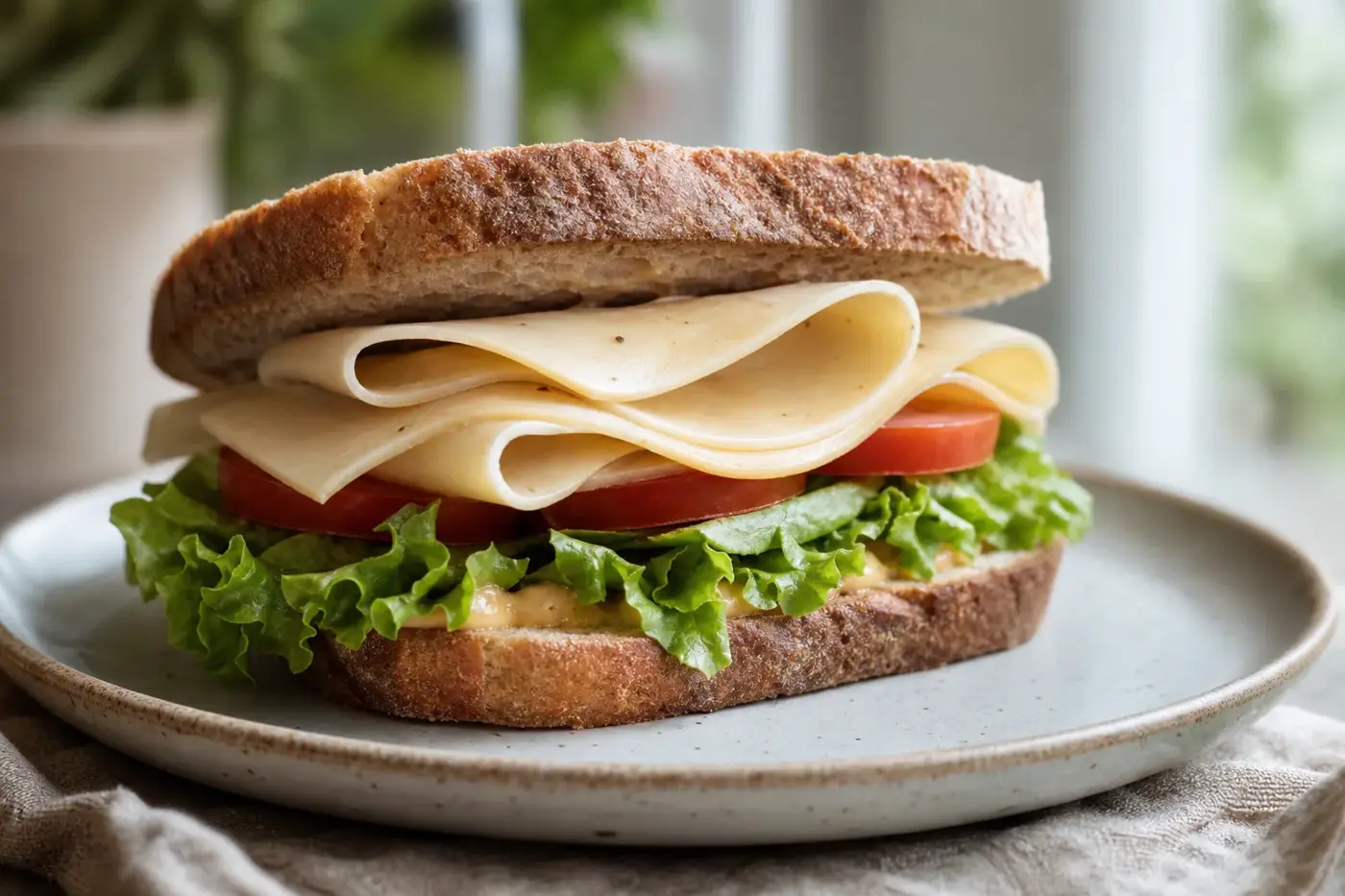
Fold a slice around your sandwich filling. Scatter shreds over pizza. Scoop up a cultured spread and taste that savoury tang. Without milk, these familiar pleasures depend on different combinations of plant ingredients, fats, starches, cultures and flavourings.[1][2]
The useful question is not which alternative looks most like cheese. It is which one will do the job you have in mind. Start with what you want to eat, and the choice becomes much more interesting.[1][2]
Find the one that belongs in your kitchen
Picture where you want it: spread on bread, tucked into a sandwich, scattered over dinner or served at the table. Some alternatives begin with nuts. Others rely mainly on water, coconut oil and starch. Research surveys show substantial differences in ingredients and manufacturing, so purpose, rather than composition, brings this category together.[1]
You might choose these foods for vegan eating, animal welfare concerns, environmental considerations or simply to reduce dairy consumption. Dietary requirements matter too. A vegan description and an allergen-free claim, though, tell you different things.[1][3]
Give the food name on the pack a moment of your attention. UK official allergen guidance explains that dairy sales names such as cheese refer to products made from mammalian milk. A plant-based product may use a descriptive name instead: one manufacturer’s UK slices are a “food preparation with coconut oil”. Read that alongside the ingredients.[4][5]
Curious about the dairy processes these alternatives seek to reproduce? Explore how cheese is made.
Let the ingredients tell their story
A picture of nuts can catch your eye. The ingredient list gives you the fuller story. Start with the first few ingredients, then read the whole list to understand how water, fat, starch and protein come together.[1][5]
Coconut oil supplies fat and helps a product firm up in the fridge. You will commonly find it alongside potato, maize or tapioca starch. Together, they can produce a sliceable block with little protein.[1]
Nuts, particularly cashews and almonds, bring their own fat, protein and solids. Some recipes also include coconut oil. “Nut-based” does not necessarily tell you where most of the fat comes from.[1]
Soya can supply protein as well as a plant base. Its nutritional contribution depends on how much goes in and what else joins it in the recipe. A mention somewhere in the ingredients is only the beginning of the story.[1][2]
Seeds, including sunflower and hemp, offer other possibilities. Their proteins behave differently from dairy proteins. Manufacturers may combine them with oils, starches or other structuring ingredients to achieve the consistency they want.[2]
Starches bind water and build texture. They do more than bulk things out. A soft spread, a firm slice and a pizza topping each need a different structure.[2]
Follow that savoury tang
The tang you taste can come from fermentation, added acid or both. Cultures are microorganisms used in production. During fermentation, they transform components of the base, bringing acidity and changes in flavour.[6]
Added acids offer another route. The UK coconut oil slices discussed here list citric acid as an acidity regulator. That tells you acid has been added, not that fermentation took place.[5]
Flavourings, salt and other ingredients can build savoury notes around that acidity. Would you like a clean tang, a stronger savoury finish or something deliberately mild behind your other ingredients? Decide before you start comparing products.[1][6]
“Cultured” tells you something about production. It does not answer the separate questions of protein content, fortification or how the product cooks.[1][6]
A neat slice does not promise a stretchy topping
You can have a beautifully firm slice that does not melt. Dairy cheese gets much of its structure from casein, a group of milk proteins. Plant alternatives build a different network, usually using plant proteins, starches, fats and water-binding ingredients.[2]
That network may keep a product firm in the fridge. In the oven, its fat may soften while much of the surrounding structure stays intact. One alternative softens without flowing across your pizza; another spreads but offers little stretch.[2]
Stretch needs a structure that holds together as it extends. More oil or more plant protein alone will not guarantee it. A 2026 research review identifies ingredient interactions and processing as central to these differences.[2]
Treat “sliceable”, “melting” and “stretchy” as separate requirements. Your dish may need one, not all three. Even a slice deserves a manageable job description.
Build a board with a little contrast
Format gives you a starting point. The maker’s stated application is a better guide to what you can do with it. Research surveys include spreads, slices, blocks and shreds made from markedly different ingredient combinations.[1][6]
| Format | Where you might use it | What to look for |
|---|---|---|
| Soft spread | Bread, crackers or a dip | Is it recommended cold, cooked or both? |
| Slices or sliceable block | Sandwiches and toasties | Cold texture and clear melting instructions |
| Grated or shredded preparation | Pizza, pasta or a baked topping | Is it meant to melt or finish the dish? |
| Cultured nut or seed preparation | A board or savoury accompaniment | Base ingredients, flavour description and serving guidance |
For a board, look for contrast in texture and flavour rather than several shapes made from similar formulations. A soft spread beside a firmer preparation gives you a clearer comparison than three nearly identical slices. Start with the maker’s descriptions, then notice what you enjoy.
An alternative does not have to impersonate a particular dairy cheese to deserve its place. Your board is supper, not an identity parade.
Choose for the dish you want to eat
Match the formulation to the dish, rather than asking one product to do everything. These principles draw on formulation research.[2][6]
Find your sandwich slice
For a cold sandwich, let cold texture lead. Does the slice bend, cut cleanly and suit your other fillings? Melting performance need not enter the decision.
For a toastie, look for an explicit hot-sandwich application. Your bread can reach the colour you want before the filling reaches the texture you want. Follow the preparation instructions, then judge what is happening inside the sandwich.
Give your sauce a small trial
Choose a product whose manufacturer provides a sauce application or recipe. Something designed to hold a neat slice may behave differently when you disperse it through liquid. Success in your sandwich does not necessarily mean success in your saucepan.
Try the suggested method with a small quantity before committing to a large dish. Look for smoothness, substantial thickening or visible oil separating out. Adjust seasoning after adding the alternative, because its salt becomes part of your finished sauce.[1][2]
Let the pizza instructions lead
Look for pizza-specific instructions, including the recommended topping quantity and cooking conditions. Softening, surface browning and stretch are distinct outcomes. A topping may do well on one and less well on another.[2]
Follow the recommended application before adjusting your oven. More heat will not reliably make a formulation melt if it is designed to stay firm.
Bake with the filling in mind
For a cheesecake-style filling, or any dish where the ingredient provides structure, use an attributed recipe developed for that alternative. An equal-weight swap changes more than flavour. Water, fat, protein and starch may all differ from dairy cheese.[1][2]
A savoury topping is a smaller substitution decision. If your filling must set and slice, the formulation matters throughout the recipe.
Turn the pack over for the nutritional picture
Compare nutrition declarations per 100 g, then think about how much you actually use. Slices that look similar can differ considerably from dairy cheese and from each other. The front of the pack cannot tell you the whole story.[1]
A 2022 US study surveyed the labels of 245 plant-based cheese alternatives. Coconut oil formulations commonly contained little protein; cashew-based products generally supplied more. This was a historical label survey, not a laboratory analysis of every product available today.[1]
A current UK manufacturer example makes that difference tangible. Violife Original Slices declares, per 100 g, 0.1 g protein, 21 g saturated fat and 2.3 g salt. A calculated 30 g portion supplies 0.03 g protein, 6.3 g saturated fat and 0.69 g salt. Those figures apply to that published formulation.[5]
Dairy cheese commonly supplies protein. An oil-and-starch alternative may chiefly replace its job in your kitchen. Read the protein line before relying on it for the same nutritional contribution.[1]
Plant origin does not automatically mean less saturated fat or salt. Coconut oil can contribute substantial saturated fat, while salt levels vary between formulations. Compare individual products, rather than treating the category as one nutritional choice.[1]
Give added nutrients individual attention
Fortification means nutrients have been added. But added vitamin B12 tells you nothing about whether calcium, iodine or vitamin D has joined it. Each needs its own attention.[1][5]
For people following a vegan diet, the UK NHS identifies sources of calcium, vitamin B12 and vitamin D, including fortified foods. It also advises making sure added vitamin D is suitable for vegans. That detail matters alongside the amount.[7]
The NHS separately advises people following a strict vegan diet to consider iodine-fortified foods or an iodine supplement. Seek healthcare advice when considering supplementation.[8]
Look for named additions in the ingredients and declared amounts in the nutrition information. Neither a cultured preparation nor nutritional yeast in the recipe establishes vitamin B12 fortification. The NHS specifically names fortified nutritional yeast as a vegan B12 source.[7]
This page summarises published guidance from the official sources it cites. It is not medical advice. Guidance differs between countries and changes over time, so check the current source for where you live, and ask your doctor, midwife, pharmacist or dietitian about your own circumstances.
Read beyond “vegan” if milk allergy matters
Read the complete ingredient list every time you choose a product. Nuts, soya and sesame may form the base. Cereals containing gluten, mustard and other allergens may appear elsewhere in the formulation or accompanying food.[9]
UK government guidance requires regulated allergens to be clearly identified within the ingredient list of prepacked food. It also explains that vegan food can acquire animal-derived allergens through cross-contamination during manufacture. “Vegan” does not remove that possibility.[3][9]
A vegan label therefore does not establish suitability for someone with milk allergy. Read precautionary statements such as “may contain milk” as well as the ingredients. UK guidance distinguishes vegan labelling from free-from labelling, which requires strict controls against the specified allergen.[3]
For the difference between reactions to milk protein and difficulty digesting lactose, read cheese allergy versus lactose intolerance.
Look closely when fermentation makes milk protein
Culturing a plant base is one process. Using precision fermentation to produce a particular protein is another. Precision fermentation uses microorganisms to make that protein, so food containing fermentation-derived milk protein belongs to a different ingredient category from an alternative made solely with plant ingredients.[10]
That distinction matters for allergy assessment. FSA and Food Standards Scotland guidance says a newly produced allergen shown to be structurally equivalent to an existing allergen should be assessed as that existing allergen. The protein itself matters.[10]
Look beyond wording such as “animal-free” to the actual protein identity and product-specific allergen information. Where milk allergy is involved, follow current official guidance and your clinician’s advice.[3][10]
Ask environmental claims a few good questions
A useful environmental comparison names the product, the comparator and the method. Life cycle assessment examines impacts across specified stages of production and supply. Change those boundaries, and you change the question too.[11]
Look at what is being compared: equal weights, servings or nutritional contributions. Then consider the impacts covered, whether greenhouse gases, land use, water use or several measures. Ingredient sourcing, manufacturing and the choice of dairy comparator all deserve your attention.
An Öko-Institut project assessed different plant-based preparations across relevant life cycle stages. Its public project description states that planned comparisons with dairy products were intended for internal company use. Without published results and assumptions, that description gives you no numerical comparison.[11]
Let the pack guide your fridge routine
Follow the pack’s advice on storage and use after opening. Formulations differ too much for one opened shelf life to fit the whole category. Your particular product needs its particular instructions.
For England, Northern Ireland and Wales, FSA guidance recommends a fridge temperature between 0 and 5 °C. It advises keeping chilled food out for the shortest possible time during preparation, with a maximum of four hours. Keep that limit in mind when serving.[12]
A preparation containing fat may soften as it loses its refrigerator chill.[2] Follow the maker’s storage instructions rather than treating that change as a serving rule.
UK government guidance distinguishes a use-by date, which concerns safety, from a best-before date, which concerns quality. Observe the storage conditions supporting the date, including any shorter instructions after opening. Do not eat a chilled product past its use-by date.[13]
For wider storage principles, see storing cheese at home. Keep the alternative’s own pack instructions as your product-specific reference.
Questions people ask
What are plant based cheese alternatives made from?
Some begin with nuts, soya or seeds, while others are built mainly from water, coconut oil and starch. Ingredients and manufacturing methods vary considerably between products.
Why does some plant based cheese soften but not stretch?
Fat may soften in the oven while much of the surrounding structure stays intact. Stretch needs a structure that holds together as it extends, and more oil or plant protein alone will not guarantee it.
Does plant based cheese contain calcium and vitamin B12?
Fortification varies, so added vitamin B12 does not mean calcium, iodine or vitamin D has also been added. The NHS identifies fortified foods as sources of calcium, vitamin B12 and vitamin D for people following a vegan diet and advises checking that added vitamin D is suitable for vegans. See the NHS vegan diet guidance.
Is vegan cheese safe for someone with a milk allergy?
UK government guidance explains that vegan food can acquire animal derived allergens through cross contamination during manufacture. It distinguishes vegan labelling from free from labelling, which requires strict controls against the specified allergen. Check the ingredients and precautionary statements, and consult the UK government allergen guidance.
How should plant based cheese be stored?
Follow the storage and opening instructions on the pack, as formulations differ. For England, Northern Ireland and Wales, the FSA recommends a fridge temperature between 0 and 5 °C and advises keeping chilled food out for the shortest possible time during preparation, with a maximum of four hours. See the FSA food storage guidance.
Sources
[1] Nutrients, “Nutritional Profiles of Non-Dairy Plant-Based Cheese Alternatives”, volume 14, article 1247, 2022. Cross-sectional survey of 245 US products, including ingredients, protein, saturated fat and fortification.
[2] Trends in Food Science & Technology, “Plant-based cheese analogues: Bridging structure-function towards improved functional performance”, volume 173, article 105783, July 2026. Retrieved abstract and publisher summary covering protein, starch and lipid networks, melting and stretch.
[3] UK Government, “Understanding food labelling: Vegan food labelling”, live guidance retrieved November 2026. Vegan labelling, cross-contamination and the distinction from free-from claims.
[4] Food Standards Agency, allergen labelling technical guidance, PDF extract concerning milk products, retrieved November 2026. Explains the relationship between dairy sales names and mammalian milk.
[5] Violife, “Original Slices”, UK product page, live formulation and nutrition declaration retrieved November 2026. A manufacturer’s commercial product information, used for composition rather than independent quality assessment.
[6] Critical Reviews in Food Science and Nutrition, “Recent updates on plant protein-based dairy cheese alternatives: outlook and challenges”, volume 65, pages 6846 to 6860, published online January 2025. Retrieved publisher abstract and indexed extracts.
[7] NHS, “The vegan diet”, live guidance retrieved November 2026. Fortified foods, calcium, vitamin B12 and vitamin D.
[8] NHS, “Vitamins and minerals: Iodine”, live guidance retrieved November 2026. Iodine-fortified foods and advice concerning supplements.
[9] UK Government, “Understanding food labelling: Allergen labelling”, live guidance retrieved November 2026. Regulated allergens and their identification on prepacked foods.
[10] FSA and Food Standards Scotland, “Supplementary Guidance for Novel Foods Produced by Precision or Biomass Fermentation”, 2026. Protein identity and allergenicity assessment.
[11] Öko-Institut, “Comparative Life Cycle Assessment (LCA) study of ‘Simply V’ products”, project ending in 2023, public project record retrieved November 2026. Scope and stated restriction of dairy comparisons to internal communication.
[12] Food Standards Agency, “How to chill, freeze and defrost food safely”, published December 2017, live version retrieved November 2026. Applies to England, Northern Ireland and Wales.
[13] UK Government, “Understanding food labelling: Best before and use-by dates”, live guidance retrieved November 2026. Date meanings, storage conditions and after-opening instructions.
This desk-researched draft combines official UK guidance, published research and a manufacturer’s ingredient and nutrition declaration; outstanding verification is recorded below for editorial resolution.
Last checked: November 2026
Last checked November 2026.
The editors suggest you read next
Smoked Cheese Explained
Your knife slips through the golden skin of a Puglian scamorza.