Cheeses with Added Flavours: Herbs, Spices and Fruit
One leaf, then another.
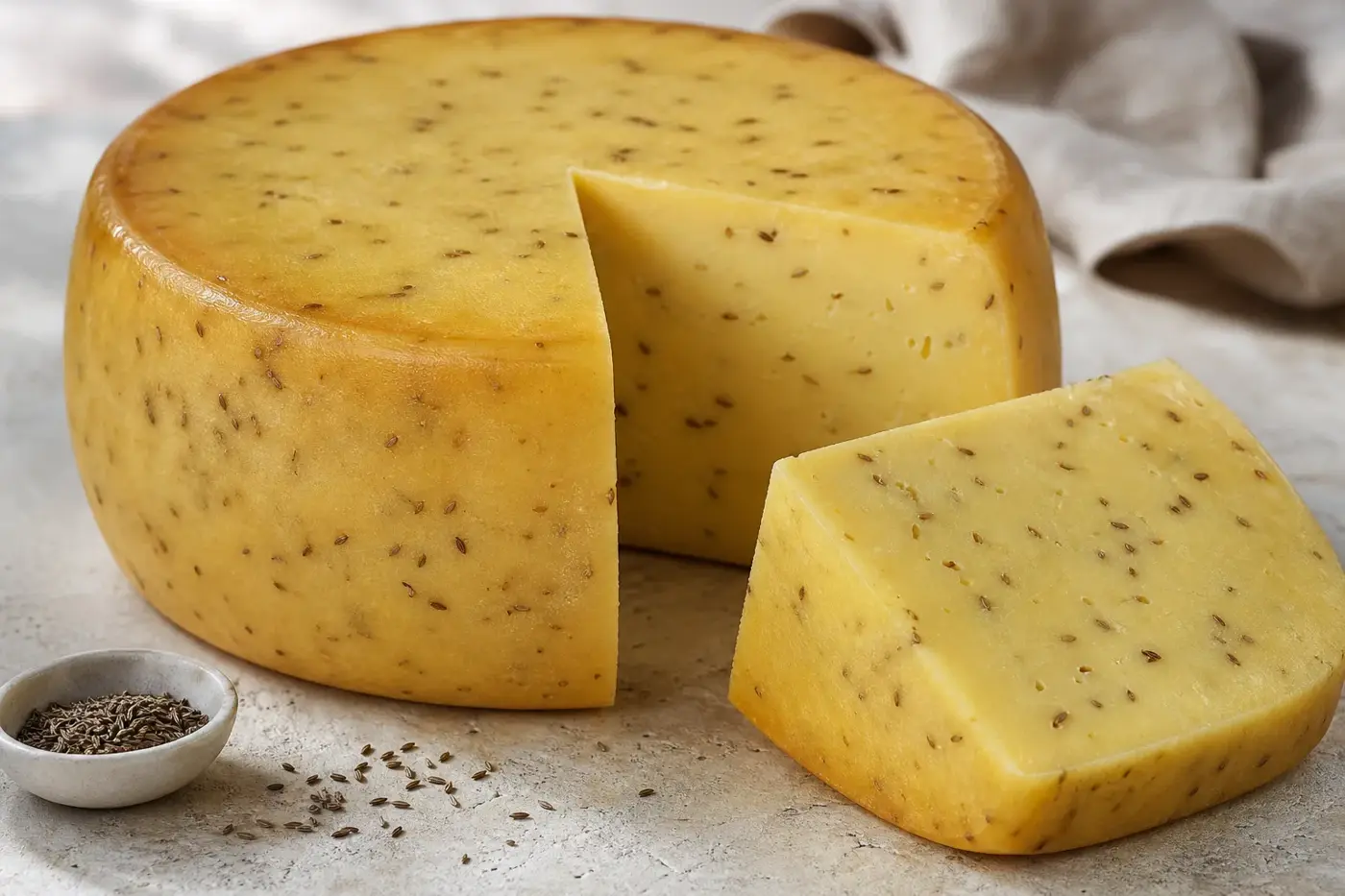
One leaf, then another. At Lynher Dairy, hands wrap leaves around cheese that has already been pressed, brined and dried, ready for maturation. At Amiksa, cumin seeds arrive earlier, joining Gouda curds before pressing, brining and ageing. One addition runs through the cheese; the other dresses its surface, leaving you to discover what each brings to the cheese beneath.[1][2]
Meet the cheese beneath the extras
Cumin seeds, chopped chives, dried fruit: each brings another ingredient to the cheese. Milk, starter cultures and ripening still lay the foundations, but they no longer tell the whole flavour story. Lynher Dairy draws a useful distinction: ripening cultures play their part during cheesemaking, while its Yarg cheeses receive their leaves after pressing, brining and drying.[2]
Start with the cheese style, then get acquainted with the addition. A soft herb cheese and a firm seeded cheese offer quite different textures and possibilities on your plate, before the seasonings get a word in. For the underlying families, see how to tell cheese styles apart.
Find out when the flavour arrives
“Mixed through” sounds straightforward. It does not always mean “added to newly made curd”, though, because ingredients join the process at different stages. At Amiksa, cumin goes in after the curds are collected, before pressing, brining and ageing. The ingredient list names cow's milk, salt, vegetarian enzymes, culture and cumin seeds.[1]
Wensleydale Creamery also has a blended cheese category. Its cranberry recipe brings cheese together with a prepared fruit ingredient, without specifying a precise point of incorporation here.[3][4]
At Lynher, the leaves take another route. Applied by hand after drying, they wrap the cheese before maturation and accompany its ripening. You will not find leafy pieces scattered through the paste, the cheesemonger's word for the interior. The addition sits around the outside instead.[2]
Wander from chives to Cornish nettles
Chives are an inviting place to begin your exploration of herb cheese. Veenland describes its garden-herb cheese, made with chives, onion and paprika, as fresh tasting. Its garlic-and-chive version also contains celery and parsley. Read the whole recipe: the biggest words on the front are only introducing the cast.[5]
Nettles can join a mixed seasoning, as they do in Veenland's herb ingredients, or form the leafy wrapping around Cornish Yarg. In one, the plant goes inside; in the other, it sits around the outside. What you taste depends on that choice, and on the other ingredients alongside it.[2][5][6]
Rosemary deserves the same attention. Veenland includes it in a summer blend with other herbs, vegetables, seaweed and citrus peel. If you want rosemary to lead, rather than supply one aromatic strand, look for a recipe that identifies it clearly. Then ask the cheesemonger how prominently it tastes.[5]
Look beyond the spice speckles
Cumin Gouda is a recognisable partnership, but not one fixed recipe. Amiksa adds its seeds to the curd before maturation; Veenland describes cumin's contribution as warm and aromatic. To meet the unflavoured style behind the pairing, explore Gouda.[1][5]
With peppercorn cheese, begin by looking at the slice. Are those whole peppercorns, smaller fragments or a finely seasoned blend? Ask to see the cut face and read the ingredient description. You are choosing a mouthful, not conducting a peppercorn census.
Seeds alone cannot tell you whether a cheese is balanced. Taste the cheese between them: is its dairy flavour still distinct? Does the spice arrive straight away, or mainly when you bite into a piece? Those mouthfuls reveal whether the seasoning sits gently alongside the cheese or takes the lead.
Taste the story behind the sweetness
Wensleydale Creamery describes its cranberry cheese as sweet and fruity, with a crumbly cheese base. The recipe explains that sweetness: sweetened dried cranberries at 13%, comprising cranberries and sugar, plus fructose and potassium sorbate. You are tasting prepared fruit, not unsweetened fresh berries folded into cheese.[4]
Apricot offers another route, including Wensleydale Creamery's named apricot cheese. Compare how the fruit's sweetness and acidity balance the cheese, and how its preparation shapes the texture of each mouthful. Ask whether the apricot is dried or otherwise prepared, then taste for what leads: milkiness, tang or fruit. The recipe tells you more than assuming every cranberry cheese will be tart, or every apricot cheese alike.[7]
Give the cheese itself a moment
Texture deserves your attention just as much as sweetness or spice. A crumbly fruit blend and a sliceable seeded cheese bring different pleasures to the plate. A useful description introduces both partners: the base cheese and the cranberry, cumin or herbs joining it.[1][4]
Age matters here, too. Veenland describes its young cumin Gouda as mild, with seeds that do not dominate, and its longer-matured version as fuller flavoured. That is why “cumin Gouda” tells you only part of the story. Ask about maturity as well as seasoning, then decide which element you would like to lead.[5]
Let the label tell you more
The flavour name catches your eye; the ingredients tell you what you are choosing. Look for the cheese base, the herb or fruit preparation, added sugar and other seasonings. Read the particular product's label, even if you have bought a similarly named cheese before.[4][8]
For England, Wales and Northern Ireland, FSA guidance explains that prepacked foods emphasise allergenic ingredients in the ingredients list. Loose cheese must also have allergen information, although a full ingredient list is not generally required. Ask counter staff for current information about the cheese, its coating and its additions. The FSA recommends written information supported by a conversation.[8]
Consider milk and every additional declared allergen separately. The government's consumer guide includes mustard, sesame, nuts and celery among the ingredients requiring allergen information. Give a mixed seasoning the same attention as a fruit preparation.[9]
For England, Wales and Northern Ireland, FSA guidance, as recorded in November 2026, specifies declaration of sulphites above 10 mg/kg or 10 mg/litre, calculated as total sulphur dioxide in the finished product as consumed. That includes relevant carryover from an ingredient. Read the actual declaration: dried fruit does not automatically mean sulphites.[8] For the wider label, see how to read a cheese label.
Make room for the whole mouthful
Give assertive seasoning some space, or echo one ingredient without adding several more to the plate. Those are the starting points for the suggestions below. For its cranberry cheese, Wensleydale Creamery specifically recommends crackers and apples, pears or grapes.[4]
| Your cheese | Bread or fruit to try | Alcohol-free drink | What to enjoy |
|---|---|---|---|
| Chive or mixed-herb cheese | Plain bread with cucumber | Still or sparkling water | Taste the herbs before adding more |
| Cumin or peppercorn cheese | Unseeded bread or plain crackers | Unsweetened black tea | Give the spice some space |
| Cranberry cheese | Plain crackers and apple | Sparkling water | Let the cheese supply the sweetness |
| Apricot cheese | Plain bread with pear | Unsweetened tea | Meet the fruit before reaching for chutney |
Start with one accompaniment, then add another only if it makes the combination more enjoyable. Fruit cheese may already supply the sweetness you would otherwise want from chutney. Spice cheese may be more interesting against plain bread than another heavily seasoned cracker. Your cheeseboard need not become an audition for every condiment in the cupboard.
This page summarises published guidance from the official sources it cites. It is not medical advice. Guidance differs between countries and changes over time, so check the current source for where you live, and ask your doctor, midwife, pharmacist or dietitian about your own circumstances.
Serve a little and store with care
Follow the storage and opening instructions for your particular cheese. For England, Wales and Northern Ireland, the FSA advises a fridge between 0 and 5 °C. Keep chilled food out for the shortest possible time, with a maximum of four hours during preparation. Its guidance also says to follow the dates and storage instructions on the packaging.[10]
Put out a small serving rather than warming your entire supply. Follow the product's storage and serving instructions, and consult the FSA's current advice for England, Wales and Northern Ireland. For wrapping and arranging your fridge, see how to store cheese at home.[10]
Before serving a coated cheese, ask the maker or cheesemonger which parts are intended to be eaten. An aromatic-looking exterior does not mean everything is edible: food ingredients and packaging are different things. Lynher's account, for example, distinguishes Yarg's leaf wrapping from wax coatings used on other cheeses.[2]
Get acquainted with leaves, smoke and ash
Herbs, spices and fruit tell you about ingredients. Smoking describes treatment with smoke; ash is a surface material; leaf wrapping tells you how the outside is covered. These categories can overlap, and a leaf may also be an aromatic ingredient. Identify both the method and the flavour addition to understand what you are choosing.[2]
At the counter, ask three questions: what is the base cheese, where is the addition, and what does the maker say it contributes? Then decide whether you want seasoning that sits quietly behind the cheese or becomes your reason for serving it. Each cheese deserves that attention, rather than being bundled into one flavoured corner of the cheeseboard.
Questions people ask
When are cumin seeds added to Gouda?
Amiksa adds cumin seeds after collecting the curds, before pressing, brining and ageing. The seeds run through the cheese rather than wrapping its surface.
Does cumin Gouda taste different as it matures?
Veenland describes its young cumin Gouda as mild, with seeds that do not dominate. It describes its longer matured version as fuller flavoured.
What can I serve with cranberry cheese?
Wensleydale Creamery recommends crackers and apples, pears or grapes with its cranberry cheese. The page also suggests plain crackers, apple and sparkling water.
How can I check flavoured cheese for allergens?
For England, Wales and Northern Ireland, the FSA says allergenic ingredients in prepacked foods are emphasised in the ingredients list. Loose cheese must also have allergen information, and the FSA recommends written information supported by a conversation; see its guidance for details.
How should flavoured cheese be stored?
For England, Wales and Northern Ireland, the FSA advises a fridge temperature between 0 and 5 °C and following the dates and storage instructions on the packaging. It also advises keeping chilled food out for the shortest possible time, with a maximum of four hours during preparation; check the FSA's current guidance.
Sources
- Amiksa. Cumin Gouda. Undated producer account, retrieved November 2026. Production sequence and published ingredients.
- Lynher Dairy. How We Make Our Cheese. Undated producer account, retrieved November 2026. Leaf application, maturation and contrasting coatings.
- Wensleydale Creamery. Blended Cheese. Undated producer category page, retrieved November 2026.
- Wensleydale Creamery. Yorkshire Wensleydale & Cranberries. Undated product information, retrieved November 2026. Ingredients, attributed sensory description and serving suggestions.
- Veenland Kaas. Kazen. Undated English-language product catalogue, retrieved November 2026. Cumin maturity descriptions and herb-blend ingredients.
- Lynher Dairy. Cornish Yarg nettle wrapped cheese. Undated product page, retrieved November 2026. Product identification.
- Wensleydale Creamery. Yorkshire Wensleydale & Apricots. Undated product page, retrieved November 2026. Product identification.
- Food Standards Agency. Food allergen labelling and information requirements technical guidance. March 2025 amendments recorded in the retrieved edition. Applies to England, Wales and Northern Ireland.
- GOV.UK. Understanding food labelling: Allergen labelling. Current consumer guidance retrieved November 2026.
- Food Standards Agency. How to chill, freeze and defrost food safely. Published 18 December 2017; current retrieved edition checked November 2026. Applies to England, Wales and Northern Ireland.
Researched from published producer descriptions and official food guidance, with practical pairing suggestions identified as editorial recommendations.
Last checked: November 2026
Last checked November 2026.
The editors suggest you read next
Smoked Cheese Explained
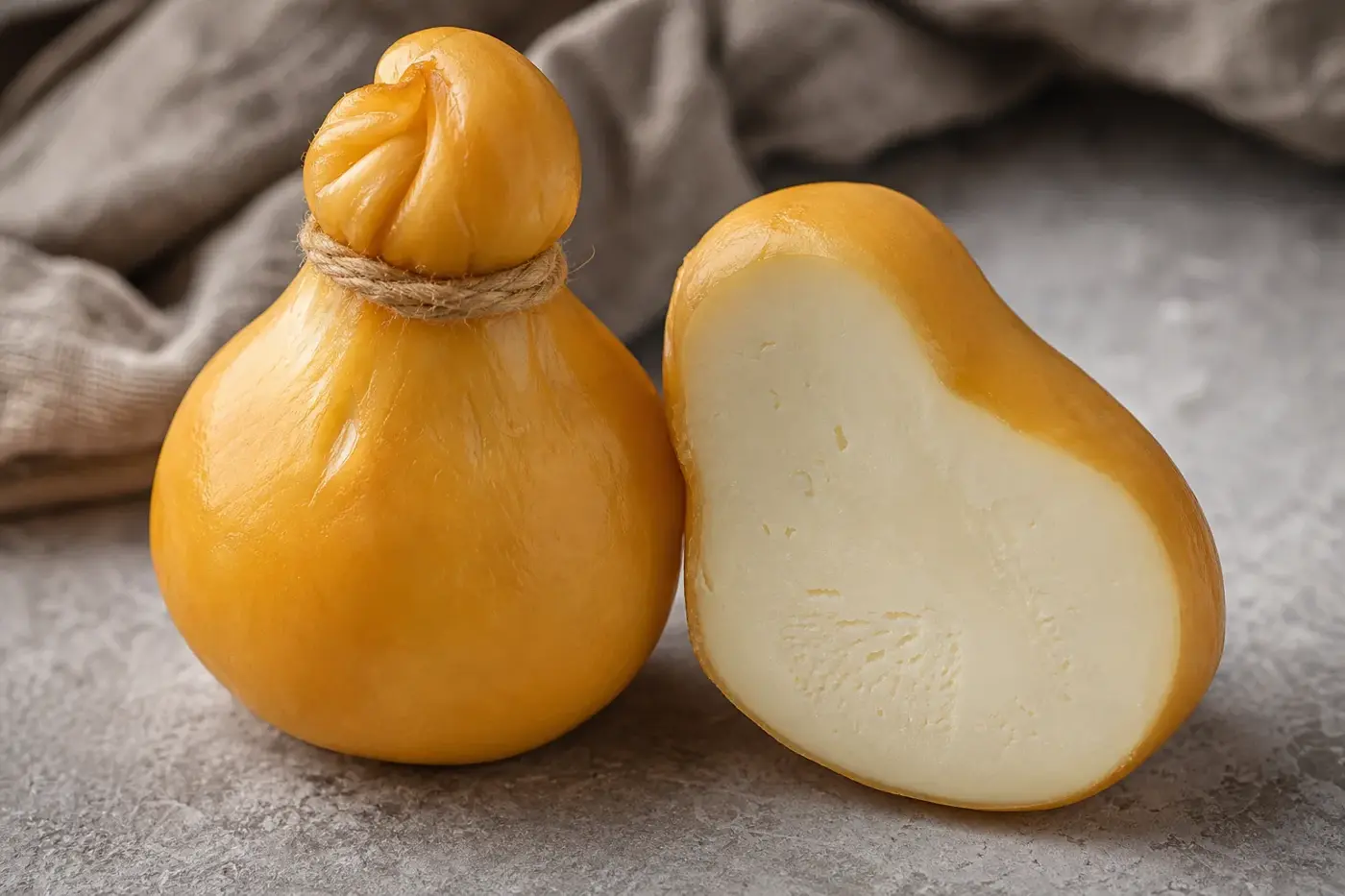
Your knife slips through the golden skin of a Puglian scamorza.