Why Are Some Cheeses Wrapped in Leaves?
Undo Banon's raffia tie and unfold its brown chestnut leaves.
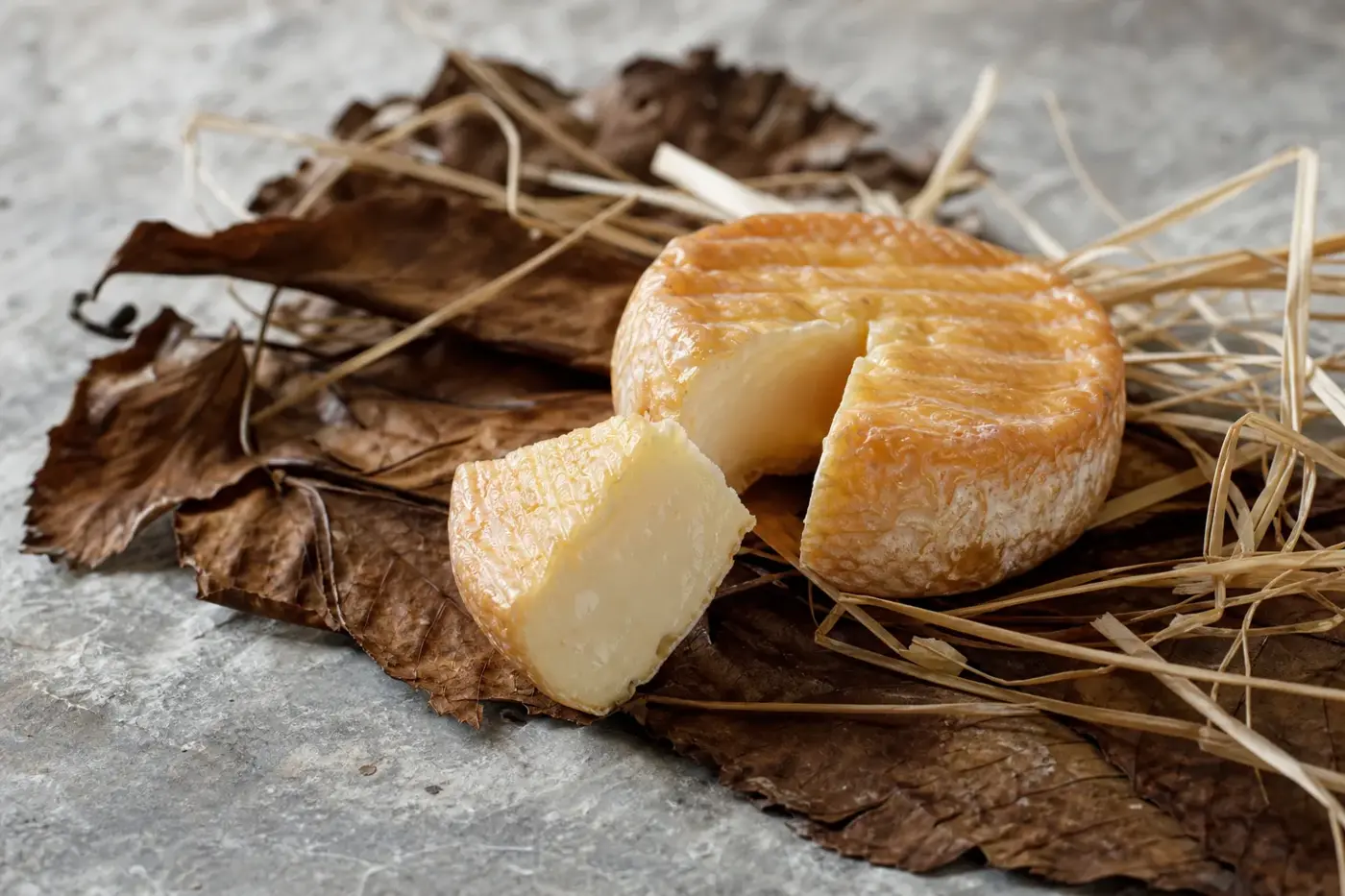
Undo Banon's raffia tie and unfold its brown chestnut leaves. Inside, you find a rind running from yellow-cream to golden-brown. Beside it, Cornish Yarg wears overlapping nettles threaded with white mould: two cheeses with quite different ideas about getting dressed.
Those coverings do more than look handsome. They can protect cheese, help manage moisture and shape ripening. What happens beneath them depends on the cheese and how its leaves are prepared.[1][2]
A little shelter, with a job to do
Wrap a leaf around a cheese and you put a physical barrier between its surface and the air. Less direct exposure can help limit drying. How much protection it offers depends on the cheese, how completely it is enclosed and how the leaves have been prepared.
Banon's closed chestnut parcel creates a different surface from Yarg's overlapping nettles, where mould grows between the leaves. Your best guide is the producer's method. Follow that cheese's maturation and storage instructions, rather than expecting every leafy wrapper to do the same job.[1][2]
Unfold Banon's chestnut parcel
Banon spends part of its maturation tucked inside brown chestnut leaves, held together with natural raffia, a plant fibre. This French goat's milk cheese uses raw whole milk. Its 2017 specification sets a minimum maturation of fifteen days after renneting, including at least ten days beneath the leaves.[1]
The wrapping does not start the ripening. First, the cheese establishes its surface flora: the community of microorganisms growing on its outside. The leaves then change the surroundings of that living surface for the next stage of the cheesemaker's specified process.[1][3]
Open the brown foliage and there is that yellow-cream to golden-brown rind. INAO, France's national origin and quality institute, describes a soft, smooth interior and woodland aromas. It attributes particular aromas to tannins passing from the chestnut leaves into the cheese.[3]
Those plant compounds make the wrapper part of Banon's development, not merely its presentation. Opening the parcel is part of the pleasure of serving it. You discover leaf, rind and interior together, with each layer telling you something about how the cheese has ripened.[3]
Follow the handwork around Cornish Yarg
Cornish Yarg's covering begins with young nettle leaves gathered in spring from local woodland, hedgerows and fields. Lynher Dairy freezes them, then brushes them onto the cheeses in overlapping concentric circles. By this point, the maker says, their sting has gone.[2]
During maturation, white moulds spread across the leafy surface, and each cheese is turned by hand. This is not a pristine green wrapper added just before sale. The covering becomes interwoven with the developing rind: you can see the handwork in the circles and the maturation in the white bloom.[2]
Beneath those leaves is a semi-hard Caerphilly style made with pasteurised cow's milk, according to Lynher. The maker describes the curd, the solid portion separated from liquid whey, being cut, stirred, blocked and milled before being packed into moulds. Pressing, brining and drying all happen before the leaves go on.[4][5]
The nettles, then, meet a cheese already formed, salted and drained. Those earlier stages help determine the texture you find underneath. Handsome though the covering is, it cannot take all the credit.[4][5]
Lynher gives Yarg a maturation of four to six weeks and describes its aroma as lactic and mushroomy. Its tasting notes pick out an open, crumbly centre and softer cheese beneath the rind. Call it all creamy and you miss the interesting part: a single slice can change distinctly in texture from centre to edge.[4]
When you choose a piece, give the cut face as much attention as the nettles. Ask your cheesemonger how far the softening has progressed and whether it suits what you want to serve. The maker's description gives you a useful place to begin.[4]
Meet the life beneath the leaves
Leaves change a cheese's immediate surroundings and provide a surface for microorganisms. Banon's specification emphasises reduced contact with air after wrapping. Lynher describes mould growing across Yarg's nettles: two methods with two intended results.[1][2]
That leafy surface can play an active part in maturation, changing appearance as the cheese develops. Look beyond the plant's name to how its leaves are prepared, when they go on and what cheese lies beneath. The useful question is what the maker wants to happen at that surface.[1][2]
From working landscape to cheese wrapper
Chestnut leaves suited Banon for practical reasons, not simply because they looked fetching. Its specification singles out their sturdy structure and tannins, linking the wrapping tradition to the need to conserve and improve cheese. The historical account places Banon in a rural economy combining woodland and grazing resources with small-scale farming.[1]
The leaves were part of that working landscape. Being available was not enough: a plant also had to cover cheese effectively, withstand handling and suit the producer's established method. Those local materials help explain the different appearances and practices you find among leaf-wrapped cheeses.[1]
Leaves, herbs and ash: look at the layers
Leaves around a cheese do a different job from herbs mixed into its paste, the body of the cheese. Herbs in the paste distribute pieces of plant material through what you cut and eat. A leaf wrapper keeps that material on the outside.
Ash is different again: fine material coating the surface, rather than overlapping leaves. When reading a label or chatting to a cheesemonger, ask separately about ingredients within the cheese, its rind and any outer wrapping. Each may affect how you prepare and serve it.
When brown leaves belong there
Banon's chestnut leaves are deliberately brown when collected; Yarg's begin as young green nettles. Judge the colour against the particular cheese, not against a freshly picked plant. Brown can be exactly the intended look.
Yarg's appearance changes as its white bloom develops during maturation, according to Lynher. Underneath, the maker describes that crumbly centre and softer cheese near the rind.[4] Leaf condition alone cannot tell you how flavour will differ, so ask the maker about the age and condition of the piece you are considering.
Which parts belong on your plate?
Cornish Yarg's leafy rind is edible, Lynher explicitly states. If you enjoy it, leave it attached. Banon calls for a different approach: undo the raffia, unfold the chestnut parcel, then set the leaves and tie aside.[1][2]
For another leaf-covered cheese, ask the producer or cheesemonger which parts are intended to be eaten. Leaf, actual rind, string and outer packaging have separate jobs. Even if you prefer to leave an edible rind, you can serve it intact and let diners decide for themselves.[1][2]
Choose your piece and give it the right home
Ask for the cheese's name, maker, milk treatment and storage instructions, along with advice on eating its covering. Keep the label after opening, particularly the use-by date and any instructions for opened cheese. You will still need that information once the wrapping is open.[7]
UK government guidance distinguishes use-by dates, which concern safety, from best before dates, which concern quality. Incorrect storage can make food unsafe before its use-by date. Tell the seller when you plan to serve it: a piece for tonight and one for a later occasion may need different handling, so ask about the actual piece you are taking home.[7]
Put the cheese away promptly and refrigerate it according to its packaging instructions. The Food Standards Agency's household guidance for England, Wales and Northern Ireland recommends a fridge temperature of 5 °C or below, checked with a thermometer. Lynher recommends wax paper for Yarg's outer wrapping; leave its existing leafy rind in place until you prepare your serving.[4][9]
Keep the label with the package so the right instructions stay with the right cheese. For other leaf-covered cheeses, ask the maker how to protect the cut face. Find out whether the original wrapper should remain after opening, too.[4][9]
- Prepare only what you plan to serve, with a clean board and knife, and keep the rest refrigerated. Open Banon's parcel or leave Yarg's edible rind attached, following that cheese's advice.[1][2][6]
- Lynher recommends allowing Yarg to come towards room temperature. If you do, follow the NHS advice in the UK dated November 2026: eat ready-to-eat food within four hours of taking it out of the fridge.[4][8]
- Follow the after-opening instructions and use-by date. Lynher recommends eating cut Yarg within ten days, but the date and instructions on your actual cheese take priority. Promptly refrigerate what you are keeping.[4][7][8]
Leave fresh leaf wrapping to the maker
For presentation, use the cheese's supplied covering and food-safe serving materials. Do not add unidentified leaves or leaves that may have been chemically treated. A producer's leaf preparation belongs to a controlled process; picking a similar-looking plant gives you neither the same identification nor those controls.[1][2]
Treat the cheese as a ready-to-eat food throughout preparation. The Food Standards Agency advises washing hands, using clean preparation surfaces and boards, and keeping ready-to-eat foods separate from raw foods. A leafy covering does not change those essentials.[6]
This page summarises published guidance from the official sources it cites. It is not medical advice. Guidance differs between countries and changes over time, so check the current source for where you live, and ask your doctor, midwife, pharmacist or dietitian about your own circumstances.
Choosing for someone at higher risk
Before considering whether to eat the leaves, establish the cheese type and milk treatment. In the UK, the NHS identifies pregnant people, newborn babies, people with weakened immunity and older people as groups at greater risk of serious illness from listeriosis. Start with those details, rather than the covering.[8][10]
NHS pregnancy guidance advises against uncooked mould-ripened soft cheeses with a white coating, including those made from pasteurised milk. It permits hard cheeses such as cheddar and parmesan, including when made from unpasteurised milk. Read the full NHS pregnancy guidance, dated November 2026, for advice on cooking and other cheese types.[10]
Follow current official advice for your country and ask your clinician about your circumstances. When choosing cheese for someone in a higher-risk group, establish its milk treatment and cheese type first. Then consider the leafy covering.[8][10]
Give your next cheese a little more attention
- How to Store Cheese at Home: practical help with wrapping, chilling and protecting cut faces.
- Mould on Cheese: When to Cut and When to Bin: help telling intended ripening apart from unwanted growth.
Questions people ask
Why are some cheeses wrapped in leaves?
Leaves can provide a physical barrier against air and help limit drying. They can also change the surroundings in which a cheese ripens, with different results depending on the cheese and how the leaves are prepared.
Can you eat the leaves on Cornish Yarg and Banon?
Lynher says Cornish Yarg’s leafy rind is edible. For Banon, undo the raffia, unfold the chestnut parcel and set the leaves and tie aside.
Why is there white mould on Cornish Yarg’s nettles?
White moulds spread across the nettles during maturation, and the covering becomes interwoven with the developing rind. The cheeses are turned by hand as they mature.
What milk is used to make Banon and Cornish Yarg?
Banon is made with raw whole goat’s milk. Cornish Yarg is made with pasteurised cow’s milk, according to Lynher.
How long does Cornish Yarg mature?
Lynher gives its maturation as four to six weeks. The maker describes a crumbly centre and softer cheese beneath the rind.
Sources
- French Ministry of Agriculture, Cahier des charges de l'appellation d'origine « Banon », homologated by the order of 27 December 2017, published in the ministry's official bulletin in January 2018. Sections 2, 5.3, 5.4 and 6 cover milk, maturation, leaf preparation and the geographical and historical explanation. Official specification.
- Lynher Dairy, Cornish Yarg, undated producer account, retrieved November 2026. Describes spring nettles, freezing, application, white mould and the edible leafy rind. Producer account.
- Institut national de l'origine et de la qualité, Banon, undated product entry and accompanying documentary texts, retrieved November 2026. Used for the product description and INAO's explanation of tannin migration and aroma. INAO entry.
- Lynher Dairy, Cornish Yarg, undated product information, retrieved November 2026. Used for milk treatment, style, maturation, attributed tasting notes, wrapping and after-cutting guidance. Product information.
- Lynher Dairy, How We Make Our Cheese, undated production account, retrieved November 2026. Used for curd handling, pressing, brining, drying and the appearance of white bloom during maturation. Production account.
- Food Standards Agency, Why avoiding cross-contamination is important, published 18 December 2017, live version retrieved November 2026. Applies to England, Northern Ireland and Wales. Official guidance.
- UK Government, Understanding food labelling: Best before and use-by dates, live version retrieved November 2026. Official guidance.
- NHS, Listeriosis, last reviewed 10 November 2023, live version retrieved November 2026. Used for higher-risk groups, refrigeration, time outside refrigeration and following storage instructions. Official guidance.
- Food Standards Agency, How to chill, freeze and defrost food safely, published 18 December 2017, live version retrieved November 2026. Applies to England, Northern Ireland and Wales. Official guidance.
- NHS, Foods to avoid in pregnancy, live version retrieved November 2026, section “Cheese, milk and other dairy”. Official guidance.
Research combined official Banon documents, attributed producer accounts and published UK food safety guidance, with physical explanations distinguished from measured experimental findings.
Last checked: November 2026
Last checked November 2026.
The editors suggest you read next
Smoked Cheese Explained
Your knife slips through the golden skin of a Puglian scamorza.