Smoked Cheese Explained
Your knife slips through the golden skin of a Puglian scamorza.
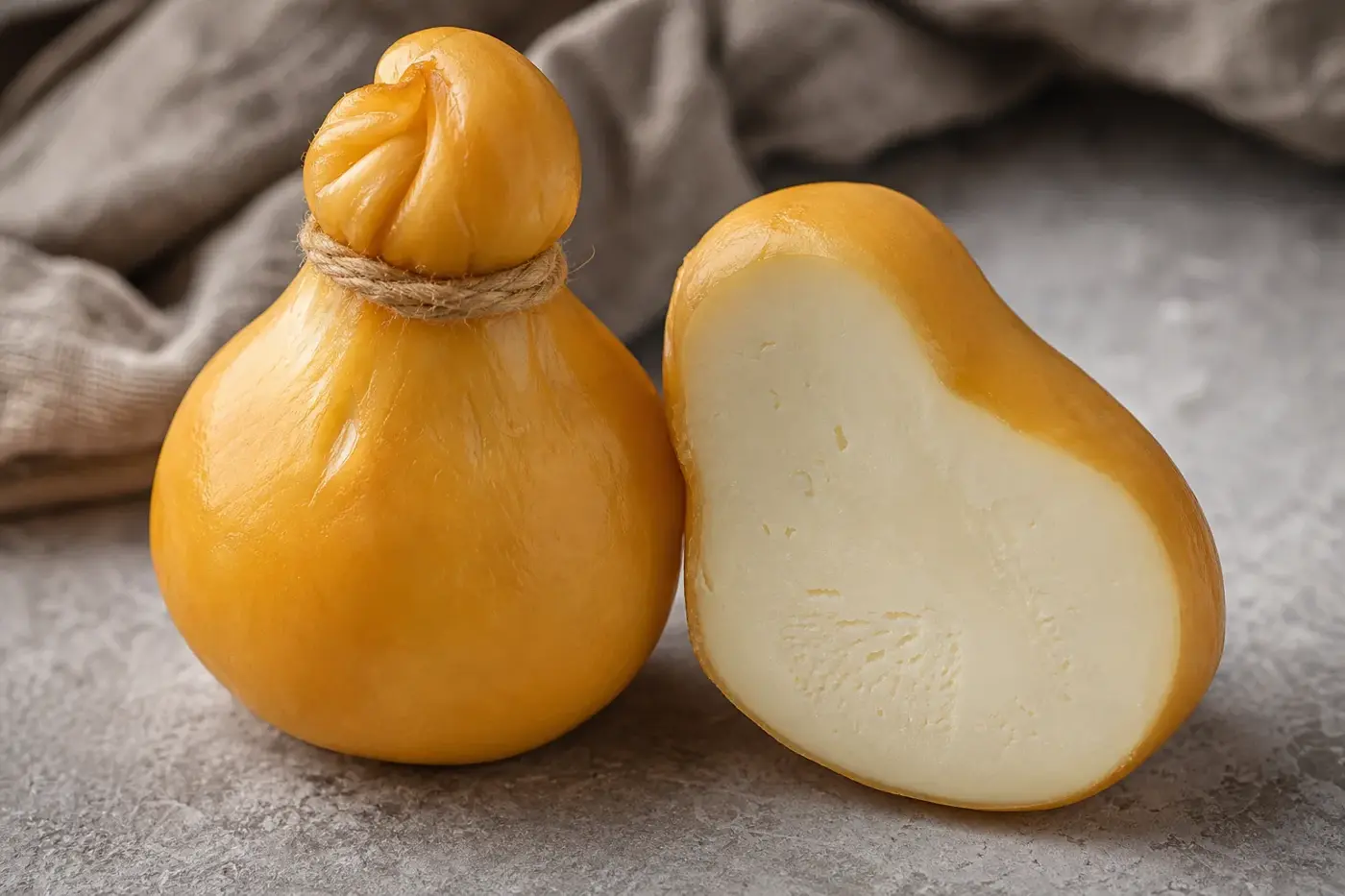
Your knife slips through the golden skin of a Puglian scamorza. First comes a strong smoky taste; then the soft heart offers barely a smoky note. That contrast, described by the University of Bari, is part of the pleasure: your next bite has something different to say.[2]
How smoke reaches your cheese matters. It may come from exposure to wood smoke or added smoke flavouring, while the cheese underneath and the strength of the smoke help shape what you taste. There is more to explore than the smoky first impression.[2][3][6]
Get to know the cheese beneath the smoke
A smoked Cheddar is still a Cheddar. A smoked stretched-curd cheese keeps its own, quite different structure. Smoking adds flavour to an existing cheese; it does not make every smoky wedge a member of the same family.[1][4][7]
At the counter, get acquainted with the cheese itself before exploring the smoke. Sometimes their contrast is the whole attraction. In the University of Bari's Puglian scamorza, that strongly flavoured golden skin gives way to a soft interior with only a light smoky note.[2]
Step into the cheese room before the smokehouse
Scamorza has a full schedule before it meets the smoke. In the Puglian method documented by the University of Bari, it is stretched, shaped, cooled, salted and dried first. Other cheeses have different preparations, but here smoking supplies the finish: the shape and structure are already there.[2]
In one method, a separate generator produces smoke and sends it into a chamber holding the cheese. Keeping that generator at a distance helps control heat. Airflow matters too, affecting combustion and, in turn, what the smoke contains.[1]
The smoking material has its own part to play. Perina says it uses beechwood chips for its scamorza. The Puglian account records straw alongside beech chips, giving you a glimpse of how a regional method can draw on more than one material.[2][4]
Cold smoke or hot? Let texture tell you more
Cold smoking is commonly used for cheese, according to the University of Wisconsin's dairy science bulletin. Cooler exposure helps your cheese keep its shape. Hotter conditions need careful control to avoid softening and oiling.[1]
Hot smoking has its place, though. Valsana describes Latteria del Molise's scamorza as hot smoked with wood shavings, giving it a thin, hazelnut-coloured skin around a soft, slightly elastic white interior. Here, “hot smoked” does not mean melted or heavily cooked.[6]
Let the finished texture guide your choice as much as the process. For neat sandwich slices, ask for a firm cheese. If you plan to bake it, ask how that particular cheese behaves under heat: the maker's description tells you more about its use than the smoking method alone.
Find the wood, then find your balance
Smoke can overstay its welcome. Too much becomes harsh and bitter, flavours the University of Wisconsin bulletin attributes to phenolic compounds. Wood species, wood moisture, combustion conditions and exposure time all influence the result.[1]
A wood name tells you most when it comes with the maker's tasting notes. Beemster says its smoked Gouda is slow smoked over hickory, with a soft texture and toasty, campfire-like smokiness. Perina describes its beech-smoked scamorza as intensely smoky: these are portraits of two cheeses, not a league table for hickory and beech.[4][7]
Ask which wood was used, whether the smoke is light or pronounced, and whether the cheese underneath is young or mature. For your first purchase, choose a clearly described smoke level. The darkest exterior is not automatically the one you will enjoy most.
Discover the two routes to a smoky bite
Liquid smoke begins as wood smoke collected in water, then processed into a flavouring. Depending on how the cheese is made, it can be added during cheesemaking or applied to the surface. Your smoky bite need not have spent time in a chamber full of smoke.[1]
The FSA describes smoke flavourings as an alternative to traditional smoking, including for cheese. They can give a full smoky taste or a subtler undertone. The useful distinction is how that flavour reaches your food, rather than simply how strongly it announces itself.[3]
Even scamorza affumicata can follow different routes. Perina declares smoking with beechwood chips; Borgo dei Vinci describes stretching, brining and drying its scamorza before immersing it in a tank containing liquid smoke. These are the makers' own accounts, so ask explicitly if you want direct exposure to wood smoke.[4][5]
Find the smoked cheese for your plate
Smoked Cheddar: start with a familiar favourite
If you want familiar Cheddar character with another layer of flavour, start here. Ask about maturity as well as smoke strength, especially if your cheese is heading for a sandwich rather than a sauce. The cheddar guide introduces the underlying cheese; smoking is a separate choice.
Smoked Gouda: follow the soft, toasty notes
Beemster's smoked Gouda offers you a softer starting point. The maker describes it as mild, soft and toasty, and recommends it with pasta. Follow those notes towards that particular cheese, rather than expecting every smoked Gouda to taste the same.[7]
Other makers have their own versions, each worth reading about on its own terms. For the wider style, explore the gouda guide.
Smoked mozzarella: choose with your dish in mind
Are you after moist smoked mozzarella to eat in slices, or a firmer format for cooking? Start with texture and purpose, then ask the seller about moisture, smoking method and intended use. Read the mozzarella guide alongside the product information, particularly when packs have different textures.[1]
Scamorza affumicata: look inside the golden skin
Look for the pear shape and small neck characteristic of scamorza in the University of Bari's description. Inside, you will find a layered structure: this is a pasta filata cheese, with curd stretched before shaping. Smoking gives it a golden exterior against that softer centre, and Valsana recommends its hot-smoked example for oven baking.[2][6]
Idiazabal: get to know the piece before you
Idiazabal's producer council describes a pressed hard cheese made from raw Latxa and/or Carranzana sheep's milk. Ask whether your piece is smoked or unsmoked, then find out how pronounced its smoke character is. Get to know the cheese's identity and its particular treatment separately.[8]
Take a tasting trip from edge to centre
There is no single correct look for smoked cheese. The examples here range from golden scamorza skin to a thin hazelnut-coloured skin and soft smoked Gouda. Compare what you see with the maker's description: smoke colour, rind development and the centre's texture are separate features.[2][6][7]
Try a little outer edge, then a piece from the centre. Does smoke arrive first, and can you still taste the cheese clearly? Consider whether the finish feels balanced to you. Words such as “gentle”, “toasty” and “intense” offer starting points, each drawing your attention to a different quality.
Let the label open the conversation
Read the food's name, ingredients, milk treatment and storage instructions together. Look for a clear account of the process, such as smoking over a named wood, and check whether smoke flavouring is declared. The how to read a cheese label guide takes you through the wider labelling framework.
The legal details matter here. In Great Britain, Article 7 of assimilated Regulation (EU) No 1169/2011 requires food information to be accurate and not misleading, including about production method. In Northern Ireland, the EU regulation applies: Annex VII, Part D requires smoke flavourings that impart a smoky flavour to be designated as smoke flavourings, with their source optionally identified.[9][10]
For a cheeseboard, tell the seller which balance you prefer: cheese-led with a light smoky edge, or smoke-led and assertive. For cooking, explain your dish and ask about texture and melting. If you manage an allergy, check the milk declaration and other allergen information separately from the smoking description.[9]
Give smoke its place at the table
Let one smoked cheese lead your board, with plainer accompaniments alongside. Start with bread or oatcakes, then add apple, pear or a sharp pickle to suit your taste. Before adding another smoky ingredient, taste the combination: not everything on the board needs a speaking part.
These serving suggestions bring fresh fruit, acidity or vegetables into contrast with smoke. All the suggested drinks are alcohol free.
| Cheese | Try it in | Serve alongside | Why it works |
|---|---|---|---|
| Smoked Cheddar | Sandwich or board | Apple and oatcakes | Crisp fruit contrasts with your cheese |
| Smoked Gouda | Toasted sandwich | Tomato and sparkling water | Freshness alongside the maker's toasty notes.[7] |
| Smoked mozzarella | Pizza or baked vegetables | Roasted peppers | Start with vegetables before adding more smoke |
| Scamorza affumicata | Oven-baked dish | Cooked greens and still water | The supplier's baking suggestion, with vegetables.[6] |
Keep your first sandwich simple: bread, cheese and one contrasting filling. In a sauce or baked pasta, try smoked cheese as just part of the cheese component, then adjust the balance to taste. Use these ideas to choose ingredients, and an established recipe for quantities, cooking and handling.
If you are sharing a board, include an unsmoked cheese too. Your guests can choose their own balance, and nobody has to negotiate over the last wedge.
Keep your cheese chilled and watch for changes
Smoke is flavour, not a replacement for proper storage. Keep your smoked cheese refrigerated and follow the pack's instructions. For home handling in England, Wales and Northern Ireland, the FSA guidance cited here recommends a fridge between 0 and 5 °C and keeping dairy products chilled; if the label specifies a lower temperature, follow it.[11]
Keep the original packaging information, including the date and instructions after opening. Return leftovers promptly to the fridge in a clean, covered container or suitable packaging. For more on wrapping choices, turn to the home cheese storage guide.[11]
Use-by dates concern safety; best-before dates concern quality. The FSA says not to eat cheese after its use-by date, even if it looks or smells normal. For products with a best-before date, its guidance allows appropriate sensory checks, including whether dairy products have soured, but correct storage remains essential.[12]
Compare any changes with the cheese's documented appearance. Golden smoked skin belongs in the Puglian scamorza description; unexpected fuzzy growth is another matter. For mould decisions, consult mould on cheese and official guidance for your country and cheese type, and do not taste suspect cheese to investigate it.[2][12]
If your pack is affected by a recall, follow the official notice before eating it. The FSA's food alerts service identifies affected products and batches, so match those details against your pack. A warning about one batch concerns that batch, not every smoked cheese.[14]
This page summarises published guidance from the official sources it cites. It is not medical advice. Guidance differs between countries and changes over time, so check the current source for where you live, and ask your doctor, midwife, pharmacist or dietitian about your own circumstances.
Choosing smoked cheese during pregnancy
During pregnancy, start with the cheese type and milk treatment. For November 2026, the UK NHS guidance referenced here lists pasteurised or unpasteurised hard cheeses, such as Cheddar, among foods safe to eat. It also lists pasteurised semi-hard cheeses and pasteurised mozzarella, so use those categories when considering a smoked cheese.[13]
The same NHS guidance says mould-ripened soft cheeses with a white coating and soft blue-veined cheeses must be thoroughly cooked. It lists cheese cooked until steaming hot as safe to eat. Check the current NHS advice directly, and ask your midwife or doctor about your circumstances.[13]
Outside the UK, follow the national food safety or health authority's advice where you live. If you are buying a loose piece, ask the seller for its exact cheese type and milk treatment before consulting that guidance.
Questions people ask
Is smoked cheese a type of cheese?
Smoking is a treatment applied to an existing cheese, not a separate cheese family. Smoked Cheddar, for example, is still Cheddar.
What is the difference between cold smoked and hot smoked cheese?
Cold smoking is commonly used because cooler exposure helps cheese retain its shape. Hot smoking needs careful control to avoid softening and oiling, but it can produce a cheese with a soft interior rather than a melted one.
Is liquid smoke the same as smoking cheese over wood?
Liquid smoke begins as wood smoke collected in water and processed into a flavouring. It can be added during cheesemaking or applied to the surface, rather than exposing the cheese directly to wood smoke.
Does smoked cheese need to be kept in the fridge?
The FSA recommends keeping dairy products chilled and, for home handling in England, Wales and Northern Ireland, a fridge temperature between 0 and 5 °C. Its guidance says to follow the label if it specifies a lower temperature.
Can I eat smoked cheese during pregnancy?
NHS guidance lists hard cheeses such as Cheddar and pasteurised mozzarella among foods safe to eat during pregnancy. It says mould ripened soft cheeses with a white coating and soft blue veined cheeses must be thoroughly cooked. Check the current NHS advice directly and ask your midwife or doctor about your circumstances.
Sources
- University of Wisconsin-Madison, Department of Food Science and Wisconsin Center for Dairy Research. Smoking of Cheese Products. Undated technical bulletin, copy hosted by the Wisconsin Cheese Makers Association. Retrieved bulletin.
- University of Bari Aldo Moro, Department of Agricultural and Environmental Sciences, with support from Regione Puglia. Scamorza. PAT Puglia project, 2021, undated individual entry. Production and product description.
- Food Standards Agency. Smoke flavourings authorisation guidance. Current retrieved PDF, revision date not stated. Official guidance.
- Caseificio Andriese Perina. Scamorza Affumicata. Undated product description and technical information. Commercial producer source. Producer's account.
- Borgo dei Vinci. Scamorza. Undated producer description. Commercial producer source. Producer's account.
- Valsana. Scamorza affumicata, code 24811. Product information created 21 January 2026. Commercial supplier source describing Latteria del Molise's product. Product information.
- Beemster Cheese. Smoked. Undated product description. Commercial brand source; tasting descriptions are the brand's own. Product description.
- Consejo Regulador de la Denominación de Origen Idiazabal. Queso Idiazabal: Descripción. Undated producer council account. Cheese description.
- European Parliament and Council. Regulation (EU) No 1169/2011 on the provision of food information to consumers. Consolidated version dated 1 April 2025, particularly Article 7, Annex II and Annex VII, Part D. Official consolidated text.
- UK legislation publisher. Regulation (EU) No 1169/2011, Article 7: Fair information practices. Current assimilated text retrieved in November 2026. Official provision.
- Food Standards Agency. How to chill, freeze and defrost food safely. Published 18 December 2017, current retrieved version; applies to England, Northern Ireland and Wales. Official storage guidance.
- Food Standards Agency, GOV.UK. Understanding food labelling: Best before and use-by dates. Current retrieved version, revision date not stated. Official date-marking guidance.
- NHS. Foods to avoid in pregnancy. Reviewed 15 June 2026. Current NHS guidance.
- Food Standards Agency. Alerts. Live official food and allergy alerts listing, retrieved November 2026. Official alerts service.
Researched through university dairy references, published producer and supplier accounts, official legislation, and FSA and NHS guidance; pairing suggestions are editorial judgements rather than recorded tasting results.
Last checked: November 2026
Last checked November 2026.
The editors suggest you read next