Why Are Some Cheeses Coated in Ash?
Look closely at Valençay’s pale, flowering rind.
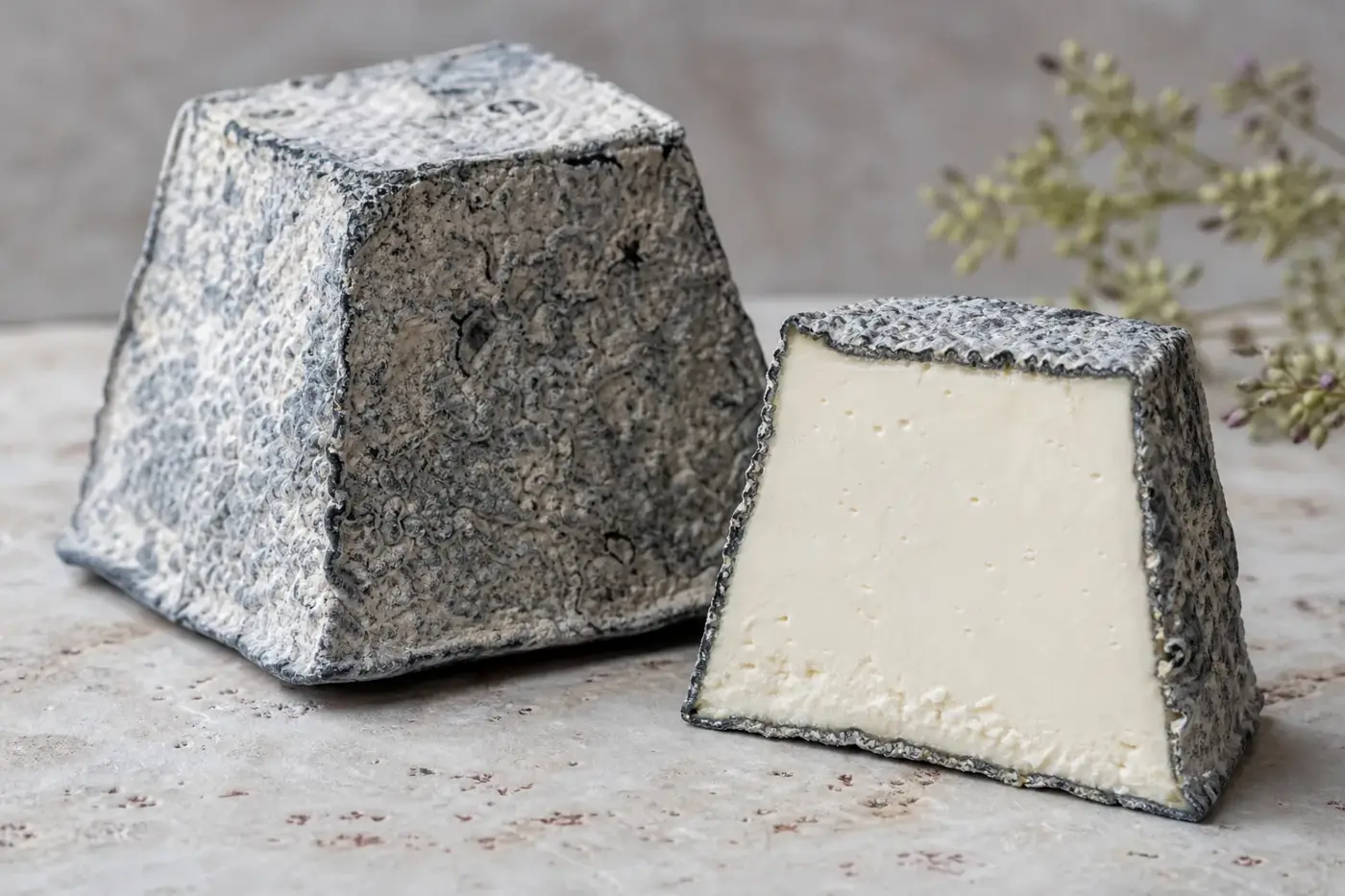
Look closely at Valençay’s pale, flowering rind. Just beneath it lies a dusting of black vegetable charcoal, almost hidden by the growth above. Light over dark: a little drama before you have even reached for a knife.[1][2][3]
That coating has more to offer than good looks. Depending on its material and preparation, it can help create the surface conditions in which a rind develops. As you explore, keep one distinction in mind: traditional mineral-rich plant ash and modern food-grade charcoal are not the same thing.[1][2][3]
That dark coat has work to do
Colour catches your eye first. A dark coating gives the developing rind a contrasting background. INAO, France’s national institute for geographical indications, describes Valençay’s production as including a coating of salt and vegetable charcoal powder.[4]
But appearances are only part of the job. The American Cheese Society’s cheesemaking guide describes vegetable ash preparations used to reduce surface acidity and encourage desirable fungi to grow earlier. The preparation matters: different black powders do not necessarily produce the same change.[2]
Picture the finished exterior in three parts: the coating, the organisms growing over it and the cheese beneath. As the cheese matures, their interaction shapes the rind you see. For a broader introduction, explore how to tell cheese styles apart.
Ash and charcoal: the difference beneath the colour
Two powders can look equally dark and still be quite different materials. New England Cheesemaking Supply describes true ash as the mineral residue left when plant material burns in air. Charcoal is carbon-rich and comes from a different burning process; true ash, its technical explanation notes, contains alkaline salts.[1]
Cheesemaking language is not always so tidy. Contemporary discussions often use “ash”, “vegetable carbon” and “vegetable charcoal” loosely. The American Cheese Society’s guide itself groups vegetable ash, vegetable carbon and vegetable black together when discussing finely divided plant-derived material used in cheesemaking.[2]
For you, the maker’s ingredient description is therefore more useful than the shorthand “ash-coated”. A traditional preparation containing alkaline mineral salts and a modern charcoal powder may look equally dark but have different chemistry. To understand the coating’s role, start with what it contains.[1][2]
Use only material intended for food production. The American Cheese Society advises cheesemakers to buy suitable material from a supplier rather than make it themselves. Do not make a coating at home or use fireplace residue, barbecue charcoal or fuel briquettes.[2]
A little less acidity, a better start for the rind
For the intended ripening organisms, a less acidic surface can make a difference. Surface acidity influences the growth of yeasts and moulds. You can read that acidity on the pH scale: as pH rises, the surface becomes less acidic.[2]
New England Cheesemaking Supply describes alkaline salts neutralising acidity on a fresh lactic cheese. If “lactic” is unfamiliar, it means a cheese whose curd develops chiefly through acidification.[1]
The practical aim is to get desirable fungi growing earlier, as the American Cheese Society explains. Temperature, moisture and salting also influence rind development. The coating plays its part alongside all the other maturation conditions the cheesemaker manages.[2]
Here, chemistry tells you more than colour ever could. An alkaline ash preparation has a chemical reason to reduce acidity. To understand a charcoal preparation’s effect, look at its composition, treatment and use, not simply its black appearance.[1]
At the cheese counter, ask what the maker wants the coating to do. “Helps the rind develop” is a useful start. An explanation of the preparation and its role in ripening tells you rather more.
Watch a pale rind emerge from the dark
Valençay makes this relationship easy to picture. INAO describes a mixture of salt and vegetable charcoal powder, while the specification requires salting and ashing on every face. Surface moulds then develop during ripening.[3][4]
The pale growth arrives later, over that dark treatment. A bloomy rind is a surface covering formed by ripening fungi. Charcoal supplies the coating beneath; the bloom develops above it. Both belong to the finished exterior, but they are different components.[3]
You can see another example in Vermont Creamery’s Bonne Bouche, which the producer says is sprinkled with poplar ash before ageing. It attributes the wrinkled surface to the ripening culture Geotrichum candidum. The blue-grey appearance comes from the ash, it explains, rather than identifying Bonne Bouche as a blue cheese.[7]
Colour, then, tells you only part of the story. Ask what forms the rind as well as what colours it.
Morbier’s dark line and the tale of two milkings
Morbier’s black line comes with a frequently repeated account of two milkings. INAO recounts farmers covering an initial portion of curd with soot from a cauldron. They then joined it to curd from the next milking.[6]
You can picture the practical rhythm of that work, but the specification places the account among several hypotheses. Its historical section presents the two-milking explanation as one possibility. In that account, soot protected the exposed surface of the first curd until the second portion was added.[5]
The recorded explanation illuminates Morbier’s identity, not the origins of every ash-coated cheese. It also leaves open when cheesemakers in different places moved from plant ash or soot to food-grade charcoal. It establishes no date for a worldwide transition.
For today’s cheesemaking, the production requirements are much more precise. They identify both the material and its position in the cheese. That gives you a clear distinction between current practice and the historical story.[5]
Valençay: every face gets its charcoal coat
Valençay’s distinctive shape is a square-based truncated pyramid. This French goat cheese comes from Centre-Val de Loire and is made with raw whole goat’s milk. Its specification describes a light-grey to blue-grey rind coloured with vegetable charcoal.[3][4]
Every face must be salted and ashed. The specification also sets a minimum marketing age of 11 days, counted from renneting, when the milk-clotting enzyme is added. That clock does not start with coating or packing.[3]
Look at the finished cheese and you are seeing treatment and maturation together. Charcoal establishes the dark background, then surface growth develops over it. Valençay gives you an especially clear view of an exterior coating becoming part of a rind as the cheese ripens.[3]
Morbier: look to the middle for the charcoal
With Morbier, your attention moves inside rather than around the outside. Its charcoal forms a horizontal black line through the cheese. The specification requires vegetable charcoal to be applied manually to the face of one portion of curd before pressing.[5]
The document names that ingredient as vegetable wood charcoal, carbo medicinalis vegetalis. The outer rind develops separately through rubbing with water, which may contain salt and cultures. Rind colouring is prohibited.[5]
Where the charcoal sits matters just as much as its name. A dark line through the paste, meaning the body of the cheese, is a different construction from a dark coating beneath a surface bloom. Neither is simply “black mould”.[5][7]
Let your first bite tell the story
“Ash-coated” is not much of a tasting note. It tells you little about how a cheese will taste or mature. Start instead with the cheesemaker’s description of the whole cheese; the coating is not entitled to all the attention.
Valençay’s specification describes mushroom, woodland and floral aromas. Its delicate goat’s-milk character becomes more pronounced during maturation, while the paste grows firmer with age.[3]
Bonne Bouche takes a different direction. Vermont Creamery describes increasing softness and a more robust flavour as it ages. Those producer tasting notes show you why a shared ash coating does not mean a shared pattern of maturation.[8]
At the table, try a small bite of paste, then a bite including the rind, provided the maker identifies that rind as edible. Notice texture and aroma rather than expecting a strong charcoal flavour. Separating a thin coating’s subtle contribution from the living rind and paste beneath would require a controlled tasting.
When choosing your cheese, ask about maturity. Firmness in one and softness in another may both be exactly what the maker intends. It depends on the cheese and its stage of development.[3][8]
Before you eat the ash-coated rind
Ask whether both the coating and the developed rind are intended to be eaten. Follow the cheesemaker’s guidance. That question is particularly useful when you buy a cut piece without its original packaging.
The ingredient declaration helps you establish what has been used. Bonne Bouche’s published ingredients, for example, list ash alongside cultured goat’s milk, salt and enzymes.[8]
Keep the food coating and the wrapper distinct in your mind. Vermont Creamery describes ventilated packaging designed to let its aged cheeses continue ripening. That packaging has a different job from the ash.[7]
If the rind is edible, eating it with the paste is your choice. You can leave some behind if you do not enjoy its texture or intensity.
Unexpected changes are a separate question. See mould on cheese for guidance, rather than assuming every dark or pale surface is an intended part of the cheese.
Bring it home and give it a good showing
Choose for the occasion, and ask your cheesemonger about maturity, rind and handling. Valençay and Bonne Bouche mature differently. They remind you to buy for the character of the particular cheese, not the colour of its coating.[3][8]
Keep the original packaging when its instructions call for it. Vermont Creamery explains that its aged cheeses use ventilated containers or micro-perforated wrapping to allow continued ripening. Those features are part of the handling system, not just the presentation.[7]
For storage and serving, follow the Food Standards Agency’s current advice for England, Northern Ireland and Wales. That includes its guidance on fridge temperature and keeping chilled food out of refrigeration.[9] Follow the product’s storage instructions and date label, and see how to store cheese at home for more detail.
For a simple alcohol-free pairing, try plain bread and fresh pear. Bread gives you a neutral first taste; pear offers a separate bite between samples. Taste the cheese alone before adding an accompaniment, so you can notice what the rind contributes rather than letting a strong condiment lead every mouthful.
General information only, not medical advice: follow the official guidance where you live.
Questions people ask
Why are some cheeses coated in ash?
A dark coating gives the developing rind a contrasting background. Some vegetable ash preparations also reduce surface acidity, encouraging desirable fungi to develop earlier.
Is cheese ash the same as charcoal?
No. True ash is the mineral residue left after plant material burns in air and contains alkaline salts. Charcoal is rich in carbon and comes from a different burning process.
What is the pale rind on Valençay?
The pale rind is surface growth that develops over a coating of salt and vegetable charcoal powder. The charcoal and the bloom are different parts of the finished exterior.
What is the black line in Morbier?
The line is vegetable wood charcoal applied manually to one portion of curd before pressing. The outer rind develops separately through rubbing with water, which may contain salt and cultures.
Can you eat the rind on an ash coated cheese?
Ask whether both the coating and the developed rind are intended to be eaten, and follow the cheesemaker’s guidance. If the rind is edible, eating it is a matter of preference.
Sources
- New England Cheesemaking Supply Co., Ash (Activated Charcoal), undated technical guidance, accessed November 2026. Commercial cheesemaking supplier; relied on for its distinction between ash and charcoal and its explanation of alkaline salts.
- American Cheese Society, Best Practices Guide for Cheesemakers, 2025 edition, sections on rind development and vegetable ash, especially printed pages 100 and 101. Industry guidance, not a regulatory approval or an ash-treatment experiment.
- French Ministry of Agriculture and INAO, Cahier des charges de l’appellation d’origine « Valençay », associated with notice AGRT1413739V, 2014. Sections 2, 5.4.6, 5.5 and 6.
- INAO, [Valençay](../valencay/), undated official product account, accessed November 2026.
- French Ministry of Agriculture, Cahier des charges de l’AOP « Morbier », text approved by the national committee on 19 November 2025 and linked by INAO to the January 2026 specification publication. Sections 5.5, 5.6 and 6.1.2.
- INAO, [Morbier](../morbier/), official product account and specification links, accessed November 2026.
- Vermont Creamery, FAQ, undated producer guidance, “Aged cheese” section, accessed November 2026.
- Vermont Creamery, Bonne Bouche, undated product information, accessed November 2026. Ingredients and maturation descriptions are the producer’s declarations.
- Food Standards Agency, How to chill, freeze and defrost food safely, published 18 December 2017, current retrieved guidance checked November 2026; applies to England, Northern Ireland and Wales.
Researched through official French product documents, published cheesemaking guidance, producer information and Food Standards Agency consumer guidance.
Last checked: November 2026
Last checked November 2026.
The editors suggest you read next
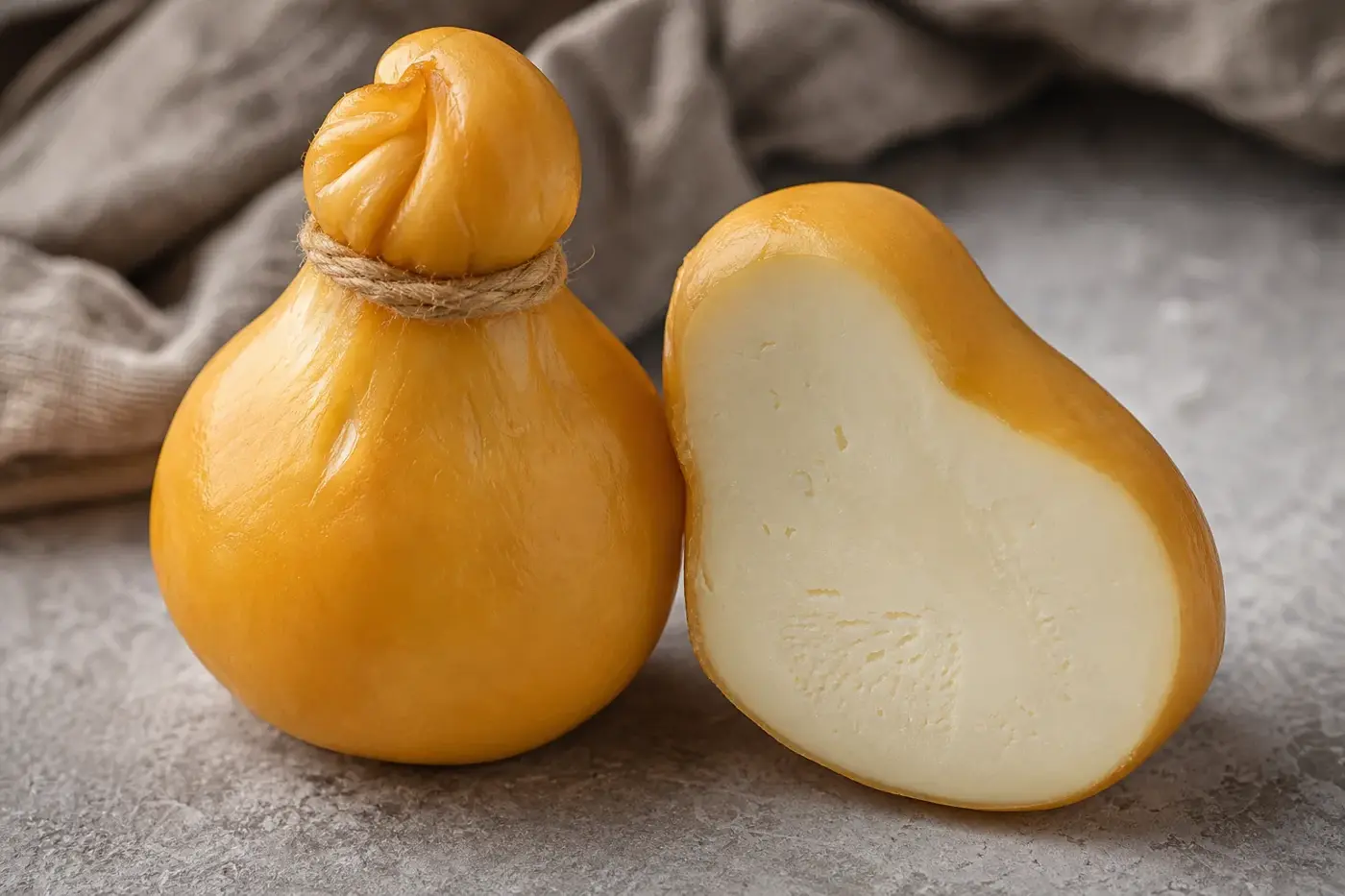
Smoked Cheese Explained
Your knife slips through the golden skin of a Puglian scamorza.