Queijo do Marajó
At the pan, fermented curd meets cream or butter for one last cooking: fritura.
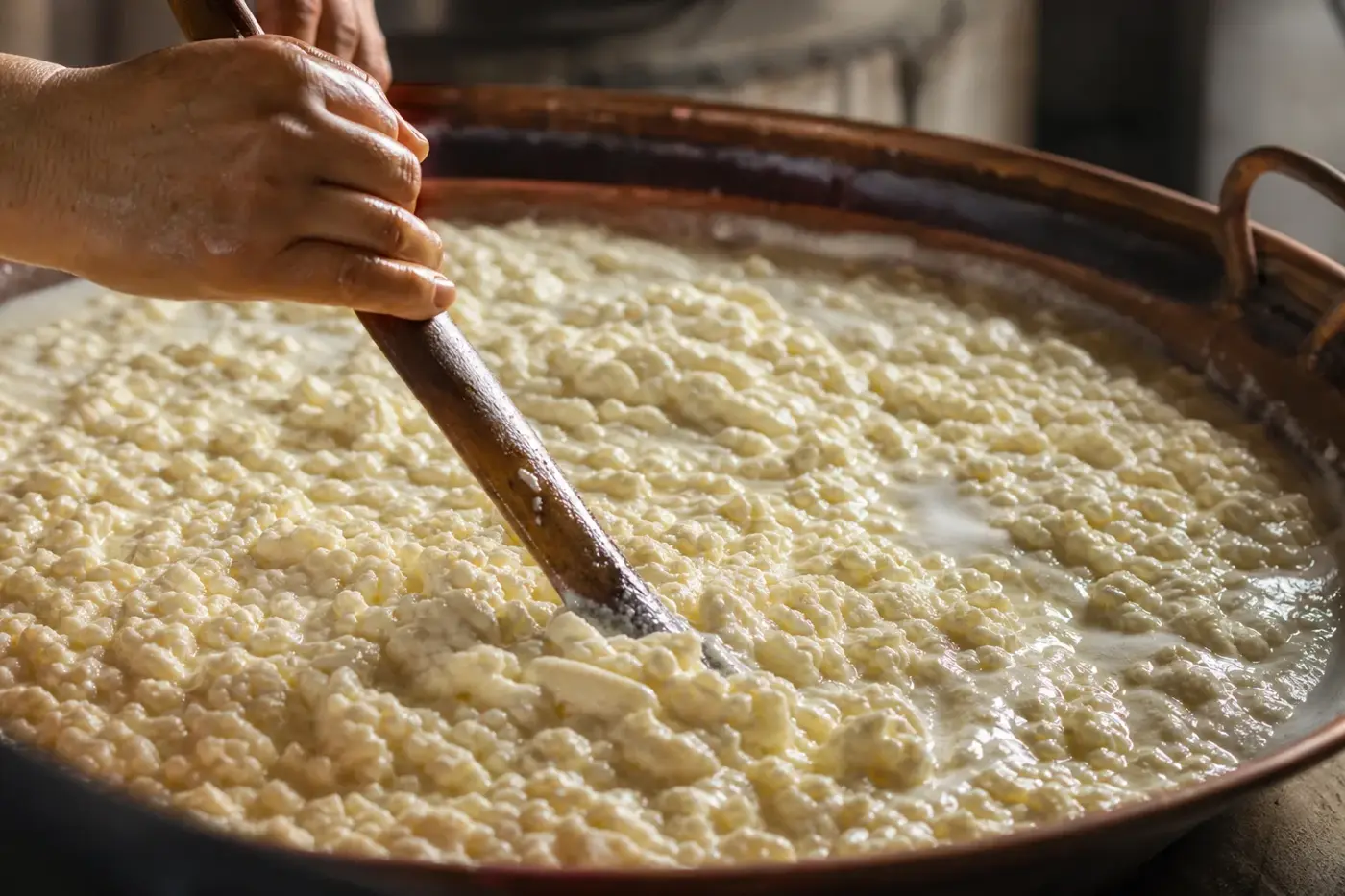
At the pan, fermented curd meets cream or butter for one last cooking: fritura. Here, on the seasonally flooded pastures of Brazil’s Amazon estuary, Queijo do Marajó comes together. Buffalo provide the milk, sometimes blended with cow’s milk from the same defined area. Its two varieties, creme and manteiga, carry local knowledge through every stage of fermenting, draining and reheating.[2][3][4]
| What to know | The detail |
|---|---|
| Name to look for | Queijo do Marajó.[3] |
| Exact registered geographical name | Marajó, registered for cheese.[1] |
| Registration authority and ID | Brazil’s Instituto Nacional da Propriedade Industrial, INPI; BR402018050007-0.[1] |
| Brazilian protection | Indicação de Procedência, registered on 23 March 2021; listed in the official register in November 2026.[1] |
| Where it comes from | Cachoeira do Arari, Chaves, Muaná, Ponta de Pedras, Salvaterra, Santa Cruz do Arari and Soure, Pará.[2] |
| Milk in your cheese | Buffalo milk, or buffalo milk mixed with no more than 40% cow’s milk; both must come from the defined area.[2] |
| Your two varieties | Tipo creme and tipo manteiga.[2] |
| Time spent ripening | Unripened, according to the technical literature.[4] |
Step into Marajó’s buffalo country
At the mouth of the Amazon, in the northern Brazilian state of Pará, seasonally flooded fields and natural pastures helped make Marajó buffalo country. The cheesemaking territory is associated particularly with the Campos do Marajó, an extensive grassland landscape. Conditions suited buffalo husbandry, bringing these animals into the heart of local dairy production.[2][4]
Follow the work and you travel from herd management and milking to cream separation and the cheesemaking pan. The knowledge passes between generations along the way. INPI’s account records producers learning as children, helping experienced family members before taking charge of the cheese themselves.[3]
Those family connections reach beyond the farm. In March 2021, Pará’s rural extension agency, Emater, described its support for cheesemaking families and the cheese’s inclusion in school meals in Soure. This is food for island communities, not simply something for visitors to discover.[5]
Before the buffalo, there was already cheese
Buffalo may fill the picture now, but Marajó was making cheese before they became central to its dairying. Agricultural literature places their introduction in the late nineteenth century and describes an existing cow’s milk tradition. As buffalo herds grew, their milk took an increasingly important place in the cheese.[3][6]
Ask where that tradition began and you find several versions. A study published through Brazil’s agriculture ministry records accounts involving Swiss settlers during the rubber economy. Others involve Portuguese and French farming families. No single account is securely established.[6]
What runs through this history is adaptation. Cheesemakers brought their knowledge to a different dairy animal, rather than bringing in a wholly new cheese alongside it. Later, the cream separator became important to the creme method, collecting cream before the remaining milk was left to ferment.[4]
Cow’s milk is not merely a historical footnote. You can still find it within the Marajó specification, provided both the permitted proportion and the geographical requirements are met.[2]
A buffalo on the packet tells only part of the story
A buffalo picture is not an ingredients list, however persuasive the buffalo looks. Queijo do Marajó may contain entirely buffalo milk, or a mixture with no more than 40% cow’s milk. Both milk supplies must come from the delimited territory. The actual milk declaration tells you more than the imagery.[2]
Start with two questions. Is your cheese all buffalo milk or the permitted mixture? Is it creme or manteiga? Those answers give you a clearer picture than the regional name alone.
Milk treatment is a separate question. The traditional process described in research begins with unpasteurised milk, then heats the prepared curd later in the make. Heating curd is not the same operation as pasteurising incoming milk. Consult the producer’s declaration when that distinction matters to your choice.[4]
If the terms leave you wondering, turn to the guide to raw, thermised and pasteurised milk. Read it alongside the declaration for the particular cheese you are considering.
Creme or manteiga? The difference goes into the pan
The decisive moment comes at the final cooking. For creme, cream removed during milk separation goes back into the cheese mass. For manteiga, the cheesemaker adds butter instead.[3]
| What to compare | Tipo creme | Tipo manteiga |
|---|---|---|
| Milk preparation required by the specification | Skimmed buffalo milk or the permitted mixed milk.[2] | Whole buffalo milk or the permitted mixed milk.[2] |
| Added at the finish | Cream and salt.[2] | Butter and salt.[2] |
| Texture tendency in technical accounts | Wetter.[4] | Drier.[4] |
| Flavour description shared by both | Slightly acidic and slightly salty.[7] | Slightly acidic and slightly salty.[7] |
Treat those texture tendencies as your starting point, not the whole tasting. The specification recognises variation arising from non-standardised milk and the cheesemaker’s practice. A variety name cannot tell you every detail of the cheese in your hand.[2]
The published regional flavour description is restrained: light acidity and saltiness. You are not looking for the pronounced ripening character of an aged or surface-ripened cheese.[7] “Creme” tells you about the added cream, and “manteiga” about the butter. Neither name supplies a complete tasting note.
For a closer comparison, look at the cut face and try a slice of each. Does it bend readily, and how moist does the surface look? Follow the acidity through the finish, too. Your own tasting makes those differences much easier to grasp.
Follow the curd from fermentation to fritura
Fermentation starts the traditional make, rather than a conventional rennet-led process. As the milk coagulates, its proteins gather into curd. The cheesemaker separates that curd from the whey, the liquid released as the milk sets.[4]
Next, the drained mass needs preparing for its final cooking. Further heating and washing with water or milk moderate its acidity. Technical descriptions also record draining, pressing and breaking up the mass before it returns to the pan.[4]
Then comes fritura. The prepared curd is heated and worked with cream or butter until it becomes a cohesive cheese mass. In the official production flow chart, the two routes run separately before coming together for moulding, packaging, storage and distribution.[2]
This sequence gives Queijo do Marajó its distinctive place in how cheese is made. Its identity comes from acid coagulation, curd preparation and heating with dairy fat. Prolonged maturation after moulding is not the defining step here.[2][4]
Let the first slice show you around
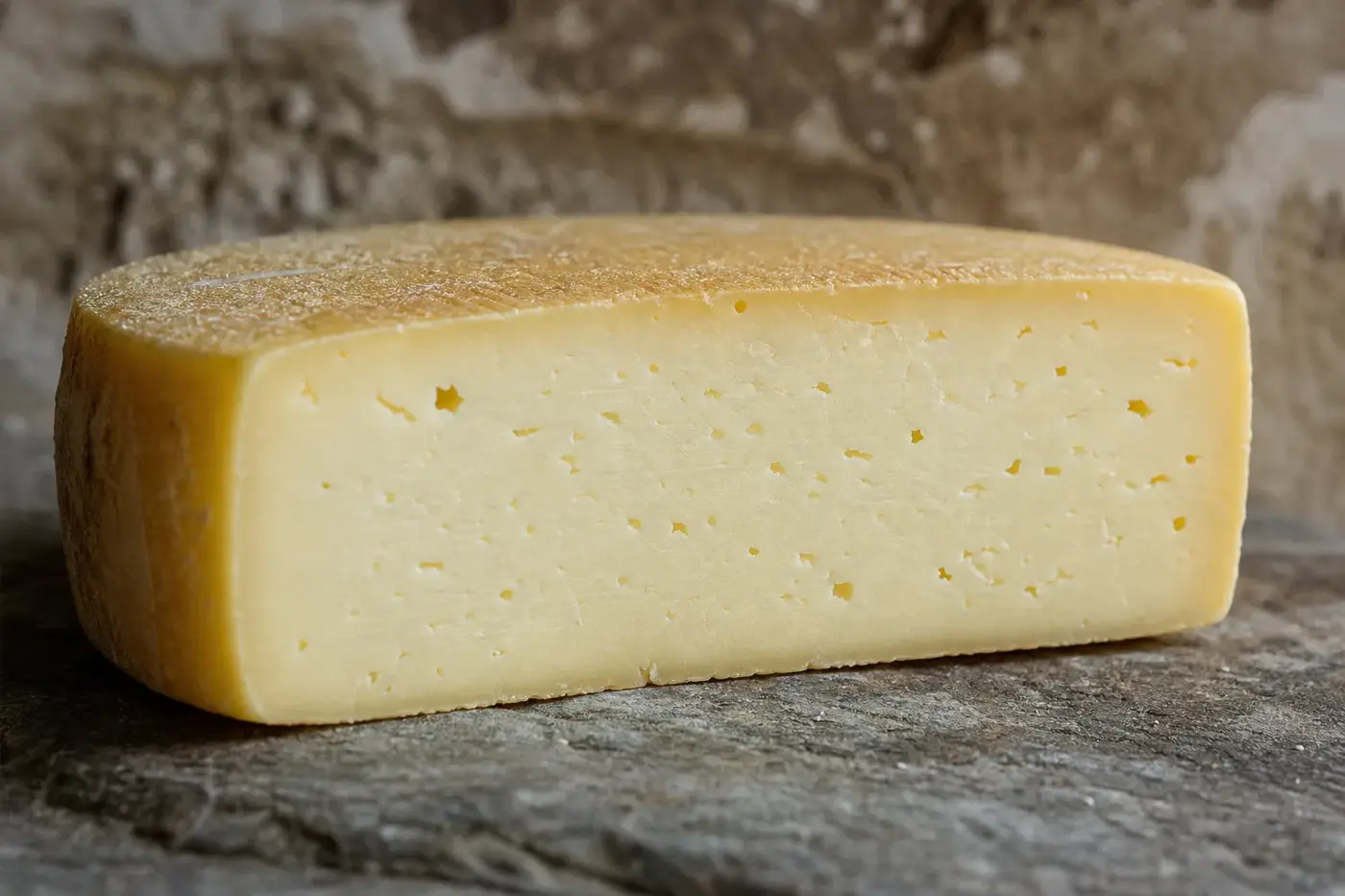
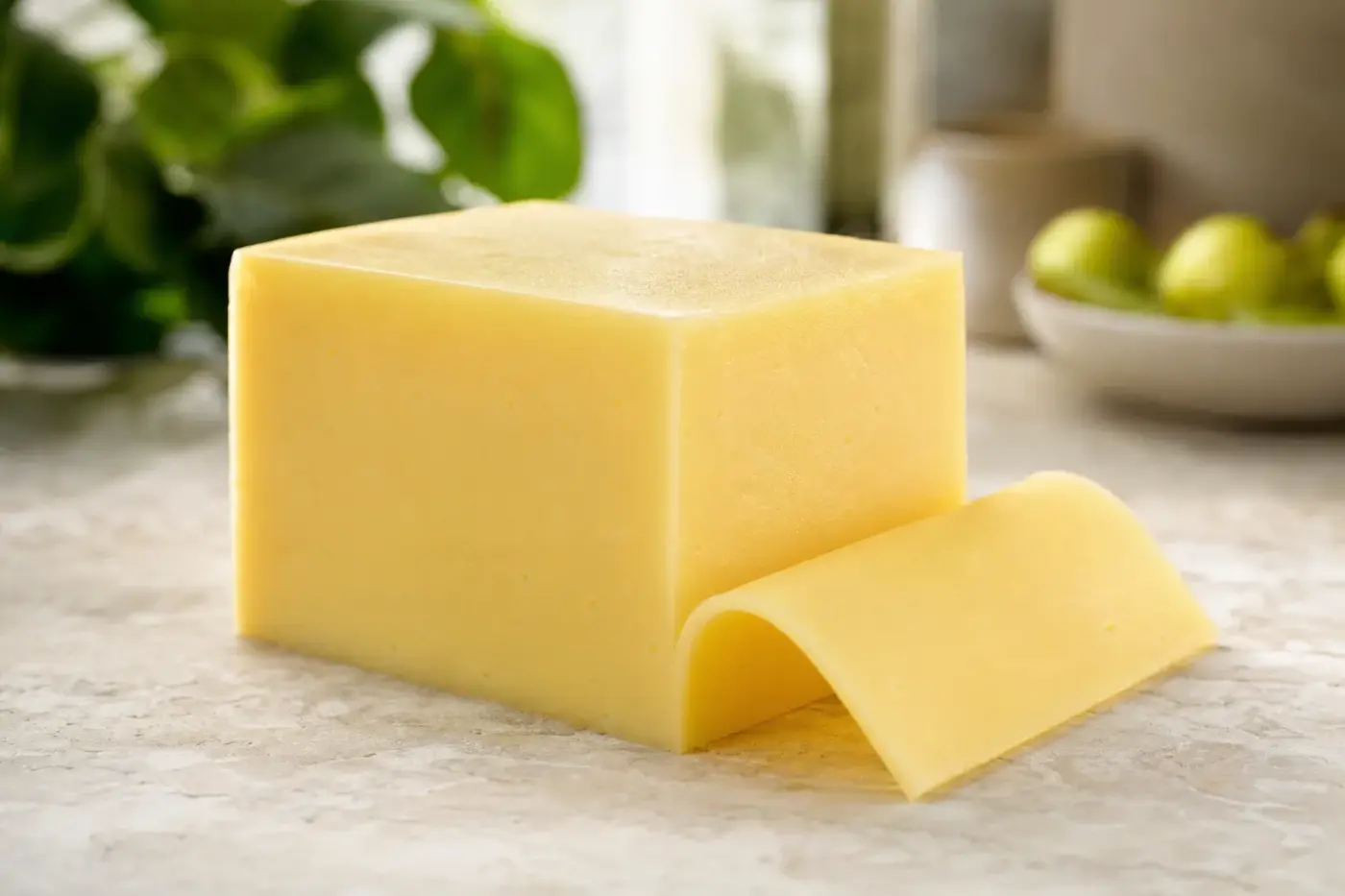
Cut into the cheese and you can begin to read its character. The academic overview describes a compact, smooth paste without eyes, the openings found in some other cheeses. Its colour ranges from white to straw. Published descriptions include both cylindrical and rectangular forms, reflecting the containers used to shape the finished mass.[7]
A technical account likewise describes the cheese taking its container’s shape immediately after processing. Inside, you find a compact body and pale interior.[4]
Both varieties belong to the same broad family of sliceable cheeses. Creme tends towards wetter and manteiga towards drier, but give the particular cut surface in front of you your attention. It offers the most immediate sense of that cheese’s consistency.[4][7]
Seven municipalities share the protected Marajó name
The registered name is Marajó, for cheese. INPI registered it as an Indicação de Procedência on 23 March 2021. It remains listed in the Brazilian authority’s register in November 2026.[1]
The territory covers seven municipalities, rather than the whole archipelago. Its specification sets production requirements and requires packaging within the territory. It also lays down conditions for using the geographical indication’s graphic representation.[2]
If you know European cheese labels, keep the systems separate. This Brazilian registration has its own rules. PDO, PGI and TSG terminology belongs to other protection systems.
Buying in Brazil: read origin and inspection together
Origin information and inspection identification answer different questions, so read them together. The Marajó specification defines geographical identity and production requirements. Food inspection concerns the establishment and its products, while national arrangements determine the recognised routes for wider circulation.[2][8]
Brazil’s agriculture ministry states that qualifying products bearing the ARTE or Queijo Artesanal identification can be commercialised nationally. Under Article 2 of Decree No. 11.099 of 21 June 2022, that artisanal identification accompanies the official inspection seal.[8]
For you as a buyer, the regional name is the beginning, not the end. Look alongside it for the labelled producer and official inspection details. Together, they help you understand where the cheese comes from and the identification under which it is sold.
Bring it to the table, one plain slice first
Give the cheese the first word. A plain slice lets you judge acidity, salt and texture before anything else changes the balance. If you have both varieties, taste them side by side with the same bread or tapioca preparation. A second slice can always be filed under research.
For a regional-style serving idea, tuck slices into a freshly prepared tapioca pancake. You could also put warm bread, cooked cassava or a little guava paste alongside. These are serving suggestions, not a single preparation that defines Marajó’s food culture.
Coffee gives you a useful starting point with a breakfast plate. Choose water for the clearest comparison between varieties, or try unsweetened tea. Keep the accompaniments simple at first, then adjust to the cheese in front of you.
Neither creme nor manteiga needs one fixed partner. Both leave room for differences between individual cheeses. That is a good reason to taste before deciding what else belongs on your plate.
Read the pack, then keep it chilled
In Brazil, start with the package. Anvisa lists ingredients and expiry date among the required food-label information. Read them alongside the variety, producer, inspection identification and storage instructions.[9]
Brazil’s official consumer booklet on foods of animal origin advises checking packaging integrity, label instructions and expiry dates. It also says to keep refrigerated foods as directed on the label. Its household example specifically shows cheese and yoghurt going into the refrigerator.[10]
Keep Queijo do Marajó under its stated refrigerated conditions, and follow the instructions for use after opening. Take out the portion you plan to eat and keep the rest refrigerated. Anvisa also directs consumers to follow the stated conservation conditions and contact the responsible business or local sanitary authority if they identify quality or safety problems.[10][11]
For an unfamiliar pack, turn to how to read a cheese label. Outside Brazil, availability may be limited. Given its regional production and refrigerated handling, ask a specialist importer about the actual product, its origin and storage arrangements before making plans that depend on finding it.
General information only, not medical advice: follow the official guidance where you live.
Questions people ask
Where is Queijo do Marajó made?
The defined production area covers seven municipalities in Pará, Brazil: Cachoeira do Arari, Chaves, Muaná, Ponta de Pedras, Salvaterra, Santa Cruz do Arari and Soure. Packaging must also take place within that territory.
Is Queijo do Marajó always made with buffalo milk?
It can be made entirely from buffalo milk or from a mixture containing no more than 40% cow’s milk. Both milk supplies must come from the defined area.
What is the difference between creme and manteiga?
Creme is finished with cream and salt, while manteiga is finished with butter and salt. Technical accounts describe creme as tending to be wetter and manteiga drier, though individual cheeses can vary.
Is Queijo do Marajó made with raw milk?
Research describes a traditional process that starts with unpasteurised milk and heats the prepared curd later. Heating curd and pasteurising incoming milk are different operations, so consult the producer’s declaration.
How should Queijo do Marajó be stored?
Brazil’s official consumer booklet on foods of animal origin advises following label instructions and keeping refrigerated foods as directed. Anvisa also advises following the stated conservation conditions.
Sources
-
INPI. Lista de IGs, current online register, Marajó entry, checked November 2026. Records the registered geographical name, product, category, registration ID and registration date. Official register.
-
Associação dos Produtores de Leite e Queijo do Marajó, hosted by INPI. Caderno de Especificações Técnicas: IG Marajó, Indicação de Procedência, 2021. Articles 2, 7, 11 to 15 and 18 to 19. Official specification.
-
INPI. Marajó, technical information sheet associated with the 2021 registration. Sections 4 and 5. Official technical sheet.
-
Universidade Federal do Pará, copy held in Embrapa’s repository. Elaboração e caracterização do “Queijo Marajó”, tipo creme, de leite de búfala, visando sua padronização, dissertation, 2006. Section 2.4. Repository document.
-
Emater Pará. Produtores do queijo do Marajó assistidos pela Emater comemoram Identificação Geográfica, 25 March 2021. Agency account.
-
Brazilian agriculture ministry repository. Study of local development and territorial recognition involving the cheeses of Marajó, Seridó and Jaguaribe, repository copy. Marajó historical discussion, section 2.1. Published study.
-
Embrapa repository. Document supplied as Bacterias-laticas-de-queijos-minas-artesanais.pdf, section 3.1.1, “Queijo Marajó”. Full publication details require editorial completion. Repository document.
-
Ministério da Agricultura e Pecuária. Selo Queijo Artesanal, official explanation reproducing relevant provisions of Decree No. 11.099 of 21 June 2022, including Article 2. Official explanation and legislative extracts.
-
Anvisa. Rotulagem de alimentos, current online guidance, checked November 2026. Official labelling guidance.
-
Brazilian agriculture ministry, hosted by CRMV-SC. Consumer booklet on inspection and household handling of foods of animal origin, undated retrieved copy, pages 9 to 11. Official consumer booklet.
-
Anvisa. Controle sanitário de alimentos, current online guidance, particularly questions 6 and 7, checked November 2026. Official consumer responsibilities and reporting guidance.
This desk-researched article brings together Brazil’s registration documents, published production accounts and official consumer guidance; serving combinations are identified as editorial suggestions.
Last checked: November 2026
Last checked November 2026.
The editors suggest you read next