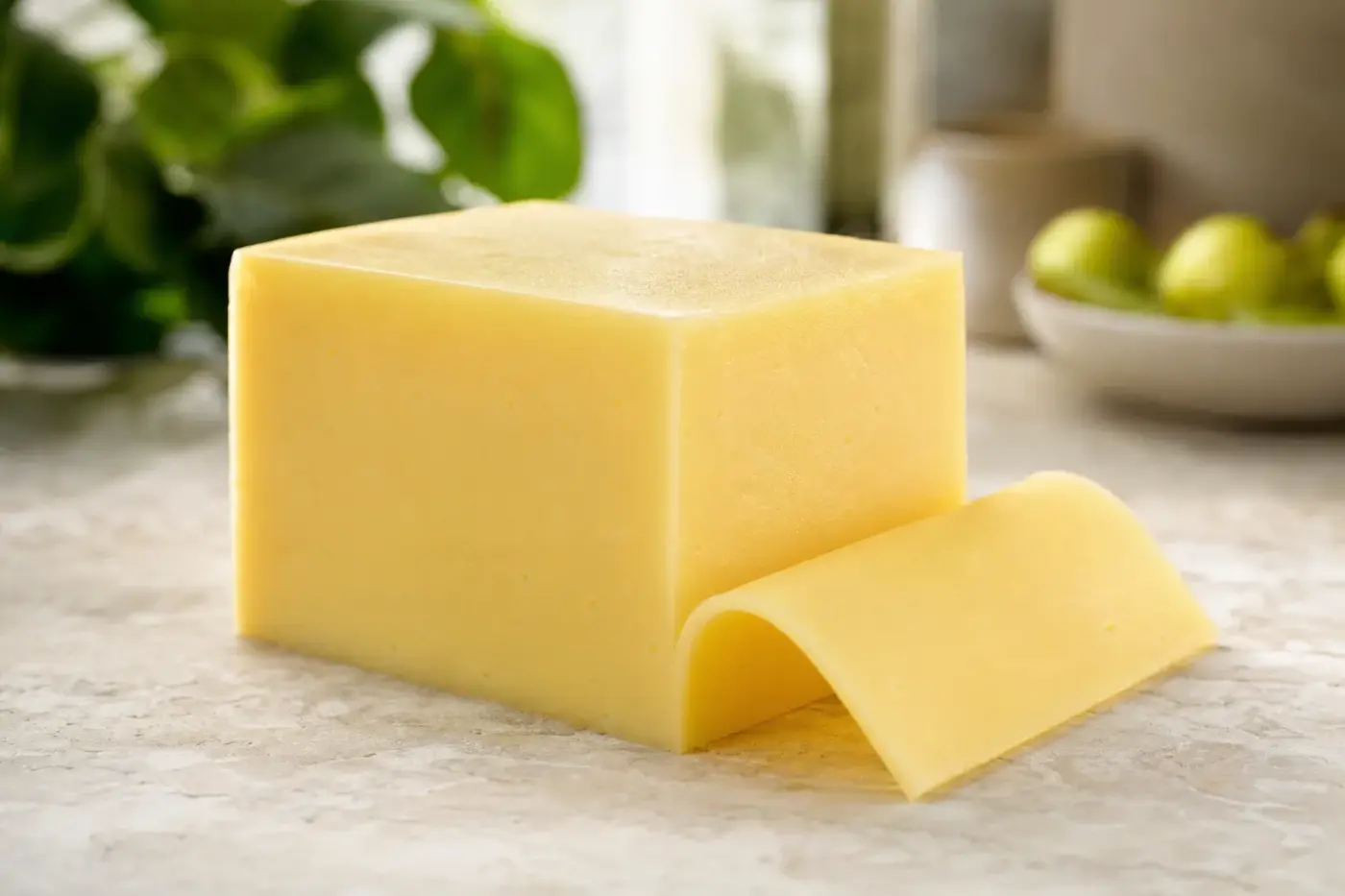
Whey drains from today’s cheese. On small farms in Brazil’s Serra da Canastra, some of it already has a job waiting tomorrow. Producers save pingo, fermented whey, to start the next batch of Queijo Canastra. That daily handover, farmhouse practice and maturation shape this raw cow’s milk cheese from Minas Gerais, with its yellow rind and compact paste. [1][2]
| What to know | The details |
|---|---|
| Name you’ll recognise | Queijo Canastra |
| Registered geographical name | Canastra; the amended certificate gives “Queijo da Canastra”. [1] |
| Authority and register ID | Brazil’s Instituto Nacional da Propriedade Industrial, INPI; IG201002. [1] |
| Brazilian protection | Registered Indicação de Procedência, or indication of provenance; registered 13 March 2012, amended 17 September 2024. Reference date: November 2026. [1] |
| Where it comes from | Eight municipalities in south-western Minas Gerais, Brazil. [1] |
| Traditional ingredients | Raw whole cow’s milk, pingo, rennet and salt. [1][2] |
| Standard wheel | Cylindrical; finished weight of 900 to 1,300 g in the amended specification. [1] |
| Rind and interior | Natural yellowish rind; compact, pale yellowish paste. [1][2] |
| Current legal minimum maturation | Not established here |
| Age to ask about | Sold at different stages; ask for the actual age. [2] |
| Pregnancy guidance | UK: NHS pregnancy and listeriosis guidance. Reference date: November 2026. [7][8] |
Meet the families who make Canastra
Canastra belongs to the farming country around the Serra da Canastra, not to a single dairy or brand. INPI’s historical account places cheesemaking at the heart of rural family livelihoods. Cattle farming, household knowledge and the work that helps families remain in the countryside are woven together here. [2]
The registered area includes São Roque de Minas, Vargem Bonita, Medeiros, Bambuí, Delfinópolis, Piumhi, Tapiraí and São João Batista do Glória. That last municipality appears in the amended certificate dated September 2024. If you find an older description listing seven municipalities, it gives an incomplete picture of the amended Brazilian registration. [1]
At the counter, remember two names: Canastra and the farm. One tells you the regional origin and registered production framework; the other tells you who made your cheese. Keep both, and you can find your way back to a wheel you loved. A little note saves a great deal of hopeful pointing next time.
Follow pingo from yesterday into tomorrow
The next batch does not begin from scratch. The amended specification defines pingo as a lactic starter collected from the final whey drainage of the previous day’s production in the same dairy. Whey is the liquid released when milk separates into curd, the solid material that becomes cheese, and liquid. [1]
The producer adds that saved culture to the following batch, alongside rennet to set the milk. Brazil’s Federal Council of Chemistry lists the traditional ingredients as raw milk, rennet, pingo and salt. It puts that carried-over whey at the centre of fermentation. [3]
Each morning’s milk joins a culture maintained through successive batches. You are tasting continuity, rather than an entirely fresh beginning each day. To untangle the different jobs of culture and coagulant, take a look at how cheese is made.
Watch a wheel take shape
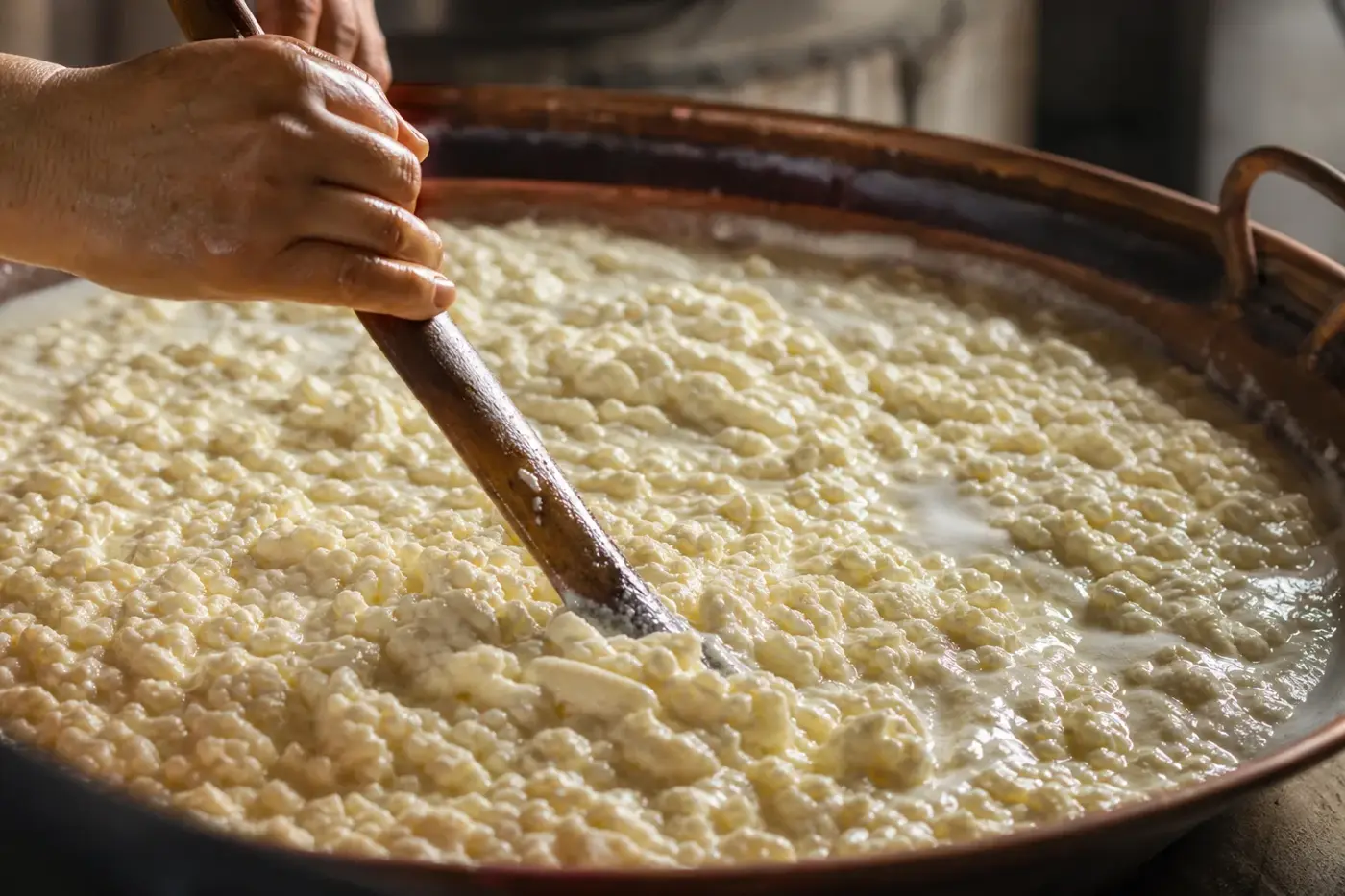
Hands do much of the shaping here. In the registered method, the maker cuts the curd after coagulation and stirs it to encourage whey drainage. It then goes into bottomless moulds, where hand pressing compacts it against the mould and turning evens the cheese’s surfaces. [1]
Salt goes onto the surface before the wheels leave their moulds for maturation. Turning and surface care follow the producer’s practice and the conditions. The specification describes wooden shelves and permits either an ambient or temperature-controlled environment within the delimited production area. [1]
Shaping gives the wheel its form; maturation helps determine what reaches your plate. Both are worth asking about at the counter. If two cheeses share the regional name, ask who made each one and how each was matured.
Look beneath that yellow rind
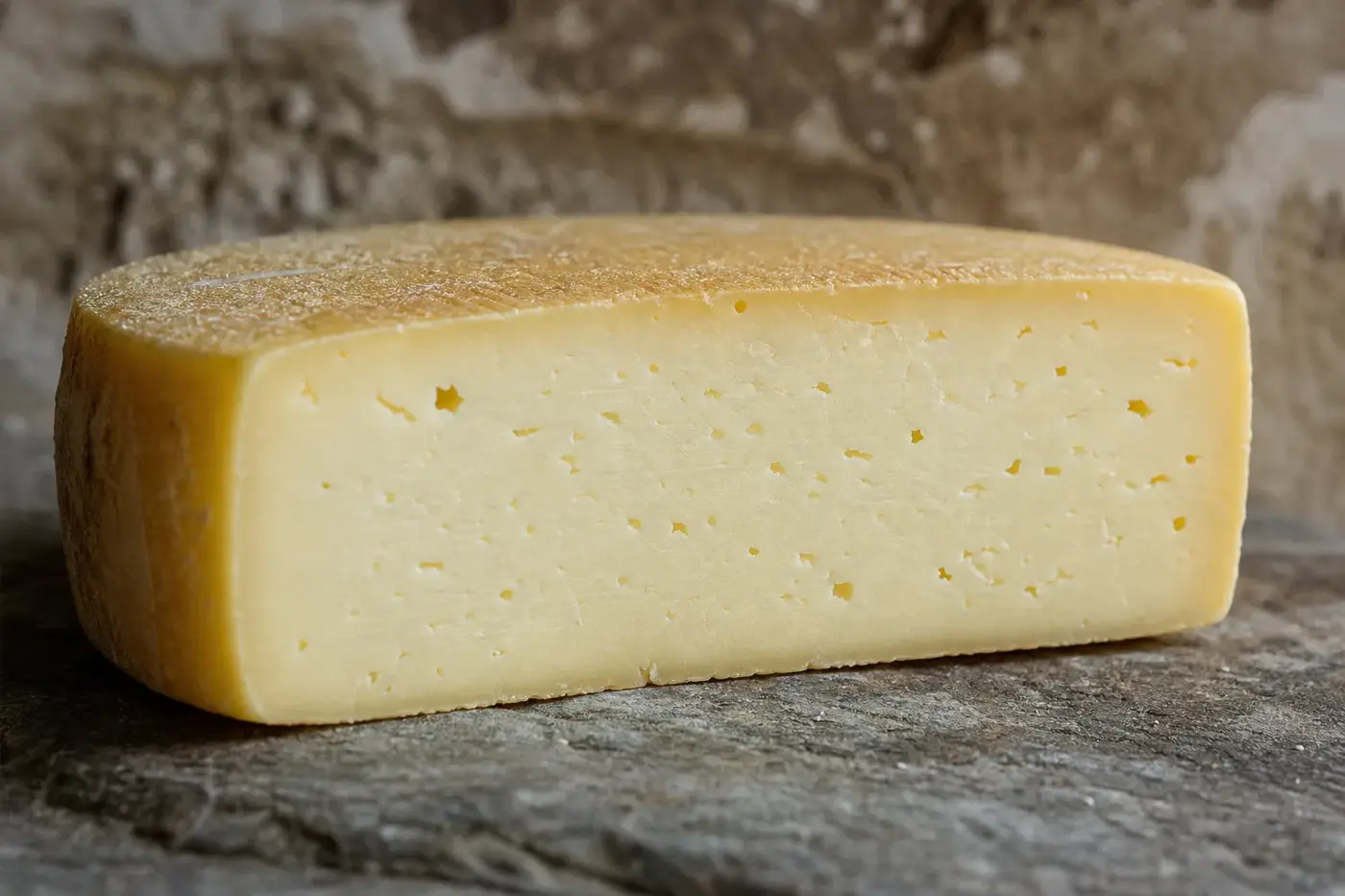
A familiar Canastra wheel is a relatively low, round cylinder, its natural rind enclosing a compact interior. INPI’s technical account describes a thin yellowish rind and white-to-yellow paste. The consistency is semi-hard but tends towards softness, and you may find small, scattered openings inside. [2]
With age, the rind can darken and the outer paste become more strongly coloured. INPI also describes aromas of milk fat and butter. Those give you something more revealing to look for than “strong” or “mild”, words that can leave rather a lot unsaid. [2]
Size does not tell the whole story, either. The amended specification recognises smaller Merendeiro and larger Real formats, and its dimensions describe moulds rather than every finished, matured wheel. If two Canastra cheeses look noticeably different, ask which format is in front of you. [1]
From the pasture to the maker’s hands
Canastra’s production framework makes room for working farms rather than requiring one cattle breed. It permits cattle of European and zebu ancestry and their crosses, with feeding based on natural or established pasture. It also describes supplementary feeding, including forage during dry periods and winter. [1]
The day’s conditions matter inside the dairy, too. The specification explicitly connects adjustments in pingo and rennet use with environmental conditions and traditional knowledge. The ingredients can remain the same while the maker changes how they handle them. [1]
Maturation brings another layer of difference. Research reported by the Instituto Federal de Minas Gerais, IFMG, compared cheeses from one producer and one batch under different packaging conditions. Their sensory profiles differed by the end: handling after manufacture had changed the result. [4]
You can explore these differences without turning your tasting into homework. Try different ages from one producer, or similarly aged cheeses from different makers. Change one thing at a time, and maturation’s contribution becomes easier to notice, rather than giving pasture or place credit for everything.
Find your favourite stage of maturity
Younger Canastra shows the milder, milk-associated side of the cheese. INPI describes a relatively soft, compact texture, gentle acidity and aromas recalling butter or milk fat. You may also encounter the traditional terms meia cura, an intermediate stage, and curado, matured cheese. [2]
Age changes more than flavour. An IFMG investigation followed cheeses from Medeiros through successive stages and recorded falling moisture alongside changes in acidity and pH. As the character develops, the cheese’s composition shifts too. [5]
The IFMG packaging study recorded descriptions including mild, acidic, buttery, salty, matured and farm associated aroma. It followed one batch under different packaging conditions, however. Treat those words as descriptions from that comparison, not a fixed flavour itinerary for every ageing Canastra. [4]
Ask about the wheel you are buying. Is it supple or firm, gently acidic or more pronounced, mainly milky or more developed? Its actual age and a description of the cut cheese tell you more than a maturity term alone.
Discover the place and the knowledge it protects
Canastra’s Brazilian geographical indication is an Indicação de Procedência, shortened to IP. INPI’s certificate records Canastra as the geographical name, cheese as the product and APROCAN, the Associação dos Produtores de Queijo Canastra, as the applicant. The original registration and later amendment are separate dated events. [1]
Look for the producer’s identity alongside the regional designation. One identifies your individual product; the other provides its regional framework. The registered specification also addresses inspection and compliance with applicable legislation, keeping origin controls and food inspection as distinct parts of the record. [1]
The knowledge itself has recognition, too. UNESCO’s entry records the inscription of “Traditional ways of making Artisan Minas Cheese in Minas Gerais” in 2024. The Minas Gerais government dates the committee’s recognition to 4 December 2024. [6][9]
The subject is the traditional way of making cheese, not simply the finished wheel. Saving cultures, learning to handle curd and passing skills between generations all belong to it. Canastra forms part of that wider Minas Gerais cheesemaking tradition, whose significance reaches beyond the piece on your plate. [6]
Put Canastra on the wider Minas map
“Minas” covers a broader geography than Canastra. Official Minas Gerais records identify several regional cheesemaking areas and different artisanal cheese categories. They include Serro, Araxá, Canastra and others, with their own technical or regional provisions. [10]
A label saying only Queijo Minas therefore tells you less about regional origin than a documented Canastra designation. Ask what style it means and where the cheese was made. Then ask whether the milk was pasteurised and how the cheese was matured.
Those questions help you make more useful comparisons. A moist cheese intended for prompt consumption and a matured farmhouse wheel have different jobs at the table. Begin with the named product and its production information, then explore the broader guide to cheese styles.
Ask well at the counter, take care at home
Start with traceability: producer, place of manufacture, batch information and maturation age. Read the storage instructions before buying, especially if the cheese has been cut or repacked. For help distinguishing product identity from other addresses and details, see reading a cheese label.
Tell the seller how you would like to serve your first piece. For straightforward slicing, ask for something relatively supple; if you enjoy firmness, discuss a mature wheel. “The oldest one” says less about what will please you than the texture you actually enjoy.
At home, follow the product’s instructions and protect the cheese from contact with raw foods. The Food Standards Agency recommends a fridge temperature of 5 °C (41 °F) or below, and observing use by dates and storage directions. This guidance applies in England, Northern Ireland and Wales; the reference date here is November 2026. [11]
Packaging matters, but the IFMG study is not a domestic storage timetable. It found sensory differences between packaging treatments during maturation, rather than establishing how long cheese lasts at home. Follow your producer’s instructions for that particular piece, with storing cheese at home for general handling. [4]
Set the table with coffee, fruit and a little sweetness
Give the first slice the plate to itself. Notice the firmness, acidity and salt before deciding what to put beside it. A simple first plate lets you get acquainted with the cheese; accompaniments can follow according to what you enjoy.
For an alcohol-free pairing, try coffee served separately and taste the cheese between sips. Fresh pear or apple offers another straightforward comparison. These are serving suggestions for your own table, rather than results from a site tasting.
For a Brazilian sweet accompaniment, try a small piece of goiabada, guava paste, or a little doce de leite, milk confection. Begin with less sweet accompaniment than cheese, then adjust to taste. You want the contrast without losing the cheese’s own flavour.
Bring out only what you intend to serve. For UK readers, NHS listeriosis guidance says to eat ready-to-eat food within four hours of taking it out of the fridge; follow any shorter product instruction. The reference date here is November 2026. [8]
Raw milk: find the guidance for your circumstances
Traditional Canastra uses raw milk, so read the product information and your country’s advice before eating it. The UK NHS identifies pregnancy, newborn babies, weakened immunity and older age as circumstances associated with a greater risk of serious illness from listeriosis. Your own circumstances matter. [1][8]
For UK pregnancy advice, read both the NHS guidance on foods to avoid during pregnancy and its separate listeriosis guidance. Their wording differs. Discuss the particular product with your midwife, doctor or dietitian. [7][8]
Keep your questions focused on this wheel: its milk treatment, texture and maturation, and the relevant official guidance. For more context, read raw, thermised and pasteurised milk. Use it alongside current national advice.
General information only, not medical advice: follow the official guidance where you live.
Questions people ask
How is Queijo Canastra made?
Traditional Canastra uses raw whole cow’s milk, pingo, rennet and salt. The maker presses the curd by hand in bottomless moulds, and the cheeses mature on wooden shelves.
How long is Queijo Canastra matured?
Canastra is sold at different stages of maturation. The page does not verify a current legal minimum, so ask the seller for the age of the wheel.
What does Queijo Canastra taste like?
Younger Canastra has a milder, milk-associated character, with gentle acidity and aromas recalling butter or milk fat. Its character changes with maturation.
What can I serve with Queijo Canastra?
The page suggests coffee, fresh pear or apple. For a Brazilian sweet accompaniment, it suggests goiabada, a guava paste, or doce de leite, a milk confection.
Can I eat Queijo Canastra during pregnancy?
Traditional Canastra uses raw milk, and the NHS identifies pregnancy as a circumstance associated with a greater risk of serious illness from listeriosis. Consult the NHS guidance on foods to avoid during pregnancy and its separate listeriosis guidance, and discuss the particular product with your midwife, doctor or dietitian.
Sources
[1] INPI and APROCAN. Certificado de registro de indicação geográfica IG201002, amended 17 September 2024, certificate signed 26 September 2024, including the amended Caderno de especificações técnicas.
[2] INPI. Ficha técnica de registro de indicação geográfica: Canastra. Undated technical account associated with registration IG201002. Used for descriptive and historical context, not the amended boundary or current sale requirements.
[3] Conselho Federal de Química. Queijo Canastra: arte e química em prol do sabor. 2019. Ingredient and pingo description only; its historical regulatory statements are not used.
[4] Instituto Federal de Minas Gerais. Pesquisa do IFMG mostra como embalagens influenciam o sabor e textura do queijo Canastra. Published 9 August 2021, updated 13 March 2024. Institutional account of research using cheese from one producer and one batch.
[5] Instituto Federal de Minas Gerais repository. Influência o tempo de maturação na qualidade fisico-química e microbiológica do queijo Minas Artesanal da Canastra. Repository abstract, publication year not verified.
[6] UNESCO. Traditional ways of making Artisan Minas Cheese in Minas Gerais. Representative List entry 02102, inscription year 2024.
[7] NHS. Foods to avoid in pregnancy. Current cheese and dairy guidance, accessed November 2026.
[8] NHS. Listeriosis. Page last reviewed 10 November 2023, accessed November 2026.
[9] Governo de Minas Gerais, Agência Minas. Estado recebe certificado que oficializa Modos de Fazer o Queijo Minas Artesanal como Patrimônio Cultural Imaterial da Humanidade. 2 September 2025.
[10] Governo de Minas Gerais. Legislação: Queijos Artesanais. Current official legislation index, accessed November 2026.
[11] Food Standards Agency. How to chill, freeze and defrost food safely. Published 18 December 2017, current online guidance accessed November 2026; stated territorial application is England, Northern Ireland and Wales.
This piece was researched from Brazil’s registration documents, public research records, heritage records and UK official food guidance, without a site visit or independent tasting.
Last checked: November 2026
Last checked November 2026.
The editors suggest you read next
Queijo Coalho
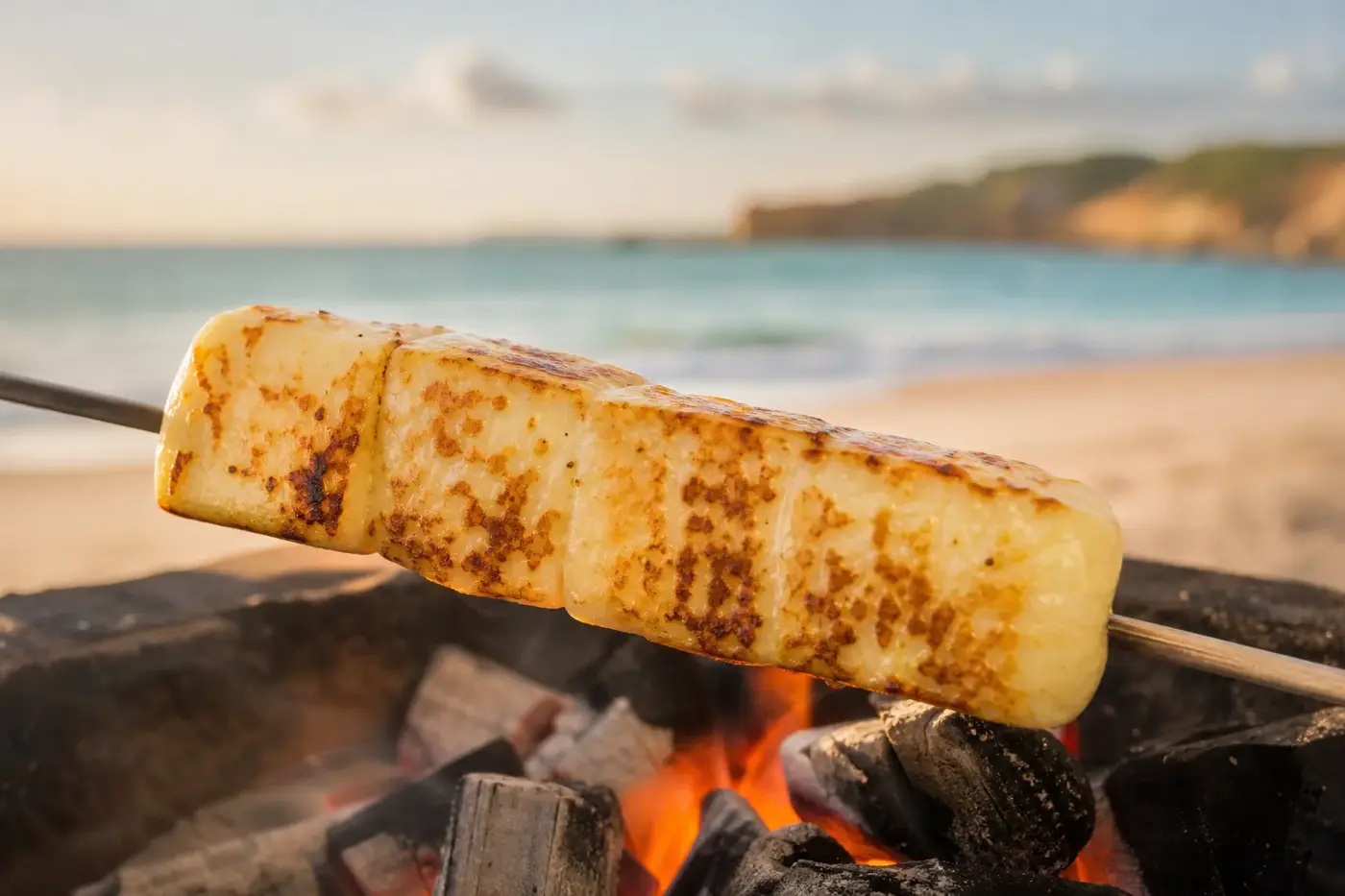
At Recife’s Boa Viagem beach, queijo coalho browns over embers, its centre still firm and yielding.