Queijo Prato
Bread toasts, a slice of Prato softens, and you have queijo quente, Brazil’s toasted cheese sandwich.
Bread toasts, a slice of Prato softens, and you have queijo quente, Brazil’s toasted cheese sandwich. This gentle, supple, matured Brazilian cheese seems made for the moment. Follow its story back to Aiuruoca in southern Minas Gerais, though, and a Danish cheesemaker enters the picture in the 1920s. There is more history between those slices than you might expect. [3][4][8]
| What you want to know | The useful details |
|---|---|
| Name to look for and Brazilian legal designation | Queijo Prato. [1] |
| Standard that applies | Brazil: Portaria nº 358, 4 September 1997, read with the general cheese standard in Portaria nº 146/1996. [1][2] |
| Where its story begins | Aiuruoca, southern Minas Gerais. [3] |
| Milk treatment in one documented example | Tirolez declares pasteurised milk. [8] |
| Permitted coagulant | Rennet or other appropriate coagulating enzymes. [1] |
| Minimum maturation | At least 25 days. [1] |
| Typical commercial maturation | No typical duration given here |
| Legal composition | Whole-cheese moisture: 36.0 to 45.9%; fat in dry matter: 45.0 to 59.9%. [1][2] |
| GI registration authority and identifier | No registration details given here |
A Danish thread in Minas Gerais
Aiuruoca’s municipal history takes you to the 1920s, crediting a Danish cheesemaker working locally with Prato’s development. This is a later institutional account, not a contemporary primary record. The connection remains part of the town’s identity, with its published cultural material continuing to associate Aiuruoca with the cheese. [3]
Brazilian dairy research picks up that Danish thread too. A study published in 2003 compares Prato with Danbo and Gouda, while recognising its distinct flavour and texture. Think family resemblance among supple, pressed cheeses, rather than a Brazilian cheese awaiting approval from its European relatives. [4]
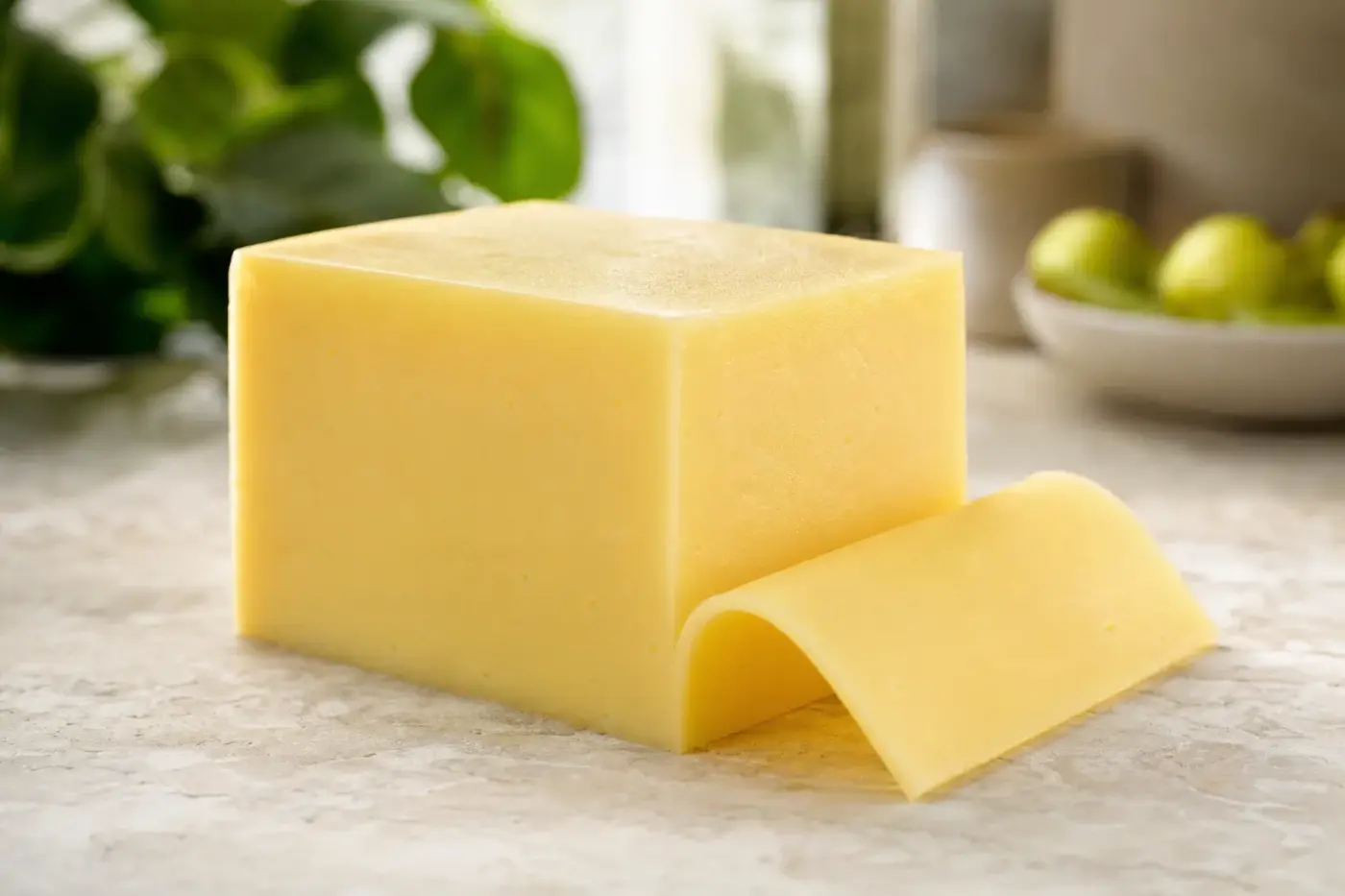
You get a more immediate sense of its appeal when you cut a slice. It holds together in bread, then softens under heat. That is a useful combination in a Brazilian kitchen, with very little ceremony required. [4][8]
Meet the “plate” with several shapes
Prato means “plate” in Portuguese. The origin of the cheese’s name and its early shape remain uncertain, though. That translation gives you a word, not the whole story.
The Brazilian standard allows several shapes: rectangular blocks, cylindrical Cobocó and spherical Esférico or Bola. Rectangular Prato may also carry the descriptions Lanche or Sandwich. These are formats within Prato, not names for three unrelated varieties. [1]
If you want slices that fit your bread, a rectangular block makes life easy. Let the job guide your choice of shape. A round cheese has no automatic claim to a more rounded personality.
Get to know the cheese beneath the rind
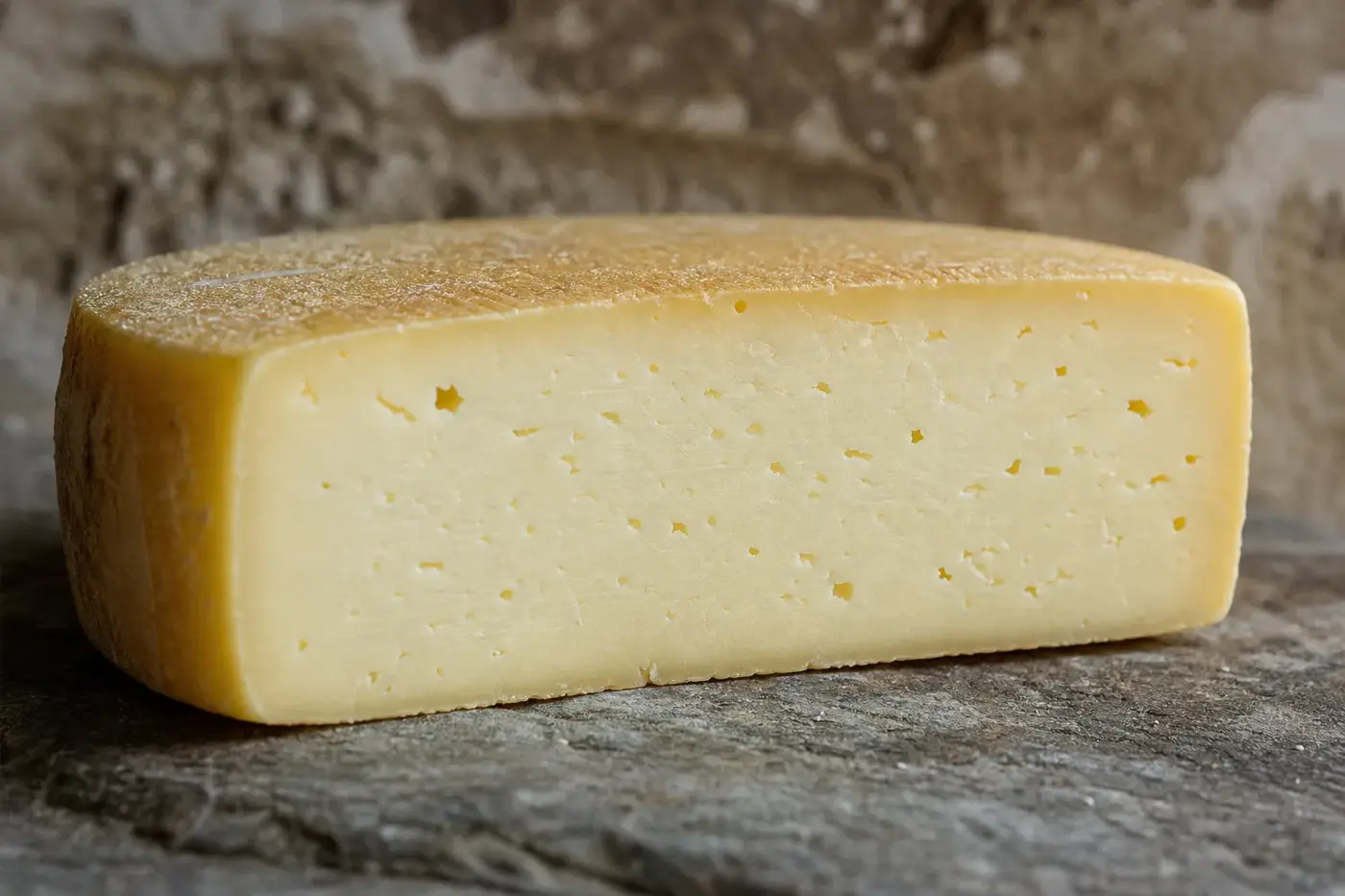
Cut into Prato and you should find the compact, smooth interior described in the Brazilian specification. Its colour runs from yellowish to straw-yellow, with an elastic, semi-hard consistency. Small, rounded eyes are allowed, but an interior without eyes belongs here too. [1]
The outside has its variations as well. Prato may be rindless, or have a thin, smooth rind without cracks. Neither appearance alone tells you how your slice will taste. [1]
Tirolez describes its Prato as mild and slightly sweet, with a soft texture suited to melting. Those producer tasting notes give you a useful first impression. For this example, expect gentle flavour rather than the pronounced character of an aged cheese. [8]
When you compare products, give each slice three separate questions. How readily does it bend, how assertive is its flavour, and how does it behave under heat? Manufacturing and maturation can change those characteristics independently, so suppleness tells you only part of the story. [4][6][7]
This page summarises published guidance from the official sources it cites. It is not medical advice. Guidance differs between countries and changes over time, so check the current source for where you live, and ask your doctor, midwife, pharmacist or dietitian about your own circumstances.
Follow the milk into the mould
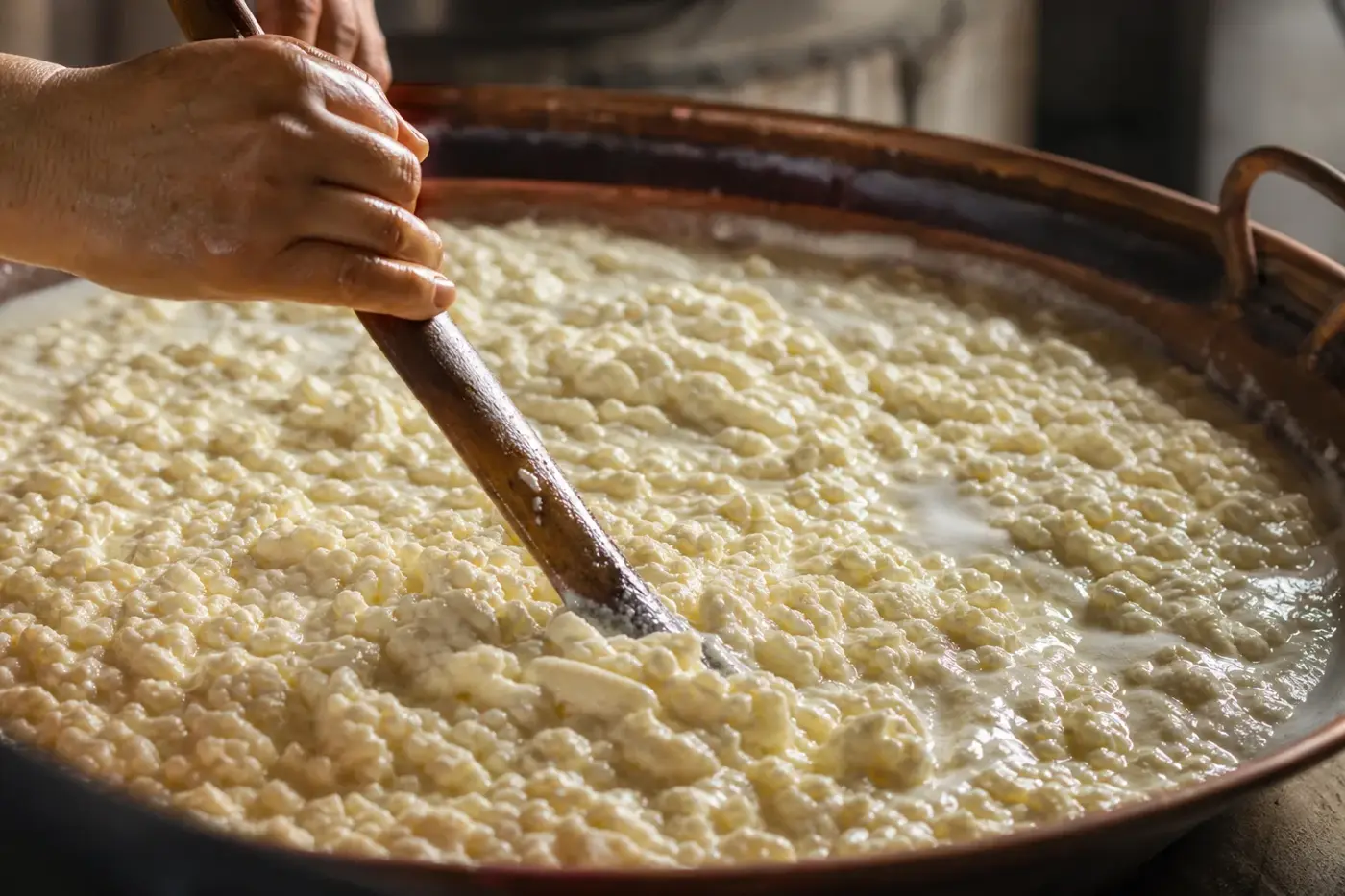
Curd washing and pressing help make Prato what it is. It belongs to the pressed, partially cooked cheese tradition. Its standard requires curd washing, pre-pressing under whey, moulding, pressing, salting and maturation. [1]
If you find those dairy terms slippery, start with this distinction. Curd is the coagulated milk solids; whey is the liquid separated from them. Both have a part in the steps that give Prato its character. [1]
The 2003 ultrafiltration study takes you through a particular production sequence. Cheesemakers coagulated milk with rennet, cut the curd, removed part of the whey and added hot water. Moulding, pressing and ripening followed. This was an experimental process, rather than a method intended for home cheesemaking. [4]
Starter cultures shape the result too. One Brazilian study compared a mesophilic culture containing Lactococcus lactis subspecies with the same culture supplemented by Streptococcus thermophilus. Mesophilic bacteria work at moderate cheesemaking temperatures, and the two treatments produced different ripening and sensory results. Culture choice can change the Prato you taste. [6]
Milk preparation has its own influence. Ultrafiltration concentrates milk through a membrane before cheesemaking. In the 2003 experiment, cheeses made this way differed in composition and melting behaviour from those made with the conventional treatment. [4]
You can follow the broader sequence in how cheese is made. For Prato, pay particular attention to the combination of curd treatment and ripening. There is rather more to its identity than yellow colour. [1]
What ripening brings to your slice
As Prato matures, enzymes break down its proteins through a process called proteolysis. In the ultrafiltration experiment, the treatment with the greatest protein breakdown also had the greatest melting capacity. Melting capacity increased during the study’s ripening period. That helps explain why two Prato products can behave differently in your toasted sandwich. [4]
Culture selection also steers flavour. In the 2006 study, cheese made with the mesophilic culture alone showed more pronounced acidity, bitterness and piquancy than cheese given additional Streptococcus thermophilus. Those differences belong to the treatments in that study, rather than setting a rule for every Prato you encounter. [6]
Another experiment compared control cheeses with cheeses given additional cultures of Lactobacillus plantarum or Lactobacillus helveticus. Researchers measured protein breakdown at several stages of maturation and assessed sensory characteristics. Both additional cultures increased proteolysis. The L. helveticus treatment received the highest mean scores for flavour and texture among the treatments. [5]
Moisture deserves your attention too. A 2019 manufacturing study associated longer curd cooking with lower initial and final moisture. Ask about age when you choose Prato, certainly, but give culture, milk preparation and curd treatment their place in the conversation. [7]
Find its family beside Minas Frescal, Danbo and Gouda
Prato and fresh Queijo Minas Frescal offer you distinctly different textures. The Brazilian standard describes Minas Frescal as a fresh cheese with very high moisture, a soft consistency, a whitish colour and a mild or slightly acidic flavour. Prato, by contrast, is matured and belongs to the medium-moisture category. [1][2][9]
In the kitchen, that difference matters more than their shared association with Minas Gerais. Choose Minas Frescal when you want the fresh cheese its standard describes. Reach for Prato when you want a cohesive slice and the melting qualities documented for it. [8][9]
Danbo and Gouda give you another way to get your bearings. Brazilian dairy research places Prato alongside them while explicitly recognising its separate flavour and texture. The resemblance introduces the family, but the cheese on your plate deserves attention on its own terms. [4]
For more ways to understand those relationships, turn to the guide to cheese styles. Moisture, texture and method give you more useful points of comparison than colour alone.
Make room for a toasted sandwich
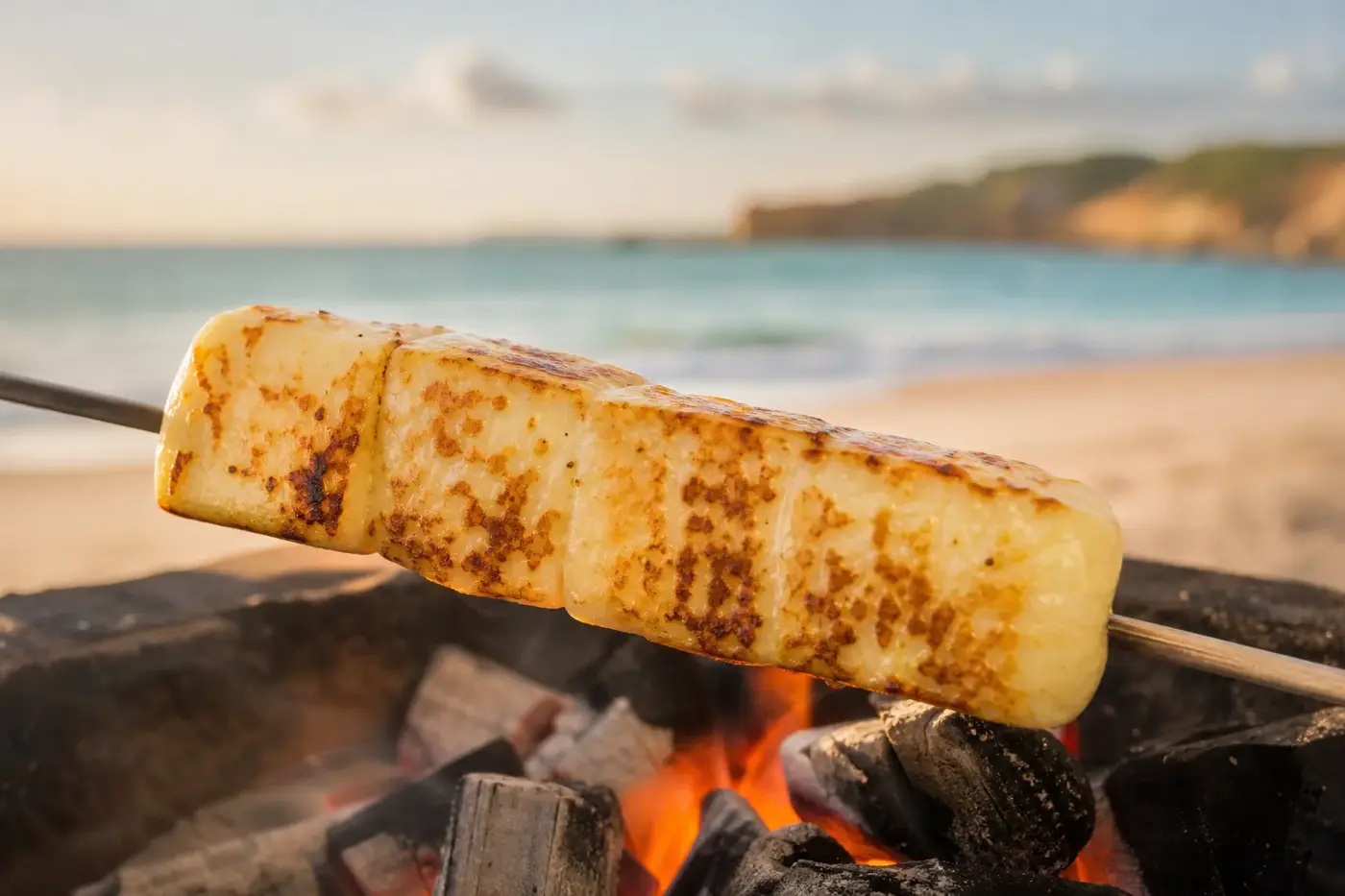
A toasted sandwich is a pleasingly direct way to meet Prato. Tirolez recommends its product for sandwiches and queijo quente, as well as potato gratin. Those published uses take you from the bread basket to the oven dish. [8]
Start with bread and Prato alone. You do not need a committee of other cheeses offering opinions. Notice the flavour and how the slice softens as it warms, then try it on toasted bread or as a melted topping for potatoes.
If you are comparing two products, keep the bread and cooking method the same. That way, changes in the dish will not obscure differences between the cheeses. These are serving suggestions, not a tested recipe, but research into Prato’s melting behaviour gives you good reason to pay attention. [4]
Give gentle flavours a little space
Simple accompaniments let you keep Prato in focus. These serving suggestions take their cue from the mild, slightly sweet profile published by Tirolez. Start quietly and see what you enjoy alongside it. [8]
Try plain bread with tomato for something savoury, or put apple or pear beside an uncooked slice. Water or unsweetened tea keeps your drink choice uncomplicated. If you fancy sharper accompaniments, add them gradually and taste the cheese again as you go.
Looking for a substitute? Young Gouda or Danbo are sensible starting points because of the relationship identified in Brazilian dairy literature. Choose a mild example and test a small amount in your intended dish. Family resemblance is useful, but it cannot promise identical flavour or melt. [4]
For toast or gratin, put melting behaviour first. For a cold sandwich, concentrate on flavour and the ability to cut good slices. You can explore the comparison further in the Gouda article.
Let the back of the pack help you choose
Start with the designation Queijo Prato, then turn to the ingredient list. Tirolez’s published example lists pasteurised milk, salt, calcium chloride, a dairy culture, coagulant and annatto colouring. That describes its own product, not a universal formula for every Prato on the shelf. [8]
For milk treatment, look for leite pasteurizado, meaning pasteurised milk. Keep milk treatment, maturation and keeping instructions as separate questions when you compare packs. Each gives you a different piece of information.
Read the after-opening instructions on the exact pack you plan to use. Even Tirolez’s product page gives different instructions for different formats. The label in your hand is more useful than a rule remembered from another pack. [8]
If you would like a fuller checklist, see how to read a cheese label. It gives you more to work with than the picture on the front.
Look after the next slice
Keep your fridge at 5 °C or below and follow the product’s storage instructions, as advised by the UK Food Standards Agency. Take out only the portion you intend to use, then return the remainder promptly. [10]
Follow both the pack’s after-opening instructions and its date marking. UK official guidance distinguishes a use-by date, which concerns safety, from a best-before date, which concerns quality. They answer different questions, so pay attention to both. [10][11]
For help with wrapping and organising opened cheese, see how to store cheese at home.
Questions people ask
What does Queijo Prato taste like?
Tirolez describes its Prato as mild and slightly sweet, with a soft texture. The Brazilian specification calls for an elastic, semi hard consistency.
Is Queijo Prato made with pasteurised milk?
Tirolez declares pasteurised milk in its Prato. Check the ingredient list for leite pasteurizado, meaning pasteurised milk.
How long is Queijo Prato matured?
The Brazilian standard requires at least 25 days of maturation. Typical commercial maturation has not been verified.
What can I use instead of Queijo Prato?
Young Gouda or Danbo are suggested starting points because Brazilian dairy research identifies a family resemblance. They are not guaranteed to match Prato’s flavour or melting behaviour.
How should I store Queijo Prato?
The UK Food Standards Agency advises keeping the fridge at 5 °C or below and following the product’s storage instructions. Check the agency’s guidance and the instructions on the exact pack, including those for after opening.
Sources
- Brazilian Ministry of Agriculture. Portaria nº 358, de 4 de setembro de 1997: Regulamento Técnico para Fixação de Identidade e Qualidade do Queijo Prato. Official ministry-hosted text.
- Brazilian Ministry of Agriculture. Portaria nº 146, de 7 de março de 1996. General cheese identity and quality provisions, official ministry-hosted text.
- Municipality of Aiuruoca. Calendário de Eventos Aiuruoca 2026. Historical account accompanying the municipality’s cheese festival entry.
- Ciência e Tecnologia de Alimentos. “Avaliação da proteólise e do derretimento do queijo prato obtido por ultrafiltração”, volume 23, supplement, 2003. Original experimental research.
- Semina: Ciências Agrárias. “Avaliação da proteólise e das características sensoriais de queijo prato com cultura adjunta”, volume 33, supplement 2, 2012. Original experimental research.
- Revista do Instituto Adolfo Lutz. “Efeito da adição de Streptococcus thermophilus como cultura adjunta na maturação e caracterização físico-química e sensorial de queijo Prato”, volume 65(3), 2006. Original experimental research.
- Revista Eletrônica Científica da UERGS. “Avaliação do tempo de cozimento da massa de queijo prato lanche sobre a umidade do produto maturado”, volume 5(3), 2019. Original manufacturing study.
- Tirolez. Queijo Prato. Undated product page, accessed November 2026. A producer’s commercial source for its own descriptions, ingredients and instructions.
- Brazilian Ministry of Agriculture. Portaria nº 352, de 4 de setembro de 1997: Regulamento Técnico de Identidade e Qualidade de Queijo Minas Frescal. Ministry-hosted text incorporating the classification amendment made by Instrução Normativa nº 4/2004.
- Food Standards Agency. How to chill, freeze and defrost food safely. Current online guidance retrieved through the agency’s chilling guidance page, November 2026.
- GOV.UK. Understanding food labelling: Best before and use-by dates. Current online guidance, accessed November 2026.
This desk-researched article brings together Brazilian standards, municipal history, experimental dairy research, a producer’s documentation and UK official storage guidance.
Last checked: November 2026
Last checked November 2026.
The editors suggest you read next