Queijo Coalho
At Recife’s Boa Viagem beach, queijo coalho browns over embers, its centre still firm and yielding.
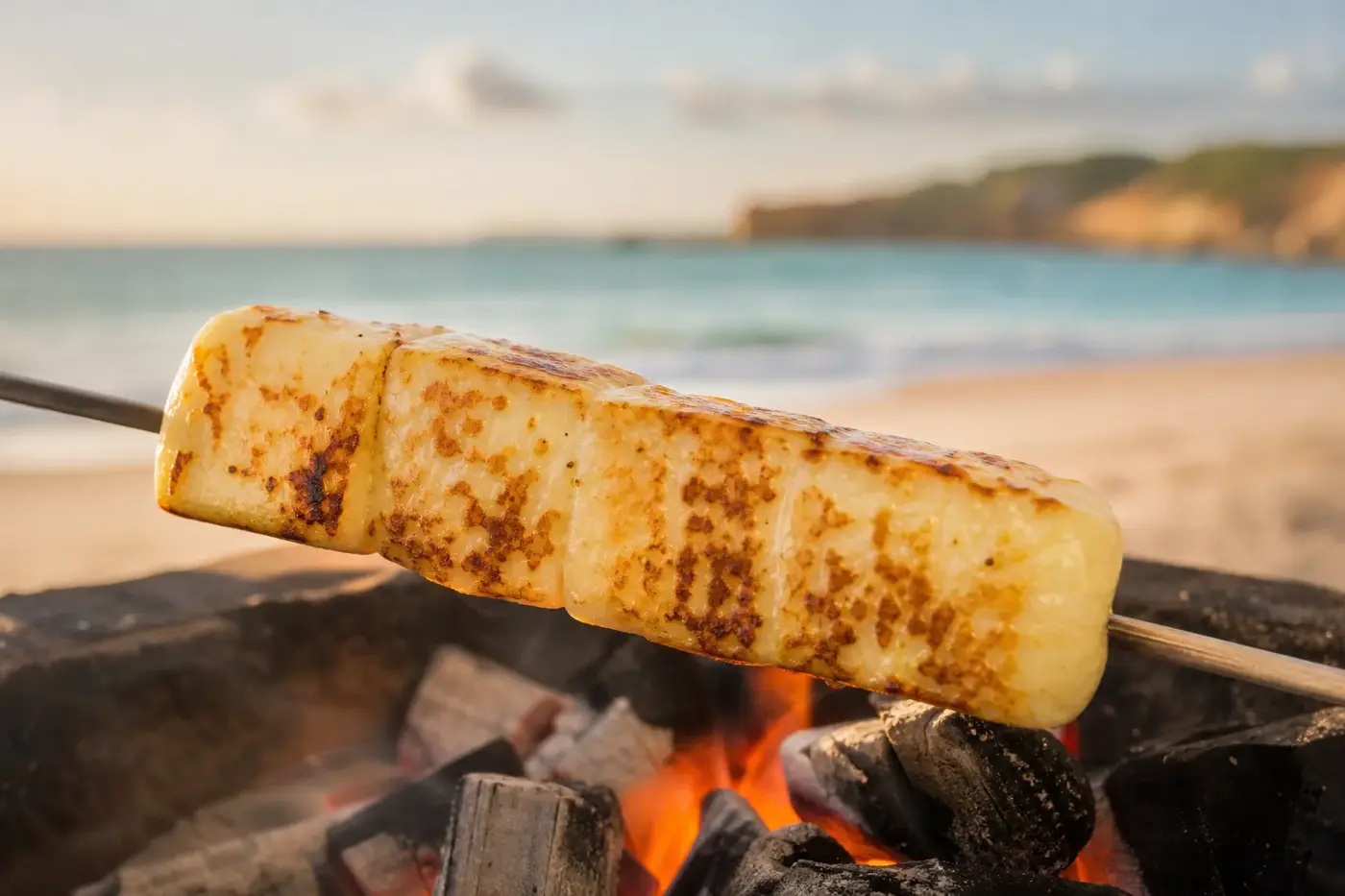
At Recife’s Boa Viagem beach, queijo coalho browns over embers, its centre still firm and yielding. You eat it from a skewer: a modest piece of beachside engineering. This rennet-set cheese connects northeastern Brazil’s dairy farms with its street-food culture, holding its shape thanks to a balance of acidity, moisture and calcium that varies from cheese to cheese.[3,4,5,6]
Meet queijo coalho at a glance
| Field | Details |
|---|---|
| Name | Queijo Coalho; Brazilian standard: Queijo de Coalho.[1] |
| Type and home | Rennet-set cheese associated with northeastern Brazil.[3] |
| Milk | Usually cow’s milk; the federal definition specifies pasteurised milk.[2,5] |
| Texture and rind | Semi-hard, elastic and compact, with little defined rind.[1] |
| Brazilian composition | Medium to high moisture; 35% to 60% fat in dry matter.[1] |
| Ageing | Normally sold within 10 days of manufacture; no legal minimum maturation specified.[1] |
| Allergen | Milk; read the product’s ingredients.[1] |
| Pregnancy guidance | UK NHS guidance, November 2026.[9] |
From northeastern dairy farms to your beach skewer
Queijo coalho belongs to the cattle-rearing communities of Brazil’s Northeast. Embrapa, Brazil’s agricultural research corporation, names Ceará, Rio Grande do Norte, Paraíba and Pernambuco as important producing states. Cheesemaking is a significant activity for rural milk producers there, including those without access to milk-processing plants.[3]
The beach skewer tells only part of the story. A Banco do Nordeste publication records queijo coalho in everyday meals, tucked into tapioca fillings and added to baião de dois, the rice-and-bean dish. Its photographs also show queijo na brasa, cheese cooked over embers, at Recife’s Boa Viagem beach.[4]
That journey from farm to vendor gives queijo coalho two lives: a dairy product and something cooked for immediate enjoyment. You can bring the skewer ritual home without much ceremony. Cook a few pieces, pass them around, then cook more, rather than leaving a large platter waiting on the table.
How milk becomes a sturdy little cheese
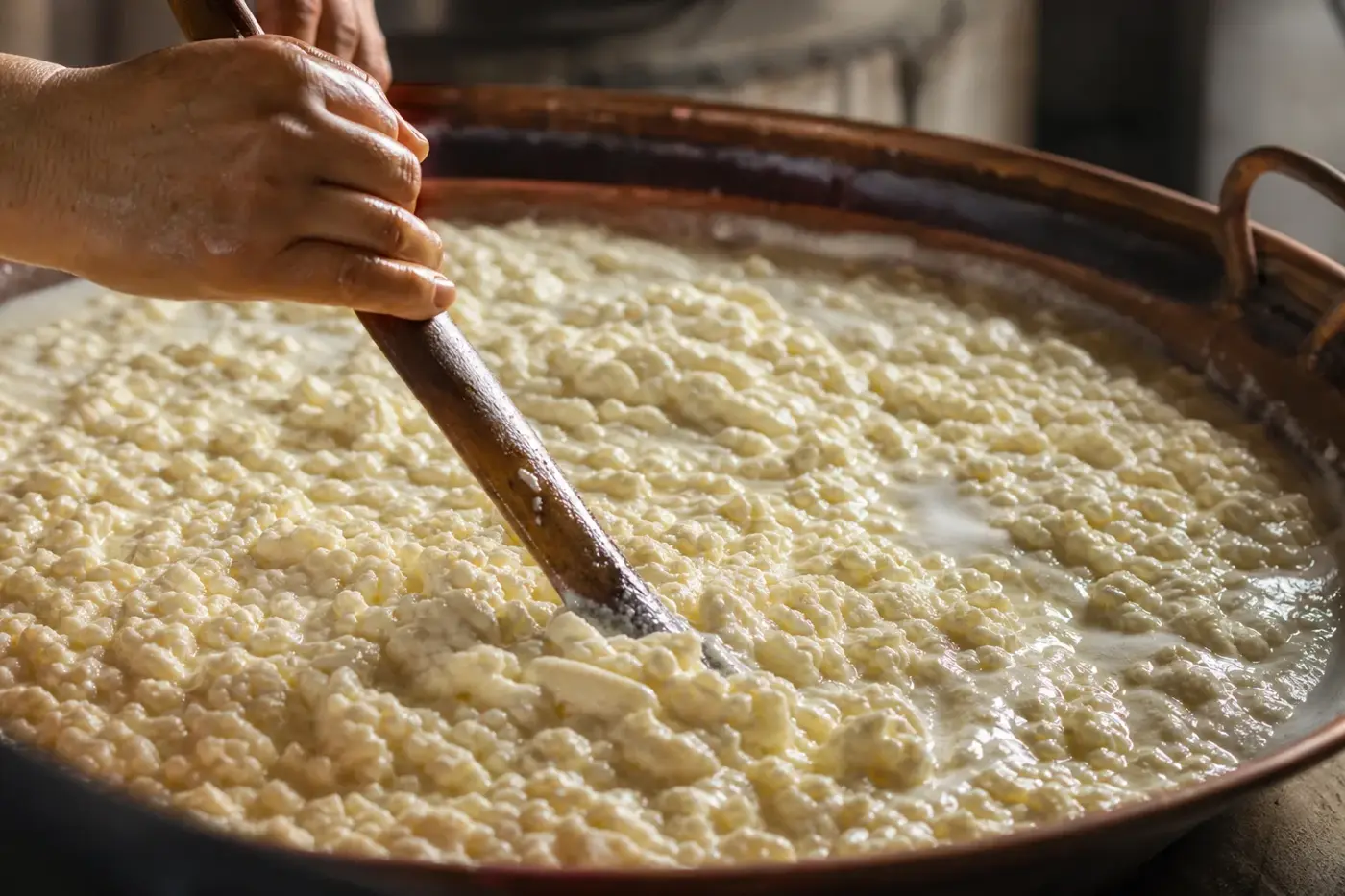
Rennet turns milk into curd, a protein-rich gel with liquid whey between and around its particles. Cutting and stirring release some whey; heating helps build the firm body you need for slicing and skewering. You can follow the underlying process in how cheese is made.[3]
Brazil’s Decreto nº 9.013/2017, Article 376, defines queijo de coalho as a cheese made with pasteurised milk and rennet or another suitable coagulating enzyme. Its drained, semi-cooked or cooked curd is pressed and dried. Selected lactic bacteria may also be used.[2]
In Embrapa’s manufacturing account, salt dissolved in whey is mixed into the curd before it goes into cylindrical or rectangular moulds. Pressing and turning bring the grains together and drain away more whey. An optional short ripening stage develops aroma and flavour before packaging.[3]
The detailed federal standard, Instrução Normativa nº 30/2001, sets two curd-heating categories. Semi-cooked curd reaches up to 45 °C (113 °F); cooked curd reaches 45 to 55 °C (113 to 131 °F). These are manufacturing temperatures, not storage instructions: at home, follow the colder guidance below.[1]
Meet its mild tang and elastic bite
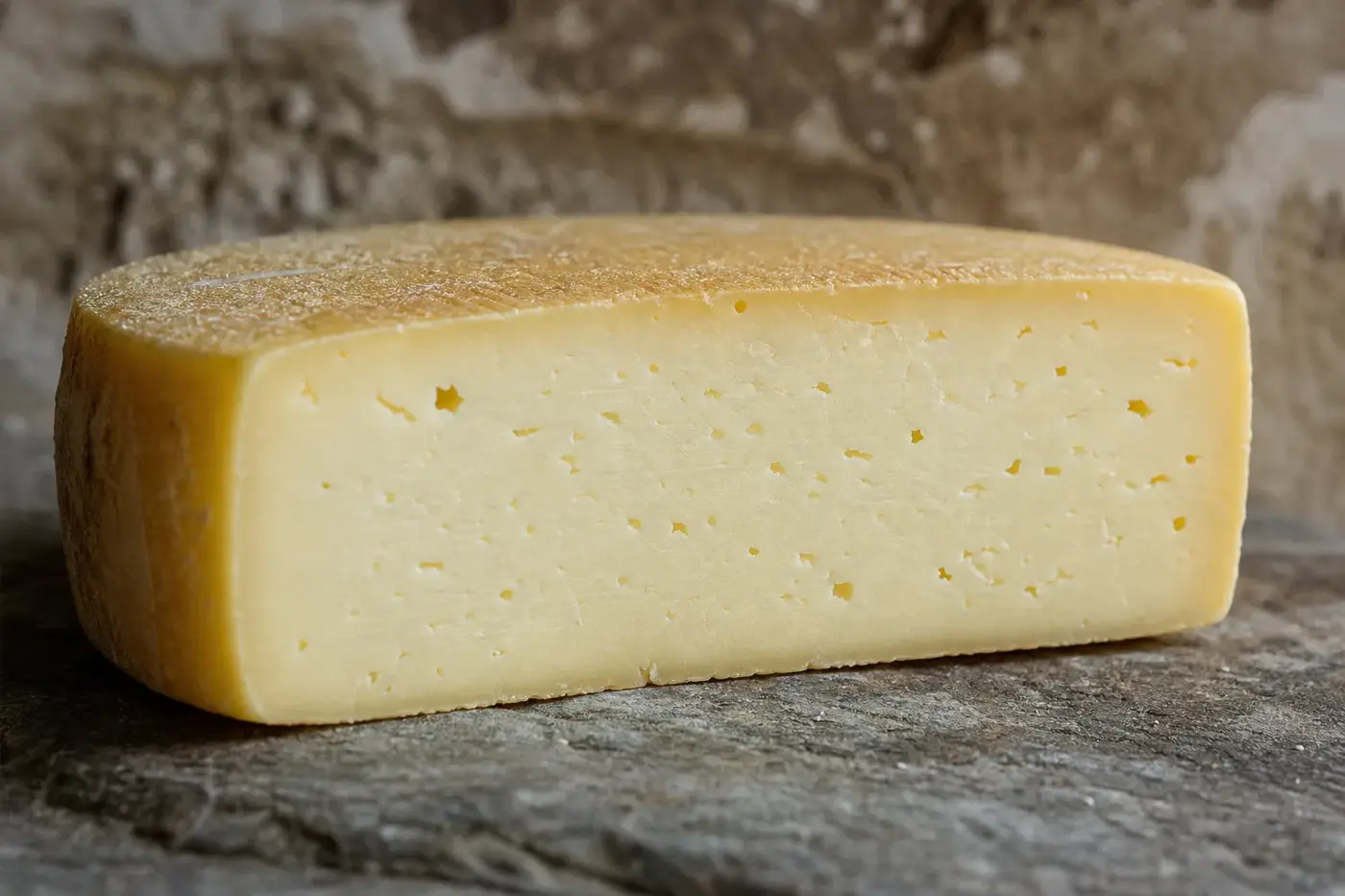
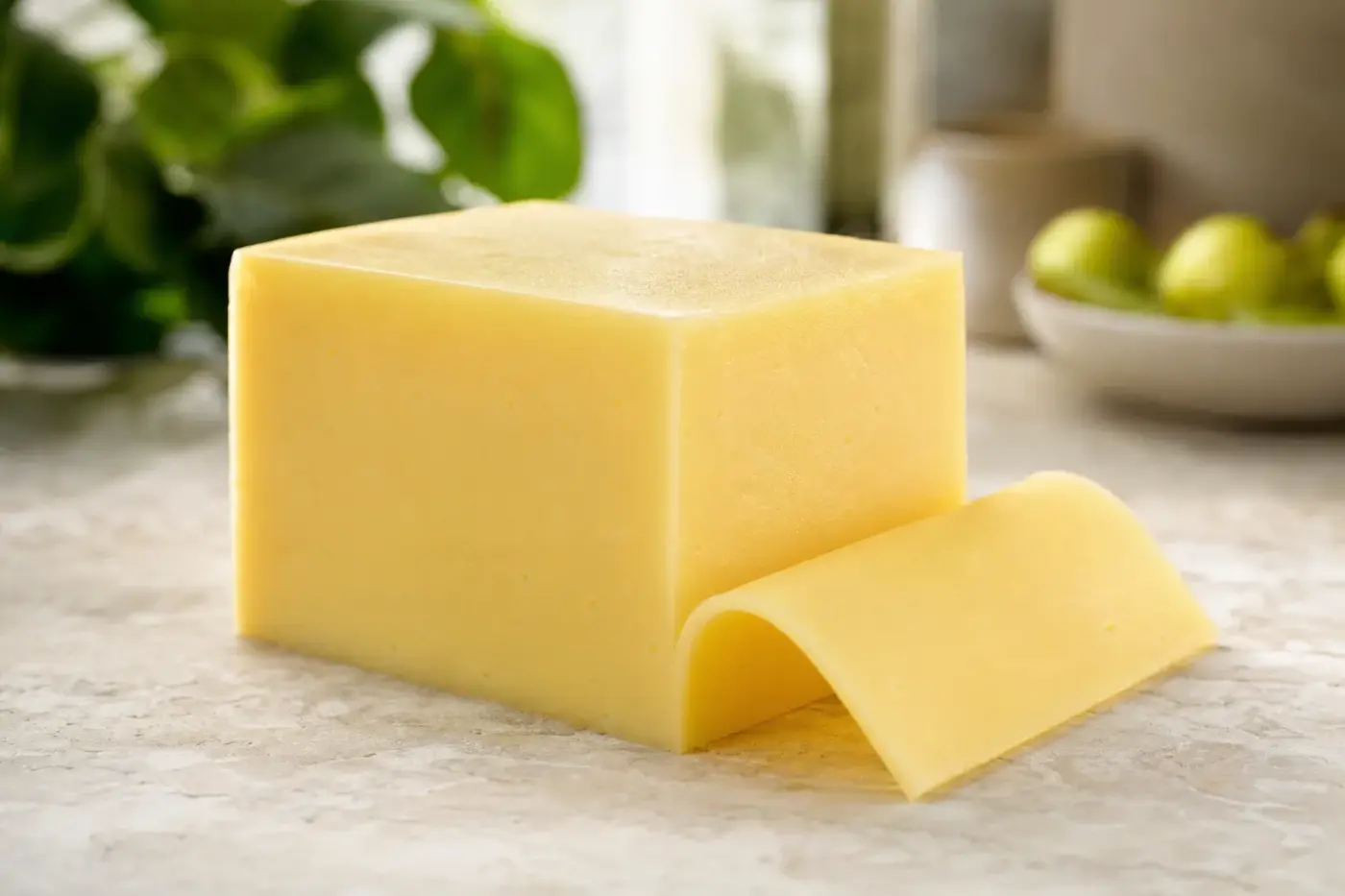
Picture a yellowish-white cheese, uniform in colour and elastic when pressed. The Brazilian standard describes a semi-hard consistency with a compact but soft texture. Its flavour is mild and slightly acidic, sometimes salty.[1]
You may see small eyes, the openings within the cheese, but a substantial, clearly defined rind is unusual.[1] Rectangular blocks are familiar, alongside the batons prepared for skewers. It is a cheese that often arrives looking ready for its next job.
Regional research records differences in manufacturing and fermentation, which help explain why one cheese tastes tangier or feels more yielding than another. If you plan to grill it, ask specifically for a version intended to hold its shape when heated.[4,5]
The secret of that golden, intact crust
Browning and melting are different things, as your first skewer should demonstrate. Queijo coalho can develop a toasted surface while keeping a resilient centre because its protein structure stays sufficiently connected during heating. Calcium and acidity play important parts in that structure.[5,6]
A pilot-scale study tested four culture formulations selected from 16 bacterial strains. The researchers discussed a pH around 6.0 as helpful for maintaining firmness, linking higher pH with calcium retention. As acidity increases, calcium associated with the protein network can dissolve, changing how the cheese behaves under heat.[6]
Acidity does not tell the whole story. In a 2007 experiment using pasteurised milk and cultures isolated from regional milk and cheeses, some cheeses below pH 5.7 resisted melting in frying tests. Moisture, culture and processing work together, so a small trial piece tells you more than expecting every pack to behave identically.[5]
Get it golden on the grill or in the pan
Start with a refrigerated product labelled ready to eat, and follow any cooking directions on its packaging. For this serving method, use colour and texture rather than a fixed cooking time: you are looking for a browned surface and a warm, resilient centre.[4,8]
- Cut pieces with a little substance. Use the supplied skewers, or cut a block into substantial batons or slices. Blot surface moisture with clean kitchen paper. Keep the rest of the pack refrigerated while you cook.
- Give one piece a trial run. Heat a non-stick frying pan over a medium heat, or use a clean barbecue grate above steady embers. Start with one piece to see how well your cheese holds its shape.
- Turn once it is golden. Let the first surface colour, then turn carefully with tongs or a spatula. Brown the other broad surfaces. Reduce the heat if the outside darkens before the middle warms.
- Bring it straight to the table. Look for golden patches, an intact shape and a centre that yields when cut. Add sweet accompaniments after cooking, spooning them over so you can adjust the balance at the table.[4,8]
If your trial piece spreads, swap the open grate for a pan that will contain it. A melting version can also go into a filling or rice dish, both uses documented in regional literature. There is no need to persuade a reluctant cheese to pursue a career on a skewer.[4]
Give the hot cheese good company
Sugar-cane syrup, known as mel de engenho, appears among the accompaniments in Banco do Nordeste’s regional account. So do oregano, chilli preserve and jabuticaba jelly. The publication also places queijo coalho with tapioca, couscous, cassava and sweet potato, bringing saltiness to sweet accompaniments or substance to a starchy dish.[4]
At a British table, you might try chilli jam, roasted sweet potato or plain bread alongside the hot cheese. A little honey is a straightforward alternative if you cannot find cane syrup. Start with a small spoonful of something sweet, taste, then add more if you want it.
Let the cheese’s own seasoning guide how much else goes on your plate. Sparkling water with lime or unsweetened iced tea would make simple drinks alongside. Either leaves the cheese and its accompaniment in the foreground.
Coalho, halloumi or Queijo Minas?
Halloumi gives you a useful reference for serving queijo coalho: slices or skewers, a browned surface and accompaniments added afterwards. Let your trial piece guide the heat and handling, though. Each cheese deserves to be enjoyed for its own character rather than expected to produce an identical result.
With Queijo Minas, the precise name matters. Brazil’s federal rules distinguish Minas frescal, a fresh, unpressed, unripened cheese, from Minas padrão, which is mechanically pressed and ripened.[2] That distinction matters when you are choosing what to cook.
Coalho’s definition instead calls for semi-cooked or cooked curd, pressing and drying. So “Minas” alone is too broad a shorthand when you want a cheese for a skewer. Look for the full name before deciding what belongs over the heat.[2]
This page summarises published guidance from the official sources it cites. It is not medical advice. Guidance differs between countries and changes over time, so check the current source for where you live, and ask your doctor, midwife, pharmacist or dietitian about your own circumstances.
Buy thoughtfully and keep it safely chilled
When buying in Brazil, look for the producer, inspection identification, ingredients, batch and expiry date. Pernambuco’s agricultural inspection agency, ADAGRO, specifically advises examining these details and making sure the product is kept at the temperature required by its packaging. Outside Brazil, give the product and its local label the same attention.[7]
Milk treatment needs its own check. Research documents raw-milk traditions, while the federal coalho standard requires pasteurisation or an equivalent heat treatment, and Article 376 specifies pasteurised milk. Read the pack or ask the supplier, because the name queijo coalho does not establish which treatment was used; see raw and pasteurised cheese for the distinctions.[1,2,5]
For home storage, the UK Food Standards Agency’s guidance for England, Wales and Northern Ireland, November 2026, recommends a fridge between 0 and 5 °C (32 to 41 °F). Keep your cheese refrigerated and follow its use-by date and any after-opening instructions. Leave chilled food out for the shortest possible time; the FSA says to throw it away if it has been left out for more than four hours.[8]
Refrigerate cooked leftovers within one to two hours and eat them within 48 hours, following the same FSA guidance. For containers and everyday handling, see storing cheese at home.[8]
During pregnancy, the UK NHS lists pasteurised semi-hard cheeses among foods that can be eaten, with separate instructions for unpasteurised and other cheese categories. Check its current pregnancy guidance against your actual product, especially if milk treatment is unclear. Ask your midwife or doctor about your individual circumstances.[9]
The NHS explains that unpasteurised or soft-ripened dairy foods may contain listeria bacteria, which can cause serious harm during pregnancy.[9]
Questions people ask
Why does queijo coalho hold its shape when cooked?
Its protein structure can stay connected during heating, allowing the surface to brown while the centre remains resilient. Acidity, calcium, moisture, culture and processing all affect how an individual cheese behaves.
How do you cook queijo coalho?
Use a refrigerated product labelled ready to eat and follow the packaging directions. Try one sturdy piece in a nonstick pan over a medium heat or on a clean grate above steady embers, turning it when golden. If it spreads, use a pan to contain it.
What does queijo coalho taste like and what can you serve with it?
It has a mild, slightly acidic flavour and can be salty. Regional accompaniments include sugar cane syrup, oregano, chilli preserve and jabuticaba jelly. It is also eaten with tapioca, couscous, cassava and sweet potato.
Is queijo coalho made with pasteurised milk?
Brazil’s federal definition specifies pasteurised milk, but research also documents traditions using raw milk. Read the pack or ask the supplier, as the name alone does not establish which treatment was used.
Can you eat queijo coalho during pregnancy?
The UK NHS lists pasteurised semi-hard cheeses among foods that can be eaten, with separate instructions for unpasteurised and other cheese categories. Check the actual product against the current NHS pregnancy guidance on foods to avoid, especially if its milk treatment is unclear. Ask your midwife or doctor about your own circumstances.
Sources
-
Ministério da Agricultura e do Abastecimento. Instrução Normativa nº 30, de 26 de junho de 2001, Annex II, Regulamento Técnico de Identidade e Qualidade de Queijo de Coalho, 2001. Official ministry-hosted text.
-
Brazil. Decreto nº 9.013, de 29 de março de 2017, consolidated text on the official ANTT legislation service, especially Articles 373, 376, 378 and 379.
-
Embrapa Informação Tecnológica and Embrapa Agroindústria Tropical. Queijo de coalho, first edition, 2006. Introduction, product definition and manufacturing stages.
-
Banco do Nordeste. Queijo coalho artesanal do Nordeste do Brasil, 2017. Regional production, cultural and gastronomic accounts, including the Pernambuco and Rio Grande do Norte chapters.
-
Food Science and Technology. Processamento do queijo coalho regional empregando leite pasteurizado e cultura lática endógena, volume 27, issue 1, 2007. Original experimental research.
-
International Journal of Dairy Technology. Wild Lactobacillus strains: Technological characterisation and design of Coalho cheese lactic culture, 2017, DOI 10.1111/1471-0307.12360. Original research, manuscript held in the CONICET repository.
-
ADAGRO, Agência de Defesa e Fiscalização Agropecuária do Estado de Pernambuco. Combate à clandestinidade, programme page referencing Resolução ADAGRO nº 012/2025, checked November 2026.
-
Food Standards Agency. How to chill, freeze and defrost food safely, published 18 December 2017, live guidance checked November 2026. Stated scope: England, Northern Ireland and Wales.
-
NHS. Foods to avoid in pregnancy, live guidance checked November 2026, section “Cheese, milk and other dairy”.
This piece was researched through Brazilian official legislation, agricultural publications and experimental cheese research, with handling guidance checked against the named British official sources.
Last checked: November 2026
Last checked November 2026.
The editors suggest you read next