Slow Food Cheese Presidia Explained
In Farindola, on the eastern side of Italy’s Gran Sasso massif, sheep’s milk sets with an ingredient you might not expect: pig rennet.
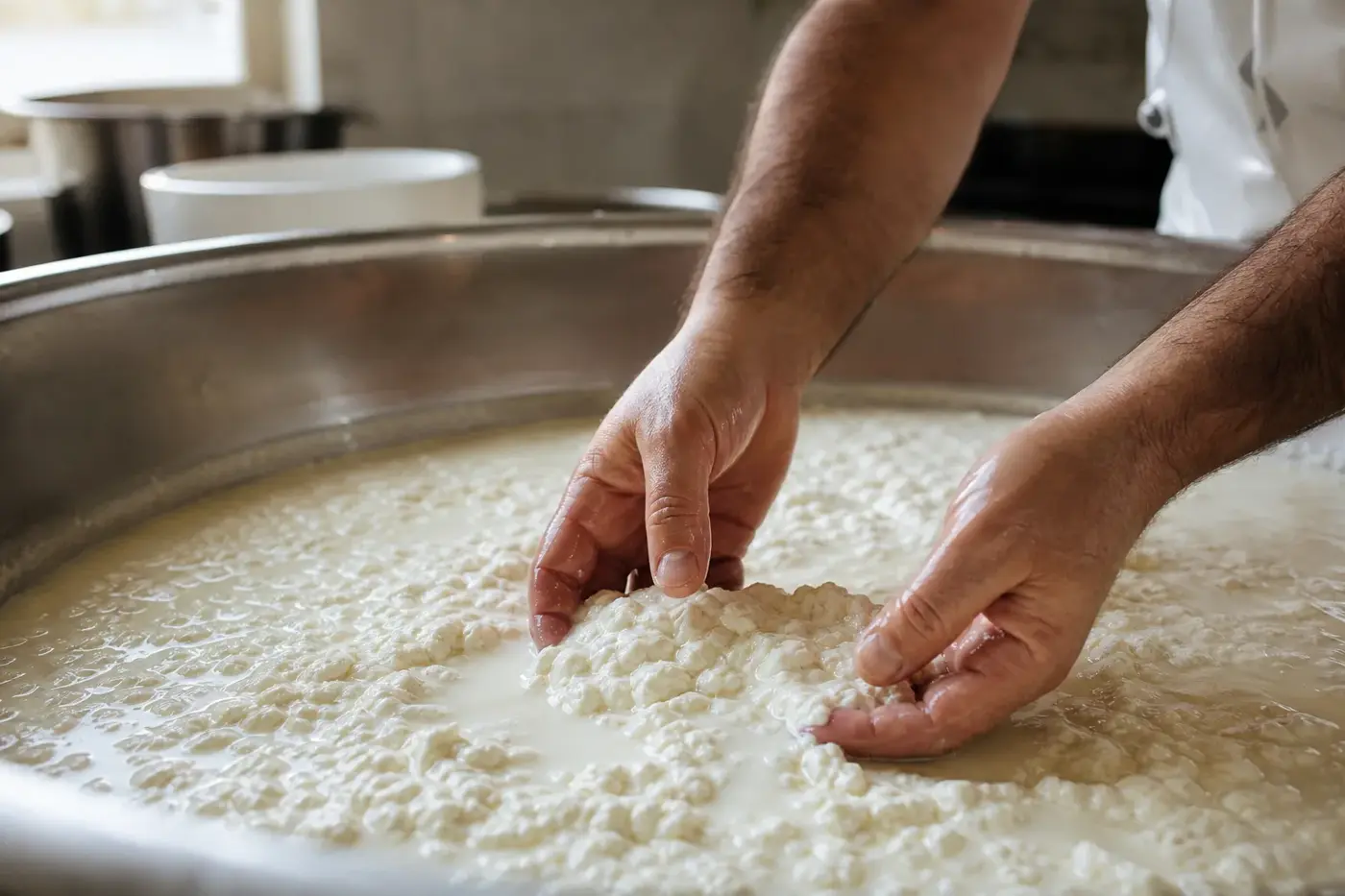
In Farindola, on the eastern side of Italy’s Gran Sasso massif, sheep’s milk sets with an ingredient you might not expect: pig rennet. Women have passed that skill between generations, keeping a cheese alive as families left the area. What survives is more than a recipe. It is knowledge you cannot simply replace. [1][2]
Slow Food Cheese Presidia support communities like these. They bring producers together around shared production rules, practical assistance and recognition for the knowledge behind their cheese. The point is to keep people making it, not just remembering it. A cheese deserves a working dairy, not merely a fond obituary. [1][2]
Meet the people keeping cheese traditions alive
A Presidium brings producers together to keep a food or production tradition viable. It is one project within Slow Food, an international movement whose stated aims connect food culture, biological diversity, education and fairer conditions for food producers. The Presidia programme puts those aims to work for particular foods, breeds, techniques and their communities. [2][3][4]
You will see Presidia, the Latin plural Slow Food uses for several projects. Italian sources use Presidio and Presìdi. A cheese project might focus on a local product, mountain cheesemaking or a broader raw milk tradition. At its heart are participating producers and the work that keeps their production going. [4][5][14]
Saving a cheese takes more than keeping its name or filing away a recipe. Slow Food connects the finished food with animal husbandry, processing knowledge, local organisation and opportunities to reach people who understand its making. The cheese and the working life behind it belong together. [4]
How a familiar cheese can quietly disappear
A cheese becomes vulnerable when its makers leave farming, retire or have nobody to teach. Slow Food identifies rural abandonment, migration, changing consumption patterns, industrialisation and climate change among the pressures threatening traditional foods and agricultural biodiversity. You can lose the knowledge along with the food. [7]
Sometimes, the obstacle is sheer hard work. Slow Food’s producer manual describes isolated production sites, lengthy processing or maturation, small quantities and considerable manual skill. A familiar cheese name can survive even as the demanding practice behind one version becomes harder to maintain. [4]
The examples below take you into three different predicaments. Around Farindola, depopulation threatens continuity; in Béarn, mountain dairies risk abandonment; for Brousse du Rove, products made with different milk cause confusion. Each tradition needs an answer shaped to its own difficulties. [1][9][10]
Around the table: how a Presidium takes shape
The work starts with producers, their dairies and the problems they face. Slow Food’s published method calls for meetings and production visits, drawing on local knowledge to find people still practising a tradition. Other farmers, cheesemongers, specialists and community organisations can help producers find one another and discuss what to safeguard together. [4]
At the centre sits the production protocol. This document sets shared rules covering the production area, history, animal husbandry and processing, within Slow Food’s category guidelines. Producers develop the details with the organisation and relevant specialists. The manual requires approval by both producers and the Foundation, followed by participating producers’ signatures. [4][5]
Signing is the start, not the whole job. Under Slow Food’s published Italian regulations, participating producers seeking the Presidium logo sign the protocol and join an association. A producers’ representative helps uphold the rules, while a Slow Food coordinator connects the group with the organisation. New participants follow the published admission process. [6]
Support can mean technical training, exchanges between producers, introductions to chefs and retailers, or opportunities to explain the product at events. Alongside rules, you get people to learn from. Producers also gain ways to help others understand the work behind their cheese. [11]
Presidium, PDO or Ark of Taste? Know what each offers
These names do different jobs. A Presidium supports people and production; a PDO gives a registered geographical name statutory protection; the Ark of Taste catalogues foods and associated diversity at risk. The distinctions concern Slow Food’s programmes and, for PDOs, the European Union framework. [4][7][8][11]
| Recognition | What it helps do | What stands behind it |
|---|---|---|
| Slow Food Presidium | Support a producer community, food or threatened practice | A shared production protocol and participation in a Slow Food project. [4][6] |
| Slow Food Ark of Taste | Catalogue foods and associated diversity at risk of disappearing | A descriptive entry explaining the food and why it is vulnerable. [7] |
| EU protected designation of origin, or PDO | Give statutory protection to a registered geographical name | EU legislation, a product specification and official controls. [8] |
| Presidia assurance arrangements | Set out participating producers’ commitments | Signed protocols, project rules and, in some projects, participatory guarantees. [6][11] |
Think of the Ark as identifying something worth safeguarding. A Presidium builds direct relationships and practical work with producers. An Ark entry can be a starting point for action, but a Presidium needs a participating community. [4][7]
A Presidium is not necessarily an independent certification scheme. Slow Food describes producers’ signed commitments and its development of participatory guarantee systems involving people within the production community. Whether you are looking at a Presidium or certification scheme, ask which rules apply, who checks them and what participation covers. [6][11]
Nor must a cheese choose between a Presidium and a protected designation. Slow Food explains that a project may safeguard particular production practices within a wider protected category. For the legal schemes, turn to protected names explained. [4]
Pecorino di Farindola: a skill handed through families
Pig rennet is the defining detail of Pecorino di Farindola. This preparation coagulates, or sets, the sheep’s milk. Slow Food’s directory lists the cheese as a Presidium in Abruzzo, centred on Farindola and neighbouring municipalities in the provinces of Pescara and Teramo. [1]
The directory describes women handing production knowledge from one generation to the next. Post-war emigration and depopulation drove the cheese’s decline: by the late 1990s, production was approaching disappearance, with continuity resting on a few families. Promoting the cheese and its territory, and consolidating production, are among the project’s stated objectives. [1]
What might you taste? Slow Food describes a granular, straw-coloured interior that retains some moisture, with sheep’s milk flavour and increasing pungency. Keeping this cheese in production also keeps its particular coagulant, handling knowledge and family teaching tradition in active use. [1]
If that unusual rennet has caught your curiosity, explore the wider differences between coagulants in rennet explained.
Two French cheeses, two traditions worth keeping
Béarn: keeping cheesemakers in the high pastures
In the French Pyrenees, where the cheese is made matters deeply. The Béarn High Pasture Cheeses project covers mountain production associated with the Ossau, Aspe and Barétous valleys. Slow Food describes shepherds taking sheep to summer pastures and making pressed raw milk cheeses there. These include cheeses combining cow’s and sheep’s milk. [9]
Its account links sheep’s milk production with the locally adapted Basque-Béarnaise breed. The project supports the association of transhumant shepherds, herders who move animals seasonally between grazing areas. The stated concern is that producers might leave mountain dairies for valley production, taking associated knowledge and land use with them. [9]
So the cheese is only part of what you are supporting. The project also supports the continued practice of working in the high pastures, where that food is made. Place and practice are closely bound together here. [9]
Brousse du Rove: get to know the goats
Soft, crumbly and unsalted, Brousse du Rove offers a different story. Slow Food describes this fresh Provençal cheese as made by heating milk and coagulating it with vinegar. Its Presidium entry connects it with Rove goats and the dry, scrub-covered country where they graze. [10]
Here, confusion with products made using other milk is part of the challenge. Slow Food presents informed consumers and opportunities for new shepherds as part of its response. Understanding the breed and pastoral practice helps you understand the cheese’s identity, rather than simply recognising its name. [10]
Follow the cheese back to milk, grazing and skill
To discover what a particular Presidium preserves, look at its production protocol. It might focus on herd management, a coagulant, a production location or several connected practices. Summer mountain grazing and a particular animal breed matter to some projects, rather than defining them all. [5]
There are shared principles beneath those local differences. Slow Food’s dairy guidelines require local production, encourage native breeds where possible and allow other breeds suited to the defined environment. They also address outdoor grazing and continuing seasonal mountain production where it belongs to the tradition. [5]
Raw milk has an explicit place in Slow Food’s general cheese guidance, but each product has its own process. Remember Brousse du Rove: its published account includes substantial heating during cheesemaking. When you ask how a cheese is made, separate the starting milk, subsequent processing and characteristics of the finished cheese. [5][10]
For a clearer guide to those milk treatments, read raw milk, thermised and pasteurised cheese.
What support makes possible, and what remains hard
Working together gives producers ways to tackle problems beyond an individual farm. Slow Food’s project guidance describes documented production knowledge, training and connections. Producers can compare methods, explain their work together and meet specialists or buyers who understand their cheese’s particular demands. [11]
Those demands do not vanish with recognition. Slow Food’s manual acknowledges difficult locations, demanding labour, small production volumes and long maturation. In Béarn, the question is especially direct: mountain cheesemaking continues only if people choose to keep doing that work. [4][9]
Recognition alone cannot secure a livelihood, and the extent of any improvement through participation remains uncertain. To understand a project, look for its participating producers, the practice they have agreed to preserve and its stated purpose. Those details tell you more about the intended support than a logo alone. [4][6][9]
Head to Bra, where cheese starts a conversation
Cheese, the event organised by Slow Food and the City of Bra in Piedmont, Italy, gives Presidia a prominent place within a broader programme. The official programme for 19 to 22 September 2025 included a wider market, affineurs, a Presidia area and discussions about pastoralism, breeds and mountain production. You can follow the conversation well beyond the cheese itself. [12]
Appearing at the event and participating in a Presidium are separate matters. For those details, consult the event’s exhibitor information and Slow Food’s directory. If you are planning a future visit, use the official event website for the relevant edition’s arrangements. [12]
Find your cheese, ask questions, then give it a moment
Start with Slow Food’s current Presidia directory. Follow the country and product entries to producer information, then confirm the particular producer and product with your cheesemonger. All three examples discussed here appear in the directory listings for November 2026, giving you starting points for enquiries. [1][2][9][10]
Ask who made the cheese, where the milk came from and which production practice the Presidium supports. Does this particular product come from a participating producer? Ask about milk treatment, coagulant and maturation separately, rather than bundling them into one question.
Keep the producer’s details, or photograph the label with permission. For help with the distinctions you are looking for, turn to how to read a cheese label. Your next visit need not depend entirely on remembering “that lovely one”.
Taste a small piece on its own before adding accompaniments. Ask which characteristics the producer considers typical. Give the cheese your attention before inviting anything else onto the plate.
Planning a visit? Confirm booking, accessibility, public access and photography arrangements directly. Respect working spaces and follow the producer’s hygiene instructions.
For UK advice on cheese and pregnancy, including raw milk cheese, consult the NHS guidance on foods to avoid in pregnancy. Its review date is 15 June 2026, with November 2026 as this page’s reference date. [13]
General information only, not medical advice: follow the official guidance where you live.
Questions people ask
What is a Slow Food Cheese Presidium?
A Presidium brings producers together to keep a food or production tradition viable. A cheese project can focus on a local product, mountain cheesemaking or a broader raw milk tradition.
What is the difference between a Presidium and a PDO?
A Presidium supports a producer community, food or threatened practice through shared rules and participation in a Slow Food project. A PDO gives statutory protection to a registered geographical name. A cheese can have both.
What rules do Presidium producers follow?
Producers agree on a production protocol covering the area, history, animal husbandry and processing. The producers and the Slow Food Foundation approve it, and participating producers sign it.
Is every Presidium cheese made the same way?
No. Each product has its own process and protocol. For example, Pecorino di Farindola is set with pig rennet, while Brousse du Rove is made by heating milk and setting it with vinegar.
How can I find a Presidium cheese?
Start with Slow Food’s current Presidia directory and follow its country and product entries to producer information. Confirm the particular producer and product with the cheesemonger, and ask whether it comes from a participating producer.
Sources
- Slow Food Foundation for Biodiversity. Pecorino di Farindola. Undated directory entry, retrieved November 2026. Source.
- Slow Food Foundation for Biodiversity. Slow Food Presidia. Undated programme overview and directory access, retrieved November 2026. Source.
- Slow Food. About Us. Undated organisational statement, retrieved November 2026. Source.
- Slow Food Foundation for Biodiversity. Slow Food Presidia: How to create a Presidium, build relationships with producers and organize activities. Undated manual, hosted in the April 2015 document directory. Source.
- Slow Food. Guidelines for Dairy Products Presidia. Updated 1 October 2019, linked from the organisation’s published guidelines page. Source.
- Slow Food Foundation for Biodiversity. Regulation: Italian Presidia. Undated published regulations, retrieved November 2026. Source.
- Slow Food Foundation for Biodiversity. Ark of Taste. Undated programme overview, retrieved November 2026. Source.
- European Parliament and Council. Regulation (EU) 2024/1143, 11 April 2024, published 23 April 2024, concerning geographical indications and related quality schemes. Original official text retrieved November 2026; consolidation verification recorded below. Source.
- Slow Food Foundation for Biodiversity. Béarn High Pasture Cheeses. Undated directory entry, retrieved November 2026. Source.
- Slow Food Foundation for Biodiversity. Brousse du Rove. Undated directory entry, English and French accounts, retrieved November 2026. Source.
- Slow Food Foundation for Biodiversity. Participatory guarantee systems case study and guidance, document hosted June 2021, particularly pages 12 to 17. Source.
- Slow Food Italia. Cheese 2025: strada facendo vedrai… che dietro ogni formaggio c’è un mondo intorno!, 16 September 2025. Official event announcement. Source.
- NHS. Foods to avoid in pregnancy. Reviewed 15 June 2026, retrieved November 2026. Source.
- Food and Agriculture Organization of the United Nations. Comparative publication covering geographical indications, agricultural heritage systems and Slow Food Presidia, 2020, particularly the Presidia section and singular/plural explanation. Source.
This article was researched from Slow Food’s programme documents and producer directory, the official EU legal publication and current NHS guidance; it is desk research.
Last checked: November 2026
Last checked November 2026.
The editors suggest you read next
Cheese Festivals Around the World
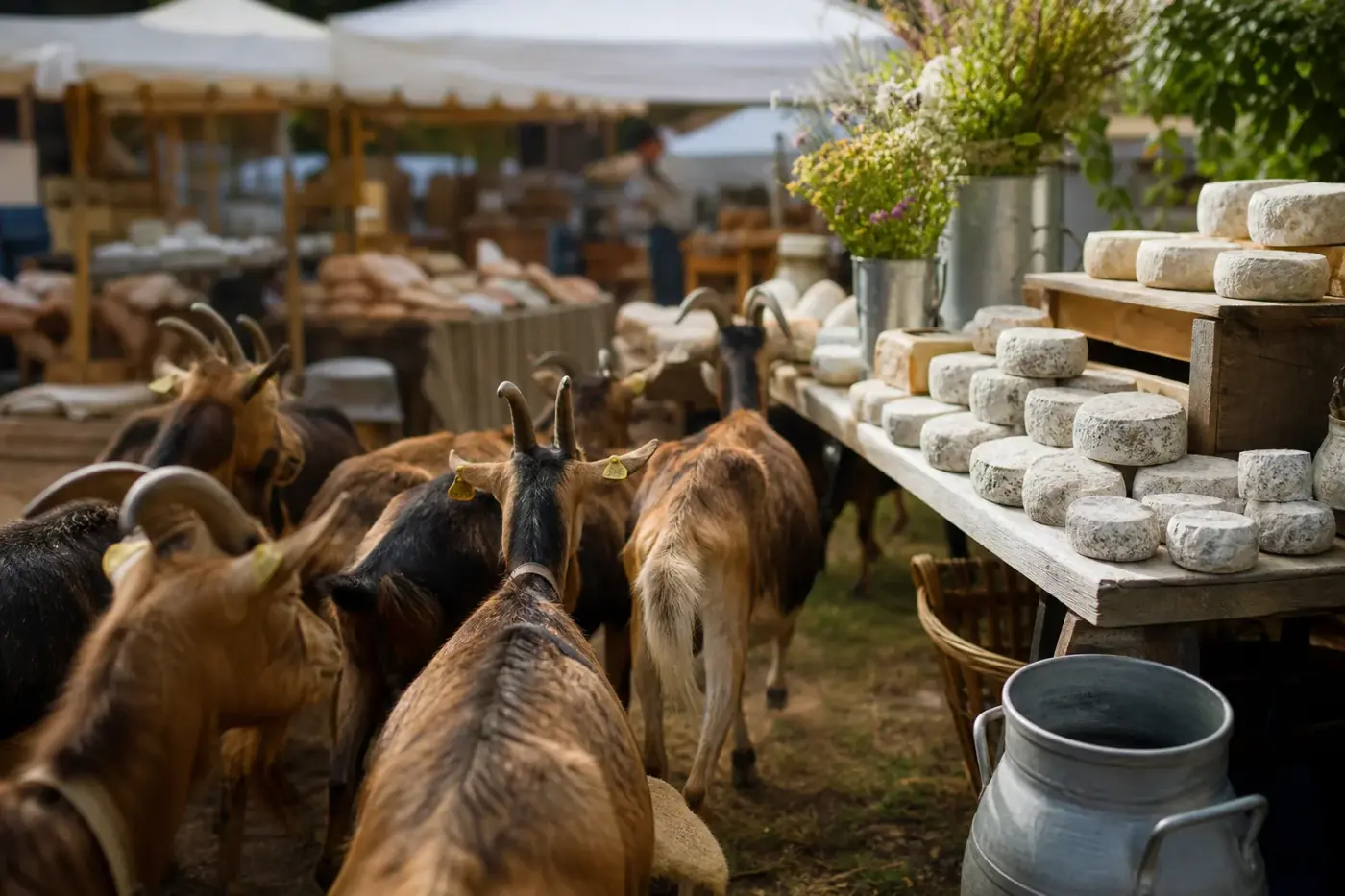
A herd of goats arrives at Rocamadour's cheese festival.