The Slow Food Cheese Festival in Bra
First, Italian meadow cheese.
First, Italian meadow cheese. Then a Saudi date. That unexpected meeting happened in a workshop at Cheese 2025, in Bra, Piedmont. Here, what you taste can lead straight into a conversation about farming, skill and tradition. [1,5]
Cheesemakers, herders, affineurs and curious eaters gather at this festival, organised by Slow Food and the City of Bra. The market and programme spill into the town’s streets. Bring your appetite and your questions. For once, being the person who talks about cheese all afternoon is entirely the point. [1,5]
A first helping of the essentials
- Cheese began in 1997. [1]
- The 2025 market rules required raw milk cheese, while allowing organisers to grant exceptions. [4]
- In 2025, you needed no reservation for the market, but Taste Workshops required one. Check the arrangements for the edition you plan to visit. [6]
Let Bra’s streets lead you to the cheese
In 2025, Piazza Roma, opposite the railway station, was where you could meet affineurs and selectors. These are the people who mature cheese or choose it from other makers. Stalls also filled Piazza Carlo Alberto, Piazza Spreitenbach and Via Audisio, bringing those different roles into your walk through town. [1]
Let that layout give your day its rhythm. Explore one area, stop for a conversation, then take a question with you to the next. Leave gaps between appointments, too. A full diary leaves little room for the encounters that give Cheese its particular purpose.
Discover the Slow Food story behind the gathering
Cheese began in 1997, organised jointly by Slow Food and the City of Bra. The Region of Piedmont supported the 2025 edition. Published programmes record an edition in September 2023 and the fifteenth from 19 to 22 September 2025. [1,2,3,5]
Behind the celebration sits Slow Food’s continuing work on biodiversity, animal welfare, farming and food waste. The exhibitor guidelines connect the market to those campaigns. So a stall offers more than a taste: you can ask how a cheese is made, and what its making helps sustain. [4]
Bring your curiosity to the market
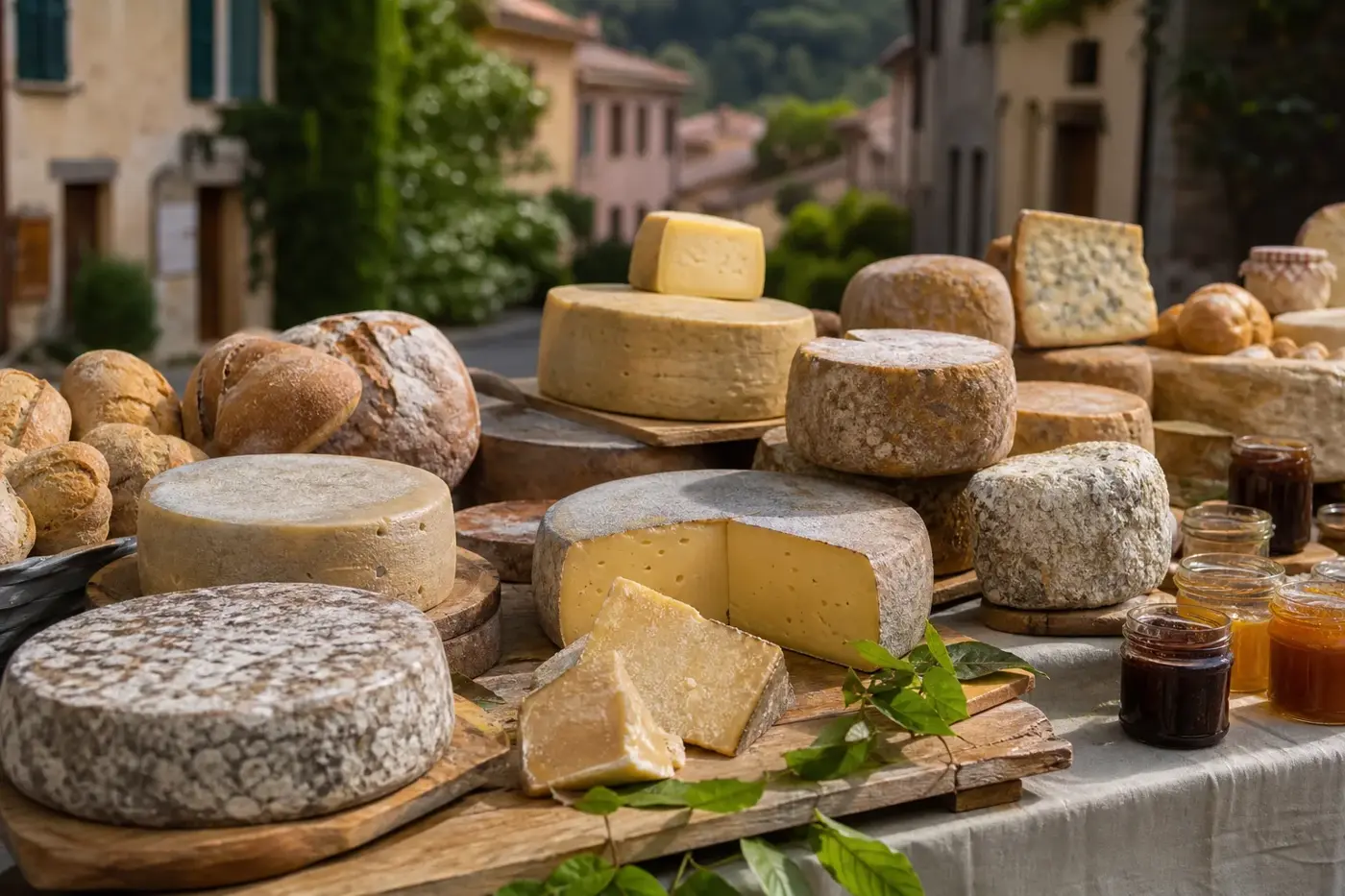
Aged cheeses, soft cheeses, bloomy rinds and cheeses made with plant rennet all appeared in Slow Food’s 2025 market introduction. Preserves, bread, oils and spices carried the selection beyond dairy. You could follow different methods and food traditions without leaving town. [1]
The selection rules favour direct contact with producers, while admitting affineurs and certain other exceptions. Begin with three questions: who made this cheese, who matured it, and where did the milk come from? The answers reveal more about the farm, dairy or maturation specialist than a stall’s address alone. [4]
Before you go, read how to tell cheese styles apart. Then use milk, rind, texture and method to get a conversation going. You do not need a memorised list of names. A useful question will take you further.
Ask the maker what raw milk means
Raw milk is central to Cheese’s identity. The 2025 market guidelines required cheeses made from raw milk, although organisers could grant exceptions under the general rules. Ask about the cheese in front of you. That market requirement did not automatically apply to the whole festival programme. [4]
For Slow Food, defending raw milk is part of protecting biodiversity and cheesemaking communities. You can bring that principle into focus with practical questions: which animals supply the milk, how are they fed, and which techniques does the producer want to preserve? Read about raw, thermised and pasteurised milk for a useful starting point. [5]
Choose a tasting that gives you something to think about
A good session sends you back to the market with a fresh question. Choose the subject, not just the cheese names. Comparing production methods can give a beginner a useful framework. If you already know your cheese, a discussion of farming or maturation might take you further.
In 2025, the programme advertised Taste Workshops and conferences at the Biodiversity House. The English FAQ said the workshops and most conferences there would have English translation. Before booking a future event, check the language on its individual listing. [6]
That pairing of Italian meadow cheese and Saudi date appears in Slow Food’s closing account of 2025. It gives you a sense of how far a workshop can travel beyond familiar combinations. Leave room for something that unsettles your usual way of tasting. [5]
Meet the people giving traditions a future
Behind a Slow Food Presidium is a community working to sustain foods, breeds and traditional skills. Its work connects production with the people and places that keep it going. Slow Food’s guide to the Presidia explains the approach and opens the project directory. [7]
Two project records bring those connections into sharper focus. Each gives you a different place, and a different set of questions, to explore:
- Mountain Pasture Castelmagno: the Foundation lists this Presidium in the municipality of Castelmagno, in Piedmont’s Cuneo province. Its focus is summer cheesemaking in mountain dairies, using the farmers’ own cows’ milk and traditional techniques. [8]
- Tombea: introduced among the Presidia at Cheese 2025, this project covers Magasa and Valvestino in Lombardy’s Brescia province. Slow Food connects its work with conserving local meadows and pastures. The Foundation describes aromas of cooked milk, herbs and hazelnut, with broth-like notes developing as the cheese matures. [1,9]
Look for participating projects in the current exhibitor list. Then ask what each Presidium is trying to keep alive. Your conversation might turn to haymaking, a local breed or the search for someone willing to learn the craft.
Follow the cheese back to the farm
At Cheese, biodiversity becomes a conversation about daily work. Tombea’s project explicitly links cheesemaking with recovering and protecting permanent meadows and pastures. Mountain Pasture Castelmagno connects production with summer grazing and work in mountain dairies. These are specific aims and practices described by Slow Food. [8,9]
Ask which task is hardest to pass on, or what has changed in the grazing season. Traditional knowledge starts to feel less abstract when someone describes the work. Pair a tasting with a farming discussion, then return to the producer whose answers stayed with you.
Give your tasting day a sense of direction
Choose a theme, not a target number of samples. Your notebook need not become a cheese census. Adapt this suggested plan to the published programme:
- Get your bearings. Download the edition’s map, locate your booked venue and choose one market area to explore. Make an initial circuit before deciding where to linger.
- New to cheese? Start with one clear difference. Ask a producer for a comparison within their range, perhaps two ages or two textures. Note the milk, maker and explanation alongside your impressions.
- Know your cheese? Give your question a sharper focus. Follow one method, farming practice or maturation decision through several conversations. Ask the same question each time, keeping the maker’s account separate from your tasting observations.
- Leave room to listen. Choose one workshop or talk, then allow an interval afterwards to follow up something you learnt. Return to a stall when the producer has time to speak.
- Keep notes you will want to read again. With permission, photograph the product label or write down its details. Separate descriptions of the cheese from the producer’s ambitions or philosophy.
Keep description and preference apart in your notebook, too. First record what you noticed about the paste, rind and finish. Then say whether you liked it and why. Ask which differences the producer expects between seasons or batches, and record the answer as their explanation.
Coming back another time? Bring one question from an earlier conversation rather than trying to repeat the whole market circuit. A small theme gives your day shape. It also makes your notes easier to revisit.
Use how to read a cheese label to organise the details. Aim to leave with a few cheeses you understand, rather than an indistinct memory of many.
Get the dates, bookings and access settled
Before making plans, look closely at the year. As of November 2026, the official pages describe the edition held from 19 to 22 September 2025. For a future visit, find a newly dated announcement on the festival website. Check the year of every programme entry. [3]
In 2025, market access was free, with no reservation needed. Taste Workshops required reservations, and the access page identified other separately ticketed programme events. For the next edition, check each listing’s admission arrangements, booking requirements, language and venue. Check market opening hours separately from individual event times. [6,10]
For accessibility, tell the organisers your intended route and chosen venues. Ask about step-free entrances, toilets, seating, surfaces and accessible shuttle arrangements. Check railway assistance separately. Trenitalia directs passengers to RFI’s Sala Blu service and advises checking individual trains’ accessibility information in its official timetable. [11]
Plan your journey and find the right base
Trenitalia’s SFM4 route connects the Turin airport and city corridor with Bra and Alba. Plan around your actual travel date, including the return after any evening event. Check disruptions and festival transport notices again shortly before you leave. [12]
Choose accommodation around the day you want to have. Staying in Bra suits a visit spent walking between markets and sessions. If Alba or Turin appeals, compare the whole journey before reserving. Include the last connection and the distance between your accommodation and the station.
Confirm the festival dates first, then arrange accommodation and transport together. If you are driving, consult the edition’s official parking and shuttle information. The 2025 organisers described central road closures and peripheral parking. Judge a hotel’s apparent convenience against those traffic arrangements: the short route on the map may not be available to you. [6]
Choose your cheese and plan its journey home
Ask before photographing a producer, respect their approach to samples and leave room for other visitors to speak. Before buying, discuss the size of the piece and your onward itinerary. Keep the label and seller’s details so you can identify the cheese later.
Travelling internationally? Before buying, consult your destination’s official food import rules and any transit country’s requirements. UK government guidance in November 2026 restricts personal imports of cheese from the EU into Great Britain. [13]
Check the current guidance before travelling for the countries covered and any exceptions. That includes a direct journey from Italy to England, Scotland or Wales. Make sure your intended purchase is permitted on your route. [13]
Once you know the route permits your purchase, discuss packing and transport with the seller. Check your carrier’s baggage requirements, too. Buy for the journey you can actually make, and leave time for one final conversation about the cheese you have chosen.
Questions people ask
Where and when is the Cheese festival held?
Cheese takes place in Bra, Piedmont. The fifteenth edition ran from 19 to 22 September 2025. Check the festival website for a newly dated announcement before planning a future visit.
Do I need to book to visit the festival?
In 2025, the market was free to enter and did not require a reservation. Taste Workshops required reservations, and some other events were separately ticketed. Check the arrangements for the edition you plan to visit.
Is all the cheese at the festival made from raw milk?
The 2025 market guidelines required cheeses made from raw milk, but organisers could grant exceptions. That market requirement should not be extended to the whole festival programme.
Are workshops and talks available in English?
The 2025 English FAQ said the Taste Workshops and most conferences at the Biodiversity House would have English translation. Check the language on each future event listing before booking.
Can I bring cheese from the festival back to Great Britain?
UK government guidance checked in November 2026 restricts personal imports of cheese from the EU into Great Britain. Check the current guidance for the countries covered and any exceptions, as well as the requirements of any transit country.
Sources
- Slow Food, Cheese 2025: strada facendo vedrai… che dietro ogni formaggio c’è un mondo intorno!, press release, 16 September 2025. Market locations, participants, styles and Tombea’s introduction at the event. Official source.
- Slow Food and City of Bra, Cheese 2023 event map, September 2023. Dated record of the 2023 edition. Official map.
- Slow Food and City of Bra, Cheese 2025, festival homepage, 2025 edition, retrieved November 2026. Official festival website.
- Slow Food, Cheese 2025: Selection criteria for exhibitors, 2025 edition. Introduction, general rules, and milk, cheese and dairy products sections. Official guidelines.
- Slow Food, From alpine pastures to global voices: Cheese 2025 champions dairy resistance, 22 September 2025. Organisers, raw milk advocacy and programme examples. Official closing account.
- Slow Food and City of Bra, FAQ, Cheese 2025 edition, undated, retrieved November 2026. Admission, reservations, translation and transport arrangements. Official visitor FAQ.
- Slow Food Foundation for Biodiversity, Slow Food Presidia, undated, retrieved November 2026. Project purpose and directory. Official guide.
- Slow Food Foundation for Biodiversity, Castelmagno d’alpeggio, undated project record, retrieved November 2026. Presidium listing, production area and mountain production practices. Official project record.
- Slow Food Foundation for Biodiversity, Tombea, undated project record, retrieved November 2026. Presidium listing, production area, conservation aims and attributed sensory description. Official project record.
- Slow Food and City of Bra, Accesso e orari, Cheese 2025 edition, undated, retrieved November 2026. General admission and separately ticketed activities. Official admission information.
- Trenitalia, Passengers with disabilities or reduced mobility, current online guidance, retrieved November 2026. RFI assistance and checking individual train accessibility. Official accessibility guidance.
- Trenitalia, SFM4 Ceres-Aeroporto-Torino-Alba, current route information, retrieved November 2026. Airport, Turin, Bra and Alba connections. Official route information.
- UK Government, Bringing food into Great Britain: Meat, dairy, fish and animal products, current online traveller guidance, retrieved November 2026. Personal imports of cheese from the EU into Great Britain. Official traveller guidance.
This piece combines desk research from the organisers’ records, Slow Food project descriptions, transport operators and official traveller guidance, with an editorial visiting plan.
Last checked: November 2026
Last checked November 2026.
The editors suggest you read next
Cheese Festivals Around the World
A herd of goats arrives at Rocamadour's cheese festival.